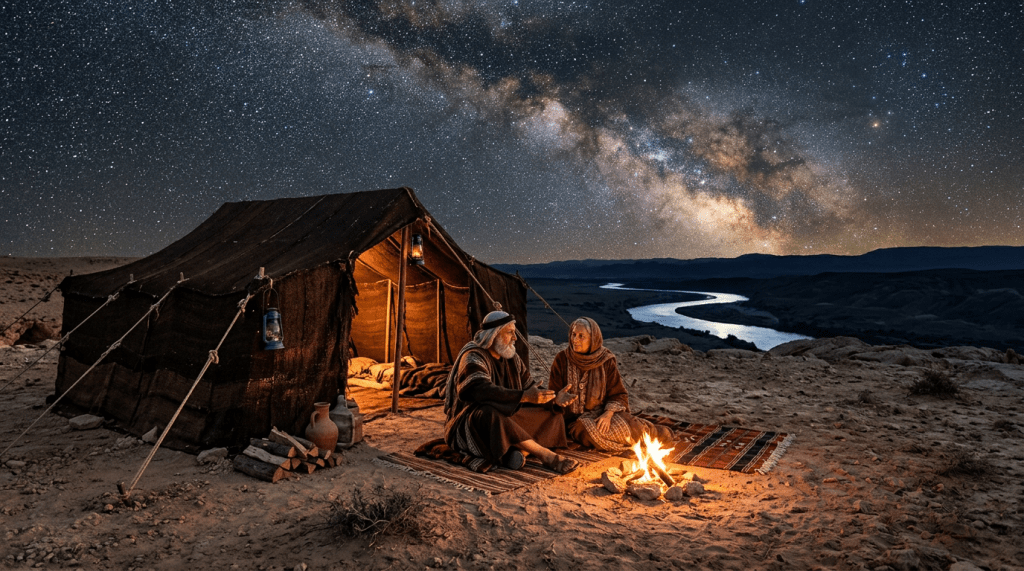
I am reminded often that God’s faithfulness is new every morning, and God’s faithfulness is the subject of my inspiration today. I am going to start my meditation with the Euthyphro dilemma – a strange place to begin, maybe, but it sets the stage for some thoughts I have on faithfulness.
The Euthyphro dilemma poses a seeming conundrum: Is God good because He determines what is good as a matter of fiat, or is God good because goodness is objectively required of God just as it is required of us? In other words, does God arbitrarily establish what is good, or is God subject to what is good?
Of course, this is a false conundrum. It assumes there are only two possibilities: that God arbitrarily establishes what is good or that God is subject to what is good.
There is at least a third possibility—that good is determined by the very nature of God. Good is simply a description of who God is. Faithfulness is good because God is faithful, and the virtue of faithfulness is a reflection of God’s very character.
If we take the Bible for our revelation of God, His faithfulness always is, always was, and always will be. It’s not as if God actually trots out a new dose of faithfulness every morning. The saying is poeti:c that God’s faithfulness is new every morning. We experience God’s faithfulness anew every morning.
It dawns on me, though it shouldn’t come as any revelation, that God desires us to be like Him. As our Father, He is proud of and appreciates when His children emulate Him. Just like the child who is proud of her father and wants to be like him, pretends to be him in play because she loves him and honors him in her heart, we are grateful for God’s faithfulness, and we seek to be faithful like Him.
If God is faithful and His faithfulness is new to us every morning, as the psalmist says, then we should desire to be like Him in faithfulness in our own lives. We should desire to be like him in this way.
I am aware that the virtue of faithfulness isn’t the most exciting virtue we could adopt. Faithfulness, perhaps, doesn’t get the kind of attention that faith, hope, and love get, for instance. But where would we be without the faithfulness of God, who gives His word and keeps His promise? Whose yes is yes and no is no. Where would we be if His faithfulness was not new every morning? If we could not count on His grace? If we were uncertain that God would keep His promise to us?
Lesslie Newbigin says that scripture is missional. Among other things, that means Scripture has a movement to it. It begins with two people, Adam and Eve, who initially walk with God in the garden created for them, but they are naive. They are duped into not trusting God. They are exiled from the garden and are instructed to multiply and populate the earth.
Scripture tracks the story of God’s plan to redeem Adam and Eve. It progresses through God’s interaction with their children, their children’s children, and their descendants along a missional path.
God works through Noah, Abraham, and Moses to move his plans along. All the milestones along the path are missional in the direction of God’s established before the foundations of the earth.
They coalesce in the incarnation, where Jesus picks up all the missional threads, fulfilling them in himself and carrying them forward in his life. He proclaims the presence and the future coming of the kingdom of God. He gives himself up to death, and he rises again to defeat sin and death. Jesus takes his seat at the right hand of the Father after commissioning his followers to carry his message and to the ends of the earth as his ambassadors.
From the promise to Eve that her seed will crush the serpent, to the rainbow covenant to Noah, to promise to Abraham to bless all the nations of the earth through his descendants, the missional progression of God’s plan in Revelation: in the New Jerusalem coming down out of heaven and in God establishing His habitation among His people in a new heavens and new earth.
In that final chapter in which God’s plans come to fruition, all God’s people are gathered in one great assembly of people. They are from every nation, tribe, and tongue. (Rev. 7:9)
In this progression, God doesn’t move; people do. God doesn’t change; people do. The mission doesn’t change from beginning to end, but people change in relation to their understanding and involvement as the mission unfolds.
Another way of characterizing the missional character of Scripture from beginning to end is with the word, migration. Scripture is about the migration of people from the garden to the New Jerusalem.
I have been listening to Pensées, by Blaise Pascal on Audible Chapter 45, Section 610 has given me some food for thought that inspires this blog post. Pascal’s analysis may not be politically correct in the 21st Century, but he makes a sound point when we give him some grace.
Leading up to Section 610, Pascal makes the claim that anyone who understands the Jewish religion by its “course of forms” will misunderstand it. He interprets the Law by the prophets who “made it plain enough that they did not interpret the Law according to the letter.”
This distinction is not novel. Paul makes the same point in all of his writings. The Law was temporary. (Galatians 3:19) It was a tutor. (Gal. 3:24) Paul says the Law is just a shadow – specifically that the religious rules about food, drink, festivals, etc. are a shadow of the substance which is in Christ. (Colossians 2:16-17) Jesus, himself, said the religious leaders search Scripture for clues about eternal life, but Scripture bears witness to him. (John 5:39-40; see also Luke 24:27)
Pascal says the Messiah according to “carnal Jews” was to be “a great temporal prince.” They expected a good fortune for them in this life when the Messiah came. In the same vein, Pascal says, “Jesus Christ according to carnal Christians has come to dispense us the love of God and to give us sacraments that should do everything to benefit us without our help.” In other words, “carnal Christians” are also just looking for benefits from God.
Pascal concludes, “Such is not the Christian religion, nor the Jewish.” He says, “True Christians and true Jews have always expected a Messiah that would make them love God and, by that love, triumph over their enemies.” (607) He puts “true Christians” and “true Jews” on the same level. They desire and seek to know and love God for who He is – and not for what He can provide them.
Pascal says, “The carnal Jews hold a midway place before Christians and heathens. The heathens know not God and love the world only. The Jews know the true God and love the world only. Christians know the true God and love not the world. Jews and heathens love the same good. Jews and Christians know the same God. The Jews were of two kinds: the first had only heathen affections; the other had Christian affections.” (608)
Pascal says, among the Christians, the coarser-minded are the Jews of the new law. The carnal Jews looked for a carnal Messiah. The “coarser Christians” believe that the Messiah has dispensed them the love of God. True Jews and true Christians worship a Messiah who makes them love God.” (609) The difference is in desiring the good things God can give them versus desiring God who is good. In these ways, Pascal claims that true Christians are like true Jews, and “coarser Christians” are like the carnal Jews.
And this is where we get to the point. Pascal says that true Jews and true Christians have the same religion. The religion of the Jews seemed to consist of the fatherhood of Abraham, circumcision, sacrifices, ceremonies, the Ark of the Covenant, the temple, Jerusalem, and the Law of Moses. But, Pascal says the true religion of the Jews “consisted of none of those things, but only in the love of God.”
Pip: If you’ve ever wondered whether the Bible has anything to say about the immigration debate, Kevin Drendel has been following the threads of the biblical fabric on the theme of immigration since 2014 — and the answer turns out to be: quite a lot, and none of it comfortable.
Mara: This episode covers three territories: migration and exile in the biblical narrative, what it means to hold citizenship in heaven over any earthly nation, and how the command to love your neighbor keeps expanding past every boundary we try to draw around it.
Pip: Let’s start with the biblical record on refugees — because it turns out the shepherd-king himself was one.
David, Ruth, and the Refugee Thread in Scripture
Mara: The anchor post here traces a thread running from the exile of Adam and Eve all the way to Revelation 7:9 — and one vivid stop along the way is David, a man on the run from a king who wanted him dead.
Pip: David dodging spears, hiding in the wilderness, and eventually crossing into enemy Philistine territory — David was not always the quintessential insider, the golden boy of the faith. He was once a refugee.
Mara: In that dilemma, “David thought to himself, ‘One of these days I will be destroyed by the hand of Saul. The best thing I can do is to escape to the land of the Philistines. Then Saul will give up searching for me anywhere in Israel, and I will slip out of his hand.'”
Pip: Some commentators criticize that David’s move as a failure of faith. They have a point — but what would any of us would do if people in power were hunting us down.
Mara: That’s where the law-versus-grace tension surfaces. David’s asylum claim, by modern legal standards, would likely be denied — his persecution wasn’t tied to race, religion, or membership in a protected group. Many real refugees today face the same wall: fleeing cartels or generalized violence, with no qualifying category under current law – no clear path to safety, security, and a permanent home.
Pip: And the number of refugees in the world are not small. Over 123 million people displaced globally, 1 in every 67 people on earth, with the average refugee spending about 17 years inrefugee camps.
Mara: The post on Ruth develops the same thread from a different angle. Ruth is a Moabite — a foreigner — who embodies every category of vulnerability Scripture pairs together: widow, orphan, and foreigner. And God chose her story, not an Israelite’s, to sit at the center of His redemption narrative.
Pip: Ruth ends up in the royal lineage that runs straight to David and then to Jesus. The foreigner isn’t a footnote; she’s load-bearing.
Mara: The post on Moses and identity adds another layer. Moses names his firstborn son Gershom — meaning “foreigner in a foreign land” — because that is how he understood himself, raised Egyptian but Hebrew by birth. That outsider identity becomes the foundation for the Mosaic law’s repeated command: love the foreigner, because you were foreigners in Egypt.
Pip: And then People from Beyond closes the loop. Abraham himself is called a Hebrew, meaning “one from beyond” — a man who never owned the land he lived in – though it was the land God promised him – because he knew it was not his ultimate destination.
Mara: David says it plainly near the end of his life, in 1 Chronicles: “We are foreigners and strangers in your sight. Our days on earth are like a shadow.” The displacement isn’t incidental to the story. It is the story.
Pip: Which raises the question of what that identity is supposed to do to us — and that’s where citizenship comes in.
Heaven’s Citizens, Earth’s Sojourners
Mara: The post on foreigners, neighbors, and citizens opens with a single line from Leviticus 24: “You are to have the same law for the foreigner and the native-born.” The post observes that Law is not meant to be merely punitive — if the law binds the foreigner, the same law also shields the foreigner.
Pip: Equal protection as a theological claim, not just a civic one.
Mara: Philippians 3:20 puts it plainly: “Our citizenship is in heaven.” The post on Jubilee and kingdom identity traces how that reorientation was built into the Mosaic law from the start — the Jubilee instructions in Leviticus 25 remind Israel they are temporary dwellers – tenants, not owners, because “the land is mine,” says the Lord.
Pip: And the post on the New Testament theme of embracing citizenship in heaven makes it personal — through the story of a woman who grew up a Christian minority in India, felt the sting of foreignness again as an immigrant in the United States, and found in that double displacement a clarifying gift.
Mara: Her experience reframes minority status not as a problem to solve but as the natural condition of anyone whose primary allegiance is to a kingdom not of this world. The danger, as that post frames it, is belonging too comfortably to any earthly nation.
Pip: That’s the tension that keeps appearing in Scripture — and the neighbor question is where it gets practical.
The Boundary That Keeps Moving
Mara: The post on insider logic opens with the backstory to the Good Samaritan. Second Temple Jews read “love your neighbor as yourself” as applying to fellow Hebrews — the qualifying phrase “among your people” in Leviticus 19:18 gave them cover.
Pip: Sixteen verses later, the same chapter extends the same love to foreigners. They just stopped reading.
Mara: Jesus removes any remaining ambiguity in Matthew 5: “You have heard that it was said, ‘Love your neighbor and hate your enemy.’ But I tell you, love your enemies.” The post calls this the perfection of love — a progression that starts with self and family, moves outward to neighbors and strangers, and doesn’t stop until it reaches enemies.
Pip: Our natural inclination is to draw the circle tight. The Bible keeps redrawing it larger.
Mara: And that’s the throughline across everything here — from David in the wilderness to Ruth in the fields to the command to love without limit. The question isn’t whether God cares about the foreigner. The question is whether we’re reading closely enough to notice.
Pip: Displacement, identity, the boundary of neighbor love — these aren’t separate topics. They’re the same argument made from every angle of Scripture.
Mara: And the posts keep returning to the same pressure point: how we treat the vulnerable stranger is a litmus test for who we actually think we are before God. This theme runs throughout the Bible, from Adam and Eve to Revelation.
Pip: More to come from Navigating by Faith — next time, we’ll see where the thread leads.
Abraham is called a Hebrew in Genesis 14:13, which is the first use of that term. The term means “one from beyond1.” Abraham was a man from beyond; he wasn’t from the land he lived in. God called him from beyond. Abraham was a foreigner, an alien, and a stranger in the land to which God called him.
When four kings in this land rose up and began to fight the people of Sodom and Gomorrah because they refused to give tribute, Abraham did not take sides. This is was the first war recorded in the Bible, and Abraham did not participate in it. (Genesis 14)
That fighting went on for over a decade, but Abraham did not take sides. It wasn’t until his nephew Lot was caught up in those warring factions that Abraham rose up with three hundred and eighteen men and went to battle to rescue Lot.
It wasn’t that Abraham was weak, unable, or unwilling to engage in the battle. The battles were not his to fight. He had a higher purpose and a higher calling. Until one member of his family was caught up in the fighting, Abraham remained on the sidelines.
The king of Sodom misunderstood Abraham’s involvement. He thought Abraham entered the war on the side of the king of Sodom, but when the king offered plunder to Abraham, Abraham refused. Abraham was not, in fact, aligned with the king of Sodom. Rescuing Lot meant effectively fighting on the side of Sodom, but Abraham was not aligned with Sodom. He was only aligned with the purpose of God.
This reminds me of Jacob when he encountered the angel of the Lord before entering the promised land. (Joshua 5:13-15) Joshua asked, “Are you for us or are you for them?” The angel said, “Neither.” Then the angel told him to go in the land and drive the people out.
It was God’s purpose to establish His people in that land at that time. God doesn’t align with our purposes; we must align with His.
In Genesis 15:13-16, God told Abram (later Abraham) that his descendants will be enslaved and oppressed in a foreign land for 400 years. God explains that they will not return to drive out the inhabitants until “the fourth generation,” because “the sin of the Amorites has not yet reached its full measure.”
God had declared it many years before it happened. But God was not aligning with the people of Israel, nor was he aligning against the people in the land. God was accomplishing a much greater plan.
God’s plans and purposes involved not just the descendants of Abraham, but all the nations of the earth. (Genesis 12:3: 18:18; and 22: 18) Three times when God told Abraham that his descendants would be be blessed that Abraham’s descendants would bless all the nations of the earth.
The land was not meant to be a permanent gift of God to a particular people. The earth and all that is in it is passing away. (Matthew 24:35; and 1 John 2:17) Abraham lived in the promised land as an alien and stranger. (Hebrews 11:9) God told Moses and the people that they would be foreigners and temporary residents in the land. (Leviticus 25:23)