When Jesus taught his disciples to pray he taught them to recognize God: “Our Father, who art in heaven, hallowed be thy name.” Immediately after recognizing God for who He is, Jesus taught us to pray, “Thy kingdom come, Thy will be done on earth as it is in heaven.” These things are the foundation of our prayer life with God, according to Jesus.
As I think about this today, the realization strikes me that praying, “Thy kingdom come,” needs to be accompanied by a willingness to reflect God’s kingdom and God’s will in the way we live. If we pray for God’s kingdom to come on earth as it is in heaven and don’t think that prayer means anything for us in the way that we live, do we really mean it?
These thoughts came to me as I was worshipping God and thinking about the song we were singing, which was an expression of faith in the promises of God. If we
pray or sing these words to God without any intention to reflect the God we are worshiping and praying to in our daily lives, is our worship and prayer anything other than a clanging gong or a banging cymbal that Paul speaks of in 1 Corinthians 13?
When Jesus began his public ministry, the message he preached was the coming of the kingdom, which he said is near at hand. (Mk. 1:14-15l Matt. 4:17, 23) Jesus said that the reason he was sent was to preach the coming of the kingdom of God. (Luke 4:3)
When Jesus spoke in his hometown synagogue, he said it a little bit differently: he said that he came to preach good news to the poor, to proclaim freedom to prisoners, to give sight to the blind, and to set the oppressed free. (Luke 4:18-19)
Throughout his public ministry Jesus demonstrated what he came to do. He touched lepers, though doing so would make him unclean under Jewish law, and he healed them. He gave sight to the blind. He healed the sick and the lame. He set people free from demonic influences. He forgave sins. He lived out a tangible demonstration of what it means for the kingdom of God to come, and he extended God’s favor to Samaritans, a Canaanite woman, and a Roman centurion.
He also challenged the religious people of his day. He repeatedly healed people on the Sabbath. He even went right into the synagogues and healed them in front of the religious leaders, knowing that it would provoke them in their religiosity, because they didn’t understand what it means for God’s kingdom to come on earth as it is in heaven.
The religious leaders were angry when Jesus challenged their understanding of the law and therefore of God. In their best moments they were just confused.
When Jesus healed ten lepers and instructed them to go show themselves to the priests, only the Samaritan leper came back and thanked Jesus. The priests asked, when would this kingdom that Jesus was preaching come? Jesus said, God’s kingdom isn’t any particular place, because God’s kingdom is within us. (ἐντός (entos), meaning inside (us) (adverb or noun) — within (us), sometimes translated “among us” or “in our midst”)
They still didn’t know what he meant. All they could see was that he was breaking the rules – the requirements they had established to protect people from breaking the mosaic Law of not working on the Sabbath. They didn’t understand that the Lord of the Sabbath was standing in front of them, telling them they were getting it wrong.
Jesus said the kingdom is in the midst of His followers. He come to announce that God’s kingdom has come, though it is also still to come. He introduced his kingdom, and he called his followers to recognize it, to repent, and to live in its reality.
The question I want to ask today of myself and anyone who might be reading this is this: Are we doing that?
All Scripture is inspired by God. Scripture is useful to teach us and it convicts us of what is right. Scripture straightens out our thinking, and it trains us in knowing and doing what it right. (2 Timothy 3:16) With this foundation, my inspiration today comes from Exodus 3.
“Then the Lord said, ‘I have surely seen the affliction of my people who are in Egypt and have heard their cry because of their taskmasters. I know their sufferings, and I have come down to deliver them out of the hand of the Egyptians and to bring them up out of that land to a good and broad land, a land flowing with milk and honey…. And now, behold, the cry of the people of Israel has come to me, and I have also seen the oppression with which the Egyptians oppress them. Come, I will send you to Pharaoh that you may bring my people, the children of Israel, out of Egypt.’”
Exodus 3:7-10 ESV
We are often comforted by God’s word to know that God sees our afflictions; He hears our cries; and He responds. We find comfort in this passage from Exodus that God sees, God hears, God knows, and God responds. This is undeniable, but it isn’t the primary purpose of Scripture.
If we only take away the fact that God sees us, hears us, knows us, and responds to us from this passage, we are missing the bigger picture. The purpose of Scripture is not primarily to comfort us. If you read 2 Timothy 3:16, which I paraphrased at the beginning of this article, it describes the primary purpose of Scripture, and the description does not include providing comfort to us.
Yes, Scripture is comforting to us, and we take great comfort in it as we should. That is part of having faith in and trusting God. The primary purpose of scripture, however, is not to comfort us, but to instruct us, to straighten out our thinking, to give us a new perspective, and to train us in what is right according to 2 Timothy 3:16.
In the passage from Exodus 3 quoted above, we are comforted to understand that God sees the afflictions of His people, hears their cries and knows their suffering, and God responds, but we should not miss that God responds through Moses who God calls to carry out His response. The focus of the story is God calling on Moses to carry out God’s response to what God sees, hears, and knows.
In reading Blaise Pascal’s, Pensées, I’m reminded of something I’ve thought about but never really tried to write down, so I will try.
Many people feel that Christianity is unnecessarily harsh in its doctrine of sin. People feel that the notion of sin produces an unhealthy negativity toward the self, perhaps a self-loathing. It can also be used in judgmental and self-righteously harsh ways as people condemn and judge others for their sin.
It seems that people either turn the negativity inward, or project it outward, or both. This is a common criticism of Christianity and the doctrine of sin. When we embrace the doctrine of sin and try to understand it from a biblical perspective, the truth is far more positive than we might suspect at first blush.
For one thing, the idea of sin is a great equalizer. When the Bible says that all have sinned and fallen short, it is mitigating one of the chief ways people feel badly about themselves, which is in comparison to others. The idea that all humans have sinned the negativity trap that comes from comparing ourselves to other people.
Paul says that anyone who has sinned in one way has transgressed the entire law. Thus, it makes no difference whether one person may be more or less sinful than another person. We are all in the same boat. To think that I am better than or worse than someone else by comparison is to misunderstand the doctrine of sin.
The great poet of the 18th century, Alexander Pope, says in more poetic language, “To err is human.” We all know this intuitively. If we are honest, we see our faults and our failures in ourselves that other people do not even see. This self-awareness can and does produce feelings of negativity even if we do not subscribe to the Ten Commandments or Christian morality.
The entire quotation from Alexander Pope is: “To hear is human, to forgive is divine.” When we struggle with our own failures and faults, we can find ourselves in an endless feedback loop of negativity. The answer to that vicious cycle is the idea of divine forgiveness. This is what the Bible teaches us.
The doctrine of sin also eliminates a primary way people are cruel to each other – by establishing comparisons that render certain people less than. This is the outward manifestation of negativity that flows from the reality that human beings are error-prone. Whether it’s the Ten Commandments, a cultural or societal standard, or a self-imposed standard, we all fall short. When we turn that negativity outward, we focus on the errors of other people; we judge them; and we become self-righteous if we think we are better than them.
The doctrine of sin levels this playing field also. I once heard the analogy of people escaping a natural disaster in California by taking to the sea. The best swimmers might outdistance the lesser swimmers, and the worst swimmers among us might perish quickly in the ocean waters. Not even the best of swimmers, however, are capable of swimming the entire ocean to reach the shores of China.
The doctrine of sin is similar to this analogy in the sense that the best of people still fall short. As Paul stated, the doctrine of sin is a losing proposition for us: it is all or nothing – if we have failed to keep only one part, we have transgressed the entire law because we are still sinners. It doesn’t matter how far any individual swimmer makes it out into the Pacific Ocean. Every swimmer will fall short of making it to the opposite shore.
When we understand that our position relative to each other makes no difference, we are not apt to judge others or to feel superior. The Bible eliminates all of that if we take it seriously, because all have sinned and fallen short so that there is no reason for boasting merely merely because some people sin more or less in one way or another.
In this sense an accurate understanding of the biblical doctrine of sin, is the great equalizer. If we truly understand a biblical view of it, the reality of sin puts us all on the same level. It equalizes all people in relation to each other and in relation to God. We are all in the same position relative to each other and relative to God.
The biblical solution for sin, of course, is God’s grace/forgiveness. The solution for sin is not doing better, but in receiving God’s grace and forgiveness and in willingness to extend that grace and forgiveness to others. As Paul also says, “If we are forgiven by grace, where is the boasting?” Sin and grace eliminate boasting and mitigate against pride, which is the root of all sin according to great thinkers of old.
As I read through the Bible this year, the phrase, “the high places,” caught my attention because it is used as a kind of litmus test and descriptor of the kings of Israel and Judah in Kings and Chronicles. Like a worn-out refrain, and a tired old drumbeat, king after king in Israel and Judah is identified for failing to remove the high places. Only Hezekiah removed them and only Josiah destroyed them completely.
In case you have not read Kings or Chronicles lately, each king is judged by whether he did what was right in the sight of the Lord and removed the high places. The phrase “the high places were not removed” functions like a spiritual diagnostic in Kings. Even of the kings who were not wholly evil, only two (2) of them did something about the high places that were scattered throughout the region.
I have glossed over the phrase every year that I have read through Kings and Chronicles until now. When I recognized I wasn’t exactly sure what the high places were, I took some time to lay my assumptions aside and look into it. What I found is interesting and surprisingly relevant for us today.
What Were the High Places?
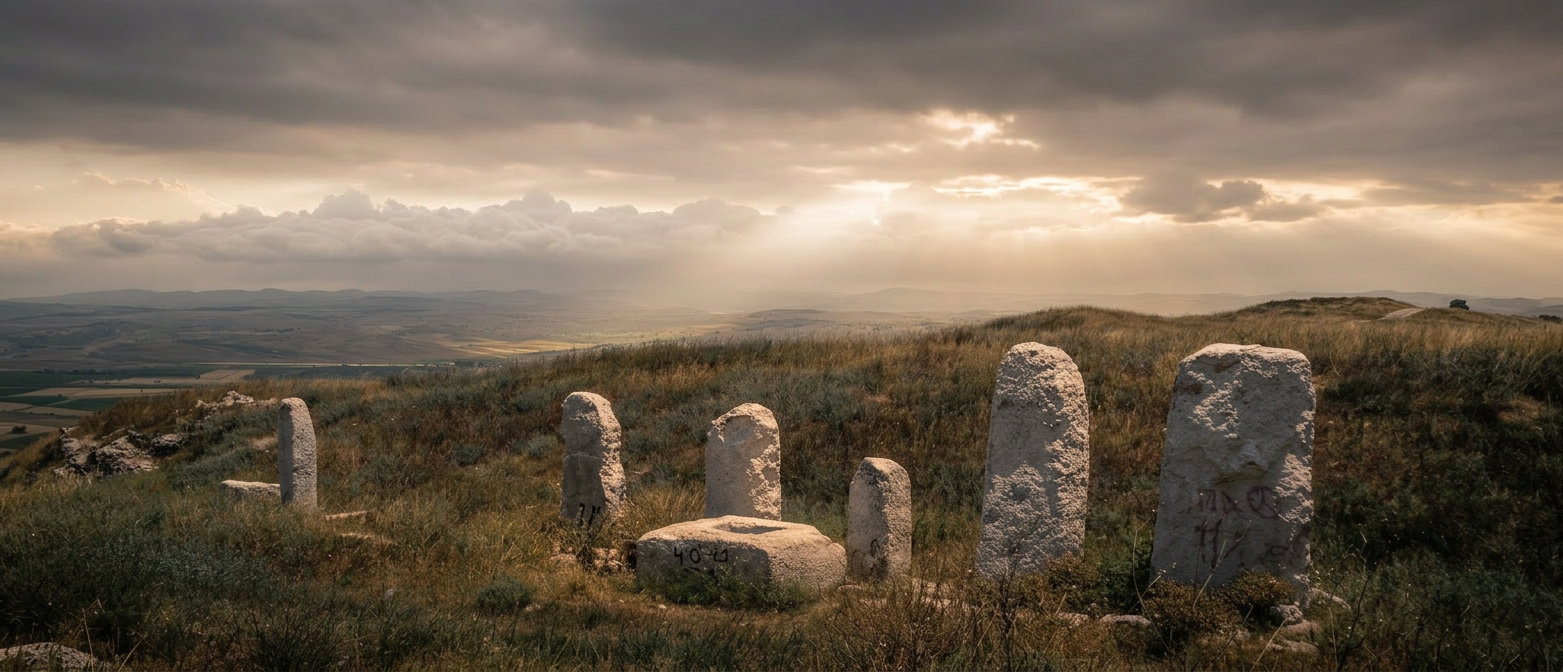
The Hebrew word translated “high places” is bamot. These were worship sites, usually located on hills or mountain tops, on ridges, or sometimes even on raised platforms in cities. A typical high place might include a stone altar for sacrifices, standing stones (masseboth), wooden poles associated with goddess worship (Asherah poles), incense altars, or occasionally a sacred tree or grove.
Ancient Near Eastern people believed that worshiping on elevated places brought them closer to heaven. Thus, “high places” became a term synonymous with worship. I wonder, as I write this, whether our phrase for good worship or a good spiritual experience – a mountaintop experience – comes from the idea of “high places” (knowingly or unknowingly).
The First Reference to a High Place
The first explicit mention of a “high place” is in 1 Samuel 9. When Saul goes looking for his father’s lost donkeys and is told to seek out the prophet, Samuel, who was planning to meet the people “at the high place” for a sacrifice. They were waiting for Samuel to get there to bless the sacrifice before they ate. Saul meets Samuel on his way to the high place, and Samuel instructed Saul to go on ahead of him, to wait for him, and to eat with him. (1 Samuel 9:12–14, 19).
This first mention of a high place is interesting because it seems to carry no negative connotation. Samuel had a good reputation as a prophet who did what was right in the Lord’s eyes, and the sacrifice they enjoyed at the high place seems to have been acceptable.
Older Worship Practice
Although the term “high place” is first used in 1st Samuel, worship on high places by some of the most iconic people of God goes back much earlier. For example: Noah builds an altar after leaving the ark; Abraham builds altars at Shechem, Bethel, and Mt. Moriah; Jacob worships at Bethel, and Moses meets God and receives the Law on Mt. Sinai.
The pattern of mountaintop worship and encounter with God is repeated and prominent. Just as noticeable, perhaps, is the absence of a negative comment about these practices. They seem to have occurred in ways that advanced relationship and covenant between God and key figures in the Old Testament. The pattern seems to have been acceptable to God, and those older mountaintop places of worship are not called “high places” (bamot).
A Change in the Worship of God
The early encounters of people with God were organic and free-flowing, but that way of relating to God changed with Moses and the Exodus. Although, Moses met with God on the top of Mt. Sinai, God changed the way people would relate to Him and worship Him going forward.
After Moses provided the blueprints from God, the Tent of Meeting (Tabernacle) was constructed to provide a place for the the Ark of the Covenant, for offering sacrifices to God, and for Moses to meet with God. The presence of God came to reside among the people over the Tent of Meeting with a visceral demonstration of fire by night and cloud by day.
Moses was instructed to consecrate the Levites, alone, to care for the Tabernacle and Ark of the Covenant, to carry, assemble, and to tear down the structures when they moved, and to conduct all of the ritual sacrifices that were very carefully prescribed.
Anyone who dared to approach God, offer sacrifices, or worship in a way that was not prescribed incurred the consequence of that transgression. No one but a Levite (and Moses) could enter the Tent of Meeting or offer sacrifices, and the Levites had to follow the the detailed instructions prescribed by God or pay the price.
The Problem with High Places
When Israel entered the Promised Land of Canaan, hilltop shrines devoted to gods like Baal and Asherah were scattered throughout the area. At that time, God specifically commanded Israel to destroy the high places (bamot), saying, “You must not worship the Lord your God in their way.” Instead, the people were instructed to “seek the place the Lord your God will choose from among all your tribes to put his Name there for his dwelling.” (Deuteronomy 12:1-7).
They were warned, “You are not to do as we do here today, everyone doing as they see fit, since you have not yet reached the resting place and the inheritance the Lord your God is giving you.” (Deut. 12:8-9) Yet, all they had was the mobile Tabernacle and the Ark of the Covenant, and they moved around until the Temple was built by Solomon. They were not always even in the same location.
The Transitionary Period
It was during this time frame that Samuel met Saul at “the high place.” Other people also offered sacrificed on high places during this period, despite the instruction from Moses. For instance, Joshua builds an altar on Mount Ebel after the conquest of Ai and offered sacrifices as Moses instructed them to do after crossing the Jordan into the Promised Land. (Deuteronomy 27; Joshua 8:30–35)
Sometime later, the tribes that took the land east of the Jordan built an altar. Joshua and the western tribes prepared to go to war with their brothers, assuming that it was an unauthorized rival worship location. They relented when eastern tribes explained it was not an altar for performing sacrifices; it was a ceremonial altar meant to be a witness that they belong to Israel. (Joshua 22)
God specifically instructed Gideon to build an altar to the LORD and offer sacrifices on it after tearing down an altar his family constructed for Baal. (Judges 6) Samson’s parents built an altar and offered sacrifices in thanks to God that seems to have been acceptable, because the Angel of the LORD ascends in the flame. (Judges 13)
Samuel repeatedly participated in offering sacrifices away from the Tabernacle at Mizpah (1 Samuel 7), Bethlehem (1 Samuel 16), the high place at Ramah (1 Samuel 9) during the period when the priesthood centered at Shiloh had collapsed and the Ark and Tabernacle were no longer together. David also built several altars during this time, including an altar on the threshing floor of Araunah (2 Samuel 24) where Solomon would later build the Temple.
Finally, Solomon offered sacrifices at the high place of Gibeon. In Solomon’s case the text seems to excuse the practice by stating, “[T]here was no house built for the name of the Lord.” (1 Kings 3) This seems to suggest that it was a transitional time.
Not a Hard and Fast Rule
Though God had told them to “seek the place the Lord your God will choose from among all your tribes to put his Name there for his dwelling,” it didn’t seem to be a hard and fast rule after they entered the Promised Land the Temple was built.
Perhaps, this is because the issue wasn’t locational, but a matter of the heart. With “high places” for pagan worship scattered throughout the land, it was too tempting for God’s people to mix worship of Yahweh with pagan practices or outright idolatry.
After the Temple was built in Jerusalem, continuing to worship at local high places was usually viewed as disobedience to God’s command. That is why the books of Kings repeatedly evaluate rulers with statements like: “Nevertheless, the high places were not removed.” Even kings who were otherwise faithful often failed this test. Once the Temple was dedicated, the transitional period ended. From then on, the high places became symbols of covenant unfaithfulness.
The clearest passage on this theme is Deuteronomy 12, which does not merely forbid worshiping other gods on the high places—it forbids Israel from worshiping the LORD wherever they choose. They were to worship only at the place God chooses.
Notice the contrast:
First, Israel is commanded to destroy the Canaanite places of worship: “You shall surely destroy all the places where the nations… served their gods, on the high mountains and on the hills and under every green tree.” (Deut. 12:2)
Then comes the key command: “You shall not worship the LORD your God in that way.” (Deut. 12:4)
We are to approach God on His terms: “But you shall seek the place that the LORD your God will choose… there you shall bring your burnt offerings and your sacrifices…” (Deut. 12:5–14)
This theme is repeated. Deuteronomy 16:21–22 forbids setting up sacred poles or standing stones alongside the LORD’s altar, practices commonly associated with high places. Deuteronomy 17:3–9 requires sacrifices to be brought to the tabernacle rather than offered wherever people wish. Deuteronomy 17:9–11 condemns Israel because they “built for themselves high places… and there they burned incense on all the high places.”
The point is not merely, “Don’t worship idols.” It is, “Don’t worship the LORD according to the pattern of the nations or at places you choose yourself.” In other words: the people can only worship and honor God properly on God’s terms – not on their own terms. God is God, and we are not.
The Spirit of the Law
This is the interesting part. Before the temple was built, there were periods when Israel lacked a single permanent sanctuary. During the days of Samuel and even early in the reign of Solomon, sacrifices at places like Gibeon were tolerated because that was where the tabernacle and bronze altar were located (1 Kings 3:2–4). The author of Kings even explains:, “The people were sacrificing at the high places because no house had yet been built for the name of the LORD.”
Once the Temple in Jerusalem was established as the place God had chosen, however, continuing to worship at local high places became an act of disobedience. That is why the historian repeatedly criticizes otherwise good kings by saying, “The high places were not removed.”
Deuteronomy is teaching that true worship is defined not by human sincerity or convenience, but by God’s initiative. The temptation of the high places was to approach God on one’s own terms—at a place of one’s own choosing, often borrowing from the belief systems and practices of the surrounding culture.
The prophets continually call Israel back to worship that is shaped by God’s word rather than by human preference. This theme reaches its fulfillment in the New Testament, where worship is no longer centered on a geographic sanctuary but on Jesus, through the Holy Spirit, who becomes the true meeting “place” between God and humanity (see John 2:19–21 and 4:21–24).
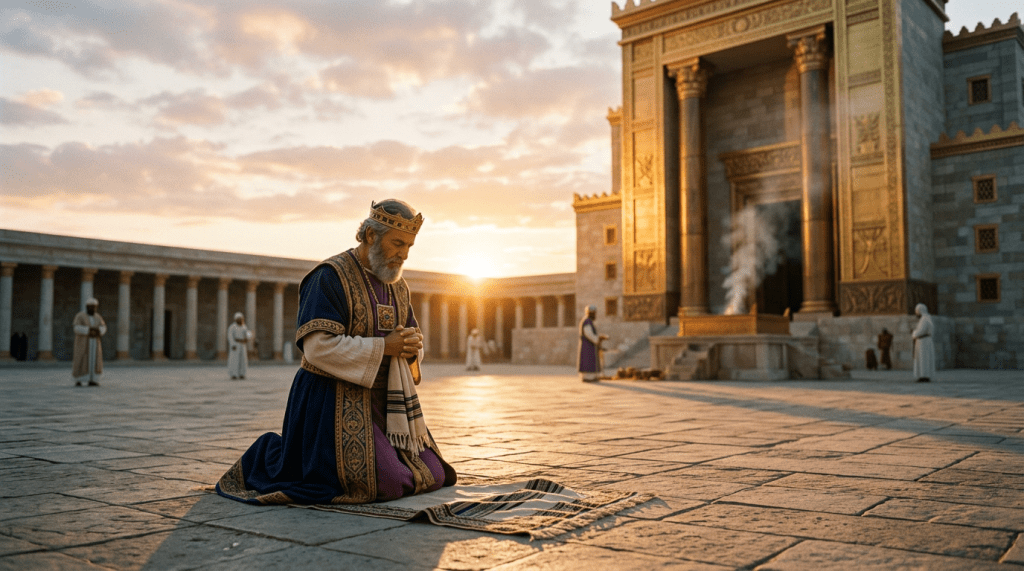
When King Solomon completed the Temple for God in Israel that David committed to build, he praised God for being true to His promise, for bringing His people out of Egypt, for choosing them to dwell among, and to have a Temple dedicated to Him in the City of David – Jerusalem. (2 Chronicles 6:1-11) He said,
“Lord God of Israel, there is no God like you in heaven or on earth – you who keep your covenant of love with your servants who continue wholeheartedly in your way.”
2 Chronicles 6:14 (NIV)
At the same time, Solomon acknowledged that not even the highest heavens can contain God – much less a temple built by human hands. (v.18) Our God is the Lord over all the earth, and He made a covenant with Abraham to bless all the nations of the earth.
Solomon petitioned God to hear the prayers of the people of Israel (vv.19-21), to remember them when they repent for failing to love their neighbors, to judge those who are guilty and vindicate the innocent are wrongfully accused, and to forgive them when they repent of their sin, to “teach them the right way to live,” and to fear the Lord and walk in obedience. (vv. 22-31) Strikingly, Solomon included foreigners in his prayers:
“As for the foreigner who does not belong to your people Israel but has come from a distant land because of your great name and your mighty hand and your outstretched arm—when they come and pray toward this temple, then hear from heaven, your dwelling place. Do whatever the foreigner asks of you, so that all the peoples of the earth may know your name and fear you, as do your own people Israel, and may know that this house I have built bears your Name.“
2 Chronicles 6:32-33
Solomon was mindful not just of the people of Israel; he was mindful of foreigners “who come from a distant land” because of God – asking God to do for them what they ask. He did this “so that all the peoples of the earth may know your name and fear you.” In doing this, Solomon remembered and honored God’s great promise to Abraham to bless all the nations through his descendants.
Let us remember and honor this promise of God today in our own land and in our own lives. God is no respecter of persons – or nations – who do not align themselves with and live out the promises and global purposes of God. Just as God promised judgment and and hardship for the ancient nation of Israel if they failed to live out their own covenant promises to God, He is and will be true to that promise for His people today – wherever they are scattered around the earth.
We are blessed when we are not just hearers of His word, but only if we are doers of His word. (James 1:22-25) God does not describe exactly how we do that. We need the guidance of His Holy Spirit to discern how to live this out in the 21st Century where we live. If we want to blessed by God and faithful to Him, however, we cannot ignore these things.
I pray that we will lean into God’s great covenant promise to all the nations of the world to live out His purposes and intentions to attract all people to Himself. May we learn to follow the prompting of the Holy Spirit in our own lives acknowledge and honor God in this way in our daily lives, individually and corporately, as the people of God.