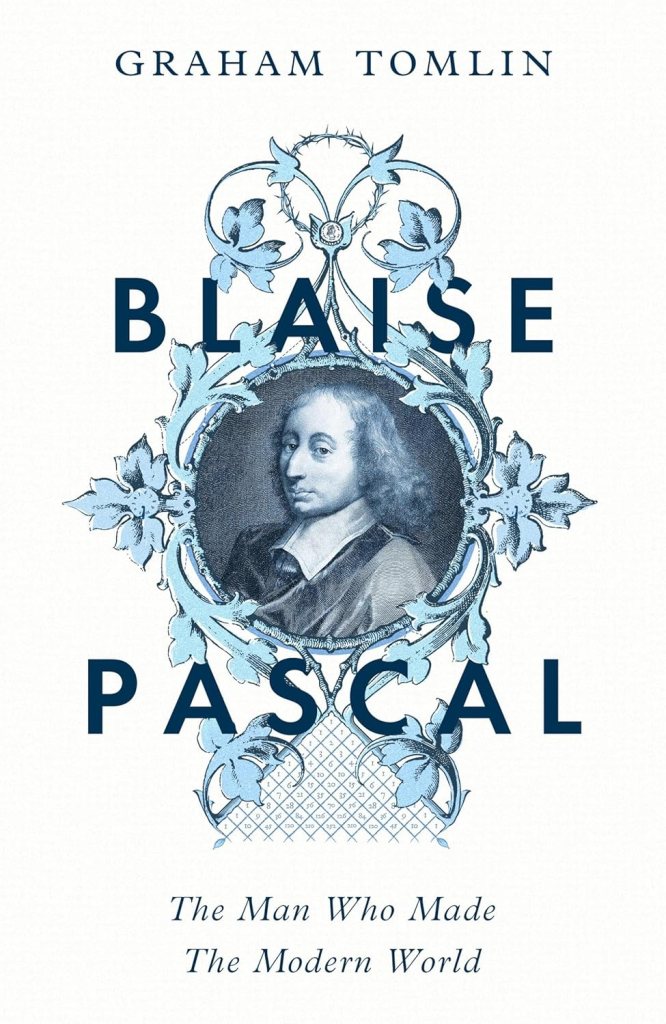
I have been listening to Pensées by Blaise Pascal, who has become a favorite philosopher, theologian, and thinker for me. I resonate with his sentiments about reason and intuition in particular. He was brilliant in science, mathematics, and theology – way ahead of his time. He lived during the initial headwind of the Enlightenment. He was a contemporary of René Descartes, yet he was able to remain objective. He wasn’t swept up in the current of the Enlightenment. He managed to remain aloof from it.
I am inspired to think of death today from my reading of Pensées. Death is the great equalizer. It will come to all of us. The longest-lived among human beings may live to be 110. Most of us will not see 100 … or even 90; and many of us will not see 80 or 70 or even 60. Try as we might, we do not control our fate. We will die, and that reality is inescapable.
Pascal talks about the people who distract themselves from the reality of death. I suppose it’s natural to want to ignore something that is as grim as death. We can’t add a day to our lives by worrying and being anxious about it. Yet, anxiety about death is also natural for the same reason – we dread it, but we can’t avoid it.
I imagine that my cat has never thought a day in its life about the fact that it will die, but I have rationality, consciousness, and awareness of myself that my cat does not seem to have, certainly not in the same measure. To the extent that we have that ability, it seems to me that ignoring the reality death that we can certainly grasp is to be something less than human. To ignore the reality of death is, therefore, beneath us. It denies the qualitative difference between us and other animals.
The proverbial deer standing frozen in the headlights of a hurtling vehicle has little idea of the imminent impact those headlights impend. Like the deer we might shut our minds off in the grim headlights of death … but we know better. The deer doesn’t know any better.
Not that we should have any pride in the fact that we have greater capacity than the other animals. It wasn’t anything we did. It simply is what it is.
Thus, to live into our capacity seems only fitting. Our anxiety about death is fitting for creatures with rationality, consciousness, and awareness of themselves.
I was first impressed about this humanly poignant characteristic – preoccupation with death – in college as an English Literature major. Death was the subject of many a novel, sonnet, and other forms of literature. Death is a common theme across the literary ages. The desire to escape the inevitability of death runs strong in creative and artistic minds living into the fullness of what it means to be human.
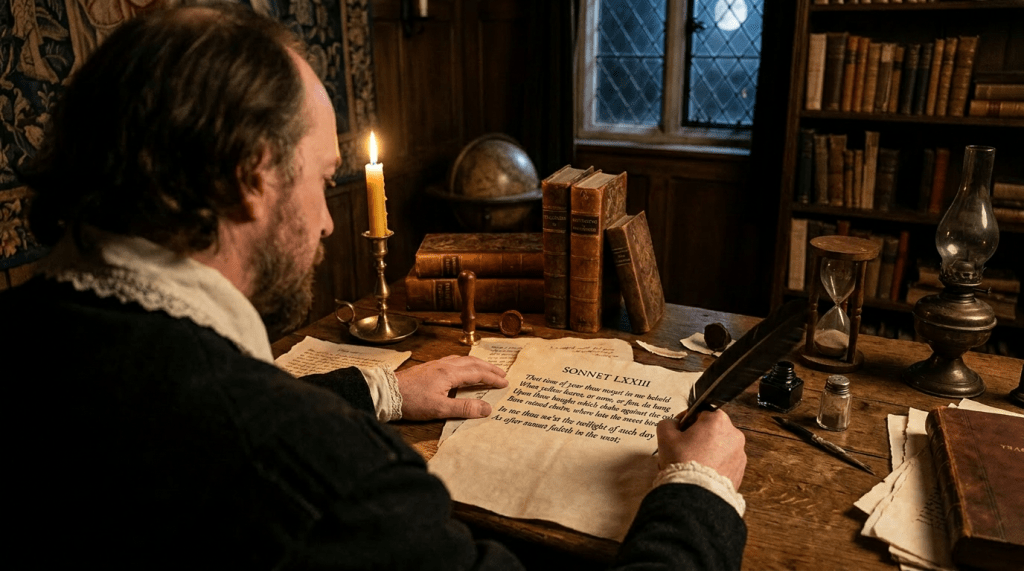
It was in a class on William Shakespeare, focusing on the sonnets, that the reality of the creative preoccupation about death crept into my own awareness. In that same time period, I must have been reading Ecclesiastes, because I associate Ecclesiastes 3:11 with that time in my life. Indeed, it has become my favorite verse in the Bible:
“For God has made everything beautiful in its time, and eternity has been set in the heart of man, but not so that he could see the beginning from the end.”
We do live in a world full of beauty, even if the world is also full of pain, struggle, and anxiety. The contrast between beauty and the ugliness of pain and death does not escape us. Ultimately, these things are painful reminders of our own finitude that we would rather not face.
To put it in biblical fashion, the reality is that we are like a mist. We are like a flower that blooms one day and dies the next. Like the writer of Ecclesiastes said, “Everything is meaningless” in a world like that.
In that sense, we are no better off than the animals. From dust we were born and to dust we will return. We end up in the ground just like they do.
Everything that we accomplish fades into other people’s memories when we die. Most if not all of those memories will long be forgotten in a few generations. The things we accumulate that do not rust or rot while we live will be left to rust or rot for someone else. In more modern, poetic terms, no one tows a Cadillac to the grave.
And yet, the very fact that we wrestle with the poignance of death is something that arouses hope. This was the realization I made in that class on Shakespeare.
Why do we even care? Why does it even enter our mind to be anxious about it? Why aren’t we, like my cat or a deer in the headlights, clueless about it? The fact that we think about it and long for a different reality suggests the possibility of such a reality.
Continue reading “Finding Hope in Death: Lessons from Ecclesiastes, Shakespeare, Pascal, and C.S. Lewis”