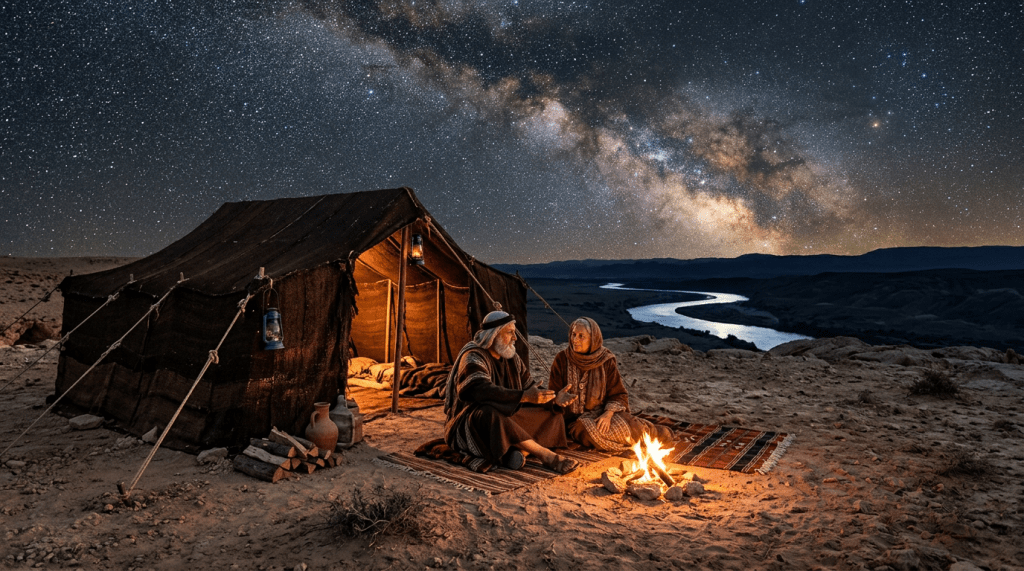
Abraham is called a Hebrew in Genesis 14:13, which is the first use of that term. The term means “one from beyond1.” Abraham was a man from beyond; he wasn’t from the land he lived in. God called him from beyond. Abraham was a foreigner, an alien, and a stranger in the land to which God called him.
When four kings in this land rose up and began to fight the people of Sodom and Gomorrah because they refused to give tribute, Abraham did not take sides. This is was the first war recorded in the Bible, and Abraham did not participate in it. (Genesis 14)
That fighting went on for over a decade, but Abraham did not take sides. It wasn’t until his nephew Lot was caught up in those warring factions that Abraham rose up with three hundred and eighteen men and went to battle to rescue Lot.
It wasn’t that Abraham was weak, unable, or unwilling to engage in the battle. The battles were not his to fight. He had a higher purpose and a higher calling. Until one member of his family was caught up in the fighting, Abraham remained on the sidelines.
The king of Sodom misunderstood Abraham’s involvement. He thought Abraham entered the war on the side of the king of Sodom, but when the king offered plunder to Abraham, Abraham refused. Abraham was not, in fact, aligned with the king of Sodom. Rescuing Lot meant effectively fighting on the side of Sodom, but Abraham was not aligned with Sodom. He was only aligned with the purpose of God.
This reminds me of Jacob when he encountered the angel of the Lord before entering the promised land. (Joshua 5:13-15) Joshua asked, “Are you for us or are you for them?” The angel said, “Neither.” Then the angel told him to go in the land and drive the people out.
It was God’s purpose to establish His people in that land at that time. God doesn’t align with our purposes; we must align with His.
In Genesis 15:13-16, God told Abram (later Abraham) that his descendants will be enslaved and oppressed in a foreign land for 400 years. God explains that they will not return to drive out the inhabitants until “the fourth generation,” because “the sin of the Amorites has not yet reached its full measure.”
God had declared it many years before it happened. But God was not aligning with the people of Israel, nor was he aligning against the people in the land. God was accomplishing a much greater plan.
God’s plans and purposes involved not just the descendants of Abraham, but all the nations of the earth. (Genesis 12:3: 18:18; and 22: 18) Three times when God told Abraham that his descendants would be be blessed that Abraham’s descendants would bless all the nations of the earth.
The land was not meant to be a permanent gift of God to a particular people. The earth and all that is in it is passing away. (Matthew 24:35; and 1 John 2:17) Abraham lived in the promised land as an alien and stranger. (Hebrews 11:9) God told Moses and the people that they would be foreigners and temporary residents in the land. (Leviticus 25:23)
Continue reading “People from Beyond”

