Pip: If you’ve ever wondered whether the Bible has anything to say about the immigration debate, Kevin Drendel has been following the threads of the biblical fabric on the theme of immigration since 2014 — and the answer turns out to be: quite a lot, and none of it comfortable.
Mara: This episode covers three territories: migration and exile in the biblical narrative, what it means to hold citizenship in heaven over any earthly nation, and how the command to love your neighbor keeps expanding past every boundary we try to draw around it.
Pip: Let’s start with the biblical record on refugees — because it turns out the shepherd-king himself was one.
David, Ruth, and the Refugee Thread in Scripture
Mara: The anchor post here traces a thread running from the exile of Adam and Eve all the way to Revelation 7:9 — and one vivid stop along the way is David, a man on the run from a king who wanted him dead.
Pip: David dodging spears, hiding in the wilderness, and eventually crossing into enemy Philistine territory — David was not always the quintessential insider, the golden boy of the faith. He was once a refugee.
Mara: In that dilemma, “David thought to himself, ‘One of these days I will be destroyed by the hand of Saul. The best thing I can do is to escape to the land of the Philistines. Then Saul will give up searching for me anywhere in Israel, and I will slip out of his hand.'”
Pip: Some commentators criticize that David’s move as a failure of faith. They have a point — but what would any of us would do if people in power were hunting us down.
Mara: That’s where the law-versus-grace tension surfaces. David’s asylum claim, by modern legal standards, would likely be denied — his persecution wasn’t tied to race, religion, or membership in a protected group. Many real refugees today face the same wall: fleeing cartels or generalized violence, with no qualifying category under current law – no clear path to safety, security, and a permanent home.
Pip: And the number of refugees in the world are not small. Over 123 million people displaced globally, 1 in every 67 people on earth, with the average refugee spending about 17 years inrefugee camps.
Mara: The post on Ruth develops the same thread from a different angle. Ruth is a Moabite — a foreigner — who embodies every category of vulnerability Scripture pairs together: widow, orphan, and foreigner. And God chose her story, not an Israelite’s, to sit at the center of His redemption narrative.
Pip: Ruth ends up in the royal lineage that runs straight to David and then to Jesus. The foreigner isn’t a footnote; she’s load-bearing.
Mara: The post on Moses and identity adds another layer. Moses names his firstborn son Gershom — meaning “foreigner in a foreign land” — because that is how he understood himself, raised Egyptian but Hebrew by birth. That outsider identity becomes the foundation for the Mosaic law’s repeated command: love the foreigner, because you were foreigners in Egypt.
Pip: And then People from Beyond closes the loop. Abraham himself is called a Hebrew, meaning “one from beyond” — a man who never owned the land he lived in – though it was the land God promised him – because he knew it was not his ultimate destination.
Mara: David says it plainly near the end of his life, in 1 Chronicles: “We are foreigners and strangers in your sight. Our days on earth are like a shadow.” The displacement isn’t incidental to the story. It is the story.
Pip: Which raises the question of what that identity is supposed to do to us — and that’s where citizenship comes in.
Heaven’s Citizens, Earth’s Sojourners
Mara: The post on foreigners, neighbors, and citizens opens with a single line from Leviticus 24: “You are to have the same law for the foreigner and the native-born.” The post observes that Law is not meant to be merely punitive — if the law binds the foreigner, the same law also shields the foreigner.
Pip: Equal protection as a theological claim, not just a civic one.
Mara: Philippians 3:20 puts it plainly: “Our citizenship is in heaven.” The post on Jubilee and kingdom identity traces how that reorientation was built into the Mosaic law from the start — the Jubilee instructions in Leviticus 25 remind Israel they are temporary dwellers – tenants, not owners, because “the land is mine,” says the Lord.
Pip: And the post on the New Testament theme of embracing citizenship in heaven makes it personal — through the story of a woman who grew up a Christian minority in India, felt the sting of foreignness again as an immigrant in the United States, and found in that double displacement a clarifying gift.
Mara: Her experience reframes minority status not as a problem to solve but as the natural condition of anyone whose primary allegiance is to a kingdom not of this world. The danger, as that post frames it, is belonging too comfortably to any earthly nation.
Pip: That’s the tension that keeps appearing in Scripture — and the neighbor question is where it gets practical.
The Boundary That Keeps Moving
Mara: The post on insider logic opens with the backstory to the Good Samaritan. Second Temple Jews read “love your neighbor as yourself” as applying to fellow Hebrews — the qualifying phrase “among your people” in Leviticus 19:18 gave them cover.
Pip: Sixteen verses later, the same chapter extends the same love to foreigners. They just stopped reading.
Mara: Jesus removes any remaining ambiguity in Matthew 5: “You have heard that it was said, ‘Love your neighbor and hate your enemy.’ But I tell you, love your enemies.” The post calls this the perfection of love — a progression that starts with self and family, moves outward to neighbors and strangers, and doesn’t stop until it reaches enemies.
Pip: Our natural inclination is to draw the circle tight. The Bible keeps redrawing it larger.
Mara: And that’s the throughline across everything here — from David in the wilderness to Ruth in the fields to the command to love without limit. The question isn’t whether God cares about the foreigner. The question is whether we’re reading closely enough to notice.
Pip: Displacement, identity, the boundary of neighbor love — these aren’t separate topics. They’re the same argument made from every angle of Scripture.
Mara: And the posts keep returning to the same pressure point: how we treat the vulnerable stranger is a litmus test for who we actually think we are before God. This theme runs throughout the Bible, from Adam and Eve to Revelation.
Pip: More to come from Navigating by Faith — next time, we’ll see where the thread leads.
Abraham is called a Hebrew in Genesis 14:13, which is the first use of that term. The term means “one from beyond1.” Abraham was a man from beyond; he wasn’t from the land he lived in. God called him from beyond. Abraham was a foreigner, an alien, and a stranger in the land to which God called him.
When four kings in this land rose up and began to fight the people of Sodom and Gomorrah because they refused to give tribute, Abraham did not take sides. This is was the first war recorded in the Bible, and Abraham did not participate in it. (Genesis 14)
That fighting went on for over a decade, but Abraham did not take sides. It wasn’t until his nephew Lot was caught up in those warring factions that Abraham rose up with three hundred and eighteen men and went to battle to rescue Lot.
It wasn’t that Abraham was weak, unable, or unwilling to engage in the battle. The battles were not his to fight. He had a higher purpose and a higher calling. Until one member of his family was caught up in the fighting, Abraham remained on the sidelines.
The king of Sodom misunderstood Abraham’s involvement. He thought Abraham entered the war on the side of the king of Sodom, but when the king offered plunder to Abraham, Abraham refused. Abraham was not, in fact, aligned with the king of Sodom. Rescuing Lot meant effectively fighting on the side of Sodom, but Abraham was not aligned with Sodom. He was only aligned with the purpose of God.
This reminds me of Jacob when he encountered the angel of the Lord before entering the promised land. (Joshua 5:13-15) Joshua asked, “Are you for us or are you for them?” The angel said, “Neither.” Then the angel told him to go in the land and drive the people out.
It was God’s purpose to establish His people in that land at that time. God doesn’t align with our purposes; we must align with His.
In Genesis 15:13-16, God told Abram (later Abraham) that his descendants will be enslaved and oppressed in a foreign land for 400 years. God explains that they will not return to drive out the inhabitants until “the fourth generation,” because “the sin of the Amorites has not yet reached its full measure.”
God had declared it many years before it happened. But God was not aligning with the people of Israel, nor was he aligning against the people in the land. God was accomplishing a much greater plan.
God’s plans and purposes involved not just the descendants of Abraham, but all the nations of the earth. (Genesis 12:3: 18:18; and 22: 18) Three times when God told Abraham that his descendants would be be blessed that Abraham’s descendants would bless all the nations of the earth.
The land was not meant to be a permanent gift of God to a particular people. The earth and all that is in it is passing away. (Matthew 24:35; and 1 John 2:17) Abraham lived in the promised land as an alien and stranger. (Hebrews 11:9) God told Moses and the people that they would be foreigners and temporary residents in the land. (Leviticus 25:23)
I am increasingly impressed by the importance of understanding the arc and sweep of Scripture from Genesis to Revelation. Though the Bible is a collection of many writings by many authors compiled over many centuries, it is a single, finely woven tapestry rich and brilliant in its nuance and theme.
Of course, a tapestry makes no sense if we do not view it from the right perspective. From the back side of the tapestry it appears like a jumbled mess of tangled threads.
The full beauty and design of the tapestry remains a mystery until it is viewed from the right perspective. Only then can we understand and appreciate it.
We would have no sense of the beauty or theme of the tapestry if we only saw it from the back side. Because the tapestry of thole Bible is so grand, we can also miss the big picture if we study it only as through a microscope or a magnifying glass.
We need to step back often and consider the trajectory, arc, and sweep of Scripture – from beginning to end – to make sense of the individual threads that may not appear to make sense in isolation.
From the time of Abraham, Isaac, and Jacob onward, the Bible seems to be all about these patriarchs and their descendants to whom God promised a land. For over 400 years Abraham’s descendants looked forward to taking possession of this land. That time was spent in captivity in Egypt, where the prospects of God’s promise grew dim and seemed unlikely until God sent Moses.
Led by Joshua, the people finally enter into the land after another 40 years of wandering in the wilderness with Moses. They drive out the inhabitants, settle in, and live there almost a millennia through cycles of judges and kings. It seems all about this land and its people. The theme of God’s covenant to give his people the promised land and the people’s covenant to keep God’s law dominates the portion of Scripture we call the Old Testament.
The land, the great leaders, the Law seem to define their destination. Again and again, however, those things prove to be provisional. The leaders fail. The Law fails because they seem wholly incapable of keeping it. The very land, itself, seems to fail them.
When we step back, we see that these things that seem to be the main point of the whole story actually point beyond themselves. They expose something deeper. They give way to something infinitely greater.
One of those themes that gets buried and lost in the jumble of threads is Jubilee. The Jubilee instructions are embedded in the middle of the Law in Leviticus 25. They are God’s specific instructions on how Israel was to live in the land into which God was leading them. That they never actually carried out the Jubilee instructions may account for us failing to recognize their importance in the tapestry of God’s Word.
The Radical Vision of Jubilee
In Leviticus 25, God established the Year of Jubilee—a societal reset unlike anything in the ancient world. The Year of Jubilee was to be observed after seven periods of seven years. In the 50th year, the Year of Jubilee, the land was to be returned to its original owners. Debts were to be released. Indentured servants were to be set free.
The Year of Jubilee was to be observed every 50 years. Every fifty years was to be a reset.These were God’s instructions and the reason for these instructions was clearly laid out:
“The land is mine” sayeth the LORD, “and you are strangers and sojourners in it.“
(Leviticus 25:23)
Let that sink in….. God never intended Israel to own the land.
Even today many people consider Israel to be the land God promised his people for eternity. Even today we think it is all about the land.
Jubilee appears to us to be an economic policy. A cringeworthy redistribution of wealth that might offend modern, conservative sensibilities. But underneath it lies a theological theme – God’s design – that reshapes everything when we see it:
God wanted them to live in the land, to work the land, to benefit from the land, but only and always as temporary dwellers – as foreigners. They were not to call the land home. They were never meant to treat the land as their own – as owners.
The write of Hebrews understood this, and commended Abraham for living in the land of promise “as in a foreign land, living in tents.” (Hebrews 11:9)
We can understand why, the writer of Hebrews commended the people of faith who “acknowledged that they were strangers and exiles on the earth.” (Heb. 11:13) They were “seeking a homeland … a better country … a heavenly one.” (Hebrews 11:15-16) Why? Because they understood the promised land wasn’t their final destination!
Jubilee is not about fairness, or economics, or socialism—it is about something much more transcendent. It is about God’s eternal plan for the heavens and the earth and all the people in it. It is a reminder to Israel (and us) of who they (we) are in relation to God. It is a reminder that to them (and to us) this world is not all there is. God has bigger plans!
A People Shaped by identity
Though God promised His covenant people a land, their identity as God’s people was the most important thing. God’s vision for them extends beyond land into identity as His people. The Israelites were not meant to identify with the land, but with God.
They were to identity as God’s people living temporarily in a land God gave them, and they were to be a light to the nations. From the days of Abraham, God planned “to bless all the nations” through his descendants. (Gen. 12:3; 18:18; 22:18; 26:4; & 28:14) They were to be a people God called out from among the nations to covenant with Him. These people were intended to identify with God’s greater purpose in the world – which was for all the nations.
Israel is commanded to care for the stranger, the poor, and the landless in the land of God’s promise—not merely as an act of generosity, but as an expression of memory and identity:
“You were strangers in Egypt.”
God wanted them to remember who (and whose) they were. God rescued and redeemed them for Himself and for His purposes. Their story was always meant to shape their community and society into what God wanted them to be. God wanted to establish His people in His land to carry out His eternal plans for all the nations – for all people in the world.
They were not to be a people defined by power, dominance or possession, but by dependence, deliverance, provision, and protection of others – just as God delivered them, provided for them, and protected them. God’s instructions were structured to prevent them from becoming the kind of nation under which they once suffered – a nation like all the other nations around them. They were to be different, holy, and set apart for God’s greater purpose
A very good friend and sister in Christ recently gave a devotional presentation to a faith-based non-profit Board of which I am a member. She reflected on her experience of being a minority as a Christian growing up in India, where less than two percent (2%) of the population is “Christian” (including Catholics, Jehovah Witnesses, and Mormons).
Her poignant story of personal struggle with minority status and finding blessing in it, hits home with me. I have never felt like a minority in the visceral way that she experienced it. The blessing she found through Scripture in embracing her minority status is a lesson for all believers.
Being a Christian in a Non-Christian World
My friend struggled with her minority status as a Christian in India. She was ridiculed, teased, and looked down upon. By God’s grace, she felt her divine calling as a child of God, but her identity as a Christian came with consequences.
The consequences proved even more difficult for her sister, who applied to medical school. The admissions officer said she must recant her faith to be approved for assignment to any med school. She refused, and she gave up her dream of becoming a physician. Minority status in a majority world as consequences.
Being a Foreigner in the United States
When she emigrated to the United States she felt the joy of being a part of the Christian majority. Over time, however, the struggle with minority status began to resurface again. She stood out because of her ethnicity, accent, and cultural differences. She realized, “I am a minority within my Christian majority realm.”
This was a very personal struggle for her because of her childhood experience in India. She thought that moving to American where Christians are in the majority would be different. Instead, she felt the sting of minority status. Though she was a Christian in an ostensibly Christian country, she was still an outsider and a foreigner because of her nationality, ethnicity, and cultural differences.
Being a Foreigner in the World
She shared that God met her in the struggle and confronted her with His Word. What she learned through this process was sobering for her, and it is a lesson for those of us who have always lived in majority status in a majority Christian nation.
She began to realize what a privilege it is to be a minority because we are called as believers out of the world where wide is the path that leads to destruction. We are set apart by God from the world, which means we are called to minority status in the world.
Narrow is the path that leads to life. Minority status is the Christian experience.
The Privilege of Minority Status
As she focused on these things God was showing her in His Word, she became grateful for her experience as a Christian in a majority non-Christian country. This experience gave her perspective that American Christians lack.
The story of Gladys and Nelson Gonzalez, an Orange County couple who were deported to Colombia after living in the United States for 35 years, raises concerns about the complexities of U.S. immigration law and the human cost of its enforcement. The Gonzalez’s case exposes the tension between the rule of law and the values of compassion and mercy, values that lie at the heart of Judeo-Christian ethic.
Gladys and Nelson Gonzalez fled Colombia in 1989, seeking asylum from violence, drugs, corruption, and instability. According to news reports, the couple hired attorneys to help them, but those attorneys were eventually disbarred. (See Fox News LA) The news reports don’t provide details on the disbarment or on the long and winding process that came to an impasse in 2021.
During this time Nelson Gonzalez (59) found work in a laboratory as a phlebotomist, and Gladys (55) remained home to care for three daughters who were born and raised here: Gabby (23), Stephanie (27), and Jessica (33). They paid federal and state income taxes for 35 years. They paid into a Social Security and Medicare system that would never benefit them. If they owned a home, they paid real estate taxes, and they paid sales taxes, gasoline taxes, etc. over that time period.
Gladys and Nelson Gonzalez regularly checked in with ICE, and they were granted extensions. They didn’t hide, and they faithfully stayed in contact. Gladys had just been granted another extension when ICE showed up for what seemed like a routine check in, and everything changed. As reported by the local news outlet, KTLA:
“They were put into handcuffs by their wrists and ankles and treated as criminals before getting to these detention centers,” Stephanie Gonzalez told KTLA. “All they said is they extended their stay, even though every year they’ve had permission to be here and they’re law-abiding citizens who show up and are doing their duty to check in with immigration and say, ‘Hey I’m here. I’m not hiding or doing anything wrong.’ Then they just arrested them like that.”
A spokesperson for U.S. Immigration and Customs Enforcement told The Orange County Register simply that the couple had “exhausted all legal options to remain in the U.S. between March 2000 and August 2021,” and they were in violation of immigration law. The news reports don’t explain the details of the legal process or why the attorneys were disbarred.
As an attorney myself, I can say with some degree of confidence that the attorneys they used were not good attorneys. Attorneys don’t get disbarred over mere incompetence, though attorneys who get disbarred are often incompetent, too. Attorneys get disbarred for taking their clients money and doing nothing, missing deadlines and court dates, embezzling client funds, violating court orders and other serious professional misconduct.
Immigrants like the Gonzalezes who leave their home countries because of desperate conditions usually have meager resources. Many of them spend their life savings just to get here. They seek asylum because they don’t know any other way forward, but proving eligibility for asylum is often very difficult. Without a competent attorney, the path is fraught with danger.
To be eligible for asylum, a person must be present in the United States. Such a person, by definition, doesn’t have legal status (yet), but petitioning for asylum requires a person to be present in the US.
Therefore, they must come here at the mercy of the process. They risk everything to seek asylum. It is the desperate path to legal status.
Eligibility for asylum requires evidence of persecution or “a well-grounded fear of future persecution“ from the government of their country of origin or from a group the government is unwilling or unable to control. The persecution must also be based on race, gender, nationality, political opinion, or membership in a particular social group.
For most asylum seekers, the only evidence they have is personal testimony. Other evidence is left behind in the country of origin. Most people without resources don’t have access to medical records of injuries or psychological trauma, police reports, court documents, or other official records that remain in their home country. The witnesses to their trauma are also not present to testify for them.
Attorneys charge upwards of $500 an hour. Costs can run into the thousands, but most asylum seekers have limited resources. They spend spent their life savings just to get here, often falling victim to the coyotes who prey on the vulnerable.
The immigration system provides no help. Asylum seekers do not have a right to attorney, so many people try to navigate the unfamiliar bureaucratic maze alone. Others are exploited by people who don’t know what they are doing and/or are just in it for the money.
People who are “only” escaping violence, corruption, poverty, and drug culture don’t qualify for asylum, even though no person I know would want to raise a child in such an environment. Run-of-the-mill desperate circumstances do not qualify a person for asylum. A person must be persecuted or face a well-grounded threat of persecution based on race, gender, nationality, political opinion, or membership in a particular social group to qualify for asylum.
People who manage to escape actual persecution or threats of persecution without injury maybe found to have insufficient proof. A judge may deny asylum because they suffered no harm or because the judge didn’t find their testimony credible enough. Language barriers don’t help.
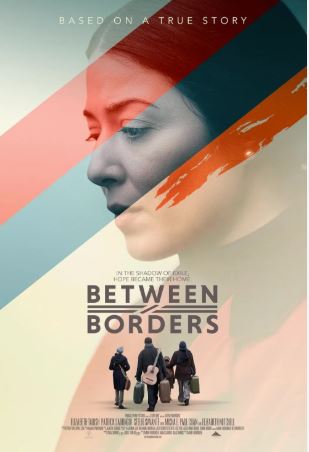
The process is complex and can take years, and everything hangs on one determination. The movie, Between Borders, streaming now on Amazon. etc. does a good job of depicting the problems of proving eligibility, even by people who qualify. The outcome of the movie is heartwarming, but that outcome is nothing but fiction for many asylum seekers.
If a judge denies the petition for asylum, deportation is the result. An appeal is possible, but an appellate judge will only reverse the decision (generally) if the trial judge didn’t follow the process or made some other technical error. Appellate judges almost never overturn a trial judge’s factual determination. Handling an appeal, is a technical and unforgiving process, and many people fail because they do not understand the process.
You can theoretically obtain an order withholding removal, but only if you prove “certain harm” would occur if you return to your home country. If your couldn’t convince the trial judge of a “well-grounded fear of persecution in the future”, you aren’t likely to prove “certain harm” on appeal after asylum is denied.
Other countries won’t take you, so must go back to your home country. Typically, you must wait ten years or win the lottery before you can come back and try again.
Other paths to legal status exist, but they require luck or years of planning and legal resources. Without a sponsor (who generally must be a parent or spouse and have sufficient resources), a person must rely on the “Green Card Lottery.”
Only people from eligible countries (which change from year to year) can apply for the Green Card Lottery. “Winners” are chosen at random. Millions apply for the lottery each year, but only 55,000 visas are awarded. My research indicates that the number of lottery applicants has exceeds 22 million, depending on the year. At 22,000,000 applicants, one quarter of one percent (0.25%) of the applicants obtain a visa this way.
The details of the Gonzalez case are not reported in the articles I read. All we know is that, despite their efforts and the appeals they filed, they were not granted legal status. Despite that, they had been granted extensions, and they were given an extension immediately before they were suddenly and summarily deported.
Their case highlights a fundamental problem with current immigration law: it is inflexible and lacks common sense. It is cumbersome, bureaucratic, and full of pitfalls. Without good legal counsel at the start, the an immigrant is often unable to navigate the course well.
They system also fails to account for the human reality of people who come here seeking asylum. They don’t typically have resources, or they would try another way. They don’t have knowledge of the system. They have to pass a gauntlet of crooks who only want to take advantage of them.
If they make it into the country, the process can drag on. Even for 35 years. Meanwhile, people like Gladys and Nelson Gonzalez have children; they find jobs; they pay taxes; and they become productive members of American society. This is where common sense prevail.
Gladys and Nelson Gonzalez had no notice they would be deported. They had just received an extension when ICE showed up for what they thought was a routine check in. Instead, they were handcuffed and shackled in front of their children and grandson and hauled off to a prison in Louisiana.
The Gonzalez story is not unique. Many immigrants live in the shadows, contributing to their communities, paying taxes, and raising families, yet they remain vulnerable to deportation due to complications and missteps with the process to obtain legal status. We don’t usually see their faces, and we don’t usually hear their stories, other than the occasional news report with minimal facts and an impersonal tone.
I met a young woman a number of years ago who volunteered in the legal clinic I run. She dreamed of going to law school from a young age. She is one of the most exceptional people I have ever met, so I have maintained contact with her.
She explained that her parents traveled fluidly back and forth from Mexico to the US for stints of work. They didn’t need a passport to cross the border at that time, so they came and went to obtain temporary work and return home.
She was born in Mexico. Her parents were in the US when 9/11 happened. They were caught on this side of the border when travel restrictions were imposed, and they couldn’t foresee how things would change. They had a son; they continued to work, and to wait, and to hope things would go back to the way they were; and years went by.
Her father is entrepreneurial and started several businesses. The IRS was happy to give him a tax number and to receive his taxes. He employed many people, and he became a mentor to other would-be business owners.
This young woman knows no other home but the US. She has no connections in her home country. She is as Americanized as you and me, but she grew up under a dark cloud with the specter of deportation hanging over her head.
She knew she had to keep her head down. She could not call negative attention to herself. She excelled in school with a purpose, knowing that she would never qualify for a scholarship. Her parents would never receive Social Security or Medicare, though they paid into it for decades.
She graduated high school in three years with a perfect GPA, and she was on a pace to graduate from college in three years with a perfect GPA when I met her. Since that time she has graduated from college, and she graduated from law school.
In Law School, she worked in immigration clinics. She landed a job with a high-end estate planning law firm, but her heart was in doing immigration work. Even though she took a significant pay cut, she left the posh position and became an immigration attorney.
She is a “Dreamer” – children born out of the country who are raised here. She has married a US citizen, but the immigration landscape is dangerously potted with landmines, especially now. Even birthright citizenship (which is in the US Constitution) is up in the air. Her parents still live under a cloud of deportation that grows darker with each passing day.
I write this blog mainly for Christians and people who sense Jesus knocking at their door. I find myself increasingly writing to the Church in America, and specifically to my tribe – evangelicals – in recent years as the polarizing vortex of politics is blowing the country apart. Evangelicals and other segments of the American Church are not immune from the polarizing forces.
I might have remained in my own ignorance of God’s heart for the stranger if I had not decided one day in 2014 (during the Obama administration) to do a deep dive into Scripture to develop a biblical view of immigration. I realized at that time that I didn’t have a biblical view of immigration as I struggled to find solid footing in the gale of the political winds at that time.
Since then, the gale has increased to hurricane force winds. If you are a Christian, and you don’t have a solid, biblical view of immigration, I implore you to do your own deep dive. A study around the time I wrote my first article indicated that only 13% of Evangelicals said the Bible is the source of their views on immigration. My own study changed my mind in 2014.
If you do your own reading of Scripture, you may not come out where I have, but I believe every Christian who takes his/her faith seriously should ground their views solidly in the Bible first, and not in the politics, culture wars, and social media influences of the day. If you want to consider what I have I found focusing on “strangers” and “sojourners” in the Bible – words in the Bible that describe people we call immigrants today – a link is in the image below to the articles I have written describing what I found.