The Book of Ruth: The Immigrant at the Center of God’s Redemption Story

Ruth pulses with the theme of redemption that includes foreigners in God’s redemptive plans

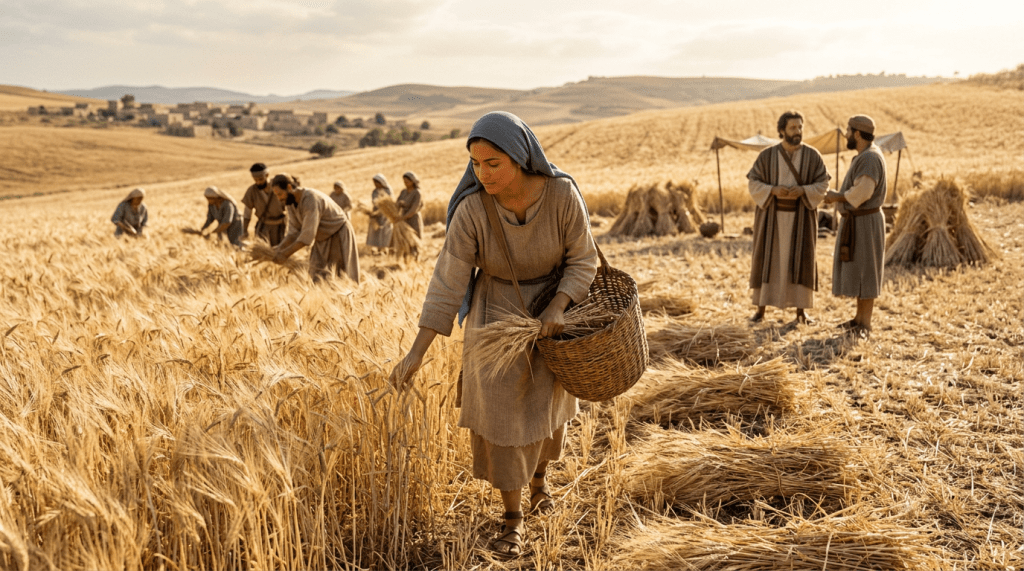
Group of people harvesting golden wheat in a field with baskets

After the downward moral spiral of the Book of Judges that ends with a shockingly horrific story about the Levite’s concubine, comes the Book of Ruth. Ruth follows Judges in the Old Testament, but the story takes place during the time of the judges, and Judges ends with a statement that characterizes the trajectory of the entire book:


In those days Israel had no king; everyone did as they saw fit.”

Judges 21:25


Despite the suggestion in this statement that kings might turn the people around from their waywardness, it doesn’t happen. The nation of Israel became polarized and divided after only three kings, and the downward moral cycle of a divided Israel continues through many generations of kings until God’s judgment on them leaves them exiled in Babylon.

We are hard pressed to find any judge in the day of the judges who is without blemish. Samson and Gideon are two of the most memorable judges, but Samson is undone by his lust for women, and Gideon progresses from a fearful doubter, to an unlikely hero, to an idolater who turns Israel from God.

Deborah appears in contrast as a strong and morally unyielding judge, though she is a woman, and her importance would have been discounted by patriarchal readers. (Judges 4-5) Ironically perhaps, another woman is the one shining, ray of hope in the time of the book of Judges – Ruth. Her story embodies the central theme of all Scripture – Redemption.

Ruth and Boaz Are Distinguished by Their Character

We might be surprised to note that Ruth is an ordinary woman. She isn’t even an Israelite. She is a Moabite (an immigrant in Israel), who was married to one of the sons of Naomi. We don’t even know which one. The Bible doesn’t tell us.

The men in this story take a back seat to the women. The book opens with the introduction of Elimelek. All we know about Elimelek, though, is that he is from the tribe of Judah and was living in Bethlehem before he leaves with his wife, Naomi, for Moab because of famine in the land.

Naomi’s husband (Elimelek) dies in Moab. Naomi’s two sons marry Moabite women, Ruth and Orpah. Then they die. All of this happens in the first five (5) verses of the book. The rest of the story focuses on the women – and Boaz, who becomes a kinsman redeemer.

Ruth could have gone back to her home and her clan but she chose to remain faithful to Naomi – a widow in her old age. She famously made this covenant with Naomi:


Where you go I will go, and where you stay I will stay. Your people will be my people and your God my God. Where you die I will die, and there I will be buried. May the Lord deal with me, be it ever so severely, if even death separates you and me.”

Ruth 1:16-17


There is nothing noteworthy about Ruth other than her tender faithfulness to distinguish her as anything but ordinary.

Boaz, the hero of the story, also has no apparent distinguishing feature – except for the way he carries himself. He is not a leader in Israel. He is not even the leader of his own family group. He is distinguished solely by his faithfulness to the spirit of the law, and his faithfulness as a kinsman redeemer anticipates the Great Redeemer himself – Jesus Christ.

Ruth is an Orphan, a Widow, and a Foreigner

The action in the story begins when Naomi hears that God has provided food in the land of Judah. Naomi had immigrated to Moab. Now that the famine was over and her husband and sons were dead, she decides to go back to home.

Naomi begins to set out for Judah, but she stops to invite her daughters-in-law to go back to their “mother’s home.” (Ruth 1:8) The offer to allow her daughters-in-law to go back to their mother’s home suggests they were fatherless.

Naomi was not rejecting them. She was offering them a way out. They would be foreigners in Israel, and widows, and fatherless – meaning they would have no clan to protect them and provide for them. Yet, Ruth decides to remain faithful to her mother-in-law’s and stick by her side

That Ruth a widow and a foreigner and probably an orphan is significant. God could have used the story of any Israelite orphan and widow to tell this story, but he chose a foreigner – an immigrant.

That point should not be lost on us. Jesus makes the same point in Luke 4:24-27, and the people in his hometown synagogue were so incensed by it that they sought to throw him off cliff. God is serious about blessing all the nations, even if His people are not.

God’s Care and Concern for the Foreigner

If Ruth was fatherless, as the text seems to suggest, she embodied all the categories of vulnerable people most often paired together in Scripture: orphan, widow, and foreigner. (Ex. 22:1-2; Deut. 24:17, 27:19; Jer. 7:6, 22:3; and Zech. 7:10) The poor and the needy are sometimes included in this list, but they are general terms. Orphans, widows, and foreigners were the people most likely to be poor and needy in Ancient Near Eastern communities because they were left on the fringes of patriarchal clans that were the lifeblood, support, and protection of people in that culture.

The Theme of Migration/Immigration in Ruth

The story of Ruth is set in the context of migration. The book opens with Naomi and her two sons migrating from Judah to Moab because of a famine. We might think of the great potato famine in Ireland that caused many Irish people to migrate to the United States. Whether it’s famine, war, oppression, or persecution, people migrate because of hardship. They always have, and they always will.

We might be tempted to judge Naomi and her sons for abandoning their heritage in Israel for greener pastures in Moab. But we don’t know their circumstances other than the famine. It’s easy and natural to judge people, but the Book of Ruth does not provide any sense that judgment is due. And if they have been in any way unfaithful to their own country, their own heritage, and to God, it is clearly forgiven in the context of the story.

Naomi’s sons marry Moabite women and settle down. Before they could have any children, one son dies and then the other son dies. Now, Naomi and her two daughters are all widows and childless – the people most likely to be poor and vulnerable.

Whatever benefits they thought they might have had in Moab, no nation in the ancient Near East had laws like the nation of Israel that protected the poor and the vulnerable like the Mosaic law. God required His people to share the harvest with widows, orphans, and foreigners by allowing them to glean from the edges of the fields. (Deut. 14:28-29; 24:19-21; & 26:12-13) The Jubilee instructions in Leviticus 25 incorporated protections for these vulnerable people groups in God’s instruction on how the Israelites were to live in the land.

Ruth Pulses with the Theme of Redemption

The leaders among the Israelites, as represented by the judges, were increasingly unfaithful to the Law, idolatrous, and unjust. In Ruth, we find ordinary people of God who are faithful to others, obedient to His commands, and living out the story of redemption that characterizes the arc and sweep of Scripture, from beginning to end.

The Book of Ruth pulses with the great theme of redemption and God’s intention to include the nations in God’s redemptive plans. God’s promise to Abraham to bless all the nations of the earth through Abraham’s descendants is repeated many times for emphasis (Gen. 12:2-3; 17:4; 22:17-18; 26:43-4; 28:13-14), and it isn’t forgotten. The drumbeat continued, though faint it may seem, as Israel and Judah wandered from the Law: Psalm 72:17; Isaiah 2:2-3; 49:6; 56-6-7; Micah 4:1-2.

From the the fall of Adam and Eve in the Garden (Gen. 2-3) to the gathering of people from every nation, tribe, and tongue before the throne of Jesus (Rev. 7:9), all of Scripture is one great redemption story. Ruth sits in the middle of that story foreshadowing the climactic act of redemption and blessing to all the nations – Christ and him crucified on the cross for our sins and the sins of the world.

Ruth the Moabite – the foreigner and outsider – is embedded by God into Israel’s royal lineage. From her womb flows Obed, the father of Jesse, the father of King David. (Ruth 4:18-22) The Gospel of Mathew traces her royal lineage to Jesus. (Matthew 1:5-6)

Boaz became a “kinsman redeemer” for Ruth when he married her; Jesus became the Great Redeemer of all mankind, marrying all who would believe in him to himself.

The kinsmen redeemer, is an archetype of Christ. Redemption, and the role of the foreigner in God’s redemptive plan for Israel and all the nations, are key themes in the Bible that coalesce in the Book of Ruth.
Who Wanted to Throw Jesus Off a Cliff? What Provoked that Reaction, and What It Might Say about Us

Jesus provoked the response that is in all of our hearts

In Luke four, Jesus announced his public ministry in his hometown synagogue with these words:


The spirit is on me because he has anointed me to proclaim good news to the poor. He has sent me to proclaim freedom for the prisoners and recovery of sight for the blind, to set the oppressed free, to proclaim the year of the Lord’s favor.”

Luke 4:18-19


Good news to the poor, freedom for prisoners, and freedom for the oppressed echoes Isaiah 61. “[T]he year of the Lord’s favor” echoes Leviticus 25, where Moses passed on the jubilee instructions given by the LORD to the LORD’s people.

Jesus was saying that these things foretold by Isaiah and the Jubilee instructions from Moses were fulfilled in him. Most of us are familiar with the way that many of the prophecies in Isaiah were fulfilled in Jesus, but we may not appreciate how Leviticus 25 takes on special significance – and controversy – in the life and ministry of Jesus.

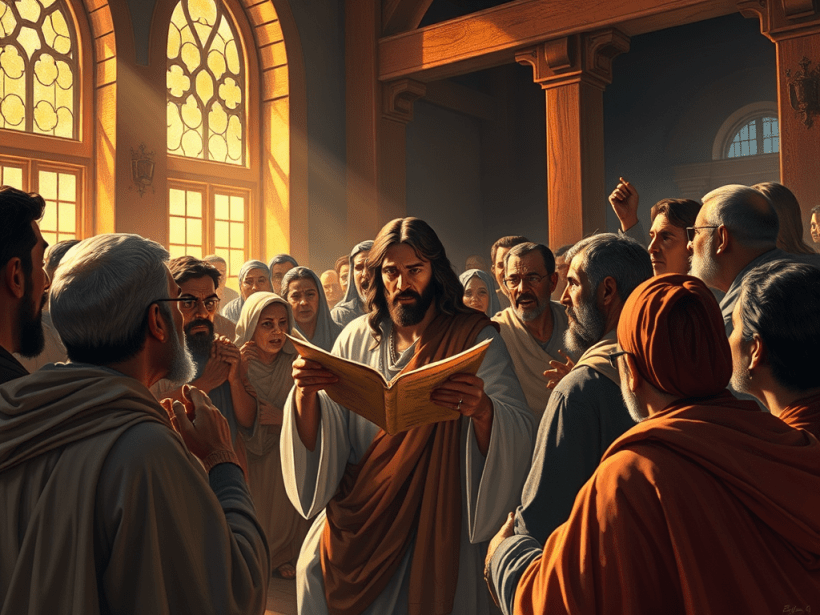
Jesus announced his public ministry in a dramatic way in his hometown synagogue when he asked for the Isaiah scroll, opened it, read the words quoted above, and sat down. The people in the synagogue were initially “amazed at the gracious words” Jesus spoke. (Luke 4:22) By the end of the short exchange that occurred after that, the people wanted to throw Jesus off a cliff. (Luke 4:28-29) What happened?

The words of Jesus that provoked his hometown people to anger were these:


“‘Truly I tell you,’ he continued, ‘No prophet is accepted in his hometown. I assure you that there were many widows in Israel in Elijah’s time, when the sky was shut for three and a half years and there was a severe famine throughout the land. Yet Elijah was not sent to any of them, but to a widow in Zarephath in the region of Sidon. And there were many in Israel with leprosy in the time of Elisha the prophet, yet not one of them was cleansed—only Naaman the Syrian.'”

Luke 4:24-27


Why did these two stories provoke the people to anger? Maybe the better question (the one we might not want to ask) is whether we are much different than they were?

The tension that played out in that Galilean synagogue when Jesus announced his ministry presages our modern reality 2000 years later. We still have a difficult time with the instructions, intentions and long-term plans that God announced when He told Abram that all the nations of the earth would be blessed through his descendants.

Today, I want to review some relevant provisions in Isaiah 61 and Leviticus 25 to explore why that reference did not sit well with God’s people. It wasn’t the references so much as the stories of Elijah and Elisha that he connected to them. Those stories – and what they suggest – may still not resonate well.

Continue reading “Who Wanted to Throw Jesus Off a Cliff? What Provoked that Reaction, and What It Might Say about Us”

The Under-Emphasized Significance of Leviticus 25 in the Ministry of Jesus and Its Importance for Us

The Israelites did not follow the Jubilee instructions


For at least 7 years, I have been drawn to the passage in Luke 4 where Jesus gives perhaps the earliest description of his public ministry. Jesus introduced his intentions by reading a select passage from the Isaiah scroll, rolled it up, sat down, and announced, “Today this scripture is fulfilled in your hearing.” (Luke 4:21) These were the words that he read:


The Spirit of the Lord is on me,
    because he has anointed me
    to proclaim good news to the poor.
He has sent me to proclaim freedom for the prisoners
    and recovery of sight for the blind,
to set the oppressed free,
    to proclaim the year of the Lord’s favor
.

Luke 4:18-19


Immediately after this announcement, Jesus began demonstrating in Galilee what he came to do – teaching with authority (Luke 4:31-32); setting people free from demonic spirits (Luke 4:33-35); and healing the sick (Luke 4:36-40). At the end of this flurry of divine action, Jesus said, “I must proclaim the good news of the kingdom of God to the other towns also, because that is why I was sent.” (Luke 4:43) In this statement, he clarified that the good news he came to proclaim is the coming of the “kingdom of God.”

This short passage from Isaiah 61 that recalls the Year of the Lord’s Favor (Jubilee) focuses our attention back on Leviticus 25, which is the framework for the communal life God desired His people to embrace when they settled into the land of God’s promise.

The context of these words in Isaiah 61 remind of us the significance of these words that defined the ministry of Jesus and the Jubilee principles that characterized his life and message. When Jesus quoted from Isaiah 61 in the synagogue, he was incorporating God’s great plan and purpose into the announcement of his ministry.

Isaiah 61 cannot be understood apart from Isaiah 59, which recalls the iniquities of the people that separated them from God and the blood that was on their hands. (Is. 59:1-2) They abandoned the way of peace and justice. (Is 59:8-9) They walked in darkness. (Is. 59:10) No one was available to intervene. (Is. 59:15-16), so God said He would step in (Is. 59:17) with a Redeemer for those who would repent. (Is. 59:20)

Isaiah 60 announces God’s plan of redemption: “arise, shine, for your light has come.” It presages that “nations will come to your light.” (Is 60:1:3) Isaiah 60:4-16 announces God’s intention that all the nations will come to Israel “bringing your [Israel’s] children from afar” (v.9), and “foreigners will rebuild your walls” (v.10) , and “you will drink the milk of nations and be nursed….” (v.16) Isaiah 60:17-22 promises peace, no more violence, everlasting light, and righteousness.

In that context, Jesus read the opening verses of Isaiah 61 – announcing that the time had come for proclaiming good news to the poor, binding up the brokenhearted, proclaiming freedom to captives and release from darkness for prisoners, and proclaiming the year of the Lord’s favor.

Significantly, the Jesus left out the concluding words: “and the day of vengeance of our God….”

In doing that, Jesus signaled that he did not come for judgment. “For God did not send his Son into the world to condemn the world, but to save the world through him.” (John 3:17) Jesus came to proclaim the good news of the coming of the kingdom of God predicted in Isaiah 61 – healing, freedom, release, and blessing – because God’s people had failed to live into and live up to the plan God had for them.

The words Jesus read culminate with a proclamation of the “year of the Lord’s favor” from Leviticus 25. This is where it gets interesting to me. I have not focused on this part of what Jesus said before, so let’s dive in.

Continue reading “The Under-Emphasized Significance of Leviticus 25 in the Ministry of Jesus and Its Importance for Us”

Embracing Our Identity as Citizens of Heaven

created with Chat GPT*

A very good friend and sister in Christ recently gave a devotional presentation to a faith-based non-profit Board of which I am a member. She reflected on her experience of being a minority as a Christian growing up in India, where less than two percent (2%) of the population is “Christian” (including Catholics, Jehovah Witnesses, and Mormons).

Her poignant story of personal struggle with minority status and finding blessing in it, hits home with me. I have never felt like a minority in the visceral way that she experienced it. The blessing she found through Scripture in embracing her minority status is a lesson for all believers.

Being a Christian in a Non-Christian World

My friend struggled with her minority status as a Christian in India. She was ridiculed, teased, and looked down upon. By God’s grace, she felt her divine calling as a child of God, but her identity as a Christian came with consequences.

The consequences proved even more difficult for her sister, who applied to medical school. The admissions officer said she must recant her faith to be approved for assignment to any med school. She refused, and she gave up her dream of becoming a physician. Minority status in a majority world as consequences.

Being a Foreigner in the United States

When she emigrated to the United States she felt the joy of being a part of the Christian majority. Over time, however, the struggle with minority status began to resurface again. She stood out because of her ethnicity, accent, and cultural differences. She realized, “I am a minority within my Christian majority realm.”

This was a very personal struggle for her because of her childhood experience in India. She thought that moving to American where Christians are in the majority would be different. Instead, she felt the sting of minority status. Though she was a Christian in an ostensibly Christian country, she was still an outsider and a foreigner because of her nationality, ethnicity, and cultural differences.

Being a Foreigner in the World

She shared that God met her in the struggle and confronted her with His Word. What she learned through this process was sobering for her, and it is a lesson for those of us who have always lived in majority status in a majority Christian nation. 

She began to realize what a privilege it is to be a minority because we are called as believers out of the world where wide is the path that leads to destruction. We are set apart by God from the world, which means we are called to minority status in the world.

Narrow is the path that leads to life. Minority status is the Christian experience.

The Privilege of Minority Status

As she focused on these things God was showing her in His Word, she became grateful for her experience as a Christian in a majority non-Christian country. This experience gave her perspective that American Christians lack.

Continue reading “Embracing Our Identity as Citizens of Heaven”

Foreigners, Neighbors, and Citizens of God’s Kingdom in the United States of America Today

Immigration is one of the most polarizing issues for American Christians today


“You are to have the same law for the foreigner and the native-born.”

Leviticus 24:22


That single line, given by the Lord to Moses, is often read narrowly: foreigners are subject to the same penalties as citizens. True—but incomplete. Law is not merely punitive; it is protective. If the same law binds the foreigner, the same law also shields the foreigner. Justice, in the biblical sense, is reciprocal.

The rules that apply to foreigners are embedded in the sacred Law God gave to Moses for His people. The Law even applied specific protections to foreigners:

  • Leviticus 19:9–10 — Leave gleanings for the poor and the foreigner.
  • Leviticus 23:22 — Harvest leftovers belong to the foreigner and poor.
  • Deuteronomy 24:19–21 — Leave grain, olives, and grapes for foreigners.
  • Deuteronomy 26:12 — Tithes every third year support foreigners.

The Reciprocity Built into God’s Law

Leviticus develops this principle further. In Leviticus 25, the Lord instructs Israel that if a native-born Israelite loses his land and falls into poverty, he is to be treated as a foreigner among them. Why? Because the law already required Israel to provide for foreigners in their midst. By placing impoverished Israelites into the same category as foreigners, God establishes a profound reciprocity:


The protections of the law given to the Israelites apply to the foreigners living among them. The protections given to outsiders become the safety net for insiders when they fall.


This is not accidental. It reveals something essential about God’s character: His justice is inseparable from His mercy.

Other passages reinforce the pattern of concern for foreigners:

  • Leviticus 19:34 — “The foreigner residing among you must be treated as your native-born. Love them as yourself.”
  • Deuteronomy 1:16–17 — Judges must hear cases fairly, whether involving Israelites or foreigners.
  • Deuteronomy 10:18–19 — God “loves the foreigner residing among you, giving them food and clothing.”
  • Deuteronomy 24:17 — Do not deprive foreigners of justice.

God’s intentions are reinforced over and over:

  • Exodus 22:21 — “Do not mistreat or oppress a foreigner, for you were foreigners in Egypt.”
  • Exodus 23:9 — Do not oppress a foreigner; you know their experience
  • Leviticus 19:33–34 — Do not mistreat; love them as yourself
  • Deuteronomy 10:19 — Love the foreigner, for you were foreigners

Israel’s memory of its own foreignness was meant to inform Israel’s identity and to shape its ethics. Their past vulnerability became the foundation of their present compassion. They were never to forget who they were and to treat people as they would want to be treated.

Set Apart—But Not Set Against

God was forming a people set apart—a light to the nations (Isaiah 49:6). Yet their distinctiveness was never meant to become isolation or superiority. From the beginning, God’s promise to Abraham was expansive:


All peoples on earth will be blessed through you.

Genesis 12:3


Election was never exclusion. The chosen people existed for the sake of the unchosen. We are the benefactors of God’s expansive purpose today.

Jubilee and Land Ownership

Leviticus 25 also introduces the Year of Jubilee – a system of Law that reinforces the design and purpose of God. Under this system, land could not be owned permanently:


The land must not be sold permanently, because the land is mine and you reside in my land as foreigners and strangers.”

Leviticus 25:23


Even in the Promised Land, Israel was reminded: you are tenants, not owners.

This theme echoes throughout Scripture. Humanity has lived in exile since Eden. Abraham lived in tents (Hebrews 11:9–10), because he was waiting for a city “whose architect and builder is God.” The saints of old lived as “foreigners and strangers on earth.” (Hebrews 11:13) This is the hallmark of God’s people – their ingrained identity.

The New Testament continues the theme:

  • Philippians 3:20 — “Our citizenship is in heaven.”
  • 1 Peter 2:11 — “I urge you, as foreigners and exiles…”

The Apostle John saw in vivid detail what Abraham and the saints of old only saw from afar:


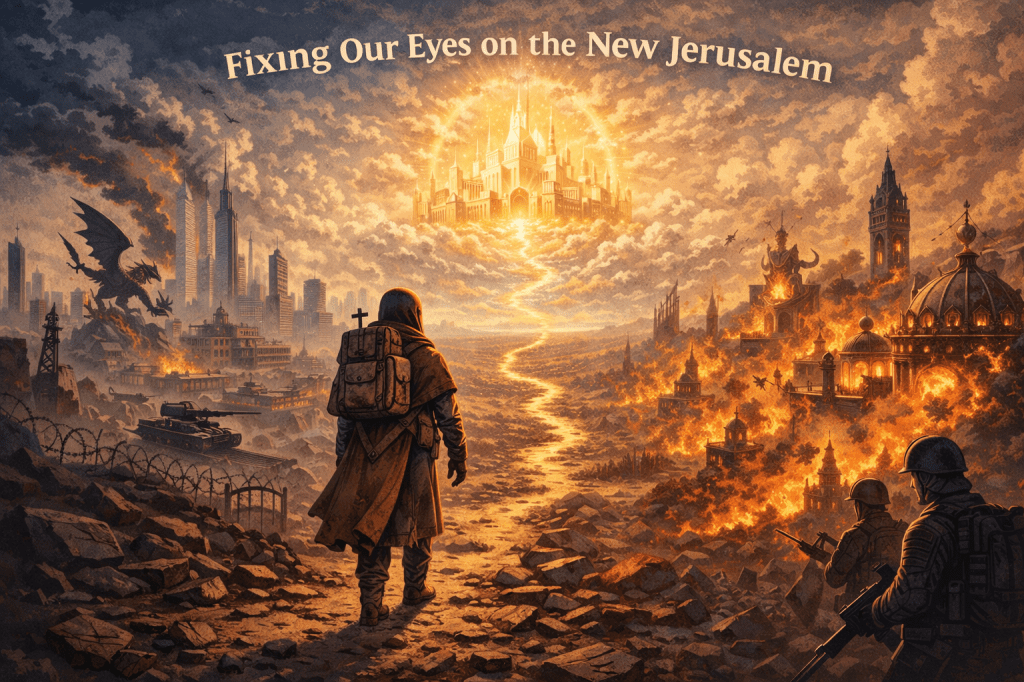
Then I saw ‘a new heaven and a new earth,’ for the first heaven and the first earth had passed away, and there was no longer any sea. I saw the Holy City, the new Jerusalem, coming down out of heaven from God.”

Revelation 21:1-2


Our true home is the New Jerusalem – where Jesus has prepared rooms for all of his people. The Kingdom of God is not of this world. The biblical story reframes our identity: no matter where we are born, God’s people live as resident aliens awaiting a better country and a City the architect and builder of which is God.

The American Tension

The United States is not ancient Israel, and the Mosaic Law is not our civil code. Yet the heart of God revealed in Scripture has not changed. The law written on stone has given way to the law written on hearts (Jeremiah 31:33), but its moral trajectory remains.

Continue reading “Foreigners, Neighbors, and Citizens of God’s Kingdom in the United States of America Today”