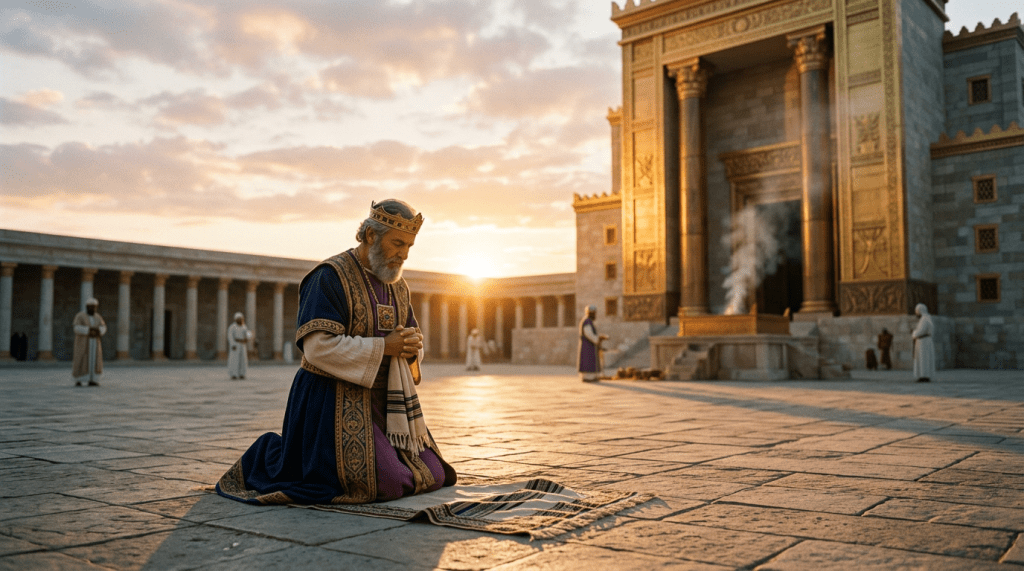
When King Solomon completed the Temple for God in Israel that David committed to build, he praised God for being true to His promise, for bringing His people out of Egypt, for choosing them to dwell among, and to have a Temple dedicated to Him in the City of David – Jerusalem. (2 Chronicles 6:1-11) He said,
“Lord God of Israel, there is no God like you in heaven or on earth – you who keep your covenant of love with your servants who continue wholeheartedly in your way.”
2 Chronicles 6:14 (NIV)
At the same time, Solomon acknowledged that not even the highest heavens can contain God – much less a temple built by human hands. (v.18) Our God is the Lord over all the earth, and He made a covenant with Abraham to bless all the nations of the earth.
Solomon petitioned God to hear the prayers of the people of Israel (vv.19-21), to remember them when they repent for failing to love their neighbors, to judge those who are guilty and vindicate the innocent are wrongfully accused, and to forgive them when they repent of their sin, to “teach them the right way to live,” and to fear the Lord and walk in obedience. (vv. 22-31) Strikingly, Solomon included foreigners in his prayers:
“As for the foreigner who does not belong to your people Israel but has come from a distant land because of your great name and your mighty hand and your outstretched arm—when they come and pray toward this temple, then hear from heaven, your dwelling place. Do whatever the foreigner asks of you, so that all the peoples of the earth may know your name and fear you, as do your own people Israel, and may know that this house I have built bears your Name.“
2 Chronicles 6:32-33
Solomon was mindful not just of the people of Israel; he was mindful of foreigners “who come from a distant land” because of God – asking God to do for them what they ask. He did this “so that all the peoples of the earth may know your name and fear you.” In doing this, Solomon remembered and honored God’s great promise to Abraham to bless all the nations through his descendants.
Let us remember and honor this promise of God today in our own land and in our own lives. God is no respecter of persons – or nations – who do not align themselves with and live out the promises and global purposes of God. Just as God promised judgment and and hardship for the ancient nation of Israel if they failed to live out their own covenant promises to God, He is and will be true to that promise for His people today – wherever they are scattered around the earth.
We are blessed when we are not just hearers of His word, but only if we are doers of His word. (James 1:22-25) God does not describe exactly how we do that. We need the guidance of His Holy Spirit to discern how to live this out in the 21st Century where we live. If we want to blessed by God and faithful to Him, however, we cannot ignore these things.
I pray that we will lean into God’s great covenant promise to all the nations of the world to live out His purposes and intentions to attract all people to Himself. May we learn to follow the prompting of the Holy Spirit in our own lives acknowledge and honor God in this way in our daily lives, individually and corporately, as the people of God.