Elijah is a hero of the faith. When we think of people of faith and obedience to God, he would be near the top of anyone’s list. He is one of only two people to appear with Jesus on the Mount of Transfiguration.
Interestingly, though, he isn’t listed n the “hall of faith” in Hebrews 11. I don’t know why Elijah isn’t mentioned in Hebrews 11, but (perhaps) we should not be as enamored of Elijah as we might want to be. I say that with due respect to Elijah, an unquestioningly bold man of great faith.
On the Mount of Transfiguration, God the Father exalts Jesus the Son of God in the presence of Elijah and Moses. When the Father declares, “This is my beloved son, with whom I am well pleased; listen to him,” the Father echoes the words of Moses to Israel: “The LORD your God will raise up for you a prophet like me from among your brothers. You shall listen to him.” (Matthew 17:5; Deut. 18:15)
Then, Elijah and Moses disappear. Only Jesus remains.
Elijah and Moses are the champions of the old covenant. Jesus came to announce a new covenant, a better one, a covenant that dates back before Moses to Abraham, when God counted his faith as righteousness. The disappearance of Elijah and Moses on the Mount of Transfiguration is not just symbolic; Jesus introduced a new covenant, a new way of relating to God, and a new purpose for the people of God.
People have always loved power and spectacular displays of power, but we do not see God most accurately portrayed in Elijah or even Moses. Only Jesus is the exact representation of God (Hebrews 1:3), and Jesus reveals God in a way that is much more nuanced and strikingly different then the way we see God through Elijah or Moses.
Not that God is any different of course. God does not change. It’s just that our perspective of God changes when he sheds his glory and becomes man in the form of Jesus. In the stripped-down version of God in human form, we see the character of God as it is displayed on our level.
In this context I want to look again at the story of Elijah and the lesson God sought to teach him on Mount Sinai – a lesson that did not resonate with him, but which is told for our benefit. It is a lesson we should grasp as we seek to follow Jesus as he walked and as he told us to follow him.
I apologize upfront for the length of this blog post, but there is so much in the text that I want to pull out and examine. I don’t think I could do it justice in a shorter blog post. To be honest, I think a whole book could be written about this.
I was taught to admire Elijah’s faith and boldness for God in a time of great ungodliness. Ahab was King of Israel (874–853 BCE), and the infamous Jezebel was queen. Jezebel, the daughter of the King of Tyre, brought the worship of Baal into Israel, leading the nation away from Yahweh. She supported hundreds of pagan prophets and sought to kill the legitimate prophets of God, and Elijah stood in opposition to Ahab and Jezebel.
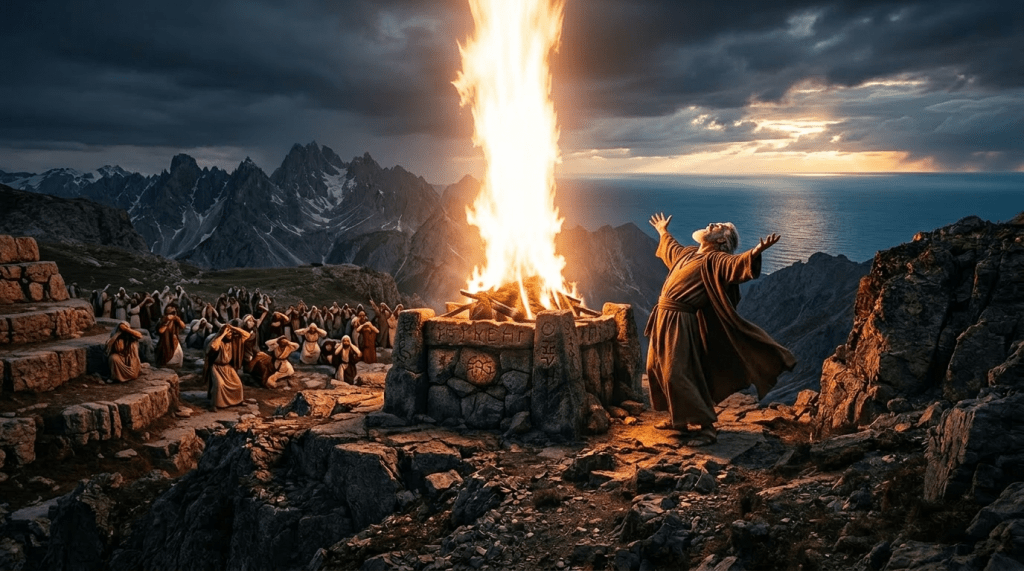
Elijah’s career defining work may be his challenge to the 450 prophets of Baal to a deadly dual that pitted Yahweh against Baal. (1Kings 18:20-40) Elijah proposed, “[Y]ou call upon the name of your god, and I will call upon the name of the Lord, and the God who answers by fire, he is God.” (v. 24)
After a morning of petition to Baal, everything was happening, and Elijah taunted the mob of prophets. “They cried aloud and cut themselves after their custom with swords and lances, until the blood gushed out upon them” (v. 29), but nothing happened. As “they raved on until the time of the offering of the oblation,” we are told, “there was no voice [gowl]. No one answered; no one paid attention.” (v. 30)
Then Elijah stepped up and said, “Watch this!” First, he repaired the altar to Yahweh that had been destroyed. Then, he prepared his own sacrifice on the altar. Then, he dramatically called for four jars of water that he emptied on the sacrifice and the altar. Three times he drenched his sacrifice before calling on Yahweh, the God of Israel.

When the stage was set and Elijah called on Yahweh, “the fire of the Lord fell and consumed the burnt offering and the wood and the stones and the dust, and licked up the water that was in the trench.” (v. 39) All the people cowered in fear.
The scene was electric. Elijah stirred the hearts of the people to march the prophets of Baal down the mountain and slaughter them. (1 Kings 18:39-40)
No one can doubt Elijah’s in God. No one can doubt his boldness and willingness to put his own reputation and life on the line for Yahweh.
People love that kind of stuff! Don’t they? We love it too.We love grand displays of fireworks at the Fourth of July. The bigger the better. We love big things and grand spectacles. We love powerful rock music in large stadiums. We love a World Series, or a World Cup, or a Super Bowl, pitting the best against the best in a majestic display of athletic prowess.
Not content with the spectacle of fire, Elijah told Ahab to prepare for rain to soak the drought-stricken land. He prayed until a small cloud appeared in the distance. (1Kings 18:41-46) Then, Elijah ran ahead of Ahab who left to report what he had witnessed to Jezebel.
Elijah watched as Jezebel received the news. She was not favorably impressed, however. In fact, she was incensed. and decreed that Elijah be put to death for his insolence against her and her prophets of Baal.
With his dreams and expectations dashed, Elijah bolted for his life into the wilderness. (1 Kings19:1-3) He finally stopped to rest, dejected and sullen under a broom tree where he prayed for God to take his life (1 Kings 19:4) – reminiscent of Jonah who sulked under a bush when Nineveh repented at his warnings of coming judgment.
The story of Jonah reveals a prophet who begrudgingly carries out God’s plan because he doesn’t want the outcome. The story of Elijah reveals a prophet zealous to carry out God’s plan when he thinks he knows the outcome, but he feels like a failure when it does not go the way he expected or desired. (1 Kings 19:4)
Though prophets may have great faith in God, a prophet does not control (or always desire) the outcome of their obedience. God uses faith, boldness, and prophetic zeal for His own purposes, but a prophet does not always align in his heart with what God is doing.
Elijah was convinced he was the only follower of God left in Israel, but we know that wasn’t true. Obadiah feared the Lord, though he served in the court of Ahab and Jezebel. (1 Kings 18:3) Obadiah protected 100 prophets from Jezebel’s murderous decrees. (1 Kings 18:4 and 13).
Elijah’s perspective was skewed, perhaps, by the very boldness of his faith. He was unwilling or unable to see that God was working in other people. He was dejected that the outcome wasn’t what he wanted: it didn’t change the hearts of Ahab and Jezebel. Elijah had his own ideas of the way his story should play out, but God has his own ways and his own purposes.
We can take heart in the fact that God did not judge Elijah harshly. God was gracious and nurtured him back to strength.
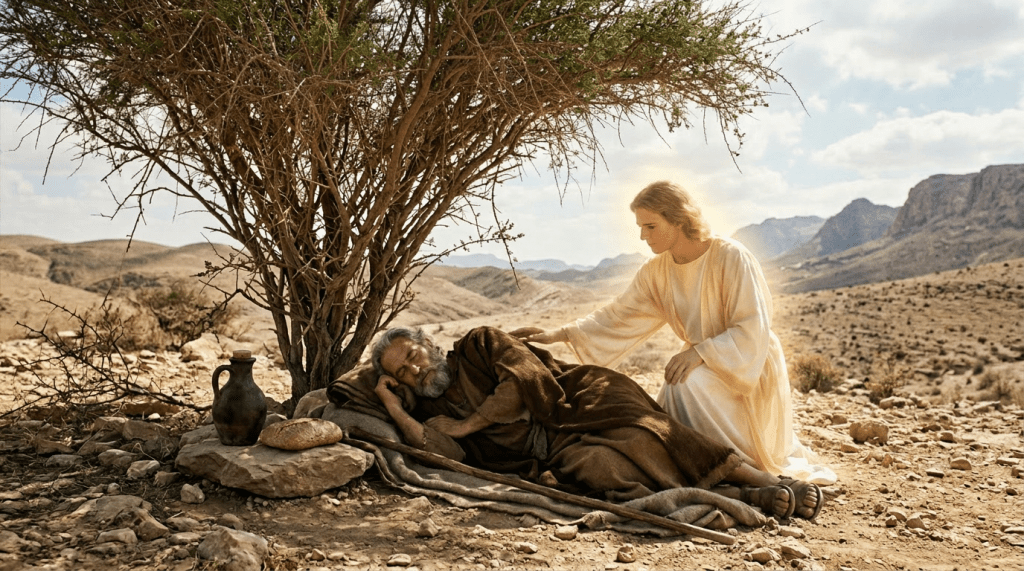
Then, Elijah kept going. He journeyed 40 days to Sinai where he took refuge at Horeb on the Mount of God. (1 Kings 19:5-8)
Elijah’s interchange with God in Sinai is one of the most fascinating conversations in the Bible. God asks him, “Why are you here?” To that question, Elijah responds in self-defense and protest: “I have been very zealous for you! … the people of Israel have forsaken your covenant, thrown down your altars, and killed your prophets with the sword, and I, even I only, am left….” (v. 10)
With the benefit of hindsight and the revelation of God, we know that Elijah was wrong. He wasn’t the only one left. We can understand why he felt that way, but God’s word highlights his error in ways that we cannot ignore. God wants us to see it, and he wants us to learn from it.
Elijah seems to be wrapped up in his own honor, vindication of himself, and obtaining the outcomes that he felt were the right ones. He seems less concerned about God and more concerned about himself. Though Elijah seems to be wrong in his attitude and focus, God did not reject Him. Though Elijah is bitter and despairing of his life, he continues to engage God. This shows how God loves us despite our shortcomings, and Elijah sets a good example for us to engage God in all of our circumstances, difficulties, failures, and disappointments.
We also need to be willing to listen, to be corrected, to allow God to change our perspective. Unfortunately, this is where Elijah falls short. This is where the lesson for us comes in.
God caused “a great and strong wind” that “tore the mountains and broke in pieces the rocks,” God caused a fire, and then an earthquake to shake the earth around Elijah, but God was not in those powerful displays of might. (1 Kings 19:9-12)
Then came a “whisper.” That one word in the NIV translation is three words in Hebrew: still/silent (dmamah), small/little/gentle (dak) voice/lowing/bleating (qowl). (1 Kings 19:12) When Elijah heard the voice (gowl), he emerged from the cave where he was hiding (1 Kings 19:13), and God spoke to him, saying (again), “Why are you here?”

God wasn’t in the great and strong wind. He wasn’t in the fire or earthquake that shook the earth and broke rocks around Elijah. God was in the still, small voice. The key to the lesson of Elijah is that God was not in the great and fearful displays of power.
Despite the object lesson, Elijah remained unmoved and focused on himself. When God asked the same question, “Why are you here?” Elijah gave the exact … same … response.
He continue to defend his own zeal. He he continued to criticize others for not being faithful. He didn’t acknowledge Lesson: God set up for him – that God was not in the great and powerful displays of power but in the still, small voice.
Viewing these things from the distance of time and the benefit of God’s revelation, we know Elijah was not the only person who was faithful to God, of course. There were 100 prophets and 7,000 people in Israel who had not bowed down to Baal. We also know that God did judge Ahab’s house – eventually … in God’s time.
Though Elijah had great faith, he also had tunnel vision. He was self-absorbed. He didn’t acknowledge the lesson God sought to teach him. He didn’t seem able or willing to understand that God works His purposes in His ways and in His own timing. Elijah wanted God to work the way Elijah wanted Him to work.
Yes, this is a story about discouragement. It’s a story about faith and obedient and faithful service to God in the face of great opposition. It’s story about persevering when difficulty comes and we do not see the results we hope for. But it’s more than that.
Elijah’s failure was not in the rejection of Ahab and Jezebel, as he thought. His failure was in not being able (or willing) to embrace aspects of God’s character and God’s ways that were not to Elijah’s liking.
Yes, God is mighty and powerful. God can call down fire. God can command the wind, thunder and lightning, and God can shake the earth, but God is found more authentically, more characteristically, more intimately in a still, small voice when we are quiet and submissive to Him. God is more authentically displayed in Jesus than he was in Elijah.
I am afraid that we, like Elijah, often don’t get it either. I used to think the lesson of Elijah was about faith, obedience, and boldness in the face of opposition from an ungodly world. I have only lately begun to see more nuance in the story, and God’s response to Elijah gives us some clues.
God did not judge Elisha for failing to acknowledge the lesson, but God did not reward him either. Traditionally people assume that God recommissions Elijah, who returns to ministry. God’s instruction is to Elijah, however, is somewhat more nuanced than that.
First, God told him, “Go back the way you came….” (1 Kings 19:15) God sent him back over the same ground he had just traveled. This might seem like restoring Elijah to his ministry, but we need to read it in the context of the previous interchange. Elijah clearly did not catch what God was trying to show him.
Then God told Elijah to anoint Hazael king over the foreign country of Aram, to anoint Jehu king over Israel, and to pass his mantel to Elisha. (vv.15-16) God adds that “Jehu will put to death any who escape the sword of Hazael, and Elisha will put to death any who escape the sword of Jehu.” (v.17) this seems to be in response to Elijah’s concern for judgment against Israel, but God reminds Elijah – again: “Yet I reserve seven thousand in Israel—all whose knees have not bowed down to Baal and whose mouths have not kissed him.” (v.18)
Every element of the response undermines Elijah’s perceptions. Elijah isn’t the only one; God’s plans do not depend on Elijah; God is sovereign, and God will do things His way in His timing. Finally, Elijah is not promoted or commended by God; instead, God tells Elijah to pass his mantle to Elisha. (v.16)
Elijah seems to think that everything is collapsing. God responds by pulling back the curtain on His providence. God is in control, not Elijah. God has already chosen successor kings and a successor prophet. God has preserved the remnant that remains faithful. God’s plans and purposes are advancing despite whatever Elijah thinks.
Anointing a foreign king seems to be an odd thing for God to tell Elijah to do. Perhaps, it signals that Yahweh is not just the God of Israel. He is sovereign over the nations. He has plans and purposes that involve other nations, and God is doing things on a far larger scale than Elijah thought.
We also need to pay attention to the way Elijah responds. Elijah goes back and passes the mantle to Elisha, but he fails to carry out the rest of God’s instructions. We are not told that Elijah went to Aram to anoint Hazael nor that he went to Israel to anoint Jehu. In fact, Elisha is the one who followed up with Hazael and Jehu. (2 Kings 8-9)
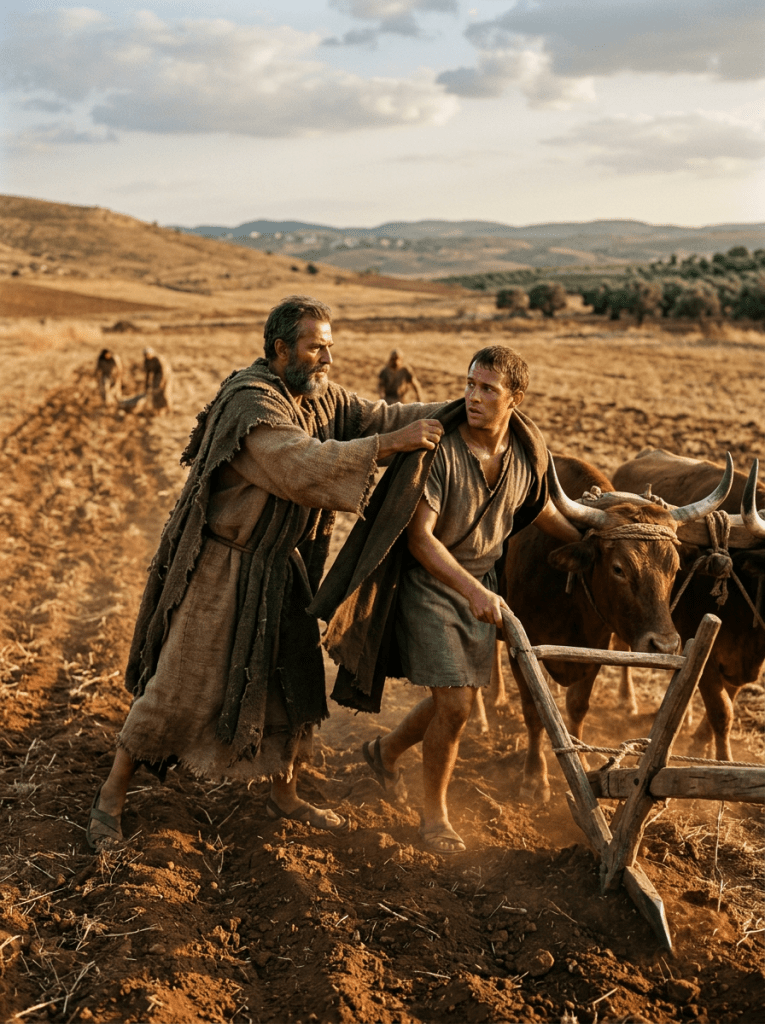
Perhaps, this is a further point about God’s sovereignty. Not only did he not need Elijah; when Elijah failed to do what he was asked, God had someone else do it.
King Ahab continued to reign for a time, having success as God allowed him. (1 Kings 20) Ahab continued to act wickedly and brought judgment on himself for it, though he repented and was spared for a time. (1 Kings 21-22) God is working out his own arrangements with people as they respond to him – both the Prophet, Elijah, and the wicked King Ahab. God does not sideline Elijah completely (1 Kings 21:17-28), but a new prophet, Micaiah, takes center stage in Ahab’s demise. (1 Kings 22)
When Ahab finally dies, his son, Ahaziah, succeeds him. (v. 40) Though God had Hazael anointed to be king of Aram, there is an intervening king. Ahaziah was injured in a fall soon after he took office. He sent messengers to consult Baal-Zebub about his recovery, but God told Elijah to intercept the messengers to tell Ahaziah he would die from his injuries.
Perhaps, God used Elijah for this task because it was right up Elijah’s alley. He liked to play the the role of the oppositional prophet. Ahaziah sent his messengers back to summon Elijah twice, and twice Elijah called down fire on the envoys sent to summon him, killing 50 people at a time. Elijah does this without any direction from God. (2 Kings 1) Fire was Elijah’s gig, but he was not instructed by God to do that.
I certainly do not want to be too harsh on Elijah. He had greater faith than I do and was more obedient and faithful than I am. I do not hold a candle to his faith or obedience. Yet we should not miss the importance of the lesson Elijah did not learn and the fact that Elijah did not change his ways.
Elijah’s way was to call down fire. Elijah was enamored with the power of God that he seemed to be able to command by will. Yet, God is God and not Elijah. God granted Elijah that power, but God conspicuously does not endorse his use of it. The third time the messengers come to summon Elijah, God tells him to go with them.
Elijah was not good at self-examination. He failed to appreciate that God is not always in the fire and brimstone, judgment and destruction. He did not appreciate or understand that God is working his plans patiently but inevitably throughout history in all the nations through various sorts of people in ways we cannot always see and appreciate.
Abraham, touted as the greatest example of faith, begged God not to rain down fire on Sodom and Gomorrah. I think there is a reason that Abraham is considered the father of faith, and Elijah is not. Abraham is more characteristic of the nature of God in his hospitality, his patience, and the way he treats people.
Abraham died still confident of God’s promise, though he did not see it fulfilled in his lifetime. Abraham did not do anything nearly as dramatic or exciting as Elijah; yet, Abraham is commended for his faith in Hebrews 11 and Elijah is not.
Jonah and Elijah wanted to see God’s judgment enacted. Both of them were loners. Both of them saw themselves as God’s only choice and only hope. We certainly know, in Elijah’s case, that it wasn’t true. There were 100 other prophets, and 7,000 people who had not bowed to Baal.
We should not think that we are the only people God can use and that no one is faithful or obedient or righteous other than us. Christians in the United States, I dare say, have an elevated view of our Christianity and our place in the world. We are the most powerful nation on Earth, and we are prone to throwing our power around – like Elijah. For that reason, I think we need to pay attention to the lesson Elijah did not acknowledge.
The lesson of Elijah is that God works in still, small ways. God is sovereign, and we are not. God controls the outcomes and He does not always do it by calling down fire. In fact, Jesus rebuked the apostles who wanted to call down fire on the people in Samaria who rejected them. (Luke 9) Jesus also wept over the coming destruction of Jerusalem.
That brings me back to the Mount of Transfiguration. Elijah and Moses signify ministry under the Old Covenant. The Law is just a tutor to bring us to Christ. (Galatians 3:23) The Law is only a shadow – not the reality – of real relationship with God. (Hebrews 10:1) God’s covenant with Israel only set the stage for the coming of Jesus and the introduction of the Kingdom of God.
The appearance of Elijah and Moses on the Mount of Transfiguration and their disappearance signals a change in the way we should perceive God and what He is doing in the world. God hints at this in the instruction he gave to Elijah.
The narrative arc suggests that while Elijah’s ministry faithfully served God’s purposes in his time, the Son reveals God’s purposes more fully – when the time was right. Divine judgment remains real, but in Jesus’ first coming it is postponed while mercy is proclaimed. Jesus came not to judge the world but to seek and save the lost. Elijah, standing beside Moses disappeared, giving way to the greater revelation in Christ.
God does not reject Elijah for his shortcomings, but He gently exposes Elijah’s tunnel vision and his infatuation with power and judgment. God’s kingdom does not depend on dramatic interventions through indispensable prophets. That theme anticipates the coming of the Messiah when the kingdom advances not primarily through displays of judgment but through the quiet, persistent work of Christ and the Spirit until the day when final judgment does come.
Jesus told us that God’s kingdom advances like a mustard seed, like leaven in bread, like salt and light. He works in a still, small voice. He works quietly, often imperceptibly.
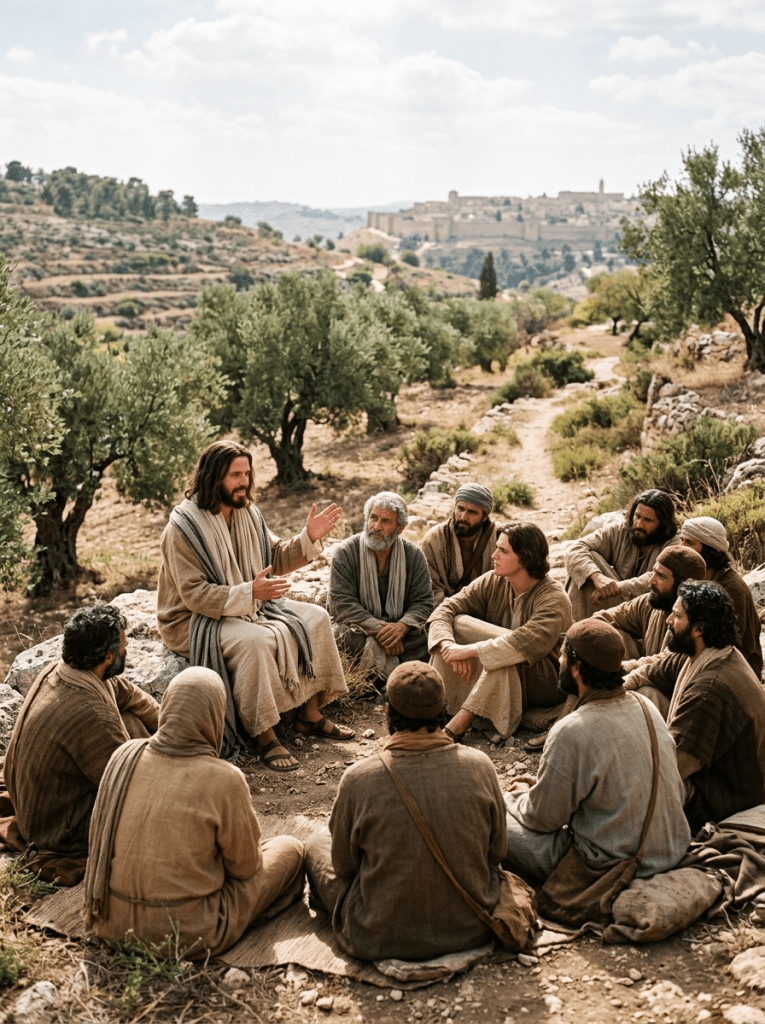
That is the way Jesus told us the kingdom of God advances. It isn’t flashy. It doesn’t come in great displays of power. It often comes through suffering, as Jesus did, and as he instructed is to follow him in our willingness to suffer for the kingdom.
God is sovereign, and He is always working toward His purposes. He doesn’t depend on us, though He invites to be involved in what He is doing. We plant, and we water, but God creates the increase.
Jesus rebuked his disciples for suggesting they should call down fire when people rejected them. Jesus asks us to be faithful in little, and God will give us more. We should reject the mentality that the only way for God to work in the world is through the exercise of power and judgment.
The kingdom of God is not like that. It’s like a buried treasure or a pearl found hidden under the waves in the sea. We have to dig for it. We have to dive for it. We have to want it – even the demons believe, but they bristle. God wants the hearts of people who want Him.
God has changed since Jesus gave us those descriptions of the kingdom. Indeed, God has not changed at all in all of history. We just understand him better, having seen him now in the flesh in Jesus.
God does not wants us to be the kind of people who want to call down fire. God wants a people who are willing to be salt and light; He doesn’t call us to be fire and brimstone.
I can’t help but think that this is a lesson we need for today. We fixate on the end times and the judgment of God. We sometimes revel in the thought of God’s judgment, but Jesus told us clearly that he did not come into the world to judge the world; he came to save it (John 3:16-17), and he commissioned us to spread the word of God’s kingdom until he comes back.
Then, there will be judgment, but now there is grace and the door is open for anyone who will walk through it. Ambassadors of this message look more like Jesus than Elijah.


One thought on “Lessons from Elijah”