The contrast between the ministries of Elijah and Elisha provides insight that carries into the coming of the Messiah, the ministry of Jesus, and the New Covenant. The contrast between Elijah and Elisha is a contrast between the Old Covenant and the New Covenant. It is a contrast between an emphasis on the judgment of God and an emphasis on the grace of God and salvation.
In my ignorance, Elijah previously stood out more to me than Elisha, even though Elisha famously asked for and received a double portion of the spirit Elijah had. The spirit of Elijah passes to Elisha as seen in the miracles each of them performs. Scholars often highlight the fourteen miracles performed by Elisha versus the seven miracles performed by Elijah as an example of the double portion, but the differences between Elijah and Elisha go much deeper than that.
The character of the miracles is different. This is something I might not have noticed but for a focus on the details in the story of Elijah over the last few years. Those details led me to see some lessons from the story of Elijah that do not stand out at first blush.
Elijah was an oppositional prophet. He was the antagonist to Ahab and Jezebel. He challenged the prophets of Baal and smoked them in a fiery display of God’s power over the impotent idol (Baal) that Ahab and Jezebel worshipped.
Elijah had all the prophets of Baal slaughtered, but Jezebel was not impressed. She called for Elijah’s head, and he fled in fear. He sulked in self-absorbed pity. He complained to God that he was the only one who was faithful, and he seemed to come close to finding fault even with God for the anti-climactic outcome.
When God tried to show Elijah that God was not in great displays of power like wind, fire, and earthquake, Elijah seemed incapable or unwilling to acknowledge what God was saying. Twice God asked why Elijah ran away to Mount Sinai. Twice Elijah gave God the exact same answer.
Elijah protested to God that he had been zealous, and he insisted that he, alone, was faithful to God in all of Israel…. But clearly, he was not alone. Multiple times the text tells us that Obadiah was faithful; he saved 100 prophets from Jezebel’s decree of capital punishment; and God found 7000 people left who had not bowed to Baal.
Elijah seemed not just disappointed, but upset (with God?) that judgment had not rained down on Ahab and Jezebel and all of Israel. It wasn’t that judgment didn’t loom over their heads; it was that God controls the timing – not Elijah.
God told Elijah to go back and anoint Hazael king of Aram and Jehu king of Israel and to pass his mantle to Elisha. Elijah passed the mantle to Elisha but he never followed through with the other instructions God gave him.
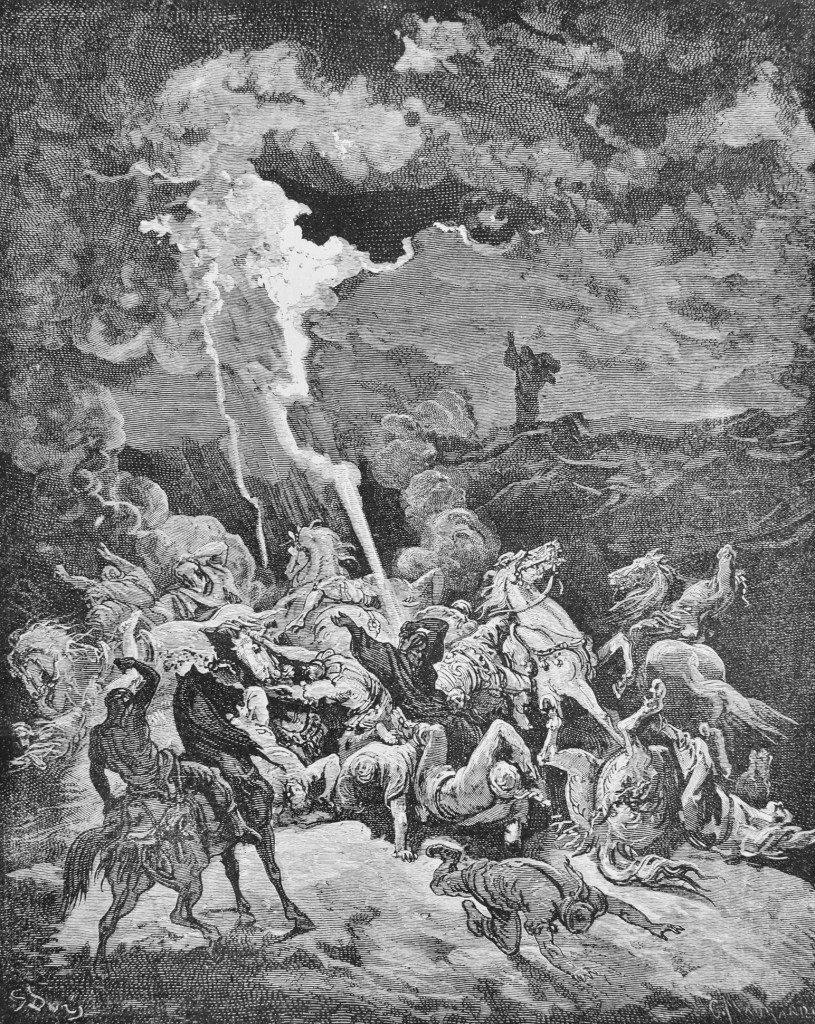
Elijah continued in ministry even after he passed his mantle to Elisha, but he seems to take a back seat to other prophets, and he did not change his attitude. God told him to meet the messengers of the King of Israel to deliver a message. After they delivered the message to the king, the king sent them back to summon Elijah, but he smoked them by calling down fire. The king sent another envoy of messengers, and Elijah smoked them with fire also – killing 50 people at a time.
Though God told Elijah to confront the king’s messengers with his own message, the text is conspicuously silent about Elijah calling down fire on the envoys who came to summon him. The King sent a third group of messengers to summon Elijah, and this time God told him to go with them.
Now that I have spent some time meditating on the stories of the two prophets, Elijah stands out for his brashness, but Elisha stands out as the prophet who is more true to who God is. He is the one whose ministry is more characteristic of God, and his ministry stands out in the way way it bridges the narrative arc of Scripture between Old Covenant and New Covenant, from a focus on Abraham’s descendants to all the nations, from the Law of Moses to the Law of grace, love and Christ.
Elisha signals the change from the old covenant to the new covenant. Elisha points the the direction that the arc and sweep of Scripture will take us. Elisha is the link in this point in the narrative to God’s ultimate plans and purposes in the world.
Elijah is a hero of the faith. When we think of people of faith and obedience to God, he would be near the top of anyone’s list. He is one of only two people to appear with Jesus on the Mount of Transfiguration.
Interestingly, though, he isn’t listed n the “hall of faith” in Hebrews 11. I don’t know why Elijah isn’t mentioned in Hebrews 11, but (perhaps) we should not be as enamored of Elijah as we might want to be. I say that with due respect to Elijah, an unquestioningly bold man of great faith.
On the Mount of Transfiguration, God the Father exalts Jesus the Son of God in the presence of Elijah and Moses. When the Father declares, “This is my beloved son, with whom I am well pleased; listen to him,” the Father echoes the words of Moses to Israel: “The LORD your God will raise up for you a prophet like me from among your brothers. You shall listen to him.” (Matthew 17:5; Deut. 18:15)
Then, Elijah and Moses disappear. Only Jesus remains.
Elijah and Moses are the champions of the old covenant. Jesus came to announce a new covenant, a better one, a covenant that dates back before Moses to Abraham, when God counted his faith as righteousness. The disappearance of Elijah and Moses on the Mount of Transfiguration is not just symbolic; Jesus introduced a new covenant, a new way of relating to God, and a new purpose for the people of God.
People have always loved power and spectacular displays of power, but we do not see God most accurately portrayed in Elijah or even Moses. Only Jesus is the exact representation of God (Hebrews 1:3), and Jesus reveals God in a way that is much more nuanced and strikingly different then the way we see God through Elijah or Moses.
Not that God is any different of course. God does not change. It’s just that our perspective of God changes when he sheds his glory and becomes man in the form of Jesus. In the stripped-down version of God in human form, we see the character of God as it is displayed on our level.
In this context I want to look again at the story of Elijah and the lesson God sought to teach him on Mount Sinai – a lesson that did not resonate with him, but which is told for our benefit. It is a lesson we should grasp as we seek to follow Jesus as he walked and as he told us to follow him.
I apologize upfront for the length of this blog post, but there is so much in the text that I want to pull out and examine. I don’t think I could do it justice in a shorter blog post. To be honest, I think a whole book could be written about this.
The Book of Jonah is an important story, but not for its historical significance. Whether the story is historical fact is not what’s important. If that is our only focus as we read and think about Jonah, we are missing the point.
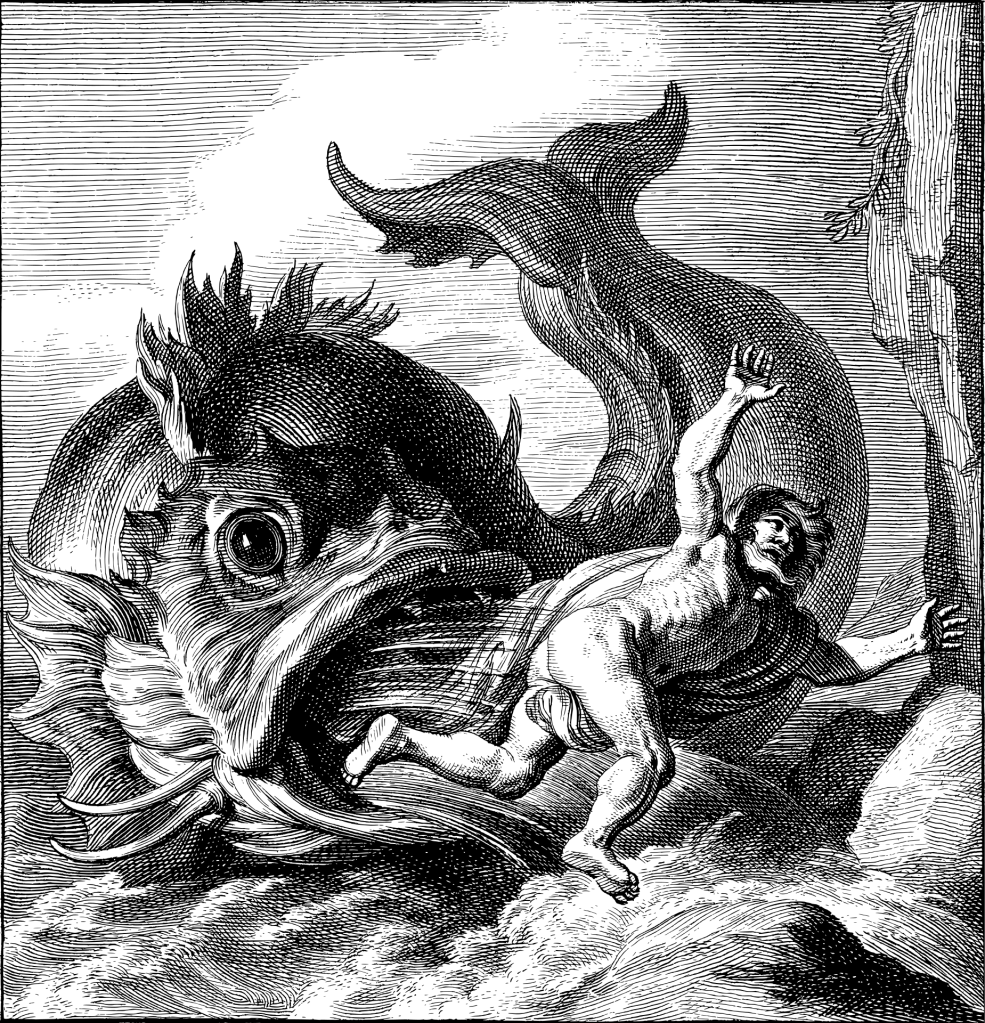
Jonah is the story of a reluctant prophet. When God commands him to go to the wicked City of Nineveh and warn them to repent to avoid judgment, Jonah heads the opposite direction by ship. God stirs up a great storm, and Jonah is swallowed by a whale. After three days, Jonah prays and submits to God, and the whale vomits him up on the shoreline.
Unable to run from God’s command, Jonah heads off to Nineveh where he delivers the warning. The wicked people of Nineveh repent, and God relents from the judgment He planned, but God’s mercy on Nineveh causes Jonah to be bitterly disappointed and angry.
Jonah was disappointed because Jonah wanted what Jonah wanted. He didn’t want what God desired. He was focused on what he thought should happen. He thought Nineveh should pay the price for its wickedness, but God had different plans.
God was patient with him and went to great lengths to show Jonah His heart for a people Jonah despised. We might credit Jonah for his (reluctant) obedience, but Jonah doesn’t understand God’s sovereignty, mercy, and compassion, even at the end.
God’s determination to spare the people of Nineveh “seemed very wrong” to him, “and he became angry.” (Jonah 4:1) If it were up to Jonah, the people of Nineveh would have been destroyed like Sodom and Gomorrah. Jonah identified with God’s judgment, but he didn’t understand God’s compassion.
Jonah reminds me of Elijah, who was known for his boundless faith in (and preoccupation with) God’s power. Elijah is known for calling down fire to consume a sacrificial bull that he soaked with water, showing up the false profits who could not get their gods to consume a dry sacrifice. When Elijah exposed them for the false prophets they were, he agitated the crowd to march the false prophets down the mountain where Elijah slaughtered them.
I imagine Elijah and Jonah would have gotten along well…. Or maybe not. Though they are much alike, Elijah was a loner, and perhaps Jonah was also. Elijah complained that he was the last of God’s prophets, though 100 of God’s prophets remained in the land. Perhaps, Elijah thought he was too good for them.
Jonah and Elijah wanted to see God’s judgment. They wanted the people to burn for their wickedness. They were personally affronted when God showed patience and reluctance to rain judgment down on the people who deserved it.
Despite the awesome display of God’s awesome power summoned by Elijah’s undaunting faith before King Ahab and his prophets, the wicked Queen, Jezebel, was not moved. She ordered Elijah to be arrested and killed on sight.
When Elijah heard her decree, he fled into the desert, where he sat down under a broom tree in bitter disappointment and anger at the way things turned out.
Couldn’t Elijah call fire down on Ahab and Jezebel? Why didn’t he do it? Elijah had just slaughtered all the King’s prophets after showing them up with fire from the heavens. When Jezebel wasn’t phased, Elijah fled in fear.
Elijah may have run in a moment of fear, but his fear turned to anger and disappointment, like Jonah. Both of them ended up under a tree that provided them shade. God ministered to both of them in their dejected state.
Elijah kept going south, all the way to the mountain where God met Moses on the Sinai Peninsula. In the cave where he took shelter, God came to him, asking, “Elijah, why are you here?” Then, Elijah let God have the full weight of his disappointment and anger:
“I have been most zealous for the Lord, the God of hosts, but the Israelites have forsaken your covenant. They have destroyed your altars and murdered your prophets by the sword. I alone remain, and they seek to take my life.”
1 Kings 19:10
But, God was patient. He told Elijah to stand at the mouth of the cave so the Lord can “pass by”. “A strong and violent wind rending the mountains and crushing rocks” came, but the Lord wasn’t in the wind. Then an earthquake came, but the Lord wasn’t in the earthquake. After the earthquake, came a fire, but the Lord wasn’t in the fire. (1 Kings 19:11-12)
Finally, “a light silent sound” came, and the Lord said to Elijah, again, “Why are you here?” God was not in the mighty displays of wind, earthquake, and fire. God was in a still, small voice.
Yet still, Elijah was fixated on his own disappointment and anger and responded exactly as he did before:
“I have been most zealous for the Lord, the God of hosts, but the Israelites have forsaken your covenant. They have destroyed your altars and murdered your prophets by the sword. I alone remain, and they seek to take my life.”
1 Kings 19:14
Elijah’s disappointment, anger, and indignation turned toward God. “They destroyed your alters and murdered your prophets!” Elijah said. It’s everyone’s fault but his. It’s ultimately God’s fault, right? Because Elijah knew what God could do. God could have destroyed Ahab and Jezebel in a ball of fire, but He didn’t.
In similar fashion, God asked Jonah twice, “Why are you angry?” (Jonah 4:1 and 4:9) Twice Jonah responds exactly the same way: “It is better for me to die!” (Jonah 4:3 and 4:8) It’s the same pattern for Elijah and Jonah.
At the end of Jonah, God asks the rhetorical question, “Should I not have concern for the great city of Nineveh?” But, Jonah doesn’t respond. (Jonah 4:10) Jonah didn’t want God’s compassion for Nineveh. He wanted them to burn.
We don’t know what became of Jonah, but we do learn the rest of the story of Elijah. God sends him back to Damascus to anoint a new King and pass his prophetic torch to Elisha. (1 Kings 19:15-18) When Elijah pronounced God’s judgment on the wicked King Ahab, the King humbled himself and repented, and God spared him (just like Nineveh). (1 Kings 21:27-29)
Eventually, Ahab’s son, Ahaziah, took over, and Elijah continued with his righteous taunts. Ahaziah sent fifty men to summon Elijah before him, and Elijah called down fire to destroy them. (2 Kings 1:10) Ahaziah sent another company of fifty men to summon Elijah, and Elijah called down fire again to destroy them. “(2 Kings 1:12)
Elijah is the prophet who called down fire. He was a man of great faith. He had great confidence in God. He was a firebrand, himself, in his sense of God’s righteousness and communication of God’s righteousness to the false prophets, the unrighteous and wicked leaders of his time, and even on the remnant of God’s prophets who escaped the sword only hid away in a cave.
Jonah had similar confidence in God. After the people of Nineveh repented and God relented, Jonah said, “I knew it! That’s what I said! That’s why I went the other way, because they don’t deserve it! Just take my life.” (Jonah 4:2-3)(my paraphrase)
Jonah and Elijah are held out in the Bible as God’s prophets and men of great faith, but they are flawed. They are self-righteous. They have a hard edge. The desire judgment, and they don’t love as God loves.
Their disappointment and anger stems from their desire to see the wicked people destroyed. God’s desire is ever to save, to have compassion, and for people to repent so God can show mercy. God’s great desire is not to judge, but to be gracious:
Truly, the Lord is waiting to be gracious to you, truly, he shall rise to show you mercy; For the Lord is a God of justice: happy are all who wait for him!
(Isaiah 30:18) God’s justice is ultimately to be gracious and to show mercy. Justice and mercy are not divorced from each other; they are intertwined. His judgment is meant to bring us to repentance so that He can have mercy on us.
When we have our act together and have great faith, our temptation is to desire judgment for its own sake, but God is not like that. Jesus, who was the exact representation of God in the flesh, shows us God’s heart when his disciples returned from traveling the countryside to tell people about the kingdom. The disciples wanted to call down fire on the people who rejected them and refused to welcome them, and Jesus rebuked them.
When we find ourselves disappointed and angry at a world full of sinners who deserve judgment, we need to think of Elijah and Jonah and the counterexample of God in dealing with Nineveh and Jesus in rebuking the disciples. God is “merciful and gracious, slow to anger, and abounding in steadfast love.” (Exodus 34:6-7) God takes no pleasure in the death of the wicked. (Ezekiel 18:23 and 33:11)
We can laud Elijah and even Jonah for their faith and (ultimately) their obedience, but we need to recognize that they didn’t understand God’s heart of compassion for people. They didn’t understand God’s desire for mercy and grace. God ultimately wants more than our raw belief and cold obedience; He desires “mercy, not sacrifice.” (Hosea 6:6 and Matthew 9:13)
God wants out hearts, and He wants us to see the world as He sees it. He wants us to love even our enemies (the wicked) and to sacrifice ourselves for the good of others as He sacrificed Himself for us in Christ. Thus, Jesus emphasized forgiving as we have been forgiven and showing mercy as God has shown mercy to us:
“Judgment without mercy will be shown to anyone who has not been merciful. Mercy triumphs over judgment.”
(James 2:13) When we are tempted to be judgmental and righteous, we need to remember that God has been gracious to us, and He desires – above all – to be gracious to the world. When we are bitter and angry at the sin in the world, we need to remember that Jesus came into the world not to condemn it, but to save it, just he saved us.
I engage in many conversations with people of faith on just about any topic. I remember one conversation (on the topic of guns, I believe) in which a fellow believer cited Mathew 11:12 in support of a Christian defense of gun ownership.
“From the days of John the Baptist until now, the kingdom of heaven has been subjected to violence, and violent people have been raiding it.” Matthew 11:12 NIV
My friend also mentioned Jesus turning over tables and instructing his followers to buy swords (Luke 22:36, though he tells them in the same chapter to but them down (Luke 22:49-51); “for all who draw the sword will die by the sword.” (Matthew 26:52)). My friend believes that Jesus was saying that force, and even violence, is ok as long as it is used for a good purpose.
I am reminded of his comments as I read through Matthew 12 in my yearly reading plan. I didn’t follow up on his comment then, but reading this passage in context brings it to mind, and it brings clarity to me at the same time.
Does this passage justify violent or forceful behavior in defending Christianity? That is the question
Let’s start with the context. Jesus is preaching in Galilee where John the Baptist has recently been imprisoned for calling out Herod for adultery. John was no shrinking violet. He was bold and forthright, and it landed him behind bars when Herod didn’t take kindly to the criticism.
While in prison, John heard reports of the miraculous things that Jesus was doing. These reports prompted John to send his own followers to ask Jesus, “Are you the one who is to come, or should we expect someone else?” (Matt. 11:3).
I imagine John the Baptist was wrestling with doubt as he languished in prison. In his mind, and in the minds of most Jews at that time, the Messiah was expected to come and take over the world, but it didn’t seem to be happening. The Roman Empire was still very much in charge.
John’s imprisonment must have given him second thoughts about the Messiah stuff. The miraculous signs seemed to mark Jesus as the Messiah, but why was he not wielding the power and the glory of God against the Roman occupation and Roman Empire? John the Baptist may have been hoping that Jesus was just biding his time when he sent for a report.
Jesus sent this message back:
“Go back and report to John what you hear and see: The blind receive sight, the lame walk, those who have leprosy are cleansed, the deaf hear, the dead are raised, and the good news is proclaimed to the poor. Blessed is anyone who does not stumble on account of me.” (Matt. 11:4-6) (quoting Isaiah 35:5-6)
Was that the report John was expecting? Jesus didn’t say anything about driving out Rome and restoring King David’s throne. He didn’t pull from the prophetic messages about a conquering messiah. He pulled a different thread from the Prophets.
When John’s followers left, Jesus praised John the Baptist to the disciples. He affirmed that John the Baptist is the one spoken of in Malachi 3:1 – the messenger sent ahead of the Messiah to prepare the way. He affirmed that he is the Messiah, but the response he sent back to John was about healing, cleansing, and proclaiming good news to the poor.
In this context, Jesus said, “the kingdom of heaven has been subjected to violence, and violent people have been raiding it.”
Jesus seems to be confirming only what John was already hearing about the miraculous signs, but John already knew about those things. Therefore, I think Jesus was doing more than confirming what John already knew. Jesus was tying what he was doing to prophetic passages like the language he quoted from Isaiah when he announced his public ministry (Luke 4:18-19):
“The Spirit of the Lord is on me, because he has anointed me to proclaim good news to the poor. He has sent me to proclaim freedom for the prisoners and recovery of sight for the blind, to set the oppressed free, to proclaim the year of the Lord’s favor.”
These words from Isaiah 61:1-2 with overtones from Isaiah 58:6 were read aloud by Jesus in his hometown synagogue in Nazareth before he sat down with all eyes on him and said, “Today this scripture is fulfilled in your hearing.” (Luke 4:21) These are the words Jesus used to to characterize the purpose for which he came.
We know, of course, that Jesus came to die on a cross, but John and his followers didn’t know that and probably could not have imagined it. Jesus’s followers also didn’t get it even when he tried to tell them.
Jesus pulled passages from Isaiah that alluded to the suffering servant motif to affirm his identity. John the Baptist would have immediately recognized the thread Jesus was pulling, but it wasn’t likely what he was expecting or what he was hoping.
First Century Jews were expecting the Messiah to reestablish the Davidic kingdom “here and now”. The Romans were well aware of that Jewish sentiment and had been putting down factions of zealots who took up the sword to attempt to bring it about.
Imagine Pontius Pilate’s confusion that prompted him to ask Jesus, “Are you the king of the Jews? …. Your own nation and the chief priests have delivered you over to me. What have you done?” This is how Jesus responded to Pontius Pilate:
“My kingdom is not of this world. If my kingdom were of this world, my servants would have been fighting, that I might not be delivered over to the Jews. But my kingdom is not from the world.” (John 18:36)
With this as the backdrop, let’s turn back to Matthew 12. If we understand the context, and the bigger picture, we see that Jesus is not advocating violence or force: he is doing just the opposite.
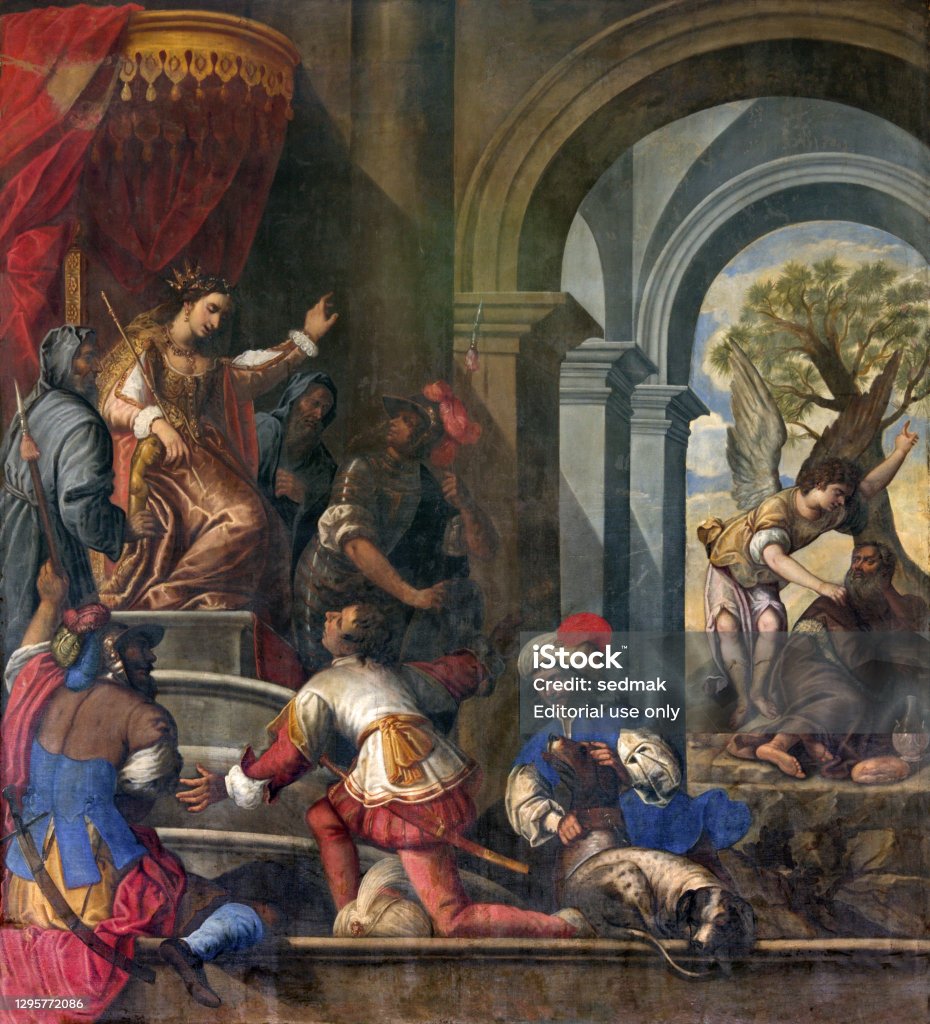
BRESCIA, ITALY – MAY 23, 2016: The painting Prophet Elijah Receiving Bread and Water from an Angel at Chiesa di San Giovanni Evangelista by Alessandro Bonvicino-Moretto
Do you identify with Elijah? Do you squirm thinking about his zeal? Do you feel guilty about not sharing the Gospel with your neighbor? Then, maybe a new look at Elijah may resonate with you.
We know Elijah for his zeal for Yahweh in a time when the culture and national leaders were rebelling against God. Sound familiar?
Elijah is famous for challenging the Israelite king, Ahab, and his rebellious wife, Jezebel, and all of the prophets of Baal and Asherah that were commissioned by that royal pair. He felt like he was the only one standing for God in a world that wanted him to shut up and go away.
Some of us may feel like Elijah, while many others of us may feel guilty that we are not like Elijah. He is a pillar of the faith, right?
Yes, of course, he is! As I read through these passages, though, I am seeing something I didn’t catch before. For one thing, I get the feeling that Elijah probably wasn’t a fun guy to be around.
He certainly didn’t go along with the crowd. He wasn’t known for his diplomatic tact. (To put it mildly) He said what was on his mind, and he didn’t pull any punches.
These characteristics of Elijah begin to give us an idea of what he is like. They also point toward a more human side of Elijah that I hadn’t noticed before, which is why I want to dive deeper into the story of Elijah and the prophets of Baal.
Elijah is famous for challenging 450 prophets of Baal to an Ancient Near Eastern duel of the gods. It was Elijah against all the prophets of Baal; Yahweh against Baal in a cosmic duel with mortal consequences for the losers.
This is the way Elijah rolled. No holds barred!
Elijah challenged the prophets to sacrifice a bull on an altar without setting fire to it, letting Baal or Yahweh, as the case might be, consume the sacrifice directly. Which one would show up?! The stakes were high. If Yahweh didn’t show, Elijah was toast!!
Elijah offered to let the prophets of Baal go first. (A bit of showmanship?) They cut up the bull; they placed it on the altar; and they did their ritual thing to entice Baal to come out of whatever stone he might live under … but nothing happened.
Elijah taunted them. (He was not a master of subtlety!) He egged them on to shout louder and offered the following “helpful” comments (paraphrased by me):
Maybe your god is daydreaming”;
Maybe he fell asleep and you need to shout louder; and
Maybe he is relieving himself, and he will be back in a minute!
Elijah’s taunting wound those prophets up into a religious frenzy. They cut themselves with knives, and swords, and spears until they bled everywhere … but still nothing happened.
When their time was up, all eyes turned to Elijah.
I imagine the anticipation in the crowd rivaled a Las Vegas audience watching Siegfried and Roy walk a full grown tiger onto the stage. Elijah let the expectation mount as he built his own altar. The atmosphere was electric. The crowd was undoubtedly hoping for more action than the prophets of Baal gave them.
I can imagine the smug look on Elijah’s face and the brash confidence in his demeaner as he instructed volunteers from the crowd to pour water on the offering. Elijah was nothing if not dramatic!
Lest we forget, they were in the middle of a long draught. Elijah didn’t just have them sprinkle water. Three times Elijah instructed his helpers to fill up the jars, and pour them out on the bull, the wood, and the altar until it was soaked and water pooled in the trench around it.
Anticipation hung like a funnel cloud overhead as darkness loomed over the mountaintop stage. The expectant crowd, the exhausted prophets recovering from their failed ordeal, and Ahab sat poised on the edge of their proverbial seats.
In the flash of a moment, fire came down from heaven. Like a galactic flamethrower, the fire was so fierce it completely consumed the bull, the wood, and the altar itself!
Nothing remained but hot, smoldering ash.
Yahweh showed up as Elijah said he would! Elijah was vindicated!
But that wasn’t enough for him. With freshened zeal fueled by the powerful demonstration of God’s power, Elijah provoked the excited crowd to grab the cowering prophets of Baal and march them down the mountain where they were slaughtered in the valley below.
Elijah was at the height of his prophetic career. Elijah may have thought, “Not even Moses presided over such a powerful demonstration of God’s awesome power!” Elijah was on top of the world!
It’s hard to imagine greater faith and boldness or a more decisive display of God’s power. Perhaps, the only thing more amazing than all of that was Jezebel’s response:
She was not… impressed… at all.
When Ahab raced to deliver the news to Jezebel, his haughty audacious wife didn’t even hesitate. She ordered death to Elijah with ice in her veins.
Elijah must have been thinking, “What’s a man of God got to do?!” (Never mind that the crowd seemed properly convinced.) If his greatest act of faith couldn’t turn the hardened hearts of Ahab and Jezebel, nothing would! He had done his absolute best, and it wasn’t enough.
Have you ever felt that way? Have you ever felt like nothing you do, or can do, makes any difference? Have you ever come to the place that you have done your best, and your best wasn’t good enough? Have you ever felt like you are the only one who stands for God?
Have you ever gotten mad at God for not defending you for standing up for Him? Then, read on.