They Thought God Was Like Them

Examine yourselves to be sure you are in the faith.

Smiling man with dark shadow holding a knife behind him

But to the wicked person, God says:

What right have you to recite my laws or take my covenant on your lips? You hate my instruction and cast my words behind you. When you see a thief, you join with him; you throw in your lot with adulterers. You use your mouth for evil and harness your tongue to deceit. You sit and testify against your brother and slander your own mother’s son. When you did these things and I kept silent, you thought I was exactly like you. But I now arraign you and set my accusations before you.'”

Psalm 50:16-21


God’s Word is full of warnings to the wise. Take heed. God does not desire that anyone perish, but a day is coming when your life will end. A day is coming when this world as we know it will cease to exist. There will be a day of judgment for all of us.

God does not force us to love Him. He doesn’t require that we submit to Him. He gives us the terrible choice of determining how we will live. He will give us over to our desires on that day when we die, on that day when the earth ceases to be as we know it, and we will face the consequences of our choices – the way we chose to live – whether it be with Him or with our own selves at the center of our orbit.

These verses indicate that even a wicked person can recite God’s laws and claim to be in covenant relationship with God. Even a wicked person can claim to know Him. Jesus echoed the words of the Psalmist when he said,


Not everyone who says to me, ‘Lord, Lord,’ will enter the kingdom of heaven, but only the one who does the will of my Father who is in heaven. Many will say to me on that day, ‘Lord, Lord, did we not prophesy in your name and in your name drive out demons and in your name perform many miracles?’ Then I will tell them plainly, ‘I never knew you. Away from me, you evildoers.'”

Matthew 7:7:21-23


This word of warning applied to the religious. We can prophesy in God’s name. We can even drive out demons and perform miracles in God’s name. These signs do not make the person who performs them a child of God. Even false prophets are able to perform great signs and wonders. (Matt. 24:4; Mark 13:22)

Only the one who actually does the will of the Father is a child of God. (Matt. 7:21) Jesus said, “Everyone who hears these words of mine and puts them into practice is like a wise man who built his house on the rock.” (Matt. 7:24) Any other way to live is like “sinking sand” as the hymn goes.

The danger we all face is our own self deception. Perhaps, this is why the Prophet said, “The heart is deceitful above all things and beyond cure.” (Jeremiah 17:9) We cannot trust our own hearts.

Skeptics say that people have created God in their own image. That is true of the person who thinks God is just like them.

According to the writer of Psalm 50, wicked people who act wickedly can feel justified in their wicked actions, and God allows them to be deluded.


When you did these things and I kept silent, you thought I was exactly like you.”

Psalm 50:21


They are encouraged by God’s silence that they are right in in what they think and do, but God’s silence is not a sign of acquiescence. God’s arraignment and accusations hang over their heads.

I am struck by the need to know God, to know His character, and to yield our assumptions about God to the truth of who God really is. God’s silence in our lives is not approval. God often remains silent. God is often hidden. He is like a treasure to be found. God urges us to seek Him because in seeking Him, we must set aside ourselves to learn who He is.

These verses remind me of Hebrews 4:12: “The word of God is sharper than a double-edged sword.” It pierces. It divides. It discerns the thoughts and intents of the heart. If the word of God is doing its job, it cuts, it penetrates, it divides. If we yield ourselves to the word of God, it does its surgical work in us. Bur, only if we truly yield ourselves to that process.

I have often thought that Scripture does this kind of work. I felt it when I first began reading scripture before I was even a believer. I recognized in that time that scripture was exposing me to myself, and that I had a choice. I could allow it to do its surgical work, or I could harden my heart and choose to see in Scripture what I wanted to see.

Many people have said in derision of Scripture that people can make it say whatever they want. They are right, of course. Like the wicked person who acts wickedly and embraces wicked thoughts, while thinking that God is just like them.

The height of pride is to think God is like us. God opposes the proud, but He gives grace to the humble.

My prayer today is that God would rebuke me as He needs to; that He would soften my heart and do His surgical work in me; that I would not be deceived by my own thoughts and think that God is like me. I pray that God would reveal Himself to me and that I would know God for who He actually is.


so that Christ may dwell in your hearts through faith. And I pray that you, being rooted and established in love

Ephesians 3:17

The Ugly Story of Gibeah: Don’t Look Away

When religious people lose connection with God


I just finished reading Judges 19-21, and I want to look away. I realize, though, that looking away is exactly the thing I should not do. This story is meant to offend modern and ancient sensibilities alike. We dare not look away and move on without understanding the poignance and significance of this passage in the Bible.

It’s a good time to state the obvious: not all passages in scripture are prescriptive. In fact, many of them are simply descriptive – a statement of what actually happened.

Further, we should recognize that Hebrew Scripture works by burying commentary subtly into the text in ways that require us to question, dig, and pull it out. Scripture is like the buried treasure and the pearl of great price that requires effort to obtain. We are not robots or data receivers. We are living beings contending with a living God and a loving revelation that requires interaction.

Scripture is also brutally candid about the human condition and the human heart. The often repeated phrase, “There is no one righteous, not even one,” is borne out over and over again to be true. All of the Bible testifies to that fact.

Hebrew scripture builds on itself. The patterns and themes we see early on are echoed in later passages. We need to pay attention to the repeated patterns, because that is where the text is signaling that we should dig.

Scripture often confronts us in ways that are highly uncomfortable. If we feel disoriented reading it, that is not a failure of interpretation. That is the point.


The word of God is alive and active. Sharper than any double-edged sword, it penetrates even to dividing soul and spirit, joints and marrow; it judges the thoughts and attitudes of the heart.

Hebrews 4:12


The closing chapters of Judges are not merely recounting Israel’s past; they are exposing what happens when a covenant people slowly, perhaps inevitably, detach themselves from the living reality of God while continuing to operate within the forms of religion. The religious structures are maintained, but the substance evaporates through spiritual neglect, idolatry (love of things more than God), and a failure to love others.

The Horror Is the Message

The brutality of Judges 19 is intentional. The narrative is crafted to unsettle us.

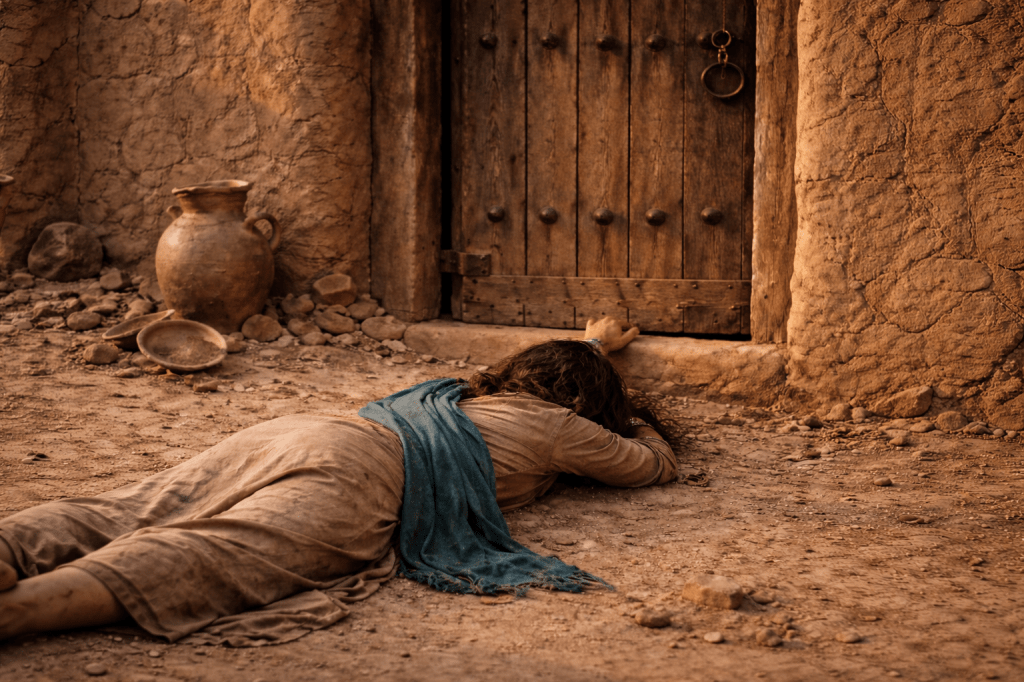
A Levite—one who should embody spiritual leadership—sacrifices the vulnerable to preserve himself. A town within Israel reenacts and surpasses the wickedness of Sodom. A woman is used, abused, and discarded,. And the response of the nation, though clothed in the language of justice, spirals into something equally disordered, brutal, and ungodly.

If we are tempted to distance ourselves from this story, we are already missing the purpose of the text. Scripture is not merely documenting their failure. It is revealing the potential trajectory of our own failings: the inclinations of the human heart untethered from right relation to God and people – the sin that is always crouching at the door, waiting to creep in, and ready to take hold … if we let it

Continue reading “The Ugly Story of Gibeah: Don’t Look Away”

The Sin of Sodom & Gomorrah Summarized: A Warning to the United States of America (and a Reason for Hope)

It may be worse then you think and more relevant than you assume


Since I noticed how Ezekiel summarized the sin of Sodom & Gomorrah earlier this year, I wanted to take a closer look. Ezekiel’s summary was surprising to me, and I wondered, “What did I miss in reading the story?”

I thought it was about sexual sin, and specifically homosexual sin, but Ezekiel doesn’t even mention sexual sin in his summary. This is what Ezekiel says, speaking to Israel:

“You not only followed [the ways of Sodom] and copied their detestable practices, but in all your ways you soon became more depraved than they. As surely as I live, declares the Sovereign Lord, your sister Sodom and her daughters never did what you and your daughters have done.

‘Now this was the sin of your sister Sodom: She and her daughters were arrogant, overfed and unconcerned; they did not help the poor and needy. They were haughty and did detestable things before me.'”

(Ezekiel 16:47-50) Obviously, the story of Sodom & Gomorrah isn’t what I thought it was.

Like most people, I was taught a simple version: God destroyed Sodom and Gomorrah because of homosexuality. End of story.

But when I actually took the time read the text carefully, I realized the Bible tells a far more unsettling story, and a story that is far more relevant to our world today than I imagined. The Bible contrasts hospitality and hostility to strangers (angels) to highlight the root of Sodom & Gomorrah’s sin.

I did a careful exegesis of the Sodom & Gomorrah story previously that demonstrates what the primary the sin of Sodom & Gomorrah was, but today I am just going to summarize it. The summary needs to include the context in which the story of Sodom & Gomorrah is embedded in the Bible.

Before Genesis 19 where we find the story of Sodom & Gomorrah is the story in Genesis 18 of Abraham’s and Sarah’s magnanimous hospitality to three strangers who turn out to be “the Lord” and two angels on their way to Sodom. The one called “the Lord” remained behind talking to Abraham, while the two angels continued on to Sodom where Lot sees them sitting in the gateway of the City. Lot calls to them, invites them in, and shows them the same magnanimous hospitality Abraham showed. (Gen. 19:1-3)

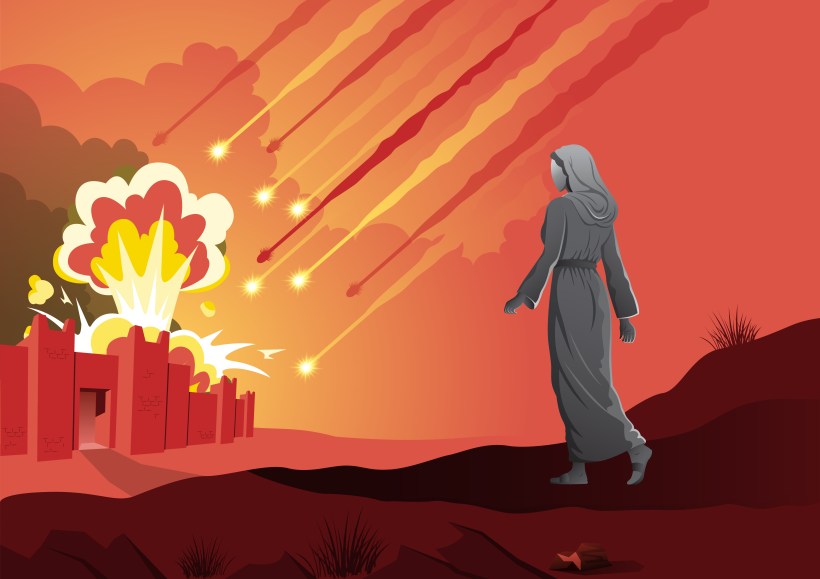
The parallel stories of Abraham’s and Lot’s hospitality that mirror each other in the same pattern set the stage for God’s judgment on Sodom. That’s when things go sideways. The men of the town surround Lot’s house and demand that Lot send them out to be violated sexually.

Abraham welcomes strangers with generosity and honor. Lot does the same, but the men of Sodom do the opposite. They rage against the strangers. They threaten Lot because he is a “foreigner”, and they warn Lot they will treat him worse than what they plan to do to the strangers in Lot’s house if he doesn’t comply.

The town’s men resented Lot being there and resented him inviting other foreigners into his house. They formed an angry mob to humiliate and violate Lot’s guests as a warning: you are not welcome here!

As Ezekiel says, the reason for this conduct is because they were arrogant, overfed and unconcerned about others. They did not help the poor and the needy. Worse, they didn’t just turn the foreigners away; they didn’t just drive them out of town; they tried to punish, violate, humiliate, and shame them.

The Lord told Abraham that He was responding to the great outcry against Sodom & Gomorrah due to the grievousness of their sin. (Gen. 18:20) Such an outcry is the response of people when great injustice is done to them. The scene echoes the story of Cain and Abel when Abel’s blood was said to cry out from the ground in Genesis 4. The same word is used for Israel’s outcry under Egyptian oppression in Exodus 2.

God responds to injustice. God responds specifically to the outcries of people who bear the oppression of that injustice, and God judges those who are unrepentantly responsible for that injustice.

The story of Sodom & Gomorrah is a story of God’s judgment on sin, but it isn’t sexual sin that brings God’s judgment. The sin that prompted God to respond was the sin that caused people to cry out under the weight of injustice.

Jesus later confirms that the sin of Sodom & Gomorrah is inhospitality when he warns towns who do not welcome his followers, saying, “it will be more bearable for Sodom and Gomorrah on the day of judgment than for that town.” Jesus says this in Mathew 10 when he sent his 12 disciples to proclaim the kingdom of God, and Jesus says it again in Luke 10, when he sent out 72 of his followers to heal the sick and proclaim the kingdom.

The context of these statements was the hospitality (or lack of it) shown to his followers. There is no mention of sexual sin—only refusal to welcome, refusal to listen, refusal to be hospitable.

Ezekiel is very specific about the sin of Sodom & Gomorrah:

“This was the sin of your sister Sodom: pride, excess of food, prosperous ease—but she did not help the poor and needy.”

Pride. Comfort. Indifference. Not just lack of empathy, but downright cruelty to the poor and needy – the vulnerable. That is the Bible’s own summary of the sin of Sodom & Gomorrah.

The angels/foreigners in the story of Sodom & Gomorrah are just one category of vulnerable people. Elsewhere, Scripture often mentions widows, orphans, and foreigners together to describe the vulnerable people in the ancient near east who God desired His people to protect and watch over – because God’s heart is to protect and watch over the vulnerable and needy.

Yes, there is sexual sin in the story, but the root of that sin is hostility toward others. In the context of the story as it sits in the greater context of the previous story about Abraham’s radical hospitality, the sexual act is a weapon of the people of Sodom. They use it out of arrogance, out of desire to guard their own wealth and comfort from foreigners, to humiliate, shame, and drive out the foreigners who dared to encroach on on what they had. It is the final expression of a society that idolized comfort, wealth, and lifestyle. Because they didn’t love God, they didn’t love people.

Sodom wasn’t destroyed because it was too permissive. Sodom was destroyed because its people were too proud, too full, too comfortable, and too cruel in their efforts to protect what they had from outsiders.

God heard the cries of those crushed by that system—and He acted.

That’s what makes this story disturbingly relevant today. The sin of Sodom isn’t ancient or obscure. It shows up whenever a society values its own prosperity above allegiance to God and clings to its own comfort, despises the stranger, and silences the cries of the vulnerable to protect what it has.

And that should give Christians (and non-Christians alike) pause in 2025 in the United States of America. God is no respecter of persons. People reap what they sow. God did not spare the people of Israel from His judgment when they repeatedly gave in to idolatry (putting their own interests above God’s interest) and oppressed their neighbors. He will not spare a country or a even a group of believers who do that.

The good news is that God is always, always faithful. He is aways just to forgive those who ask to be forgiven and repent of their ways. I pray that we can be such people.

Why I Write About Immigration Issues

The truth is complicated, but God’s heart is certain

Mexican Border

I have friends who keep me honest, and I am grateful for that. They don’t always agree with me. In fact, they often disagree with me on various things, but they remain my friends, and I remain grateful for them.

Anyone who follows me on social media knows that I am virtually fixated on the issue of immigration right now. It may seem like a new thing—that all of a sudden I have become woke, liberal, or progressive. Some people who don’t know me well, I am sure, think that about me. The truth is more complicated than that.

I am a lifelong Republican and conservative by nature. I’m also a follower of Jesus, though, and I find that Jesus defies modern political categories and stereotypes. If Jesus looks to me like a Republican or Democrat, “my Jesus” probably is not the real Jesus, and my politics have likely influenced my view of Jesus.

Many people might look at my posts on immigration and feel like I have abandoned all sense of patriotism and national pride. They might think I have become a hater of the United States of America. Again, the truth is more complicated than that.

I grew up with a love for my country and a strong sense of patriotism and pride. I was educated, like most people my age, on the goodness of the United States of America, celebrating Christopher Columbus and Thanksgiving this time of year with idyllic depictions of pioneers living in harmony with Native Americans as our forefathers lived out their manifest destiny in keeping with a divine mandate from our creator to form the greatest, freest country on earth.

I still believe we live in the greatest, freest country on earth, but the truth is messier and more complicated than I once believed. I am grateful for a strong sense of the goodness of the United States of America I learned as a child, and I appreciate the positives in that idealized memory of America. But it’s more complicated than that.

Humanity is nothing if not messy. We are fallen, sinful creatures. We know that, but our idyllic, comforting images die hard.

The pioneers displaced the Native Americans who were here long before us. They were pushed out of their ancestral lands. They were marched in a “trail of tears” to godforsaken territories where they have had to scrape out a meager subsistence ever since then in the literal dust of the barren, rocky places to which they were consigned.

Slavery is a pox on our idyllic history. That it was supported, promoted, and defended by Christians who sought comfort in the Bible while they exploited, oppressed, and dehumanized people for the color of their skin (and wealth they could generate) is a testament to the utter bankruptcy of human beings – even religious ones.

Let’s be honest about this, also: religious people who use their religion to justify their unjust ways are not doing anything different than non-religious people who are unjust. It’s just more insidious for the fact that they contort love of neighbor to love of self.

I have learned to be honest and not to look away from these contrary images of our history and our past. God calls for repentance, and repentance requires honesty. Repentance and heart change are the only proper response to the evil of idolatry and injustice.

Honesty does not mean I do not love my country, and it does not mean that I am not thankful for being born here. I still believe that the good we have brought into the world is not any less good. It’s just complicated, and I want us to live up to the ideals we ascribe to.

In case you could not tell, I am not an idealist, though I certainly do have idealistic tendencies. Not that I am any different than anyone else. We are complicated and complex creatures; human beings. Despite the polarized simplicity of social media that pigeon holes us into two-dimensional, stereotypical ideologues, people and societies are complex.

On the issue of immigration, my “awakening” happened more than a decade ago – in 2014. During the Obama administration, as I watched the Syrian refugee crisis unfold in the news, I realized that didn’t have a robust biblical view on the subject of immigration. I have written about this often, so please bear with me if you have read what I have written before.

Continue reading “Why I Write About Immigration Issues”

Trust for Those Who Would Judge the World?

Living out our trust in God by waiting on Him


Do you trust God? Do you have faith? Those aren’t trite questions, and they don’t discount the desperation behind those who cry out to God for justice, for righteousness, for real change in the world and in our own circumstances.

Where is the justice in this world? The writer of Ecclesiastes looked for justice and observed, “In the place of justice – wickedness was there!” (Ecc. 3:16) I have seen injustice in the American court system myself. I see injustice every day in the news. Just today, I met with people who have suffered great injustice in the local legal aid clinic I run.

The injustice in this world is undeniable, and it can be utterly crushing for those on the wrong side of injustice. In truth, we have all been on the wrong side of injustice at times in our lives, big or small. Truly, the writer of Ecclesiastes was accurate when he said:

I saw the tears of the oppressed—
    and they have no comforter;
power was on the side of their oppressors—
    and they have no comforter.

(Ecclesiastes 4:1) Injustice feeds injustice in a seemingly never-ending cycle. (Think about the Hatfields and the McCoys or the Palestinians and the Israelis.)

In our human minds, we imagine that injustice must be met immediately with action and force. Justice cries out for redress. We lament when justice does not come. We pray and cry out to God. When justice does not come for us, we might even be tempted to believe that God does not care or worse – the God does not exist.

The questions I pose, therefore, are not glib or lightly asked: Do you trust God? Do you believe?

When we are tempted to take judgment into their own hands, we fail to trust God if we act on that temptation. We become judge and jury. We usurp God’s justice in the process. (Vengeance is mine sayeth the Lord.) And, when become the judge and executioner, we make a mess of it in the process. We warp God’s justice to our conceptions of justice.

“Justice is not God wielding ‘the stick.’ It’s His desire to restore, redeem, reconcile, and mend all that’s broken in the world.” Chris Gresham-Britt

When the world talks about justice, the focus is on punishment. We don’t realize it as Christians that our view of justice is often more colored by the world than by God. Worldly justice is punitive.

If we are going to trust and believe God, we accept what the prophet says: that God desires mercy, not sacrifice. (Hosea 6:6) God desires to save and not to judge. That is why God sent His only Son into the world: not to condemn the world, but to save the world. (John 3:17)

God’s goal is redemption and destruction. God is just, but justice seems to be lacking in the world. Why? Peter says, we need to trust and be patient, as God us patient with us:

“[T]he Lord is not slow in keeping his promise, as some understand slowness. Instead he is patient with you, not wanting anyone to perish, but everyone to come to repentance.” (2 Peter 3:9)

God is waiting (longing) to have mercy on us! (Psalm 30:18) “[God takes] no pleasure in the death of the wicked, but rather that they turn from their ways and live.” (Ezekiel 33:11)

So, God waits patiently, withholding His judgment – withholding ultimate justice. He does this because He desires that none would perish, that all would turn to him and be saved. He waits to be gracious to us.

But we are impatient. We don’t want to wait. We want everything to be made right immediately, especially the injustices done to us, the people like us, and the people we know. “With the Lord a day is like a thousand years, and a thousand years are like a day” (2 Peter 3:8), but a day seems like a thousand years to us when are suffering or see suffering.

We cannot imagine the delicate and complex balance of God’s patience in waiting for people to come to repentance so that He can have mercy and the judgment that He will inevitably allow to be imposed on those who refuse to turn and repent. All the while, God hears the outcries of people suffering the injustices of their own folly and wickedness and the folly and wickedness of others – sowing the wind and reaping the whirlwind.

But, we do not see as God sees, and we do not know as God knows. Judgment is God’s business. It is not our business to judge the world. (1 Corinthians 5:12) That is where real faith comes – to leave the judging to God and to love the world as God loves the world, which is His instruction to us.

The whole law is summarized in two principles: love God, and love your neighbor. (Matthew 22:37-40; Romans 13:8-10; Galatians 5:14) That’s it. Just do it.

If you see a hurting neighbor, don’t judge; just help. Like the Good Samaritan, cross the road (go out of you way) to help your neighbor. Bear one another’s burdens. By doing these things, you will fulfill the law of love. (Romans 13:8-10)

In the end, justice will come quickly, but will God find faith on earth?

Do you trust God? Show it by loving others and leave the judgment to God. Do you have faith that God will bring justice? God’s justice is always colored by his desire to be gracious and compassionate. Be a vessel of God’s justice that is tempered by mercy and love, and love your neighbor.