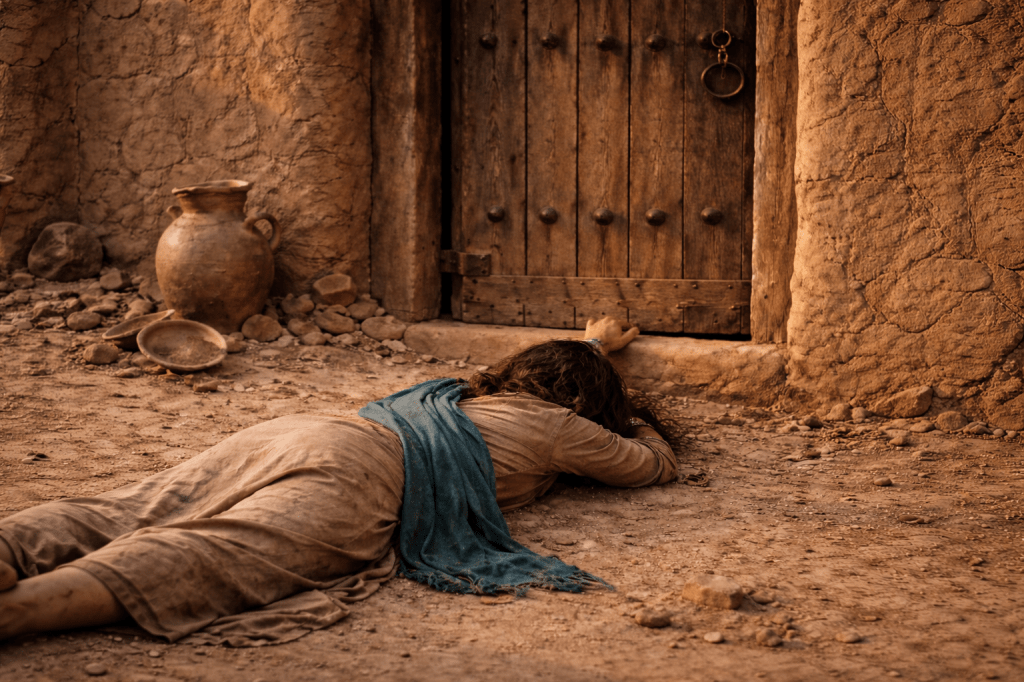
I just finished reading Judges 19-21, and I want to look away. I realize, though, that looking away is exactly the thing I should not do. This story is meant to offend modern and ancient sensibilities alike. We dare not look away and move on without understanding the poignance and significance of this passage in the Bible.
It’s a good time to state the obvious: not all passages in scripture are prescriptive. In fact, many of them are simply descriptive – a statement of what actually happened.
Further, we should recognize that Hebrew Scripture works by burying commentary subtly into the text in ways that require us to question, dig, and pull it out. Scripture is like the buried treasure and the pearl of great price that requires effort to obtain. We are not robots or data receivers. We are living beings contending with a living God and a loving revelation that requires interaction.
Scripture is also brutally candid about the human condition and the human heart. The often repeated phrase, “There is no one righteous, not even one,” is borne out over and over again to be true. All of the Bible testifies to that fact.
Hebrew scripture builds on itself. The patterns and themes we see early on are echoed in later passages. We need to pay attention to the repeated patterns, because that is where the text is signaling that we should dig.
Scripture often confronts us in ways that are highly uncomfortable. If we feel disoriented reading it, that is not a failure of interpretation. That is the point.
“The word of God is alive and active. Sharper than any double-edged sword, it penetrates even to dividing soul and spirit, joints and marrow; it judges the thoughts and attitudes of the heart.“
Hebrews 4:12
The closing chapters of Judges are not merely recounting Israel’s past; they are exposing what happens when a covenant people slowly, perhaps inevitably, detach themselves from the living reality of God while continuing to operate within the forms of religion. The religious structures are maintained, but the substance evaporates through spiritual neglect, idolatry (love of things more than God), and a failure to love others.
The Horror Is the Message
The brutality of Judges 19 is intentional. The narrative is crafted to unsettle us.
A Levite—one who should embody spiritual leadership—sacrifices the vulnerable to preserve himself. A town within Israel reenacts and surpasses the wickedness of Sodom. A woman is used, abused, and discarded,. And the response of the nation, though clothed in the language of justice, spirals into something equally disordered, brutal, and ungodly.
If we are tempted to distance ourselves from this story, we are already missing the purpose of the text. Scripture is not merely documenting their failure. It is revealing the potential trajectory of our own failings: the inclinations of the human heart untethered from right relation to God and people – the sin that is always crouching at the door, waiting to creep in, and ready to take hold … if we let it
Continue reading “The Ugly Story of Gibeah: Don’t Look Away”

