I just finished reading Judges 19-21, and I want to look away. I realize, though, that looking away is exactly the thing I should not do. This story is meant to offend modern and ancient sensibilities alike. We dare not look away and move on without understanding the poignance and significance of this passage in the Bible.
It’s a good time to state the obvious: not all passages in scripture are prescriptive. In fact, many of them are simply descriptive – a statement of what actually happened.
Further, we should recognize that Hebrew Scripture works by burying commentary subtly into the text in ways that require us to question, dig, and pull it out. Scripture is like the buried treasure and the pearl of great price that requires effort to obtain. We are not robots or data receivers. We are living beings contending with a living God and a loving revelation that requires interaction.
Scripture is also brutally candid about the human condition and the human heart. The often repeated phrase, “There is no one righteous, not even one,” is borne out over and over again to be true. All of the Bible testifies to that fact.
Hebrew scripture builds on itself. The patterns and themes we see early on are echoed in later passages. We need to pay attention to the repeated patterns, because that is where the text is signaling that we should dig.
Scripture often confronts us in ways that are highly uncomfortable. If we feel disoriented reading it, that is not a failure of interpretation. That is the point.
“The word of God is alive and active. Sharper than any double-edged sword, it penetrates even to dividing soul and spirit, joints and marrow; it judges the thoughts and attitudes of the heart.“
Hebrews 4:12
The closing chapters of Judges are not merely recounting Israel’s past; they are exposing what happens when a covenant people slowly, perhaps inevitably, detach themselves from the living reality of God while continuing to operate within the forms of religion. The religious structures are maintained, but the substance evaporates through spiritual neglect, idolatry (love of things more than God), and a failure to love others.
The Horror Is the Message
The brutality of Judges 19 is intentional. The narrative is crafted to unsettle us.
A Levite—one who should embody spiritual leadership—sacrifices the vulnerable to preserve himself. A town within Israel reenacts and surpasses the wickedness of Sodom. A woman is used, abused, and discarded,. And the response of the nation, though clothed in the language of justice, spirals into something equally disordered, brutal, and ungodly.
If we are tempted to distance ourselves from this story, we are already missing the purpose of the text. Scripture is not merely documenting their failure. It is revealing the potential trajectory of our own failings: the inclinations of the human heart untethered from right relation to God and people – the sin that is always crouching at the door, waiting to creep in, and ready to take hold … if we let it
The Backstory: Radical Hospitality
Jewish interpreters have long drawn attention to something that can be overlooked if we focus only on the climactic violence: the failure of hospitality. In fact, most Christian commentators miss this theme in the text.
Jewish theologians have always emphasized the radical hospitality of Abraham. This characteristic of Abraham is drawn out in Genesis 18 with the story of the Lord and two angels. We are told who they are in Genesis 18:1, but Abraham sees them only as men in Genesis 18:2. They are strangers to him.
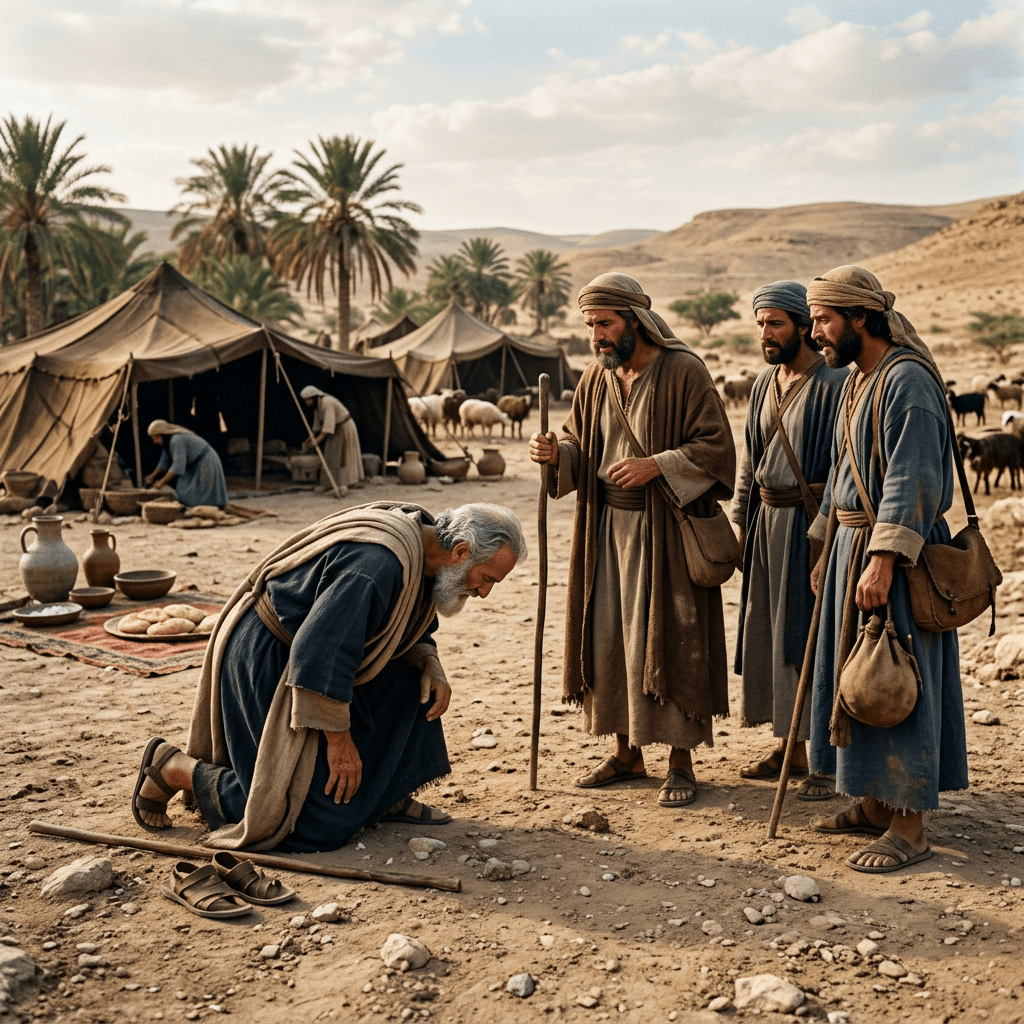
Upon seeing them, Abraham hurries to them, bows to them, calls himself their servant, gives them water to wash their feet, and makes a feast for them. Abraham’s radical hospitality is a demonstration of his heart, and his heart is a reflection of God’s character.
The pattern in Genesis 18 is repeated in Genesis 19. When Lot sees the two angels in the city square in the evening. He also believes they are foreign men. The text emphasizes that no one has taken them in. He rushes to them, bows to them, calls himself their servant, begs them to come and be fed, gives them water to wash their feet, and makes a feast for them.
The pattern is unmistakable when you see it. It is repeated from Abraham to Lot in the same vein for emphasis.
Hospitality is an underappreciated thing in our modern, individualistic, American world. Hospitality has more honor and deference in Middle Eastern cultures and other cultures around the world. At its core, hospitality is a demonstration of caring for other people.
In the Ancient Near East, traveling foreigners were vulnerable, and hospitality brought them under the protection, support, and provision of the host. These parallel demonstrations of radical hospitality to strangers are echoed in Hebrews 13:2 in the encouragement “to show hospitality to strangers, for by so doing some people have shown hospitality to angels without knowing it.” They also become the backdrop for what happens next in Genesis 19.
The Wickedness of Radical Inhospitality
While Lot is entertaining the strangers/angels, all the men of the town surround the house and demand Lot send the men out so they can have sex with them. In our modern preoccupation with sex and sexual sin, we tend to miss the real point here. These men are not seeking pleasure; they want to violate the strangers. They are angry at Lot – a foreigner – for inviting them into his home in their town.
When Lot tries to dissuade the men from their intentions, they tell Lot, “Get out of our way!” They comment to each other, “This fellow came here as a foreigner, and now he wants to play the judge!” Then, they threaten Lot, “We’ll treat you worse than them.” (Genesis 19:9)
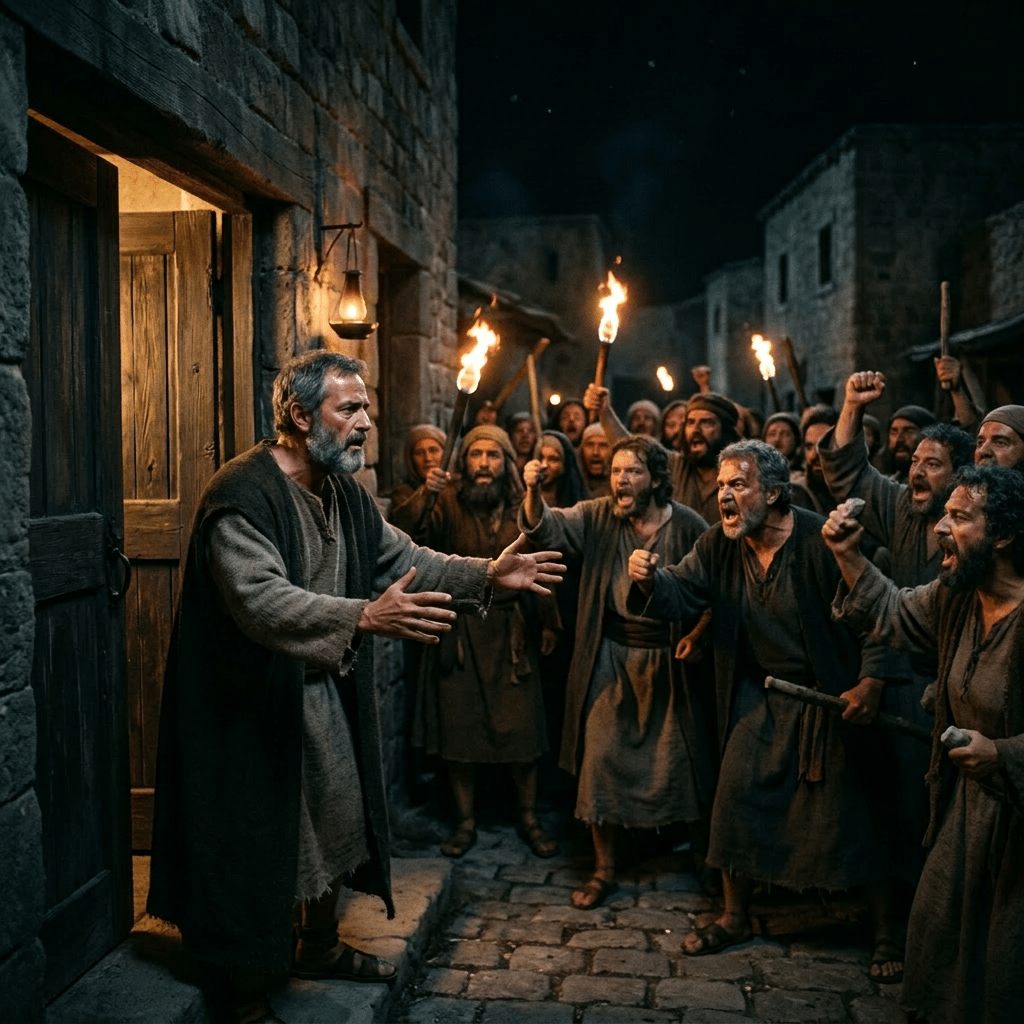
This reveals the intentions of the men: to do harm. It was a showing of dominion over Lot and the strangers who dared to enter their town. It was a display of radical inhospitality. Their actions are in sharp contrast to the radical hospitality Abraham and Lot showed for the same strangers.
The point of these parallel and contrasting stories is to expose the wickedness of the people in Sodom. Their wickedness is demonstrated in their violent inhospitality. When we fail to love God and love neighbor, it inevitably is demonstrated in our brutal, uncaring treatment of other people – especially vulnerable people like foreigners.
If we focus only on the sexual nature of the sin, we actually miss the main point here. The main point is highlighted in the parallel and contrasting stories. Ezekiel confirms the point when he describes Sodom’s sin:
“Now this was the sin of your sister Sodom: She and her daughters were arrogant, overfed and unconcerned; they did not help the poor and needy.”
Ezekiel 16:49
They were arrogantly focused on their own appetites so that they were overfed and unconcerned for others. Not only did they not help the poor and needy, they oppressed and violated them. In fact, the angels went to Sodom because they heard the outcry of the people in Sodom. (Gen. 18:20-21) The judgement that rained down on Sodom was ultimately because of their mistreatment of the vulnerable – variously described in the Bible as the poor, the foreigners, the widows and the orphans.
When God’s People Become Worse Than the Ungodly
The scene in Genesis 19 is replayed in Judges 19, but this time it plays out in an Israelite town. Before we get there, a Levite’s concubine leaves him to return to her father’s house in Bethlehem. The fact that a Levite had a concubine is a clue to the moral decline of God’s people at this point.
The Levite goes to is concubine’s parents’ home where her father “gladly” welcomes the Levite. The father prevails on the Levite to stay, and he stayed, ate, drank, and slept there for three days. When the Levite determined to go, his father-in-law persuaded him again to refresh himself, eat, and spend the night. This happened again on the fifth day. Finally, the Levite insisted on leaving for his home in the hill country of Ephraim.
The father-in-law’s display of radical hospitality echoes the hospitality shown by Abraham and Lot to the strangers/foreigners/angels in Genesis. The Levite was not a foreigner nor a stranger as he had married his host’s concubine, but the kinship of all the parties in this repeat story is central.
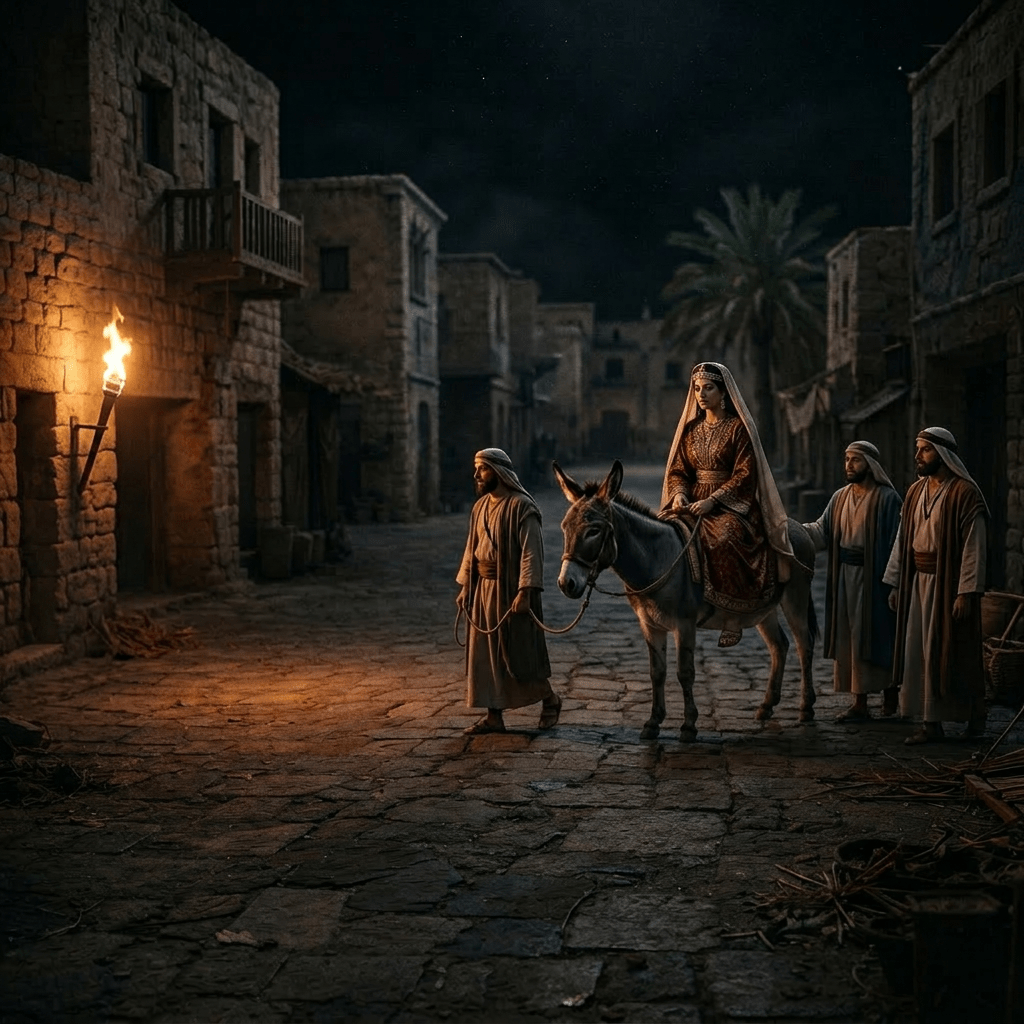
The Levite left to go back to his home. Daylight was waning when he reached Jebus, a foreign city, but they pressed on to Gibeah, an Israelite city of the tribe of Benjamin. They went into the city and sat in the city square but no one took them in for the night. (Judges 19:11) This is the first clue that we are about to repeat the story of Sodom.
The repeated statement that “no one took them in for the night” suggests that the right and hospitable thing to do would be for someone in the town to invite those fellow Israelites into their home. In a covenant people shaped by the memory of sojourning—“you were strangers in Egypt”—hospitality was not a social courtesy. It was a moral obligation rooted in the character of God. To receive the stranger was to participate in God’s own generosity. To refuse was to deny it.
That’s when “an old man from the hill country of Ephraim arrives in town.” Though he wasn’t from Gibeah, he was living there. We should see the parallel in this story to Lot, the foreigner living in Sodom, who sees the men/strangers/angels in the city square.
Just as Lot did to the angels, the old man insists that the Levite spend the night with him. The man took the travelers in, fed their donkeys, washed their feet, and made them something to eat and drink. (Judg. 19:16-21)
As they were enjoying themselves, “some wicked men of the city” surrounded the house, pounded on the door, and demanded the Levite be brought out for them to have sex with him. (Judg. 19:22) They wanted to violate the Levite – the stranger in their town – like the men of Sodom demanded Lot’s guests – to send a message to the foreigner, Lot – that they didn’t take kindly to him inviting more foreigners into their city.
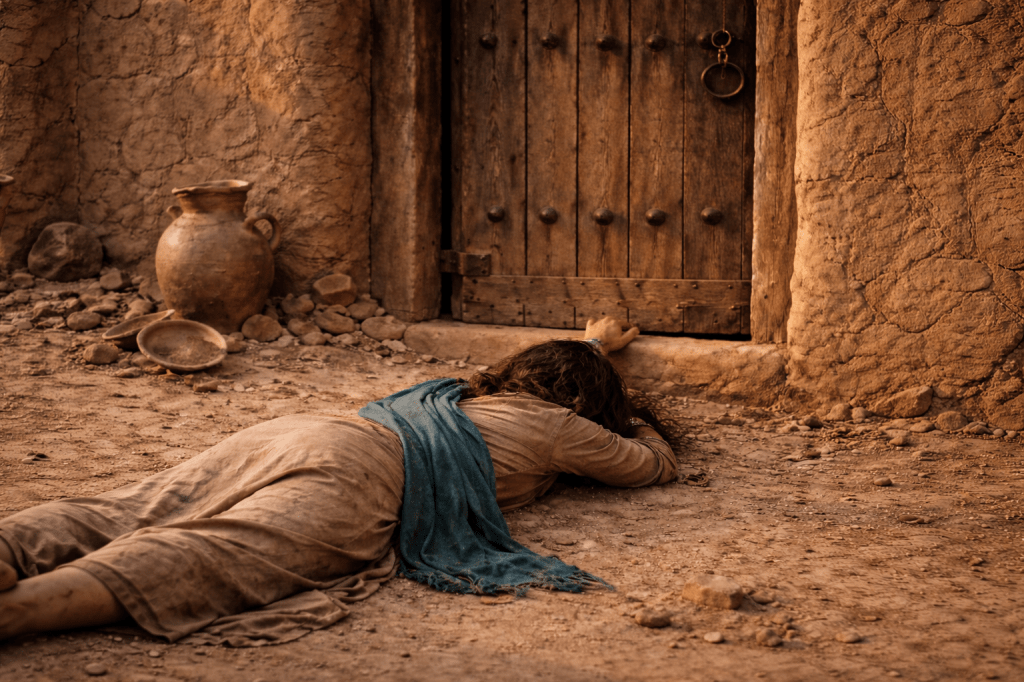
This time there were no angels to intervene, but the Levite sent his concubine out to the men. They raped and abused her throughout the night. At daybreak the Levite found her lying face down at the door with her hands on the threshold. (Judg. 19:23-26)
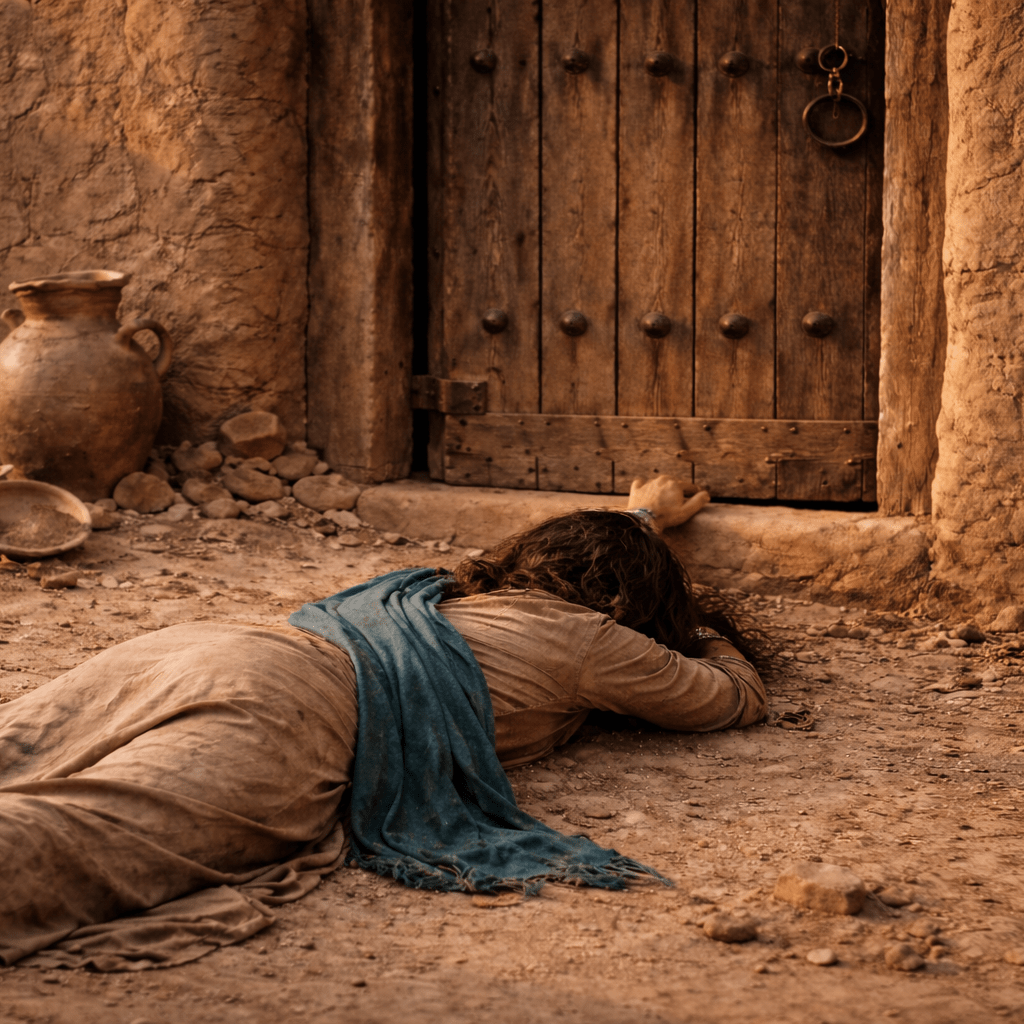
This story is ugly and shocking. The Israelites from the tribe of Benjamin in the city of Gibeah had devolved so thoroughly in their moral depravity they were just like the Sodomites – actually they were worse.
They had no respect even for a fellow Israelite – and not just an Israelite, but a Levite. They didn’t just violate the concubine, the vulnerable one, they raped and abused her so badly that she could not get up when the Levite called to her in the morning.
The Levite was not much better than the Benjamites. He shows no concern or empathy for his concubine. He throws her on the donkey and heads home. We don’t know when she died. That detail is conspicuously absent. All we know is that she did not respond to him when he found her and said to her, “Get up, let’s go.”
The old man from the hill country of Ephraim – the same location where the Levite was from – does not stand out as extraordinary. He and the Levite were from the same area, and he was only doing what was expected. He is just a faint echo of what Israel was meant to be.
When the Levite arrived at his home, he took a knife, cut the body of the dead woman into twelve parts, and sent them all around Israel. (Judg. 19:27-30) She is not the focus of his attention. He just wants to get even.
The whole thing is ugly, and we naturally recoil from it. Everyone in this story, but for the concubine and the old man from the hill country of Ephraim – the outsiders – are evidence of the great moral collapse of God’s people.
From Injustice to Vengeance: A Form of Religion without the Substance
The tribes respond to the great injustice. They gather and seek guidance. They pay homage to God, but everything they do bears the marks of a people who are no longer shaped by Him. At the end of the story we are told that everyone is doing what is right in his own eyes.
Their religious practice is hollowed-out, self-serving, and empty. It is a kind of religiosity that can persist long after the heart has drifted—a form that still speaks the right language, performs the right actions, and seeks the right outcomes, but it no longer reflects the reality and character of God.
The Levite is religious. The tribes are religious. Their cause—justice—has an air of legitimacy. But, their religiosity and efforts at justice feel more like superstitious religiosity and the reckless justice of vigilantes.
The Levite claimed the townsmen wanted to kill him, and he neglected to admit that he offered up his concubine to be raped and abused in his place. (Judges 20:5-6) He demands justice, but he takes no responsibility.
All the rest of the tribes of Israel rashly gathered to confront the town of Gibeah to demand the “wicked men” be turned over to them to be killed – their lives for the life of the concubine. The Benjamites refused to comply and mustered 26,000 men to fight. It became tribal.
Though the other tribes of Israel mustered 400,000 swordsman to attack their unrepentant Benjamite brothers, they were rebuffed twice. They lost 22,000 men the first day and 18,000 men the second day. We are left to wonder, “What was their plan?” Did they have a plan? In the context of Old Testament narrative, the losses speak to the absence of blessing on what they were doing.
The Israelites spend much time weeping before God and offering all kinds of sacrifices, but they spend little time asking God’s guidance and attempting to discern God’s heart and direction for them.
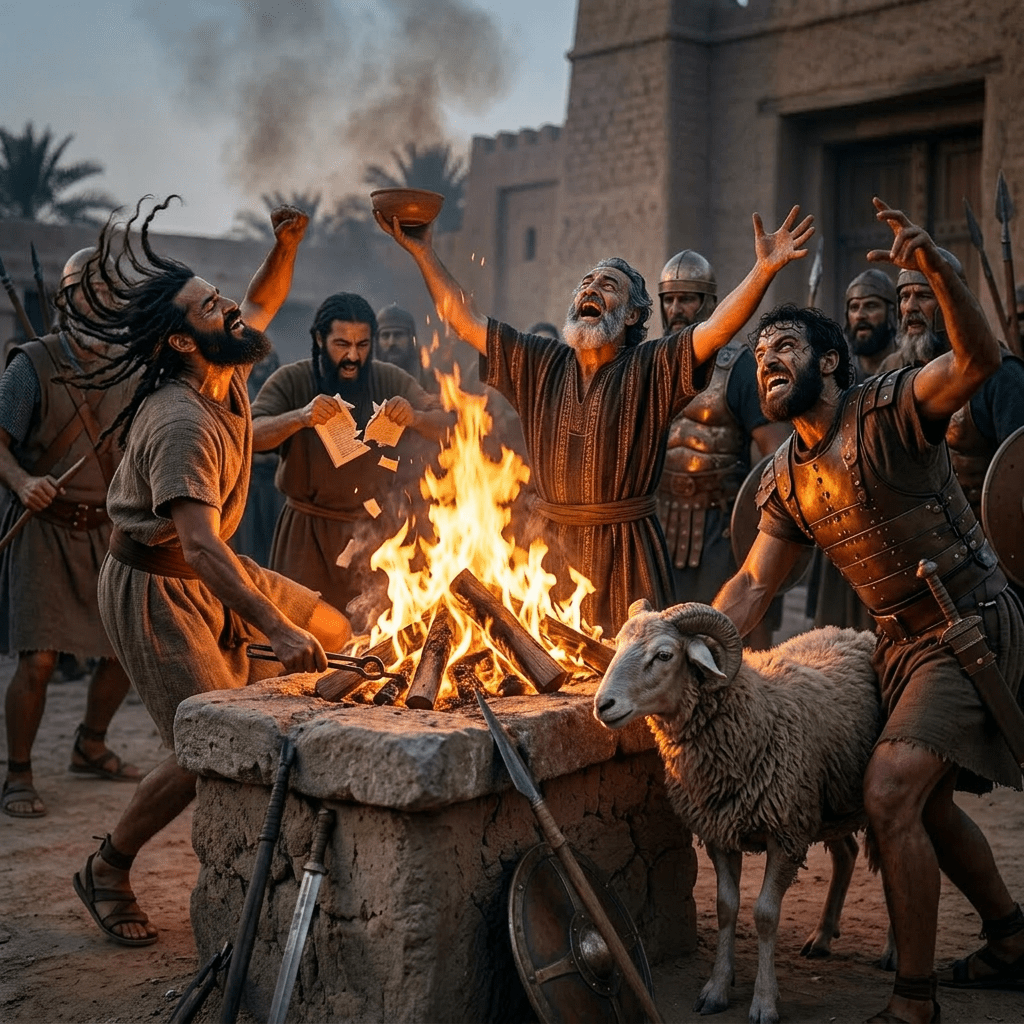
I am reminded of the prophet Samuel’s words to Saul: “To obey is better than sacrifice.” How often do we set the course of our lives and ask God to bless it, rather than submit ourselves to God and to His plans and seek to understand God’s character in how we should live and be a reflection of Him?
When the Israelites attack a third time (this time with a plan), they routed the Benjamites, chased them down, and slaughtered over 25,000 men. Only 600 men were left scattered in the wilderness. (Judg. 20:28-48) But their vengeance was not complete; they vowed in the heat of the moment not to give their daughters in marriage to a Benjamite. (Judg. 21:1)
After making that vow they realized how rash and foolish it was. The Benjamites were their own kin – one of the twelve tribes of Israel – and they left them vulnerable.
They assembled at Bethel, where they “sat before God,” but they didn’t inquire of God. They decided to slaughter the men and women of Gilead because they did not show up. They sent 12,000 troops to slaughter the people at Gilead, sparing only 400 women who were virgins, and they delivered the women to the Benjamites who survived the previous slaughter. Judg. 21:2-14)
The nameless Levite’s concubine and women of Gilead are reduced to possessions. They have no dignity and no intrinsic worth in the estimation of Israel in its fallen state. The image of God is not recognized in them (or anyone for that matter) in the story.
Their efforts at justice went from bad to worse. Without inquiring of God further, they devised a solution that would allow them to save face with their vow. They instructed the remnant of the Benjamites to go to a festival in Bethel and steal women to become their wives. In that way they could claim they did not go back on their vows. (Judg. 21:15-24) All the while, they advance further into a warped and morally shifting existence that looks nothing like the Law of Moses or the character of God.
This is not merely failure. It is inversion. An innocent women and men who were killed, stolen, and bartered for to satisfy their own warped sense of morality. They had a form of religion, but the substance of God’s character is wholly absent. The verse at the end of the chapter says it all: “Everyone did as they saw fit.)
Moral Decline and Misguided Religious Zeal
The moral decline of the nation of Israel is accompanied by the rise of misguided religious zeal. The civil war at Gibeah is often read as a necessary act of justice. And at one level, it is true: the sin of Gibeah demanded response. Benjamin’s refusal to confront it compounds the guilt.
But what unfolds is not justice rightly administered. It is justice untethered from restraint. It is the justice of religious zeal, divorced from the character and guidance of God. Justice is warped by the sin that has come to define God’s people.
The nation that failed to protect one vulnerable woman answered by destroying entire communities. The people who rightly hated the evil, but they perpetuated evil and injustice under the banner of their own morality and misplaced religious zeal. In the end, they devised solutions that mirrored the very sin that provoked their outrage – sacrificing the vulnerable to achieve their ends.
This is the anatomy of misguided zeal: when the pursuit of what is right is no longer governed by the character or counsel of God, it produces outcomes that are themselves, profoundly unjust and profoundly unlike the character and nature of God.
The Vulnerable as the Measure of a People
If there is a moral center in this narrative, it is found in the treatment of the vulnerable. Throughout the Mosaic law are protections to safeguard widows, orphans, strangers, and the poor. In Leviticus 25 those protections are a safety net in turn for Israelites who fall in hard times.
The failure of Israel always results in the oppression of the poor and the vulnerable. The prophets reduce the sins of Israel to two things: idolatry and injustice. These sins mirror the two great commandments that summarize the law and the prophets: love God and love your neighbor as yourself.
These things go hand in hand. If there is any failure in doing justice and protecting the vulnerable, there is always a failure to love God. When people fail to love God, they inevitably fail to love people. Idolatry and injustice are wicked companions.
A society’s spiritual health is revealed not in its declarations, but in its actions. Where the vulnerable are neglected, exploited, or sacrificed—even for causes that appear righteous—the covenant has already been abandoned in practice, whatever may remain in word.
The failure of hospitality at the beginning of the story and the exploitation at its end are not separate issues. They are the same failure, fully matured. The judgment God rained down on Sodom for arrogance, feeding their appetites, wallowing in comfort, and neglecting the poor and needy (Ezekiel 16:49) is now hanging over Israel. Israel has descended to the same nadir of wickedness.
The Failure of Sin: Doing What is Right in Your Own Eyes
The book of Judges closes with a line that we might read too narrowly:
“In those days there was no king in Israel; everyone did what was right in his own eyes.”
It would be easy to reduce it to a political statement—a justification for monarchy. Having a king didn’t resolve the moral and spiritual decline. The same downward cycles of idolatry and injustice continued through the time of the kings. The deeper issue is not the absence of a human king; it is the rejection of divine kingship.
Without a shared orientation toward God’s authority, every individual and tribe became their own measure of right and wrong. Israel became tribal; they were no longer twelve tribes unified under Mosaic Law; and that fragmentation splintered all the way down to individuals – every man – doing what was right in his own eyes.
The result is what we see here: a people who can no longer distinguish between justice and vengeance, righteousness and self-assertion, worship and manipulation, God’s righteousness and self-righteousness.
What This Text Asks of Us
Judges 19–21 does not offer resolution. It offers revelation. It reveals how even God’s chosen people can descend into moral collapse and spiritual emptiness. The arrogance to go one’s own way is rebellion and idolatry. The inevitable result of that path is seen in a lack of godly character and righteousness that results in harm to the vulnerable and injustice.
Hospitality gives way to self-protection. Justice is severed from mercy. Religion continues in form without personal transformation. God’s authority is acknowledged in word only, but the reality is godlessness
The descendants of Abraham, the nation God led out of Egypt, and God’s covenant people who entered into the promised land did not arrive where they were at the end of the book of Judges overnight. The symptoms, however, were there from the beginning.
They grumbled in the wilderness. They convinced Aaron to make them a golden calf. They questioned the authority of Moses. They shrunk back in fear to take the land God promised them. They fell into a downward spiral of idolatry and injustice through generations of judges until their religious expression had only form and no substance.
Perhaps, the most evidence result of that failure is injustice. that prompted God to send the cries of the people suffering injustice led the angels to Sodom. The Israelites were to be a light to the nations around them, an example of God’s character among the nations, but they lived in darkness. Instead of being a light to the nations, they became indistinguishable from the wicked nations around them – maybe even worse. Though Judges 19-21 is the end result, the beginnings of decline are less noticeable.
- The quiet refusal to receive those who disrupt our comfort
- The subtle reshaping of righteousness around our own instincts
- The maintenance of religious identity without corresponding obedience
The collapse in Judges did not begin with wanton wickedness or violence. It begins with neglect, with disordered priorities, with the offer of sacrifices to appease a guilty, disobedient heart, and a desire to define right and wrong for ourselves.
Navigating by Faith
To navigate by faith is not simply to affirm God, but to be transformed by Him—to allow the character of God to shape how we receive, how we judge, how we act, and how we respond to the vulnerable among us. God is love (1 John 4:20), so it is no wonder that loving God and loving your neighbor is the way forward. We cannot do one without the other.
We often fail to notice our idolatry until it devolves into a hardness of heart reflected in the way we treat others. Thus, Judges 19–21 stands as a severe mercy. It refuses to let us imagine that we can drift from God without consequence. It shows us, with unflinching clarity, where that road leads. It shows us how to recognize the symptoms of our spiraling sin and arrests before we God gives us over to our own failings.
The story is meant to arrest us. It is meant to shock us into caring. And in doing so, it calls us back—not merely to better behavior, and not merely to religiosity, but to submission to the One who alone defines what is good. The fruit of our repentance and transformation is ultimately seen in the way we treat others.
“Whoever claims to love God yet hates a brother or sister is a liar. For whoever does not love their brother and sister, whom they have seen, cannot love God, whom they have not seen. And he has given us this command: Anyone who loves God must also love their brother and sister.“
1 John 4:20-21
As ugly as this story is, we know that God has plumbed the depths of sin and human depravity, and God has provided the solution – the death of Christ on the cross has defeated sin. The Law of Moses has been replaced by the law of Love. It is not our righteousness, but the righteousness of Christ who justifies us before God, and it is the Holy Spirit who writes God’s love on our hearts that we might die to ourselves and live for Christ – loving God and loving neighbor because of Christ who lives in us.


Well said, and thank you for once again challenging my heart. While reading it, I was reminded of one of God’s final statements to Isaiah when He said, “Of all those thing I have created and of everything that exists, the one thing on which I look is on the spirit of a man that is broken and contrite before Me, and who trembles at My Word.” Is 66:2
LikeLiked by 1 person