If you have followed my blog for any length of time, you know that I have written often on the theme of migration (aliens, foreigners, sojourners, and strangers) as it appears in the Bible. Now that I am aware of it, I am amazed at the amount of time devoted to it in God’s revelation to us. It is a rich and deep vein of gold with significant Gospel implications.
I began reading to determine how God views immigrants back in 2014 during the Syrian refugee crisis. I wrote Immigration: The Strangers Among Us in the fall of 2014 to share what I found.
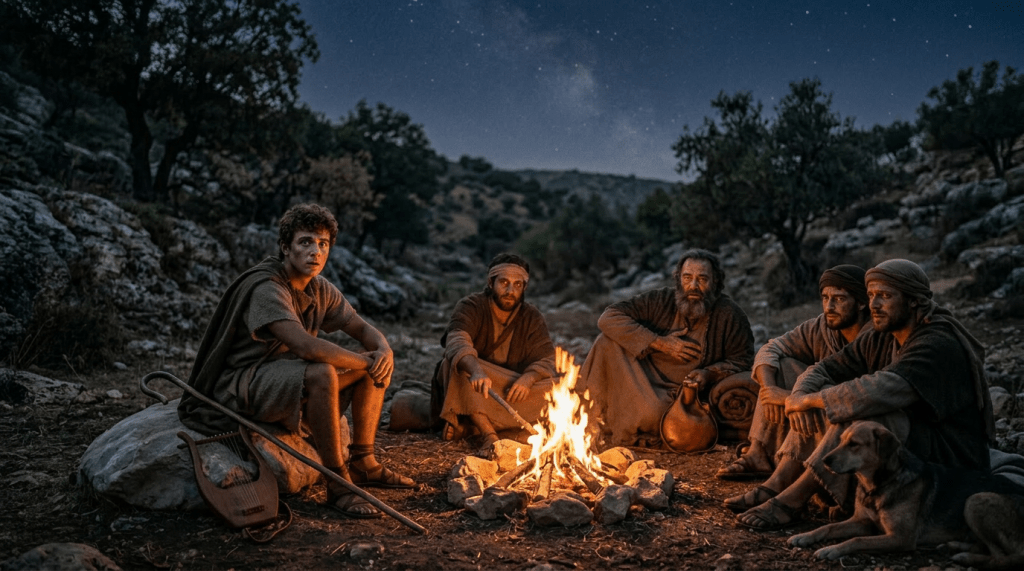
Since then I have noticed how central this thread is to the Gospel and the whole biblical narrative from the beginning (the exile of Adam & Eve from the garden) to the end (the gathering of people from every nation, tribe and tongue before the throne of Jesus in Revelation 7:9). In my daily reading recently, I noticed another segment of that thread involving David before he was king. When you see it, it’s obvious.
David Was a Refugee
David rose quickly to prominence after killing Goliath. He was initially taken in by King Saul because of that success, but Saul became jealous of David as he had more and more success in battle andas a leader of men. God rejected Saul, though he remained King, and David was anointed as his successor.
Jealousy drove Saul to want to kill David. His first attempt is chronicled in 1 Samuel 18:10-11. Saul tried to pin David to the wall with his spear twice, David dodged him and escaped. Saul tried a different tactic – to send David into battle after battle, hoping he would be killed by enemy forces. (1 Samuel 18:17, 25) When those efforts failed, Saul ordered his son, Jonathan, and his attendants to kill David, but Jonathan would not do it. (1 Samuel 19:1-2)
With Jonathan’s help, David fled into the wilderness to preserve his life, but Saul pursued David with an army of men. David was on the run from Saul from 1 Samuel 19 through 1 Samuel 26 until Saul died in battle with the Philistines.
Today, we would call David a refugee because he was displaced due to violence. Over 123 million people have been displaced today because of war, armed conflict, persecution, human rights abuses, and generalized violence, according to the UN Refugee Agency (UNHCR). About 60-70 million refugees are displaced inside their own countries. The other 40+ million refugees have crossed country borders to escape the violence that threatens them.
In 1 Samuel 21:10-15, David fled across the border to the Philistine city of Gath, which ironically was the hometown of Goliath, the giant that David killed. The Philistines were obviously enemies of the nation of Israel, but David was desperate.
Not surprisingly, the Philistines recognized David and were suspicious. David feigned insanity to save himself from potential hostility (1 Samuel 21:10-15), and he returned to hiding in the wilderness of Israel.
Being a refugee is a desperate circumstance. Like David, many people are caught up in local, regional, or national violence and do not have safe places to go in their home country. They face danger at home and abroad. People in David’s position are vulnerable. They look for safety, protection, and welcome wherever they can find it.
The things David experienced as a refugee and asylum seeker play out for millions of people in our world today. In fact, more people are displaced today because of violence than ever before, according to the UNHCR Global Trends Report published in 2024. That number doubled in the last decade, leaving 1 out of every 67 people in the world displaced today!
This is obviously a sad state of affairs, but I am more interested in what God has to say about these things. There was a time when I didn’t know. Since 2014, I have become increasingly aware of the way scripture views people in refugee status, and today I will trace what can be found in the life of David when he became a refugee and asylum seeker.
When a Refugee Seeks Help
David’s flight from violence took him and his men into the territory of Nabal, a descendant of Caleb from the tribe of Judah. (Samuel 25) This was David’s tribe, but David and his men stayed in the outskirts of Nabal’s territory. They respected their distance, and took nothing from Nabal’s shepherds, even though David and his men were in need. They even watched over and protected Nabal’s shepherds in the field while hiding from Saul.
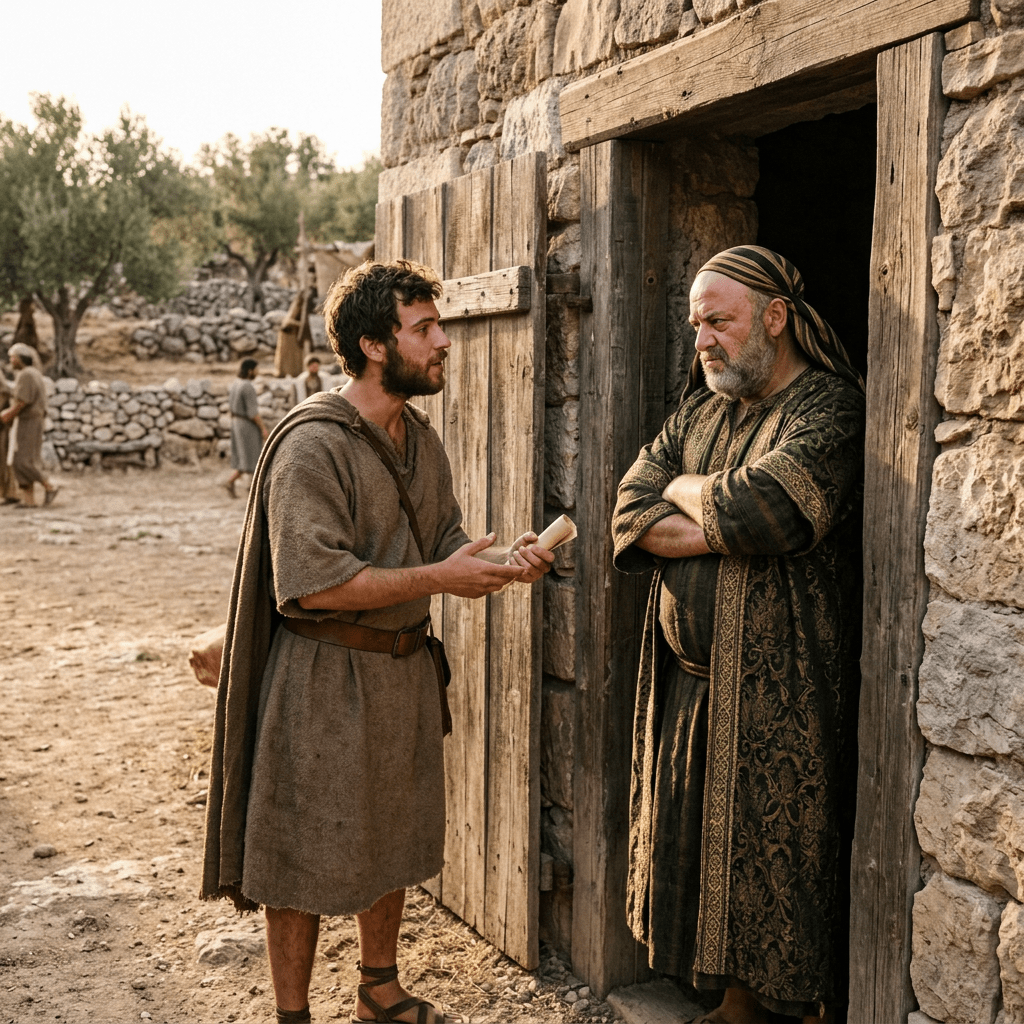
During festival time, David sent men to inquire of Nabal for food so that David and his men could celebrate. Though Nabal was kin to David, he rejected their request out of hand, despite knowing who David was and the goodwill David showed to his men and sheep in the wilderness.
Nabal’s inhospitality angered David so much that he vowed to kill Nabal and of his men, but Nabal’s wife, Abigail, intervened. She discerned David’s character from his respect for the shepherds and the things she heard about David. She sent her servants to David with a generous supply of feed to convince him not to do what he vowed to do.
David relented, and he even thanked Abigail for convincing him to avoid bloodshed and leave vengeance to God. (Samuel 25:32-35) He did not carry out his vow, and God honored him. Just 10 days later, Nabal died suddenly.
In the context of this story, we understand that the Lord took Nabal’s life because he failed to be hospitable to David. David was from his own tribe and was gracious to him, but Nabal failed to provide for David and his displaced men when they sought his help.
I think we can understand by this how God viewed Nabal’s refusal to to help. It is all the more clear when we consider all the times God told the Israelites to love the stranger sojourning in the land (Lev. 19:33-34; Deut. 10:18-19); not to oppress a sojourner (Ex. 22:21; 23:9); to share a tithe with the sojourner (Deut. 14:28-29) to include foreigners in their feasts (Deut. 16:11); to leave food for foreigners (Deut. 24:19-21; Lev. 23:22); etc.
David wasn’t even a foreigner, though Nabal may have never met him. He was kin, but God told His people to support poor Israelites with the same care they were to provide for foreigners. (Lev. 19:10; 23:22; 25:35; 39-43) Nabal refused, and God took his life for it, demonstrating how seriously God takes His instruction to us – that we should protect and provide for the foreigner who comes to us for help.
David, the Asylum Seeker
In 1 Samuel 27, David is still a refugee fleeing the threat of violence, and Saul is relentlessly pursuing him to kill him, so David sought asylum, again, with the arch enemies of Israel, the Philistines. This time, David is taken in by the Philistine king, Achish, and David becomes a part of the Philistine army.
The appeal to a foreign authority for refuge might make David an asylum seeker today. Under international and U.S. law, a person may show up at the border without prior approval and seek asylum if that person has suffered past persecution and/or has a well-grounded fear of future persecution due to race, religion, nationality, political opinion, or membership in a particular social group.

David fled from Saul because Saul wanted to kill him, but David’s asylum claim in the 21st century would not be clear-cut. Saul did not want to kill him because of his race, religion, or nationality. Although Samuel anointed David to be king, David did not set himself up in political opposition to Saul. He respected Saul’s kingship. David also wasn’t a member of a threatened social group. Saul only wanted to kill David.
This underscores how difficult it may be for many people to seek asylum. Many people flee where they live because of drug cartels, rape culture, and general violence, but none of these things would qualify a person to seek asylum. Even if the supreme leader of the country wanted to kill you like David, you would not qualify for asylum under current asylum laws.
Law vs. Grace
In the biblical story, David’s request for asylum was granted by the Philistine King. Seeking asylum from the Philistines seems untenable, but what else was David to do? It wasn’t safe for David in Israel. He was vulnerable, and his options were few and treacherous.
Most refugees, like David, do not want to leave their homeland. About 70% of refugees cross the border into a neighboring country, according to the International Rescue Committee, because they hope to return where they came from. (Migrants and Refugees, UN News, May 26, 2017) Neighboring countries are often overwhelmed with the number of refugees, and many refugees are forced to move on.
David was fortunate to find refuge with the Philistines, but some commentators criticize David for lacking faith. Instead of relying on God, he sought the protection of the arch enemies of Israel.
A clue to David’s frame of mind is found in 1 Samuel 27:1: “David thought to himself, ‘One of these days I will be destroyed by the hand of Saul. The best thing I can do is to escape to the land of the Philistines. Then Saul will give up searching for me anywhere in Israel, and I will slip out of his hand.'”
I think the commentators who criticized David have a point. God didn’t tell him to do it. David “thought to himself” that it would be a good idea. David became overwhelmed and he succumbed to his fear.
They have a point, don’t they? David made a bad choice and he should pay for it, right? He deserves whatever consequences he gets. That is the view of many Christians who emphasize law and order over love and compassion in the area of immigration.
Fortunately though, we don’t have to earn God’s favor, and God doesn’t abandon us when our faith wanes!
David’s fear is understandable. What would you do if your country was wracked by civil war and people were trying to hunt you down and kill you? Who of us has not compromised our faith in difficult circumstances far less serious than David’s situation?
This wasn’t even the worst mistake David ever made in his life. Thankfully, God is always ready to extend grace. Shouldn’t we adopt a similar attitude of grace toward others based on the grace God has shown for us?
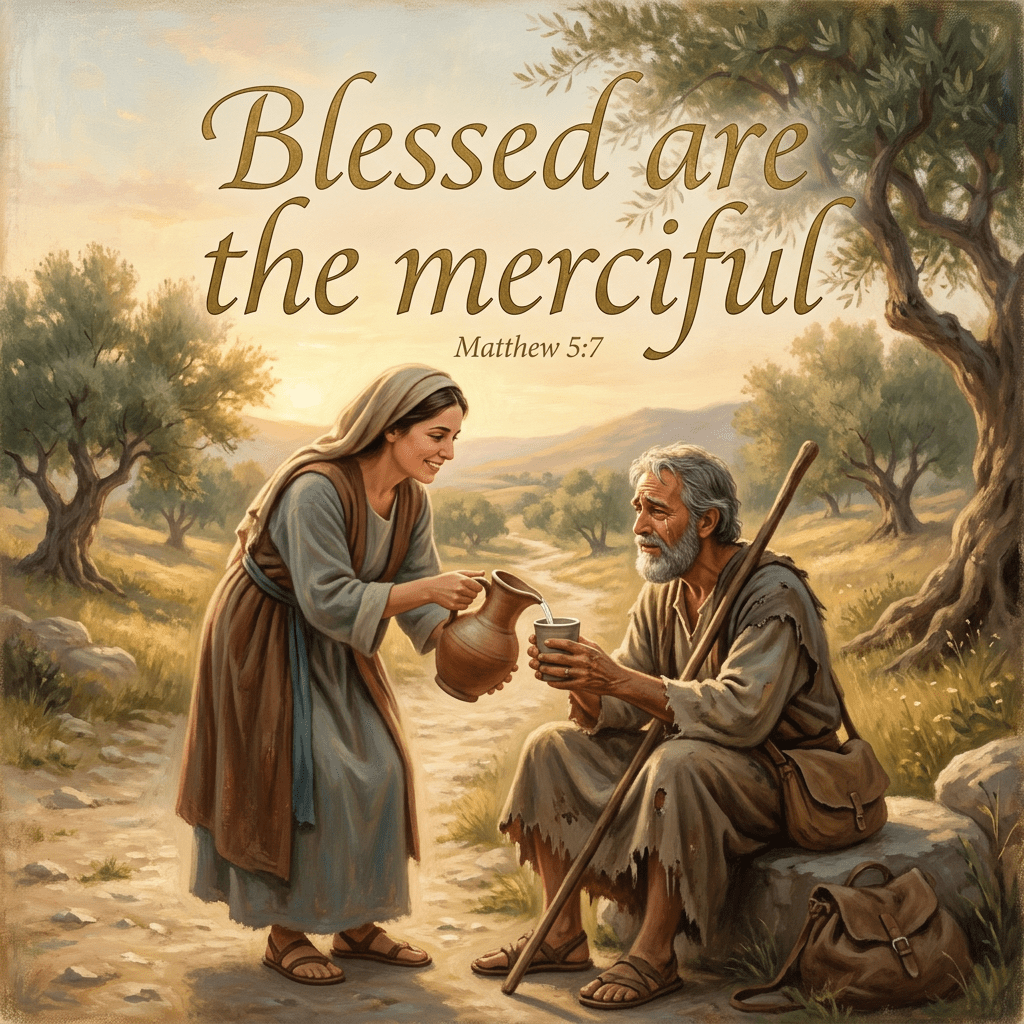
Jesus says, “Blessed are the merciful, for they shall obtain mercy.” (Matt. 5:7) Jesus also says. “You will be judged by the same standard by which you judge others and you will be measured by the same measure you use.” (Matt. 7:2)
David is not judged by God in this story. When Saul dies, David is officially crowned as King, and David becomes the king by which all other purely human kings are measured.
People who have been displaced, who become refugees and asylum seekers, are vulnerable and desperate. Even David, in desperate times, took desperate measures to seek asylum from the enemies of Israel.
It’s important that we understand the plight of refugees and asylum seekers in developing our attitudes toward them. It’s important to remind ourselves that God desires mercy, and not sacrifice from us. (Mett. 9:13 & 12:7) “Mercy triumphs over judgment.” (James 2:13) And we are to “Be merciful, just as your Father is merciful” (Luke 6:36)
Christian Refugees and Asylum Seekers
According to data collected by PEW Research in 2024, about 47% of the refugee and asylum seeking population are Christians. In comparison, Muslims make up about 29% of the displaced population worldwide. The percentage of Christians is much higher among displaced peoples in African and Latin American countries, in particular, is higher than 50%.
The percentage of Christians who seek refuge and asylum in the United States is even higher – about 79%. Many people are displaced due to religious persecution, and people tend to seek refuge and asylum in countries that are friendly to their religious practices.
To that extent, the vast majority of refugees and asylum seekers who come to the United States for help are spiritual kin. They are like David to Nabal. They are members of the body of Christ and the family of God. We should not be miserly and unsympathetic to them like Nabal was to David.
The Harvest is Plentiful
Many people who find refuge in a foreign country end up adopting the religious practices of the country where they find a safe harbor. With unprecedented numbers of people who have been displaced due to violence in the world, the opportunity for evangelism has, perhaps, never been greater.
Jesus commissioned the body of Christ to go into all the world to make disciples, and Christianity has spread in the world because many people have taken that commission to heart. Many generations of Christians have traveled to foreign lands at great peril and great cost to share the Gospel, and many Christians still do.
While Christ followers are still responding to the Great Commission today, record numbers of people are migrating due to global violence. Increasingly, the harvest is coming to us!
The opportunities for sharing the Gospel with people who have never heard the Gospel have never been greater. It is becoming increasingly more likely for us to encounter people who have never heard the Gospel – right where we live – if we will recognize and seize the opportunity.

With this great opportunity comes great responsibility for the Church to respond to God’s heart for the lost. Just as Jesus preached good news to the poor and vulnerable (Luke 4), we have opportunity like we never have had before to reach the people of the world who are coming to us.
“To whom much is given, much is expected.” (Luke 12:48)
We should not fumble this opportunity or worse – punt it away.
Welcome the Foreigner
Throughout Scripture, God repeatedly charges His people with the special responsibility to care for widows, orphans, and strangers (foreigners) – the poor and vulnerable among us. Foreigners are always among the vulnerable people God cares about and instructs us to provide for.
I recently noticed this theme in Job, which is perhaps the oldest book in the Bible. God calls Job “blameless and upright” (Job 1:1), so we should pay attention to the attributes of Job. In Job 29:16, he says, “I was a father to the needy; and I took up the case of the stranger.” In Job 31:32, he says, “[N]o stranger had to spend the night in the street, for my door was always open to the traveler.”
The word for stranger in Job 29:16 means someone Job did not know, and the word for stranger in Job 31:32 (ger) means a foreigner. His care for people he did not know, including foreigners, was among the attributes that made Job blameless and upright in God’s eyes.
Elsewhere I have chronicled how God views immigration in the Law of Moses throughout the Old Testament and through the New Testament – through all of Scripture – where God informs us how we should think about foreigners who seek our help. We ourselves were enemies of God in our sin, foreigners exiled from Eden and separated from God; but God so loved us that he sent his only son into the world to save us.
He sends us out into the world with the same commission – to preach good news to the poor, to those who are far away, and to those who are near. When strangers and foreigners come to us seeking our help, the correct biblical response is to receive them, protect them, and provide for them – as we are able. If we want to be a nation like David after the heart of God, we should advocate generously for immigrants who come seeking our help.
Application to Our Current Times
We obviously could not take in the whole world, but we do not have the whole world knocking at our door. We might reasonably differ among ourselves on the number of refugees and asylum seekers we can reasonably take. The Bible doesn’t give us a quota or a formula, but we should be mindful that God measures grace and generosity out to us the way we measure out grace and generosity to others.
With over 120 million refugees in the world today, how does the United States measure up?
The Current administrations has set a fiscal cap on refugees in 2026 of 7,500 people, and the current administration has limited refugees to one country and one group of people – Afrikaners. “Afrikaners” refers to a white ethnic group in South Africa.
According to the United Nations High Commissioner for Refugees, based on accumulated data, typical refugees spend between 10 and 20 years in refugee status before finding permanent placement in the world. The average amount of time is about 17 years as a refugee. There is no large-scale long-term Afrikaner refugee situation comparable to people groups from other countries. Most Afrikaners continue to live in South Africa as citizens, not in refugee camps or in cross-border displacement.
As for our current record on asylum claims, the Trump administration has attempted to deny asylum claims without hearings. President Trump issued a proclamation shutting down asylum claims altogether. These efforts have been struck down by courts applying existing law, but the executive branch controls how asylum claims are handled, and the current official position of the executive branch is to ignore them.
As Christians living in this country with the right – and some say the obligation – as citizens to participate in our government, we should advocate for an approach to immigration that is biblically grounded. It seems to me that the course we are on looks more like the way Nabal treated David than the way God instructs us to be. If we want God to measure out to us the way we measure out to other people, we should act accordingly. It’s not about politics; it’s about following Jesus.


Excellent article, amen. It’s a shame that a lot of Christians have bought the right wing lie that we should be xenophobic…
LikeLiked by 1 person
It saddens me to see. I have always been conservative and have been influenced by a pro life commitment to vote Republican most of my life. I feel like the world has been turned upside down. Roe v. Wade was overturned, but abortions are increasing. The current president does not seem to be very pro life. The same biblical compassion that led me to a pro life commitment leads me to a commitment to immigrants. Frankly, the biblical revelation on how we should treat immigrants is far more robust than it is for the pro life position. I am not sure how many Christians became so captive to one political party that clear biblical mandates are ignored.
LikeLiked by 1 person
Amen brother. Sadly ‘Christian’ Nationalism is on the rise in the UK too. And the epidemic of abortion continues. Euthanasia has been stopped from legalisation… For now. We need revival and ultimately the return of King Jesus
LikeLiked by 1 person