The Ugly Story of Gibeah: Don’t Look Away

When religious people lose connection with God


I just finished reading Judges 19-21, and I want to look away. I realize, though, that looking away is exactly the thing I should not do. This story is meant to offend modern and ancient sensibilities alike. We dare not look away and move on without understanding the poignance and significance of this passage in the Bible.

It’s a good time to state the obvious: not all passages in scripture are prescriptive. In fact, many of them are simply descriptive – a statement of what actually happened.

Further, we should recognize that Hebrew Scripture works by burying commentary subtly into the text in ways that require us to question, dig, and pull it out. Scripture is like the buried treasure and the pearl of great price that requires effort to obtain. We are not robots or data receivers. We are living beings contending with a living God and a loving revelation that requires interaction.

Scripture is also brutally candid about the human condition and the human heart. The often repeated phrase, “There is no one righteous, not even one,” is borne out over and over again to be true. All of the Bible testifies to that fact.

Hebrew scripture builds on itself. The patterns and themes we see early on are echoed in later passages. We need to pay attention to the repeated patterns, because that is where the text is signaling that we should dig.

Scripture often confronts us in ways that are highly uncomfortable. If we feel disoriented reading it, that is not a failure of interpretation. That is the point.


The word of God is alive and active. Sharper than any double-edged sword, it penetrates even to dividing soul and spirit, joints and marrow; it judges the thoughts and attitudes of the heart.

Hebrews 4:12


The closing chapters of Judges are not merely recounting Israel’s past; they are exposing what happens when a covenant people slowly, perhaps inevitably, detach themselves from the living reality of God while continuing to operate within the forms of religion. The religious structures are maintained, but the substance evaporates through spiritual neglect, idolatry (love of things more than God), and a failure to love others.

The Horror Is the Message

The brutality of Judges 19 is intentional. The narrative is crafted to unsettle us.

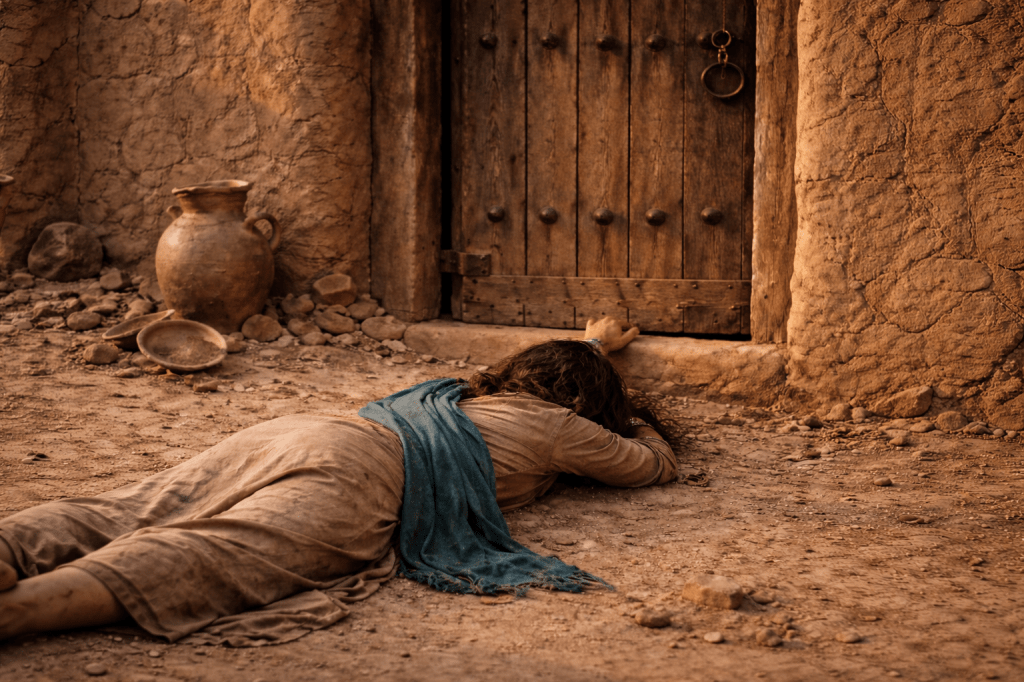
A Levite—one who should embody spiritual leadership—sacrifices the vulnerable to preserve himself. A town within Israel reenacts and surpasses the wickedness of Sodom. A woman is used, abused, and discarded,. And the response of the nation, though clothed in the language of justice, spirals into something equally disordered, brutal, and ungodly.

If we are tempted to distance ourselves from this story, we are already missing the purpose of the text. Scripture is not merely documenting their failure. It is revealing the potential trajectory of our own failings: the inclinations of the human heart untethered from right relation to God and people – the sin that is always crouching at the door, waiting to creep in, and ready to take hold … if we let it

Continue reading “The Ugly Story of Gibeah: Don’t Look Away”
The Danger of Religiosity, Political Expediency and the Weight of the Cultural Moment

We can be so caught up in our own lives and the world around us that we fail to recognize the God who gave us life and created the world.

I have been reading through the Gospel narratives leading up to the death and resurrection of Jesus during Lent. My reading included the following passage that jumped out at me:

“Then they led Jesus from the house of Caiaphas to the governor’s headquarters. It was early morning. They themselves did not enter the governor’s headquarters, so that they would not be defiled, but could eat the Passover.” 

John 18:28 ESV

I will get the point, but first we need to build in a little context. This passage describes a passing moment leading up to the crucifixion after Judas betrayed Jesus in the garden. Jesus was taken, first, to the palace of Annas (John 18:13) and then to Caiaphas, the Jewish High Priest. (John 18:14)

After Caiaphas questioned Jesus, Jesus was taken to the Roman governor, Pontius Pilate. The High Priest wanted Jesus put to death for blasphemy, but only the Roman state had authority to impose capital punishment.

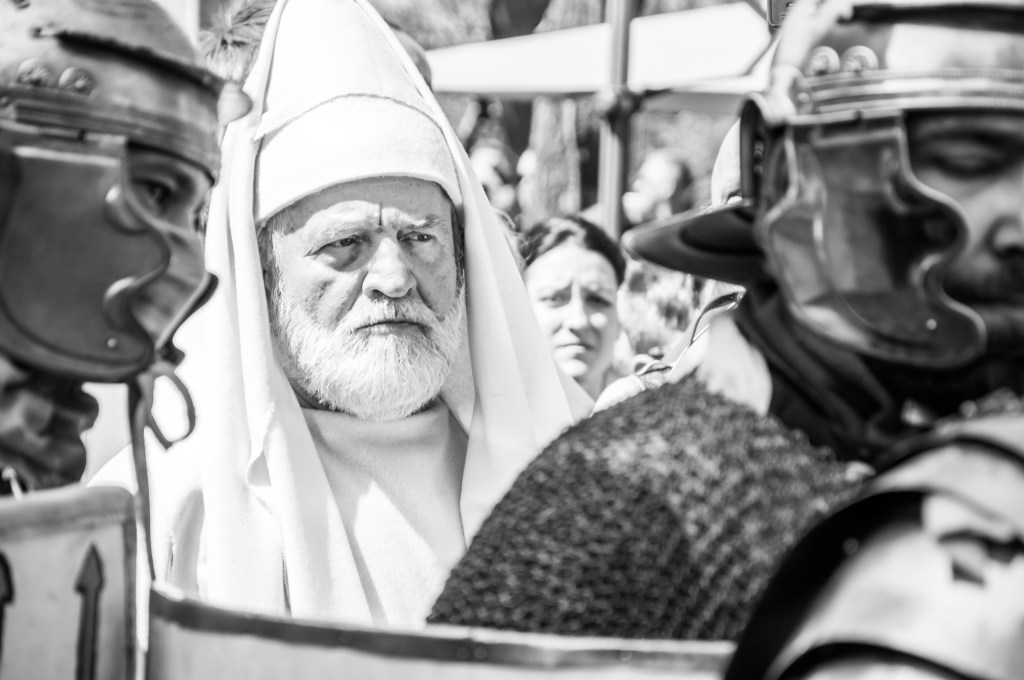
Caiaphas was the High Priest who presided over the Sanhedrin, the official religious body recognized by the Romans. Caiaphas was made the High Priest by the Roman procurator Valerius Gratus. Annas, the father-in-law of Caiaphas, had presided over the Sanhedrin before Caiaphas.

They were the official heads of the ruling group of religious leaders in First Century Judea in the time of Jesus, the Sanhedrin. They stood between the Romans, who conquered and controlled the region, and the Jewish people on matters of the Jewish religion.

During this tumultuous time, a group of violent men, the Zealots, who were opposed to Roman rule threatened to upset the political balance and peace. Similarly, the growing, unpredictable following of Jesus posed a threat to the Sanhedrin’s position as trusted middlemen trying to preserve peace and the status quo.

Potential disruption threatened the delicate balance. The Sanhedrin tried to walk the line between the threat of the Roman Empire on the one side and the Zealots and others who might provoke the Romans to tighten their grip on Judea, dismiss the Sanhedrin from their power position, and clamp down on the freedoms of the Jewish people they ruled.

Tensions were not just a threat to the Sanhedrin, who were officially given some overlapping authority the Romans; they were legitimately a threat to the well-being of all the Jews in Judea. Thus, we read in John that Caiaphas advised “advised the Jewish leaders that it would be good if one man died for the people”. (John 18:14)

The suggestion was based on practical expediency. Though Jesus wasn’t a Zealot, he was very popular among the people, likely including the Zealots who hoped Jesus would spell the end of the Roman occupation.

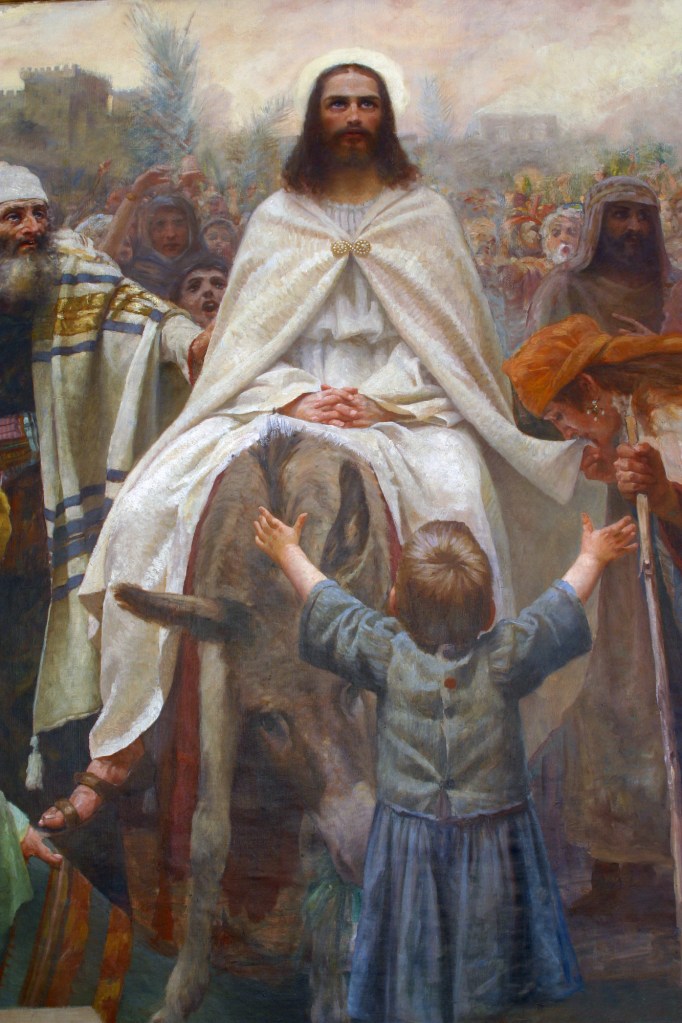
The concerns of the religious leaders were no doubt heightened to a critical level when Jesus came riding into Jerusalem on a donkey in triumphant celebration greeted by a “great crowd” that lined the streets, waiving palm branches and shouting,

“Hosanna!…. Blessed is the king of Israel!”

John 12:12

I am going to get to the danger of religiosity, political expediency and the weight of the cultural moment as the title to this article promises. First, however, I want to develop the backstory a bit further. To do this, we need to jump forward several months in time.

Continue reading “The Danger of Religiosity, Political Expediency and the Weight of the Cultural Moment”

Why Did Jesus Pick on the Pharisees so Much?

Perhaps, we malign the Pharisees more than we should.


Have you ever noticed that Jesus engaged more with certain groups of people than with others? In the 1st century Judea, there were at least five distinct Jewish groups: the Herodians, the Sadducees, the Pharisees, the Zealots, and the Essenes. The record we have in the Gospels shows that Jesus engaged one of these groups far more than the others.

My interest in this question goes back to the very first time I read the Gospels in a college world religion class. The way Jesus focused on the Pharisees virtually leapt off the pages at me! He was brutal to them! And, that is putting it politely.

Jesus called the Pharisees hypocrites (Matt. 23:13, 15, 23, 25, 27, 29), blind guides (Matt. 23:16, 19, 24, 26), blind fools (Matt. 23:17), “white-washed tombs” that “appear outwardly righteous”, “but inwardly … full of hypocrisy and wickedness” (Matt. 23:27), and a “brood of vipers”! (Matt. 23:33)

I am not saying that Jesus didn’t engage the other groups. It’s just that he engaged one group far more than the others. The Pharisees are mentioned ninety eight (98) times in the New Testament, mainly in the Gospels.

The Pharisees were not friendly with Rome. They hoped in the restoration of the throne of David. Unlike the Zealots, who violently opposed Roman rule, the Pharisees more or less ignored Rome. They devoted themselves to God and following the Law.

Unlike the Essenes, who retreated to the desert and removed themselves from Judean community and life, the Pharisees remained in the community. Like Jesus, they remained engaged.

The religious views of the Pharisees were in opposition to the Sadducees on resurrection, the reality of supernatural and demonic activity and the authority of the Prophets. While the Sadducees were officially recognized as religious leaders by Rome, the Pharisees were religious leaders for the common people.

Though they were popularly influential, the Pharisees wielded no political influence or position. Though some Pharisees were wealthy, they were elite primarily in their religious study and devotion.

In many ways, the Pharisees were most like Jesus, and Jesus was most aligned with them in their social orientation and religious views. “They were the holy men who kept the law; they pursued purity with a passion and wanted nothing more than to live lives that pleased God. They were sincere, albeit sincerely misguided.”

So, that brings me to the question: Why did Jesus pick on the Pharisees so much? In the remainder of this article, I will give you my current answer, though I reserve the right to change it (again).

Continue reading “Why Did Jesus Pick on the Pharisees so Much?”