From Jubilee to Kingdom: How God Transforms Ownership, Identity, and Belonging

From promised land to God’s kingdom is a journey from flesh to spirit


I am increasingly impressed by the importance of understanding the arc and sweep of Scripture from Genesis to Revelation. Though the Bible is a collection of many writings by many authors compiled over many centuries, it is a single, finely woven tapestry rich and brilliant in its nuance and theme.


Of course, a tapestry makes no sense if we do not view it from the right perspective. From the back side of the tapestry it appears like a jumbled mess of tangled threads.


The full beauty and design of the tapestry remains a mystery until it is viewed from the right perspective. Only then can we understand and appreciate it.


We would have no sense of the beauty or theme of the tapestry if we only saw it from the back side. Because the tapestry of thole Bible is so grand, we can also miss the big picture if we study it only as through a microscope or a magnifying glass.

We need to step back often and consider the trajectory, arc, and sweep of Scripture – from beginning to end – to make sense of the individual threads that may not appear to make sense in isolation.

From the time of Abraham, Isaac, and Jacob onward, the Bible seems to be all about these patriarchs and their descendants to whom God promised a land. For over 400 years Abraham’s descendants looked forward to taking possession of this land. That time was spent in captivity in Egypt, where the prospects of God’s promise grew dim and seemed unlikely until God sent Moses.

Led by Joshua, the people finally enter into the land after another 40 years of wandering in the wilderness with Moses. They drive out the inhabitants, settle in, and live there almost a millennia through cycles of judges and kings. It seems all about this land and its people. The theme of God’s covenant to give his people the promised land and the people’s covenant to keep God’s law dominates the portion of Scripture we call the Old Testament.

The land, the great leaders, the Law seem to define their destination. Again and again, however, those things prove to be provisional. The leaders fail. The Law fails because they seem wholly incapable of keeping it. The very land, itself, seems to fail them.

When we step back, we see that these things that seem to be the main point of the whole story actually point beyond themselves. They expose something deeper. They give way to something infinitely greater.

One of those themes that gets buried and lost in the jumble of threads is Jubilee. The Jubilee instructions are embedded in the middle of the Law in Leviticus 25. They are God’s specific instructions on how Israel was to live in the land into which God was leading them. That they never actually carried out the Jubilee instructions may account for us failing to  recognize their importance in the tapestry of God’s Word.

The Radical Vision of Jubilee

In Leviticus 25, God established the Year of Jubilee—a societal reset unlike anything in the ancient world. The Year of Jubilee was to be observed after seven periods of seven years. In the 50th year, the Year of Jubilee, the land was to be returned to its original owners. Debts were to be released. Indentured servants were to be set free.

The Year of Jubilee was to be observed every 50 years. Every fifty years was to be a reset.These were God’s instructions and the reason for these instructions was clearly laid out:


The land is mine” sayeth the LORD, “and you are strangers and sojourners in it.

(Leviticus 25:23)


Let that sink in….. God never intended Israel to own the land.

Even today many people consider Israel to be the land God promised his people for eternity. Even today we think it is all about the land.

Jubilee appears to us to be an economic policy. A cringeworthy redistribution of wealth that might offend modern, conservative sensibilities. But underneath it lies a theological theme – God’s design – that reshapes everything when we see it:

God wanted them to live in the land, to work the land, to benefit from the land, but only and always as temporary dwellers – as foreigners. They were not to call the land home. They were never meant to treat the land as their own – as owners.


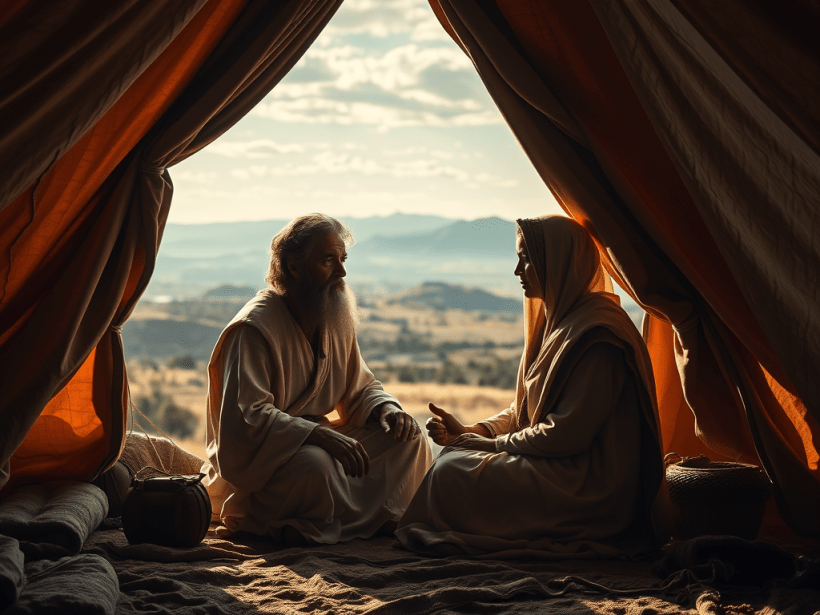
The write of Hebrews understood this, and commended Abraham for living in the land of promise “as in a foreign land, living in tents.” (Hebrews 11:9)


We can understand why, the writer of Hebrews commended the people of faith who “acknowledged that they were strangers and exiles on the earth.” (Heb. 11:13) They were “seeking a homeland … a better country … a heavenly one.” (Hebrews 11:15-16) Why? Because they understood the promised land wasn’t their final destination!

Jubilee is not about fairness, or economics, or socialism—it is about something much more transcendent. It is about God’s eternal plan for the heavens and the earth and all the people in it. It is a reminder to Israel (and us) of who they (we) are in relation to God. It is a reminder that to them (and to us) this world is not all there is. God has bigger plans!

A People Shaped by identity

Though God promised His covenant people a land, their identity as God’s people was the most important thing. God’s vision for them extends beyond land into identity as His people. The Israelites were not meant to identify with the land, but with God.

They were to identity as God’s people living temporarily in a land God gave them, and they were to be a light to the nations. From the days of Abraham, God planned “to bless all the nations” through his descendants. (Gen. 12:3; 18:18; 22:18; 26:4; & 28:14) They were to be a people God called out from among the nations to covenant with Him. These people were intended to identify with God’s greater purpose in the world – which was for all the nations.

Israel is commanded to care for the stranger, the poor, and the landless in the land of God’s promise—not merely as an act of generosity, but as an expression of memory and identity:

“You were strangers in Egypt.”

God wanted them to remember who (and whose) they were. God rescued and redeemed them for Himself and for His purposes. Their story was always meant to shape their community and society into what God wanted them to be. God wanted to establish His people in His land to carry out His eternal plans for all the nations – for all people in the world.

They were not to be a people defined by power, dominance or possession, but by dependence, deliverance, provision, and protection of others – just as God delivered them, provided for them, and protected them. God’s instructions were structured to prevent them from becoming the kind of nation under which they once suffered – a nation like all the other nations around them. They were to be different, holy, and set apart for God’s greater purpose

Continue reading “From Jubilee to Kingdom: How God Transforms Ownership, Identity, and Belonging”

From His Holy Dwelling, God Sets the Lonely in Families

In between Eden and the New Jerusalem are we, the people of God, with the indwelling Holy Spirit.


In my morning time with God and His Word, the following verses caught my attention:

“A father to the fatherless, a defender of widows is God in his holy dwelling. God sets the lonely in families. He leads out the prisoners with singing, but the rebellious live in a sun-scorched land.”

Psalm 68:5-6

Other verses speak of God being a father to the fatherless and a defender of widows (and a lover of “the foreigner residing among you” (Deut. 10:18) and an upholder of the cause of the appressed (Psalm 146:7), but this hit in a different way today. God is a father to the fatherless and a defender of widows “in his holy dwelling.”

The Hebrew word translated “holy dwelling” is the word used to mean God’s tabernacle or temple. As John Walton and other Old Testament scholars say, the tabernacle and the temple are designs meant to remind us of the Garden of Eden, full of Edenic imagery. They were used to demonstrate God’s desire to dwell among His people, first in the tabernacle that was carried through the desert and stationed in the Tent of Meeting and later in the Temple in Jerusalem.

God allowed the Temple to be destroyed after Jesus came, died, and rose again, leaving the Holy Spirit to dwell with us and in us. The progression of the tabernacle, the Temple, and the Holy Spirit living in and among God’s people are all pointers to God’s ultimate plan and design:

“Then I saw ‘a new heaven and a new earth,’ for the first heaven and the first earth had passed away, and there was no longer any sea. I saw the Holy City, the new Jerusalem, coming down out of heaven from God, prepared as a bride beautifully dressed for her husband.  And I heard a loud voice from the throne saying, ‘Look! God’s dwelling place is now among the people, and he will dwell with them. They will be his people, and God himself will be with them and be their God. ‘He will wipe every tear from their eyes. There will be no more death’ or mourning or crying or pain, for the old order of things has passed away.””

Revelation 21:1-4

God is a father to the fatherless and a defender of widows in his holy dwelling. Since Adam and Eve were banished from the Garden, human beings have not dwelt with God in His holy dwelling. God has dwelt among His people in limited ways in the Tabernacle, and in the Temple, and (presently) in people who have received the indwelling of the Holy Spirit, but we have not lived with God in His holy dwelling.

Though God’s people have the comfort and guidance of the Holy Spirit in this world, this world is still on the other side of Eden, and this world as we know it will pass away. We await the new heavens, the new earth, and the new Jerusalem where God will dwell with His people.

In the meantime, though God is a father to the fatherless and a defender of widows in His holy dwelling. What does that mean? We are separated from God’s holy dwelling in this life. We are in between Eden and the New Jerusalem.

I believe it means that commissions those who have God in us (the Holy Spirit) to the “defend the weak and fatherless” and to “uphold the cause of the poor and the oppressed.” (Psalm 82:3) He commissions us to “care about justice for the poor” (Prov. 29:7), and He commissions us to love the foreigners living among us. (Deut. 10:19)

God is a father to the fatherless and a defender of widows in His holy dwelling. That is who God is in his inner sanctum. That is who God is at the core of his being. God “sets the lonely in families,” and “God leads out the prisoners with singing.” This is God’s very heart at the core of his being. This is who God is, and this is who we should be as His children.

Continue reading “From His Holy Dwelling, God Sets the Lonely in Families”

A Facelift Proposed on the Doctrine of Inerrancy

God guided the circumstances in which the biblical literature was divinely inspired, and God approved the final product


The Chicago Statement on Biblical Inerrancy is just a little older than my Christian faith. It was relatively new when I first read the Bible in college and when I first asked Jesus to be the Lord and Savior of my life. I have wrestled with the idea of inerrancy from the beginning of my Christian life until now.

It isn’t that I don’t think the Bible is the “word of God”. It isn’t that I don’t have a “high” view of the reliability, integrity, and divine nature of the Bible. It isn’t that I don’t think the Bible was inspired by God and should be relied on as His word to us to follow.

I believe all these things, but I have issues with statements on inerrancy that seem to push what the Bible says about itself beyond what it says.

Finally, I have found some similar thinking in two of the great Christian thinkers of our time: Mike Licona and William Lane Craig. In his blog, Risen Jesus, Licona introduces a paper to the world that he wrote and presented at the annual meeting of the Evangelical Theological society.


In the paper, Licona cites Craig in support of a new proposal on inerrancy. First, though, he explains some of what is problematic with the Chicago Statement. I am not going to restate the points he makes here. You can read the paper, CSBI Needs a Facelift, yourself, but I will summarize it for those who don’t have the time or inclination to read the original (though it isn’t long).

Licona starts with the two main verses that provide the inspiration (pun intended) for the doctrine of inerrancy: 2 Timothy 3:16 and 2 Peter 1:20-21. At the center of this are the words “God-inspired” or “God-breathed” which are English translations of the Greek word, “theopneustos“.

Licona traces the history of the use of the word, theopneustos, prior to the 3rd Century. The word was not often used, and it was used in very diverse contexts. Licona quotes a commentary on 2 Timothy, stating, “Theopneustos does not have enough precision to go beyond the basic idea that the Scriptures came from God.” and he concludes:

Therefore, 2 Timothy 3:16 does not contribute as much to our discussion as we may have first thought. So we should be cautious not to read more into it than Paul may have intended.

The 2 Peter 1:20-21 text speaks of prophets who were “carried along by the Holy Spirit.” Licona observes that the Greek word translated “carried along”, pherō, is also used by Philo “to describe how prophets received revelation from God, during which time they had ‘no power of apprehension’ while God made ‘full use of their organs of speech.’ Josephus likewise used this word to say that “God’s Spirit put the words in the mouths of the prophets” (quoting Licona, who paraphrased Josephus).

The 2 Timothy passage and the 2 Peter passage express different ideas and give rise to different pictures of how God speaks to/through people who authorized the writings of the Bible. some writings purport to be prophetic and some do not expressly adopt that attitude. The Chicago Statement assumes that both passages mean the same thing, but most biblical scholars disagree with that conclusion.

Licona goes on to summarize some phenomena in the text of the Bible that suggest a “human element in Scripture”. Licona concludes from this, “Although [the human element] does not challenge the doctrine of the inspiration of Scripture, it does challenge the concept of inspiration imagined by [the Chicago Statement].”

These issues with the ambiguous meaning of the Greek words and the very different images of God working to convey His “Word” through people (God-breathed and carried along by the Spirit), can be reconciled with a “new” paradigm, says Licona. This paradigm was suggested by Craig in 1999.

Continue reading “A Facelift Proposed on the Doctrine of Inerrancy”

To Be Known and to Fully Know God is the Great Purpose of Our Lives

To whom does God say, “Depart from me. I never knew you?”

Have you ever wondered who are the people to whom God may say, “I never knew you; depart from me”?[1] If you are like me, those words ring ominously. We might be tempted to gloss over them, because they are uncomfortable to consider, but there they are.

These words contrast with the verse that inspires this article, which informs the title to this blog piece. But first, I want to focus briefly on people whom God never knew. Jesus described them for us.

They are people who prayed to God, “Lord, Lord.” They are people who prophesied in God’s name. They are people who cast out demons and even did “mighty works” in God’s name. They are highly religious people, but they didn’t “do the will of the Father who is in heaven”. (Matt. 7:23)

What does that mean?

For starters, it means that religiosity is not a ticket to heaven. Public piety is not anything that impresses God; if anything, it may even be repulsive to Him.[2]

Power and influence and doing things that amaze people, even if done in God’s name, are not keys to heaven.  An eloquent speaker who can bring people to tears and repentance is not, thereby, assured of any place in God’s kingdom. The prophet and the teacher who speak the very word of God are not, by virtue of the gift of prophecy or knowledge, assured of eternity with God.

In the “Love Chapter” of the Bible (1 Corinthians 13), Paul says,

If I speak in the tongues of men and of angels, but have not love, I am a noisy gong or a clanging cymbal. And if I have prophetic powers, and understand all mysteries and all knowledge, and if I have all faith, so as to remove mountains, but have not love, I am nothing. If I give away all I have, and if I deliver up my body to be burned, but have not love, I gain nothing.”

1 Corinthians 13:1-3

These realities are at once sobering and liberating. Nothing we can “practice” or do will propel us into God’s heaven. We are saved by grace, though faith, of course (Eph. 2:8-9), but even faith that can move mountains is of no gain to us by itself.

And here is the kicker – not even sacrifice, not even the sacrifice of our own bodies, by itself gains us anything.

David knew this when he said, “For you will not delight in sacrifice, or I would give it; you will not be pleased with a burnt offering.” (Ps. 51:16)

Jesus said, “Greater love has no one than this, that someone lay down his life for his friends.” (John 15:13) Laying one’s life down might be considered a sacrifice, yes; but it done out of love it is more than merely a sacrifice. It isn’t the act itself that is important, but the motivation, the inspiration, the desire behind the act that matters.

Jesus is the ultimate example of love. When he sacrificed himself for our sakes, he didn’t do it to earn some heavenly brownie points. He gave himself for us out of love for us. He gave himself to us for our benefit. This is love, which focuses not one the benefit of the sacrifice to himself, but on the benefit for other another.

“For the letter kills, but the Spirit gives life.” (2 Cor. 3:6) Legalism and fundamentalism and dogmatism and doctrine and theology can never save a person. It doesn’t matter how much we do, or how much we know, or how accurate our understanding is when we have not love.

God, who we are to worship in spirit and truth (John 4:24), is love.[3] All the Law and the Prophets are summarized in this one statement: Love God above all things and love your neighbor as yourself. (Matt. 22:40) Thus, Paul says,

But if anyone loves[4] God, he is known by God.

1 Corinthians 8:3 ESV

This is the verse that got me thinking about these things today. If you love God, you are known by God. The people of whom God will say, “Depart from Me; I never knew you”, are people who don’t really love God. Their motivation was wrong.

Continue reading “To Be Known and to Fully Know God is the Great Purpose of Our Lives”

Listening in on a Discussion of the Coronavirus and the Church

What some might see as a threat to the vitality of Christian community, others see as opportunity to advance the kingdom of God.


I am reading through the Bible chronologically this year and paying attention to themes that sweep from beginning to end. One great theme is the promise to Abraham and his descendants, that God would bless him and make of him descendants that would be too numerous to count, and by them God would bless all the nations of the world.

I just got done contemplating why, when God entered the world as a human being and came to “His own” His own people didn’t recognize or receive Him. They had developed their own expectations that were very focused, understandably, on the nation of Israel and the promised land, and Jesus didn’t meet the expectations they had. (See What We Can Learn from Expectations about What God Is Doing.)

Expectations are good. It’s good to be expectant about what God is doing, but the danger is that we anchor those expectations in our own perspectives, which are unavoidably limited. Our expectations should be shaped by Scripture and relationship to God alone, but (being human) we tend to superimpose our own personal, community, societal, cultural and philosophical models on top of that foundation. Sometimes we even import biblical principles on top of a foundation that is not biblical.

American Christianity is no different than any other cultural expression of Christianity in that regard. Perhaps, American Christianity is even super-sized in that tendency, however, because of our historical sense of manifest destiny and extreme confidence in the rightness of the great American experiment in Democracy, capitalism and constitutional framework that has allowed the United States to thrive and become the dominant country in the world.

Because of the human tendency to filter everything through our unique perspectives and miss what other people with different perspectives can see, I spend time listening to and reading Christians and people with other perspectives from other parts of the world. For that reason, I listen to many of the episodes of the Unbelievable? podcast with Justin Brierly, a British Christian, who interviews people from various parts of the world from various viewpoints, including Christian and non-Christian worldviews.

The coronavirus pandemic has created a confluence of varying viewpoints in the Church global, the American Church, and communities in and out of the Church and societies all around the world. That global pandemic has, perhaps, heightened the degree of angst that comes to bear on other issues in the world and locally, such as the current racial tensions in the US and particularly acute response that we have experienced as events have unfolded that have opened and exasperated old racial wounds that have not yet healed.

How we respond to these things as Christians is critical. It affects the effectiveness of our mission to carry out the Great Commission – the marching orders Jesus gave to His followers to spread the Gospel throughout the world. The pandemic means that we can no longer carry on “business as usual”. Indeed, God often used catastrophic and extreme measures to accomplish His purposes throughout Scripture and (certainly I believe) continues to do so today. There is opportunity in these times to adjust with what is happening, listen for what God is saying to the Church and advance His kingdom.

I think of these things as I listen to the recent interview by Justin Brierley of three Christians talk about the coronavirus: Mark Sayers from Australia, AJ Roberts from Los Angeles, Ruth Jackson from Great Britain. Continue reading “Listening in on a Discussion of the Coronavirus and the Church”