The Sin of Sodom & Gomorrah Summarized: A Warning to the United States of America (and a Reason for Hope)

It may be worse then you think and more relevant than you assume


Since I noticed how Ezekiel summarized the sin of Sodom & Gomorrah earlier this year, I wanted to take a closer look. Ezekiel’s summary was surprising to me, and I wondered, “What did I miss in reading the story?”

I thought it was about sexual sin, and specifically homosexual sin, but Ezekiel doesn’t even mention sexual sin in his summary. This is what Ezekiel says, speaking to Israel:

“You not only followed [the ways of Sodom] and copied their detestable practices, but in all your ways you soon became more depraved than they. As surely as I live, declares the Sovereign Lord, your sister Sodom and her daughters never did what you and your daughters have done.

‘Now this was the sin of your sister Sodom: She and her daughters were arrogant, overfed and unconcerned; they did not help the poor and needy. They were haughty and did detestable things before me.'”

(Ezekiel 16:47-50) Obviously, the story of Sodom & Gomorrah isn’t what I thought it was.

Like most people, I was taught a simple version: God destroyed Sodom and Gomorrah because of homosexuality. End of story.

But when I actually took the time read the text carefully, I realized the Bible tells a far more unsettling story, and a story that is far more relevant to our world today than I imagined. The Bible contrasts hospitality and hostility to strangers (angels) to highlight the root of Sodom & Gomorrah’s sin.

I did a careful exegesis of the Sodom & Gomorrah story previously that demonstrates what the primary the sin of Sodom & Gomorrah was, but today I am just going to summarize it. The summary needs to include the context in which the story of Sodom & Gomorrah is embedded in the Bible.

Before Genesis 19 where we find the story of Sodom & Gomorrah is the story in Genesis 18 of Abraham’s and Sarah’s magnanimous hospitality to three strangers who turn out to be “the Lord” and two angels on their way to Sodom. The one called “the Lord” remained behind talking to Abraham, while the two angels continued on to Sodom where Lot sees them sitting in the gateway of the City. Lot calls to them, invites them in, and shows them the same magnanimous hospitality Abraham showed. (Gen. 19:1-3)

The parallel stories of Abraham’s and Lot’s hospitality that mirror each other in the same pattern set the stage for God’s judgment on Sodom. That’s when things go sideways. The men of the town surround Lot’s house and demand that Lot send them out to be violated sexually.

Abraham welcomes strangers with generosity and honor. Lot does the same, but the men of Sodom do the opposite. They rage against the strangers. They threaten Lot because he is a “foreigner”, and they warn Lot they will treat him worse than what they plan to do to the strangers in Lot’s house if he doesn’t comply.

The town’s men resented Lot being there and resented him inviting other foreigners into his house. They formed an angry mob to humiliate and violate Lot’s guests as a warning: you are not welcome here!

As Ezekiel says, the reason for this conduct is because they were arrogant, overfed and unconcerned about others. They did not help the poor and the needy. Worse, they didn’t just turn the foreigners away; they didn’t just drive them out of town; they tried to punish, violate, humiliate, and shame them.

The Lord told Abraham that He was responding to the great outcry against Sodom & Gomorrah due to the grievousness of their sin. (Gen. 18:20) Such an outcry is the response of people when great injustice is done to them. The scene echoes the story of Cain and Abel when Abel’s blood was said to cry out from the ground in Genesis 4. The same word is used for Israel’s outcry under Egyptian oppression in Exodus 2.

God responds to injustice. God responds specifically to the outcries of people who bear the oppression of that injustice, and God judges those who are unrepentantly responsible for that injustice.

The story of Sodom & Gomorrah is a story of God’s judgment on sin, but it isn’t sexual sin that brings God’s judgment. The sin that prompted God to respond was the sin that caused people to cry out under the weight of injustice.

Jesus later confirms that the sin of Sodom & Gomorrah is inhospitality when he warns towns who do not welcome his followers, saying, “it will be more bearable for Sodom and Gomorrah on the day of judgment than for that town.” Jesus says this in Mathew 10 when he sent his 12 disciples to proclaim the kingdom of God, and Jesus says it again in Luke 10, when he sent out 72 of his followers to heal the sick and proclaim the kingdom.

The context of these statements was the hospitality (or lack of it) shown to his followers. There is no mention of sexual sin—only refusal to welcome, refusal to listen, refusal to be hospitable.

Ezekiel is very specific about the sin of Sodom & Gomorrah:

“This was the sin of your sister Sodom: pride, excess of food, prosperous ease—but she did not help the poor and needy.”

Pride. Comfort. Indifference. Not just lack of empathy, but downright cruelty to the poor and needy – the vulnerable. That is the Bible’s own summary of the sin of Sodom & Gomorrah.

The angels/foreigners in the story of Sodom & Gomorrah are just one category of vulnerable people. Elsewhere, Scripture often mentions widows, orphans, and foreigners together to describe the vulnerable people in the ancient near east who God desired His people to protect and watch over – because God’s heart is to protect and watch over the vulnerable and needy.

Yes, there is sexual sin in the story, but the root of that sin is hostility toward others. In the context of the story as it sits in the greater context of the previous story about Abraham’s radical hospitality, the sexual act is a weapon of the people of Sodom. They use it out of arrogance, out of desire to guard their own wealth and comfort from foreigners, to humiliate, shame, and drive out the foreigners who dared to encroach on on what they had. It is the final expression of a society that idolized comfort, wealth, and lifestyle. Because they didn’t love God, they didn’t love people.

Sodom wasn’t destroyed because it was too permissive. Sodom was destroyed because its people were too proud, too full, too comfortable, and too cruel in their efforts to protect what they had from outsiders.

God heard the cries of those crushed by that system—and He acted.

That’s what makes this story disturbingly relevant today. The sin of Sodom isn’t ancient or obscure. It shows up whenever a society values its own prosperity above allegiance to God and clings to its own comfort, despises the stranger, and silences the cries of the vulnerable to protect what it has.

And that should give Christians (and non-Christians alike) pause in 2025 in the United States of America. God is no respecter of persons. People reap what they sow. God did not spare the people of Israel from His judgment when they repeatedly gave in to idolatry (putting their own interests above God’s interest) and oppressed their neighbors. He will not spare a country or a even a group of believers who do that.

The good news is that God is always, always faithful. He is aways just to forgive those who ask to be forgiven and repent of their ways. I pray that we can be such people.


Trust for Those Who Would Judge the World?

Living out our trust in God by waiting on Him


Do you trust God? Do you have faith? Those aren’t trite questions, and they don’t discount the desperation behind those who cry out to God for justice, for righteousness, for real change in the world and in our own circumstances.

Where is the justice in this world? The writer of Ecclesiastes looked for justice and observed, “In the place of justice – wickedness was there!” (Ecc. 3:16) I have seen injustice in the American court system myself. I see injustice every day in the news. Just today, I met with people who have suffered great injustice in the local legal aid clinic I run.

The injustice in this world is undeniable, and it can be utterly crushing for those on the wrong side of injustice. In truth, we have all been on the wrong side of injustice at times in our lives, big or small. Truly, the writer of Ecclesiastes was accurate when he said:

I saw the tears of the oppressed—
    and they have no comforter;
power was on the side of their oppressors—
    and they have no comforter.

(Ecclesiastes 4:1) Injustice feeds injustice in a seemingly never-ending cycle. (Think about the Hatfields and the McCoys or the Palestinians and the Israelis.)

In our human minds, we imagine that injustice must be met immediately with action and force. Justice cries out for redress. We lament when justice does not come. We pray and cry out to God. When justice does not come for us, we might even be tempted to believe that God does not care or worse – the God does not exist.

The questions I pose, therefore, are not glib or lightly asked: Do you trust God? Do you believe?

When we are tempted to take judgment into their own hands, we fail to trust God if we act on that temptation. We become judge and jury. We usurp God’s justice in the process. (Vengeance is mine sayeth the Lord.) And, when become the judge and executioner, we make a mess of it in the process. We warp God’s justice to our conceptions of justice.

“Justice is not God wielding ‘the stick.’ It’s His desire to restore, redeem, reconcile, and mend all that’s broken in the world.” Chris Gresham-Britt

When the world talks about justice, the focus is on punishment. We don’t realize it as Christians that our view of justice is often more colored by the world than by God. Worldly justice is punitive.

If we are going to trust and believe God, we accept what the prophet says: that God desires mercy, not sacrifice. (Hosea 6:6) God desires to save and not to judge. That is why God sent His only Son into the world: not to condemn the world, but to save the world. (John 3:17)

God’s goal is redemption and destruction. God is just, but justice seems to be lacking in the world. Why? Peter says, we need to trust and be patient, as God us patient with us:

“[T]he Lord is not slow in keeping his promise, as some understand slowness. Instead he is patient with you, not wanting anyone to perish, but everyone to come to repentance.” (2 Peter 3:9)

God is waiting (longing) to have mercy on us! (Psalm 30:18) “[God takes] no pleasure in the death of the wicked, but rather that they turn from their ways and live.” (Ezekiel 33:11)

So, God waits patiently, withholding His judgment – withholding ultimate justice. He does this because He desires that none would perish, that all would turn to him and be saved. He waits to be gracious to us.

But we are impatient. We don’t want to wait. We want everything to be made right immediately, especially the injustices done to us, the people like us, and the people we know. “With the Lord a day is like a thousand years, and a thousand years are like a day” (2 Peter 3:8), but a day seems like a thousand years to us when are suffering or see suffering.

We cannot imagine the delicate and complex balance of God’s patience in waiting for people to come to repentance so that He can have mercy and the judgment that He will inevitably allow to be imposed on those who refuse to turn and repent. All the while, God hears the outcries of people suffering the injustices of their own folly and wickedness and the folly and wickedness of others – sowing the wind and reaping the whirlwind.

But, we do not see as God sees, and we do not know as God knows. Judgment is God’s business. It is not our business to judge the world. (1 Corinthians 5:12) That is where real faith comes – to leave the judging to God and to love the world as God loves the world, which is His instruction to us.

The whole law is summarized in two principles: love God, and love your neighbor. (Matthew 22:37-40; Romans 13:8-10; Galatians 5:14) That’s it. Just do it.

If you see a hurting neighbor, don’t judge; just help. Like the Good Samaritan, cross the road (go out of you way) to help your neighbor. Bear one another’s burdens. By doing these things, you will fulfill the law of love. (Romans 13:8-10)

In the end, justice will come quickly, but will God find faith on earth?

Do you trust God? Show it by loving others and leave the judgment to God. Do you have faith that God will bring justice? God’s justice is always colored by his desire to be gracious and compassionate. Be a vessel of God’s justice that is tempered by mercy and love, and love your neighbor.

Submitting to Authority For the Lord’s Sake Like Peter, Paul, and Jesus Did

Both Peter and Paul defied authority by speaking, but spoke about submitting to authority

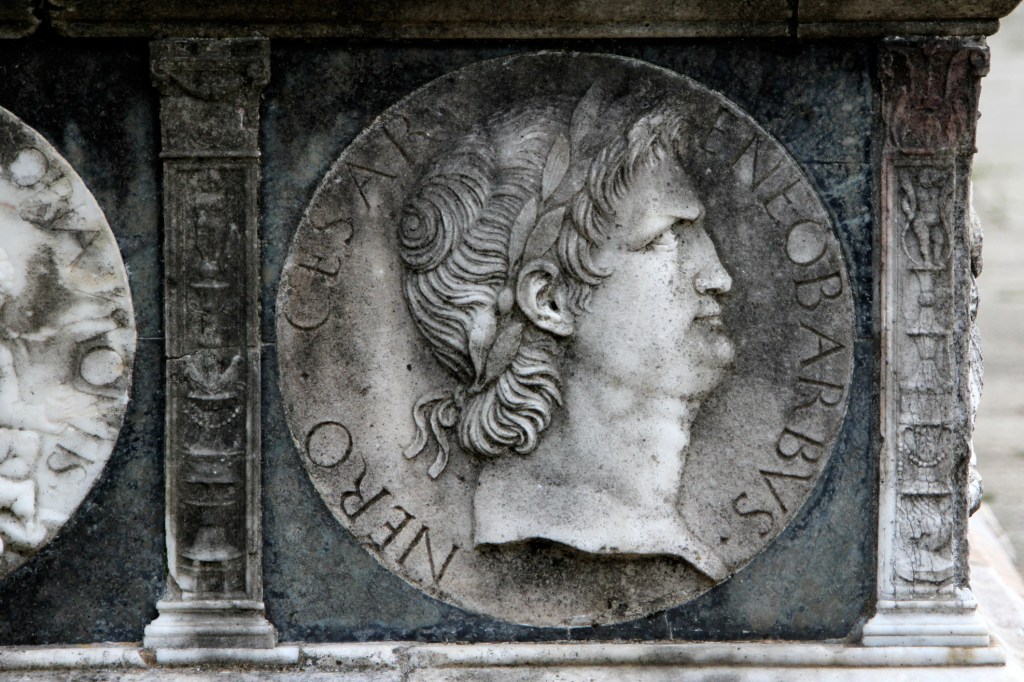
Bas-relief portraying the emperor Nero at the Certosa di Pavia

One of the most discussed texts in early Christian ethics is 1 Peter 2:13–17, because it calls believers to “submit… to every human institution” and to “honor the emperor,” even in times when those institutions were hostile or unjust. Peter, who penned this admonition, ultimately lost his life to an arbitrary, capricious, and unjust Roman Emperor.

13 Submit yourselves for the Lord’s sake to every human authority: whether to the emperor, as the supreme authority, 14 or to governors, who are sent by him to punish those who do wrong and to commend those who do right. 15 For it is God’s will that by doing good you should silence the ignorant talk of foolish people. 16 Live as free people, but do not use your freedom as a cover-up for evil; live as God’s slaves. 17 Show proper respect to everyone, love the family of believers, fear God, honor the emperor.”

1 Peter 2:13–17

Paul, who lost his life to the same Roman Emporer, says similarly,

“Let everyone be subject to the governing authorities, for there is no authority except that which God has established. The authorities that exist have been established by God. Consequently, whoever rebels against the authority is rebelling against what God has instituted, and those who do so will bring judgment on themselves.”

Romans 13:1-2


These two passages speak to the way Christians should honor and submit to earthly authorities. They have posed challenges to Christians from the time there were written. In Peter’s and Paul’s time, Nero was the Roman Emperor. Nero was a brutal, harsh, paranoid ruler who had his own wife and children killed to protect himself and to advance his own ends. Peter and Paul were both martyred by his decree.

The great American story is a far cry from the brutality and caprice of Roman history, but we have lived through our own unjust laws, including laws that protected the institution of slavery and the laws that perpetuated Jim Crow after slavery was finally prohibited. In more recent times, American have laws protected the practice of abortion, and we could find other examples of unjust laws and laws that protect unjust practices if we dig deeper.

I doubt I am exaggerating to say that no nation governed by men has ever been perfectly just, and I doubt no nation of men will ever be perfectly just. How then should Christians in any age govern themselves in light of Peter’s and Paul’s admonitions to honor and submit to governing authorities, including unjust ones?

I previously tried to parse these tensions when I published How Should the Church Act Regarding Authority? the day after January 6th, when supporters of Donald Trump, including many people flying banners of Christian faith, stormed the Capitol building in response to what they thought were unjust election results. At that time, I was critiquing the “insurrection” against the election and inauguration of President Biden. Even if the election results were unjust, shouldn’t Christian have submitted to them?

Now, I find myself critiquing the Trump Administration’s unjust enforcement of immigration laws. Some of the people who defended Trump’s complicity with the January 6th insurrection are now defending the current immigration enforcement practices based on the biblical mandate to honor and submit to authority. It seems to be a tangled mess!

We should obviously be consistent, and not selective, about the law and order we submit to, but how we should live that out in the face of injustice may not seem crystal clear. It’s important, though, that we do the work to rightly divide the Word of God

Continue reading “Submitting to Authority For the Lord’s Sake Like Peter, Paul, and Jesus Did”

What Was the Sin of Sodom and Gomorrah?

A clue is that people cried out in distress

It is probably not exactly what you think


I have wanted to dig into the story of Sodom and Gomorrah for a while now, ever since someone suggested to me that the story isn’t what I think it is. Everyone knows the reference to Sodom and Gomorrah, right? God smote those villages with fire and brimstone because of homosexuality.

That’s what I was taught. At least, that is what I always believed, but I have learned there may be more to the story. The truth is right where we should expect to find it: in the Bible. If you are intrigued as I was, then read on.

First, let’s review the story in Genesis 13. Abram and Lot flourished, and their clans and flocks grew in size in the land God promised Abram. There was tension among their entourages, though, so they decided to separate and spread out. (Gen. 13:5-9)

“Lot looked around and saw that the whole plain of the Jordan toward Zoar was well watered, like the garden of the Lord, like the land of Egypt.” (Gen. 13:10) Lot, therefore, chose move to Sodom and Gomorrah in the plain of Jordon, while Abram remained in Canaan.

Although the land was like a well watered garden, “the people of Sodom were wicked and were sinning greatly against the Lord.” (Gen. 13:13) Thus, we shouldn’t be surprised when that sin catches up to the people of Sodom and Gomorrah.

Before we move on, though, we should acknowledge that Sodom and Gomorrah was a lush, fertile place. It was inhabited with “wicked” people, yet Lot moved there anyway because it was a desirable place to live. Perhaps, the allure of the things of this world and the temptation to associate with people who have accumulated wealth, position, and influence was great, in spite of any misgivings Lot may have had.


This may provide some explanation for why Lot’s wife looked back in defiance of the angel’s warning. She may have regretted leaving.


She may have wanted to return to the abundance and comfort that drew them there, and that desire to hold on to abundance and comfort may have been her undoing.

We should also understand the backstory in Genesis 18 before we get to the story of Sodom and Gomorrah in the next chapter. Before some angles visited Sodom, they visited Abram. Abram saw the three “angels of the Lord” from his tent. He went out to meet them, bowed in respect, and insisted they come to his tent to be refreshed. Abram and Sarai spared no expense to show them hospitality, and the angels returned the favor by affirming God’s promise to the elderly couple: promising that Sarai would bear a child within a year. (Gen. 18:1-15)

Before the angels left, the angels told Abram the reason they came: to investigate Sodom and Gomorrah because “the outcry against Sodom and Gomorrah [was] so great and their sin so grievous.” (Gen. 18:20) This “outcry” that reached the LORD is the first clue to what was going on there. (Gen. 18:21)

The Hebrew word that is translated “outcry” in this verse is za’aq. It mean a shriek, cry for help, cry of distress, lamentation. Thus, something was going on in Sodom and Gomorrah that was causing people to cry out in distress.

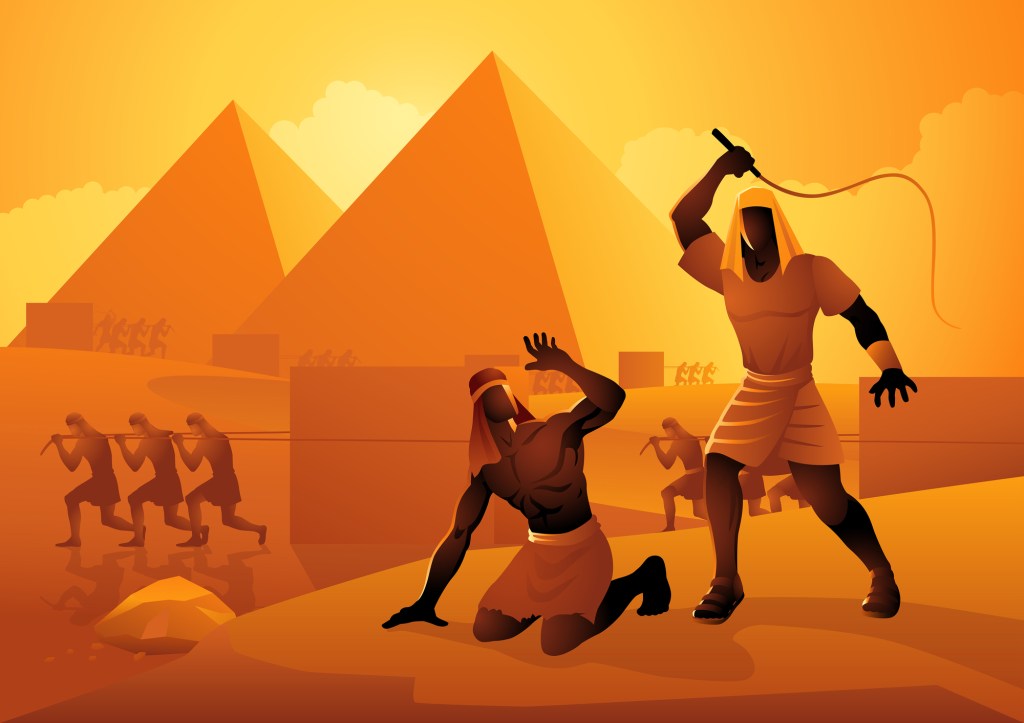
The word, outcry, in Genesis 18 should bring Exodus 2:23 to mind where God heard the Israelites cry out. In both cases, in Egypt and in Sodom & Gomorrah, God responds to an outcry of the people living there.

They same word, za’aq, is used in both passages. God responded to the Hebrews cry for deliverance by sending Moses, and God miraculously rescued them from the land of Egypt. In Genesis 18, God similarly responded to a cry for deliverance by sending His angels.

The parallel nature of these stories is important to recognize. The people cried out in distress, and God responded. Parallel stories and themes run throughout the Bible, and we should pay attention to the when they appear, because they usually mean something.


We know why the people cried out in Egypt – because Pharaoh enslaved and mistreated them. The Bible is relatively silent, however, on the circumstances in Sodom and Gomorrah.


If we pay close attention, though, we can find some clues!

In Genesis 19. Lot repeats the pattern of Abram’s hospitality: Lot saw two angels at the city gate, and he went out to meet them, like Abram did. Lot greeted them with respect the same way Abram did, and Lot insisted they come to his home where he prepared a feast for them, just as Abram did. (Gen. 19:1-3) These stories appear one after the other in the biblical narrative, and the parallel symmetry signals that we should pay attention.

Abram and Sarai, by the way, are known for generous hospitality. The generous hospitality of Abram is legendary in Jewish and even Muslim lore. Generous hospitality was a key distinctive of God’s man of faith.

Lot, who was Abram’s kin, demonstrated the same kind of generous hospitality, but the story takes a bad turn. Everything seems great until the men of Sodom surround Lot’s house and demand that Lot bring the angels out to them, “So that we can have sex with them.” (Gen. 19-4-5) When Lot refused, they turned on Lot, This is what they said:

“This fellow [Lot] came here as a foreigner, and now he wants to play the judge! We’ll treat you worse than them.”

genesis 19:9

Most of us, I think, assume the sin of Sodom was primarily sexual in nature. The story certainly seems to suggest that if we miss the clues to what was really going on. The symmetry of the parallel stories leading up to the story of Sodom and Gomorrah suggest that something else is going on. The people crying out in distress, like the Jews in Egypt is another clue, and what the townspeople say to Lot is still another clue.

The clues are in the context and more specifically in the contrast between the way Abram and Lot treated the foreigners/angels and the way the townspeople in Sodom & Gomorrah treat them. Abram and Lot go out of their way to greet the angels, bow to them in respect, make them feel welcome, and show them generous hospitality. The men of Sodom react the opposite way: they respond with hostility. They are angry that the foreigner in their midst (Lot) invited foreign guests into his home, and they they came to punish and humiliate those guests by violating them sexually.

I never noticed these clues in the text before. They cast a different light on the story. It seems that the story is less about men wanting to have sex with the foreigners than it is about brutish inhospitality.


This was a lynch mob. They came to run the foreign guests out of town and to demonstrate their extreme displeasure with Lot for inviting them in to his home. The men wanted to humiliate, violate, and punish Lot’s foreign guests in the worst possible way, and they wanted Lot to understand why: because Lot was a foreigner, and these men were foreigners, who were not welcome in their town.


As side note, I would not likely have noticed all this but for the book I am reading by James K. Hoffmeier, The Immigration Crisis: Immigrants, Aliens, and the Bible. He cites to the Sodom and Gomorrah story as an example of the way people in the Old Testament control their borders and their cities. (See also Judges 19-21 in which a similar scene plays out in Gibeah where the sons of Benjamin treat the Levites passing through in exactly the same way.)

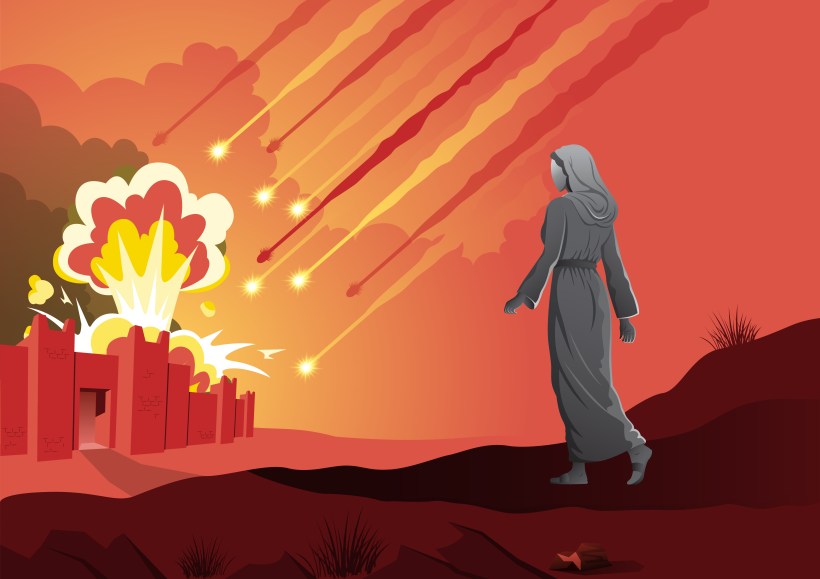
This was the last straw for God. The angels returned the favor Lot showed them by protecting him and his family and by warning them to get out of town quick. As soon as Lot and his family were out of town, “the Lord rained down burning sulfur on Sodom and Gomorrah….” and reduced it to smoke and ash (Gen. 19:10-28)

Aside from some other details that do not seem directly relevant at the moment, that is the story of Sodom & Gomorrah. Most of the references to Sodom & Gomorrah in the rest of the Bible are used as warnings without much commentary, except for three passages. These passages tell the rest of the story.

Continue reading “What Was the Sin of Sodom and Gomorrah?”

Thoughts on the Sanctity of Human Life, Injustice and Unity in the Church in the United States

God’s desire is to save us, to have relationship with us, to renew our minds and to conform us to His image.

Reading in Exodus today, I observe that two passages in the first two chapters have poignant application to the Body of Christ in the United States today. I see two predominant lines of injustice in the United States to which the Church collectively has given its attention that are identified in these first two chapters of Exodus.

At the same time, the Church is divided on justice issues. I don’t say this to condemn or to be judgmental. It’s simply a fact that I think we need to recognize soberly, honestly and humbly.

We might find many examples, but the one that comes to mind – the one that is, perhaps, most poignant in this given time – is the division between black and white and the division between supporters and and non-supporters of Donald Trump.

I know: I said one example, and it seems I given two here. These are two examples, but they coalesce into one. The proof for that is in the statistics that show that approximately 80% of white evangelicals support Trump, and approximately 80% of black “evangelicals”[i] do not support Trump.

Now, I recognize that these statistics are sweeping generalizations, but generalizations do tell a story. There is some reflection of truth in them. I also don’t mention Trump to be divisive here. The example simply is provided for illustration.

Churchgoing African Americans can be as theologically conservative on things like what it means to be born again as white evangelicals, but their individual and collective experiences give them a different perspective on life. Their view of the world and injustice is different than their white, evangelical counterparts, for the most part, and influences them to have different political affiliations.

My reading in Exodus (which I will get to) is timely because today is Sanctity of Life Sunday. I didn’t even realize it when I did my daily reading after I woke up this morning.

I didn’t realize it until I tuned into the Manchester (NH) Vineyard Community Church service this morning. I have never tuned into their services, until today, though I know people affiliated with them. When I set out to participate in a more local church service, I believe God drew my attention away to this one.

It was a great message, and I gained some perspective from it that, perhaps, God wanted me to have in writing this. With that introduction, let me explain the passages in Exodus that prompt my writing. Those texts include Exodus 1 (about the killing of babies) and Exodus 2 (about slavery).   

I will take these things one at a time and draw some conclusions consistent with the burden God has placed on my heart over the years. In another article, perhaps, I will explain how my perspectives have changed and, hopefully, shed some light on how the church can come together in the full council of God to advance His justice and righteousness.

Before I get into my immediate thoughts, though, I need to say that I speak with no condemnation in my heart

Just as Jesus said to the woman caught in adultery that he did not condemn her, I am reminded that God sent his son into the world not to condemn the world; God sent His son into the world so that the world might be saved through him. (John 3:17)

I do not say these things to condemn anyone because Jesus has redeemed us!


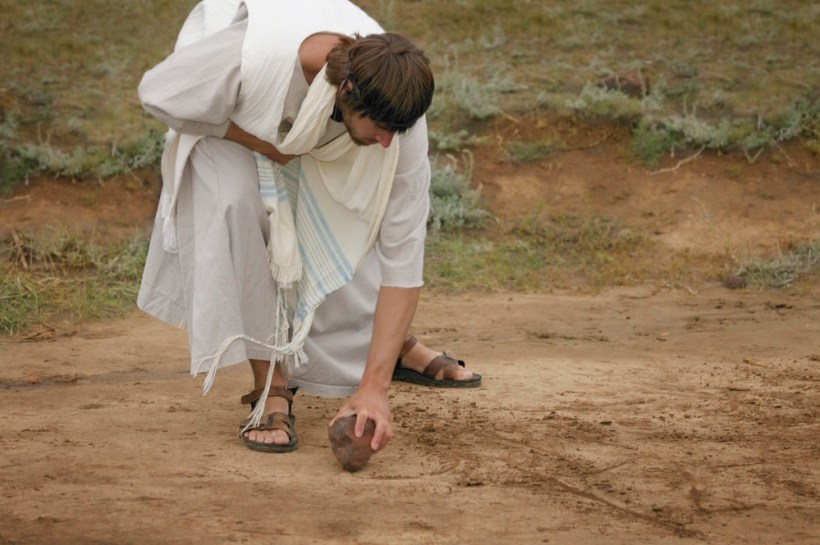
In the story of the woman caught in adultery, the Pharisees and Sadducees brought her to Jesus to challenge him because the Law required her to be stoned. They wanted to see what Jesus would do, but Jesus seemed to ignore them and began writing in the sand.

Some people believe that Jesus may have written the Ten Commandments out in the sand. When he looked up from from writing, Jesus “invited” them, saying, “He who is without sin may cast the first stone.” Then, he continued writing in the sand.

Some people believe he was writing down the sins those men had committed. They would say the men walked away silently because they realized that no one is without sin.


The wages of sin for every person is death.

Whatever he wrote, we know how the dialogue went next. “Jesus stood up and said to [the woman], ‘[W]here are they? Has no one condemned you?,” John 8:9) When she replied, “No one”, Jesus said, “Neither do I condemn you.” (John 8:10)

Jesus didn’t condemn the men either, because he told us he came not to condemn, but to save. I imagine that, Jesus would have received, forgiven and invited the men to follow him, if they had stayed and repented.

God desires to save us, to have relationship with us, to renew our minds and to conform us to His image. Our sin is the reason God became flesh and died for us. He came not to condemn, but to demonstrate His great love for us and to save us from the sin that enslaves us.

One last thing before I get into what I believe God has put on my heart to share: salvation and sanctification is a process. It starts where we are. When we are born again, God begins to work in us to will and to act according to His purposes and to conform us to His image, but we start that process in different places.

One point made in the sermon today, is that “a person doesn’t have to be pro-life to be saved”. People are saved by grace; it’s a gift that we haven’t earned. There will be no exam in heaven we must answer satisfactorily for salvation. It’s already been accomplished for us by Christ’s death and resurrection.

At the same time, if we are born again, God has begun a work within us. He has begun to renew our minds, and change our hearts, and we have begun to learn to think God’s thoughts after Him and become like Him.

With that said, I will address the two texts I read today in Exodus 1 and 2 that speak to me about the Church, collectively, in the United States. In writing this article, my hope is to provide some biblical basis on which we might begin to bridge the divide along racial and political lines and come together as the body of Christ. I hope to provide some perspective and understanding that will bring us together in Christ.

Continue reading “Thoughts on the Sanctity of Human Life, Injustice and Unity in the Church in the United States”