Jesus, Is Still Shaking the Church Like He Shook the First Century Religious Leaders

Righteousness and justice are the foundations of God’s throne. They are the building blocks of His character.

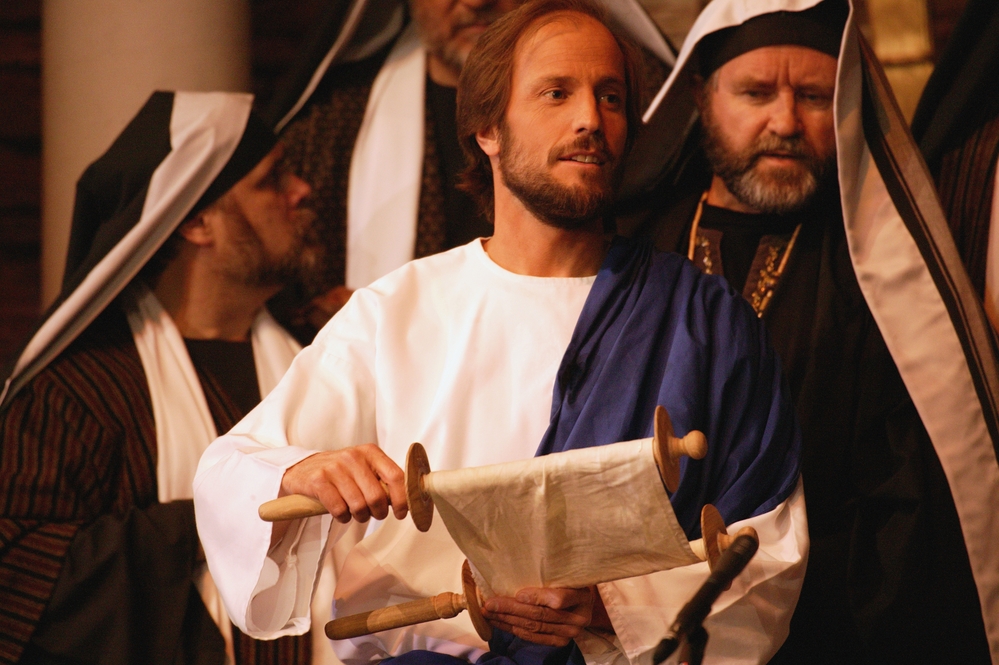
I wrote about A Mic Drop Moment in First Century Galilee back in March of 2020, referring to the passage in Luke 4 in which Jesus read from the Isaiah Scroll in the synagogue in Galilee where he announced his public ministry. I have been focused on that passage since the spring of 2019, when I was drawn to it for a talk on doing justice.

I am still continually drawn to that passage. I intended to write more about justice when I wrote that piece in March of 2020, but it wasn’t until July that I actually got around to it. (See Evangelicalism and Injustice Part I, Evangelicalism and Injustice Part II and The Need for the Church to Address and Injustice, for example.)

The world changed dramatically between March 2020 and July 2020. COVID shut down commerce and isolated people. The George Floyd killing happened in June, and we were embroiled in nationwide unease and unrest. The need for justice in a spiritually dry and parched world was quite evident, then, as the scabs of centuries of racial injustice were torn open and bleeding.

The focus of my writing has been on my fellow evangelicals. They way I have phrased this introduction may strike discord among my church family (or so I imagine as I write this).[i] I am convinced, however, these things are centrally important to God and how the body of Christ lives out the Gospel in the world.

Righteousness and justice are the foundation of God’s throne. Mercy and truth go before Him. (Ps. 89:14)

If we want to get closer to God, to know Him better and to be like Him in this fallen world, we need to focus on these: righteousness and justice. They are the twin pillars of God’s character.


This morning, Jeff Frazier’s sermon at Chapelstreet Church in Batavia, IL was on the same passage in Luke 4 that I have been reading periodically since 2019.[ii] I focus on a particular emphasis today that prompts this article, but let me set the scene first.

The entirety of the passage is found at Luke 4:16-30.  I encourage you to read it now or read my mic drop description of it (as if Jesus read from the Isaiah scroll in a neighborhood church today).

The key points for this article are that Jesus went to his home synagogue and read from the Isaiah scroll to his “own people” who knew him well. When Jesus said the messianic message of that passage was being fulfilled in their hearing, the people asked him, “Aren’t you Joseph’s son?”

Still, they spoke well of him and marveled at his “gracious words”. (Luke 4:22) Then Jesus made them uncomfortable by foretelling that they would taunt him and reject Him, adding, “[N]o prophet is acceptable in his hometown.” (Luke 4:23-24)

I imagine the synagogue went quiet quickly. They probably looked at each, thinking or saying things, like,

  • What is he saying?
  • Did I just hear him right?
  • Weren’t we just saying how he has grown up into a fine young man?
  • Did  he just accuse us of rejecting him?
  • We haven’t done anything!
  • We weren’t even thinking those things!”

But Jesus didn’t stop there. He turned the heat up a notch! This is where things really got dicey in his hometown synagogue. This is the point I am seeing in this passage today – something for us to think about in the American Church today.

Jesus referenced two passages of Scripture and two stories of revered Hebrew prophets. His citation to Scripture may not have raised eyebrows. It was the application of them that riled up his synagogue audience.

Continue reading “Jesus, Is Still Shaking the Church Like He Shook the First Century Religious Leaders”

What Was God Doing with Time and Eternity?

Why would God set up the universe so we would be cognizant of time?

The Christian understanding of God is that of “the” ultimate (maximal) Being, the architect and creator of everything (all that is seen and unseen as we say). God is the First and the Last. Reality does not exist outside or apart from God. Space/time (the universe we know) was created by God.

Christians also believe that God is transcendent (other) from the universe He created. When the writer of Hebrews says “the universe was formed at God’s command” and “what is seen is not made out of what is visible”, he is saying that God initiated the material universe from His immaterial, preexisting being by His command (will) out of nothing.

Nothing?

Yes, no material thing.

This is hard for us to grasp. It suggests that God is, in essence, immaterial – like unembodied mind or pure consciousness or something like that. It’s a mystery. We can’t go back prior to the beginning and “see” what reality or God was like, but we understand that the material universe had a beginning, which means that God is something other than material.

The beginning of the universe is confirmed by science. The universe began from the point of singularity that can be calculated with mathematical precision. Before that point, which we can trace to the millisecond, we can go no further. This is a boundary beyond which our exploration of the material universe cannot go.

God, therefore, exists “outside” (transcendent from) the space/time continuum that we know as the universe. He is somehow different and distinct from it. As best as we can determine, He is timeless and immaterial

This concept of God differentiates Christianity from all the Eastern religions and from all forms of pantheism and paganism. God is not part of His creation, though He can be (and is) intimate and present in all of it.

Though we may struggle to know “what God is like”, we can know something of God through the material reality He created in the same way we can know something of an artist from the art he creates. Knowing something about the artist from his works, though, isn’t the same as knowing the artist himself.

We are not left completely in the dark. Paul says that God made Himself evident in the world He created. (Rom. 1:20) The fact that something exists instead of nothing suggests a creator God. We can know something of God by the very fact that He the universe that is separate and “other” than Himself.

In a material world, we have to strain to find mutuality with “others”. It doesn’t come naturally. We are very conscious of our separateness – from each other and our creator – so much so that we have some difficulty connecting (emphasizing) with others, and we are tempted to believe we have no creator.

Not being of the same “substance” as God (timeless and immaterial – what Paul calls “heavenly” or “spiritual”), we know the material world much more intimately than the realm in which God exists (not that He doesn’t also exist in this material realm – though He transcends it). Yet, being made in God’s “image” suggests that we also have some ability to connect with His immateriality in some sense.

I say these things in preface to my thoughts today, which come from the Old Testament: the book of Genesis, and the book of Ecclesiastes. My thoughts begin with the beginning:

“And God said, ‘Let there be lights in the expanse of the heavens to separate the day from the night. And let them be for signs and for seasons, and for days and years….'”

Genesis 1:7

This isn’t the actual beginning, but very close to it. It is the first thing God does after creating “the heavens and the earth” (which is the Hebrew expression that means the universe). His first act of creation after forming the material universe was to call into existence “lights in the expanse of the heavens”, and He did it for a purpose.

(Not that these separate aspects of creation were necessarily a linear progression in the sense of completely separate “acts” of God. We might read these passages that way, but it isn’t the only way to read them.)

What was the purpose for which God established lights in the expanse of the heavens? To separate day from night and for signs, seasons, days and years – to establish measurements of time.

Interesting…. God wouldn’t need those things to measure time. What is time to God? He is timeless! Being all-knowing, God also (presumably) wouldn’t need material objects to be able measure time. So, why did God create ways to measure time?

It seems obvious that He created the tools for us to be able to measure time, and, therefore, God wants us to to be able to measure time.

We don’t really question our need to measure time. We just do it. We take time for granted, and our “need” to measure it.

But why?


It seems God set up the universe that way so that we would be cognizant of time, and we are, in fact, very cognizant of time. It seems to be there must be a purpose for it.

Continue reading “What Was God Doing with Time and Eternity?”

On the Intersection of Differences and Unity in the Body of Christ

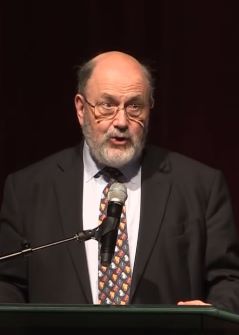
Esau McCaulley interviewed NT Wright on his Disrupters podcast last year. NT Wright is a British New Testament scholar of some renown who became McCaulley’s mentor at St. Andrew’s University in Scotland. McCaulley made a comment after the interview that prompts my writing today. He said,

“I feel like I am a mix of a bunch of things. I have this kind of British, evangelical side, and I have this kind of African American church side, and strangely they have coalesced in ways I didn’t expect.”

N.T. Wright Forces an Overdue Conversation on the Disrupters Podcast 2-3-22

McCaulley was raised Southern Baptist in the deep south, so their relationship is intriguing to me. The conversation between Wright and McCaulley is interesting and rich. The fact that they come from unique and diverse backgrounds permeates the discussion as they explore the things that unite them.

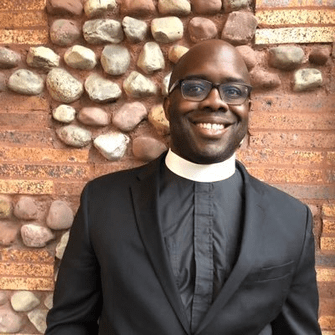
Esau McCaulley is a New Testament scholar in his own right, due in no small part to the influence of NT Wright. He has written one book on Galatians, and he is now writing a second. McCaulley also became an Anglican priest, but his heritage and unique experience, personally and communally, as a black man in America remain central to his identity.

The close relationship between these men from very different backgrounds and from different areas of the world has me thinking about the church in the United States and the global Church. I recently heard someone comment on an unfortunate, unforeseen, and unintended consequence of the Reformation. That consequence was the fragmentation of the Church.

The post-Reformation church fragmented into dissenting groups, and some of those dissenting groups fragmented further into groups of people who spoke English, French, and other European languages. Over time, the fragmentation rippled out from Europe to the New World and beyond.

The Reformation splintered into many “protestant” groups, and that fragmentation exploded in the New World where Lutherans, Presbyterians, Methodists and others splintered apart from each other into various and distinct groups, and many more new denominations sprung up. The fragmentation continued along cultural, doctrinal, ethnic, ritualistic, racial, governmental, language and other lines.

Today in America we can find a mind-boggling number of separate church bodies aligned in linguistic, ethnic doctrinal, geographic, and cultural huddles of believers that keep largely to themselves based on language, ethnicity, race, heritage, doctrine, worship preference, governmental protocol, and other things.

This fragmentation is still evident in the United States, and churches in the United States have been accused of being more segregated than the rest of the country (which is still pretty segregated).

The intersectionality (to use a very loaded term) of the disparate backgrounds, experiences and heritage of Wright and McCaulley, and their ongoing relationship remind me of the need for unity in the Church. We need to come together. We need to talk.

We need each other.

Continue reading “On the Intersection of Differences and Unity in the Body of Christ”

Thoughts on the Sanctity of Human Life, Injustice and Unity in the Church in the United States

God’s desire is to save us, to have relationship with us, to renew our minds and to conform us to His image.

Reading in Exodus today, I observe that two passages in the first two chapters have poignant application to the Body of Christ in the United States today. I see two predominant lines of injustice in the United States to which the Church collectively has given its attention that are identified in these first two chapters of Exodus.

At the same time, the Church is divided on justice issues. I don’t say this to condemn or to be judgmental. It’s simply a fact that I think we need to recognize soberly, honestly and humbly.

We might find many examples, but the one that comes to mind – the one that is, perhaps, most poignant in this given time – is the division between black and white and the division between supporters and and non-supporters of Donald Trump.

I know: I said one example, and it seems I given two here. These are two examples, but they coalesce into one. The proof for that is in the statistics that show that approximately 80% of white evangelicals support Trump, and approximately 80% of black “evangelicals”[i] do not support Trump.

Now, I recognize that these statistics are sweeping generalizations, but generalizations do tell a story. There is some reflection of truth in them. I also don’t mention Trump to be divisive here. The example simply is provided for illustration.

Churchgoing African Americans can be as theologically conservative on things like what it means to be born again as white evangelicals, but their individual and collective experiences give them a different perspective on life. Their view of the world and injustice is different than their white, evangelical counterparts, for the most part, and influences them to have different political affiliations.

My reading in Exodus (which I will get to) is timely because today is Sanctity of Life Sunday. I didn’t even realize it when I did my daily reading after I woke up this morning.

I didn’t realize it until I tuned into the Manchester (NH) Vineyard Community Church service this morning. I have never tuned into their services, until today, though I know people affiliated with them. When I set out to participate in a more local church service, I believe God drew my attention away to this one.

It was a great message, and I gained some perspective from it that, perhaps, God wanted me to have in writing this. With that introduction, let me explain the passages in Exodus that prompt my writing. Those texts include Exodus 1 (about the killing of babies) and Exodus 2 (about slavery).   

I will take these things one at a time and draw some conclusions consistent with the burden God has placed on my heart over the years. In another article, perhaps, I will explain how my perspectives have changed and, hopefully, shed some light on how the church can come together in the full council of God to advance His justice and righteousness.

Before I get into my immediate thoughts, though, I need to say that I speak with no condemnation in my heart

Just as Jesus said to the woman caught in adultery that he did not condemn her, I am reminded that God sent his son into the world not to condemn the world; God sent His son into the world so that the world might be saved through him. (John 3:17)

I do not say these things to condemn anyone because Jesus has redeemed us!


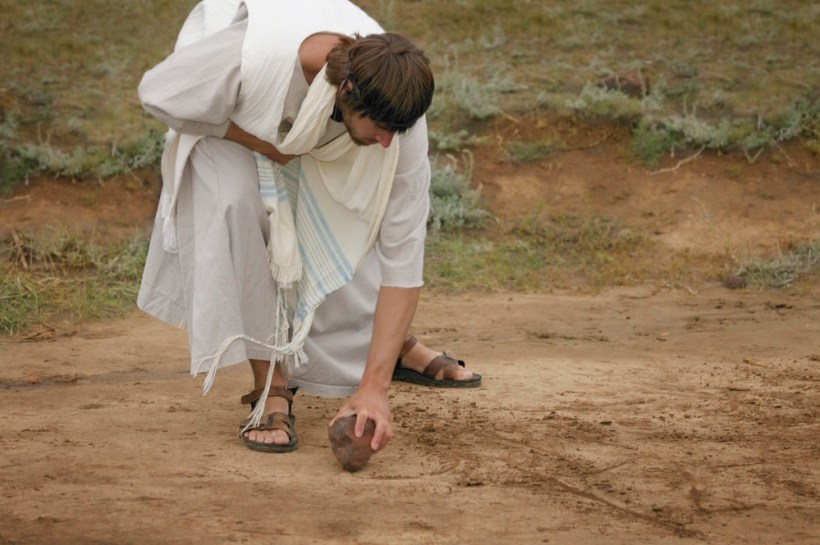
In the story of the woman caught in adultery, the Pharisees and Sadducees brought her to Jesus to challenge him because the Law required her to be stoned. They wanted to see what Jesus would do, but Jesus seemed to ignore them and began writing in the sand.

Some people believe that Jesus may have written the Ten Commandments out in the sand. When he looked up from from writing, Jesus “invited” them, saying, “He who is without sin may cast the first stone.” Then, he continued writing in the sand.

Some people believe he was writing down the sins those men had committed. They would say the men walked away silently because they realized that no one is without sin.


The wages of sin for every person is death.

Whatever he wrote, we know how the dialogue went next. “Jesus stood up and said to [the woman], ‘[W]here are they? Has no one condemned you?,” John 8:9) When she replied, “No one”, Jesus said, “Neither do I condemn you.” (John 8:10)

Jesus didn’t condemn the men either, because he told us he came not to condemn, but to save. I imagine that, Jesus would have received, forgiven and invited the men to follow him, if they had stayed and repented.

God desires to save us, to have relationship with us, to renew our minds and to conform us to His image. Our sin is the reason God became flesh and died for us. He came not to condemn, but to demonstrate His great love for us and to save us from the sin that enslaves us.

One last thing before I get into what I believe God has put on my heart to share: salvation and sanctification is a process. It starts where we are. When we are born again, God begins to work in us to will and to act according to His purposes and to conform us to His image, but we start that process in different places.

One point made in the sermon today, is that “a person doesn’t have to be pro-life to be saved”. People are saved by grace; it’s a gift that we haven’t earned. There will be no exam in heaven we must answer satisfactorily for salvation. It’s already been accomplished for us by Christ’s death and resurrection.

At the same time, if we are born again, God has begun a work within us. He has begun to renew our minds, and change our hearts, and we have begun to learn to think God’s thoughts after Him and become like Him.

With that said, I will address the two texts I read today in Exodus 1 and 2 that speak to me about the Church, collectively, in the United States. In writing this article, my hope is to provide some biblical basis on which we might begin to bridge the divide along racial and political lines and come together as the body of Christ. I hope to provide some perspective and understanding that will bring us together in Christ.

Continue reading “Thoughts on the Sanctity of Human Life, Injustice and Unity in the Church in the United States”

How Should Christians Act in Times Like These?

If we aren’t responding to current events in ways that display love and the fruits of the Spirit, we are “doing it wrong”

Tyler Merbler from USA, CC BY 2.0 https://creativecommons.org/licenses/by/2.0, via Wikimedia Commons

The events that are unfolding in the United States are troubling from many angles. Many Christians pinned their immediate and long term hopes on Donald Trump. With Biden as President, the fight against the killing of the unborn has been dealt a significant blow.

But there are many other problems. The racial divide, polarization, political fringe groups, extreme rhetoric, threats of violence, conspiracy theories, fake news, increasing control of popular speech by private monopolies of information, an abandonment of all semblance of non-bias by media, our ability to choose our own tailored news, hatred for people who don’t think like us, an unwillingness to show respect, listen and engage in real dialogue – these are things that are deeply troubling in “the land of the free and the home of the brave”.

To my brothers and sisters in Christ, Jesus said we would have tribulation in this world. He didn’t tell us to take up arms and fight it. He said we should follow him, spread the Gospel and make disciples.

His kingdom is not of this world. Jesus didn’t come to empower the Zealots, but to turn them into self-sacrificing servants of God and His kingdom – spreading the Gospel and making disciples.

Islam spreads by the sword. The Gospel spreads by people who wash others’ feet, turn the other cheek and love God, neighbors and even enemies. The Christian wields not a political flag, but a cross that he carries on his own back.

If we are going to fight for the mission of Jesus, our fight should be “to proclaim good news to the poor… to proclaim liberty to the captives and recovering of sight to the blind, to set at liberty those who are oppressed, to proclaim the year of the Lord’s favor”. (Luke 4:18-19) This was how Jesus described his own purpose on the day when he stood up in the temple and announced his ministry.

Should we not follow him?

Continue reading “How Should Christians Act in Times Like These?”