
Elisha, Naaman, Upended Expectations, Jesus, and God’s Grace to the Nations

Upended expectations that revolutionize our understanding of world

Older man standing in a river washing with a cloth during sunset

The story about Naaman, the Aramean general, always seemed odd to me. It didn’t really attract my attention other than to pique my curiosity a bit, until I focused on Luke 4, describing how Jesus announced his public ministry in his hometown synagogue.

Because Jesus referenced the healing of Naaman in the context of announcing his own purpose, the story takes on new significance. The story is not just an oddity. It should command our attention for the purpose for which Jesus referenced it – related to his earthly ministry. (Luke 4:16-30)

I have written about Jesus mentioning the healing of the pagan general in Luke 4 many times since 2020 when I first became intrigued with it. The mere mention of the healing in connection with the ministry of Jesus is intriguing. The intrigue is bolstered by the reaction of his hometown synagogue – they tried to march him out to a cliff and throw him to his death! (vv.28-30)

Until recently, I had spent much time reading the story itself. The fact that Naaman was an Aramean (Syrian) general, that Jesus made a peculiar point of saying Elisha could have gone to any one in Israel with leprosy and healed them, but he healed the foreign general, seemed to stand on its own. In New Testament theology, we would say that Jesus was tipping God’s hand about salvation for the Gentiles.

We might simply check the theological box and move on, but I think there is a deeper message here.

If we put ourselves in the shoes of those first-century Jews hearing the story, it takes on new significance. They and their ancestors had been God’s people for roughly 2000 years since Abraham and 1500 years since Moses. Their outrage at the suggestion of Jesus that he might bypass God’s people and go to the Gentiles is understandable.

Scripture is rich and the story itself is worth examining in more detail. It appears in 2 Kings 5. The details of the story add more nuance in the context of Luke 4 that has application for us today. It deepens and expands the significance of Jesus mentioning it in his home town synagogue when he announced his public ministry.

Continue reading “Elisha, Naaman, Upended Expectations, Jesus, and God’s Grace to the Nations”
Jesus, Is Still Shaking the Church Like He Shook the First Century Religious Leaders

Righteousness and justice are the foundations of God’s throne. They are the building blocks of His character.

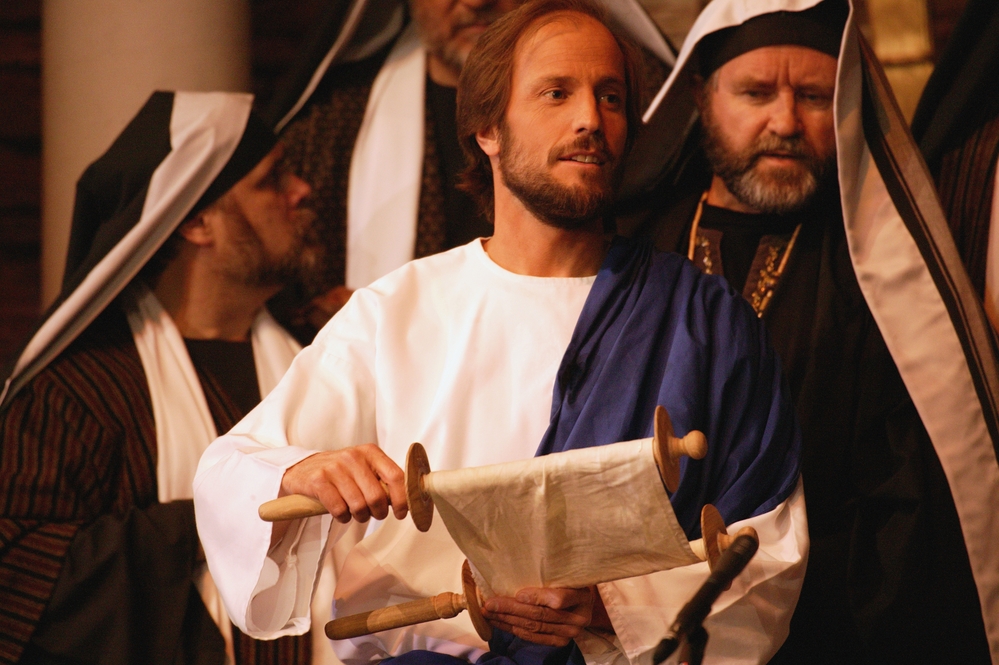
I wrote about A Mic Drop Moment in First Century Galilee back in March of 2020, referring to the passage in Luke 4 in which Jesus read from the Isaiah Scroll in the synagogue in Galilee where he announced his public ministry. I have been focused on that passage since the spring of 2019, when I was drawn to it for a talk on doing justice.

I am still continually drawn to that passage. I intended to write more about justice when I wrote that piece in March of 2020, but it wasn’t until July that I actually got around to it. (See Evangelicalism and Injustice Part I, Evangelicalism and Injustice Part II and The Need for the Church to Address and Injustice, for example.)

The world changed dramatically between March 2020 and July 2020. COVID shut down commerce and isolated people. The George Floyd killing happened in June, and we were embroiled in nationwide unease and unrest. The need for justice in a spiritually dry and parched world was quite evident, then, as the scabs of centuries of racial injustice were torn open and bleeding.

The focus of my writing has been on my fellow evangelicals. They way I have phrased this introduction may strike discord among my church family (or so I imagine as I write this).[i] I am convinced, however, these things are centrally important to God and how the body of Christ lives out the Gospel in the world.

Righteousness and justice are the foundation of God’s throne. Mercy and truth go before Him. (Ps. 89:14)

If we want to get closer to God, to know Him better and to be like Him in this fallen world, we need to focus on these: righteousness and justice. They are the twin pillars of God’s character.


This morning, Jeff Frazier’s sermon at Chapelstreet Church in Batavia, IL was on the same passage in Luke 4 that I have been reading periodically since 2019.[ii] I focus on a particular emphasis today that prompts this article, but let me set the scene first.

The entirety of the passage is found at Luke 4:16-30.  I encourage you to read it now or read my mic drop description of it (as if Jesus read from the Isaiah scroll in a neighborhood church today).

The key points for this article are that Jesus went to his home synagogue and read from the Isaiah scroll to his “own people” who knew him well. When Jesus said the messianic message of that passage was being fulfilled in their hearing, the people asked him, “Aren’t you Joseph’s son?”

Still, they spoke well of him and marveled at his “gracious words”. (Luke 4:22) Then Jesus made them uncomfortable by foretelling that they would taunt him and reject Him, adding, “[N]o prophet is acceptable in his hometown.” (Luke 4:23-24)

I imagine the synagogue went quiet quickly. They probably looked at each, thinking or saying things, like,

  • What is he saying?
  • Did I just hear him right?
  • Weren’t we just saying how he has grown up into a fine young man?
  • Did  he just accuse us of rejecting him?
  • We haven’t done anything!
  • We weren’t even thinking those things!”

But Jesus didn’t stop there. He turned the heat up a notch! This is where things really got dicey in his hometown synagogue. This is the point I am seeing in this passage today – something for us to think about in the American Church today.

Jesus referenced two passages of Scripture and two stories of revered Hebrew prophets. His citation to Scripture may not have raised eyebrows. It was the application of them that riled up his synagogue audience.

Continue reading “Jesus, Is Still Shaking the Church Like He Shook the First Century Religious Leaders”