Embracing Our Identity as Citizens of Heaven

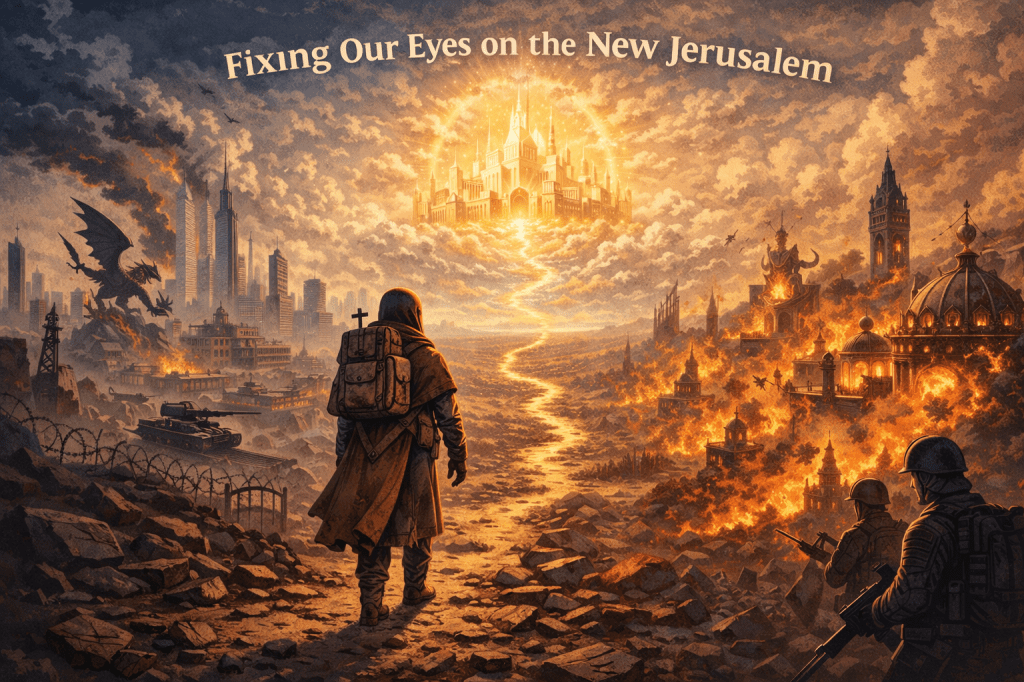
created with Chat GPT*

A very good friend and sister in Christ recently gave a devotional presentation to a faith-based non-profit Board of which I am a member. She reflected on her experience of being a minority as a Christian growing up in India, where less than two percent (2%) of the population is “Christian” (including Catholics, Jehovah Witnesses, and Mormons).

Her poignant story of personal struggle with minority status and finding blessing in it, hits home with me. I have never felt like a minority in the visceral way that she experienced it. The blessing she found through Scripture in embracing her minority status is a lesson for all believers.

Being a Christian in a Non-Christian World

My friend struggled with her minority status as a Christian in India. She was ridiculed, teased, and looked down upon. By God’s grace, she felt her divine calling as a child of God, but her identity as a Christian came with consequences.

The consequences proved even more difficult for her sister, who applied to medical school. The admissions officer said she must recant her faith to be approved for assignment to any med school. She refused, and she gave up her dream of becoming a physician. Minority status in a majority world as consequences.

Being a Foreigner in the United States

When she emigrated to the United States she felt the joy of being a part of the Christian majority. Over time, however, the struggle with minority status began to resurface again. She stood out because of her ethnicity, accent, and cultural differences. She realized, “I am a minority within my Christian majority realm.”

This was a very personal struggle for her because of her childhood experience in India. She thought that moving to American where Christians are in the majority would be different. Instead, she felt the sting of minority status. Though she was a Christian in an ostensibly Christian country, she was still an outsider and a foreigner because of her nationality, ethnicity, and cultural differences.

Being a Foreigner in the World

She shared that God met her in the struggle and confronted her with His Word. What she learned through this process was sobering for her, and it is a lesson for those of us who have always lived in majority status in a majority Christian nation. 

She began to realize what a privilege it is to be a minority because we are called as believers out of the world where wide is the path that leads to destruction. We are set apart by God from the world, which means we are called to minority status in the world.

Narrow is the path that leads to life. Minority status is the Christian experience.

The Privilege of Minority Status

As she focused on these things God was showing her in His Word, she became grateful for her experience as a Christian in a majority non-Christian country. This experience gave her perspective that American Christians lack.

Continue reading “Embracing Our Identity as Citizens of Heaven”

The Borderlines: A Place Called Earth

When we stand at the borderline and understand the limitations and futility of our lives, we have begun to see as God intended for us to see.

Oh, how I long for heaven in a place called earth
Where every son and daughter will know their worth
Where all the streets resound with thunderous joy
Oh how I long for heaven in a place called earth

Song writers have common themes and images that run through their work. Jon Forman is one of my favorite song writers because he resonates with a theme that has run through my thinking over the last decade: the transience of this life and the transcendence of the life to come.

In the song, A Place Called Earth, he focuses on the “borderlines” between the transience of our lives and the longing for transcendence. It’s an age-old theme. It’s a theme that has been the subject of some of the greatest writers in the history of world from the author of Ecclesiastes to Shakespeare.

The video embedded above was a recent live performance of this song off the new EP, Departures. Linked below is the studio recording of A Place Called Earth that was written by Jon Foreman with his brother, Tim, and Lauren Daigle. I encourage you to listen to it in all of its orchestral fullness.

The hope of the Christ follower is the longing for heaven, a place where everyone knows their worth through the eyes of Jesus. Our hope to know even as we are fully known. Meanwhile, we see dimly as in a mirror, and we have this hope, the treasure of the Holy Spirit who gives us assurance, in earthen vessels. (2 Corinthians 4:7) We long for heaven in a place called earth.

Oh, the wars we haven’t won
Oh, the songs we’ve left unsung
Oh, the dreams we haven’t seen
The borderlines

Jon Foreman’s plaintive voice captures the angst of these lines perfectly. We try to notch our belts with victories, but what of all the defeats? The songs we have left unsung? The great dreams we dared to dream that we haven’t seen?

All our victories are hollow trophies at the end of our days. Memories of them begin to fade from the moment of victory. Like the entropy to which our universe is subjected (Romans 8:20), those memories will fade into utter obscurity long after we have taken our last breaths.

We see this on the borderlines. On the borderlines, where we peer out over an endless expanse yawning out into a far distant future, and beyond it into an eternity we can’t even fathom. We realize our utter insignificance as we peer out beyond what we can see and comprehend.

Continue reading “The Borderlines: A Place Called Earth”

Where in the World is God?

Our western view of God, heaven and the earth may get in the way of understanding where in the world is God.


I have been listening with some relish to the new podcast, Ask NT Wright Anything, with Justin Brierley the host of Unbelievable! podcast fame. NT Wright is currently the Research Professor of New Testament and Early Christianity at St. Mary’s College in the University of St. Andrews in Scotland. (Wikipedia) He is a renowned scholar and prolific writer and speaker.

In listening to the first few episodes of the new podcast, I have become interested in NT Wright’s view the kingdom of God, the ascension and what it means that someday Jesus will “come again on the clouds”.  calls westerners “innate Epicureans” who believe that “heaven is a long way away”. Thus, when we think of something like the ascension of Jesus, we imagine him rising up to heaven far away where He “sits at the right hand of the Father”.

This image of Jesus in heaven far away seems to be suggested in the passages from which we have coined the term ascension. The Gospel of Luke describes it this way: “While [Jesus] was blessing them, He parted from them [left them] and was carried up [taken up] into heaven”. (Luke 24:51 (NASB/ESV)) In Acts, the description is that “He was lifted up while they were looking on [taken up before their very eyes], and a cloud hid him [received Him] from their sight [out of their sight].” (Acts 1:9 NASB/ESV)

In Luke, the phrase, “parted and was carried” is a translation of the one Greek word, diístēmi, meaning literally “to set apart, to intervene, make interval” and translated as carried, parted and/or passed.[i] In the Greek, it appears (to me) that some interpretation is apparent in the English verb tenses used: “He parted and was carried [taken]”. The first phrase conveys action on the part of Jesus, and the second phrase conveys some action asserted upon Jesus, presumably from the Father.

The phrase is inserted as the interpretation of a single word so who undertook the action is really not implicitly expressed. It’s an interpretation (it seems to me). Further, the descriptor, “up” is added. That descriptor is not inherent in the Greek word, diístēmi. Rather, it seems to be a common sense addition to connect with the word translated “heaven”, which is ouranós. But is that an accurate translation?

After hearing NT Wright, I think not. Our western worldview filter may be to blame, and removing this worldview filter opens up a more accurate view, perhaps, of what the kingdom of God is, the ascension, and the second coming of Jesus.

Continue reading “Where in the World is God?”

Four Misconceptions about Christianity

Four basic assumptions that seem to be prevalent in the modern American world that are not not biblical.


I am continually impressed by the persistence of misconceptions about Christianity, even in the United States. The US is considered by many (still) to be a “Christian” nation. Most people may identify as Christian in the US, but that doesn’t necessarily mean that we all understand the basic tenets of the faith. Maybe it’s an example of familiarity leading us to assume things that aren’t necessarily true. Following I address just four very basic assumptions that seem to be prevalent in the modern American world that are not consistent with the Christian perspective that is revealed in the Bible. Continue reading “Four Misconceptions about Christianity”

The Great Divide

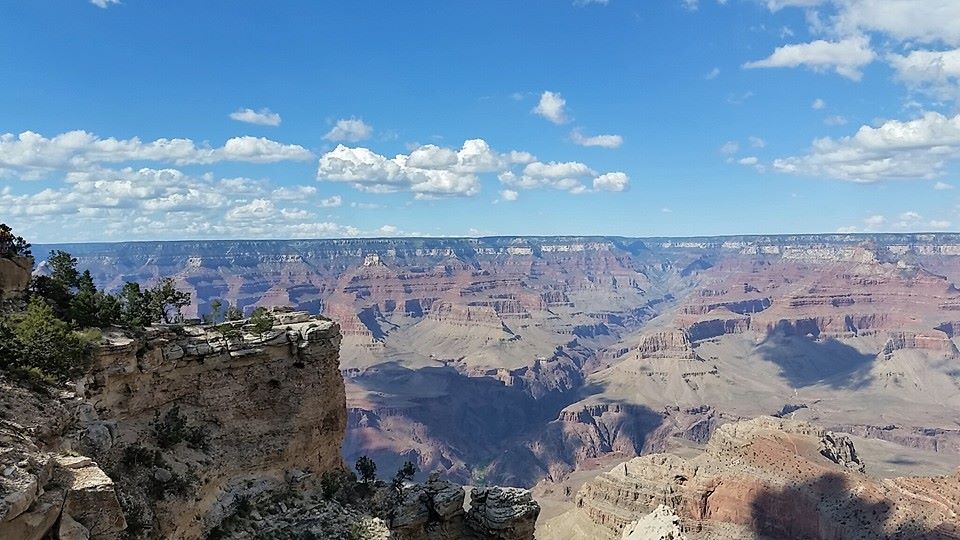
Grand Canyon


“The Lord is not slow about His promise, as some count slowness, but is patient toward you, not wishing for any to perish but for all to come to repentance[i].” (2 Peter 3:9)

People began talking about the second coming of Christ since soon after Jesus died. Jesus talked about it when he was alive. We still talk about it today.

I am not going to speculate or to suggest when the second coming will be. Jesus said that no man knows the day or the hour (Matt. 24:36), so I take him at his word.

I do believe that a God who could raise Jesus from the dead can cause Him to come again. It will happen. We will also all die as surely as we live. These things I take to the bank.

We do not like to talk about judgment or hell, but we cannot accept the Bible as true with any integrity without conceding those principles. Whether Jesus spoke more of hell than heaven or more of heaven than hell is beside the point; Jesus clearly and pointedly spoke of judgment[ii] and of hell[iii].

Jesus said that some people would end up in heaven with Him, and some would end up in hell without Him. We might call this the great divide.

The “slowness” referenced in 2 Peter 3:9 is God’s slowness in fulfilling the promise of the second coming of Christ… and of the Day of Judgment. (2 Pet. 3:3-8) the second coming and the judgment go together. That is when Jesus will separate the proverbial sheep from the goats.

In this context, Peter famously reminds us that one day is like a thousand years, and a thousand years is like one day for God. (2 Pet. 3:8). Because God exists outside of time and space (always is, always was and always will be), time is not such a big deal for God as it is for us (limited, as we are, in the confines of space/time and finite).

The fact that “the Day” has not yet come speaks to God’s patience and His desire that none would perish. (See also John 3:16). God’s desire is that everyone would be “saved”. (1 Tim. 2:4) That God desires none would perish and all would be saved suggests that hell is a reality, and it is a reality that God doesn’t choose for us.

Some say that hell means primarily separation from God, but others make a good case that it means something else. (See for example Hell is Not Separation from God (eternal condemnation vs. eternal fellowship with God) or The Rich Man and Lazarus (death vs. eternal life)).

Regardless of what it might mean, hell is no place or condition God desires for us, and it’s not a place or condition we might desire for ourselves, all things being equal. Right?

God does warn of the dualism between heaven and hell. Primarily, however, He presents us with the choice between God and His way or other things and other ways; ultimately, it boils down to God’s way or “my way”. In that sense, the Frank Sinatra song, I Did It My Way, might be a good anthem for those who reject God.

God’s patience allows time for people to repent, to turn from their own ways, and to accept what God desires for us. God doesn’t make that choice for us. He won’t violate the free will He gave us a beings created in His very image.

We also do not dictate to God. God is who He is, and He does not change. The universe was created by Him and for His purpose, including us. The choice is ours to accept what God finds acceptable and to align with Him or reject Him and to seek what we want and align against Him.

For almost two thousand years since God became man, God has been patient, allowing time for repentance (“declaring to men that all people everywhere should repent” Acts 17:31 & 20:21). Thus, the writer of Hebrews implores:

“Today, if you hear His voice do not harden your hearts….” (Heb. 3:7-8; quoting Ps. 95:7-8)

Continue reading “The Great Divide”