In my morning time with God and His Word, the following verses caught my attention:
“A father to the fatherless, a defender of widows is God in his holy dwelling. God sets the lonely in families. He leads out the prisoners with singing, but the rebellious live in a sun-scorched land.”
Psalm 68:5-6
Other verses speak of God being a father to the fatherless and a defender of widows (and a lover of “the foreigner residing among you” (Deut. 10:18) and an upholder of the cause of the appressed (Psalm 146:7), but this hit in a different way today. God is a father to the fatherless and a defender of widows “in his holy dwelling.”
The Hebrew word translated “holy dwelling” is the word used to mean God’s tabernacle or temple. As John Walton and other Old Testament scholars say, the tabernacle and the temple are designs meant to remind us of the Garden of Eden, full of Edenic imagery. They were used to demonstrate God’s desire to dwell among His people, first in the tabernacle that was carried through the desert and stationed in the Tent of Meeting and later in the Temple in Jerusalem.
God allowed the Temple to be destroyed after Jesus came, died, and rose again, leaving the Holy Spirit to dwell with us and in us. The progression of the tabernacle, the Temple, and the Holy Spirit living in and among God’s people are all pointers to God’s ultimate plan and design:
“Then I saw ‘a new heaven and a new earth,’ for the first heaven and the first earth had passed away, and there was no longer any sea. I saw the Holy City, the new Jerusalem, coming down out of heaven from God, prepared as a bride beautifully dressed for her husband. And I heard a loud voice from the throne saying, ‘Look! God’s dwelling place is now among the people, and he will dwell with them. They will be his people, and God himself will be with them and be their God. ‘He will wipe every tear from their eyes. There will be no more death’ or mourning or crying or pain, for the old order of things has passed away.””
Revelation 21:1-4
God is a father to the fatherless and a defender of widows in his holy dwelling. Since Adam and Eve were banished from the Garden, human beings have not dwelt with God in His holy dwelling. God has dwelt among His people in limited ways in the Tabernacle, and in the Temple, and (presently) in people who have received the indwelling of the Holy Spirit, but we have not lived with God in His holy dwelling.
Though God’s people have the comfort and guidance of the Holy Spirit in this world, this world is still on the other side of Eden, and this world as we know it will pass away. We await the new heavens, the new earth, and the new Jerusalem where God will dwell with His people.
In the meantime, though God is a father to the fatherless and a defender of widows in His holy dwelling. What does that mean? We are separated from God’s holy dwelling in this life. We are in between Eden and the New Jerusalem.
I believe it means that commissions those who have God in us (the Holy Spirit) to the “defend the weak and fatherless” and to “uphold the cause of the poor and the oppressed.” (Psalm 82:3) He commissions us to “care about justice for the poor” (Prov. 29:7), and He commissions us to love the foreigners living among us. (Deut. 10:19)
God is a father to the fatherless and a defender of widows in His holy dwelling. That is who God is in his inner sanctum. That is who God is at the core of his being. God “sets the lonely in families,” and “God leads out the prisoners with singing.” This is God’s very heart at the core of his being. This is who God is, and this is who we should be as His children.
I have wanted to dig into the story of Sodom and Gomorrah for a while now, ever since someone suggested to me that the story isn’t what I think it is. Everyone knows the reference to Sodom and Gomorrah, right? God smote those villages with fire and brimstone because of homosexuality.
That’s what I was taught. At least, that is what I always believed, but I have learned there may be more to the story. The truth is right where we should expect to find it: in the Bible. If you are intrigued as I was, then read on.
First, let’s review the story in Genesis 13. Abram and Lot flourished, and their clans and flocks grew in size in the land God promised Abram. As their estates grew, tensions arose among their entourages, and they decided to separate and spread out. (Gen. 13:5-9)
“Lot looked around and saw that the whole plain of the Jordan toward Zoar was well watered, like the garden of the Lord, like the land of Egypt.” (Gen. 13:10) The desirability of the land prompted Lot to choose Sodom and Gomorrah in the plain of Jordon, while Abram remained in Canaan.
Although the land was desirable, the story ends with this ominous statement: “The people of Sodom were wicked and were sinning greatly against the Lord.” (Gen. 13:13) Did Lot know what he was getting into?
That statement is there for a reason. We should take note. The land was inhabited with “wicked” people, yet Lot moved there anyway. Perhaps, the allure of a well watered garden – like the garden of Eden and like Egypt – was so great that Lot ignored the fact that wicked people lived there.
The mention of similarity to Egypt should also recall the desire of the people in the wilderness to go back to Egypt. Though they were enslaved there, the land was lush, and they had food and comfort. It seems that these allurements caused Lot to overlook the obvious problem with choosing to live there.
The comment also may provide an explanation for why Lot’s wife looked back in defiance of the angel’s warning. She may have regretted leaving such a desirable place to live, despite the wickedness of the people there.
She may have wanted to return to the abundance and comfort that drew them there, and that desire to hold on to abundance and comfort in the face of the abject wickedness of the people may have been her undoing.
We should also understand the backstory in Genesis 18 before we get to the story of Sodom and Gomorrah Genesis 19. Before the angels visited Sodom, they visited Abram.
Abram saw the three “angels of the Lord” from his tent. He went out to meet them, bowed in respect, and insisted they come to his tent to be refreshed. Abram and Sarai spared no expense to show them hospitality, and the angels returned the favor by affirming God’s promise to the elderly couple: promising that Sarai would bear a child within a year. (Gen. 18:1-15)
Before the angels left, the angels told Abram the reason they came: to investigate Sodom and Gomorrah because “the outcry against Sodom and Gomorrah [was] so great and their sin [was] so grievous.” (Gen. 18:20) This “outcry” that reached the LORD is the first clue to what was going on there. (Gen. 18:21)
The Hebrew word that is translated “outcry” in this verse is za’aq. It mean a shriek, cry for help, cry of distress, lamentation. The outcry means something was going on in Sodom and Gomorrah that was causing people to cry out for help in distress.
The word, outcry, in Genesis 18 should bring to mind Exodus 2:23 where God heard the Israelites cry out in distress over their oppressive treatment by the Egyptians. In both cases, in Egypt and in Sodom & Gomorrah, God responds to an outcry of the people living there.
They same word, za’aq, is used in both passages. God responded to the Hebrews cry for deliverance by sending Moses, and God miraculously rescued them from the land of Egypt. In Genesis 18, God similarly responded to a cry for deliverance from Sodom by sending His angels to investigate.
The parallel nature of these stories is important to recognize. The people cried out in distress, and God responded. Parallel stories and themes run throughout the Bible, and we should pay attention to them when they appear. They usually mean something.
We know why the people cried out in Egypt – because Pharaoh enslaved and mistreated them. The Bible is relatively silent, however, on the circumstances in Sodom and Gomorrah. If we pay close attention, though, we can find some clues!
Back to the story: In Genesis 19, Lot repeats the pattern of Abram’s hospitality. Lot saw two angels at the city gate, and he went out to meet them, like Abram did. Lot greeted them with respect the same way Abram did, and Lot insisted they come to his home where he prepared a feast for them, just as Abram did. (Gen. 19:1-3) These stories appear one after the other in the biblical narrative, and the parallel symmetry signals that we should pay attention.
Abram and Sarai, by the way, are known for generous hospitality. The generous hospitality of Abram is legendary in Jewish and even Muslim lore. Generous hospitality was a key distinctive of Abraham, God’s man of faith.
Lot, who was Abram’s kin, demonstrated the same kind of generous hospitality, but the story takes a bad turn. Everything seems great until the men of Sodom surround Lot’s house and demand that Lot bring the angels out to them, “So that we can have sex with them.” (Gen. 19-4-5) When Lot refused, they turned on Lot, This is what they said:
“This fellow [Lot] came here as a foreigner, and now he wants to play the judge! We’ll treat you worse than them.”
genesis 19:9
Most of us, I think, assume the sin of Sodom was primarily sexual in nature. The story certainly seems to suggest that if we miss the clues to what was really going on. The symmetry of the parallel stories leading up to the story of Sodom and Gomorrah suggest that something else is going on. The people crying out in distress, like the Jews in Egypt is another clue, and what the townspeople say to Lot is still another clue.
The clues are in the context and the contrast between the way Abram and Lot treated the foreigners/angels and the way the townspeople in Sodom & Gomorrah treated them. Abram and Lot go out of their way to greet the angels, bow to them in respect, make them feel welcome, and show them generous hospitality. The men of Sodom react the opposite way: they respond with hostility. They are angry that the foreigner in their midst (Lot) invited foreign guests into his home, and they came to punish and humiliate those guests by violating them sexually.
I never noticed these clues in the text before. They cast a different light on the story. It seems that the story is less about men wanting to have sex with men than it is about brutish inhospitality the strangers/foreigners.
This was a lynch mob. They came to run the foreign guests out of town and to demonstrate their extreme displeasure with Lot for inviting them in to his home. The men wanted to humiliate, violate, and punish Lot’s foreign guests in the worst possible way, and they wanted Lot to understand why: because Lot was a foreigner, and these men were foreigners, and they were not welcome in their town.
As side note, I would not likely have noticed this but for the book I am reading by James K. Hoffmeier, The Immigration Crisis: Immigrants, Aliens, and the Bible. He cites to the Sodom and Gomorrah story as an example of the way people in the Old Testament controlled their borders and their cities. (See also Judges 19-21 in which a similar scene plays out in Gibeah where the sons of Benjamin treat the Levites passing through in exactly the same way.)
I am reminded of the Parable of the Sheep and the Goats in which people did not realize the way they treated foreigners (and other vulnerable people) was like treating Jesus that way – good and bad. I am also reminded of Hebrews 13:2: “Do not forget to show hospitality to strangers, for by so doing some people have shown hospitality to angels without knowing it.” Mistreating strangers – similarly – might be nistreating angels!
This was the last straw for God. The angels returned the favor Lot showed them by protecting him and his family. The angels warned them to get out of town quick. As soon as Lot and his family were out of town, “the Lord rained down burning sulfur on Sodom and Gomorrah….” and reduced it to smoke and ash (Gen. 19:10-28)
Aside from some other details that do not seem directly relevant at the moment, that is the story of Sodom & Gomorrah. Most of the references to Sodom & Gomorrah in the rest of the Bible are used as warnings without much commentary, except for three passages. These passages tell fill in the rest of the story.
In 2014, during the Syrian refugee crisis, I watched the flood of humanity escaping from the ruthless butchery that occurred during that time in that region of the world. I recall the controversy in the various countries to which this seemingly unending stream of people fled in desperation and anger. Some countries like Germany opened the floodgates; other countries like Hungary closed their borders.
I empathized with people who didn’t want their countries overrun by foreign refugees. I watched the mass of displaced foreigners overwhelming the roads and rails in Europe, and I read stories of mobs of young Arab men taking out their anger on the countries they entered and women they encountered there.
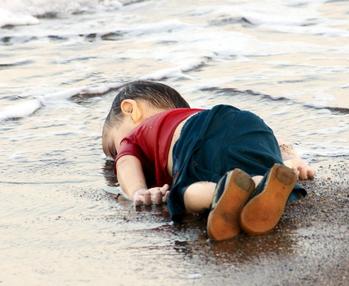
I saw mothers and fathers with desperation in their eyes and fearful children in tow. The image of a lifeless little boy washed up on a sandy Mediterranean beach still haunts me.
Syria was home to the oldest population of Christians on earth, and Christians were caught in a sectarian and political power struggle between largely Muslim factions fighting for and against Democracy. Both Christians and Muslims fled from the conflagration between the deadly governmental crackdown against the popular rebel uprising, and the ruthlessly uncompromising, opportunistic butchers of ISIS who joined in the fight.
Though many of the refugees were Christians caught in the cross fire, and the though the rebels fought for Democracy, President Obama resolutely refused to open American borers to more than a handful of Syrian refugees. As the flood of humanity streamed into Turkey and Europe, we stood aloof.
I was torn. The throngs of young and angry Muslim men mixed with desperate parents and fearful children pulled me in different directions, and I didn’t know how to respond.
I had recently done an apologetic study of Christianity vs. Islam, and my concern about the angry, displaced Muslims was keen. President Obama and the Democratic majority acted as if the moral fabric of the universe would rend in two if we verbalized what everyone knew and thought: that angry young men indoctrinated by radical Islam are dangerous.
Yet, the faces of those parents and children and the haunting visage of the 3-year old Alan Kurdi lying lifeless and washed up on a Mediterranean shoreline begged for a compassionate response.
I realized in that conflict of opposing strains of response to the Syrian crisis that I really had no idea how a Christian should look at these things. I realized that I didn’t know what, if anything, a robust reading of Scripture might suggest.
So, I did what I should have done a long time before that. I did a deep dive into what the Bible has to say about immigrants.
For anyone who does not honor or respect or believe in the Bible, this won’t mean much to you. For me, it was important to know whether the Bible addressed the subject and, if so, what the Bible has to say about it.
The news waves are buzzing with reports of summary deportations with a mixed reaction of angst and anger on the on hand and zeal on the other hand. Social media is overtaken by the reports and the opposite reactions in a vortex of swirling vitriol.
I am as guilty as the next person of the desire to post knee-jerk reactions, I realize we need cooler heads to prevail if we are going to find a positive way forward as a nation.
The same swirling vortex of reaction is evident in the Church, even in the evangelical church, which is my “tribe”, and the same need for cooler heads to prevail exists. We also need biblical grounding and direction if we are going to maintain any sense of unity in Christ.
The latest news involves the visit to the White of El Salvadoran President, Nayib Bukele. The staged meeting of the two presidents comes in the wake of the mass deportation on March 15, 2025, of hundreds of men to a notorious Salvadoran prison known for its harsh and inhumane treatment of prisoners.
The deportations happened so fast that an emergency motion filed in court and an emergency order blocking the deportation came too late as the plane rushed off the runway just as the order was handed down. The White House maintained that every one of the several hundred men were violent criminals, though about half of them had no criminal records, and none of them received even a cursory hearing.
Homeland Security insisted to the trial judge that the plane had already left the runway when the order was issued. According to the Supreme Court, however, “The United States acknowledges that Abrego Garcia was subject to a withholding order forbidding his removal to El Salvador, and that the removal to El Salvador was therefore illegal,” suggesting that the order was in place before the plane took off.
The court found further that “[t]he United States represents that the removal to El Salvador was the result of an ‘administrative error.’” Thus, Homeland Security admits they made a mistake in deporting him. One of the reasons for “due process, which I will get into, is to avoid such mistakes.
Nevertheless, Homeland Security justifies the action taken by claiming that Abrego Garcia “has been found to be a member of the gang MS–13, a designated foreign terrorist organization, and that his return to the United States would pose a threat to the public.” They maintain they have done nothing wrong.
The subject of this post is due process, so I will ignore some of the other elements of this case, such as the Supreme Court’s affirmation of the order to facilitate the return of Abrego Garcia, the fact that the decision was 9-0, and Donald Trump’s insistence this was a victory for him (perhaps because he got away with it with no repercussions – yet).
While the Supreme Court remanded the matter back to the trial court for clarification, the Court did weigh in on the substance of the issues in various ways. The Supreme Court said:
“The order properly requires the Government to “facilitate” Abrego Garcia’s release from custody in El Salvador and to ensure that his case is handled as it would have been had he not been improperly sent to El Salvador.”
“To this day, the Government has cited no basis in law for Abrego Garcia’s warrantless arrest, his removal to El Salvador, or his confinement in a Salvadoran prison. Nor could it.”
The government is bound by a 2019 order effectively granting Abrego Garcia legal refugee status in the United States.
“Instead of hastening to correct its egregious error, the Government dismissed it as an ‘oversight.’”
The government’s request to be able to allow them to leave Abrego Garcia in El Salvador is based on “no reason recognized by the law.”
“The only argument the Government offers in support of its request, that United States courts cannot grant relief once a deportee crosses the border, is plainly wrong.”
“[T]he Government must comply with its obligation to provide Abrego Garcia with ‘due process of law,’ including notice and an opportunity to be heard, in any future proceedings.”
“Federal law governing detention and removal of immigrants continues, of course, to be binding as well. See 8 U. S. C. §1226(a) (requiring a warrant before a noncitizen ‘may be arrested and detained pending a decision” on removal)….”
“In the proceedings on remand, the District Court should continue to ensure that the Government lives up to its obligations to follow the law.”
These are direct quotes from the Supreme Court ruling. As you should be able to discern easily, this is not a victory for the Trump Administration, and it is not a vindication of what they have done (and continue to do) in detaining, arresting, imprisoning and deporting people without due process.
Many things are said about judging, and confusion persists about whether Christians are to judge or not to judge. I wrestled through the seeming conundrum – to judge or not to judge – a number of years ago and came up with 8 Important Points About Judging and Judgment. I didn’t realize, then, how these principles tie into the way we should look at immigration.
In very brief summary, Jesus said, “Judge not, that you be not judged” (Matt. 7:1), and followed immediately with the statement, “For in the way you judge, you will be judged; and by your standard of measure, it will be measured to you.” (Mt. 7:2) He was not telling us not to judge; he was telling us to be careful how we judge. This is critical.
The statements in Matthew 7 cited above are the set up for the short parable of the person with a log in his eye trying to take the speck of his brother’s eye. The parable ends with Jesus telling us first to take the log out of our own eye; then we can see accurately to take the speck out of our brother’s eye.
Paul riffs on this theme Jesus preached when he said, “If we would judge ourselves, we would not be judged.” (1 Cor. 11:31 NKJV) Paul also picks up on something I missed for years in the log and speck parable. In that parable, Jesus is talking about “judging” our brother. Who we judge is just as critical as how we judge.
When I first discovered this, I realized that I and most Christians I know had it all wrong. That lightbulb went on when I read these words by the Apostle, Paul:
“What business is it of mine to judge those outside the church? Are you not to judge those inside?”
1 corinthians 5:12
Jesus only talked about judging our brothers, and Paul makes it clear this means people in the church. We have no business judging people outside the church. “God will judge those outside.” (1 Cor. 5:13) (This is why we need to preach the gospel to them!)
Of course, when we feel compelled to judge someone else, we should always examine ourselves first. We should always be careful how we judge, because we how we judge others is how we will each be judged. We should never judge people outside the church – because Jesus came not to condemn – and neither should we; he came to save.
Notice these themes that Jesus preached:
We will be shown mercy as we show mercy to others (Matt. 5:7)
We will be forgiven as we forgive others (Matt. 6:15); and
We will be judged as we judge others (Matt. 7:2);
Consistent with what Jesus preached, the themes of judgment and mercy are tied together by James:
“[J]udgment without mercy will be shown to anyone who has not been merciful. Mercy triumphs over judgment.”
JAMES 2:13
When James adds that “mercy triumphs over judgment,” he is highlighting a standard that is based on God’s character. God desires mercy and not sacrifice (Hosea 6:6); God desires mercy, which is why Jesus came to call sinners to himself (Matt. 9:13); and God desires us to be merciful as He is merciful. (Luke 6:36)
So many people view God as an angry God who is full of wrath and judgment. Nothing could be further from the truth. “The Lord is merciful and gracious, slow to anger, and abounding in steadfast love.” (Psalm 103:8) “The steadfast love of the Lord never ceases; his mercies never come to an end.” (Lamentations 3:22)
God is just because he is merciful! Biblical justice is characterized by mercy. Thus, justice without mercy is not biblical justice:
“Therefore the Lord waits to be gracious to you; therefore he will rise up to show mercy to you. For the Lord is a God of justice; blessed are all those who wait for him.”
Isaiah 30:18
But what does this have to do with judging neighbors? Why did James ask the rhetorical question: “Who are you to judge your neighbors?” This question ripples back to the question, “Who is my neighbor?” The context in which God told us to love our neighbors is a good place to start with answers to these questions.














 Navigating by Faith