Under the Sun

We chase after those carrots. When we catch one, there is always another carrot to chase.


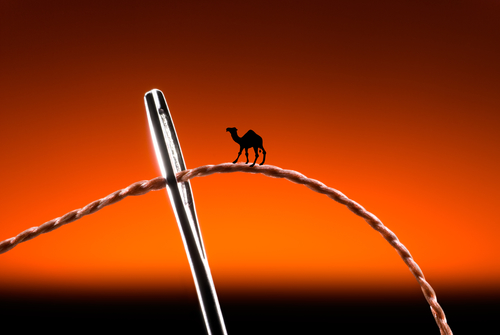
“What advantage does a man have for all the work he has done under the sun?” (Ecclesiastes 1:3). The Book of Ecclesiastes is sobering, though it is one of my favorite books in the Bible. I was drawn to it in college because of the candid assessment of life that it reveals. That candid assessment was refreshing to me as a young adult as I surveyed life and my place in the world.

We work most of our lives to earn a living, to keep up appearances, to obtain things, to advance our station in the world, to keep our yards neat and clean. We go about our labors often without much thought for why we do it. I don’t mean that we don’t have goals. Of course we do, but our goals are temporal.

I am reminded of the carrot attached to a stick mounted on the harness of a horse. We chase after those carrots. When we catch one, there is always another carrot to chase. Often we don’t achieve our goals, and we are left unsatisfied as a result. The truth is, though, even when we do achieve our goals, we are rarely satisfied by having attained them.

The author of Ecclesiastes takes a step back from the busyness of life, as I was doing in college. The author contemplates the arc of life, the beginning to the end, and asks what it all means. We rarely do that. But, if you stop to think about it, what is the point? We labor and toil on this Earth through our 60, 70, 80 or more years, but for what? What do we get in the end?

Continue reading “Under the Sun”

No Greater Evil. No Greater Love.

The evil that we suffer is no greater than the evil God endured at the hand of His own creation


Has there ever been a greater evil in the world then this…

That God humbled himself to become one if us, divesting himself of all of his greatness and glory, to give Himself to us. The light came into the world, but the world loved darkness instead.

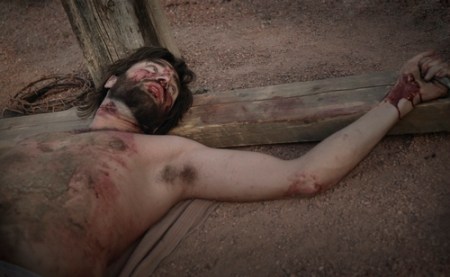
God became a man and came to us, and we rejected him. God presented himself to us, and we crucified him, publicly humiliated him, cruelly beat and tortured him, mocking him as he died on the cross.

Is there no greater love than this…

That God, the creator of the universe became one of us. He laid aside all of his greatness that sets Him above everything that He created and become part of His creation.

That he would do that for us, experiencing the same sorrows, the same humiliation, the same awful pain, the same rejection, the same fatigue and need for sleep and hunger and thirst as we experience – that God would stoop to become one of us and to die on a cross as a sacrifice for us to redeem us from our own sinful ways – is an unbelievable feat of love.

He did even for the sin of rejecting the very God who created us.

That God would do these things reveals to us that he works in and through a sinful, fallen, and evil world, and He uses the very darkness of the world to display His light and His love for us.

God stands above and beyond time, surveying all that is, all that ever was, and all that ever will be. He knew the time of His coming before the initial burst of the creation of the cosmos that spawned the earth and eventual life it would contain, including us.

He knew the reception He would be given. He knew the time of His dying at the hands of His creation. He knew the time of His rising from the dead, and He knows the end He has planned out for all those who receive Him.

Just as God’s light shone in the darkness of the world in the life, death and resurrection of Jesus, we can take comfort in the hope of salvation God wrought for us and the promises that await us.

Why Does Goes God Allow Suffering: Eternal Decisions

Sometimes the rational answer doesn’t satisfy the emotional problem, but there is an answer to the emotional problem of suffering.

Depositphotos Image ID: 31692361 Copyright: DesignPicsInc

I often listen to podcasts in the morning as I shave, shower, brush my teeth and get ready for work. Today I was listening to Dr. William Lane Craig respond to some questions about free will and suffering, and his comments prompt this blog piece.

He made the following statement

“Natural suffering forms the arena in which the drama is played out of people being freely called to come into the kingdom of God and find an eternal relationship with God. It is not at all improbable that only in a world infused with natural suffering would an optimal number of people freely respond to God’s gracious initiatives and come to enjoy a relationship with God and eternal salvation.”

Dr. Craig represents the Molinist view of the tension between God’s sovereignty, knowledge and power and man’s free will. On the Molinist view, God knows the future, but he does not determine it. Knowing the future, God chose to set the universe in motion, but he does not determine every aspect of it, including the choices that people make.

Knowing the future, God chose to set the universe in motion, and to that extent, He determines the outcome, because He knows the outcome. He does not determine it, however, to the extent of interfering with the free will He gave humans who are created in His image.

The fact that he knows the outcome, does not mean that He determines the choices each person makes. Each person is free to choose as they will, but God knows how they will choose from the beginning, and so He can be said to have willed it.

This is (my simple version of) the Molinist view. It respects God’s sovereignty, while acknowledging the clear implication of free will and moral responsibility to which God holds us that is reflected from beginning to end in the Bible.

I tend to like the Molinist view, but I am always somewhat cautioned in my own thinking not to be overly concerned with doctrinal nuances on matters that are, frankly, beyond us. I don’t want to die on a Molinist hill, or any other hill than the Gospel.

The Calvinist resurgence in the church today stands in contrast to a more Armenian view of inviolate free will. Many have been the discussions and debates between these two views. I fear we spend too much time and energy on debating when we should spend more time living out the Gospel. I think Paul might lump these debates in the category of vain discussions.

Still, I think it is good to chew on these things as they may be beneficial to our knowledge and understanding of God. As I thought about Dr. Craig’s comment above, I could not help think that this is a kind of divine utilitarianism – what is optimal for generating the most free will responses of love for, relationship with God, and eternal life with God.

Dr. Craig’s thesis is an attempt to explain why suffering exists in the world when God is supposed to be good, all-powerful and sovereign. Why doesn’t God stop suffering if He is all those things? Why does he allow suffering at all?

Continue reading “Why Does Goes God Allow Suffering: Eternal Decisions”

The 2nd Amendment, Freedom & Responsibility

Second Amendment to the Constitution
Depositphotos Image ID: 173296888 Copyright: zimmytws

If faith without works is dead, then our thoughts, prayers and condolences are meaningless at some point if we aren’t willing to take some action to address the societal problem of school shootings and mass shootings in general. What is the Christian response to these tragedies? Is the 2nd Amendment greater than the 6th commandment (though shall not murder), the greatest commandment (to love God with all our hearts, souls and minds) and the second greatest commandment (to love others as ourselves)? How do we balance the 2nd Amendment with God’s commandments? Are guns really the issue? Below is an article with some thoughts to consider as we mourn the victims of another school shooting.

via The 2nd Amendment, Freedom & Responsibility


Hope: In My Time of Dying

Photo courtesy of yours truly, Budapest Hungary

I have experienced an awful lot of dying in my world recently. People that I know, friends and family of people that I know, one after another, many people in my world are dying lately.

Frankly, from the moment we are born, we begin to die. This isn’t a pleasant thought, but this is where my head is going as I read my Facebook feed, offering condolences, prayers and thoughts, one after another.

Our cells begin to die off from the moment we are born. Sure, they regenerate. Our cells die off and regenerate throughout our lives. As our lives go on, however, the dying process speeds up, it picks up in intensity, the dying outpaces the regeneration and it results, eventually, in our natural deaths… if something doesn’t kill us sooner.

It could be depressing to think about. On the other hand, it is natural. This is the way it is.

Why do we even care?

Really, why does death bother us so much? Does my dog think about dying?

If death is simply a fact, a matter of life, a natural phenomenon, what’s gotten into our heads about it? How do we explain our preoccupation with death?

Continue reading “Hope: In My Time of Dying”