Our Transcendent Hope

Llife is short and tenuous. Whether we live to be a hundred or 80 or only 8, life will end. What, then, is our hope?


A very close friend of mine was expressing concern about the state of the world recently. He expressed concern about Donald Trump the Korean dictator, like a bully provokes a mass murderer. I was not prepared for such an existential discussion, and I did not respond very well.

I recognize, though, the the concerns are real. I was haunted by the specter of nuclear war as a child growing up in the 60’s and 70’s. I even bought a poster of a mushroom cloud to hang on my wall, not because I wanted the world to end in a ball of fire, but because it was a reality I couldn’t ignore.

But we do learn to ignore realities like that. I no longer have a poster of a mushroom cloud, and the threat of nuclear war no longer looms in my psyche like it did in my teenage years. Though it is no less likely to happen. (Maybe even more likely now!)

Maybe we lose our angst over these things because they are hard to live with them. We learn to push them back into the recesses of our consciousness. We displace the angst with busyness, entertainment and other distractions.

The fact is that life is short and tenuous. Whether we live to be a hundred or 80 or only 8, life will end. This is a harsh, but true, reality, though I’m afraid it isn’t very helpful “advice” for someone who is laboring under the burden of the weight of the world. I wish I had said something different (or, at least, more).

I firmly believe this world is not all there is. We thirst, and water exists to quench our thirst. We hunger, and food exists to sate our hunger. It makes sense that, if we yearn for something transcendent, something transcendental exists to satisfy our existential longing.

We all seem to “know” this, but the world is so full of a thousand superficial answers to the ultimate existential question that we hardly have any idea what to believe. We might be tempted to seize on the first or closest one or easiest answer, like responding to that Publishers Clearing House Sweepstakes mailer declaring you might be the winner. For some people, hope springs eternal.

Others are tempted to abandon any hope of an existential answer. The resign ourselves to the material world, trying to squeeze whatever temporal pleasure and benefits while they can out of this myopic existence.

Is there proof of something transcendent? How can we know? These are serious and heartfelt questions.

Continue reading “Our Transcendent Hope”

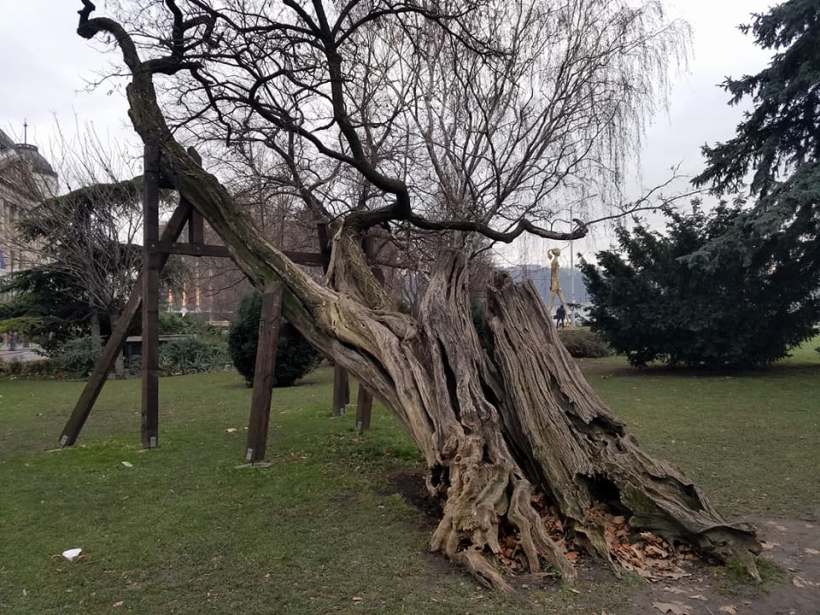
Back to the Tree of Life

The hope that is deferred is not just eternal life, but fullness of life.

The tree of life is mentioned only three places in the Bible. The first and most prominent appearance of the tree of life is in Genesis. The tree of life appears in Proverbs (three times) and again in the Book of Revelation (on either side of the “river of the water of life… flowing from the throne of God….”[1])

The tree of life was there in the beginning, and it will be reappear in the end. In between, where we are now, between Genesis and Revelations, we are presently cut off from the tree of life.

The tree of life obviously figures into God’s ultimate plan and purpose. But how? Where is the tree of life between the Garden of Eden and standing beside the river of the water of life flowing from the throne of God? Let’s take a look.

Continue reading “Back to the Tree of Life”

A Remedy for the Utter Loneliness of the Human Condition

Even our closest friends do not really, really know us in our innermost being.

Depositphotos Image ID: 5949233 Copyright: olly18

Have you ever felt like nobody gets you? Have you ever felt that no one understands who you really are? Not even your family or your closest friends?

First of all, congratulations, because you are being honest. It’s uncomfortable to be that honest.

I could be wrong. Maybe it’s only me, but I think many of us would rather pretend people know us better than they really do. We connect on the surface. We connect the best we can, but there are parts of us few people know or understand… if we are honest.

I sometimes feel as if everyone else “gets it” (this thing we philosophically call life) but me. Perhaps, everyone else is connected in a way that I am not. Nothing feels more isolating or lonely than feeling disconnected and alone.

I don’t think I am alone in feeling this way, though. This is the human condition. If we are being brutally honest about it. This is reality.

If this is the reality, what do we do with it? How do we live with the brutal honesty of it? We yearn for connection deep down, but many of us feel utterly disconnected and isolated from others at the core of our being.

Continue reading “A Remedy for the Utter Loneliness of the Human Condition”

Locked Out of Garden

God didn’t leave us trapped in a maze with a hidden door. God became the door.

depositphotos Image ID: 11321001 Copyright: draghicich

Prompted by the new book by Clay Jones, Why Does God Allow Evil?, I have highlighted a couple of potential keys to addressing the “problem of evil” emphasized in his book in the article,  The Problem of Evil and Mystery of Will.

The Christian response to the age old problem lies in the story of Adam and Eve. Created in God’s own image, they were given a choice but were forbidden from exercising it. Anyone with a modicum of understanding about human nature knows that forbidden fruit is a temptation that is hard to ignore. It should come as no surprise to us (or God) that Adam and Eve gave into the temptation and ate of the fruit.

God surely must have known that they would exercise that forbidden choice! Yet, he banished them from the idyllic “garden” He created for them and cursed the world, subjecting it to difficulty, pain, suffering and death. We are looking for a clue to the question that screams from our guts, “Why?!”

This indeed is the harsh reality in which we live. There can be no denying it. Recognition of this harsh reality is not uniquely Christian. It is a universal truth. The explanation of it is what differs. The atheist might simply say that we all die and “then worms will eat our bodies”. That’s just the way it is. The Hindu might say we suffer because of karma, and we all die, and die again, and again, and again, and again. The Buddhist might say we suffer only because we haven’t reached enlightenment because pain and suffering are just a figment of the unenlightened imagination. All worldviews must contend with the fact that we live in a less than idyllic world.

The Christian says we suffer pain and death because Adam sinned. “And we’ve been attending funerals ever since,” Clay Jones says; and “Only one thing is going to prevent you from watching absolutely every person you know die from murder, accident, or disease, and that will be your own death from murder, accident, or disease.” What a harsh sentence!

If the Bible is an accurate reflection of God and of reality, why in the world would God have cursed the ground and subjected His creation to futility?

The Apostle Paul tells us in his letter to the Romans that God subjected the world to futility “in hope that the creation itself will be set free from its bondage to corruption….” (Romans 8:20) This suggests that the choice that led man to corruption and the cursing of the world to futility was part of the plan all along. In this second half of “the story” we try to make some sense of it.

Continue reading “Locked Out of Garden”

The Problem of Evil and Mystery of Will

Why did God allow us a choice that would lead to our own corruption?

depositphotos Image ID: 135430388 Copyright: KrisCole

I am reading a book by Clay Jones called Why Does God Allow Evil? I highly recommend it. The “problem of evil” is one of the more challenging questions that we face in life, and difficulties struggling with that question have led many people to abandon or refuse to embrace faith in God.

Why does God allow pain and suffering? If God is good, how can He allow people to suffer? Why doesn’t God stop evil? If God exists, why does He allow evil to exist? These are just some of the variations of the problem of evil.

The problem of evil is a challenge for every worldview. Responses include that there is no God, and that’s just the way it is (a naturalistic world view); evil is just an illusion of unenlightened souls (a Buddhist or eastern view); evil is result of bad karma (Hindu); or evil is the result of rebellsion against God – sin (Christian). We all struggle with the conviction that things simply aren’t the way they ought to be. That Utopian disconnect urges us to ask, “Why not?”

I think, personally, that the Christian worldview makes the most sense of this question. It begins with the story of God and Adam and Eve. Whether the story is allegorical or historical, the answer involves God’s purpose in creating man, man’s finite, corruptible character (compared to God’s infinite, pure character) and a plan to develop this corruptible creature (man) who is created in God’s own image into a pure, loving relationship with God that is defined by God’s pure character, and not the corruptible nature of man.

Continue reading “The Problem of Evil and Mystery of Will”