Finding God


“You will seek Me and find Me when you search for Me with all your heart.” Jeremiah 29:13

This is one of the more encouraging and hopeful verses in the Bible. It had a profound impact on me when I was first reading the Bible. I took it to heart, and it guided me into a relational position with God.

As with any verse or passage in the Bible, the depth, nuance and layers of meaning can be drawn out by focusing on the context. We can tease the meaning out further by considering application of it to my own life.

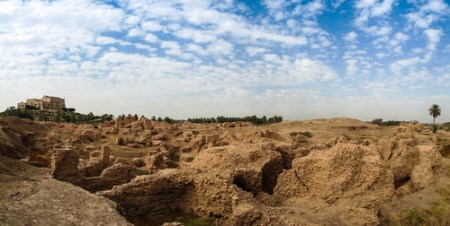
The context here is a letter written by the prophet, Jeremiah, to his people who had recently been exiled to Babylon. Though Jeremiah’s letter was written to a particular people in a particular time and place under particular circumstances, and it was particularly relevant to them, it has application to us today. Some people claim that an ancient verse like this that was written to a specific people in a specific time for a specific purpose shouldn’t be applied to modern life. I beg to differ.

Continue reading “Finding God”

Christmas Thoughts: God Redeems the Line of Judah through Tamar

Originally posted on Navigating by Faith:
(c) Can Stock Photo / halfpoint Amazingly, the genealogy of Jesus in Matthew lists five women. In a patriarchal society governed by paternal lineage, that fact should jump out at us and cause us to take notice. What is God saying? What was He doing? How should we view…


Families and Christmas can be messy. The vast majority of us do not live in a Hallmark world. The fact that Christmas season always sees an uptick in the incidence of suicide is testament to the fact that the gap between Holiday cheer and reality can be a big on

But there is hope! Christmas is the remembrance of God stepping into world like a light shining in the darkness.

Last year at this time, I began a series of blogs on the women listed in the genealogical lineage of Jesus in the Gospel of Luke. That a total of five women are even listed in his genealogy is kind of mind blowing. Genealogies, especially in the First Century patriarchal world, are dominated by men. What are these women doing there?

It occurs to me that maybe God is saying something particularly important by including five women in the genealogy of Jesus.

For starters, God’s view of women, I believe, has always been higher than patriarchal history gives them credit. After all, God made us, male and female, in His image. Men are only half the image of God if you do the math.

But something else is going on as well. When you dig into the stories of the people in the lineage of Jesus, the Messiah, the Savior, surprises are plentiful. His lineage isn’t particularly saintly. It’s “complicated”.

Jesus came not only as a light in the darkness of the world; he came as a light in the darkness of his own lineage. The story of Tamar is just one such example. She is the first woman listed in that lineage.

kevingdrendel's avatarNavigating by Faith

 (c) Can Stock Photo / halfpoint(c) Can Stock Photo / halfpoint

Amazingly, the genealogy of Jesus in Matthew lists five women. In a patriarchal society governed by paternal lineage, that fact should jump out at us and cause us to take notice. What is God saying? What was He doing? How should we view that today?

We can gain insights by looking at the women who are listed. The first woman listed is Tamar. Her story is found in Genesis 38, and it is a wild one for people of polite sensibilities.

Tamar was the wife of Judah’s oldest son, Er. Judah was the fourth son of Jacob (son of Isaac, son of Abraham). It might seem odd that Judah, the fourth son, is the one from whom Jesus (the Messiah) descends, but that is only a minor oddity compared to the rest.

View original post 1,702 more words

Yearning for Perfection in an Imperfect World


Have you ever felt like all you do is spin your wheels, but you don’t get anywhere? I have days and weeks like that. Sometimes, it seems my life is like that.

Imagine a people like that….

Isaiah said this of the nation of Israel (Isaiah 26:17-18 NASB):

As the pregnant woman approaches the time to give birth,
She writhes and cries out in her labor pains,
Thus were we before You, O Lord.
We were pregnant, we writhed in labor,
We gave birth, as it seems, only to wind.
We could not accomplish deliverance for the earth….

As a lawyer, I have spent a lot of time in court. I have represented many people, and I have seen our system of justice at work. I can tell you from experience that it’s far from perfect. That is being kind really.

The truth is that not just our legal system is imperfect; our lives are far from perfect. We all desire perfection, but our attempts at achieving perfection are like giving birth to the wind. Though we strive to make the world a better place, for ourselves, our loved ones and others, we haven’t been able to accomplish deliverance from the imperfections that have been the blight of human existence since time immemorial.

What are we to do?

Continue reading “Yearning for Perfection in an Imperfect World”

The Impossible Perfection of God

What is it that is impossible with man, but possible with God? What can we not do that only God can do for us?


In the Gospel of Mark, we read the story of the rich young man who came to Jesus and asked him what he must do to inherit eternal life. (Mark 10:17) After a brief discussion about the law and keeping its commandments, Jesus said to him, “One thing you lack: go and sell all you possess and give to the poor, and you will have treasure in heaven; and come, follow Me.” (Mark 10:21)

The rich young ruler went away saddened and grieving. (Mark 10:22)

Obviously, the rich young man found the instruction very difficult. He was evidently hoping for a different answer. He claimed to have kept the commandments of God from an early age, but Jesus brushed his boasting aside and dashed his hopes by demanding the “impossible” from him.

Jesus turned to his disciples as the example for what he was about to say was walking away, and commented, “How hard it will be for those who are wealthy to enter the Kingdom of God!” (Mark 10:23)

If we are being honest with ourselves, most Christians in the United States are wealthy compared to the rest of the world. We might even be considered wealthy compared to the rich young man who sought out Jesus in the First Century. Unless we gloss over what Jesus said, these are hard words to swallow.

They were hard words for the disciples also. Though they had left everything to follow Jesus, they were still “amazed” at what Jesus just said. (Mark 10:24)

As if the example wasn’t enough, Jesus said it again, “[H]ow hard it is to enter the kingdom of God!” and he added a word picture for emphasis:

“It is easier for a camel to go through the eye of a needle than for a rich man to enter the kingdom of God.” (Mark 10:25)

At these words, the disciples were not just amazed; they were “astonished”, asking, “Then who can be saved?” (Mark 10:26)

I believe they identified with the rich young man. I suspect they knew they had to more to give than what they had given. They might have also been thinking about the size of this following to which they had given themselves – it would be small indeed! Who could even qualify?!

Continue reading “The Impossible Perfection of God”

Diamonds and Coal and the Pressures of Life that Shape Us by Our Reactions to Them

We don’t choose our circumstances, but we can choose how we respond to them.


Diamonds and coal are made from the same substance, carbon.[1] They are both formed by heat and pressure, but the results are very, very different. We can learn some very poignant things from diamonds and coal that I will explore in this piece.

The properties of the two substances are interesting, and very different, though they form from the same substance. Coal is relatively soft. Coal burns and provides a source of energy, but it is not a very clean source of energy because coal is full of impurities.

Diamonds, on the other hand, are relatively hard – one of the hardest substance that exist. Diamonds have few impurities, and diamonds won’t burn. Diamonds can be used for cutting hard metals and similar uses because they are so hard and immutable.

Coal is readily available. It is soft and combustible. Coal is dirty and rubs off everywhere. Coal is really only useful for burning. Appropriately, a coal in the stocking has become cliché for an unwanted “gift”.

Diamonds are clean, translucent, rare and beautiful. Diamonds are highly valued for their own sake. So much, that we wear them on our fingers and around our necks as adornment for special occasions. They are also highly useful in all kinds of industrial applications.

Interestingly, diamonds and coal are both formed by heat and pressure. The difference is only in degree and location.

Coal is formed relatively near to the surface of the Earth, while diamonds are formed deep within the Earth. Diamonds are formed under tremendous heat and pressure over a long period of time. Coal forms relatively quickly under less heat and less pressure.

The result is that coal is full of impurities. Coal is still combustible, though it is formed under heat. Diamonds, on the other hand, undergo so much heat and so much pressure, that they are no longer combustible. All the impurities have been burned away.

I have heard that diamonds form from coal, but they don’t. Though diamonds and coal do form from the same substance – carbon – one doesn’t form from the other.

Carbon can be formed into diamonds, or it can be formed into coal. It’s one or the other. Coal never forms into diamonds, and diamonds never form into coal. The paths for the two elements are completely different, and the difference in the process under which they form results in two completely different elements – though they form from the same basic substance.

These facts that I have taken some time to gather in relation to diamonds and coal prompt some very poignant thoughts, beginning with the question: Would you rather be a diamond or a lump of coal? How do the processes of the formation of diamonds and coal, and nature of diamonds and coal, instruct us?

Continue reading “Diamonds and Coal and the Pressures of Life that Shape Us by Our Reactions to Them”