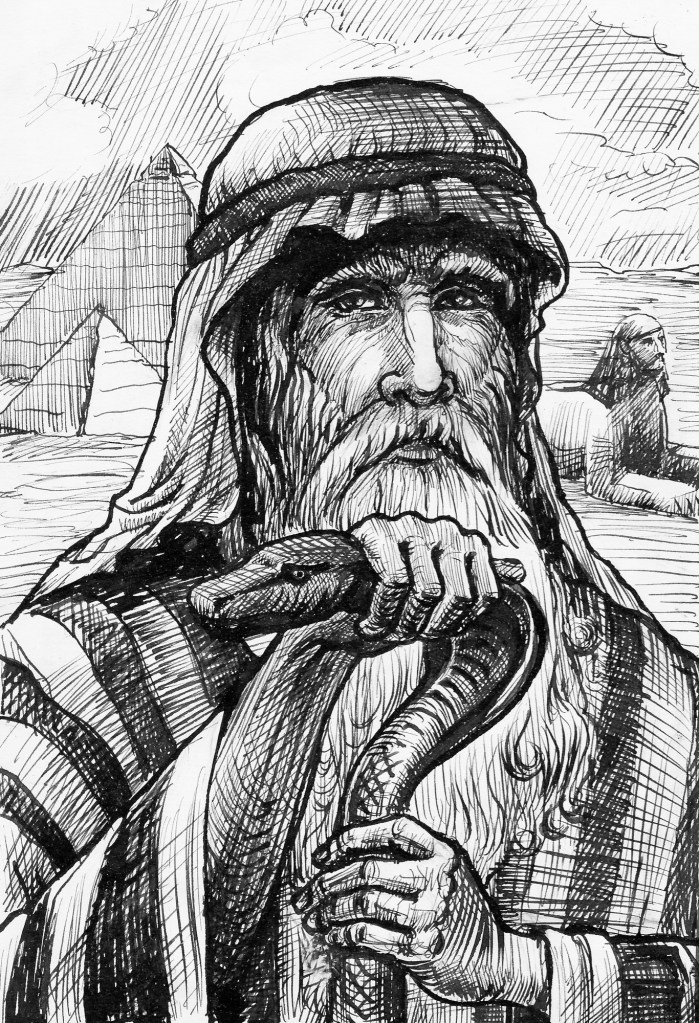
The Importance of Our Identity as Citizens of Heaven: Moses, Aliens, and Strangers

Our identity as Christians informs (or should inform) how we see the world


The importance of identity is not just a 21st Century trend. The significance of a person’s identity dates back to the Ancient Near Eastern culture preserved in the Bible.

Parents commonly named their children based on prominent identity markers. For instance, Isaac and Rebekah named their second born, Jacob, who was born clinging to his two brother’s ankle. Jacob (Ya’aqov in Hebrew) meant “supplanter,” “heel-catcher,” or “he who follows on the heels of.” The name became part of his identity not just literally; it corresponded with actions to acquire his older brother’s birthright from his father by manipulation and deception. (Gen. 25:26; 27:36; and Hos. 12:2-4)

God often gave people new names to go with their identity in relation to God. After a personal encounter with the Lord, God gave Jacob a new name: Israel, which meant “struggles with God,” “wrestlers with /God,” or “God prevails.” (Gen. 32)

The naming of children and God renaming people according to some key characteristic associated with their personal identity, or a new identity God gave them, is a common theme in the Bible. Groups of people were known by ancestral names, like Israelites, Amalekites, Hittites, etc. Thus, I find significance in the name Moses gave his first born child: Gershom.

Moses was the son of Hebrew parents, but he was placed in a basket in the Nile when Pharaoh ordered the killing of all male Hebrew babies. The Pharaoh’s own daughter found Moses and adopted him, though she allowed him to be nursed by a Hebrew woman who turned out to be Moses’s mother.


Moses grew up in the privilege of the Pharaoh’s house. He was educated in all the ways of Egypt, learned to read and write, and was familiar with Egyptian history, culture, religion, and philosophy. He was Hebrew by birth, but he was Egyptian by upbringing.
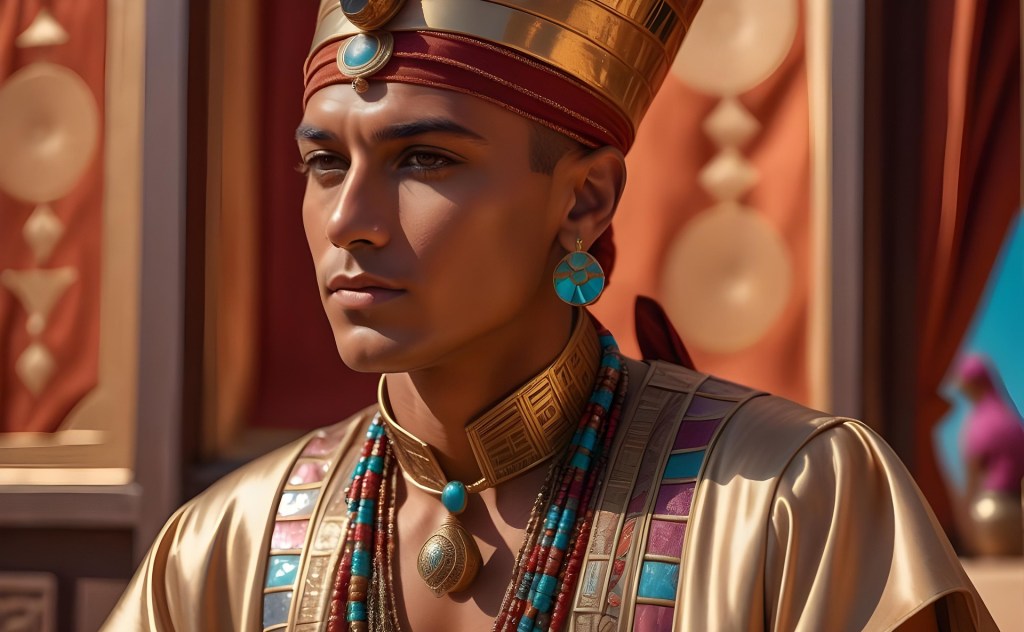

Moses must have known that he was Hebrew. It was probably obvious by his facial features, and he might have even been circumcised. He was schooled in Egyptian ways and thinking, but he was probably painfully aware that he was not Egyptian by birth.

One day as he observed an Egyptian beating a Hebrew man, Moses stepped in and killed the Egyptian. I believe Moses identified with the Hebrew man because of his Hebrew ethnicity. He fled into the desert in Midian for fear of punishment from the Egyptians for the murder.

In Midian, he was accepted into the family of a Midianite, married a Midian woman, and settled down there. When his wife, Zipporah, gave birth to a son, “Moses named him Gershom, saying, ‘I have become a foreigner in a foreign land.’” Exodus 2:21-22

Moses named his first son Foreigner because he identified as a foreigner himself. Despite being raised as an Egyptian in Pharaoh’s family with all the privilege associated with the royal household, Moses could not escape the fact of his Hebrew heritage. That knowledge influenced his personal identity.  That identify as an outsider – a foreigner – was reinforced in his persona when he settled in Midian to the extent that he extended that identity to his firstborn son.

I find significance in that story and in the realization that Moses identified so poignantly with being a foreigner. That same identity – of being foreign – defined the Hebrew people enslaved in Egypt. It remained with them as they wandered 40 years in the Levant wilderness, and, God sanctified that identity for the Israelites in the Mosaic Law:


“When you reap the harvest of your land, do not reap to the very edges of your field or gather the gleanings of your harvest. Do not go over your vineyard a second time or pick up the grapes that have fallen. Leave them for the poor and the foreigner. I am the Lord your God….

When a foreigner resides among you in your land, do not mistreat them. The foreigner residing among you must be treated as your native-born. Love them as yourself, for you were foreigners in Egypt. I am the Lord your God.

Leviticus 19:9-10, 33-34


The Israelites lived 430 years in Egypt by the time Moses led them out of that land. Their memories of the promised land were ancient history. Their memories would be like modern Native Americans recalling the history of the United States in 1596. European settlers at that time comprised a few thousand people at most in precarious settlements in the New World inhabited by millions of indigenous people.

The Roanoke Colony had already failed, and no English settlements remained. Some Spanish missionary and military expeditions existed in the south and west, and French and Portuguese fishing camps existed in Newfoundland. Jamestown (1607), Quebec City (1608), Plymouth (1620), and New Amsterdam (New York, 1624) were not yet established.


Some 430 years later, the Native Americans may identify as outcasts in their own country, like Israelites identified as foreigners in their “home” country of Egypt. The Israelites lived there, but they were not assimilated into Egyptian culture, and they lived there without all the benefits Egyptian privileges.

Though Moses was raised with Egyptian privileges in the royal family, he never lost his Hebrew identity. In that sense, Moses identified similarly to the way Christians are taught to identify themselves in the New Testament: as people of God who are foreigners and exiles (1 Peter 2:10-11), “foreigners and strangers on earth” (Hebrews 11:13), who are now “fellow citizens with God’s people.” (Ephesians 2:19)

For Moses, though, he probably didn’t even feel at home with his own, Hebrew people because of his upbringing. He was raised separately from them. His Hebrew features (and perhaps circumcision) reminded him of his heritage. He could not escape it, but his personal connection to those Hebrew roots was not yet intimate.

Even so, the sense of foreign identify was profound enough that Moses was compelled to come to the aid of a Hebrew stranger. Moses identified with the plight of the Israelites who lived as vulnerable foreigners in a land they could not call their own.

I and my fellow Christians should have the same profound sense of living as strangers in a foreign land in this world – if, indeed, we are citizens of heaven. This realization hits home today as I watch what is happening in the streets of American cities.

Do we identify with the aliens and strangers in our country? Or do we identify with the government that has recently adopted more oppressive and strong handed tactics to deal with immigrants in this country who are not wanted here? If you are not sure these connections belong together, bear with me awhile longer.

Continue reading “The Importance of Our Identity as Citizens of Heaven: Moses, Aliens, and Strangers”

Lessons from Moses of Faith, the Lack Thereof and the Purposes of God

Moses knew better, but his own emotions got the best of him.

Egypt, Sinai, Mount Moses: view from road on which pilgrims climb the mountain of Moses

The passage in Numbers 20:1‭-‬13, which I quote below (in the NIV), has puzzled me in the past. It didn’t sit well with me, and I figured I simply didn’t understand it well.

As with many things I don’t understand well, I often “shelve” them for later consideration. Later is now, as I have just read through the passage again in my yearly journey through the Bible. This is the setting:

“In the first month the whole Israelite community arrived at the Desert of Zin, and they stayed at Kadesh. There Miriam died and was buried.”

Miriam, the sister of Moses and Aaron, had just died. Not much is said about her death, but Moses and Aaron must have been grieving. That grief on top of resistance from the Israelites they were trying to lead according to God’s direction, and the harsh circumstances of the desert must have weighed heavily on them.


“Now there was no water for the community, and the people gathered in opposition to Moses and Aaron. They quarreled with Moses and said, ‘If only we had died when our brothers fell dead before the Lord!'”

I believe their “brothers” who “fell before the Lord” refers to Korah who led a rebellion against Moses. (Numbers 16) Korah challenged Moses and his right to lead the Israelites, because Korah was not happy with his clan’s roll in caring for the Tent of Meeting. In challenging Moses, he was basically saying, “Who put you in charge?!”

Instead of confronting Korah directly, Moses set up a test before the people to allow God to identify who was in charge. When Korah and his clan burned incense, the ground rumbled, and Moses told the people to back away from Korah and his tribe of rebels as the ground swallowed them up.

Not long afterward, the wanderings of the Israelites brought them to the Desert of Zin, where the Israelites became so angry and distraught about the conditions in the desert that they wished they died with Korah in rebellion against God. The desert conditions must have seemed pretty inhospitable. Moses was losing the hearts of the people, and they were turning against him. Again! The people said:

“‘Why did you bring the Lord’s community into this wilderness, that we and our livestock should die here? Why did you bring us up out of Egypt to this terrible place? It has no grain or figs, grapevines or pomegranates. And there is no water to drink!’” 

Of course, Moses was God’s man. That fact was demonstrated graphically in the Korah situation, but they continued to take their dissatisfaction over their circumstances out on Moses. Instead of God, they blamed Moses for their situation. When Moses and Aaron the assembly of the people, the made a beeline for the entrance to the tent of meeting where they “fell facedown”, and “the glory of the Lord appeared to them.”

Moses and Aaron knew the score. They knew that the people were really finding fault with God, not Moses or Aaron. They were intimate enough with God to know that God was not to be trifled with.

When the glory of God appeared to them, they should have been emboldened to stand resolute on their confidence in God’s direction. They should not have doubted that God was with them. Right?

Of course, the Israelites should not have doubted that God was with them, either. God’s visibly demonstrated Himself to them over and over again. His visible presence went with them in a pillar of cloud by day and fire by night. They had seen the demonstrations of the power and holiness of God at the Red Sea, at Mount Sinai and in the ground swallowing up Korah and his band of rebels.

What more did they need to see to understand that God was with them?

Yet, they did not trust that God had their back. God gave them manna every morning, and God gave them so much meat when they demanded meat that it came out of their nostrils. Yet, they continually grumbled and complained and wished they were back in Egypt.

Something had to be done to put down the unrest!

“The Lord said to Moses, ‘Take the staff, and you and your brother Aaron gather the assembly together. Speak to that rock before their eyes and it will pour out its water. You will bring water out of the rock for the community so they and their livestock can drink.’” (Emphasis added)

The instructions were simple and pretty clear: take the staff and speak to the rock.

“So Moses took the staff from the Lord’s presence, just as he commanded him. He and Aaron gathered the assembly together in front of the rock and Moses said to them, ‘Listen, you rebels, must we bring you water out of this rock?’” 

Moses started out all right. He took the staff as he was commanded, but things begin to go off the rails after that. Moses was obviously perplexed that the people were so angry, and he might have been taking it personally. Instead of speaking to the rock, Moses turned and spoke to the people, and he was full of wrath for them in that moment.

It’s hard for me to blame Moses for feeling this way. I am sure I would take it personally also. It was personal!

The people were obstinate. What more could Moses do to demonstrate that God put him in charge?! Yet, they continued to challenge Moses and blame him for their unsatisfactory conditions.


Moses knew better, but it seems his own emotions got the best of him. He took their opposition personally, and his anger led him to forget God’s instructions to him:

“Then Moses raised his arm and struck the rock twice with his staff. Water gushed out, and the community and their livestock drank.”

The result was good, right?

But, Moses didn’t do exactly what God commanded him. God told him to speak to the rock. Instead, Moses spoke to the people, and Moses struck the rock with his staff. These clues pop when God responds:

“But the Lord said to Moses and Aaron, ‘Because you did not trust in me enough to honor me as holy in the sight of the Israelites, you will not bring this community into the land I give them.'”

I have long thought that the punishment didn’t fit the crime. Perhaps, I didn’t understood the significance of these things. God’s response seemed harsh in light of the faithfulness of Moses before Pharaoh, in receiving and delivering the Ten Commandments, and in putting up with the grumbling, and complaining, and obstinance, and waywardness of the Israelites, but maybe I was missing something.

Keep in mind that Moses grew up in luxury and privilege in Pharaoh’s household. The Israelites were “his people”, but only by genetics. Moses put up with a lot with these people he didn’t grow up with and didn’t even know very well. It seemed to me that Moses had been pretty faithful to God but clearly, his disobedience to God was more significant than I have appreciated.

Continue reading “Lessons from Moses of Faith, the Lack Thereof and the Purposes of God”

Why Should We Not Want to Make a Deal With God?

If you are bargaining with God for some immediate relief in your life, your view of God is too small.

Photo by Peter Avildsen

I have been reading through parts of Exodus. Today, I continued reading about Moses and Pharaoh. Pharaoh hardened his heart to the plea of Moses to let the Israelites travel three days into the wilderness to meet with God, and Pharaoh did not take the signs Moses performed to heart.

Up to this point, Pharaoh’s magicians matched all the signs Moses and Aaron performed, so apparently didn’t take those signs seriously. Aaron threw his staff to the ground, and the magicians did the same. It didn’t matter that Aaron’s staff swallowed up the magicians’ staffs. The magicians matched Moses and Aaron sign for sign, and Pharaoh paid no heed to them.

Moses turned the water of the Nile to blood. Pharaoh’s magicians did the same, “and Pharaoh’s heart became hard”, it says. (Ex. 7:22) He turned and walked away into his palace, and he didn’t take it to heart.

Aaron stretched out his arm with his staff and caused frogs to emerge all over the land. The magicians did the same, and Pharaoh was not moved, at least not right away.

Later, Pharaoh asked Moses and Aaron to “Pray to the Lord to take the frogs away…, and I will let your people go….” (Ex 8:8) Moses did it, “But when Pharaoh saw that there was relief, he hardened his heart and would not listen….” (Ex. 8:15)

Moses responded by having Aaron summon a plague of gnats. This time the magicians could not duplicate what Moses did, and they said to Pharaoh, “This is the finger of God.” But, “Pharaoh’s heart was hard….” (Ex. 19)

Notably, the Pharaoh’s heart became hard, or he hardened his heart, after the previous displays. After the plague of flies, however, the Pharaoh’s heart was hard.

Pharaoh’s heart was already hard at this point. He had been hardening his heart all along, but Pharaoh’s heart was already hard by the time Moses and Aaron summoned the plague of flies and the plague of flies “ruined the land”.


Even though Pharaoh’s heart was hard at that point, “Pharaoh summoned Moses and Aaron and said, ‘Go, sacrifice to your God here in the land.'” (Ex. 8:25)

Sometimes even people with hard hearts toward God will have moments in which they seem to believe, or seem to repent, but there is no heart change. They desire to be delivered from their dire circumstances, but nothing more. It isn’t really a true change of heart, and it doesn’t last.

Moses insisted that the people be allowed to leave the land and go into the wilderness, but “Pharaoh said, ‘I will let you go to offer sacrifices to the Lord your God in the wilderness, but you must not go very far. Now pray for me.”’ (Ex. 8:28)

People often make deals with God. People bargain for relief from the pain or difficulty that brings them finally to God as a last resort, but they turn to God out of desperation, and they don’t really mean to keep their part of the bargain. When people are “forced” to the point of praying to God as a last resort, they may not come willingly, and their hearts many not be changed if relief is all they want.

This was the case with Pharaoh:

“Then Moses left Pharaoh and prayed to the Lord, and the Lord did what Moses asked. The flies left Pharaoh and his officials and his people; not a fly remained. But this time also Pharaoh hardened his heart and would not let the people go.” (Ex. 8:‬30‭-‬32)

Pharaoh didn’t understand that the God of Moses and Aaron is the God who gives all people life and breath. He saw “their” God as a means to an end: a possible solution to the immediate relief he desired. Pharaoh didn’t perceive God as his God too!

We are often tempted in the same way to view the Bible, church, and God Himself as a means to our owns temporary ends. We aren’t looking down the road. We don’t appreciate that the universe, this earth, our world and our very beings are wholly dependent on God!

Once we get the relief we want from the immediate difficulty we are facing, it’s easy for us to harden our hearts again. Once we are out of trouble, we resort back to a hard heart and a stiff neck. There is no lasting change.

This is a human tendency we all have. All people can be “religious” at times. Many people go to church on Sunday, or once in a while, maybe on special holidays, but they live in Egypt the rest of the time.

We can be religious in the same way that we might carry a lucky rabbit’s foot or consult a medium. We want something. We want good fortune and good health, but we don’t want to change.

God should not have to make a deal with you. If you are bargaining with God for some immediate relief in your life, your view of God is too small, and you are missing the mark!

Continue reading “Why Should We Not Want to Make a Deal With God?”

Be Careful Lest You Fail to Take What God Is Doing to Heart

Pharaoh did not take to heart a movement of God in his time.


In Exodus 7, we read that God moved in visible and compelling ways to convince Pharaoh to listen to the request by Moses to let the people go into the wilderness and be with God. Pharaoh was given demonstrative signs that God was behind the request, but Pharaoh was not swayed.

“Instead, he turned and went into his palace, and did not take even this to heart.”

Exodus 7:23 NIV

Pharaoh’s magicians answered Moses and Aaron with their own divination, and Pharaoh did not take the demonstration of the movement of God to heart. This is the character of hardness of heart. We see God move, but we have an answer to explain it away, and we do not take it to heart.

Pharaoh and Egypt are considered to be analogous to the world that does not know God, a world that has set itself against God. We don’t consider ourselves to be like Pharaoh or like Egypt.

When we do the same thing, however, we are no different. When we see God move, and we explain it away and do not take it to heart, we are no different.

The Pharisees, the religious leaders of God’s people, did the same thing. When Jesus performed miracles right in front of them, they explained it away. They said it was of the devil, and they did not take it to heart.

Be careful that you are not quick with an answer to explain away what God is doing and fail to take it to heart.

Do not be quick to explain away what is happening at Asbury University (and reportedly at other universities now, too). Do not be quick to dismiss it and miss what God is doing.

Take it to heart. Ponder it like Mary pondered what the angel told her: that she would give birth to Jesus. Be open to what God is doing, and what God wants to do in you.

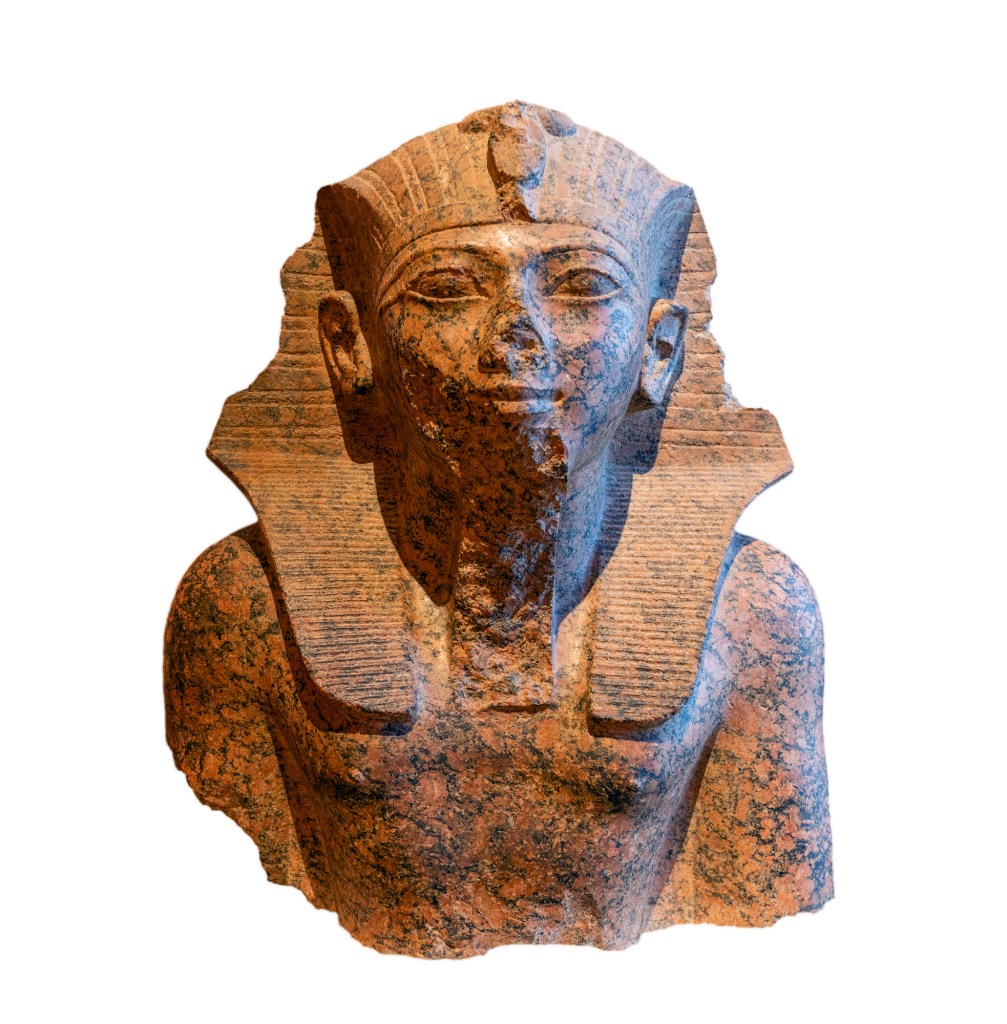
The Pharaoh that didn’t take to heart what God was doing in his time lies entombed today like a stone. The God of Israel lives! Jesus, who was also entombed, rose from the dead and lives! The grave could not hold him, and he offers that same life to you!

Loving the Sojourner Because God Loves the Sojourner

The terms, aliens, strangers and sojourners, were found throughout Scripture, and the Bible has a lot to say about them.

During the second half of the Obama administration and leading up to and through much of the Trump administration, immigrants were much in the news. The country was divided over how immigrants should be handled: whether we should build a wall and be more restrictive at the borders; how strictly we should enforce the laws; whether the laws should be changed; whether immigrants from certain countries should be restricted or prohibited; and so on.

Much of the public “discussion” was inflamed with political rhetoric. The tone was angry on both “sides”. It seemed that most people were talking past each other. People took extreme positions. The issues were couched in all or nothing language, as if the choices were to open the borders wide or shut them down completely.

As I talked with people privately on both “sides”, though, the tenor and tone was different. I didn’t speak with anyone who advocated open borders with no security or regulations. I didn’t speak with anyone who wanted to close the borders and keep everyone out. Most people really fell in the middle; it was the inflamed rhetoric that created the appearance that people were amassed at the polar extremes, like angry mobs with pitchforks in their hands.

The heat of the immigration discussion has died down, but the issues haven’t gone away. President Biden has undone most or all of the executive orders issued by President Trump to tighten up border security and other immigration controls, but the laws haven’t changed.

We can expect less and less enforcement and control of the border, but the laws haven’t changed. The issues haven’t been resolved. Our immigration system is still not very workable, and issues are bound to boil to the surface again and demand attention.

I first seriously dug into the “issue” of immigration during the Obama administration. I was buffeted by the opposing winds of political rhetoric, but I wanted to know how Christians should view immigration… if there was a definitive Christian position to be taken. Most Christians I knew were well-versed in the political rhetoric, but I wasn’t hearing a biblically focused critique of the subject.


The Syrian refugee crisis was flooding the news and my conscience. I had to confess that I didn’t know where God stood. I didn’t know what the Bible said on immigration, if anything. I wanted to step back from the political fray and do my own searching of Scripture and meditation to let God speak to me on the issue.


I spent a weekend searching the Scriptures. I discovered that the Bible has much to say on the subject. The terms, aliens, strangers and sojourners, are found throughout Scripture from the Old Testament to the New Testament, and those terms permeate everything from start to finish.

I found that Scripture speaks very clearly and directly on the subject, and it leaves me little room to wonder how we ought to respond to immigration issues in our current day. I wrote about it for the first time in November 12, 2014 in the article, Immigration: the Strangers Among Us.

God’s “view” of immigrants is closely aligned with how God relations with Abraham and his descendants. We might forget that God told Abraham his descendants “would be foreigners in a strange land, and that they would be enslaved and mistreated four hundred years”. (Gen. 15:13; and Acts 7:6) Abraham’s faith also prompted him to live “like a stranger in a foreign country” (as did Isaac and Jacob). (Heb. 11:9)


“For he was looking forward to the city with foundations, whose architect and builder is God.”

Hebrews 11:10


In fact, this identify of being an alien and a stranger on the earth applies to all people of faith in the past:


“All these people were still living by faith when they died. They did not receive the things promised; they only saw them and welcomed them from a distance, admitting that they were foreigners and strangers on earth. People who say such things show that they are looking for a country of their own. If they had been thinking of the country they had left, they would have had opportunity to return. Instead, they were longing for a better country—a heavenly one. Therefore God is not ashamed to be called their God, for he has prepared a city for them.”

Hebrews 11:13-16


The status of God’s people as aliens and strangers was built into the very fabric of the their relationship with God and emphasized by centuries of living with that status. It became their fundamental sense of identity, and it should be ours also. (1 Peter 2:9-12)

Continue reading “Loving the Sojourner Because God Loves the Sojourner”