The Words of Amos to the Faithful Remnant of God’s People in the US Today?

The pairing of the church and state is not a wedding made in heaven

Mountain fortress overlooking a stone bridge and river gorge at twilight

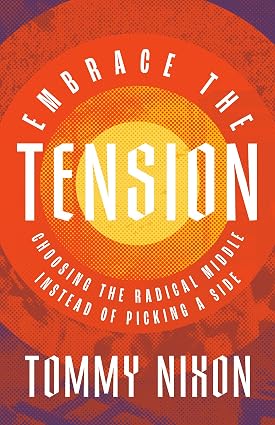
I have been reading Embrace the Tension by Tommy Nixon. He has resonated deeply with me, especially in this time. Christians in the United States seem to be living in a golden moment with a president openly engaging Christians and a popular segment of the church celebrating a symbiotic relationship with the president and his administration.

We don’t have to look too closely, however, to be concerned. Many prophetic voices have distanced themselves from this expression of Christianity. They stand outside the structure of this church and state power duo sounding an alarm. The foundation of this relationship is power and influence, and the fruit of the Holy Spirit is missing,

Satan tempted Jesus by offering him all the power of the kingdoms of the world, and Jesus flatly turned him down. When Jesus’ own followers attempted to seize him by force and make him king, he escaped into the hills. When Pilate confronted Jesus about the confusing things he was hearing – Was Jesus really king of the Jews? – Jesus told him that his kingdom is not of this world.

Jesus explained to Pilate that his power was given to him by God. If Jesus had come to take over, his followers would have risen up and seized control, but that isn’t why he came. He came to good news to the poor and to die on a cross. He came to introduce people to the Kingdom of God that is here now – growing in the midst of the kingdoms of this world – though the reign of the Righteous King is not yet.

Jesus will not reign as king until he comes again at the end of the age. In the meantime, he was clear that his followers are to be salt and light in the world. The church has no mandate to take over the kingdoms of the world. The church is commissioned to make disciples – followers of Jesus. 

Tommy Nixon recalls in his book the church at Antioch. They were diverse, but not for diversity’s sake. They were diverse because Jesus loves and came to save the world. They were unified, but not for unity’s sake. They were unified in Christ and in his purposes. They had power, but not for power’s sake. The power they wielded was found in taking up a cross and following Jesus. They experience the joy of the Holy Spirit, but not for joy’s sake. They experienced the joy of the Holy Spirit in the midst of a world that was orientated against what God was doing.

A dramatic change in the church took place when Constantine became king and issued the Edict of Milan, proclaiming religious toleration for Christianity within the Roman Empire, followed by the Edict of Thessalonica, in which Christianity was made the state religion. This is how Tommy Nixon characterizes the change:


“What seemed like a triumph for the church was the beginning of a dangerous compromise. The same empire that once persecuted followers of Christ now embraced Christianity as its own. The gradual fusion of the church with the state followed, leading to the kingdom becoming the empire. Political power and cultural dominance diluted the gospel message. It was no longer good news to the margins; it was a tool to maintain control.

Embrace the Tension: Choosing the Radical Middle Instead of Picking a Side by Tommy Nixon, page 142


If we make an honest comparison of the church before the 5th century and the church after the first century, we can see the influence that state power had on the church. Before the church had any power it was persecuted and marginalized, but it revolutionized the Roman world in the love of neighbor and the love of God. The church was subversive in the best possible ways, led by people authentically walking the path of its suffering Savior, preaching good news to the poor – as Jesus did.

From the 6th century on, the became wedded to state power and than more deeply embedded in state power. Church and state became inseparable, and the corruption of the Church ensued. We call those years the Dark Ages for good reason.

Not everything was dark, of course. God was still at work in His church and in the world, despite the evil and corruption that litter the annals of this period of the history of the Church. The Crusades and the Inquisition are among the rotten fruit that grew in the name of Christ, though God always preserves a remnant in every age.

Tommy Nixon is nothing if not brutally honest and authentic:


“We see the effects of this today. In the United States, the surge of Christian nationalism and the conflation of faith with political ideology reveal how deeply the empire has shaped our perception of what it means to be a follower of Christ.”

Embrace the Tension, page 142


Once again, a segment of the Church flirts with the power and influence of Empire. In this context, Tommy Nixon refers to the Book of Amos. Amos was a prophet in Israel in the 8th Century BC. He warned Israel, that was once the oppressed living in slavery, that it had become the oppressor. Idolatry and injustice were rampant, and God was giving them an opportunity to repent and turn from their waywardness.

They didn’t listen, of course. Within 30 years of the ministry of Amos, the northern kingdom was exiled to Babylon.

Though Amos spoke at a low point in the history of God’s people, he ended with a message of hope. He spoke of a day when God would “restore David’s fallen shelter,” and “repair its broken walls,” “restore its ruins,” and “rebuild it as it used to be.” Amos 9:11-12

I don’t think that God intended to restore the nation of Israel exactly as it was; God intended to restore Israel as He designed it to be. Amos says God would do this so that his people would “possess the remnant of Edom and all the nations that bear my name.” God’s blessing and promise to Abraham was always to extend to all the nations.

We see the reality of this, of course, in Jesus. He came first to the lost sheep of Israel, but his ministry extended far beyond the remnant of Israel. It extended to all of us and to all of time.

God’s ways are not our ways. He sent his only Son into the world that all who call upon his name will be saved – in Israel, Judah, Samaria, and all the world: the United States, the United Kingdom, the United Arab Emirates, Afghanistan, El Salvador, China, and to all the islands of the world.

Tommy Nixon concludes his assessment of the church in America by saying. “It doesn’t have to be this way.” We don’t need to devolve into the corruption of state power. “We can continue to be the rebels, but we have to be honest about the rebellion. The church needs a lot of work, but you and I are the church. It is time to be brave and own our hypocrisy and do something about it.”

Tommy Nixon speaks truth when he says, “The church is the problem,” but our hope is in the fact that “the church is also the solution.”


It’s time for the church to be the church, to repent, and to get back to what it means to be followers of Christ, fellow cross bearers, suffering servants in the way of Jesus, who live out the kingdom of God in our daily lives, preaching good news to the poor, suffering with those who suffer, mourning with those who mourn, and sharing the good news of the kingdom of God to anyone who will hear.

Jesus could have taken over the kingdoms of the Earth, but he knew who it was who had the present authority over the kingdoms of the world. The will of God was to introduce His kingdom on Earth and to raise up an army of suffering servants who would pray and live into the reality of the kingdom of God on Earth as it is in heaven.

We are tempted by the same things that tempted Jesus, and we should reject them the same way Jesus rejected them. His kingdom is not of this world. We have missed the mark in our attempt to protect the power and influence we have gained in this world at the expense of being like Jesus – the ambassadors of his kingdom.

Just as Amos prophesied it is not too late. It is not too late for the remnant of God’s people in this age – the church – to be the body of Christ, representatives of Jesus in this world. We do not need earthly power and influence. As a matter of fact, earthly power and influence will corrupt the whole thing. It always has, and it always will until the day Jesus comes again. As God told Amos, God will do what He says. We only need to be faithful.

Loving the Sojourner Because God Loves the Sojourner

The terms, aliens, strangers and sojourners, were found throughout Scripture, and the Bible has a lot to say about them.

During the second half of the Obama administration and leading up to and through much of the Trump administration, immigrants were much in the news. The country was divided over how immigrants should be handled: whether we should build a wall and be more restrictive at the borders; how strictly we should enforce the laws; whether the laws should be changed; whether immigrants from certain countries should be restricted or prohibited; and so on.

Much of the public “discussion” was inflamed with political rhetoric. The tone was angry on both “sides”. It seemed that most people were talking past each other. People took extreme positions. The issues were couched in all or nothing language, as if the choices were to open the borders wide or shut them down completely.

As I talked with people privately on both “sides”, though, the tenor and tone was different. I didn’t speak with anyone who advocated open borders with no security or regulations. I didn’t speak with anyone who wanted to close the borders and keep everyone out. Most people really fell in the middle; it was the inflamed rhetoric that created the appearance that people were amassed at the polar extremes, like angry mobs with pitchforks in their hands.

The heat of the immigration discussion has died down, but the issues haven’t gone away. President Biden has undone most or all of the executive orders issued by President Trump to tighten up border security and other immigration controls, but the laws haven’t changed.

We can expect less and less enforcement and control of the border, but the laws haven’t changed. The issues haven’t been resolved. Our immigration system is still not very workable, and issues are bound to boil to the surface again and demand attention.

I first seriously dug into the “issue” of immigration during the Obama administration. I was buffeted by the opposing winds of political rhetoric, but I wanted to know how Christians should view immigration… if there was a definitive Christian position to be taken. Most Christians I knew were well-versed in the political rhetoric, but I wasn’t hearing a biblically focused critique of the subject.


The Syrian refugee crisis was flooding the news and my conscience. I had to confess that I didn’t know where God stood. I didn’t know what the Bible said on immigration, if anything. I wanted to step back from the political fray and do my own searching of Scripture and meditation to let God speak to me on the issue.


I spent a weekend searching the Scriptures. I discovered that the Bible has much to say on the subject. The terms, aliens, strangers and sojourners, are found throughout Scripture from the Old Testament to the New Testament, and those terms permeate everything from start to finish.

I found that Scripture speaks very clearly and directly on the subject, and it leaves me little room to wonder how we ought to respond to immigration issues in our current day. I wrote about it for the first time in November 12, 2014 in the article, Immigration: the Strangers Among Us.

God’s “view” of immigrants is closely aligned with how God relations with Abraham and his descendants. We might forget that God told Abraham his descendants “would be foreigners in a strange land, and that they would be enslaved and mistreated four hundred years”. (Gen. 15:13; and Acts 7:6) Abraham’s faith also prompted him to live “like a stranger in a foreign country” (as did Isaac and Jacob). (Heb. 11:9)


“For he was looking forward to the city with foundations, whose architect and builder is God.”

Hebrews 11:10


In fact, this identify of being an alien and a stranger on the earth applies to all people of faith in the past:


“All these people were still living by faith when they died. They did not receive the things promised; they only saw them and welcomed them from a distance, admitting that they were foreigners and strangers on earth. People who say such things show that they are looking for a country of their own. If they had been thinking of the country they had left, they would have had opportunity to return. Instead, they were longing for a better country—a heavenly one. Therefore God is not ashamed to be called their God, for he has prepared a city for them.”

Hebrews 11:13-16


The status of God’s people as aliens and strangers was built into the very fabric of the their relationship with God and emphasized by centuries of living with that status. It became their fundamental sense of identity, and it should be ours also. (1 Peter 2:9-12)

Continue reading “Loving the Sojourner Because God Loves the Sojourner” →

An Ancient Near East View of Israel

Gehenna (Hinnom) Valley near the Old City in Jerusalem

I am grateful for the religion classes I had in college. I wasn’t a religion major, but I took all the classes to be one, including the thesis class. I took them because I was hungry for the truth that was contained in the ancient scriptures. That hunger began as a hunger for truth, and I searched for it in history, literature, art, philosophy and wherever I could find it, including religion.

I searched for whatever truth I could find in the various religions of the world, but the religion classes at Cornell College where I did my undergraduate work were largely the Judeo-Christian scriptures. There I got a solid academic foundation in the Old Testament and New Testament, with an emphasis on the Pentateuch (Books of Moses), writings and the Prophets, because one of the two religion professors was Jewish.

I appreciate the sense of the sweep of biblical history that this education gave me. I wasn’t taught in the context of a particular Christian denomination, but from a Jewish perspective. So, I appreciate what James Michael Smith is doing in his ministry, the DiscipleDojo, who presents an authentic Ancient Near East perspective of Deuteronomy in the podcast that is embedded below. I encourage you to listen to the whole thing (and listen to the other installments if your interest is piqued).

To get an accurate and nuanced understanding of God’s interaction in history with His covenant people that became the backdrop and springboard for His plan of universal redemption, it helps to understand the Ancient Near East that formed the historical context for this interaction. The Abrahamic people were very much people of the Ancient Near East. God’s interaction connects with them where they were in the cultural understandings that informed them.

It’s amazing to me to think about how this very intimate and familiar interaction in an Ancient Near East culture (Bronze Age people as skeptics like to point out) has become a timeless, ongoing and ever relevant message for us through the Scripture that was inspired and written down in the process. How could such a Bronze Age perspective carry forward such a universal and timeless message?

Continue reading “An Ancient Near East View of Israel” →

Israel, the Promised Land

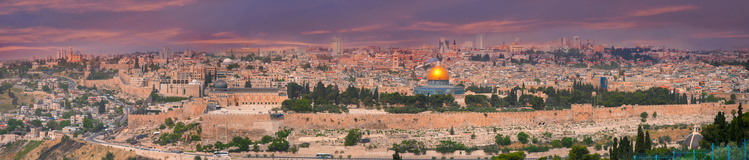
Panorama of Jerusalem, Israel


Israel is the only nation in the world that is living under the same name, speaking the same language, observing the same religion and located in the same place that they were 4000 years ago.

After a lapse of nearly 2000 years during which the Israeli people were scattered and often persecuted in the various places to which they were dispersed, the UN declared the reestablishment of the nation of Israel on May 5, 1948. The nation of Israel was ousted from their native land in 70 AD when the Romans destroyed the temple in Jerusalem, 1878 years earlier. That UN decree brought 3.6 million Jews back to the historic land of Jews from over 90 nations in 1948, an unprecedented event.

This history is as remarkable as it is unprecedented.  Continue reading “Israel, the Promised Land” →

Whatever We Fix Our Eyes On We Reflect

I have found myself recently caught up in the torrent, reacting and re-reacting to the various comments, news clips and videos, like waves of offensives and sieges…

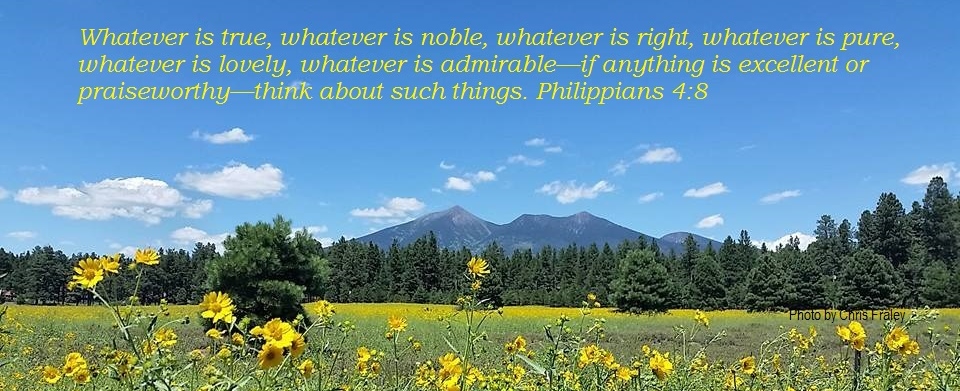
Flagstaff Mountain Flowers Philippians 4 8 by Chris Fraley jpeg


The world seems to be coming unglued! Militant, radical Muslims in Iraq are killing Christians, minority religious groups and even other Muslims. Hamas bombards Israel, and Israel responds with shelling that is killing women and children. At home, police decked out in military gear in a Missouri town are confronting an angry mob looting in the street and threatening to kill policemen.

Daily posts on Facebook and other social media demonize Barack Obama and “liberal Democrats”, or greedy corporations and capitalists, or Israelis or Hamas. The air is filled with ranting on both sides and all sides decrying every conceivable evil in the world. The cacophony seems to be reaching new heights. The many forms of social media make ranting as easy as shouting out the window to a world that is right within earshot.

I have found myself caught up in the torrent, reacting and re-reacting to the various comments, news clips and videos, like waves of offensives and sieges, until I began to realize something was happening to me…. Continue reading “Whatever We Fix Our Eyes On We Reflect” →