
The determination of birthright citizenship case may take years to sort out, but the balance of the separation of powers is at stake now.
The determination of birthright citizenship case may take years to sort out, but the balance of the separation of powers is at stake now.
The determination of birthright citizenship case may take years to sort out, but the balance of the separation of powers is at stake now.

God’s approved rulers do what is right and just.

Let’s lay politics aside for a moment, and just consider the Word of God. Politics, of course, is the backdrop to this article. A person cannot be completely apolitical, no matter how hard one tries, but political positions shift, evolve and change, while the Word of God is eternal. Therefore, we should put the Word of God first over our political inclinations.
The Word of God existed before God made the universe, and all of creation was made by the Word. (John 1:1-3) God spoke the entire universe into existence (Genesis 1) and made all things by that are seen from what cannot be seen His command. (Hebrews 11:3)
Of course if you are a Christian, you believe that the Word of God became flesh (John 1:14) in Jesus: God with us; God incarnate; God who became man. He proved himself by what he said, by the miracles he did, and by rising from the dead after he was tortured, crucified, and buried.
The Word of God (at least some of it) is preserved in writing for us as it was spoken to and through people who heard God’s voice and responded in faith by preserving it. Jesus, Himself, quoted extensively from the books of what we call the Old Testament as authority for what he said and did. (Interestingly, he never quoted from apocryphal texts.) Jesus, who we believe was God who became man and who rose from the dead, treated those Old Testament writings with great deference – as the word of God.
Jesus quoted Scripture often from Genesis to the Prophets. When Jesus was tempted by Satan in the wilderness, he quoted scripture, including Deuteronomy 8:3: “Man shall not live on bread alone, but on every word that comes from the mouth of God.” When Jesus began his ministry, his first public statement and the description of his ministry came from the prophet, Isaiah:
“The Spirit of the Lord is on me,
because he has anointed me
to proclaim good news to the poor.
He has sent me to proclaim freedom for the prisoners
and recovery of sight for the blind,
to set the oppressed free,
to proclaim the year of the Lord’s favor.”
Luke 4:18-19 (which Jesus told the listeners was fulfilled by him that day in their hearing)
After Jesus rose from the dead, he explained how the Scriptures from Genesis through the Prophets were about him. (Luke 24:27) Jesus was both the Word of God through whom God made the universe, and he honored the word of God preserved in the Bible – calling it his daily bread. It defined his purpose; and it informed who he was.
With that set up, my theme today is the Prophets and what they said about how God’s people should act in the world, especially rulers who wield governmental influence and power. Our political views, how we conduct ourselves in politics, and who we champion as our rulers should be informed and driven by God’s Word.
Continue reading “What Does the Word of God Say about How Rulers Should Rule?”
We need to be ever humble before God and ever humble in our reliance on our own understanding

In my last blog post, I wrote about the crippled woman Jesus healed in the synagogue, to the synagogue leader’s chagrin (The Danger of Being Too Set in Our Interpretation of What God Requires and What He Is Doing). The synagogue leader thought Jesus shouldn’t be working/healing on the Sabbath, so he instructed the crowd that they could come any other day of the week to be healed, but not on the Sabbath. (Luke 13:10-17)
It seems ridiculous to us, but who knows what doctrines, dogmas, understandings, and ways of thinking we have that get in our way of recognizing God and what He is doing in our present time. If we shrug our shoulders at the seeming insignificance of the Sabbath concern, we will miss the weight of this encounter.
The keeping of the Sabbath was a sacred tradition that goes all the way back to Genesis, when God rested after the six (6) days of creation. (Gen. 2:2-3) Moses passed on the commandment directly from God when the Hebrews were delivered out of Egypt: “Six days you shall labor and do all your work. But the seventh day is a sabbath to the Lord your God; you shall not do any work….” (Ex. 20:9-10)
The Sabbath was reinforced by Moses as part of the covenant relationship established by God with the Israelites. Many centuries before Jesus, God told Moses:
“Say to the Israelites, ‘You must observe my Sabbaths. This will be a sign between me and you for the generations to come, so you may know that I am the Lord, who makes you holy. Observe the Sabbath, because it is holy to you. Anyone who desecrates it is to be put to death; those who do any work on that day must be cut off from their people.” (Ex. 31:13-14)
Can you see why the first century Hebrews held so tightly to their Sabbath doctrine? It was a commandment; it was sacred; it was an intimate sign of their covenant with God going back many centuries; and the penalty of violating the Sabbath in the Mosaic law was death (or being cut off from the people).
For that reason, the Jewish leaders added strict protocols to the observance of the Sabbath to be sure that no one violated it, even inadvertently. Thus, when Jesus did something highly irregular, like calling a crippled woman forward in the synagogue in the first place, and then healing her, the synagogue leader was legitimately concerned, in his mind, about a violation of that sacred commandment.
Yet, in his concern for not offending God and for observing law, he failed to recognize God in the flesh standing right before him! Ironically, the Law that was intended to point the Hebrews to God got in the way of the him recognizing God.
God commanded them to keep the Sabbath at the risk of death and exile! Thus, they believed they couldn’t be too careful! What are we to make of this?
One clue is in the details of the response by Jesus. He called the religious leaders hypocrites because they untied their livestock and took them out to get water on the Sabbath. (Luke 13:13) If they believed that caring for their animals on the Sabbath was ok on the Sabbath, they should have recognized that healing a person was ok also.
“Yes, but God commanded!”, the synagogue leader might have said. I suppose Jesus might have asked in return, “Commanded what?” The synagogue leader might have protested further, “But we cannot be too careful! These things are not to be taken lightly. We need to err on the side of caution, lest we step over the line!”
These things should not be taken lightly, no doubt, but the synagogue leader obviously missed something of essential importance. What he missed, I think is better understood in the context of some global criticisms Jesus expressed toward the religious leaders of his day (which likely are as applicable today as they were then):
“Woe to you, teachers of the law and Pharisees, you hypocrites! You give a tenth of your spices—mint, dill and cumin. But you have neglected the more important matters of the law—justice, mercy and faithfulness. You should have practiced the latter, without neglecting the former. You blind guides! You strain out a gnat but swallow a camel.” (Matt. 23:23-24)
The Law and all of its rules were not meant to be the end all be all. Paul says the law was a guardian or tutor to lead us to Christ. (Gal. 2:24) Perhaps partially, to help us recognize our need for Christ in our inability to keep the Law. Perhaps, partially, to provide rituals by and through which a relationship could be established with God. Perhaps, in other ways as well.
The point is that the Law was never meant to define the totality of God’s relationship with people. What God wanted, which is what the Law was intended to teach, was for the Hebrews to love Him and for them to love each other.
Jesus said as much when he said the Law can be summed up succinctly in two phrases: Love God, and love your neighbor.
This was not a new concept when Jesus spoke those words, though. Jesus was once asked, “What is greatest commandment?”, by a teacher of the Law. When Jesus said the greatest commandment is to love God, and the second greatest commandment is to love our neighbor, the teacher commended Jesus for the answer, demonstrating that the teacher of the Law knew the answer, himself. (Mark 12:28-34)
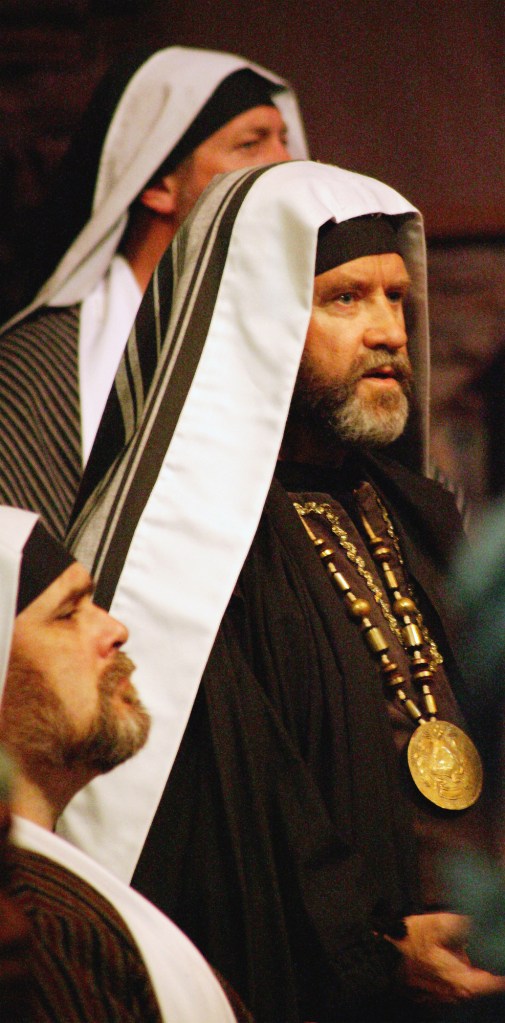
When the teacher of the law commended Jesus for the answer, Jesus told the teacher that he answered “wisely” and, therefore, is “not far from the kingdom of God.” (Mk. 12:34) In other words, the key to unlocking the “mystery” of the Law is to understand that it is meant to teach us to love God and love our neighbors. If we fail to see that, we are missing the boat
When we hold too tightly to our doctrinal constructs to the point that we miss the ultimate point, like the synagogue leader did, we fail to understand God; we fail to recognize God when He is acting in our midst; and we risk being on the “outside” with God, though we may be good, religious people in every other way.
Jesus said,
“The eye is the lamp of the body. If your eyes are healthy, your whole body will be full of light. But if your eyes are unhealthy, your whole body will be full of darkness. If then the light within you is darkness, how great is that darkness!”
Matthew 6:22-23
How do we apply this? How do we make sense of the things God has commanded us without missing the forest for the trees? How do we take a lesson from the synagogue ruler? I am no theologian, but I have some thoughts.
Continue reading “The Importance of Humility, Openness, and Generosity toward the Holy Spirit in Reading Scripture”
A believing heart turns toward God. As long as it is “today”, we can turn toward God, and we can have confidence that He will forgive.

“Therefore, since we are surrounded by such a great cloud of witnesses, let us throw off every encumbrance and the sin that so easily entangles, and let us run with endurance the race set out for us. Let us fix our eyes on Jesus, the author and perfecter of our faith, who for the joy set before Him endured the cross, scorning its shame, and sat down at the right hand of the throne of God.”
Hebrews 12:1-2[1]
These two verses in Hebrews 12 were shared with me by a gentleman at the church I go to who sends out daily verses by text to a group of men. Sometimes things like this are particularly timely and poignant. These verses inspires my thoughts today.
I have been wrestling with my own sinfulness lately. I have been painfully aware of areas of sinful behavior in my life and sinful attitudes in my heart that I have yet to conquer. The threads of this sinfulness go back to childhood, and they are rooted deeply.
I find myself stumbling over the same things time and again. I sometimes feel like a bird caught in a snare that cannot escape. I am tempted to be completely disgusted with myself, indignant, and condemning. Then, I recall that God is faithful to forgive; and I must ask myself, “Who am I to condemn?” Unless, of course, I am not really “saved”.
I have variously felt convicted, forgiven, hopeful, condemned, hopeless, and depressed in cycles for a long time. I tire of continually going back to God, asking for forgiveness…. again! I fear that my lack of success in overcoming these things means that I do not have the power of the Holy Spirit in me; and maybe I have fooled myself into believing in Christ’s power in my life.
I am reminded today that the letter to the Hebrews carries in it some of the most hopeful and some of the most despairing verses that can be found in the New Testament, like my cycle of feelings. I am digging deeper today to explore them. In doing so, I am reminded that the trajectory of Hebrews is hope!
The following verses provide great hope to the weary Christ follower:
“[S]ince we have a great high priest who has ascended into heaven, Jesus the Son of God, let us hold firmly to the faith we profess. For we do not have a high priest who is unable to empathize with our weaknesses, but we have one who has been tempted in every way, just as we are—yet he did not sin. Let us then approach God’s throne of grace with confidence, so that we may receive mercy and find grace to help us in our time of need.”
Hebrews 4:14-16
If we “hold firmly to the faith we profess” and “approach God’s throne of grace with confidence”, these verses promise mercy and grace to help us in our time of need. These words bring great comfort to a person like me.
Yet, thoughts arise in my mind that are concerning: What does it mean to “find grace to help us in our time of need”? How does this grace help us? Does this grace mean forgiveness in our time of need? If so, then I am thankful for that grace?
What is that grace in our time of need us the power to overcome the sin – to put a stop to it? What if the grace we receive is meant to empower us to stop, and I don’t stop? Does that mean I didn’t receive the grace that is offered? Am I doomed if I continue to fail?
A fear naturally arises that grace is not enough for me, that maybe it isn’t offered to me, or that I have spurned that grace by continuing to fail. If we go on sinning, we fear we will exhaust God’s well of mercy. The consequences of “falling away” loom ominously:
“It is impossible for those who have once been enlightened, who have tasted the heavenly gift, who have shared in the Holy Spirit, who have tasted the goodness of the word of God and the powers of the coming age and who have fallen away, to be brought back to repentance. To their loss they are crucifying the Son of God all over again and subjecting him to public disgrace.”
Hebrews 6:4-6
This passage is particularly ominous in its finality and the impossibility of coming back from “falling away”. I have tasted of the goodness of the word of God, If I go on sinning is there no repentance for me?
Am I the only who thinks like this? Am I the only one who fears being on the wrong side of this grace that is offered, doomed to a life of sin and, eventually, death? Fortunately for us, we have hope!
Continue reading “Hope in the Midst of the Warnings in Hebrews”
The tension between the Law and the Gospel and how they relate to each other is the key to understanding Christianity.
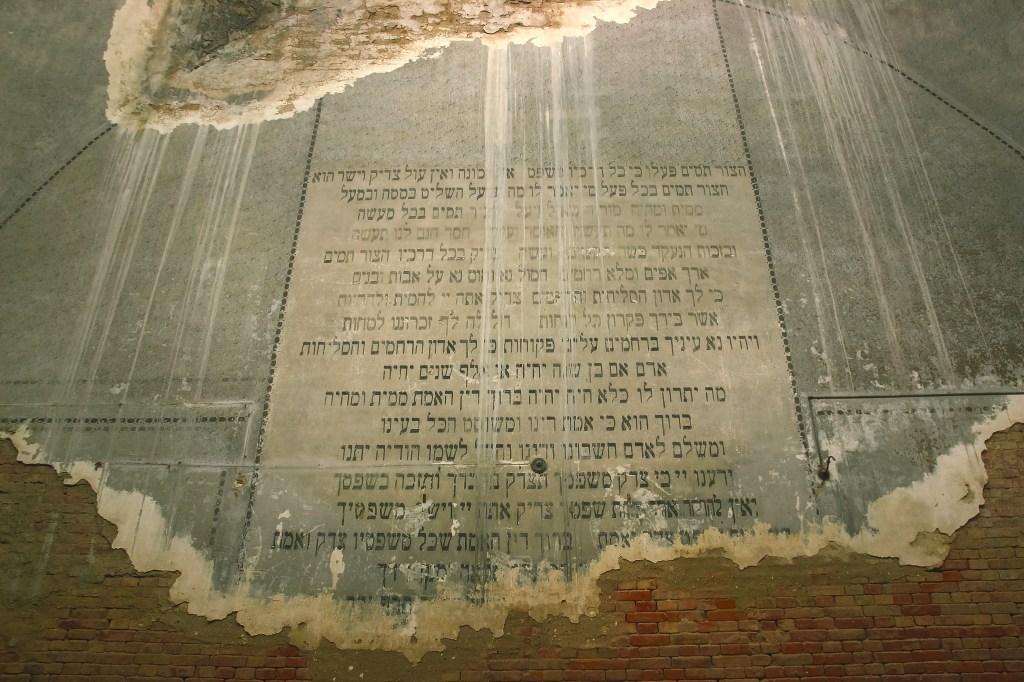
The themes of law and grace are central to Christianity. Sorting them out gets to the very heart of the gospel message. Yet, many people inside and outside of the Christian community are unclear on what laws Christians must follow, what laws are no longer applicable, and why.
Someone recently posted the following question to a group to which I belong on social media:
I get the message of we are not under the law but under grace. But if we live through Christ we will follow the law. How do we know what law to follow? Does this go as far back as to not mix fabrics?
Obviously everyone says we’re no longer under the law, but ”faith without works is dead” so I am confused.
How do we know which laws to follow?
Human tendency is to want a list of rules to follow so we can check them off. The rich young ruler demonstrates that human tendency when he came to Jesus one day and asked, “Teacher, what good thing must I do to get eternal life?” (Matt. 19:16)
We also have a tendency to want to quantify rules, and to simplify them to make them easier to follow. Perhaps, that is what motivated someone to ask Jesus, “Teacher, which is the greatest commandment in the Law?” (Matt. 22:36)
Or we go the other direction: we add rules on top of rules on top of rules to make sure that we don’t miss anything. The Pharisees demonstrated this approach in how they handled the commandment to observe the Sabbath. The created a list of “work” that was forbidden including, among other things: sowing, plowing, reaping, binding sheaves, threshing, winnowing, selecting, grinding, sifting, kneading, and baking bread; twelve similar activities related to the preparation of clothing, from shearing sheep to sewing; and seven activities related to preparing the carcass of a deer for food or leather. (See What are some Sabbath Observance rules that the Pharisees made?)
Moses started with ten commandments. By the time the books of Moses were completed, there were 613 commandments! (Though not everyone agrees on exactly what they are.)
The Torah (the Five Books of Moses – Genesis, Exodus, Leviticus, Numbers & Deuteronomy) focused on laws. That focus carries through the entire Old Testament. Though the laws are often more prominent in the breach, than in the observance thereof!
The same focus continued into the New Testament. We see it in the question asked by the rich young ruler and the Pharisees’ questions to Jesus. We see it in the tension between Paul and Peter that threatened to divide the early church over whether believing Jews must follow the Law and what laws believing Gentiles must follow.
This is the tension between the Law and the Gospel. If we understand only one thing about the Gospel message, the relationship of the Law to the Gospel might be the most important thing! I have written about it often, including How the Moorings of the Gospel Were Secured.
For the sake of brevity, I won’t summarize everything here. You can click in the links in the last two paragraphs to get an overview from the articles linked there. Understanding what Jesus meant when he said he didn’t come to abolish the law, but to fulfill it is critical.
If you are not a Christian, or you are a Christian, but you are not sure you understand these things, please do not just gloss over them. The tension between the Law and the Gospel and how they relate to each other is the key to Christianity.
It was the focus of almost all of Paul’s writings. It is the major theme in Romans, Galatians, Ephesians, Hebrews and the other epistles. Take some time now to wrestle with it. Don’t stop until it makes sense to you!
Hopefully, the rest of my thoughts in this piece will help.
Continue reading “What Laws Must a Christian Follow?”
Wanda Waterman's Journal of Mindful Creativity
Lead Pastor at V1 CHURCH INC
Take a few minutes to slow down and think about what's going on in your world...
Letters on my journey of rediscovering hope
"The LONG VIEW ON THE HIGH ROAD" -- Intriguing perspectives on life

