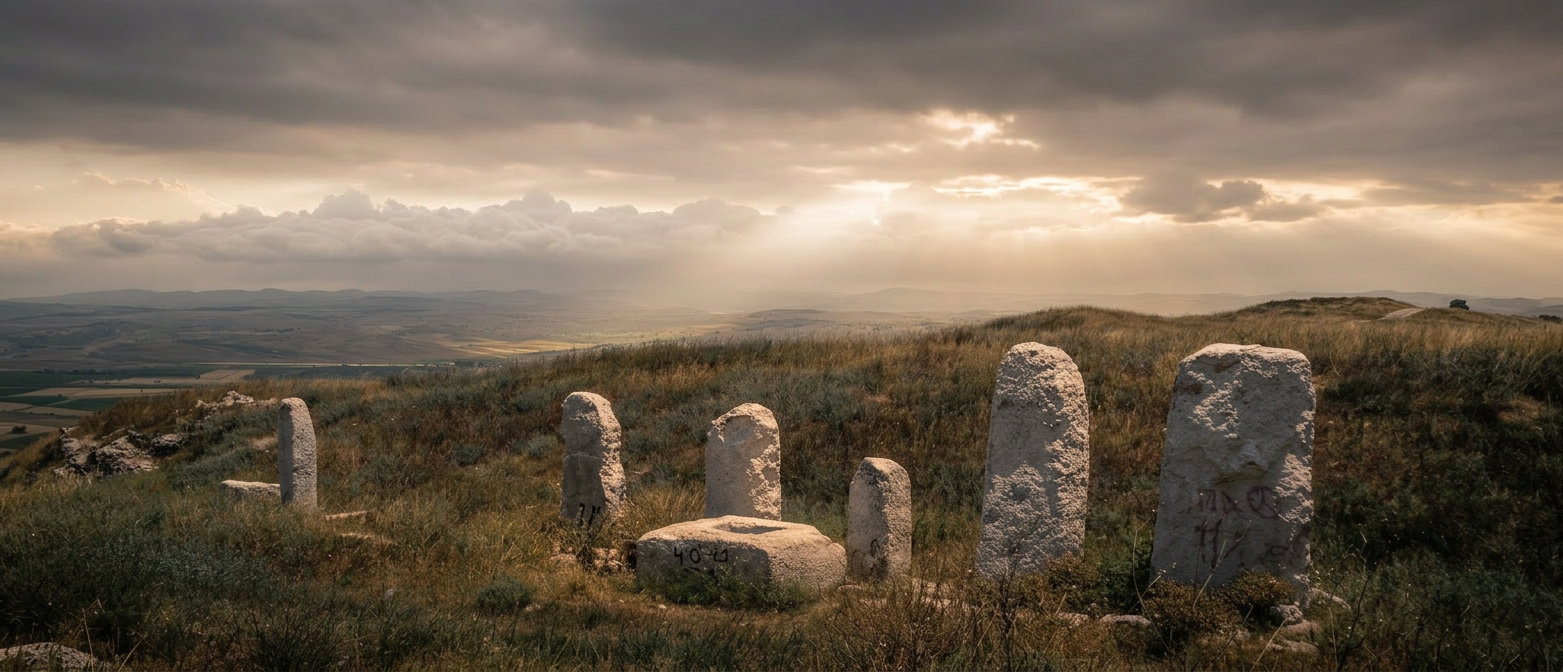
As I read through the Bible this year, the phrase, “the high places,” caught my attention because it is used as a kind of litmus test and descriptor of the kings of Israel and Judah in Kings and Chronicles. Like a worn-out refrain, and a tired old drumbeat, king after king in Israel and Judah is identified for failing to remove the high places. Only Hezekiah removed them and only Josiah destroyed them completely.
In case you have not read Kings or Chronicles lately, each king is judged by whether he did what was right in the sight of the Lord and removed the high places. The phrase “the high places were not removed” functions like a spiritual diagnostic in Kings. Even of the kings who were not wholly evil, only two (2) of them did something about the high places that were scattered throughout the region.
I have glossed over the phrase every year that I have read through Kings and Chronicles until now. When I recognized I wasn’t exactly sure what the high places were, I took some time to lay my assumptions aside and look into it. What I found is interesting and surprisingly relevant for us today.
What Were the High Places?
The Hebrew word translated “high places” is bamot. These were worship sites, usually located on hills or mountain tops, on ridges, or sometimes even on raised platforms in cities. A typical high place might include a stone altar for sacrifices, standing stones (masseboth), wooden poles associated with goddess worship (Asherah poles), incense altars, or occasionally a sacred tree or grove.
Ancient Near Eastern people believed that worshiping on elevated places brought them closer to heaven. Thus, “high places” became a term synonymous with worship. I wonder, as I write this, whether our phrase for good worship or a good spiritual experience – a mountaintop experience – comes from the idea of “high places” (knowingly or unknowingly).
The First Reference to a High Place
The first explicit mention of a “high place” is in 1 Samuel 9. When Saul goes looking for his father’s lost donkeys and is told to seek out the prophet, Samuel, who was planning to meet the people “at the high place” for a sacrifice. They were waiting for Samuel to get there to bless the sacrifice before they ate. Saul meets Samuel on his way to the high place, and Samuel instructed Saul to go on ahead of him, to wait for him, and to eat with him. (1 Samuel 9:12–14, 19).
This first mention of a high place is interesting because it seems to carry no negative connotation. Samuel had a good reputation as a prophet who did what was right in the Lord’s eyes, and the sacrifice they enjoyed at the high place seems to have been acceptable.
Older Worship Practice
Although the term “high place” is first used in 1st Samuel, worship on high places by some of the most iconic people of God goes back much earlier. For example: Noah builds an altar after leaving the ark; Abraham builds altars at Shechem, Bethel, and Mt. Moriah; Jacob worships at Bethel, and Moses meets God and receives the Law on Mt. Sinai.

The pattern of mountaintop worship and encounter with God is repeated and prominent. Just as noticeable, perhaps, is the absence of a negative comment about these practices. They seem to have occurred in ways that advanced relationship and covenant between God and key figures in the Old Testament. The pattern seems to have been acceptable to God, and those older mountaintop places of worship are not called “high places” (bamot).
A Change in the Worship of God
The early encounters of people with God were organic and free-flowing, but that way of relating to God changed with Moses and the Exodus. Although, Moses met with God on the top of Mt. Sinai, God changed the way people would relate to Him and worship Him going forward.
After Moses provided the blueprints from God, the Tent of Meeting (Tabernacle) was constructed to provide a place for the the Ark of the Covenant, for offering sacrifices to God, and for Moses to meet with God. The presence of God came to reside among the people over the Tent of Meeting with a visceral demonstration of fire by night and cloud by day.
Moses was instructed to consecrate the Levites, alone, to care for the Tabernacle and Ark of the Covenant, to carry, assemble, and to tear down the structures when they moved, and to conduct all of the ritual sacrifices that were very carefully prescribed.
Anyone who dared to approach God, offer sacrifices, or worship in a way that was not prescribed incurred the consequence of that transgression. No one but a Levite (and Moses) could enter the Tent of Meeting or offer sacrifices, and the Levites had to follow the the detailed instructions prescribed by God or pay the price.
The Problem with High Places
When Israel entered the Promised Land of Canaan, hilltop shrines devoted to gods like Baal and Asherah were scattered throughout the area. At that time, God specifically commanded Israel to destroy the high places (bamot), saying, “You must not worship the Lord your God in their way.” Instead, the people were instructed to “seek the place the Lord your God will choose from among all your tribes to put his Name there for his dwelling.” (Deuteronomy 12:1-7).
They were warned, “You are not to do as we do here today, everyone doing as they see fit, since you have not yet reached the resting place and the inheritance the Lord your God is giving you.” (Deut. 12:8-9) Yet, all they had was the mobile Tabernacle and the Ark of the Covenant, and they moved around until the Temple was built by Solomon. They were not always even in the same location.
The Transitionary Period
It was during this time frame that Samuel met Saul at “the high place.” Other people also offered sacrificed on high places during this period, despite the instruction from Moses. For instance, Joshua builds an altar on Mount Ebel after the conquest of Ai and offered sacrifices as Moses instructed them to do after crossing the Jordan into the Promised Land. (Deuteronomy 27; Joshua 8:30–35)

Sometime later, the tribes that took the land east of the Jordan built an altar. Joshua and the western tribes prepared to go to war with their brothers, assuming that it was an unauthorized rival worship location. They relented when eastern tribes explained it was not an altar for performing sacrifices; it was a ceremonial altar meant to be a witness that they belong to Israel. (Joshua 22)
God specifically instructed Gideon to build an altar to the LORD and offer sacrifices on it after tearing down an altar his family constructed for Baal. (Judges 6) Samson’s parents built an altar and offered sacrifices in thanks to God that seems to have been acceptable, because the Angel of the LORD ascends in the flame. (Judges 13)
Samuel repeatedly participated in offering sacrifices away from the Tabernacle at Mizpah (1 Samuel 7), Bethlehem (1 Samuel 16), the high place at Ramah (1 Samuel 9) during the period when the priesthood centered at Shiloh had collapsed and the Ark and Tabernacle were no longer together. David also built several altars during this time, including an altar on the threshing floor of Araunah (2 Samuel 24) where Solomon would later build the Temple.
Finally, Solomon offered sacrifices at the high place of Gibeon. In Solomon’s case the text seems to excuse the practice by stating, “[T]here was no house built for the name of the Lord.” (1 Kings 3) This seems to suggest that it was a transitional time.
Not a Hard and Fast Rule
Though God had told them to “seek the place the Lord your God will choose from among all your tribes to put his Name there for his dwelling,” it didn’t seem to be a hard and fast rule after they entered the Promised Land the Temple was built.
Perhaps, this is because the issue wasn’t locational, but a matter of the heart. With “high places” for pagan worship scattered throughout the land, it was too tempting for God’s people to mix worship of Yahweh with pagan practices or outright idolatry.
After the Temple was built in Jerusalem, continuing to worship at local high places was usually viewed as disobedience to God’s command. That is why the books of Kings repeatedly evaluate rulers with statements like: “Nevertheless, the high places were not removed.” Even kings who were otherwise faithful often failed this test. Once the Temple was dedicated, the transitional period ended. From then on, the high places became symbols of covenant unfaithfulness.
The clearest passage on this theme is Deuteronomy 12, which does not merely forbid worshiping other gods on the high places—it forbids Israel from worshiping the LORD wherever they choose. They were to worship only at the place God chooses.
Notice the contrast:
- First, Israel is commanded to destroy the Canaanite places of worship: “You shall surely destroy all the places where the nations… served their gods, on the high mountains and on the hills and under every green tree.” (Deut. 12:2)
- Then comes the key command: “You shall not worship the LORD your God in that way.” (Deut. 12:4)
- We are to approach God on His terms: “But you shall seek the place that the LORD your God will choose… there you shall bring your burnt offerings and your sacrifices…” (Deut. 12:5–14)
This theme is repeated. Deuteronomy 16:21–22 forbids setting up sacred poles or standing stones alongside the LORD’s altar, practices commonly associated with high places. Deuteronomy 17:3–9 requires sacrifices to be brought to the tabernacle rather than offered wherever people wish. Deuteronomy 17:9–11 condemns Israel because they “built for themselves high places… and there they burned incense on all the high places.”
The point is not merely, “Don’t worship idols.” It is, “Don’t worship the LORD according to the pattern of the nations or at places you choose yourself.” In other words: the people can only worship and honor God properly on God’s terms – not on their own terms. God is God, and we are not.
The Spirit of the Law
This is the interesting part. Before the temple was built, there were periods when Israel lacked a single permanent sanctuary. During the days of Samuel and even early in the reign of Solomon, sacrifices at places like Gibeon were tolerated because that was where the tabernacle and bronze altar were located (1 Kings 3:2–4). The author of Kings even explains:, “The people were sacrificing at the high places because no house had yet been built for the name of the LORD.”
Once the Temple in Jerusalem was established as the place God had chosen, however, continuing to worship at local high places became an act of disobedience. That is why the historian repeatedly criticizes otherwise good kings by saying, “The high places were not removed.”

Deuteronomy is teaching that true worship is defined not by human sincerity or convenience, but by God’s initiative. The temptation of the high places was to approach God on one’s own terms—at a place of one’s own choosing, often borrowing from the belief systems and practices of the surrounding culture.
The prophets continually call Israel back to worship that is shaped by God’s word rather than by human preference. This theme reaches its fulfillment in the New Testament, where worship is no longer centered on a geographic sanctuary but on Jesus, through the Holy Spirit, who becomes the true meeting “place” between God and humanity (see John 2:19–21 and 4:21–24).
Application & Extension in the New Testament
I think there is a profound biblical-theological connection here. The New Testament does not simply abolish the Old Testament concern about the high places—it transforms and fulfills it.
The issue with the high places was never merely geography. It was who determines the terms of worship: God or human beings? It distinguishes God, the creator of the universe, from false gods and human preference.
Jesus and the Samaritan Woman
The conversation between Jesus and the Samaritan woman signals a bridge between the Old and New Testaments. Samaritans worshiped on Mount Gerizim. The Jews worshiped at the Temple in Jerusalem. The woman asks, in effect, “Which mountain is the right one?” Jesus replies:
“The hour is coming when neither on this mountain nor in Jerusalem will you worship the Father… true worshipers will worship the Father in spirit and truth.
John 4:23
Notice that Jesus does not say that place no longer matters because everyone can now choose whatever they like. Rather, he says that the place of God’s presence is no longer identified with a mountain because He Himself is becoming the meeting place between God and humanity. In John’s Gospel, Jesus is the new Temple (John 2:19–21).
The narrative arc moves from altars built wherever God is encountered vs. the high places of pagan worship to the Tabernacle in the wilderness where God establishes the meeting place and people come to Him. After they enter the land God gave them to inhabit, worship transitions from the Tabernacle that moves to the Temple that does not move.
It’s not that God cannot, or will not, meet people other places. It’s that people are too easily drawn to pagan forms of worship that do not honor God for who He is. People are too influenced by their own preferences and too tempted to try to control and manipulate their relationship with God.
The God of the universe is not “a respecter of persons” – He is Author of this play that He created, and not merely a character in it. To know God requires understanding who He is and requires relating to Him in truth.
The narrative arc leads us to Christ – to God who is with us, who became like us, and who desires people to unite with Him. He is not ultimately found in particular locations, but He will not be known by people who do not desire to know Him in truth.
The Church as the Temple

Paul the Apostle expands this idea dramatically. In 1 Corinthians 3:16–17, the “you” is plural: “You are God’s temple.” Paul is talking about the gathered church – the body of believers who are, in themselves temples of the Holy Spirit – who together become the habitation of God through His Holy Spirit to worship Him in spirit and truth.
The individual and the body of Christ are two complementary truths: individually, believers are temples; corporately, the church is God’s dwelling place. The emphasis shifts from a sacred location to a sacred people.
The New Testament does not eliminate corporate worship. Just the opposite. Believers are repeatedly commanded to gather together: Hebrews 10:25: “Do not neglect meeting together.” Thus, early the believers devoting themselves to teaching, fellowship, breaking bread, and prayer (Acts 2:42), and Paul provides extensive instructions for worship “when you come together.” (1 Corinthians 11–14)
Notice the difference. Israel gathered because God had chosen one place. The church gathers because God has made one people. The center is no longer geographical but personal—Christ himself.
The Danger of New “High Places”
This is where the Old Testament theme becomes searching and relevant for us. Religious ritual at the high places was not only idolatrous; it reduced worship to human preference rather than God’s revelation. It failed to honor God for who He is – the Creator of the universe and of all mankind.
The desire to know God only on our own terms according to our own preferences has never disappeared. The New Testament repeatedly warns against self-made religion (Colossians 2:23) – worship according to human traditions that fails to honor God’s word (Mark 7) or to perceive Him in truth.
In that sense, a “high place” is any form of worship or religious practice that fails to honor God for who He is, that attempts to manipulate relationship with God, that smacks of our own personal preferences and desires, that and/or that combines pagan notions or practices with Christianity.
The Temple still looms in the New Testament. Peter uses language that sounds remarkably like the Temple (1 Peter 2:5):
“You yourselves, like living stones, are being built up as a spiritual house… to offer spiritual sacrifices acceptable to God through Jesus Christ.”
The church is now the temple, the “place” where the priesthood of believers is dedicated to worship and offer themselves as living sacrifices to the LORD. In this way, the Temple in the Old Testament points toward and is fulfilled in Christ and his people.
Key Takeaways
Humanity naturally seeks God through sacred places and self-chosen forms of worship, but God chooses where and how He will be known to distinguish Himself from false gods we concoct by our own hands or in our own imaginations. The progression of the narrative takes us from the Tabernacle, to the Temple, to God who is incarnate in Christ and His body – the Church.
Through the Spirit, God incarnate now dwells in His gathered people. We do not worship and serve Him in isolation. Only in the body of believers is the fullness of the truth of God experienced and encountered.
The New Testament does not abolish the theology behind the high places. It fulfills it. The fundamental question remains the same throughout Scripture: Will we approach God where and how He has made himself known, or will we construct our own “high places” according to our own wisdom? That is the thread that runs from Deuteronomy, through Kings and the prophets, into the teaching of Jesus and the apostles.
The Christian who does not go to church is like an ancient king of Israel who “did not remove the high places.” They may “do right in the LORD’s eyes,” but they do not honor God as He is and has He desires to be known. The failure to remove the high places inevitably warps our knowledge of God and our relationship to Him.
We cannot know God in spirit and truth if we neglect to gather together with other believers. We cannot know God in the fullness in which He desires to be known apart from the Body of Christ. If we linger too long outside the camp, the danger increases that we will loose touch with God because we have neglected to know Him as He desires to be known.
I will end with another analogy that Jesus uses for the reality of being connected as God desires us to be connected:
“Remain in me, as I also remain in you. No branch can bear fruit by itself; it must remain in the vine. Neither can you bear fruit unless you remain in me.
“I am the vine; you are the branches. If you remain in me and I in you, you will bear much fruit; apart from me you can do nothing. If you do not remain in me, you are like a branch that is thrown away and withers; such branches are picked up, thrown into the fire and burned. If you remain in me and my words remain in you, ask whatever you wish, and it will be done for you. This is to my Father’s glory, that you bear much fruit, showing yourselves to be my disciples.
“As the Father has loved me, so have I loved you. Now remain in my love. If you keep my commands, you will remain in my love, just as I have kept my Father’s commands and remain in his love. I have told you this so that my joy may be in you and that your joy may be complete. My command is this: Love each other as I have loved you.”
John 15:5-12
Loving God and each other is the expression of this relationship. We cannot do that alone. We can only do that in community. That doesn’t happen on “the high places” – , off on our own, aloof from the Temple where God has chosen to dwell – among His people.
We can go nowhere that God is not with us because each of us is a temple of the Holy Spirit. We have access to God. Wherever we are and wherever we go. We are not limited in our ability to worship and honor God, but we need to worship and honor God for who He really is. He is not like a rabbit’s foot we take with us in our front pocket. God desires ultimately for us to know Him in the assembly of His people. God is constructing a holy temple that is His inhabitants for all eternity with and among His people.


