Idolatry, the High Places, and the Modern Believer


As I read through the Bible this year, the phrase, “the high places,” caught my attention because it is used as a kind of litmus test and descriptor of the kings of Israel and Judah in Kings and Chronicles. Like a worn-out refrain, and a tired old drumbeat, king after king in Israel and Judah is identified for failing to remove the high places. Only Hezekiah removed them and only Josiah destroyed them completely.

In case you have not read Kings or Chronicles lately, each king is judged by whether he did what was right in the sight of the Lord and removed the high places. The phrase “the high places were not removed” functions like a spiritual diagnostic in Kings. Even of the kings who were not wholly evil, only two (2) of them did something about the high places that were scattered throughout the region.

I have glossed over the phrase every year that I have read through Kings and Chronicles until now. When I recognized I wasn’t exactly sure what the high places were, I took some time to lay my assumptions aside and look into it. What I found is interesting and surprisingly relevant for us today.

What Were the High Places?

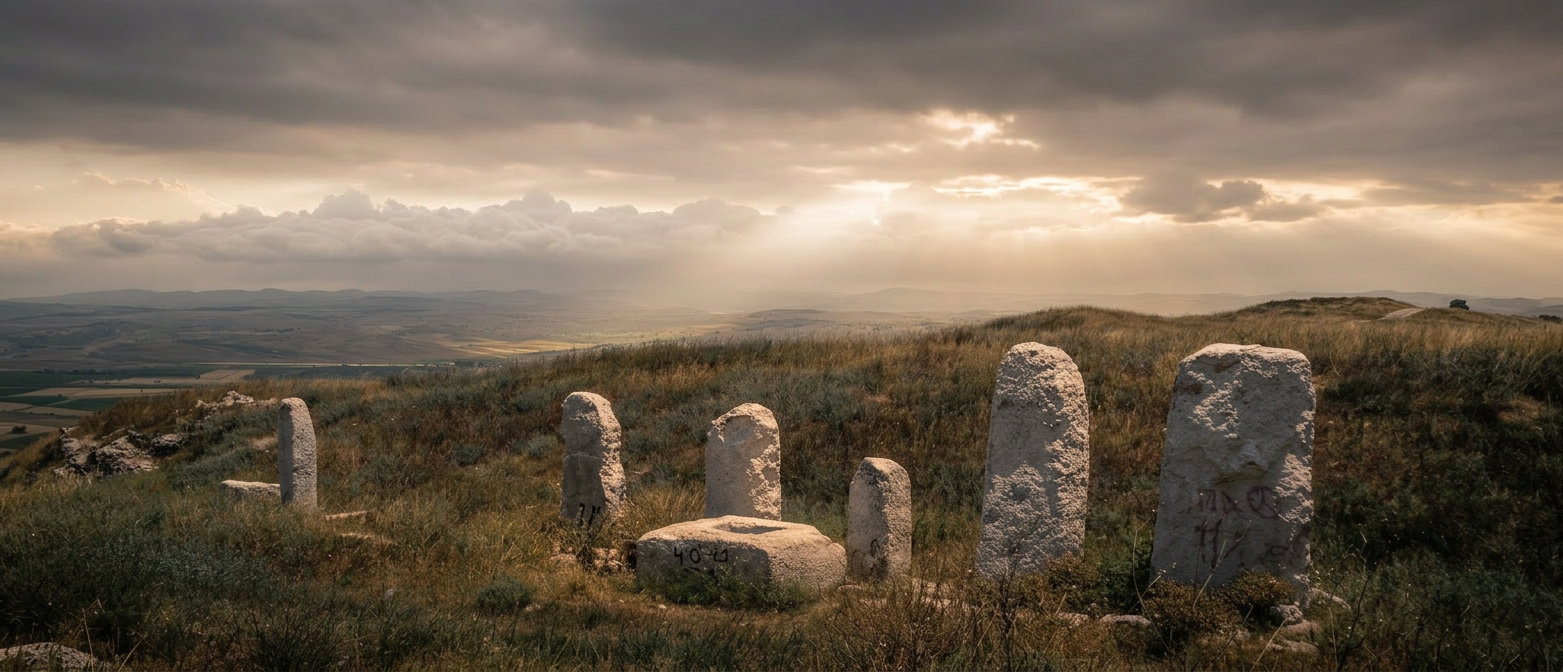
The Hebrew word translated “high places” is bamot. These were worship sites, usually located on hills or mountain tops, on ridges, or sometimes even on raised platforms in cities. A typical high place might include a stone altar for sacrifices, standing stones (masseboth), wooden poles associated with goddess worship (Asherah poles), incense altars, or occasionally a sacred tree or grove.

Ancient Near Eastern people believed that worshiping on elevated places brought them closer to heaven. Thus, “high places” became a term synonymous with worship. I wonder, as I write this, whether our phrase for good worship or a good spiritual experience – a mountaintop experience – comes from the idea of “high places” (knowingly or unknowingly).

The First Reference to a High Place

The first explicit mention of a “high place” is in 1 Samuel 9. When Saul goes looking for his father’s lost donkeys and is told to seek out the prophet, Samuel, who was planning to meet the people “at the high place” for a sacrifice. They were waiting for Samuel to get there to bless the sacrifice before they ate. Saul meets Samuel on his way to the high place, and Samuel instructed Saul to go on ahead of him, to wait for him, and to eat with him. (1 Samuel 9:12–14, 19).

This first mention of a high place is interesting because it seems to carry no negative connotation. Samuel had a good reputation as a prophet who did what was right in the Lord’s eyes, and the sacrifice they enjoyed at the high place seems to have been acceptable.

Older Worship Practice


Although the term “high place” is first used in 1st Samuel, worship on high places by some of the most iconic people of God goes back much earlier. For example: Noah builds an altar after leaving the ark; Abraham builds altars at Shechem, Bethel, and Mt. Moriah; Jacob worships at Bethel, and Moses meets God and receives the Law on Mt. Sinai.

Man placing stones near a wooden ark under a cloudy sunrise in the mountains

The pattern of mountaintop worship and encounter with God is repeated and prominent. Just as noticeable, perhaps, is the absence of a negative comment about these practices. They seem to have occurred in ways that advanced relationship and covenant between God and key figures in the Old Testament. The pattern seems to have been acceptable to God, and those older mountaintop places of worship are not called “high places” (bamot).

A Change in the Worship of God

The early encounters of people with God were organic and free-flowing, but that way of relating to God changed with Moses and the Exodus. Although, Moses met with God on the top of Mt. Sinai, God changed the way people would relate to Him and worship Him going forward.

After Moses provided the blueprints from God, the Tent of Meeting (Tabernacle) was constructed to provide a place for the the Ark of the Covenant, for offering sacrifices to God, and for Moses to meet with God. The presence of God came to reside among the people over the Tent of Meeting with a visceral demonstration of fire by night and cloud by day.

Moses was instructed to consecrate the Levites, alone, to care for the Tabernacle and Ark of the Covenant, to carry, assemble, and to tear down the structures when they moved, and to conduct all of the ritual sacrifices that were very carefully prescribed.

Anyone who dared to approach God, offer sacrifices, or worship in a way that was not prescribed incurred the consequence of that transgression. No one but a Levite (and Moses) could enter the Tent of Meeting or offer sacrifices, and the Levites had to follow the the detailed instructions prescribed by God or pay the price.

The Problem with High Places

When Israel entered the Promised Land of Canaan, hilltop shrines devoted to gods like Baal and Asherah were scattered throughout the area. At that time, God specifically commanded Israel to destroy the high places (bamot), saying, “You must not worship the  Lord your God in their way.” Instead, the people were instructed to “seek the place the Lord your God will choose from among all your tribes to put his Name there for his dwelling.” (Deuteronomy 12:1-7).

They were warned, “You are not to do as we do here today, everyone doing as they see fit, since you have not yet reached the resting place and the inheritance the Lord your God is giving you.” (Deut. 12:8-9) Yet, all they had was the mobile Tabernacle and the Ark of the Covenant, and they moved around until the Temple was built by Solomon. They were not always even in the same location.

The Transitionary Period

It was during this time frame that Samuel met Saul at “the high place.” Other people also offered sacrificed on high places during this period, despite the instruction from Moses. For instance, Joshua builds an altar on Mount Ebel after the conquest of Ai and offered sacrifices as Moses instructed them to do after crossing the Jordan into the Promised Land. (Deuteronomy 27; Joshua 8:30–35)


Stone firepit with smoldering ashes near river in natural valley landscape

Sometime later, the tribes that took the land east of the Jordan built an altar. Joshua and the western tribes prepared to go to war with their brothers, assuming that it was an unauthorized rival worship location. They relented when eastern tribes explained it was not an altar for performing sacrifices; it was a ceremonial altar meant to be a witness that they belong to Israel. (Joshua 22)


God specifically instructed Gideon to build an altar to the LORD and offer sacrifices on it after tearing down an altar his family constructed for Baal. (Judges 6) Samson’s parents built an altar and offered sacrifices in thanks to God that seems to have been acceptable, because the Angel of the LORD ascends in the flame. (Judges 13)

Samuel repeatedly participated in offering sacrifices away from the Tabernacle at Mizpah (1 Samuel 7), Bethlehem (1 Samuel 16), the high place at Ramah (1 Samuel 9) during the period when the priesthood centered at Shiloh had collapsed and the Ark and Tabernacle were no longer together. David also built several altars during this time, including an altar on the threshing floor of Araunah (2 Samuel 24) where Solomon would later build the Temple.

Finally, Solomon offered sacrifices at the high place of Gibeon. In Solomon’s case the text seems to excuse the practice by stating, “[T]here was no house built for the name of the Lord.” (1 Kings 3) This seems to suggest that it was a transitional time.

Not a Hard and Fast Rule

Though God had told them to “seek the place the Lord your God will choose from among all your tribes to put his Name there for his dwelling,” it didn’t seem to be a hard and fast rule after they entered the Promised Land the Temple was built.

Perhaps, this is because the issue wasn’t locational, but a matter of the heart. With “high places” for pagan worship scattered throughout the land, it was too tempting for God’s people to mix worship of Yahweh with pagan practices or outright idolatry.

After the Temple was built in Jerusalem, continuing to worship at local high places was usually viewed as disobedience to God’s command. That is why the books of Kings repeatedly evaluate rulers with statements like: “Nevertheless, the high places were not removed.” Even kings who were otherwise faithful often failed this test. Once the Temple was dedicated, the transitional period ended. From then on, the high places became symbols of covenant unfaithfulness.

The clearest passage on this theme is Deuteronomy 12, which does not merely forbid worshiping other gods on the high places—it forbids Israel from worshiping the LORD wherever they choose. They were to worship only at the place God chooses.

Notice the contrast:

  • First, Israel is commanded to destroy the Canaanite places of worship: “You shall surely destroy all the places where the nations… served their gods, on the high mountains and on the hills and under every green tree.” (Deut. 12:2)
  • Then comes the key command: “You shall not worship the LORD your God in that way.” (Deut. 12:4)
  • We are to approach God on His terms: “But you shall seek the place that the LORD your God will choose… there you shall bring your burnt offerings and your sacrifices…” (Deut. 12:5–14)

This theme is repeated. Deuteronomy 16:21–22 forbids setting up sacred poles or standing stones alongside the LORD’s altar, practices commonly associated with high places. Deuteronomy 17:3–9 requires sacrifices to be brought to the tabernacle rather than offered wherever people wish. Deuteronomy 17:9–11 condemns Israel because they “built for themselves high places… and there they burned incense on all the high places.”

The point is not merely, “Don’t worship idols.” It is, “Don’t worship the LORD according to the pattern of the nations or at places you choose yourself.” In other words: the people can only worship and honor God properly on God’s terms – not on their own terms. God is God, and we are not.

The Spirit of the Law

This is the interesting part. Before the temple was built, there were periods when Israel lacked a single permanent sanctuary. During the days of Samuel and even early in the reign of Solomon, sacrifices at places like Gibeon were tolerated because that was where the tabernacle and bronze altar were located (1 Kings 3:2–4). The author of Kings even explains:, “The people were sacrificing at the high places because no house had yet been built for the name of the LORD.”


Once the Temple in Jerusalem was established as the place God had chosen, however, continuing to worship at local high places became an act of disobedience. That is why the historian repeatedly criticizes otherwise good kings by saying, “The high places were not removed.”

King kneeling on a prayer rug in front of an ancient temple altar with rising smoke

Deuteronomy is teaching that true worship is defined not by human sincerity or convenience, but by God’s initiative. The temptation of the high places was to approach God on one’s own terms—at a place of one’s own choosing, often borrowing from the belief systems and practices of the surrounding culture.

The prophets continually call Israel back to worship that is shaped by God’s word rather than by human preference. This theme reaches its fulfillment in the New Testament, where worship is no longer centered on a geographic sanctuary but on Jesus, through the Holy Spirit, who becomes the true meeting “place” between God and humanity (see John 2:19–21 and 4:21–24).

Continue reading “Idolatry, the High Places, and the Modern Believer”
Of the Holy Spirit, Truth, Tares, and Wheat at the Asbury Revival

“[N]o one can say, ‘Jesus is Lord,’ except by the Holy Spirit.”


I listened to Voddie Bauchaum summarize what is wrong at Asbury recently. The video title is (Wow) The Asbury Revival is NOT of God. His summary is similar to other skeptical takes I have heard, so I will summarize his summary here. (You can also watch the video and hear what he says for yourself.)

Bauchaum said he listened to four testimonies of students who attended the “revival”, and they “confirmed exactly what I figured was going on.” It’s a small sampling size, but I have no reason to believe he didn’t hear what he heard.

His conclusions were more in number than his sampling size. First, he said, “This event is nothing more than strange fire.” (The whole event.) For proof, he offered what the students said in their testimonies: One student admitted said he experienced a “fit of laughter”; another student claimed his mother began speaking in “unknown tongues”. (If Bauchaum supplied a summary of the other two testimonies he heard, I missed it.)

The phrase, “strange fire”, is a reference to Leviticus 10:1-3 an incident in which two priests put incense into censors and offered “strange fire before the Lord, which he commanded them not.” (KJV) Those men were consumed by fire from the Lord, the passage says. Therefore, Bauchaum is comparing the people at Asbury to the two rogue priests who presented offerings to God they were not instructed to give and were killed for it.

Clearly, Bauchaum is suggesting that “this event” is not of God; it is “unauthorized” worship; and God views it like He viewed the priests who offered strange fire and were killed for it.

As further proof that this event could not be from God, he said, “A lot of this took place out of the church!” He added that “the university ordains women for ministry, so there is a lot wrong here.”

He went on to explain to say that he was looking for a man of God taking the pulpit to open the Bible and preach the word of God, “and it never happened.” Though he didn’t say it, I am left to assume that revivals must happen only inside church buildings, and then only when a man of God preaches the word of God from a proper pulpit.

I note that he didn’t do much research if he only heard four testimonies, as I found testimonies all over the Internet, including many statements by professors and school administrators. The happenings at Asbury took place over roughly a two-week period, so there was a lot of footage to see and many people who were there talking about it.

I also note that the chapel service began with someone preaching, but, then, I don’t know if he was “a men of God”, and I don’t recall whether he used a pulpit. (Sarcasm alert.)

Bauchaum warned that Satan tricks people with music. As anecdotal proof, he recounted his own experience attending a Pentecostal church a few times when he was a new believer. He recalled feeling emotional, on the verge of tears, because he felt like God was moving, but he determined it was “nonsense” after reading the Bible for himself for several weeks.

To his credit, he said that he “matured really fast” during during those few weeks. (I am not being sarcastic now. These were his words, not mine.) He said he desired to hear someone preach the Word of God because he was hungry for preaching.

To be fair, I can appreciate. I have been in his shoes before when all I wanted was to hear a meaty sermon that dug deep into God’s word.

Bauchaum recalled an old Paul Washer sermon in which people were moved by the preaching of the word, not by the music. As proof that this is the way it should be done, he quoted Romans 10:17: “Faith comes by hearing, and hearing by the word of God.” (No issue there.)

I don’t know if Bauchaum is a cessationist (someone who believes the “gifts of the Holy spirit” have ceased), so I don’t want to make any assumptions. If he is a cessationist, then it would not matter if people had limbs grow back: a cessationist has already determined God doesn’t do those things anymore.

To give him the benefit of the doubt, I can admit that his concerns might be just as validly expressed by someone who is not a cessationist. His concerns do suggest a need for some circumspection, but I have greater concern over his conclusions than any of the spectacle he described that took place on the Asbury University campus for over two weeks in February of 2023.

Continue reading “Of the Holy Spirit, Truth, Tares, and Wheat at the Asbury Revival”

What Is a Revival? And What Does It Matter?

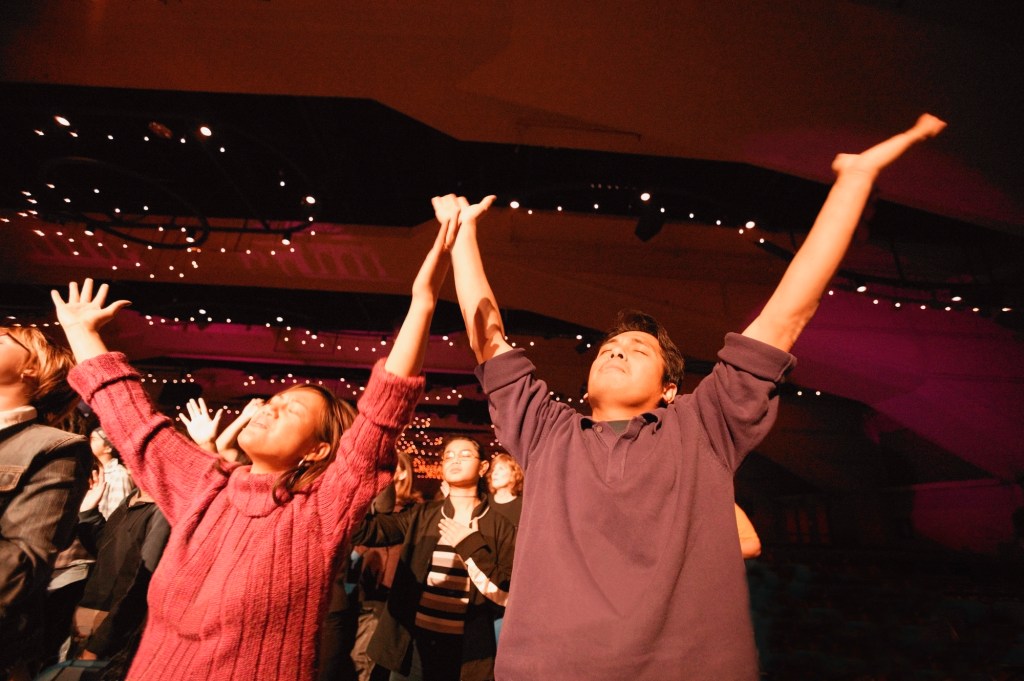
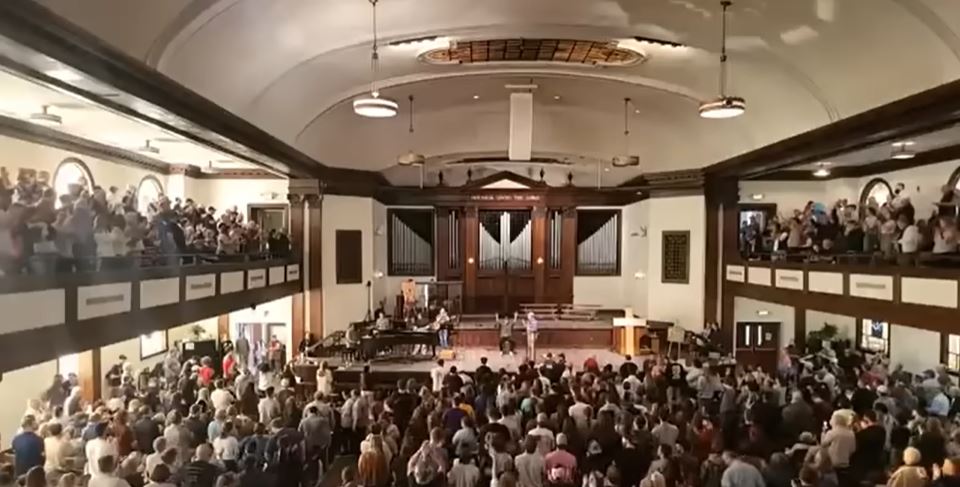
The spark in the beginning seemed to be a small group of students who didn’t want to leave. They didn’t want to stop worshiping.

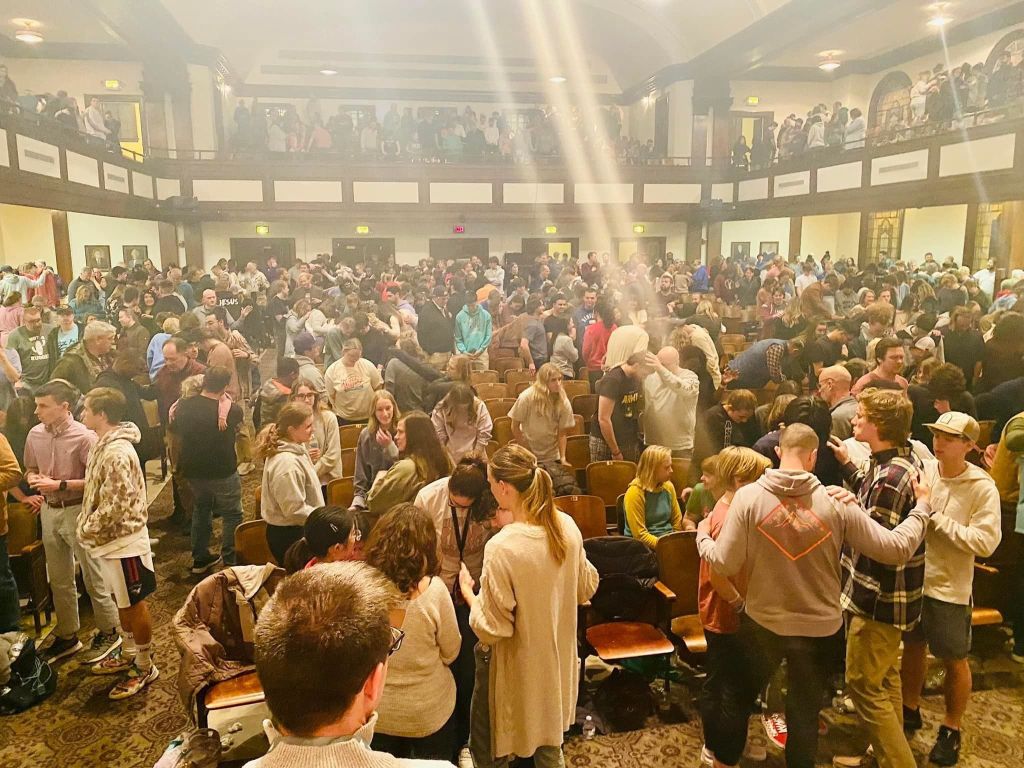
I did not take this photo, but I am grateful to the person who captured the scene.

I pay only casual attention to the news. Maybe that is why I didn’t know much about what is going on at Asbury University in Wilmore, KY until about 10 days into the 1-hour chapel service that turned into a two-week long, around the clock gathering of young people worshiping Jesus.

Or maybe I hadn’t noticed because most media outlets weren’t reporting on it. Not that they would know what to do with it if they had!

When I began scrolling through Instagram that Friday evening, I found one video after another from the chapel at Asbury University. It seemed like these videos were all I had in my feed, and I started following it.

Along with the live feeds, video, and people self-reporting on the Asbury phenomenon, I began seeing many cautionary pundits who were concerned about whether what was happening is a revival, and these people were convinced it wasn’t.

Notably, the Asbury school administrators and staff seemed uniformly hesitant to categorize what was happening as a revival. They were in agreement with the critics, but criticism rang hollow to me.

I have watched a lot of live video. I have listened to interviews with students, staff, professors and visitors. I have listened to people who are skeptical. I have listened to the cautions and warnings.

I “grew up” in my faith in charismatic churches in the 1980’s. Since the 1990’s, however, I have gravitated away from charismatic churches to more traditional evangelical churches. I have focused on daily Scripture reading, weekly church attendance, and getting involved in leading and participating in small groups, apologetics, and regular fellowship – and writing.

I have been disillusioned by the emotionalism and thrill-seeking that can characterize the charismatic movement. I have seen the dangers of idolizing charismatic leaders and the charismatic movement, itself.  

It’s all too easy to want what God can do for us more than we want God.

Some people I looked up to in those charismatic churches walked away from God. The church that I practically idolized in my early Christian walk, splintered and fragmented and fell apart in a very short time. The pastor who married my wife and I got divorced a few years later. It didn’t last.

I am an attorney. I am trained to be analytical, even skeptical. I am naturally more comfortable exercising my brain than my heart. I can easily settle into an intellectual faith that is thin on experience and authenticity.

I didn’t immediately pay attention to the Asbury University “revival”. We live in a sensationalized world of clickbait, and I have learned to look away.

Revival isn’t a biblical term, as far as I know. I can’t think of a verse or passage that uses that terminology (other than a plea for God to revive).

Anyway, I began scrolling through Instagram on this Friday night. I know better than to scroll through Instagram late at night like that, but it was a long week. I was looking for some mindless entertainment before I shut my eyes and went to sleep.

I scrolled to one video after another from Asbury University. Mild interest began to pique. Something was going on there. It was then that I realized that 10 days is a long time for a routine school chapel to last!

One video showed the last few minutes of the message that ended the chapel. It was ok, but anything but spectacular. It was far from a passionate call to the altar. It was an ordinary message by any measure.

Now, I was even more interested.

Continue reading “What Is a Revival? And What Does It Matter?”

Taste and See that God is Good: The Asbury Revival

We spend far more time praying for renewal of our strength than soaring on wings like eagles.


I have noticed with some mild interest at what is going on at the chapel on the Asbury University campus in Kentucky. Posts show up in my Facebook feed daily, as I am connected to many Christians (and many other people too) on Facebook. One post today, shared from someone who has been there from the beginning, described it succinctly as follows:

“A chapel service that didn’t stop but continued spontaneously for 8 days now.”

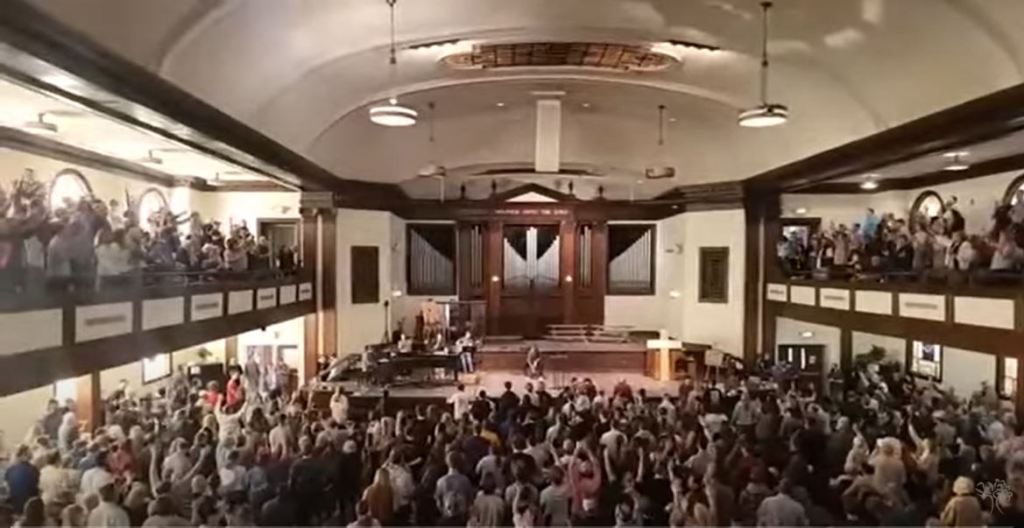
Today has been ten (10) days since that spontaneous beginning, and I have been watching various live streams of the February 8th chapel service that is still going on. This is how it started:

How the Asbury University chapel started on February 8, 2023

I have seen doubters and critics, I have seen posts from people who jumped in their cars and traveled hundreds of miles to see it for themselves: this chapel service that started and has not stopped. It has continued around the clock for 10 days now.

I have seen hype. I have seen caution. Critics caution about emotionalism. Critics want to de-emphasize experience and double down on the Bible and doctrine. Critics say that an omnipresent God should not require a person to travel to a particular location to experience Him.

I have been cautious myself. I am also aware that a sovereign God does what He wants to do despite our understanding of scripture, and theology and the way things ought to be. I have experienced “moves of the Holy spirit”, myself.

I have experienced that people cannot dictate how, when, or whether the Holy Spirit moves. “The wind blows where it will.” We don’t put the Holy Spirit in our pocket like a rabbit foot. We don’t command or possess Him.

People have described what is going on at Asbury University as a revival. That term may conjure up images of a “tent revival” and flamboyantly crass preachers, artificially slick hair, words that drip like honey, and ecstatic chaos.

The Asbury Revival is characterized by a different atmosphere. The person’s post from today who has been there from the beginning said this:

“To quote Professor McCall, a theology professor at Asbury Seminary, ‘what we are experiencing now—this inexpressibly deep sense of peace, wholeness, holiness, belonging, and love—is only the smallest of windows into the life for which we are made.’”

As a child of the 60’s and 70’s, I am reminded of the hippies who wanted “Peace and love. Not war!” I think of John Lennon who imagined a world without war – and without religion – with only peace. Hippies, however, were a contentious bunch, and John Lennon was no saint.

Not that I blame them for dreaming or trying. It’s just that people are completely incapable of making these kinds of dreams come true. Just when we think we have created our utopia, it is already disintegrating and slipping through our fingers like a mirage we feel we can grab hold of.

I lived for several years in a communal house. It was a leftover from the flower children of the 1960’s who became the Jesus people of the 1970’s. I loved it, but it was no utopia. The reality is that people have rough edges. So, “iron sharpens iron,” but the sharpening isn’t always a pleasant process.

Yet, when people get together to devout themselves to following God together, to worship and pray together, to do life together, God is in their midst. These words of Jesus are as true today as the day he spoke them:

“Where two or three gather in my name, there am I with them.”

Matthew 18:20

These words are true when our rough edges are rubbing against each other as much as when we “feel the love” (which may not be as often as we like). Even then, I have never experienced the intimacy with another human being as I have experienced when I have experienced the Holy Spirit “moving” in me, usually during times of group worship..

I have experienced the “inexpressibly deep sense of peace, wholeness, holiness, belonging, and love” described by the Asbury professor. It cannot be manufactured or trumped up. When it “happens”, words are difficult to describe it; the experience is life changing.

The experience is only truly life changing, however, if we recognize that the experience is not the point. The experience is a brush with God, who is the source of peace, wholeness, holiness, belonging and love.

If we walk away from the experience longing for another experience, we have missed the important thing. It isn’t ultimately the experience that we long for at all; we long for God, and relationship with Him.

If we chase the experience, it becomes ever more elusive. In our desperation and desire to repeat it, we may resort to emotionalism. We may even resort to trumping up experiences that are artificial.

We desperately need connection to our Creator and the lover of our souls.

Continue reading “Taste and See that God is Good: The Asbury Revival”

If Creation Worships God

If creation sings Your praises so will I


So Will I (A Hundred Million Times) by Hillsong is my inspiration today. Listen to the version by the UPPERROOM, featuring Abbie Simmons while you read the lyrics and view the photos of the wonders of God’s creation.


God of creation
There at the start
Before the beginning of time


With no point of reference
You spoke to the dark
And fleshed out the wonder of light


And as You speak
A hundred billion galaxies are born


In the vapor of Your breath the planets form


If the stars were made to worship so will I


I can see Your heart in everything You’ve made


Every burning star A signal fire of grace


If creation sings Your praises so will I


God of Your promise
You don’t speak in vain
No syllable empty or void
For once You have spoken
All nature and science
Follow the sound of Your voice


Photo credit Deb Zehyer

And as You speak

A hundred billion creatures catch Your breath


Evolving in pursuit of what You said
If it all reveals Your nature so will I


I can see Your heart in everything You say

Every painted sky
A canvas of Your grace


Photo credit Miriam Higgs

If creation still obeys You so will I
So will I
So will

If the stars were made to worship so will I


If the mountains bow in reverence so will I


If the oceans roar Your greatness so will I


For if everything exists to lift You high so will I
If the wind goes where You send it so will I


If the rocks cry out in silence so will I


Photo credit Paul Smith

If the sum of all our praises still falls shy
Then we’ll sing again a hundred billion times


God of salvation
You chased down my heart
Through all of my failure and pride


On a hill You created
The light of the world