What Was the Sin of Sodom and Gomorrah?

A clue is that people cried out in distress

It is probably not exactly what you think


I have wanted to dig into the story of Sodom and Gomorrah for a while now, ever since someone suggested to me that the story isn’t what I think it is. Everyone knows the reference to Sodom and Gomorrah, right? God smote those villages with fire and brimstone because of homosexuality.

That’s what I was taught. At least, that is what I always believed, but I have learned there may be more to the story. The truth is right where we should expect to find it: in the Bible. If you are intrigued as I was, then read on.

First, let’s review the story in Genesis 13. Abram and Lot flourished, and their clans and flocks grew in size in the land God promised Abram. There was tension among their entourages, though, so they decided to separate and spread out. (Gen. 13:5-9)

“Lot looked around and saw that the whole plain of the Jordan toward Zoar was well watered, like the garden of the Lord, like the land of Egypt.” (Gen. 13:10) Lot, therefore, chose move to Sodom and Gomorrah in the plain of Jordon, while Abram remained in Canaan.

Although the land was like a well watered garden, “the people of Sodom were wicked and were sinning greatly against the Lord.” (Gen. 13:13) Thus, we shouldn’t be surprised when that sin catches up to the people of Sodom and Gomorrah.

Before we move on, though, we should acknowledge that Sodom and Gomorrah was a lush, fertile place. It was inhabited with “wicked” people, yet Lot moved there anyway because it was a desirable place to live. Perhaps, the allure of the things of this world and the temptation to associate with people who have accumulated wealth, position, and influence was great, in spite of any misgivings Lot may have had.


This may provide some explanation for why Lot’s wife looked back in defiance of the angel’s warning. She may have regretted leaving.


She may have wanted to return to the abundance and comfort that drew them there, and that desire to hold on to abundance and comfort may have been her undoing.

We should also understand the backstory in Genesis 18 before we get to the story of Sodom and Gomorrah in the next chapter. Before some angles visited Sodom, they visited Abram. Abram saw the three “angels of the Lord” from his tent. He went out to meet them, bowed in respect, and insisted they come to his tent to be refreshed. Abram and Sarai spared no expense to show them hospitality, and the angels returned the favor by affirming God’s promise to the elderly couple: promising that Sarai would bear a child within a year. (Gen. 18:1-15)

Before the angels left, the angels told Abram the reason they came: to investigate Sodom and Gomorrah because “the outcry against Sodom and Gomorrah [was] so great and their sin so grievous.” (Gen. 18:20) This “outcry” that reached the LORD is the first clue to what was going on there. (Gen. 18:21)

The Hebrew word that is translated “outcry” in this verse is za’aq. It mean a shriek, cry for help, cry of distress, lamentation. Thus, something was going on in Sodom and Gomorrah that was causing people to cry out in distress.

The word, outcry, in Genesis 18 should bring Exodus 2:23 to mind where God heard the Israelites cry out. In both cases, in Egypt and in Sodom & Gomorrah, God responds to an outcry of the people living there.

They same word, za’aq, is used in both passages. God responded to the Hebrews cry for deliverance by sending Moses, and God miraculously rescued them from the land of Egypt. In Genesis 18, God similarly responded to a cry for deliverance by sending His angels.

The parallel nature of these stories is important to recognize. The people cried out in distress, and God responded. Parallel stories and themes run throughout the Bible, and we should pay attention to the when they appear, because they usually mean something.


We know why the people cried out in Egypt – because Pharaoh enslaved and mistreated them. The Bible is relatively silent, however, on the circumstances in Sodom and Gomorrah.


If we pay close attention, though, we can find some clues!

In Genesis 19. Lot repeats the pattern of Abram’s hospitality: Lot saw two angels at the city gate, and he went out to meet them, like Abram did. Lot greeted them with respect the same way Abram did, and Lot insisted they come to his home where he prepared a feast for them, just as Abram did. (Gen. 19:1-3) These stories appear one after the other in the biblical narrative, and the parallel symmetry signals that we should pay attention.

Abram and Sarai, by the way, are known for generous hospitality. The generous hospitality of Abram is legendary in Jewish and even Muslim lore. Generous hospitality was a key distinctive of God’s man of faith.

Lot, who was Abram’s kin, demonstrated the same kind of generous hospitality, but the story takes a bad turn. Everything seems great until the men of Sodom surround Lot’s house and demand that Lot bring the angels out to them, “So that we can have sex with them.” (Gen. 19-4-5) When Lot refused, they turned on Lot, This is what they said:

“This fellow [Lot] came here as a foreigner, and now he wants to play the judge! We’ll treat you worse than them.”

genesis 19:9

Most of us, I think, assume the sin of Sodom was primarily sexual in nature. The story certainly seems to suggest that if we miss the clues to what was really going on. The symmetry of the parallel stories leading up to the story of Sodom and Gomorrah suggest that something else is going on. The people crying out in distress, like the Jews in Egypt is another clue, and what the townspeople say to Lot is still another clue.

The clues are in the context and more specifically in the contrast between the way Abram and Lot treated the foreigners/angels and the way the townspeople in Sodom & Gomorrah treat them. Abram and Lot go out of their way to greet the angels, bow to them in respect, make them feel welcome, and show them generous hospitality. The men of Sodom react the opposite way: they respond with hostility. They are angry that the foreigner in their midst (Lot) invited foreign guests into his home, and they they came to punish and humiliate those guests by violating them sexually.

I never noticed these clues in the text before. They cast a different light on the story. It seems that the story is less about men wanting to have sex with the foreigners than it is about brutish inhospitality.


This was a lynch mob. They came to run the foreign guests out of town and to demonstrate their extreme displeasure with Lot for inviting them in to his home. The men wanted to humiliate, violate, and punish Lot’s foreign guests in the worst possible way, and they wanted Lot to understand why: because Lot was a foreigner, and these men were foreigners, who were not welcome in their town.


As side note, I would not likely have noticed all this but for the book I am reading by James K. Hoffmeier, The Immigration Crisis: Immigrants, Aliens, and the Bible. He cites to the Sodom and Gomorrah story as an example of the way people in the Old Testament control their borders and their cities. (See also Judges 19-21 in which a similar scene plays out in Gibeah where the sons of Benjamin treat the Levites passing through in exactly the same way.)

This was the last straw for God. The angels returned the favor Lot showed them by protecting him and his family and by warning them to get out of town quick. As soon as Lot and his family were out of town, “the Lord rained down burning sulfur on Sodom and Gomorrah….” and reduced it to smoke and ash (Gen. 19:10-28)

Aside from some other details that do not seem directly relevant at the moment, that is the story of Sodom & Gomorrah. Most of the references to Sodom & Gomorrah in the rest of the Bible are used as warnings without much commentary, except for three passages. These passages tell the rest of the story.

Continue reading “What Was the Sin of Sodom and Gomorrah?”

What is the Attitude Christians Should Have on Immigration?

A Christian’s attitude on immigration should be informed by the Bible


In 2014, during the Syrian refugee crisis, I watched the flood of humanity escaping from the ruthless butchery that occurred during that time in that region of the world. I recall the controversy in the various countries to which this seemingly unending stream of people fled in desperation and anger. Some countries like Germany opened the floodgates; other countries like Hungary closed their borders.

I empathized with people who didn’t want their countries overrun by foreign refugees. I watched the mass of displaced foreigners overwhelming the roads and rails in Europe, and I read stories of mobs of young Arab men taking out their anger on the countries they entered and women they encountered there.


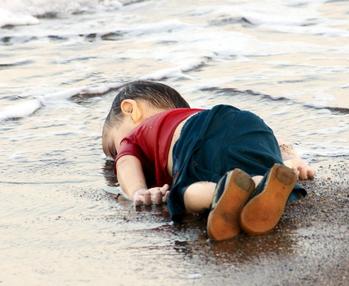
I saw mothers and fathers with desperation in their eyes and fearful children in tow. The image of a lifeless little boy washed up on a sandy Mediterranean beach still haunts me.


Syria was home to the oldest population of Christians on earth, and Christians were caught in a sectarian and political power struggle between largely Muslim factions fighting for and against Democracy. Both Christians and Muslims fled from the conflagration between the deadly governmental crackdown against the popular rebel uprising, and the ruthlessly uncompromising, opportunistic butchers of ISIS who joined in the fight.

Though many of the refugees were Christians caught in the cross fire, and the though the rebels fought for Democracy, President Obama resolutely refused to open American borers to more than a handful of Syrian refugees. As the flood of humanity streamed into Turkey and Europe, we stood aloof.

I was torn. The throngs of young and angry Muslim men mixed with desperate parents and fearful children pulled me in different directions, and I didn’t know how to respond.

I had recently done an apologetic study of Christianity vs. Islam, and my concern about the angry, displaced Muslims was keen. President Obama and the Democratic majority acted as if the moral fabric of the universe would rend in two if we verbalized what everyone knew and thought: that angry young men indoctrinated by radical Islam are dangerous.

Yet, the faces of those parents and children and the haunting visage of the 3-year old Alan Kurdi lying lifeless and washed up on a Mediterranean shoreline begged for a compassionate response.

I realized in that conflict of opposing strains of response to the Syrian crisis that I really had no idea how a Christian should look at these things. I realized that I didn’t know what, if anything, a robust reading of Scripture might suggest.

So, I did what I should have done a long time before that. I did a deep dive into what the Bible has to say about immigrants.

For anyone who does not honor or respect or believe in the Bible, this won’t mean much to you. For me, it was important to know whether the Bible addressed the subject and, if so, what the Bible has to say about it.

Continue reading “What is the Attitude Christians Should Have on Immigration?”

In Response to the State of Our Culture, Do We Carry the Cross or the Sword?

Jesus told us to follow him by picking up our crosses, but many of us today are picking up our swords.


I recently heard Tim Alberta say that some modern evangelicals have picked up a sword, and that sword is Donald Trump. Such a sword is needed for success in a culture war, and a culture war mentality drives the politics of many, if not most, of evangelicals today.

Many evangelicals are concerned, if not fearful, of current cultural trends. People are pulling away from and rejecting traditional Christian values in the US. The change has been rapid (as far as cultural trends go). American society is going the way of Europe and Canada in letting go (and outright rejecting) Christian labels, overtly Christian thinking, and church attendance.

Perhaps, nothing demonstrates the cultural movement away from Christianity in the United States like the book, The Nones: Where They Came From, Who They Are, and Where They Are Going, by Ryan P. Burge. The author says that only five percent (5%) of Americans claimed “no religion” in a 1972 poll. That number rose to over twenty three percent (23%) by 2018. This made “nones” as numerous as Catholics or evangelicals in the US in 2018.

Nones are predominantly young Americans, but this trend does not just affect the nation’s youth, and it has picked up momentum since COVID. Robb Redman reports from various sources on community trends and culture for worshipleader.com, including the following:

  • 70% of Americans were church members in 1999 (Gallup);
  • Less than 50% of Americans were church members in 2023 (Id.);
  • 45 million Americans have stopped going to church in that time;
  • 41% of Americans 39-57 went to church regularly in 2020 (Barna);
  • 28% of Americans 39-57 went to church regularly in 2023 (Id.).

Ryan Burge partnered with Jim Davis and Michael Graham to explore the reasons for this precipitous decline in church membership and attendance and the rise in self-described nones in their recent book, The Great Dechurching. This book has become the topic of much conversation in the short time since it was published. I haven’t read the book yet, so I posed the question, “What are the top five reasons people have stopped going to church, listed from most common to least common”, to two different AI platforms. The results from Bing Co-Pilot are as follows:

  1. Judgmental attitudes (87%)
  2. Distrust of organized religion (74%)
  3. Too focused on Money (70%)
  4. Busy schedules (67%)
  5. Loss of Habit (58%)

The Co-Pilot response summarized studies done by the Pew Research Center, Gallup Polls, the Barna Group, the Public Religion Research Institute and various academic studies to generate this list. I note that the first three reasons people have given for not attending church are issues with the Church I am referring to the Church (capital C) because I don’t know how this breaks down among denominations. The other two main reasons are unrelated to the Church; they reflect personal and societal lifestyle issues.

Chat GPT reported different results, citing some of the same sources (Pew and Barna) and some different sources (General Social Survey and books and articles, generally, including Sociology of Religion by Diana Butler Bass, an academic book). The Chat GPT list is not as straight forward:

  • “A growing disconnection with church teachings or religious beliefs” (about 60%-70%);
  • “Negative experiences, such as feeling judged or encountering hypocrisy” (about 30%-40%);
  • “A perceived irrelevance of church” and disconnectedness of the church to modern issues (about 25%-35%);
  • Busyness, lifestyle, time constraints, and changing priorities (about 20%-30%); and
  • Exploring alternative spirituality and religious practices (about 15%-25%).

Again, the first three (3) (and the most prominent) reasons for not attending church deal with the Church, itself. Worldviews are shifting away from the views held by the Church (which seems to indicate we are losing this “culture war”). The Church is perceived as disconnected from modern life and the modern world and not relevant to it, and the Church is perceived as overly negative and hypocritical.

The one area of overlap is the high percentage of people who list judgmental attitudes, including negative experiences and hypocrisy) as major reasons of not attending church. This is obviously a key issue (ranking 1st and 2nd respectively).

I find this to be highly problematic for the Church because the Paul plainly said the Church should not be (presently) judging the world (according to Paul (See What Business Do We Have Judging the World?)) And, Jesus said we should be known by the love we have for each other.

It seems pretty obvious to me in my own anecdotal experience that the American Church, generally, has some significant issues in this regard. We are not following Paul’s instruction not to judge the world, and we are failing to love each other well.

I recently watched a Gavin Ortlund critique of fundamentalism in the Church today that focuses on these issues. He says it well when he describes a segment of the Church that is focused more on what followers of Christ should against, rather than than what we should be for. When our focus is on the negative, our positive message is likely to be eclipsed and obscured and it lost in the noise.

I realize, of course, that this “indictment” of the Church generally, is a very broad brush. The church I attend does not fit this mold. Most of the Christians I have close relationships with do not fit this mold. We don’t have to look very far or deep on social media, however, to see evidence of judgmental attitudes, hypocrisy, and negativity.

It’s interesting to me that resources Co-Pilot pulled from identify more negatives (distrust of organized religion and too focused on money) in the top three reasons for not going to church, while the Chat GPT sources identified “growing disconnection with church teachings or religious beliefs” and perceived irrelevance of church” and disconnectedness of the church with modern issues. Distrust and money-focused have nothing to do with message, but disconnection with church teachings and a perceived irrelevance with modern issues has everything to do with message (theology).

Exploring alternative spirituality and religious practices (the 5th reason noted by the Chapt GPT response is related to the disconnection responses. I don’t know whether these things are causal or just symptomatic. If people were finding what they were looking for in church, they wouldn’t disconnect and look elsewhere. If their church experience wasn’t negative, they might still be connected.

On the other hand, both sources identify other things that are going on. Busyness, lifestyle, time constraints, and changing priorities are “neutral” pressures that are affecting not just churches, but service organizations, fraternal organizations, and other traditional ways people have gathered together.

We see a spike in this trend of disconnection from Church membership and attendance after COVID (pun intended). COVID seemed to supercharge changes that were already in the works in many areas of life. People were already disconnecting from face-to-face contact with other people with the proliferation of hand-held devices and social media going back at least to 2012. COVID isolated people even further.

Sociologist, Jean Twenge, finds sharp changes in teen behavior and mental health starting in 2012, which she attributes to teen use of smartphones and other hand-held devices. Her findings about the changes in the behavior of teens is a yardstick to measure the pulse of society.


A published interview with Twenge as Time Magazine’s Person of the Week, reports that “Gen Z is in the grips of a historic mental health crisis, with teenagers struggling with record levels of depression, anxiety, and loneliness.” Twenge, who has studied many generations of teens, discovered “big and sudden” changes in Gen Z starting around 2012, when hand-held devices became normalized among teens.

Those changes included, among other things, a doubling in the diagnosis of clinical depression among 12-17 year-olds from 2011 to 2019. At the same time, teens reported significantly less face time with other people corresponding significantly with more screen time. I have heard her say that teen pregnancy is down (which seems to be a good thing) because teens spend more time on their phones in their bedrooms alone than spending time with each other (which is problematic).

So, what does this have to do with Donald Trump and Christians fighting a culture war to try to preserve their power and influence in a society that seems to be pulling away from us? I seem to have wandered far afield, but now I am going to pull it in and get to the point.


It seems our culture needs Jesus more than ever. At the same time, people are do not see the benefits of knowing Jesus. At the very time when people need the grace and love of Christ most, people are being pushed away by judgmental attitudes and negative experiences. As people are struggling with isolation, polarization, and mental health issues, the Church is becoming more irrelevant, disconnected, and inaccessible to them.

Ironically, it seems to me, we are not only losing this culture war, the culture war seems to be the very thing that is pushing people away and isolating them from us. As we are circling our wagons defending ourselves against these “outsiders”, and attacking them from behind our theological walls, we have lost sight of the fact that Jesus sent us out into the world to bring the Gospel to the lost.

We are failing in our most critical mission.

Continue reading “In Response to the State of Our Culture, Do We Carry the Cross or the Sword?”

How Do I Help My Brother with a Speck In His Eye When I Have a Log In My Own Eye? Judging Rightly

We cannot grow in maturity and holiness if our focus is on the sin of other people. We have a hard enough time recognizing and dealing with our own sin!


I have written previously about the parable of the log in a person’s eye who sees a speck of saw dust in another person’s eye. (See 8 Important Points about Judging and Judgment) Jesus says that we need to be careful about focusing on the specks in others’ eyes because of the logs in our own eyes. (Matthew 7:1-5)

Jesus is expressly talking about judging others, but the implications are much larger than that. They are about loving others, especially our brothers and sisters in the Lord. It is also about our posture to the world (those who do not know God in Christ, who gave Himself up for us).

We might be tempted to read what Jesus said and walk away thinking that we should not judge other people. That isn’t quite what Jesus says. Jesus says be careful in the way you judge others because the way you judge others is the way you will be judged. (Matt. 7:1-12)

We can’t get away from making judgments, which is nothing more, really, than the conclusions we reach based on what we know. We make judgments about innumerable things every day.

This is also not about Judgment (capital J). Only God has the authority to judge people, and God alone is a true Judge who can weigh all the facts accurately and completely. God alone knows our thoughts and our hearts. We can only judge by appearances, and we judge only from ground level.

When we see a speck in our brother’s eye, the parable should cause us to consider the logs in our own eyes, first. It’s a matter of perspective. What seems like a speck in someone else’s eye appears like a log when that speck is in my eye. Even so, humans have an unusual capacity to get used to those “logs” and forget they even exist.

One point of this parable is that we need to be dealing with our own sin as a matter of first priority. If sin is discovered in our brother, that discovery should cause us to consider first our own sin. I believe this is a fair reading of what Jesus is saying.

Jesus also does not tell us to leave our brother alone with a speck in his eye. Rather, he tells us to be considerate as we determine what to do about. We need to start by considering our own sin sinned (missing the mark) in our own lives. Then we need to approach our brother in the right attitude of heart, with empathy, realizing that we are not any better then our brother who’s speck we have observed.

Today, I have read what Paul says in Galatians 6:1-2 in my daily reading, and the parable about the log and the speck comes rushing back to me. I realize that Paul’s admonition in Galatians 6:1-2 harmonizes with what Jesus was taught his disciples in this parable:

Brothers and sisters, if a person is discovered in some sin, you who are spiritual restore such a person in a spirit of gentleness. Pay close attention to yourselves, so that you are not tempted too. Carry one another’s burdens, and in this way you will fulfill the law of Christ.”

Galatians 6:1-2 NET (Emphasis added)

I previously observed that we must be in relationship with others to do what Jesus has said (judge rightly). We should not be approaching anyone about a speck in their eye if we do not do it from the perspective of loving relationship (as brothers and sisters). We have to do this in the right relationship, or we will not do it right.


Continue reading “How Do I Help My Brother with a Speck In His Eye When I Have a Log In My Own Eye? Judging Rightly”

Opinions, Heresy & Unity in Christ: Judging and Despising Believers

Let us pursue what makes for peace and for building up one another

I am not sure how to write about the things that I believe God has laid on my heart today. I will start, though, by explaining the combination of things that give rise to my thoughts, and I will try my best, relying on the leading of the Holy Spirit and whatever wisdom I have, in humility and full reliance upon the grace of God, to address these things that weigh on my heart today

My thoughts rise out of a combination of my daily scripture reading and regular podcast listening. I have been reading through the New Testament on a year long plan created by the Bible Project. I am in Romans 14 today. These are some excerpts from Romans 14 that stand out:

“Now receive the one who is weak in the faith, and do not have disputes over differing opinions….
“Who are you to pass judgment on another’s servant? [speaking of followers of Christ as servants of God]….
“But you who eat vegetables only – why do you judge your brother or sister? And you who eat everything – why do you despise your brother or sister? For we will all stand before the judgment seat of God….
So then, let us pursue what makes for peace and for building up one another.”

Romans 14:1,4, 10, 19

I have not reproduced the entire Chapter here to be efficient with space, but I encourage anyone who wants to dig in deeper to read all of Romans 14. I have added emphasis where the text has spoken to me.

Paul’s example of eating meat vs. not eating meat is one that doesn’t divide people in churches today, though it might divide vegans and vegetarians from “meat eaters” in our contemporary secular society. (What we eat and our religiosity about it has divided people, I guess, for 2000 years.)

“One person believes he may eat anything, while the weak person eats only vegetables. Let not the one who eats despise the one who abstains, and let not the one who abstains pass judgment on the one who eats, for God has welcomed him.”

Romans 14:2-3

Frankly, people tend to become divided over just about anything and everything. Paul uses the example of eating and of sacred days to illustrate his point about not despising and not judging each other when we have disagreements:

“One person esteems one day as better than another, while another esteems all days alike. Each one should be fully convinced in his own mind. The one who observes the day, observes it in honor of the Lord. The one who eats, eats in honor of the Lord, since he gives thanks to God, while the one who abstains, abstains in honor of the Lord and gives thanks to God.”

Romans 14:5-6

Paul says that each of us must give account to God for our own lives. Each of us must follow our own consciences that guide us with the help of the Holy Spirit, and we need to allow space with an attitude of grace for other people to work out their own salvation with fear and trembling in the same way.

Of course, we also have the Holy Spirit to guide us. How our own consciences and the Holy Spirit guide us is a bit of a mystery, though. They are not the same things. We have the Holy Spirit, but we also have our individual consciences. Paul references them both in his writings, and each plays a part in the way we understand and follow Christ in our lives.

The Holy Spirit, of course, is infallible, but our consciences are not.

And, that is the rub. We have this treasure in earthen vessels. We are finite beings, and our individual (and collective) perspectives are limited by the age we live in, the country and culture we are born in, our own abilities, experiences, and myriad factors that influence and shape us. How we internalize and process what the Holy Spirit “says” to us is going to vary from person to person and from people to people.

I recently heard someone say that we each approach Scripture from where we sit. People sit in difference “places” in respect to the Gospel at different times in history, in different cultures, and in different areas of the world. Experts in missions warn of the danger of unwittingly smuggling in our own human perspectives when we take the Gospel to different people groups.

The differences in perspective are not just factors for disparate people groups in far flung regions of the world. People in the seemingly homogenous sphere of the United States of America in the 21st Century are not so homogenous – even among Bible-believing, Jesus-loving people.

I’ll give you an example that stopped me in my tracks in 2016. Polls report that about 80% of people who identify as evangelical (which means white in political polls) voted for Trump, while 80% of blacks who attend church on a regular basis and are theologically conservative did not vote for Trump.

These are people who would largely agree with each other on traditional Christian values, but they “sit” in different places in respect to how they live out following Jesus politically. For white evangelicals, abortion is the political benchmark. For churchgoing blacks, racial and minority issues are paramount.

I should not have to say that God grieves all injustice and all sin. It’s easy to label each other “white supremacists” or “woke progressives” and miss the obvious fact that we all claim Jesus as our Lord and Savior. We all have the Holy Spirit to guide us, and we do the best we can from where we sit to follow the Spirit and our consciences.

Having listened to many black voices since 2016 (because I realized I was missing something), I learned that most black Christians believe that abortion is wrong. They believe in traditional family values, and they are at odds with the Democratic party on those issues. I also learned that a large segment of those “white evangelical’s” in political polls don’t even attend church more than once or twice a year, if that.

Another less controversial example from my own life illustrates what Paul talks about in Romans 14. I grew up in a family of responsible social drinkers. Family gatherings included a “cocktail hour” before meals, but I never observed family members getting drunk.

During my rebellious youth, and before I became a believer, however, I was a reckless, irresponsible drinker. I drank often and to great excess. When I became a Christian, I didn’t touch alcohol for many years, and I was tempted to believe that no one else should either.

My views on this subject have been tempered by the wisdom that comes with age and experience and the gentle grace of the Holy Spirit. Paul would say I was weak in my faith, and I admit that I became judgmental over it because I projected my weakness onto everyone else.

Paul says in Romans 14 that people who are weak in their own faith become judgmental. The danger of people who have a strong faith and a secure conscience is to despise those who are weaker. Paul urges us to resist both tendencies.

But, let me get to my point. I am increasingly concerned with judgmental attitudes over issues on a par with eating, drinking, and sacred days are doing damage in the modern Church. Paul would say that we need to focus our attention on “pursu[ing] what makes for peace and for building up one another.” Unfortunately, we spend far too much energy judging each other and tearing each other down.

This is nothing new, of course. Paul wrote an entire letter to the Church in Corinth that he led off with this exhortation:

“I urge you, brothers and sisters, by the name of our Lord Jesus Christ, to agree together, to end your divisions, and to be united by the same mind and purpose.”

1 Cor. 1:10
Continue reading “Opinions, Heresy & Unity in Christ: Judging and Despising Believers”