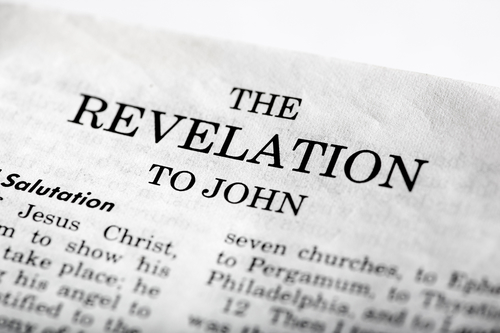
In Progression of Revelation in the Bible Part 1, I made the point that the Old Testament Scriptures anticipate and point toward Jesus. Jesus said he was the fulfillment of the Law and the Prophets. The thrust of the Scriptures from the Old Testament to the New Testament also progresses from physical to spiritual, from law to grace. I will pick up on those themes and get into the progression from law to grace in this piece.
Before doing that, though, I am taking a short sidetrack to recall an observation I made years ago as a college freshman in a world religion class. As I as I studied (and read) the Bible for the first time in my life I realized that the fabric of the Scripture, from beginning to end, is an intricately woven tapestry. I wasn’t a believer then, but I could see (as a budding English Literature major) the incredible, unlikely harmony of the Scriptures.
I say unlikely, because the Old Testament and New Testament are a combination of writings that were penned by dozens of people and collected over a period of many centuries. All of them wrote down the revelation each one of them received from God. The “book” of the Bible would be, perhaps, the finest masterpiece of cohesive literature ever written if it were written by a single author, but it’s cohesiveness and internal integrity is all the more noteworthy by the fact that it was written by dozens of authors across a large expanse of time.
People who understand the Bible only on a surface level claim it is full of contradictions. We should hardly find it surprising if it was full of contradictions, having been written by so many people over such a long time, but the thing is: a deeper reading of the Bible reveals an uncanny, transcendent, incredibly subtle and nuanced consistency and harmony.
The intricacy and harmony of the Bible is quite stunning given its authorship: the fact that it was written by people, and not by the hand of God Himself.
And this fact led me to another thought when I first read the Bible in its sweep from beginning to end: if God is God, 1) He could reveal Himself in a way that creatures made by Him could understand His communication; and 2) He could preserve the integrity of that communication. Why? Because He is God.
I didn’t become a believer immediately at that point in my life, but I could not deny the uncanny tapestry of the Scriptures.
I recall these things as I consider the Qur’an, and the progressive nature of the two religions’ Scriptures. In the Qur’an, statements in the later sura expressly contradict and abrogate (negate) earlier sura. The later sura are also the problematic ones in which we see statements about killing infidels, etc.
In the Bible, by contrast, we see the earlier Scriptures affirmed, explained and extended in the person of Jesus. We see a progression from Law to the spirit of the law, and from law to grace, and the seeds of that progression are there in the very beginning.
Continue reading “Progression of Revelation in the Bible Part 2”










 Navigating by Faith