What Was the Sin of Sodom and Gomorrah?

A clue is that people cried out in distress

It is probably not exactly what you think


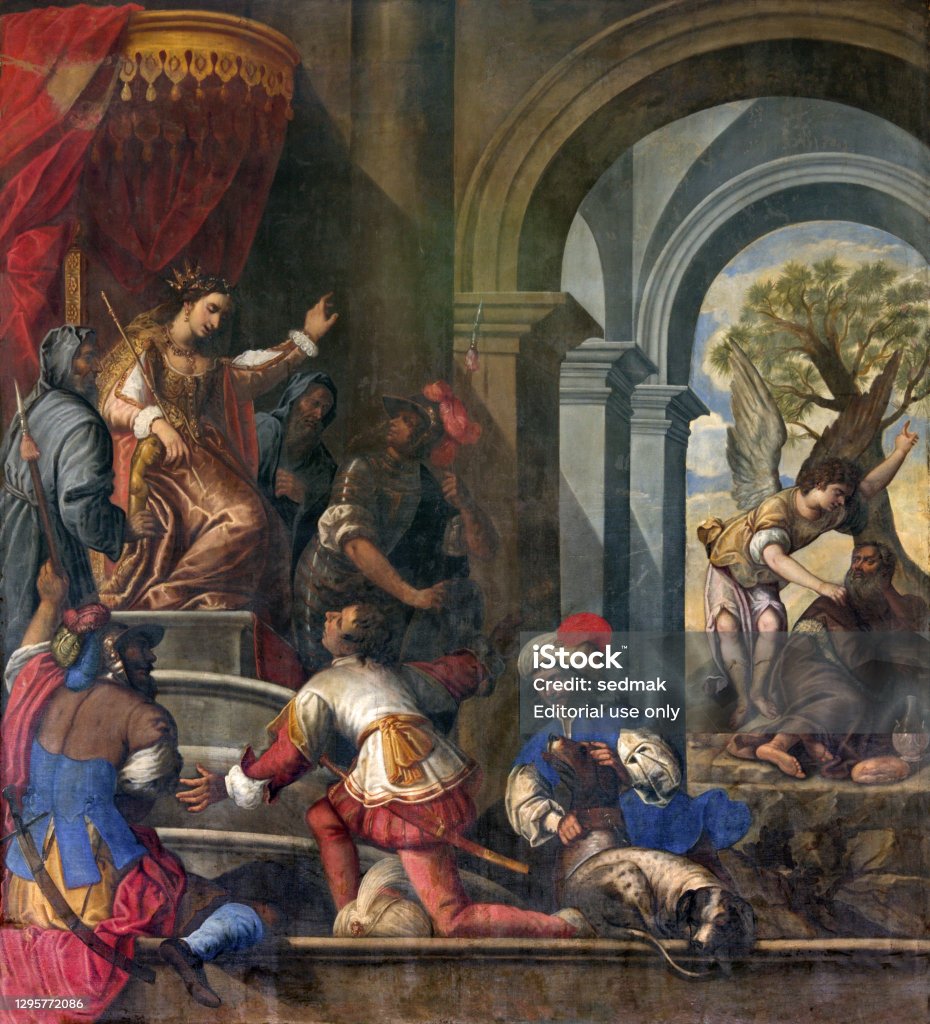
I have wanted to dig into the story of Sodom and Gomorrah for a while now, ever since someone suggested to me that the story isn’t what I think it is. Everyone knows the reference to Sodom and Gomorrah, right? God smote those villages with fire and brimstone because of homosexuality.

That’s what I was taught. At least, that is what I always believed, but I have learned there may be more to the story. The truth is right where we should expect to find it: in the Bible. If you are intrigued as I was, then read on.

First, let’s review the story in Genesis 13. Abram and Lot flourished, and their clans and flocks grew in size in the land God promised Abram. There was tension among their entourages, though, so they decided to separate and spread out. (Gen. 13:5-9)

“Lot looked around and saw that the whole plain of the Jordan toward Zoar was well watered, like the garden of the Lord, like the land of Egypt.” (Gen. 13:10) Lot, therefore, chose move to Sodom and Gomorrah in the plain of Jordon, while Abram remained in Canaan.

Although the land was like a well watered garden, “the people of Sodom were wicked and were sinning greatly against the Lord.” (Gen. 13:13) Thus, we shouldn’t be surprised when that sin catches up to the people of Sodom and Gomorrah.

Before we move on, though, we should acknowledge that Sodom and Gomorrah was a lush, fertile place. It was inhabited with “wicked” people, yet Lot moved there anyway because it was a desirable place to live. Perhaps, the allure of the things of this world and the temptation to associate with people who have accumulated wealth, position, and influence was great, in spite of any misgivings Lot may have had.


This may provide some explanation for why Lot’s wife looked back in defiance of the angel’s warning. She may have regretted leaving.


She may have wanted to return to the abundance and comfort that drew them there, and that desire to hold on to abundance and comfort may have been her undoing.

We should also understand the backstory in Genesis 18 before we get to the story of Sodom and Gomorrah in the next chapter. Before some angles visited Sodom, they visited Abram. Abram saw the three “angels of the Lord” from his tent. He went out to meet them, bowed in respect, and insisted they come to his tent to be refreshed. Abram and Sarai spared no expense to show them hospitality, and the angels returned the favor by affirming God’s promise to the elderly couple: promising that Sarai would bear a child within a year. (Gen. 18:1-15)

Before the angels left, the angels told Abram the reason they came: to investigate Sodom and Gomorrah because “the outcry against Sodom and Gomorrah [was] so great and their sin so grievous.” (Gen. 18:20) This “outcry” that reached the LORD is the first clue to what was going on there. (Gen. 18:21)

The Hebrew word that is translated “outcry” in this verse is za’aq. It mean a shriek, cry for help, cry of distress, lamentation. Thus, something was going on in Sodom and Gomorrah that was causing people to cry out in distress.

The word, outcry, in Genesis 18 should bring Exodus 2:23 to mind where God heard the Israelites cry out. In both cases, in Egypt and in Sodom & Gomorrah, God responds to an outcry of the people living there.

They same word, za’aq, is used in both passages. God responded to the Hebrews cry for deliverance by sending Moses, and God miraculously rescued them from the land of Egypt. In Genesis 18, God similarly responded to a cry for deliverance by sending His angels.

The parallel nature of these stories is important to recognize. The people cried out in distress, and God responded. Parallel stories and themes run throughout the Bible, and we should pay attention to the when they appear, because they usually mean something.


We know why the people cried out in Egypt – because Pharaoh enslaved and mistreated them. The Bible is relatively silent, however, on the circumstances in Sodom and Gomorrah.


If we pay close attention, though, we can find some clues!

In Genesis 19. Lot repeats the pattern of Abram’s hospitality: Lot saw two angels at the city gate, and he went out to meet them, like Abram did. Lot greeted them with respect the same way Abram did, and Lot insisted they come to his home where he prepared a feast for them, just as Abram did. (Gen. 19:1-3) These stories appear one after the other in the biblical narrative, and the parallel symmetry signals that we should pay attention.

Abram and Sarai, by the way, are known for generous hospitality. The generous hospitality of Abram is legendary in Jewish and even Muslim lore. Generous hospitality was a key distinctive of God’s man of faith.

Lot, who was Abram’s kin, demonstrated the same kind of generous hospitality, but the story takes a bad turn. Everything seems great until the men of Sodom surround Lot’s house and demand that Lot bring the angels out to them, “So that we can have sex with them.” (Gen. 19-4-5) When Lot refused, they turned on Lot, This is what they said:

“This fellow [Lot] came here as a foreigner, and now he wants to play the judge! We’ll treat you worse than them.”

genesis 19:9

Most of us, I think, assume the sin of Sodom was primarily sexual in nature. The story certainly seems to suggest that if we miss the clues to what was really going on. The symmetry of the parallel stories leading up to the story of Sodom and Gomorrah suggest that something else is going on. The people crying out in distress, like the Jews in Egypt is another clue, and what the townspeople say to Lot is still another clue.

The clues are in the context and more specifically in the contrast between the way Abram and Lot treated the foreigners/angels and the way the townspeople in Sodom & Gomorrah treat them. Abram and Lot go out of their way to greet the angels, bow to them in respect, make them feel welcome, and show them generous hospitality. The men of Sodom react the opposite way: they respond with hostility. They are angry that the foreigner in their midst (Lot) invited foreign guests into his home, and they they came to punish and humiliate those guests by violating them sexually.

I never noticed these clues in the text before. They cast a different light on the story. It seems that the story is less about men wanting to have sex with the foreigners than it is about brutish inhospitality.


This was a lynch mob. They came to run the foreign guests out of town and to demonstrate their extreme displeasure with Lot for inviting them in to his home. The men wanted to humiliate, violate, and punish Lot’s foreign guests in the worst possible way, and they wanted Lot to understand why: because Lot was a foreigner, and these men were foreigners, who were not welcome in their town.


As side note, I would not likely have noticed all this but for the book I am reading by James K. Hoffmeier, The Immigration Crisis: Immigrants, Aliens, and the Bible. He cites to the Sodom and Gomorrah story as an example of the way people in the Old Testament control their borders and their cities. (See also Judges 19-21 in which a similar scene plays out in Gibeah where the sons of Benjamin treat the Levites passing through in exactly the same way.)

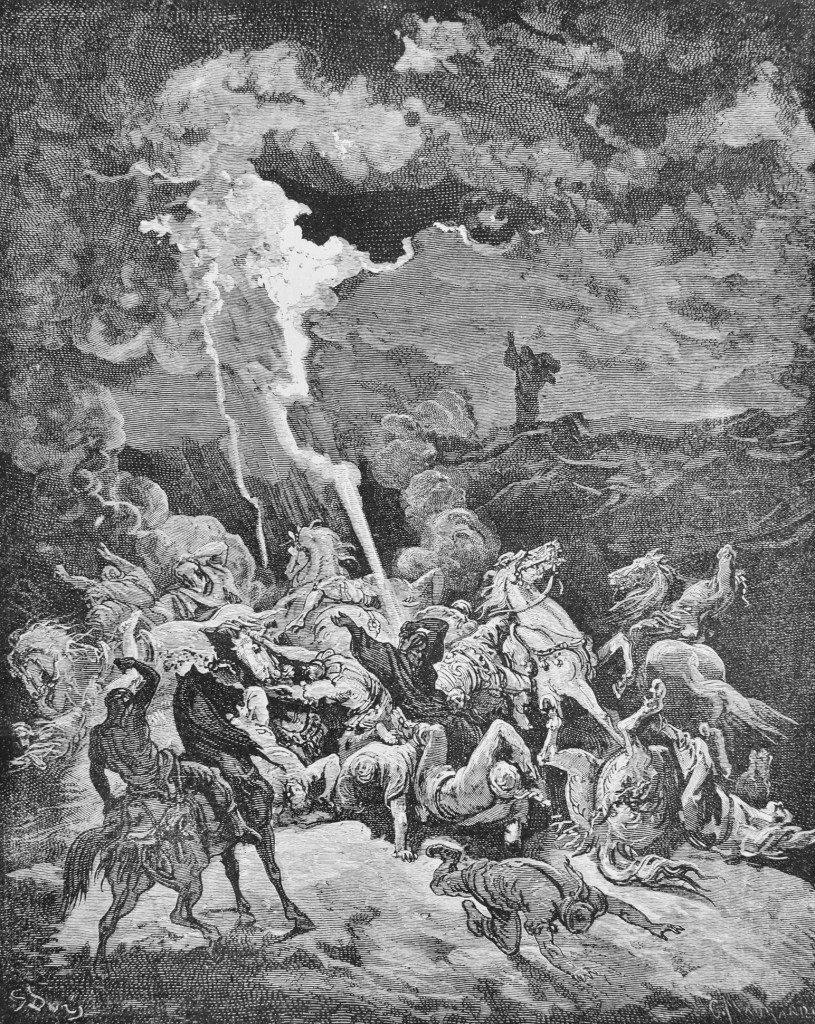
This was the last straw for God. The angels returned the favor Lot showed them by protecting him and his family and by warning them to get out of town quick. As soon as Lot and his family were out of town, “the Lord rained down burning sulfur on Sodom and Gomorrah….” and reduced it to smoke and ash (Gen. 19:10-28)

Aside from some other details that do not seem directly relevant at the moment, that is the story of Sodom & Gomorrah. Most of the references to Sodom & Gomorrah in the rest of the Bible are used as warnings without much commentary, except for three passages. These passages tell the rest of the story.

Continue reading “What Was the Sin of Sodom and Gomorrah?”

On the Flying Fickle Finger of Fate and Reeds Blowing in the Wind

Should Christians be influenced by shifting political winds?


I recall today the Flying Fickle Finger of Fate award from Rowan and Martin’s Laugh In back in 1968. When I was 8 years old, Laugh In was a hip variety show of biting political humor that was mostly lost on my young mind. The award was a dubious honor ceremoniously presented each week to public figures, corporations, and government agencies for ridiculous “achievements”.


The Fickle Finger of Fate suggests the unpredictable and arbitrary nature of luck or destiny. As finite human beings, we don’t control our fates, and we cannot know the twists and turns that await us in the future.


The award has an ironic backstory. Star Trek was moved from the coveted 7:00 PM spot to the dreaded 10:00 PM “death slot” by NBC to make room for Laugh In. The hip, comedic variety show, however, was popular only for a relatively a short stint from 1968 to 1973 and has largely been forgotten by all but impressionable young minds.

Star Trek, on the other hand, went on to become an iconic science fiction series. It was ahead of its time, and it became a hit in off-network syndication, inspiring sequels and movies for almost 50 years.

Fate is certainly a fickle thing. Driven by polls and ratings to attract the largest audience, NBC obviously did not foresee the lasting success of the Star Trek brand. They also did not expect the short-lived lifespan of their cutting edge variety show that replaced Star Trek.

As Christians, we don’t believe in fate, of course. We don’t believe in random chance. We believe in God who designed and ordered the universe and established our place in it.

The future, however, is equally unknowable to us. As the writer of Ecclesiastes said thousands of years ago, “God set eternity in the heart of man, but not so that he can know the end from the beginning.” (Ecc. 3:11). The Prophet Isaiah said it this way,

“’For my thoughts are not your thoughts,
    neither are your ways my ways,’
declares the Lord.
‘As the heavens are higher than the earth,
    so are my ways higher than your ways
    and my thoughts than your thoughts.'”

Isaiah 58:8-6

God famously, but lovingly, rebuked Job for insisting on understanding things he could not fathom. As with Job, we are invited to have faith and to trust God, but we have more reason for hope and trust than Job, because we know our redeemer lives. He rose from the dead!

We understand that God can be trusted because of His willing demonstration of love for us in emptying Himself to become a man and laying down His life for us. We have no option but to trust Him, but we know we can trust him because of His love for us that He demonstrated on the cross.

Still, we easily are easily swayed and influenced by external pressures. We may think that we understand the times when we are only blowing in the shifting winds of “fate” (powers and principalities that want to blow us off course).


Paul says these powers and principalities are operative in the world. They are “spirits of the age” that play us like instruments if we are not grounded in the Word of God and led by His Holy Spirit.

Jesus used the phrase, reed blowing in the wind, when he addressed a crowd that went into the wilderness to see John the Baptist: “Did you you go to see a “reed swayed in the wind?” (Matt. 11:7-18)


John the Baptist was not just a curiosity. He was not a fleeting personality (like Rowan & Martin) with no lasting importance or purpose. He was the messenger of the Messiah, foretold by the prophets preparing the way for Jesus, the suffering servant who would take away the sins of the world. John was an agent in God’s eternal plan, and Jesus was (and is) the key figure in that plan.

Though he was foretold by the Prophets, no one knew exactly how things would unfold – not even God’s own people. In fact, they didn’t recognize God’s Messiah or receive him when he came. (John 1:11). Crowd of common people were drawn to Jesus, but smarter and more prestigious religious leaders were not.

Many have come, and many have gone. Many have claimed to be the harbingers of promise and special knowledge in their times, but many have proven wrong in their predictions.

The reality is that we do not know what we do not know. We must ever remain open to letting God’s Word shape us and direct us, and we must ever remain attentive to allow the Holy Spirit to guide us in applying His Word in our times.

Even now, smart people – including learned, religious people – believe and act as if they know the times. It is the same in every age and every generation, but we are easily swayed and blown by the winds of fate and human influence that seek to drive the course of history not always in ways that are aligned with God’s plan and purposes. To that generation, and to ours, Jesus said:

“They are like children sitting in the marketplaces and calling out to others:
‘We played the pipe for you,
    and you did not dance;
we sang a dirge,
    and you did not mourn.’”

Matt. 11:16-17

Human tendency is to trust ourselves. The smarter we are, the more we trust in our own ability to figure it out. Perhaps, this explains why so many scientists and PhD’s are atheists. Perhaps, this is why so many of the religious leaders in the time of Jesus were blind leaders of the blind. Perhaps, we are susceptible to the same error.


We don’t know the end from the beginning. We don’t know God’s thoughts unless He reveals them. God doesn’t dance to the tunes we play. Our tunes are often just riffs on the spirits of our age changing as those spirits change their tunes that we follow.


I reflect on these things as I think through changes in the winds influencing the evangelical church in my lifetime.. We need to be grounded in the Word of God and in tune with the Spirit of God. (See Hearing the Voice of God for Today) if we are not, we become reeds blowing in the wind.

A few weeks ago, I created a short list of issues on which Evangelicals (my tribe) have swayed in the political winds during my lifetime. I have done some research to confirm and correct my intuitions, and that exercise has confirmed my suspicions that we have, indeed, been reeds blowing in the political winds over the last 60 years. Following are just a few examples.

Continue reading “On the Flying Fickle Finger of Fate and Reeds Blowing in the Wind”

Putting Experience into Gospel Perspective

Love, truth, and personal experience


I think most people are skeptical of other people’s experiences. It’s only natural to be skeptical of experiences we have not had and do not share. When people have had experiences in common with or similar to us, we are much less skeptical. It’s also natural to assume the validity and legitimacy of experiences that we share in common or similar to the experience of others.

We have an affinity for people with whom we have shared experiences and for people whose experiences are similar to ours. Shared experiences bind us together. Those shared experiences affirm us and become part of our individual and common identities.

We let our guards down with people with whom we have shared experiences, and we can “be ourselves” with them. We want to affirm them because they affirm us.

These are all good things in and of themselves, but the affirmation is not always positive. Shared experiences can form the basis of co-dependency that is unhealthy and even destructive.

If we spend all our time with people with whom we share experiences, we can become insular and narrowminded. If we don’t venture beyond those circles of commonality, we may find ourselves in an echo chamber of conformation bias that blinds us to the false stories we tell ourselves and reinforces our narrowmindedness.

Common experiences can also have the opposite effect. People who spend significant time in other countries and with people not like them tend to be more openminded, more humble, and more accommodating of people who see the world differently.

As Christians, the common experience of being “in Christ” with people who are very different from us in ethnicity, native language, economic strata, age, etc. is mind and heart expanding. The usual commonalities that define us – like Jews and Gentiles, male and female, slave and free – give way to a greater identity that we find together in Christ.

Being in Christ should be a defining commonality for Christians, though we often default back to commonalities that are of lesser significance. We need to guard against that.

Jesus challenges every Christian to stretch ourselves in these things – to strive to make our shared experience in Christ the commonality that is preeminent in our lives. That commonality should be the one thing that unites us, though we may have little else in common.

Jesus also urges us to stretch back from that one commonality to engage a world that does not share that one common, all encompassing identity that unites Christians around the world. Jesus bids us to go out into the world to share the Gospel with people who do not yet share that common identity.

In doing that, we need to use other, lesser commonalities to bridge the gap, to make connection, to open doors to sharing the Gospel. Jesus is our ultimate example. In Jesus, God became flesh so that He could share in our humanness and, therefore, to connect with us so that he could share the good news with us.

We often become insular in our Christian community, however. It’s comfortable there, and the effort to connect with people who do not share the most important aspect of our lives is hard work.

We sometimes vacillate between the groups of people with whom share certain commonalities like chameleons, fitting in where we go. It’s hard to maintain our distinctiveness as Christ followers among people who do not know Jesus. Yet, this is our calling.

The religious community in the first Century was insular. The religious leaders criticized Jesus for making those human connections with the world – the tax collectors, prostitutes, and sinners of his day.

If Jesus was born today, I am convinced he would be criticized for hanging out with the LGBTQ community, Muslims, and atheists. The people in those communities would be just as critical of Christ followers as they were in the 1st Century, yet our commission is to bridge the gap to share the good news. I don’t think the dynamics were any different when Jesus walked the earth in the flesh than they are today.

We cannot let our experiences define how we operate in the world. They can be good and bad, positive and negative, helpful in living out the Christian life and unhelpful, depending on our perspective. They can define us and bind us in our closedmindedness, or they can be tools for making critical connections in furtherance of the plans and purposes of God.

My thoughts today are inspired by something Preston Sprinkle said in response to a questions posed by a listener to his podcast, Theology in the raw. Sprinkle gets much criticism from within the Christian community for his efforts to bridge gaps with the modern world – especially the LGBTQ community.

I appreciate his heart and his attempts to make connections with the “sinners” of the world. Of course, we are all sinners. We know that, but we have a hard time putting it all in perspective. It’s difficult and sometimes messy work trying to remain pure and undefiled in the world and to “go into” the world at the same time with the Gospel.

One thing that he said seemed important enough for me to write it down. He said:

“I don’t determine my theology from other peoples experiences. You can’t. Which experience are you going to choose to determine it? .. . But I do think listening deeply to other people’s experiences should shape how we think theologically, how we hold on to our theology. Listening well to other people helps us put our theology into the conversation with real people.”

If you will indulge me, I am going to try to break down what I think he is saying. I think it is critical to our role as ambassadors of Christ to get this right.

Continue reading “Putting Experience into Gospel Perspective”

Why Doesn’t God Reveal Himself to Me?

Have you prayed, and God didn’t respond?


I have heard many people say that they would believe in God if God revealed Himself to them in clear, undeniable ways. Richard Dawkins, the New Atheist, said that God would have to write a direct message in the sky before he would believe (and then, he added, he would still assume that he was hallucinating or something else before believing it).

Young children tend to believe in God innately. This is true whether children are raised in religious homes or non-religious ones and in countries that are predominantly religious and in countries that are not. Even atheist sociologists have observed this phenomenon that some people have called “universal design intuition.” (See Universal Design Intuition & Darwin’s Blind Spot)

Since the Enlightenment, the general assumption in scientific and academic circles is that children outgrow naïve faith and civilizations do too as they advance in knowledge and sophistication. Thus, the modern assumption is that we outgrow faith in God as people and societies mature.

There is some truth to that assumption as we can see anecdotally (maybe in your own life or in the lives of people you know) and from the history of Western Civilization, with evidence of declining religious belief. Still, 81% of people in the United States in 2022 believed in God (or a higher power) (as reported in a Gallup poll), and the number increased to 82% in 2023 (according to a Pew Research poll).

We have all heard about the “Great Dechurching” – the 40 million Americans who used to go to church, but no longer do. We have also heard about “the rise of the nones“, the increase in the number of Americans who are atheist, agnostic or religiously unaffiliated, which increased precipitously from 16% in 2007 to 30% by 2022!

The nones include people of every age, but the highest percentage of nones are Gen Z and millennials. These age groups have largely grown up not going to church, yet, Bible sales surged in 2024 by 22% (after years of declining sales), and that surge is attributable to first time purchasers among Gen Z and Millennials. (See Bible boom: Why are people buying so many Bibles?; and US Bible Sales Jump 22% in 2024, Driven by First-Time Buyers and New Versions: Circana BookScan)

The hint of a spiritual renewal in the West isn’t limited to young Americans. Justin Brierley has reported on and written a book about the Surprising Rebirth of Belief in God in the UK. (See The Surprising Rebirth of Belief in God: Why New Atheism Grew Old and Secular Thinkers Are Considering Christianity Again) Agnositics and atheists, at least in the UK, are rethinking their positions on Christianity in noticeable numbers.

While Brierley’s thesis is largely based on anecdotal evidence, the volume of his anecdotal evidence is impressive. He has been hosting dialogues between atheists and Christians regularly since the mid-2000’s, and his data comes from a combination of atheists who have recently cozied up to the idea of God and religion and former atheists who unabashedly believe in God now.

My writing today is inspired by one such former atheist, a bio-chemist with a robust career in science, who became a believer in his middle age. Sy Garte wrote a book about his journey from atheism to faith, The Works of His Hands: A Scientist’s Journey from Atheism to Faith, in which he explains how a combination of science and his experience led him to believe.

The science opened his mind to the possibility of God. His study of religions, philosophy, and theology led him to an intellectual acknowledgement of the likelihood of God, but his experience and willingness to embrace it brought him in the door to faith in God.


In a recent interview with John Dickson on the Undeceptions podcast, Sy Garte provides some advice to listeners who believe science holds all the answers to reality and truth by insisting that nothing in science contradicts the Bible.


If you read his whole story, he explains how science suggested the possibility of God to him, but he also emphasizes the importance of experience in belief. His acknowledgement of the role of experience, I think, is important, and it is underappreciated.

Skeptics and believers, alike, discount experience. A skeptic might chalk experience up to fantasy, a desire to believe, a disconnection with reality, or similar thinking. A believer might question the experiences of people who arrive at unorthodox beliefs based on their experiences.

Clearly, experience must be tempered by facts, science, and sound reasoning, but Sy Garte maintains that experience is good evidence, nevertheless, primarily for the one who has the experience. In doing so, he acknowledges the objection by the person who hasn’t had such an experience, and his response to the person who hasn’t had an experience with God is what I want to focus on today.

Continue reading “Why Doesn’t God Reveal Himself to Me?”

What is the Attitude Christians Should Have on Immigration?

A Christian’s attitude on immigration should be informed by the Bible


In 2014, during the Syrian refugee crisis, I watched the flood of humanity escaping from the ruthless butchery that occurred during that time in that region of the world. I recall the controversy in the various countries to which this seemingly unending stream of people fled in desperation and anger. Some countries like Germany opened the floodgates; other countries like Hungary closed their borders.

I empathized with people who didn’t want their countries overrun by foreign refugees. I watched the mass of displaced foreigners overwhelming the roads and rails in Europe, and I read stories of mobs of young Arab men taking out their anger on the countries they entered and women they encountered there.


I saw mothers and fathers with desperation in their eyes and fearful children in tow. The image of a lifeless little boy washed up on a sandy Mediterranean beach still haunts me.


Syria was home to the oldest population of Christians on earth, and Christians were caught in a sectarian and political power struggle between largely Muslim factions fighting for and against Democracy. Both Christians and Muslims fled from the conflagration between the deadly governmental crackdown against the popular rebel uprising, and the ruthlessly uncompromising, opportunistic butchers of ISIS who joined in the fight.

Though many of the refugees were Christians caught in the cross fire, and the though the rebels fought for Democracy, President Obama resolutely refused to open American borers to more than a handful of Syrian refugees. As the flood of humanity streamed into Turkey and Europe, we stood aloof.

I was torn. The throngs of young and angry Muslim men mixed with desperate parents and fearful children pulled me in different directions, and I didn’t know how to respond.

I had recently done an apologetic study of Christianity vs. Islam, and my concern about the angry, displaced Muslims was keen. President Obama and the Democratic majority acted as if the moral fabric of the universe would rend in two if we verbalized what everyone knew and thought: that angry young men indoctrinated by radical Islam are dangerous.

Yet, the faces of those parents and children and the haunting visage of the 3-year old Alan Kurdi lying lifeless and washed up on a Mediterranean shoreline begged for a compassionate response.

I realized in that conflict of opposing strains of response to the Syrian crisis that I really had no idea how a Christian should look at these things. I realized that I didn’t know what, if anything, a robust reading of Scripture might suggest.

So, I did what I should have done a long time before that. I did a deep dive into what the Bible has to say about immigrants.

For anyone who does not honor or respect or believe in the Bible, this won’t mean much to you. For me, it was important to know whether the Bible addressed the subject and, if so, what the Bible has to say about it.

Continue reading “What is the Attitude Christians Should Have on Immigration?”