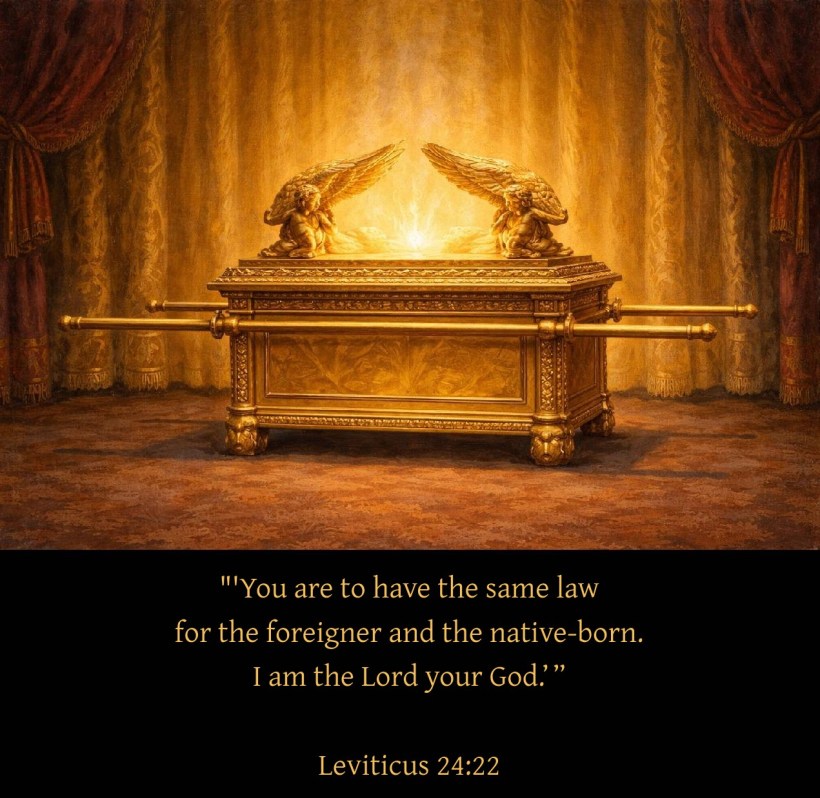
When You Are Bitterly Disappointed and Angry at the World

God waits to be gracious


The Book of Jonah is an important story, but not for its historical significance. Whether the story is historical fact is not what’s important. If that is our only focus as we read and think about Jonah, we are missing the point.

Jonah is the story of a reluctant prophet. When God commands him to go to the wicked City of Nineveh and warn them to repent to avoid judgment, Jonah heads the opposite direction by ship. God stirs up a great storm, and Jonah is swallowed by a whale. After three days, Jonah prays and submits to God, and the whale vomits him up on the shoreline.


Unable to run from God’s command, Jonah heads off to Nineveh where he delivers the warning. The wicked people of Nineveh repent, and God relents from the judgment He planned, but God’s mercy on Nineveh causes Jonah to be bitterly disappointed and angry.


Jonah was disappointed because Jonah wanted what Jonah wanted. He didn’t want what God desired. He was focused on what he thought should happen. He thought Nineveh should pay the price for its wickedness, but God had different plans.

God was patient with him and went to great lengths to show Jonah His heart for a people Jonah despised. We might credit Jonah for his (reluctant) obedience, but Jonah doesn’t understand God’s sovereignty, mercy, and compassion, even at the end.

God’s determination to spare the people of Nineveh “seemed very wrong” to him, “and he became angry.” (Jonah 4:1) If it were up to Jonah, the people of Nineveh would have been destroyed like Sodom and Gomorrah. Jonah identified with God’s judgment, but he didn’t understand God’s compassion.

Jonah reminds me of Elijah, who was known for his boundless faith in (and preoccupation with) God’s power. Elijah is known for calling down fire to consume a sacrificial bull that he soaked with water, showing up the false profits who could not get their gods to consume a dry sacrifice. When Elijah exposed them for the false prophets they were, he agitated the crowd to march the false prophets down the mountain where Elijah slaughtered them.

I imagine Elijah and Jonah would have gotten along well…. Or maybe not. Though they are much alike, Elijah was a loner, and perhaps Jonah was also. Elijah complained that he was the last of God’s prophets, though 100 of God’s prophets remained in the land. Perhaps, Elijah thought he was too good for them.

Jonah and Elijah wanted to see God’s judgment. They wanted the people to burn for their wickedness. They were personally affronted when God showed patience and reluctance to rain judgment down on the people who deserved it.


Despite the awesome display of God’s awesome power summoned by Elijah’s undaunting faith before King Ahab and his prophets, the wicked Queen, Jezebel, was not moved. She ordered Elijah to be arrested and killed on sight.


When Elijah heard her decree, he fled into the desert, where he sat down under a broom tree in bitter disappointment and anger at the way things turned out.  

Couldn’t Elijah call fire down on Ahab and Jezebel? Why didn’t he do it? Elijah had just slaughtered all the King’s prophets after showing them up with fire from the heavens. When Jezebel wasn’t phased, Elijah fled in fear.

Elijah may have run in a moment of fear, but his fear turned to anger and disappointment, like Jonah. Both of them ended up under a tree that provided them shade. God ministered to both of them in their dejected state.

Elijah kept going south, all the way to the mountain where God met Moses on the Sinai Peninsula. In the cave where he took shelter, God came to him, asking, “Elijah, why are you here?” Then, Elijah let God have the full weight of his disappointment and anger:

“I have been most zealous for the Lord, the God of hosts, but the Israelites have forsaken your covenant. They have destroyed your altars and murdered your prophets by the sword. I alone remain, and they seek to take my life.”

1 Kings 19:10

But, God was patient. He told Elijah to stand at the mouth of the cave so the Lord can “pass by”. “A strong and violent wind rending the mountains and crushing rocks” came, but the Lord wasn’t in the wind. Then an earthquake came, but the Lord wasn’t in the earthquake. After the earthquake, came a fire, but the Lord wasn’t in the fire. (1 Kings 19:11-12)

Finally, “a light silent sound” came, and the Lord said to Elijah, again, “Why are you here?” God was not in the mighty displays of wind, earthquake, and fire. God was in a still, small voice.

Yet still, Elijah was fixated on his own disappointment and anger and responded exactly as he did before:

“I have been most zealous for the Lord, the God of hosts, but the Israelites have forsaken your covenant. They have destroyed your altars and murdered your prophets by the sword. I alone remain, and they seek to take my life.”

1 Kings 19:14

Elijah’s disappointment, anger, and indignation turned toward God. “They destroyed your alters and murdered your prophets!” Elijah said. It’s everyone’s fault but his. It’s ultimately God’s fault, right? Because Elijah knew what God could do. God could have destroyed Ahab and Jezebel in a ball of fire, but He didn’t.

In similar fashion, God asked Jonah twice, “Why are you angry?” (Jonah 4:1 and 4:9) Twice Jonah responds exactly the same way: “It is better for me to die!” (Jonah 4:3 and 4:8) It’s the same pattern for Elijah and Jonah.

At the end of Jonah, God asks the rhetorical question, “Should I not have concern for the great city of Nineveh?” But, Jonah doesn’t respond. (Jonah 4:10) Jonah didn’t want God’s compassion for Nineveh. He wanted them to burn.

We don’t know what became of Jonah, but we do learn the rest of the story of Elijah. God sends him back to Damascus to anoint a new King and pass his prophetic torch to Elisha. (1 Kings 19:15-18) When Elijah pronounced God’s judgment on the wicked King Ahab, the King humbled himself and repented, and God spared him (just like Nineveh). (1 Kings 21:27-29)

Eventually, Ahab’s son, Ahaziah, took over, and Elijah continued with his righteous taunts. Ahaziah sent fifty men to summon Elijah before him, and Elijah called down fire to destroy them. (2 Kings 1:10) Ahaziah sent another company of fifty men to summon Elijah, and Elijah called down fire again to destroy them. “(2 Kings 1:12)


Elijah is the prophet who called down fire. He was a man of great faith. He had great confidence in God. He was a firebrand, himself, in his sense of God’s righteousness and communication of God’s righteousness to the false prophets, the unrighteous and wicked leaders of his time, and even on the remnant of God’s prophets who escaped the sword only hid away in a cave.


Jonah had similar confidence in God. After the people of Nineveh repented and God relented, Jonah said, “I knew it! That’s what I said! That’s why I went the other way, because they don’t deserve it! Just take my life.” (Jonah 4:2-3)(my paraphrase)

Jonah and Elijah are held out in the Bible as God’s prophets and men of great faith, but they are flawed. They are self-righteous. They have a hard edge. The desire judgment, and they don’t love as God loves.

Their disappointment and anger stems from their desire to see the wicked people destroyed. God’s desire is ever to save, to have compassion, and for people to repent so God can show mercy. God’s great desire is not to judge, but to be gracious:

Truly, the Lord is waiting to be gracious to you,
    truly, he shall rise to show you mercy;
For the Lord is a God of justice:
    happy are all who wait for him!

(Isaiah 30:18) God’s justice is ultimately to be gracious and to show mercy. Justice and mercy are not divorced from each other; they are intertwined. His judgment is meant to bring us to repentance so that He can have mercy on us.

When we have our act together and have great faith, our temptation is to desire judgment for its own sake, but God is not like that. Jesus, who was the exact representation of God in the flesh, shows us God’s heart when his disciples returned from traveling the countryside to tell people about the kingdom. The disciples wanted to call down fire on the people who rejected them and refused to welcome them, and Jesus rebuked them.

When we find ourselves disappointed and angry at a world full of sinners who deserve judgment, we need to think of Elijah and Jonah and the counterexample of God in dealing with Nineveh and Jesus in rebuking the disciples. God is “merciful and gracious, slow to anger, and abounding in steadfast love.” (Exodus 34:6-7) God takes no pleasure in the death of the wicked. (Ezekiel 18:23 and 33:11)

We can laud Elijah and even Jonah for their faith and (ultimately) their obedience, but we need to recognize that they didn’t understand God’s heart of compassion for people. They didn’t understand God’s desire for mercy and grace. God ultimately wants more than our raw belief and cold obedience; He desires “mercy, not sacrifice.” (Hosea 6:6 and Matthew 9:13)

God wants out hearts, and He wants us to see the world as He sees it. He wants us to love even our enemies (the wicked) and to sacrifice ourselves for the good of others as He sacrificed Himself for us in Christ. Thus, Jesus emphasized forgiving as we have been forgiven and showing mercy as God has shown mercy to us:

“Judgment without mercy will be shown to anyone who has not been merciful. Mercy triumphs over judgment.”

(James 2:13) When we are tempted to be judgmental and righteous, we need to remember that God has been gracious to us, and He desires – above all – to be gracious to the world. When we are bitter and angry at the sin in the world, we need to remember that Jesus came into the world not to condemn it, but to save it, just he saved us.

Submitting to Authority For the Lord’s Sake Like Peter, Paul, and Jesus Did

Both Peter and Paul defied authority by speaking, but spoke about submitting to authority

Bas-relief portraying the emperor Nero at the Certosa di Pavia

One of the most discussed texts in early Christian ethics is 1 Peter 2:13–17, because it calls believers to “submit… to every human institution” and to “honor the emperor,” even in times when those institutions were hostile or unjust. Peter, who penned this admonition, ultimately lost his life to an arbitrary, capricious, and unjust Roman Emperor.

13 Submit yourselves for the Lord’s sake to every human authority: whether to the emperor, as the supreme authority, 14 or to governors, who are sent by him to punish those who do wrong and to commend those who do right. 15 For it is God’s will that by doing good you should silence the ignorant talk of foolish people. 16 Live as free people, but do not use your freedom as a cover-up for evil; live as God’s slaves. 17 Show proper respect to everyone, love the family of believers, fear God, honor the emperor.”

1 Peter 2:13–17

Paul, who lost his life to the same Roman Emporer, says similarly,

“Let everyone be subject to the governing authorities, for there is no authority except that which God has established. The authorities that exist have been established by God. Consequently, whoever rebels against the authority is rebelling against what God has instituted, and those who do so will bring judgment on themselves.”

Romans 13:1-2


These two passages speak to the way Christians should honor and submit to earthly authorities. They have posed challenges to Christians from the time there were written. In Peter’s and Paul’s time, Nero was the Roman Emperor. Nero was a brutal, harsh, paranoid ruler who had his own wife and children killed to protect himself and to advance his own ends. Peter and Paul were both martyred by his decree.

The great American story is a far cry from the brutality and caprice of Roman history, but we have lived through our own unjust laws, including laws that protected the institution of slavery and the laws that perpetuated Jim Crow after slavery was finally prohibited. In more recent times, American have laws protected the practice of abortion, and we could find other examples of unjust laws and laws that protect unjust practices if we dig deeper.

I doubt I am exaggerating to say that no nation governed by men has ever been perfectly just, and I doubt no nation of men will ever be perfectly just. How then should Christians in any age govern themselves in light of Peter’s and Paul’s admonitions to honor and submit to governing authorities, including unjust ones?

I previously tried to parse these tensions when I published How Should the Church Act Regarding Authority? the day after January 6th, when supporters of Donald Trump, including many people flying banners of Christian faith, stormed the Capitol building in response to what they thought were unjust election results. At that time, I was critiquing the “insurrection” against the election and inauguration of President Biden. Even if the election results were unjust, shouldn’t Christian have submitted to them?

Now, I find myself critiquing the Trump Administration’s unjust enforcement of immigration laws. Some of the people who defended Trump’s complicity with the January 6th insurrection are now defending the current immigration enforcement practices based on the biblical mandate to honor and submit to authority. It seems to be a tangled mess!

We should obviously be consistent, and not selective, about the law and order we submit to, but how we should live that out in the face of injustice may not seem crystal clear. It’s important, though, that we do the work to rightly divide the Word of God

Continue reading “Submitting to Authority For the Lord’s Sake Like Peter, Paul, and Jesus Did”

From His Holy Dwelling, God Sets the Lonely in Families

In between Eden and the New Jerusalem are we, the people of God, with the indwelling Holy Spirit.


In my morning time with God and His Word, the following verses caught my attention:

“A father to the fatherless, a defender of widows is God in his holy dwelling. God sets the lonely in families. He leads out the prisoners with singing, but the rebellious live in a sun-scorched land.”

Psalm 68:5-6

Other verses speak of God being a father to the fatherless and a defender of widows (and a lover of “the foreigner residing among you” (Deut. 10:18) and an upholder of the cause of the appressed (Psalm 146:7), but this hit in a different way today. God is a father to the fatherless and a defender of widows “in his holy dwelling.”

The Hebrew word translated “holy dwelling” is the word used to mean God’s tabernacle or temple. As John Walton and other Old Testament scholars say, the tabernacle and the temple are designs meant to remind us of the Garden of Eden, full of Edenic imagery. They were used to demonstrate God’s desire to dwell among His people, first in the tabernacle that was carried through the desert and stationed in the Tent of Meeting and later in the Temple in Jerusalem.

God allowed the Temple to be destroyed after Jesus came, died, and rose again, leaving the Holy Spirit to dwell with us and in us. The progression of the tabernacle, the Temple, and the Holy Spirit living in and among God’s people are all pointers to God’s ultimate plan and design:

“Then I saw ‘a new heaven and a new earth,’ for the first heaven and the first earth had passed away, and there was no longer any sea. I saw the Holy City, the new Jerusalem, coming down out of heaven from God, prepared as a bride beautifully dressed for her husband.  And I heard a loud voice from the throne saying, ‘Look! God’s dwelling place is now among the people, and he will dwell with them. They will be his people, and God himself will be with them and be their God. ‘He will wipe every tear from their eyes. There will be no more death’ or mourning or crying or pain, for the old order of things has passed away.””

Revelation 21:1-4

God is a father to the fatherless and a defender of widows in his holy dwelling. Since Adam and Eve were banished from the Garden, human beings have not dwelt with God in His holy dwelling. God has dwelt among His people in limited ways in the Tabernacle, and in the Temple, and (presently) in people who have received the indwelling of the Holy Spirit, but we have not lived with God in His holy dwelling.

Though God’s people have the comfort and guidance of the Holy Spirit in this world, this world is still on the other side of Eden, and this world as we know it will pass away. We await the new heavens, the new earth, and the new Jerusalem where God will dwell with His people.

In the meantime, though God is a father to the fatherless and a defender of widows in His holy dwelling. What does that mean? We are separated from God’s holy dwelling in this life. We are in between Eden and the New Jerusalem.

I believe it means that commissions those who have God in us (the Holy Spirit) to the “defend the weak and fatherless” and to “uphold the cause of the poor and the oppressed.” (Psalm 82:3) He commissions us to “care about justice for the poor” (Prov. 29:7), and He commissions us to love the foreigners living among us. (Deut. 10:19)

God is a father to the fatherless and a defender of widows in His holy dwelling. That is who God is in his inner sanctum. That is who God is at the core of his being. God “sets the lonely in families,” and “God leads out the prisoners with singing.” This is God’s very heart at the core of his being. This is who God is, and this is who we should be as His children.

Continue reading “From His Holy Dwelling, God Sets the Lonely in Families”

Waiting for the Fullness of Time – the Day of the Lord

What if the Day of the Lord, the Second Coming, is not fixed?


Marty Solomon makes some bold statements in the 2nd episode of Season 5 of the BEMA Podcast (Episode 192, Telling a Story) (starting about 20 minutes in). He says the early Christians were not wrong to believe the return of Christ was imminent. He believes Christ’s return actually was imminent (and still is) – if only the time was right

Solomon basically believes that Jesus might have returned within a generation or two of his death if the right things developed. He believes that the date was not and is not fixed. This is not how I have viewed it nor how I believe most people view the return of Jesus.

I have always assumed that God has fixed a date for the return of Jesus. It seems to me that this is what is generally taught or assumed. This is why we struggle with Jesus saying no one knows the hour or day of his return – not even Jesus. This is why we wrestle with the message of the imminent return of Jesus that bleeds through the New Testament.

Jesus didn’t return, so can it be possible that they were wrong about that? If they were wrong about that, what else are they wrong about?

Marty Solomon says they were not wrong about the potential, imminent return of Jesus. It could have happened, if only the time was right, if only the right things happened, if only the circumstances were such that his return was appropriate.

This is a radically different view than what I have assumed, but I was intrigued by the thought of it. As I mulled it over, I began to see some some things, and that inspires my writing today.

Continue reading “Waiting for the Fullness of Time – the Day of the Lord”

Are We Alien and Strange Enough in Our World?

Are you looking for a heavenly country?


Aliens and strangers in our world: that is an apt definition of Christians. We are made for more than the present heavens and present earth that we live in. Though we are born of perishable seed, we have been born again of imperishable seed, and we look forward to the day when we, like the acorn, will die so that we may rise again.

I say these things as I think about the chaos, or law and order, of our times, depending upon your perspective. I see it as chaos from the perspective of the immigrants who have come to the United States for a better life. It is just law and order from the perspective of the person who defends the current immigration laws of our country.

Of course, it isn’t that simple. Slavery was once legal in our country. Is it really just law and order? Or is it something else?

Our ancestors came here for a better life. Unless, of course, our ancestors are Native American. My father’s ancestors came here in 1846. they entered a commercial port in New York City before Ellis Island existed and before there was any process in place to receive immigrants. My mother’s ancestors came here long before that.

When I was young, we celebrated the pilgrims and other sojourners who came here for a better life. Seeking a better life for ourselves and our families, our children and our children’s children was the American way. We were proud of the pioneer spirit brought people to our shores.

It’s also a bit more complicated for Christians, as we believe this world is not all there is, as I often say. Followers of Christ know that a place has been prepared for each one of us. We know that storing up treasures on this earth is a futile and fruitless endeavor at the end of our days. The only thing that ultimately matters are the treasures we store in heaven – if, indeed, we are actually people of faith.

We store our treasures in heaven by following the narrow path, by taking up our crosses and following Jesus. We do this by laying down the desires of our own flesh, and living for the love of God and the love of our neighbor.

To those of us who are clinging to the rock of this country, who are trying to defend the law and order that protects our comfort, our future, and our way of life, I say, you are clinging to the wrong thing. In fact, it really isn’t really a rock at all.

A nation is actually shifting sand. Like the sands of the great civilization of Babylon that lies today in deserted ruins, on a wind-swept dessert expanse without inhabitant. A nation is an empty and parched hope that turns to dust. People, however, have eternal value.

As I look at the way the present administration of this country is carrying out the agenda of President Donald Trump, I am saddened all the way around. I am not unpatriotic. I am not empty of all nationalistic pride, but the older I get and the more deeply I commit to Jesus, the more I identify as an alien and stranger in our world. My citizenship is not ultimately in the United States of America – or in any worldly nation. My citizenship is in heaven.

And as I turn down another stretch in this journey of my life, I am learning to be more focused on life after life, which is the life that Jesus urges us to focus on. The kingdom of God, which is not a kingdom of this world, is a foretaste of the next. That is the aim of people of faith.

By faith Abraham made his home in the promised land like a stranger in a foreign country. Isaac and Jacob did the same. They were waiting for “the city with foundations, whose architect and builder is God.” (Hebrews 11: 9-10) All the people offered to us as examples of faith in Hebrews 11 welcomed the promises of God from a distance as “welcomed them from a distance, admitting that they were “foreigners and strangers on earth” (Heb. 11:13) because they were longing for a “heavenly country” (Heb. 11:16) – not an earthly country.

So, as Christians on either side of the modern immigration issues, we cannot lose sight of our heavenly home, of that city whose architect and maker is the Lord. We longingly wait for the new heavens and the new earth that will come down and that day when the Lord, Himself, will dwell among us. That is our destiny and that is our destination.

Nations come and go. The grand monuments to our national identities will become like the Babylonian ruins, the heavens and earth will fade away, but a person who is born of imperishable seed lives forever. What, then, is a nation? Nations do not last.

We live by faith in the hope of the new Jerusalem where people from every tribe and nation and tongue will gather before the throne of the Lamb, crying, “Holy! Holy! Holy! Lord, God Almighty!” No human eye has seen nor mind conceived what is the greatness of the world that lies in store for us.

Why cling to the comforts and the privileges and the things that we can accumulate in this life when we are promised a life we cannot even imagine? Perhaps it is because we have a hard time imagining it. Yet, that is the substance of true faith – the certainty of things hoped for.

We should ask ourselves as we look at the great examples of faith God chose to parade before us in Hebrews 11 whether we would be honored to be counted among them? Or whether we think they were foolish to be tortured, jeered at, flogged and imprisoned for such a hope? They are commended for their faith in the promises of God they didn’t receive in this life.

Perhaps, the immigration issue separates sheep from goats. The laws and order of this country that wall out a field that is ripe unto harvest for the imperishable seed of the gospel are of illusory value to the person of faith. Are we willing to gain our country at the loss of our citizenship in heaven?

That is a question we all must ask ourselves. Even if we do not ask that question, though, we are all deciding which side of the wall we are on in the decisions we make daily. Are we aliens and strangers in our world? Or have we chosen the world as our portion?