Unveiling the Mystery of the Hiddenness of God

Why would God be hidden to us?


I have been meditating on the hiddenness of God lately and leaning into the mystery of God’s hiddenness. I am intrigued by it. The Bible is forthright about the hiddenness of God.

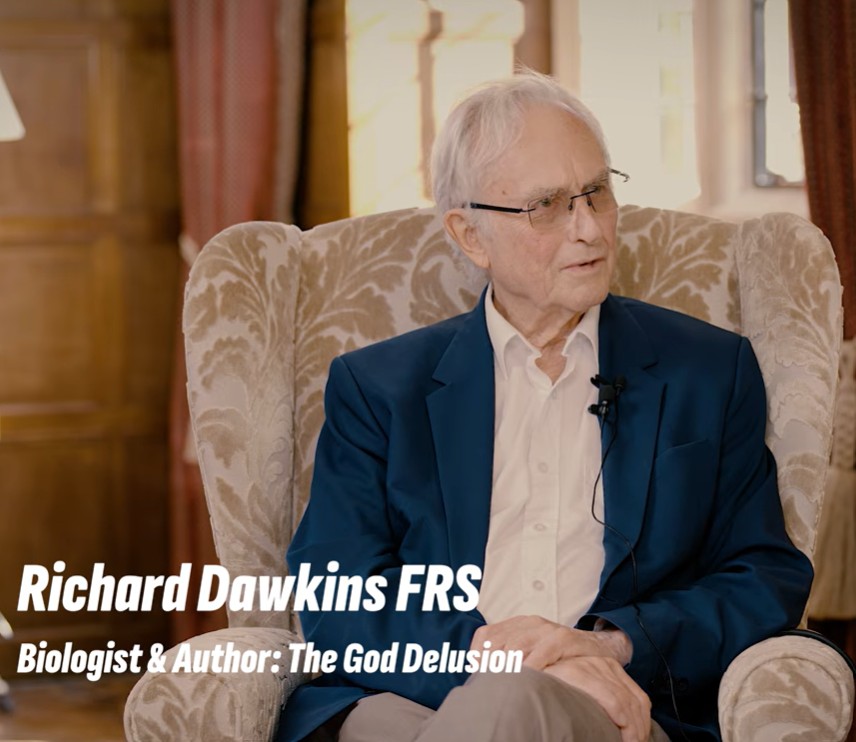
As I think about the hiddenness of God, the mind of the skeptic plays in my ear: “How do you know God exists? Why does God seem hidden? Maybe it’s because He doesn’t exist!” Believing in a “hidden” God is belief without evidence; it’s belief in the teeth of the evidence (as Dawkins says).

My response is that we all have faith in our basic assumptions about reality. The scientist assumes only matter and motion. He sees evidence for things like gravity and neutrinos, and dark matter and dark energy that cannot be seen. The scientist reasons to the best explanation for the things that cannot be seen in order to make sense of the reality in the world, and he does so within the “limitations” of materiality.

Science, after all, is the study of the material world. That is is the scope of science as it is defined in the modern world. Science is based on what is quantifiable, measurable, observable, and reproducible.

When I do theology or philosophy, I also start with assumptions. I start with an assumption, or a theory if you like, that God exists. The proof of God, however, is necessarily different than scientific proof.

God is not a substance in the universe to be quantified, measured, observed, or reproduced in the way we can study the natural world. He is not a component of the universe. He is not comprised of matter and motion like the universe. God is not a principle of physics that can be observed in its regularity and tested by its regularity.


If God exists and created the universe, He is separate and apart from the universe. That does not mean that God is not present in some way; it means that He is not present in the same way that you and I are present. Rather, God is transcendent. He is imminent (near in some way), but not contained within the creation.


God also must have agency to have determined to create. We understand the necessity for agency by our own agency. This makes sense of the question: why is there a universe; why is there something, rather than nothing.

For the life of me, I can make no sense of the assertion that a universe can create itself. What kind of voodoo magic is that? That conclusion is based on an assumption that matter and motion is all that exists, but we cannot prove that assumption.

To say that God must have agency is not to be anthropomorphic about it but to reason to the best explanation based upon what we know, which is our own agency and the way we conduct ourselves in the world. Where does a universe come from? The simple answer is that it comes from a creator who has agency, who has intentionality, and the ability to will and to act according to His purpose and design.

Where does intricate, fine-tuned complexity that is complex to the nth degree come from? It comes from a mind, from a creator who conceives a plan and then implements it. We know that from the way human beings create things. Where did we get that capacity? Like things produce or reproduce like things.

We know that the universe is “winding down”. That is what the law of thermodynamics tell us. Entropy is the rule. This means the universe is not getting more complex; it is breaking down, evening out, cooling, and becoming less complex over time.

Over course, this is occurring over a very, very long period of eons, so (perhaps) there is enough energy in the universe for complexity to form in areas of the universe even while entropy is working its very long way toward the inevitable heat death of the universe as a whole.


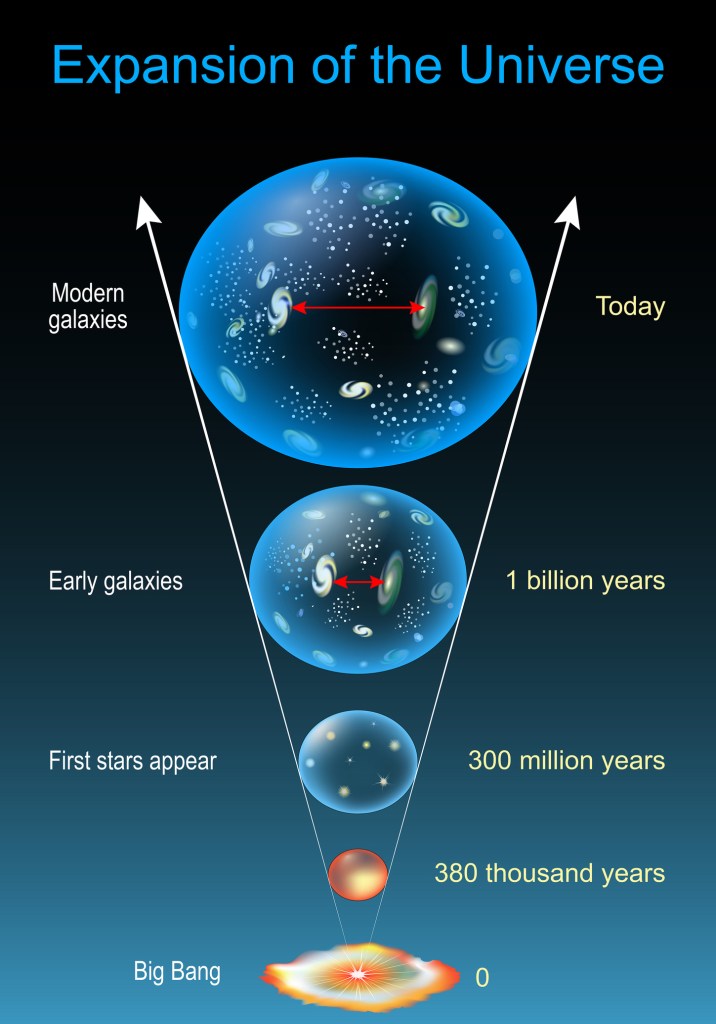
Maybe, but where did the energy come from to cause the so-called Big Bang? What triggered the universe to begin to begin with?

No one can explain that who doesn’t believe in a “Big Banger”, a Creator. It is the best explanation that we have. It makes the most sense of the reality that the Universe had a beginning.


The multiverse doesn’t solve the “problem” of a beginning. It just kicks the can back down the road further. What triggered the multiverse into being? It’s an endless regression.

The Christian (Jewish and Muslim) conception of God is that God is the timeless, eternal being who always existed and was never created who chose to trigger the universe (or multiverse) into existence.

This, frankly, makes much more sense than a past eternal, non-sentient universe that just poofed life into existence. How do you get life from nonliving matter? What animates that matter?

But the questions don’t stop there. What triggers consciousness from inert, non-conscious matter? How do the fundamental “building blocks” of matter develop consciousness? It’s a complete mystery, and there is no mechanism known to modern science to explain it – other than the brute fact that human beings and (to some lesser degree) animals (and maybe plants) are conscious beings.

Consciousness is proven by the sheer fact that we are conscious of ourselves. It seems to “reside” in or be attached to the brain, but the brain by itself is not consciousness. The brain is a perfect, intricate receptacle for consciousness, but the brain and consciousness are not perfectly coexistent. They are not the same things, and science has no adequate explanation for that.

Because these things suggest looking outside the limitations of the material world for our answers, we have theology and philosophy, which can be “scientific” loosely in method and approach, but defies the limitations of scientific inquiry.

That doesn’t mean that theology and philosophy should be divorced from science (or that science should be divorced from theology and philosophy). All reality must ultimately cohere harmoniously, or we cannot call it reality.

But, I have digressed (only slightly) from the point, which is the mystery of the hiddenness of God.

Continue reading “Unveiling the Mystery of the Hiddenness of God”

Understanding Pascal’s Wager

“The heart has its reasons of which reason knows nothing.”

Glen Scrivener argues that atheists misunderstand Pascal’s Wager in Episode number 595 of his Speak Life Podcast (Atheists Misunderstand Pascal’s Wager (and so do Christians) I think he is right, and it seems that Christians don’t really understand it, either. Me included … until now. Before we dive in, though, let’s review Pascal’s Wager.

Blaise Pascal starts with the premise that human beings can neither prove the existence of God, nor prove that God does not exist. This is a concession, perhaps, to the atheist, but the atheist stands in no better position in relation to proving that God does not exist.

If that is the reality, then whether to believe in God or not is crap shoot. If we can’t prove it one way or the other, are we any better off than a roll of the dice? Pascal says we are, and the truly rational person would choose belief in God based on what is known as Pascal’s Wager.

Believing in God potentially gains a person everything (eternal life, joy, meaning, etc.). If God exists, the believer hits the jackpot. Believing in God also has very little downside. Pascal supposes that a person might forego some pleasures that were not pursued or time and energy spent living out faith (more on that below), but a person is little worse off for believing in God if God does not exist.

On the other hand, a person who doesn’t believe in God loses everything if God does exist (eternal separation from God). Therefore, Pascal said, the rational thing is to believe in God, because the potential gain is infinite and the potential loss is minimal. Given that we cannot prove God one way or the other, the truly rational person would “wager” on God, says Pascal.

Christopher Hitchens calls Pascal’s Wager “religious hucksterism of the cheapest, vulgarist, nastiest kind,” and Alex O’Connor calls it “half-hearted ass-kissing just in case.” Richard Dawkins asks, “What is so special about belief?” And, “Why would God not look for something of more substance from us, like being good?”

The often deriding comments beg for some understanding, and Dawkins’s legitimate questions call for a response. Matt Dillahunty says, “Pascal’s wager is an apologetic argument that attempts to demonstrate that belief in God is warranted based on decision theory and probability.” But is it?

All of these comments and questions assume that Pascal’s Wager is an apologetic argument for God, and they find it woefully wanting in that respect. Even Christians assume it is an apologetic argument, also, but everyone who makes that assumption has missed the actual point of Pascal’s Wager.


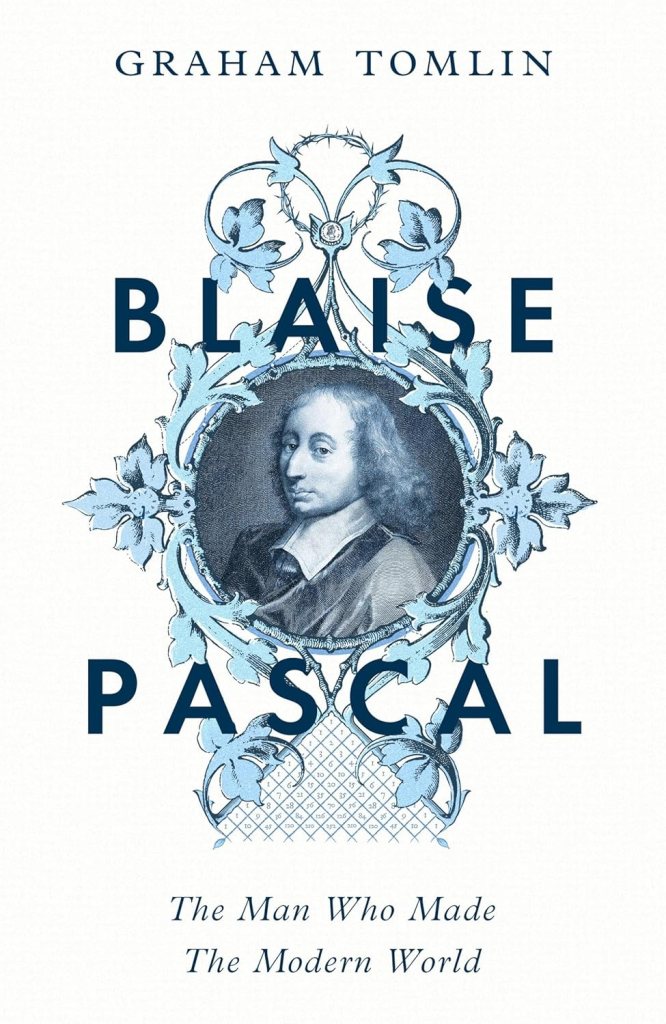
Glen Scrivener’s summary of Pascal’s Wager taken from Graham Tomlin’s book, Pascal, The Man Who Made the Modern World, exposes the error people make in these assumptions. Pascal wasn’t attempting to assert a rational argument, defense, or proof of God. He was making a very different point altogether.


Pascal was a genius by any measure. He was a scientist, mathematician, geometer, physicist, philosopher, polemicist, and theologian. He invented probability theory; he proved the existence of the vacuum, laid the foundations of integral calculus, performed what is called the first proper scientific experiment, established the principle that made possible the hydraulic press, demonstrated that air has weight, and many other things.

Thus, Scrivener says, “If we think that Blaise Pascal was silly, that might not reflect on Blaise Pascal; it might be a sign that we have misunderstood him.” The podcast featuring Graham Tomlin linked above and embedded below does a great job explaining the misunderstanding. It is worth the 25 minutes to watch and listen, but I am going to summarize and add my own thoughts as I continue.


Continue reading “Understanding Pascal’s Wager”

Did Jesus So Judge the World that He Came into the World to Condemn It?

When Jesus called us to follow him, he called us to adopt his posture toward the world.


I am writing today about something I have written before, but I think it bears repeating. I have not stopped thinking about it since these words from Paul virtually leapt off the page when I read them a few years ago:

What business is it of mine to judge those outside the church? Are you not to judge those inside? God will judge those outside.”

1 Corinthians 5:12-13 (emphasis added)

How many times had I glossed over those words without really seeing them? Did he really mean that? We are not to judge people outside the church? Isn’t that exactly what we do?

I have kept going back to Paul’s admonition often since that day. I didn’t see it right away, but I eventually noticed that Paul echoed the very words of Jesus in that statement: Jesus said,

“If anyone hears my words but does not keep them, I do not judge that person. For I did not come to judge the world, but to save the world. There is a judge for the one who rejects me and does not accept my words; the very words I have spoken will condemn them at the last day.”

JOhn 12:47-48 (emphasis added)

Elsewhere, Jesus said, “God did not send his Son into the world to condemn the world, but to save the world through him.” (John 3:17)

If Jesus bids us to follow him, should we not adopt the same posture toward the world? It is the same posture Paul admonished the Corinthians to model toward those outside the Church: Do not judge them because they have a judge! (And it isn’t us!)

Paul

1 Corinthians 5:12-13

What business is it of mine to judge those outside the church?

God will judge those outside

Jesus

John 12:47-48

I have not come to judge the world.

There is a judge for the one who rejects me.

When adopt the posture Jesus had toward the world and the posture Paul tells the church to adopt, we are freed up from the responsibility to judge so that we can love. Even if the world goes its own way, which it will, we can love the world. Even if the world hates us, we can still love the world.

We are free to preach good news to the poor, to give sight to the blind, to set the oppressed free, and to proclaim the favor of God to all who will receive Him. This was how Jesus characterized what he came to do when he read from the Isaiah scroll in his hometown synagogue, sat down, and said, “Today this scripture is fulfilled in your hearing.” (Luke 4: 21) This is our ministry also, if we will follow him.

We don’t have to be in the business of judging the world because the world has a Judge. We can leave that to God. In fact, it isn’t an option. It is God’s rightful place to judge, and it isn’t our place.

That means it isn’t up to us to make the world conform to the law of God. We are not responsible to require godly behavior and biblical morality from the world, and it isn’t our business to do that.

Rather, we are to love the world, though people in the world are yet sinners. We can do that because Jesus loved us and died for us while we were yet sinners.

“Are you not to judge those inside?” says Paul. The world has not subscribed to Jesus, but we have. Judgment begins in the house of God because Jesus counts on us to be the light and salt of the world. If we lose our flavor, we cannot be who God calls us to be.

Who among us were able to conform to the Law before Jesus? None of us! Which is why we needed him. We are saved by grace through faith, and not by anything we could do. The world, likewise, cannot conform to God’s law apart from Jesus. This is why the world needs a Savior: because it has a Judge.

Why, then, would we try to impose godly behavior and biblical morality on the world through human, legal means when the world is incapable of conforming to God’s law apart from Jesus?

Jesus sends us into the world as his ambassadors just as he came into the world: not to judge the world, because the world already has a judge. He sends us out as ambassadors not to condemn the world, but but to save it.

If we can adopt this posture toward the world that Jesus adopted and that Paul admonished, we can be unified in that purpose and calling of Jesus even in our own differences about how the world ought to operate. We can love each other as fellow ambassadors of Christ and give each other grace in the areas in which we disagree.

Our primary focus should be the purpose and focus of Jesus – not to condemn the world, but to save it by proclaiming good news to the poor, sight for the blind, freedom for the oppressed, and the favor of God’s love toward all who will receive Him. Everything else fades in light of that purpose and calling.

Jesus said, the world will know us by our love for each other. (John 13:35) Let us so live, then, that the world knows us for our love for one another and our love for the world that Jesus loved!

Our Post Enlightenment, Neo Religious World and the Proof of God

Not all truth is known through scientific inquiry and method.


As often happens with me, the things I have been listening to and reading have converged in a meaningful way. Whether we attribute these “convergences” to God’s presence in our lives or dumb luck, pure happenstance, or “coincidence” is a matter of speculation and faith.

Whatever you want to call it, I take special notice of these things. I pay attention. I take them seriously, and they become signposts on my journey through life.

Perhaps, I am just being a good attorney. I am trained to find harmony and contrast in nuanced fact patterns and to apply legal principals to them. Finding harmonies and contrasts and applying spiritual principals to them operates in the same vein. That’s the way my mind works.


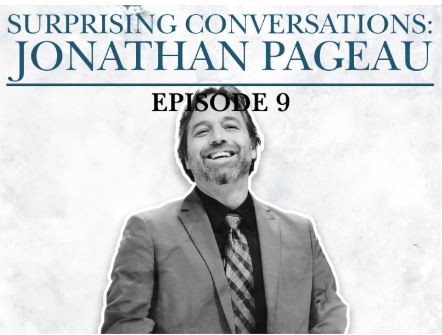
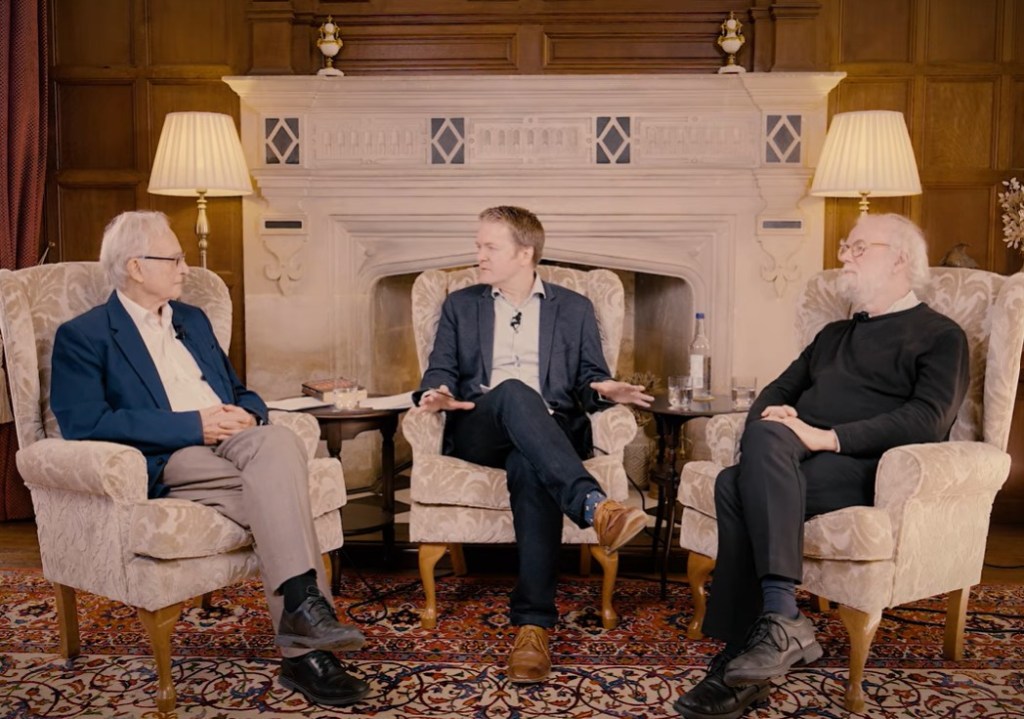
Yesterday, I listened to an interview of Jonathan Pageau by Justin Brierley. Pageau is an interesting character and a critical thinker. His recent conversation with Brierley inspires my writing today.


Raised in Montreal influenced by French Catholicism in a French Baptist Church community, Pageau has moved over to Eastern Orthodoxy by way of 4-year and 3-year stints in the Congo and Kenya. He has an undergraduate degree in postmodern art. He returned from Africa to obtain a degree in Orthodox Theology and Iconology from Sherbrooke University in Quebec. Along the way, Jonathan Pageau has become a cutting edge Christian thinker who is in demand as a speaker.

One line of discussion caught me ear in the interview with Justin Brierley that I want to explore. The subject touches on post-Enlightenment, neo-religious thinking and the proof of God.

Continue reading “Our Post Enlightenment, Neo Religious World and the Proof of God”

Redeeming Diversity, Equality, and Inclusion

DEI has become a weaponized, pejorative term.


Diversity, Equality, and Inclusion (otherwise known as DEI) has become a pejorative label for the “evils” of progressives that is a target of the Trump administration in their take down of government as it existed when Donald Trump took office. I don’t want to talk about politics. I want to address something to the Church in America. Something I think we need to think about prayerfully in these times.

I have been through a DEI session as a mandatory component of my professional continuing education. My experience is limited, so I discount it, but it will serve my purpose of introducing the subject I want to address.

Honestly, I would characterize the DEI session I went through as cringy. It was uber sincere, preachy, and not a little condescending. I also didn’t think it was very effective for these and other reasons. Well-intentioned, maybe. I will give it the benefit of the doubt, but I am afraid it rubbed me the wrong way – privileged white man that I am.

I can see how people outside the church might feel about the uber sincerity, preachiness, and condescension of Christians. It can be … well, cringy. I find it ironic that the progressive world (it seems to me) has overtaken the Church in self-righteous condescension, preachiness, and overall cringe in its own beliefs that it appears to be trying to cram down the throats of people it views as less than.

But, I digress. I want to take a step back and re-examine the ideas of diversity, equality, and inclusion. I am not going to do a deep dive, but I want to recapture these words that have been hijacked by political operatives and used alternatively as political bludgeons and pejoratives.

Diversity was created by God when he confused the languages of the people. God confused their languages because the people had unified together with one common language to make a name for themselves and to resist God’s instruction to be fruitful and multiply over the earth. God “confused the language of the whole world” to scatter people around the world as He originally intended. (Genesis 11:1-9)

From this, we see that God is in control, and He has a plan. Well, He is still in control, and He still has a plan. People are either working with Him, or they are working at cross purposes to His plan.

As Christians, we don’t ever want to be working at cross purposes to God! Diversity was God’s idea going all the way back to Genesis, and He shows where He is going with it in Revelation. This is the vision He gave John to share with the world to let us know His end game:


“After this I looked, and there before me was a great multitude that no one could count, from every nation, tribe, people and language, standing before the throne and before the Lamb. They were wearing white robes and were holding palm branches in their hands.  And they cried out in a loud voice:

“Salvation belongs to our God,
who sits on the throne,
and to the Lamb."

Revelation 7:9

God’s plan is to bring all the nations, tribes, and languages back together in all their diversity! Every different nation, and every different tribe, in all their different languages – diversity. But, they will be unified in their worship of the Lamb who sits on the throne. (Notice, it isn’t the Lion of Judah who appears on the throne, but the Lamb of God.)

God celebrates the diversity He created by gathering all the nations, tribes, and tongues together from around the world where they were scattered. Diversity is not pejorative. It is something God created in His wisdom that we can celebrate as we worship Him in one voice and many tongues.

If we pray authentically as Jesus taught us, we pray, “Our Father, who is in Heaven, hallowed be your name. Your kingdom come and your will be done on earth as it is in Heaven!” If we are praying for God’s kingdom on earth – now – as it is in heaven, we cannot really mean that if we do not embrace the diversity that God created on earth.

Continue reading “Redeeming Diversity, Equality, and Inclusion”