Did Jesus So Judge the World that He Came into the World to Condemn It?

When Jesus called us to follow him, he called us to adopt his posture toward the world.


I am writing today about something I have written before, but I think it bears repeating. I have not stopped thinking about it since these words from Paul virtually leapt off the page when I read them a few years ago:

What business is it of mine to judge those outside the church? Are you not to judge those inside? God will judge those outside.”

1 Corinthians 5:12-13 (emphasis added)

How many times had I glossed over those words without really seeing them? Did he really mean that? We are not to judge people outside the church? Isn’t that exactly what we do?

I have kept going back to Paul’s admonition often since that day. I didn’t see it right away, but I eventually noticed that Paul echoed the very words of Jesus in that statement: Jesus said,

“If anyone hears my words but does not keep them, I do not judge that person. For I did not come to judge the world, but to save the world. There is a judge for the one who rejects me and does not accept my words; the very words I have spoken will condemn them at the last day.”

JOhn 12:47-48 (emphasis added)

Elsewhere, Jesus said, “God did not send his Son into the world to condemn the world, but to save the world through him.” (John 3:17)

If Jesus bids us to follow him, should we not adopt the same posture toward the world? It is the same posture Paul admonished the Corinthians to model toward those outside the Church: Do not judge them because they have a judge! (And it isn’t us!)

Paul

1 Corinthians 5:12-13

What business is it of mine to judge those outside the church?

God will judge those outside

Jesus

John 12:47-48

I have not come to judge the world.

There is a judge for the one who rejects me.

When adopt the posture Jesus had toward the world and the posture Paul tells the church to adopt, we are freed up from the responsibility to judge so that we can love. Even if the world goes its own way, which it will, we can love the world. Even if the world hates us, we can still love the world.

We are free to preach good news to the poor, to give sight to the blind, to set the oppressed free, and to proclaim the favor of God to all who will receive Him. This was how Jesus characterized what he came to do when he read from the Isaiah scroll in his hometown synagogue, sat down, and said, “Today this scripture is fulfilled in your hearing.” (Luke 4: 21) This is our ministry also, if we will follow him.

We don’t have to be in the business of judging the world because the world has a Judge. We can leave that to God. In fact, it isn’t an option. It is God’s rightful place to judge, and it isn’t our place.

That means it isn’t up to us to make the world conform to the law of God. We are not responsible to require godly behavior and biblical morality from the world, and it isn’t our business to do that.

Rather, we are to love the world, though people in the world are yet sinners. We can do that because Jesus loved us and died for us while we were yet sinners.

“Are you not to judge those inside?” says Paul. The world has not subscribed to Jesus, but we have. Judgment begins in the house of God because Jesus counts on us to be the light and salt of the world. If we lose our flavor, we cannot be who God calls us to be.

Who among us were able to conform to the Law before Jesus? None of us! Which is why we needed him. We are saved by grace through faith, and not by anything we could do. The world, likewise, cannot conform to God’s law apart from Jesus. This is why the world needs a Savior: because it has a Judge.

Why, then, would we try to impose godly behavior and biblical morality on the world through human, legal means when the world is incapable of conforming to God’s law apart from Jesus?

Jesus sends us into the world as his ambassadors just as he came into the world: not to judge the world, because the world already has a judge. He sends us out as ambassadors not to condemn the world, but but to save it.

If we can adopt this posture toward the world that Jesus adopted and that Paul admonished, we can be unified in that purpose and calling of Jesus even in our own differences about how the world ought to operate. We can love each other as fellow ambassadors of Christ and give each other grace in the areas in which we disagree.

Our primary focus should be the purpose and focus of Jesus – not to condemn the world, but to save it by proclaiming good news to the poor, sight for the blind, freedom for the oppressed, and the favor of God’s love toward all who will receive Him. Everything else fades in light of that purpose and calling.

Jesus said, the world will know us by our love for each other. (John 13:35) Let us so live, then, that the world knows us for our love for one another and our love for the world that Jesus loved!


Our Post Enlightenment, Neo Religious World and the Proof of God

Not all truth is known through scientific inquiry and method.


As often happens with me, the things I have been listening to and reading have converged in a meaningful way. Whether we attribute these “convergences” to God’s presence in our lives or dumb luck, pure happenstance, or “coincidence” is a matter of speculation and faith.

Whatever you want to call it, I take special notice of these things. I pay attention. I take them seriously, and they become signposts on my journey through life.

Perhaps, I am just being a good attorney. I am trained to find harmony and contrast in nuanced fact patterns and to apply legal principals to them. Finding harmonies and contrasts and applying spiritual principals to them operates in the same vein. That’s the way my mind works.


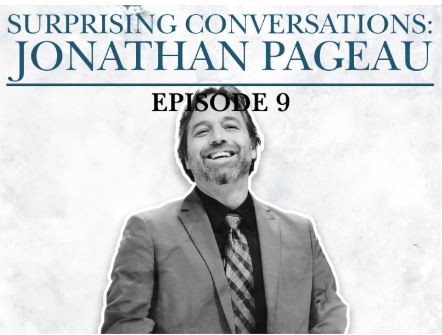
Yesterday, I listened to an interview of Jonathan Pageau by Justin Brierley. Pageau is an interesting character and a critical thinker. His recent conversation with Brierley inspires my writing today.


Raised in Montreal influenced by French Catholicism in a French Baptist Church community, Pageau has moved over to Eastern Orthodoxy by way of 4-year and 3-year stints in the Congo and Kenya. He has an undergraduate degree in postmodern art. He returned from Africa to obtain a degree in Orthodox Theology and Iconology from Sherbrooke University in Quebec. Along the way, Jonathan Pageau has become a cutting edge Christian thinker who is in demand as a speaker.

One line of discussion caught me ear in the interview with Justin Brierley that I want to explore. The subject touches on post-Enlightenment, neo-religious thinking and the proof of God.

Continue reading “Our Post Enlightenment, Neo Religious World and the Proof of God”

Redeeming Diversity, Equality, and Inclusion

DEI has become a weaponized, pejorative term.


Diversity, Equality, and Inclusion (otherwise known as DEI) has become a pejorative label for the “evils” of progressives that is a target of the Trump administration in their take down of government as it existed when Donald Trump took office. I don’t want to talk about politics. I want to address something to the Church in America. Something I think we need to think about prayerfully in these times.

I have been through a DEI session as a mandatory component of my professional continuing education. My experience is limited, so I discount it, but it will serve my purpose of introducing the subject I want to address.

Honestly, I would characterize the DEI session I went through as cringy. It was uber sincere, preachy, and not a little condescending. I also didn’t think it was very effective for these and other reasons. Well-intentioned, maybe. I will give it the benefit of the doubt, but I am afraid it rubbed me the wrong way – privileged white man that I am.

I can see how people outside the church might feel about the uber sincerity, preachiness, and condescension of Christians. It can be … well, cringy. I find it ironic that the progressive world (it seems to me) has overtaken the Church in self-righteous condescension, preachiness, and overall cringe in its own beliefs that it appears to be trying to cram down the throats of people it views as less than.

But, I digress. I want to take a step back and re-examine the ideas of diversity, equality, and inclusion. I am not going to do a deep dive, but I want to recapture these words that have been hijacked by political operatives and used alternatively as political bludgeons and pejoratives.

Diversity was created by God when he confused the languages of the people. God confused their languages because the people had unified together with one common language to make a name for themselves and to resist God’s instruction to be fruitful and multiply over the earth. God “confused the language of the whole world” to scatter people around the world as He originally intended. (Genesis 11:1-9)

From this, we see that God is in control, and He has a plan. Well, He is still in control, and He still has a plan. People are either working with Him, or they are working at cross purposes to His plan.

As Christians, we don’t ever want to be working at cross purposes to God! Diversity was God’s idea going all the way back to Genesis, and He shows where He is going with it in Revelation. This is the vision He gave John to share with the world to let us know His end game:


“After this I looked, and there before me was a great multitude that no one could count, from every nation, tribe, people and language, standing before the throne and before the Lamb. They were wearing white robes and were holding palm branches in their hands.  And they cried out in a loud voice:

“Salvation belongs to our God,
who sits on the throne,
and to the Lamb."

Revelation 7:9

God’s plan is to bring all the nations, tribes, and languages back together in all their diversity! Every different nation, and every different tribe, in all their different languages – diversity. But, they will be unified in their worship of the Lamb who sits on the throne. (Notice, it isn’t the Lion of Judah who appears on the throne, but the Lamb of God.)

God celebrates the diversity He created by gathering all the nations, tribes, and tongues together from around the world where they were scattered. Diversity is not pejorative. It is something God created in His wisdom that we can celebrate as we worship Him in one voice and many tongues.

If we pray authentically as Jesus taught us, we pray, “Our Father, who is in Heaven, hallowed be your name. Your kingdom come and your will be done on earth as it is in Heaven!” If we are praying for God’s kingdom on earth – now – as it is in heaven, we cannot really mean that if we do not embrace the diversity that God created on earth.

Continue reading “Redeeming Diversity, Equality, and Inclusion”

Mockery of the Offense and the Offended: the Opening Ceremonies in Paris

I want to be offended, but, I am caught up short by Paul’s admonition not to judge the world at this time – while people may still be saved.


Paul famously says in Roman 1:20 that people everywhere are without excuse in their denial of God and suppression of the truth because God’s invisible attributes and His eternal power and divine nature have been clearly seen and are understood through the creation. This is one of the most often quoted verses in the first couple of Chapters of Roman.

I have often quoted Romans 1:20 as a defense of the faith to unbelievers, but Romans 2:1 catches my eye today. It begins with same phrase, “Therefore, you are without excuse….” Except this verse is clearly directed to an audience of Roman believers.

I wonder how I have missed the parallel nature of this statement to believers. Just as nonbelievers are without excuse in their unbelief, Paul says believers are without excuse in a different sense:

“Therefore you are without excuse, whoever you are, when you judge someone else. For on whatever grounds you judge another, you condemn yourself, because you who judge practice the same things.”

Romans 2:1

I have to admit my own tendency to focus on Romans 1 and Paul’s statements that the world is without excuse, because God made himself known, and people in their depraved minds chose not to honor God, embracing sin instead. I tend to focus on the list of sins, including men and women trading natural relations for unnatural ones.

It seems that the world focuses on those things as well. Christians and non Christians alike, and this list of sins has become become a dividing line in the ongoing battle of a “culture war” that wages in the United States.

While Romans 1:20 and the list of sins that follow it seems to have captured our attention, I wonder today why we seem to glossed over what Paul says in Romans 2:1?

The parallel nature of the two verses demands some attention. We dare not focus on one half of the equation to the exclusion of the other half of the equation.

Paul says in Romans 1:14 that he is a debtor to Greeks and barbarians and to the wise and the foolish because the Gospel has the power for salvation. (Rom. 1:16) The righteousness of God is revealed in the Gospel from faith to faith. (Rom. 1:17)

Then, Paul says that the wrath of God is revealed against the ungodliness and unrighteousness of people who suppress the truth (Rom. 1:19) because God has made it plain to them…. Therefore, they are without excuse.

Paul doesn’t stop there, however, and neither should we. In Romans 2, Paul starts out saying that people who judge others are also without excuse! On whatever grounds we judge others, we condemn ourselves because we practice the same things.

This is a sobering statement, and one which we ignore to our detriment and the detriment of the preaching of the gospel.

Again, it’s important to note that Paul is talking to the believers in Rome. He is not talking to heathens and barbarians and people who are given over to their carnal desires.

Five chapters later Paul talks personally about believers’ struggles with sin (Romans 7:15-20), doing the things we don’t want to do and not doing the things we know we should do. Paul is brutally honest about the fact that sin is still a problem for the believer. If anyone ways he is without sin, he makes God out to be a liar! (1 John 1:10)

Of course, believers should resist sin and learn to overcome it. This is a lifelong process, and we only overcome by the work of the Holy Spirit in us as we yield to His direction in our lives.

Yet, the holiest of people – Paul – admits to failing from time to time and giving into or returning to some form of sin. It doesn’t what what the sin is. The sin that causes us to stumble may be different for each one of us. That fact is that we sin, even though we don’t want to sin anymore.

The import of this for the believer, Paul is saying, is that we, should not adopt a judgmental attitude toward anyone. Not even to those who God has given over to their carnal desires. In judging others, we condemn ourselves, says Saint Paul. Paul also days,

“What business of mine is it to judge those outside the church? Are you not to judge those inside?”

1` Corinthians 5:122

The timing of this fresh revelation from my daily scripture reading is interesting. My social media feed has been full of judgmental tirades over the opening ceremonies at the Paris Olympics. I did not watch them, but I have certainly become aware of how everyone feels about those ceremonies, particularly Christians.

I know I am late to the discussion, but I have resisted the temptation to jump into the fray. It seems there is much to be offended about, yet the parallelism of Romans 1:20 and Romans 2:1 gives me pause. The judgmentalism of offended Christians screams for a response.

Continue reading “Mockery of the Offense and the Offended: the Opening Ceremonies in Paris”

The Minimalest, Non-Factual, Argument for the Resurrection

Perhaps, the minimalest, non-factual argument in favor of the resurrection isn’t a factual argument at all, but a philosophical one.

Thought to be the place of the resurrection of Jesus Christ in Jerusalem Israel

The title of this piece is tongue-in-cheek, a play on the “minimal facts” evidence for the resurrection made famous by Gary Habermas. I don’t really have a killer piece of evidence that uses fewer facts (or no facts) that trumps all other arguments. But, maybe I got your attention!

As often is the case, my inspiration comes from what someone said or wrote. In the podcast interview linked below, Mason Jones describes how he he decided to read through the Gospel accounts as an atheist who knew next to nothing about Christianity. He quickly caught on that the resurrection is the centerpiece of Christianity, so he focused his attention on that.

He researched the evidence for the resurrection. He googled arguments for the resurrection and arguments against the resurrection. Though he was an atheist at that time, he was willing to give the evidence that exists a chance. (Whether there was any, he didn’t know.)

As he considered the arguments and counterarguments, he found that the arguments against the resurrection didn’t address very well the arguments for the resurrection. They didn’t take them seriously.

Then he realized that the arguments against the resurrection only work if you start with the presupposition that the resurrection didn’t happen. Because it is impossible. Because people don’t come back to life. Ever.

If you take that presupposition out of the equation, thought Jones, the evidence favors the conclusion that the resurrection occurred, and the arguments against the resurrection loose their luster. If you want to hear the rest of Mason Jones’s thought journey from atheism to theism to Christianity in his own words, you can listen here.

Meanwhile, I want to spend a little time considering the presuppositions people make about the resurrection.

Continue reading “The Minimalest, Non-Factual, Argument for the Resurrection”