What Good Is Apologetics?

If we do apologetics only to win arguments, we are missing something.


I recently heard someone say that apologetics is not good for anything because it is just about proving to other people that you are right. The statement was made by a Christian who is vocal about sharing his faith. So, this was not an excuse from someone who is ashamed to defend the reasons for his hope in Jesus Christ.

Indeed, some people approach apologetics as a kind of intellectual game of one-upmanship. Some people seem to think that apologetics is a kind of silver bullet or kryptonite to combat skepticism and atheism.

I have been drawn to apologetics over the last 12 to 15 years as I have gone through a renewal of my faith. I became a Christian in the academic setting of college, so apologetics was attractive to me. The intellectual exercise is invigorating and stimulating.

Along the way, I developed expectations similar to the ones criticized by my friend on social media – that apologetics has all the answers and engaging in apologetics will turn skeptics and atheists into believers, but it doesn’t necessarily work that way.

Just watch a debate and listen to the responses of the people who observed it. Most skeptics are going to walk away skeptical, thinking that the atheist won, and most believers are going to walk away believing, thinking that the Christian won.

We might call this confirmation bias. It’s human nature. We are naturally inclined to identify with the things we already believe in and to find the arguments that align with our beliefs to be compelling.

Debates tend to promote the kind of one-upmanship that my friend criticized. After all, that is traditionally the point of debate. For me, this seemed to be the wrong format for sharing the Gospel.

Therefore, I dismissed debating as an effective apologetics “tool”. It seemed to me that debates were not an effective way of delivering truth. Therefore, I gravitated toward platforms like the Unbelievable? Podcast hosted by Premiere Christian Radio in Great Britain where dialogues between theists and atheists are carried on civilly (usually) in a dialogue format.

But, I am not sure how much more effective dialogue is than debate in convincing people of the truth of Christianity. Most people remain convinced of their own views most of the time. Human beings are stubborn that way.

Many modern people see themselves primarily as rational beings, so we think apologetics reaches them where (they think) they live. I am skeptical that so many people are such rational beings. I have to question my own rationality sometimes. We are motivated by many things other than reason, and we use reason to cover up ulterior motives.

This is the thesis (more or less) of Jonathan Haidt in his book, The Righteous Mind: Why Good People Are Divided by Politics and Religion. He argues that we reach our fundamental moral judgments about right and wrong at a gut level – not at a rational level. We turn to reason to defend our positions, but our positions are formed at an intuitive level.

I have not read the whole book, and I don’t recall his data and evidential support for the conclusions he reaches, but the general proposition rings true to my own experience and observation, limited as it is. What good is apologetics, then?

If Jonathan Haidt is right, then apologetics is not going to reach people where they actually live – in their gut. If we are aiming at the head, we are missing the mark, perhaps.

Continue reading “What Good Is Apologetics?”
The Problem of the Intelligibility of the Universe

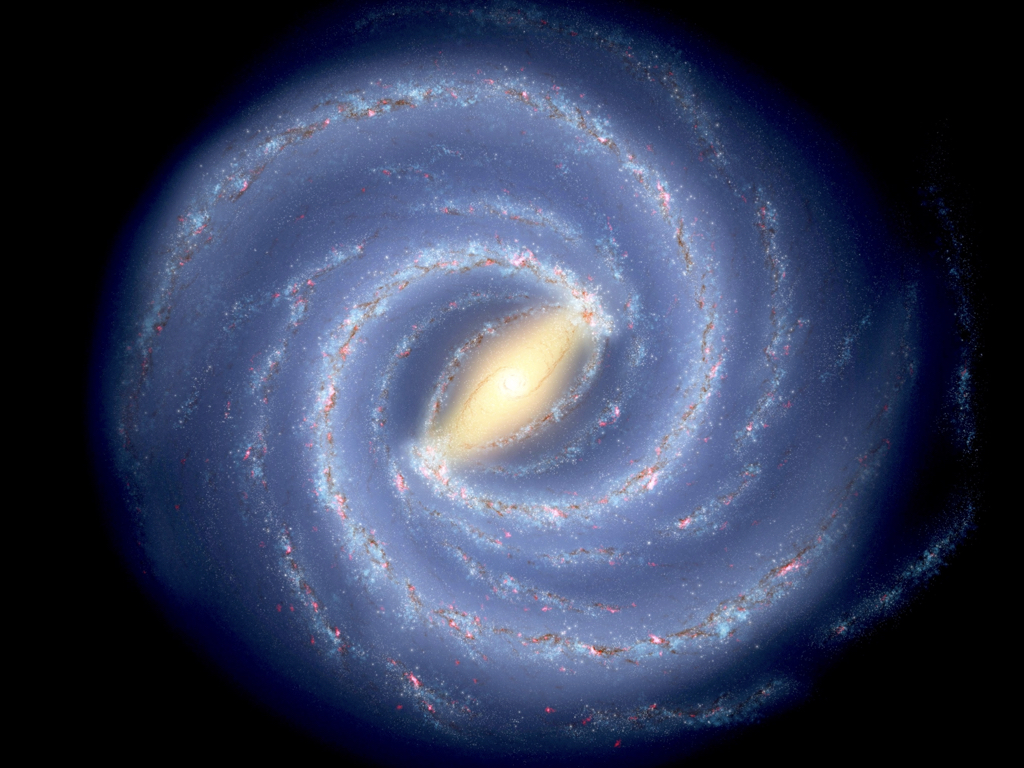
The Milky Way

The most incomprehensible thing about the universe is that it is comprehensible.” Albert Einstein

I am intrigued by the stories of peoples’ journeys, especially of their thought journeys. Some are more intriguing than others. The story of Pat Flynn fits squarely into the more intriguing category. (See the Side B Stories Podcast – Episode 78 – Science, Philosophy, and Reality – Pat Flynn’s Story)

Patrick Flynn has an educational background in philosophy. He embraced naturalism at an early age, but he encountered philosophical problems with naturalism when he read people like HL Menken and Frederick Nietzsche. These problems led him to seek answers that might provide a more coherent view of reality.

I am not going to try to summarize his whole story. You can listen to him describe his thought journey at the link in the first paragraph. I just want to focus on one aspect of his journey from atheism to theism.

Flynn’s journey took him from atheism to theism through the medium of philosophy. This process was intellectual for him, and not experiential. He became convinced of theism, first, before he even told his spouse, because he knew she was not particularly fond of religion.

He didn’t dive into Christianity after he became convinced of theism. He explored Eastern religions, first, perhaps because he had a good friend who was Indian. When the Eastern religions didn’t solve the philosophical problems posed by naturalism, he reluctantly began to explore Christianity.

One of the big issues Flynn had with atheism was the lack of explanation for the fact the universe is intelligible. Digging further, Patrick Flynn found that the fundamental, core commitments of science fit much better with theism than with atheism.

Continue reading “The Problem of the Intelligibility of the Universe”

Do We Have Any Evidence of the Resurrection? A Critique of Skepticism and Proof

People confuse proof, as in a mathematical proof, and proof, as in an offer of evidence that tends to support a proposition.


Some people say that we have absolutely no evidence for the resurrection (and no evidence that God exists in the first place). Nothing could be further from the truth. We have evidence. The issue isn’t a lack of evidence; the issue is how we approach the evidence and weigh it it.

A person who approaches “supernatural” phenomenon with purely materialistic assumptions will weigh the evidence differently than one who is open to nonmaterialistic possibilities. Jesus, though, lived in time and space in history. Many people in the first century who saw him die claim to have seen Jesus and interacted with him in the flesh after he died, and those people were willing to die for what they saw.

That is evidence. Full stop. People may be skeptical of it. People may assume Jesus couldn’t have risen from the dead, despite what people think they saw, because miracles don’t happen. But, now I am talking about how people approach and weigh the evidence.

People confuse proof, as in a mathematical proof, and proof, as in an offer of evidence that tends to support a proposition. Fallible, finite human beings deal almost exclusively in the latter realm of evidence, even in science, because we don’t know what we don’t know.

Mathematical proofs are an achievable goal in mathematics (though sometimes not even then). Such proof is impossible outside of mathematics.

Science does not provide us that kind of certainty, either. Science changes all the time on the basis of new evidence, and things we thought we knew in the past are constantly being adjusted, or even discarded, on the basis of additional evidence.

Finite beings such as ourselves are limited in our knowledge, our access to knowledge, and our understanding of how the knowledge we have fits together. We have to be humble as we cautiously put our confidence in the things we think we know because we are limited in our ability to know and understand our world, and we will always lack absolute proof for most, if not all, things.

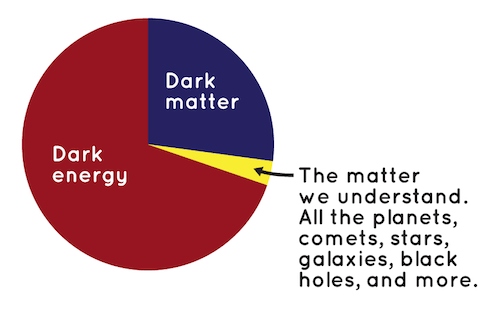
The extent of our limitations can even be quantified. For instance, 95% of the physical universe is invisible to us! The vast, unseen reaches of the universe are comprised of things like dark matter and dark energy that we cannot see and know little about, except for what we can infer about them. We aren’t sure what these things are, but we know they exist by the affects we see on the matter we see and know.


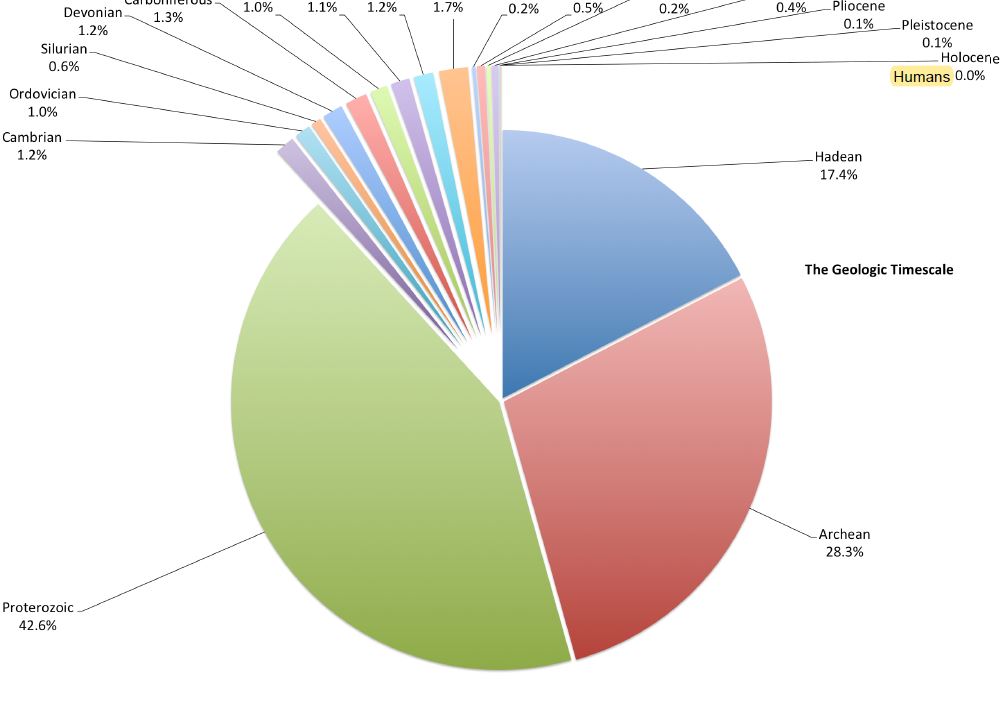
According to scientific consensus, the universe is about about 13.7 billions years old, and the earth is about 4.543 billion years old (give or take about 50 millions years), and homo sapiens appeared only 300,000 years ago (and maybe even only190,000 years ago). Assuming those calculations to be true, human-like beings have existed for only 0.0066% of the time the earth has existed and only 0.002% of the time the universe has existed. (If my math is correct.)

If we view the existence of the earth (not even the universe) on a 24-hour scale from the beginning to the present time, life began at 5:00 AM, the first vertebrates appeared at 8:00 AM, and human beings appeared just a fraction of a second before midnight.

Homo sapiens have only developed knowledge and the ability to communicate and preserve a record of it for about 5,500 years. We have been developing and recording our knowledge for only 0.00022% of the time the earth has existed, which is only 0.00007% of the time the universe has existed.


During that relatively short, 5500-year time period we have developed the capability to see only about five percent (5%) of the universe, though we have actually examined very little of it – and then only at very great distances. We hnave only explored more than five percent (5%) of the oceans on this earth – a very small planet orbiting a very small sun in a very small solar system in the inconceivably large expanse of what we we call the universe.

The body of our scientific knowledge has grown tremendously, even exponentially, especially in the last 200 years, but we have only just begun to know and understand the universe we live in. If humans live another 5,500 years, we will not have explored all of the universe, and we will not know all that there is to know.

Our world is grand and almost inconceivably complex. The DNA of a single human cell contains so much information that if it were represented in printed words, simply listing the first letter of each base would require over 1.5 million pages of text! Imagine how much information exists in the universe and how much we don’t know.

We will likely never know all there is to know about the expanse of the universe and everything in it, large and small, in all the years mankind is on the earth. Thus, we are in no position to write off the possibility of God creating the universe and Jesus rising from the dead.

The title to this piece is (admittedly) a bit misleading, so I need to provide the following disclaimer. Some people will read the title and assume that I am attempting to prove the resurrection. I am not doing that. I am offering only the beginning of proof (as in offering evidence) in this article, but it is evidence. You can weigh it how you will.

We should at least be open to consider what evidence there is for the existence of God and not write off the possibility that God exists. If God exists and made the universe out of nothing, which is what the Bible claims in Genesis 1, John 1, and Hebrews 11, then He could certainly raise Jesus from the dead.

How arrogant it would be for us to determine for ourselves (categorically) that there is no God, that He did not create the universe, and that Jesus did not raise from the dead. We don’t know what we don’t know, and we don’t understand perfectly what we think we know.

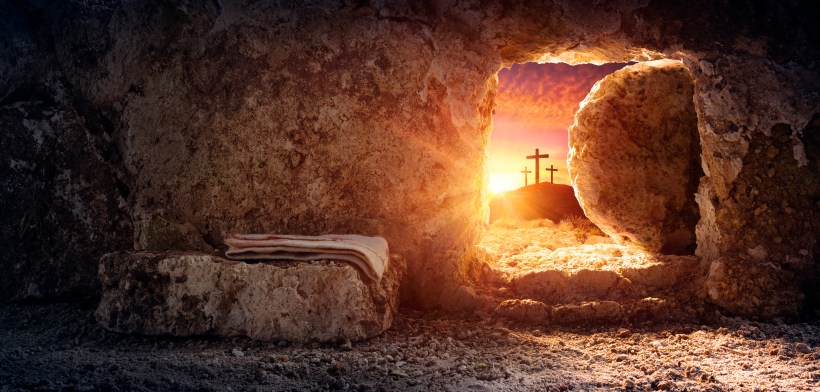
With that said, I want to provide some minimal facts that provide some evidence that tends to support the resurrection. These things are not proof; they are an offer of proof. We cannot achieve definitive proof, but there is evidence for the credibility of the claims made that Jesus rose from dead.


Continue reading “Do We Have Any Evidence of the Resurrection? A Critique of Skepticism and Proof”

The Best Explanation for a Finite Universe (or an Infinite Universe)

What if new evidence calls into question that the universe had a beginning?


The best scientific data and analysis that we have today leads to the conclusion that the universe we live in began a finite time ago. That understanding, however, was far from evident just 100 years ago. In fact, most scientists, then, believed the universe always existed (the Steady State Theory).

Evidence that suggested to the contrary, that the universe is expanding (and therefore had a beginning “point”), was not received enthusiastically. Even the people whose discoveries led to that conclusion resisted it. Einstein famously added a cosmological constant to his equations on general relativity to avoid that conclusion.

Such was the commitment in the scientific community to the “Steady State” theory: the theory that the universe always existed infinitely in the past.

Indeed, that evidence unfolded like a “big bang” that blew apart the previous scientific consensus. Thus, the “Big Bang Theory” theory of an expanding universe from a “point” of beginning was coined, perhaps, more for the effect it had on the scientific community than as a descriptor of the occurrence. (See Is the Big Bang finally Over?)

The evidence as it has unfolded since the discovery of the red shift on stars farther away from us (the first big clue that our universe is expanding) has continued to strengthen the so-called Big Bang Theory. The design of the James Webb Telescope is only the latest in a long line of evidence vindicating the “Big Bang Theory” that dramatically changed the paradigm of physics and cosmology.

Though the evidence continues to substantiate the view that our universe is expanding (and therefore had a beginning a finite time ago), I have often been aware that science is provisional. Just when we think we know something, something else comes along to change the paradigm. The recent history of physics and cosmology is a case in point.

A primary reason that the Big Bang Theory landed so hard in the scientific community is because it challenged more than the accepted science. It challenged the prevalent worldview of the scientific community since the Enlightenment.

Since the days of Darwin (and even before Darwin), people in the scientific community had been advocating for separating science from religion. When Darwin proposed evolutionary theory (natural “selection” acting on random changes), the scientific community was more than ready to use that “key” to unlock what they viewed as the “shackles” of religion.

The Steady State Theory, that the universe always existed infinitely in the past, was the natural assumption of scientists based on a worldview with no God and no religion at the center of it. Life was good for the proponents of naturalistic materialism until the specter of a beginning to our universe (and the real possibility of a “Beginner”).

That many people have managed to keep that specter at bay despite the strong evidence that gets stronger as time goes on that our universe is expanding is a testament to the faith some people have in naturalistic materialism. Never since before the Enlightenment, however, has science been so harmonious with the Bible and belief in God.

Even so, I have often wondered: what if the paradigm shifts again? What if new evidence is discovered to upset the apple cart again? What if that new evidence begins to cut against the grain of the Big Bang Theory and reinvigorates the Static State Theory?

What if the new evidence shows what Einstein and most other cosmologists and physicists believed 100 years ago? That our universe is past eternal; that it is not expanding after all; or that the earth is expanding, but that the expansion is not proof of a “singularity” (beginning)?

Indeed, this is what many preeminent scientists have been trying to prove since the scientific world conceded the evidence of the apparent expansion and singularity of our universe.

Would Christians, like myself, and other theists simply cling to faith without evidence? Would we cling to our faith “in the teeth of the evidence”, as Richard Dawkins has charged?

I wasn’t sure before today. As I was listening to Return of the God Hypothesis by Stephen C. Meyer on Audible, an answer to my question began to materialize. I will attempt to summarize it.

Continue reading “The Best Explanation for a Finite Universe (or an Infinite Universe)”

An Invitation to Test and See Whether God Exists

The title of this piece is a bit of poetic license. I am combining the Psalmist’s challenge to “taste and see that the Lord is good….” (Psalm 34:8) with Paul’s admonition to “test everything”. (1 Thess. 5:21) The general thrust of these two verses is an invitation to seek God and truth and to test what we think we know.

Tasting suggests that we can experience that God is good, and testing suggests that we can measure, in some respect, that experience with God. While the existence of God is not susceptible to testing and measurement like we do with science in a laboratory or in physics (for many reasons), these statements are claims that we can in some sense measure, prove, and have confidence in our conclusions.

Both writers are talking about experience in these passages, something that is frowned upon as evidence in our modern, western culture. I will come back to that. First, though, I want to make some observations.

It should go without saying that tasting and testing requires some commitment to the process. Tasting is highly experiential. If we are going try to “taste” something, we have to engage in that process.

We cannot taste through another person’s experience. It requires our own engagement in the tasting, and that requires some willingness on our part to engage.

On the subject of being scientific about spiritual experience, we can and should listen to what others say who claim to have tasted that God is good. We can and should weigh the “results” and conclusions of various people who make these claims.

In that process, we could categorize, compare, and contrast the tasting and the testing and reach some conclusions purely on basis of the data collected. I have done that anecdotally for years, and I suspect I could find some more objective data pools of these largely subjective “experiences”. The larger the data pool, the more objective we can be in our analysis of them, though they are subjective for the individuals involved.

Tasting and testing, as we are challenged to understand it in the Bible, however, is more personal than that. We can study other peoples’ experiences for a lifetime and never really know what the experience is like in the “biblical” sense of knowing.

These thoughts today are inspired by the following quotation by CS Lewis from his seminal book, Mere Christianity:

“A man can accept what Christ has done without knowing how it works; indeed, he certainly won’t know how it works until he’s accepted it.”

The emphasis on accepting something without knowing how it works seems to run counter to the way we do science, but I don’t think it really is. We do a lot of science on a hunch without knowing whether we are right or wrong. We might call those hunches educated guesses. We don’t know whether a hunch or educated guess is right until we put it to the test, and we understand it better in the process.

Continue reading “An Invitation to Test and See Whether God Exists”