
When You Are Bitterly Disappointed and Angry at the World

God waits to be gracious


The Book of Jonah is an important story, but not for its historical significance. Whether the story is historical fact is not what’s important. If that is our only focus as we read and think about Jonah, we are missing the point.

Jonah is the story of a reluctant prophet. When God commands him to go to the wicked City of Nineveh and warn them to repent to avoid judgment, Jonah heads the opposite direction by ship. God stirs up a great storm, and Jonah is swallowed by a whale. After three days, Jonah prays and submits to God, and the whale vomits him up on the shoreline.


Unable to run from God’s command, Jonah heads off to Nineveh where he delivers the warning. The wicked people of Nineveh repent, and God relents from the judgment He planned, but God’s mercy on Nineveh causes Jonah to be bitterly disappointed and angry.


Jonah was disappointed because Jonah wanted what Jonah wanted. He didn’t want what God desired. He was focused on what he thought should happen. He thought Nineveh should pay the price for its wickedness, but God had different plans.

God was patient with him and went to great lengths to show Jonah His heart for a people Jonah despised. We might credit Jonah for his (reluctant) obedience, but Jonah doesn’t understand God’s sovereignty, mercy, and compassion, even at the end.

God’s determination to spare the people of Nineveh “seemed very wrong” to him, “and he became angry.” (Jonah 4:1) If it were up to Jonah, the people of Nineveh would have been destroyed like Sodom and Gomorrah. Jonah identified with God’s judgment, but he didn’t understand God’s compassion.

Jonah reminds me of Elijah, who was known for his boundless faith in (and preoccupation with) God’s power. Elijah is known for calling down fire to consume a sacrificial bull that he soaked with water, showing up the false profits who could not get their gods to consume a dry sacrifice. When Elijah exposed them for the false prophets they were, he agitated the crowd to march the false prophets down the mountain where Elijah slaughtered them.

I imagine Elijah and Jonah would have gotten along well…. Or maybe not. Though they are much alike, Elijah was a loner, and perhaps Jonah was also. Elijah complained that he was the last of God’s prophets, though 100 of God’s prophets remained in the land. Perhaps, Elijah thought he was too good for them.

Jonah and Elijah wanted to see God’s judgment. They wanted the people to burn for their wickedness. They were personally affronted when God showed patience and reluctance to rain judgment down on the people who deserved it.
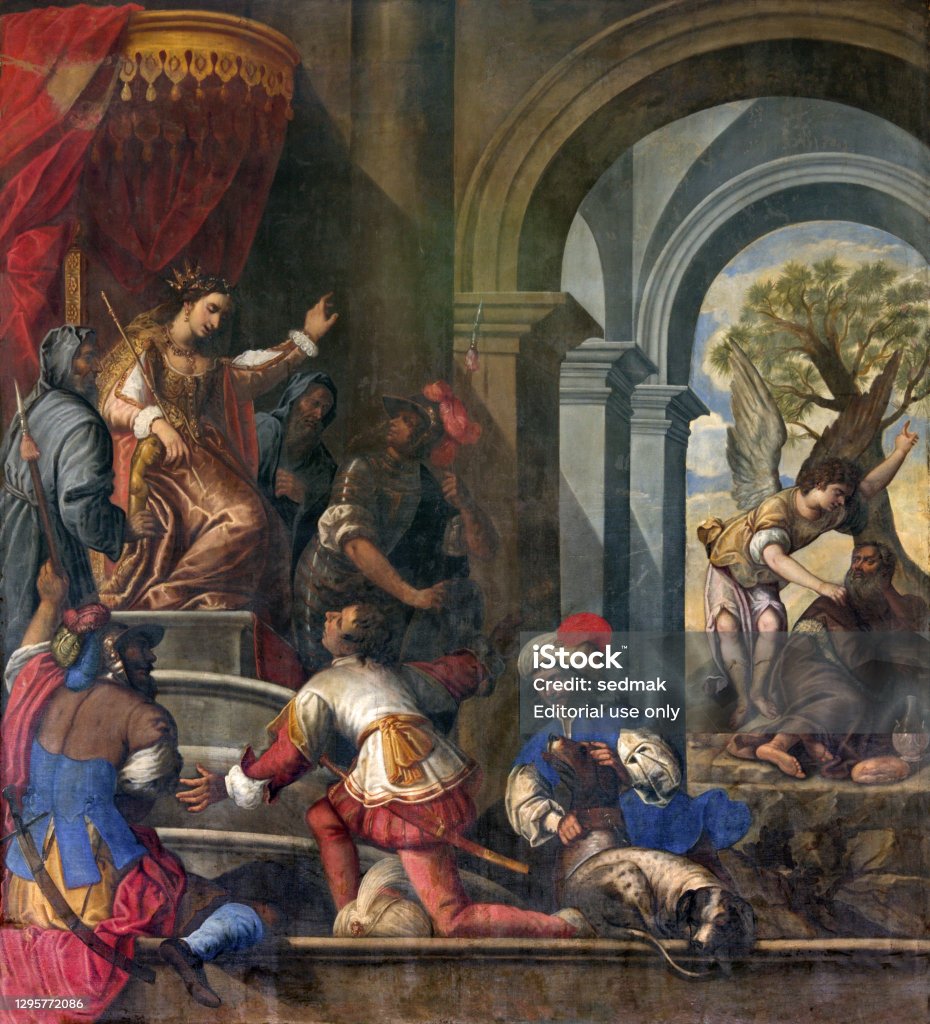

Despite the awesome display of God’s awesome power summoned by Elijah’s undaunting faith before King Ahab and his prophets, the wicked Queen, Jezebel, was not moved. She ordered Elijah to be arrested and killed on sight.


When Elijah heard her decree, he fled into the desert, where he sat down under a broom tree in bitter disappointment and anger at the way things turned out.  

Couldn’t Elijah call fire down on Ahab and Jezebel? Why didn’t he do it? Elijah had just slaughtered all the King’s prophets after showing them up with fire from the heavens. When Jezebel wasn’t phased, Elijah fled in fear.

Elijah may have run in a moment of fear, but his fear turned to anger and disappointment, like Jonah. Both of them ended up under a tree that provided them shade. God ministered to both of them in their dejected state.

Elijah kept going south, all the way to the mountain where God met Moses on the Sinai Peninsula. In the cave where he took shelter, God came to him, asking, “Elijah, why are you here?” Then, Elijah let God have the full weight of his disappointment and anger:

“I have been most zealous for the Lord, the God of hosts, but the Israelites have forsaken your covenant. They have destroyed your altars and murdered your prophets by the sword. I alone remain, and they seek to take my life.”

1 Kings 19:10

But, God was patient. He told Elijah to stand at the mouth of the cave so the Lord can “pass by”. “A strong and violent wind rending the mountains and crushing rocks” came, but the Lord wasn’t in the wind. Then an earthquake came, but the Lord wasn’t in the earthquake. After the earthquake, came a fire, but the Lord wasn’t in the fire. (1 Kings 19:11-12)

Finally, “a light silent sound” came, and the Lord said to Elijah, again, “Why are you here?” God was not in the mighty displays of wind, earthquake, and fire. God was in a still, small voice.

Yet still, Elijah was fixated on his own disappointment and anger and responded exactly as he did before:

“I have been most zealous for the Lord, the God of hosts, but the Israelites have forsaken your covenant. They have destroyed your altars and murdered your prophets by the sword. I alone remain, and they seek to take my life.”

1 Kings 19:14

Elijah’s disappointment, anger, and indignation turned toward God. “They destroyed your alters and murdered your prophets!” Elijah said. It’s everyone’s fault but his. It’s ultimately God’s fault, right? Because Elijah knew what God could do. God could have destroyed Ahab and Jezebel in a ball of fire, but He didn’t.

In similar fashion, God asked Jonah twice, “Why are you angry?” (Jonah 4:1 and 4:9) Twice Jonah responds exactly the same way: “It is better for me to die!” (Jonah 4:3 and 4:8) It’s the same pattern for Elijah and Jonah.

At the end of Jonah, God asks the rhetorical question, “Should I not have concern for the great city of Nineveh?” But, Jonah doesn’t respond. (Jonah 4:10) Jonah didn’t want God’s compassion for Nineveh. He wanted them to burn.

We don’t know what became of Jonah, but we do learn the rest of the story of Elijah. God sends him back to Damascus to anoint a new King and pass his prophetic torch to Elisha. (1 Kings 19:15-18) When Elijah pronounced God’s judgment on the wicked King Ahab, the King humbled himself and repented, and God spared him (just like Nineveh). (1 Kings 21:27-29)

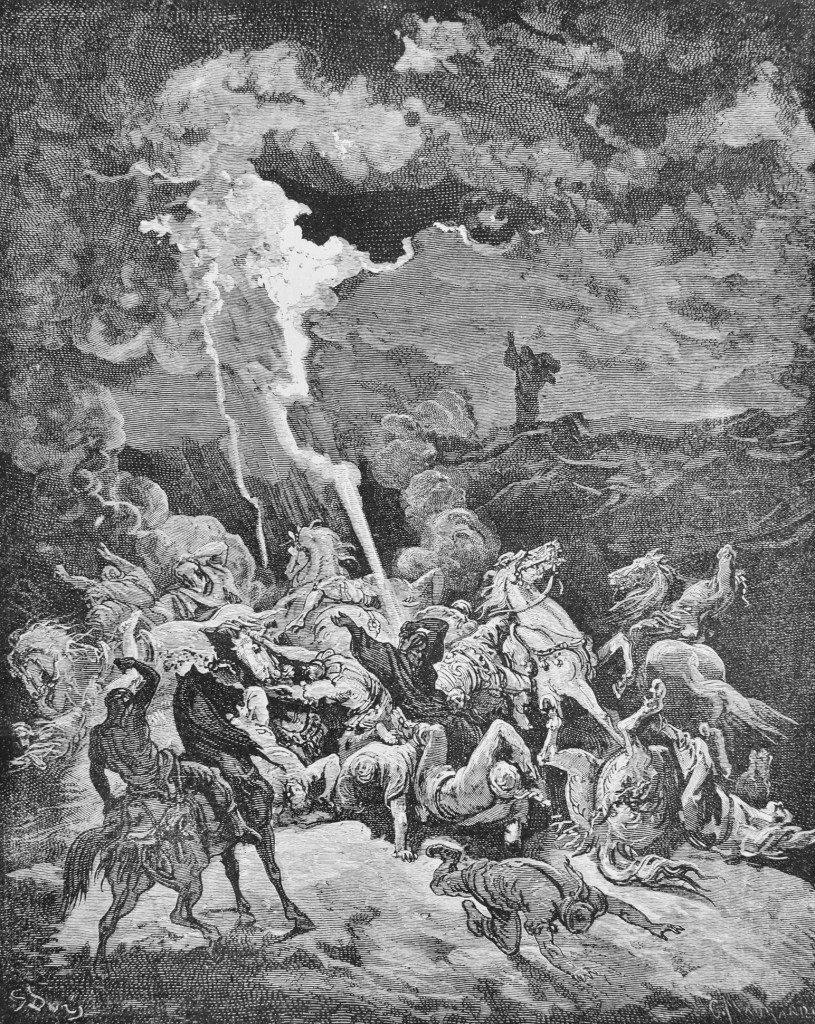
Eventually, Ahab’s son, Ahaziah, took over, and Elijah continued with his righteous taunts. Ahaziah sent fifty men to summon Elijah before him, and Elijah called down fire to destroy them. (2 Kings 1:10) Ahaziah sent another company of fifty men to summon Elijah, and Elijah called down fire again to destroy them. “(2 Kings 1:12)


Elijah is the prophet who called down fire. He was a man of great faith. He had great confidence in God. He was a firebrand, himself, in his sense of God’s righteousness and communication of God’s righteousness to the false prophets, the unrighteous and wicked leaders of his time, and even on the remnant of God’s prophets who escaped the sword only hid away in a cave.

Jonah had similar confidence in God. After the people of Nineveh repented and God relented, Jonah said, “I knew it! That’s what I said! That’s why I went the other way, because they don’t deserve it! Just take my life.” (Jonah 4:2-3)(my paraphrase)

Jonah and Elijah are held out in the Bible as God’s prophets and men of great faith, but they are flawed. They are self-righteous. They have a hard edge. The desire judgment, and they don’t love as God loves.

Their disappointment and anger stems from their desire to see the wicked people destroyed. God’s desire is ever to save, to have compassion, and for people to repent so God can show mercy. God’s great desire is not to judge, but to be gracious:

Truly, the Lord is waiting to be gracious to you,
    truly, he shall rise to show you mercy;
For the Lord is a God of justice:
    happy are all who wait for him!

(Isaiah 30:18) God’s justice is ultimately to be gracious and to show mercy. Justice and mercy are not divorced from each other; they are intertwined. His judgment is meant to bring us to repentance so that He can have mercy on us.

When we have our act together and have great faith, our temptation is to desire judgment for its own sake, but God is not like that. Jesus, who was the exact representation of God in the flesh, shows us God’s heart when his disciples returned from traveling the countryside to tell people about the kingdom. The disciples wanted to call down fire on the people who rejected them and refused to welcome them, and Jesus rebuked them.

When we find ourselves disappointed and angry at a world full of sinners who deserve judgment, we need to think of Elijah and Jonah and the counterexample of God in dealing with Nineveh and Jesus in rebuking the disciples. God is “merciful and gracious, slow to anger, and abounding in steadfast love.” (Exodus 34:6-7) God takes no pleasure in the death of the wicked. (Ezekiel 18:23 and 33:11)

We can laud Elijah and even Jonah for their faith and (ultimately) their obedience, but we need to recognize that they didn’t understand God’s heart of compassion for people. They didn’t understand God’s desire for mercy and grace. God ultimately wants more than our raw belief and cold obedience; He desires “mercy, not sacrifice.” (Hosea 6:6 and Matthew 9:13)

God wants out hearts, and He wants us to see the world as He sees it. He wants us to love even our enemies (the wicked) and to sacrifice ourselves for the good of others as He sacrificed Himself for us in Christ. Thus, Jesus emphasized forgiving as we have been forgiven and showing mercy as God has shown mercy to us:

“Judgment without mercy will be shown to anyone who has not been merciful. Mercy triumphs over judgment.”

(James 2:13) When we are tempted to be judgmental and righteous, we need to remember that God has been gracious to us, and He desires – above all – to be gracious to the world. When we are bitter and angry at the sin in the world, we need to remember that Jesus came into the world not to condemn it, but to save it, just he saved us.


What is the Attitude Christians Should Have on Immigration?

A Christian’s attitude on immigration should be informed by the Bible


In 2014, during the Syrian refugee crisis, I watched the flood of humanity escaping from the ruthless butchery that occurred during that time in that region of the world. I recall the controversy in the various countries to which this seemingly unending stream of people fled in desperation and anger. Some countries like Germany opened the floodgates; other countries like Hungary closed their borders.

I empathized with people who didn’t want their countries overrun by foreign refugees. I watched the mass of displaced foreigners overwhelming the roads and rails in Europe, and I read stories of mobs of young Arab men taking out their anger on the countries they entered and women they encountered there.


I saw mothers and fathers with desperation in their eyes and fearful children in tow. The image of a lifeless little boy washed up on a sandy Mediterranean beach still haunts me.


Syria was home to the oldest population of Christians on earth, and Christians were caught in a sectarian and political power struggle between largely Muslim factions fighting for and against Democracy. Both Christians and Muslims fled from the conflagration between the deadly governmental crackdown against the popular rebel uprising, and the ruthlessly uncompromising, opportunistic butchers of ISIS who joined in the fight.

Though many of the refugees were Christians caught in the cross fire, and the though the rebels fought for Democracy, President Obama resolutely refused to open American borers to more than a handful of Syrian refugees. As the flood of humanity streamed into Turkey and Europe, we stood aloof.

I was torn. The throngs of young and angry Muslim men mixed with desperate parents and fearful children pulled me in different directions, and I didn’t know how to respond.

I had recently done an apologetic study of Christianity vs. Islam, and my concern about the angry, displaced Muslims was keen. President Obama and the Democratic majority acted as if the moral fabric of the universe would rend in two if we verbalized what everyone knew and thought: that angry young men indoctrinated by radical Islam are dangerous.

Yet, the faces of those parents and children and the haunting visage of the 3-year old Alan Kurdi lying lifeless and washed up on a Mediterranean shoreline begged for a compassionate response.

I realized in that conflict of opposing strains of response to the Syrian crisis that I really had no idea how a Christian should look at these things. I realized that I didn’t know what, if anything, a robust reading of Scripture might suggest.

So, I did what I should have done a long time before that. I did a deep dive into what the Bible has to say about immigrants.

For anyone who does not honor or respect or believe in the Bible, this won’t mean much to you. For me, it was important to know whether the Bible addressed the subject and, if so, what the Bible has to say about it.

Continue reading “What is the Attitude Christians Should Have on Immigration?”

Justice and Mercy and the Faithfulness of God

God waits to be gracious


Isaiah says. “[T]he Lord waits to be gracious to you.” He desires and longs to be gracious. In modern vernacular, we might say that God cannot wait to be gracious to us! 

We may think that God exalts Himself in showing judgment. We might imagine Jesus coming on a white horse judging and making war in righteousness with a sword coming from his mouth as the supreme exaltation of God. (Revelation 19-11-16) But, God doesn’t exalt Himself in showing Judgment. He exalts Himself in showing mercy.

God is God. He could judge the world at any time. He could utterly overwhelm us with presence and power right now. He could wipe humankind off the face of the earth in a moment, but He doesn’t do that.

God waits to be gracious to us, and He exalts Himself by showing mercy. God’s greatness is seen most authentically in showing mercy.

This is because God is a God of justice. We might be tempted to think that justice is the opposite of mercy, but justice turns out to be wrapped up in mercy. The greatest expression of God’s justice is on display in God showing mercy.

Justice, then, is not in opposition to mercy; justice and mercy are not opposites. They are brothers. Justice and mercy are mutually dependent on each other. One does not exist without the other.

For this reason, James says, “Judgment will be without mercy to anyone who has not shown mercy.” James 2:13 We might think we want judgment to come, but it’s justice with mercy that we want and need. If think we do justice without showing mercy, we are do neither, and neither justice nor mercy will be done. 

Mercy triumphs over judgment, according to James. That means that mercy is God’s ultimate goal. Not judgment, but mercy

As Christians, we should know this. Jesus came not to condemn, but to save. He is the Good Shepherd who leaves the 99 in search of the one, lost sheep. Jesus came not for the righteous but for this sick with sin. He came not to judge but to save.

Jesus warned the Pharisees about heaping heavy, cumbersome loads on other people’s shoulders. (Matthew 23:4) He warned them about shutting the door of the kingdom of heaven in people’s faces. (Matt. 23:13) And, he warned them about neglecting the more important matters of the law—justice, mercy and faithfulness. (Matt. 23:23)

Justice is not justice without mercy. God is just, merciful and faithful. So, we wait – so we trust – in Him. He who is merciful and just is faithful and just to forgive us when we confess our sins (1 John 1:9) because God waits to gracious.

We should wait always to be gracious and merciful because God is merciful in His justice with us.

Each: How to Be a Ruler in Your Corner of the Kingdom of God Today

We are vassals of King Jesus, a royal priesthood, ambassadors of Christ


“Behold, a king will reign in righteousness, and princes will rule in justice. Each will be like a hiding place from the wind, a shelter from the storm, like streams of water in a dry place, like the shade of a great rock in a weary land. Then the eyes of those who see will not be closed, and the ears of those who hear will give attention.”

Isaiah 32:1-3 ESV

A king will reign in righteousness!

What king in the history of the world has ruled in righteousness?

Maybe there is one I don’t know about. If you believe the Bible, though, no man is righteous. Not one. (Romans 3:10-12)

Only one person in history might fit this description, and his name is Jesus. Pilate called him “king of Jews”, and Jesus didn’t deny it (John 18:33), but he died on a cross at the hands of the dominant power in the First Century: Rome.

During his life, Jesus predicted his death, but he said he would come again. (See, for instance, John 5:28-29, 14:1-3; Luke 21:25-28; and Matthew 24:23, 36-44) His First Century followers claimed that Jesus rose from the dead, and he ascended to the right hand of God. (Revelation 3:21; Matthew 22:44; Acts 2:33) They wrote about his coming back to rule the earth. (See, 2 Peter 3:10, 4:7: 1 Thessalonians 4:16-17, 5:1-3; Hebrews 9:28) In the vision John the Apostle famously saw, he says:

Behold, he is coming with the clouds, and every eye will see him, even those who pierced him, and all tribes of the earth will wail on account of him. Even so. Amen.

Revelation 1:7

“See, I am coming soon; my reward is with me, to repay according to everyone’s work. I am the Alpha and the Omega, the first and the last, the beginning and the end….”

Revelation 12:12

During his life, Jesus said he came to preach the good news of the kingdom of God, (Luke 4:43), and he traveled around from town to town “proclaiming the good news of the kingdom of God.” (Luke 8:12) He said the kingdom of God has come (Luke 10:9), and it is in our midst. (Luke 17:21)

From these things, we learn that Jesus claimed to have brought the kingdom of God to earth, but he also said he would die. He also said he would rise from the dead, and come again. His followers claim he did rise and return in the flesh, but only for 40 days. Then, he left and ascended into heaven.

Jesus said, and his followers claim, that he would come again (again), but that hasn’t happened yet. In the meantime, Jesus claims he introduced the kingdom of heaven on earth. So, where is it?

Jesus told Pilate his kingdom is “not of this world.” (John 18:36) And, he said this right before he was crucified We might write Jesus off as a lunatic except for the fact that he seems to have risen from the dead according to hundreds of his followers (1 Corinthians 15:3-8), and he spent time with them over 40 days before he reportedly ascended to the right hand of God. (Acts 1: 3–4)

Even for people who have difficulty believing these claims, no one can deny the lasting influence Jesus has had. One has to wonder how such a person who was not born into nobility, who was not even a ranking religious leader in his local community, who worked with his hands, who never had political power or influence, who was poor, and who is more famous for dying than living could have become the symbol and hope of Western Civilization. Not only that, but he is revered, followed and worshipped in every nation around the world.

Paul called followers of Jesus “ambassadors” with a “message of reconciliation”. (2 Corinthians 5:18-21) He says this because Jesus came to reconcile the world to himself – to God the Father, with whom Jesus called himself one. He cam to reconcile the world to God, and we who follow him are commissioned to share the same message.

This is the good news of the kingdom of God: freedom for people who are imprisoned and oppressed, recovery of sight to the blind, and an invitation to enter into God’s favor – His kingdom. (Luke 4:18-19) Jesus is the king of this kingdom that is not of this world.

But, we are to be despised of all people on the earth if we have nothing but a kingdom that is not of this world (and nothing beyond it). If Jesus was not raised from the dead, we have nothing, and our faith is less than useless.

Thus, the testimony of those early followers who watched him die on a Roman cross and be buried and who claimed that he appeared to them, sat with them and broke bread with them, and taught them for 40 days before he ascended into heaven is the foundation of our faith. (1 Corinthians 15:3-7)


Because of their witness, we believe his promise that he will come again to bring his other-worldly kingdom to this earth in a final resolution and redemption of all that God created. If we trust the Bible, we find that his coming was foretold centuries before he was born:

“Wonderful Counselor, Mighty God, Everlasting Father, Prince of Peace. Of the increase of his government and of peace there will be no end, on the throne of David and over his kingdom, to establish it and to uphold it with justice and with righteousness from this time forth and forevermore.”

Isaiah 5:9-7

“One like the son of man” was also foretold by Daniel, a person who would be “given dominion and glory and a kingdom, that all peoples, nations, and languages should serve him….” (Daniel 7:13-14) Jesus claimed to be this “Son of Man”. (See, Matthew 16:13-20 and Luke 22:48) Indeed, Christians believe Jesus is this Son of Man who was foretold, and that he will come again to judge the living and the dead.

Jesus is the “king who will reign in righteousness!” And Isaiah says that “princes [rulers, officials, captains] will rule in justice.” Among the meanings of the Hebrew word sar (שַׂר) is a vassal (a protected servant of the king), who has power and authority under a king. As followers of Jesus, that is us!

We are all vassals of King Jesus. Peter calls us a “royal priesthood”. (1 Peter 2:9) Isaiah says that each of the vassals of the king of righteousness will rule with justice. Each of us!

How do we do that today in the kingdom of God that is not of this world?


Continue reading “Each: How to Be a Ruler in Your Corner of the Kingdom of God Today”

Current Lessons in the Parable of the Good Samaritan: Focusing on the Weightier Matters of the Law

We often fail to help people in need because we are focused on the good things we are doing

I have been involved in the faith-based legal aid organization, Administer Justice, in different capacities for about 12 years. I am an attorney. AJ is an organization founded by an attorney, Bruce Strom, who left his lucrative law practice to provide pro bono (free) legal services for people who can’t afford a lawyer. AJ helps churches run Gospel Justice Centers.

Bruce’s book, Gospel Justice, describes his calling and the journey he began over 20 years ago. Gospel Justice follows the familiar parable of the Good Samaritan and what it means to love your neighbor as God commands. Implicit in the parable is the question: who is my neighbor?

I have learned recently, that parables were common in the rabbinical tradition of the time, and the set up of a priest, a Levite and a third person was a common parable structure. It is the equivalent to the modern set up for a joke: a priest, an Irishman, and a Scotsman walk into a bar…..

According to Marty Solomon of the BEMA Podcast, the third person (the one through whom the lesson is learned) was often a Pharisee in the rabbinical Jewish tradition of the First Century. Jesus turned the tables by making the third person a Samaritan.

Samaritans had Hebrew DNA. They were ancestors of the Israelites who were left behind during the exile. They had intermarried and changed their religious practices to accommodate their mixed marriages and life without the Temple. The Jewish remnant that returned to rebuild the Temple saw them as mongrels who abandoned the faith. For Centuries, Samaritans were despised by the Jews who rebuilt the Temple and carried on the traditions of the Mosaic Law.

The priests and Levites represent good, religious people and the devotion to traditional values. They represent respectable, hard-working people who have faithfully kept those traditional values through hundreds of years of faithful adherence in difficult times.

When the priest and Levite in the parable pass by the anonymous, injured man on the road, we react with modern sensibilities that are honed by two millennia of Christian thought, tradition, and conditioning to judge them. First Century Pharisees, however, would have viewed the situation differently.

The injured man had no identify. They might have wondered who he was. (Raising the question: who is my neighbor?) Pharisees and Sadducees may have disagreed on whether aid should be offered to Gentiles, but they would have agreed that the mongrel Samaritans did not merit their aid.

They also would have recognized that the priest and the Levite had good reasons to pass over to the other side of the road and keep going. Among other things, priests were forbidden to touch a corpse. (Lev. 21:1–3) Touching a corpse, or even being in the same space as a corpse meant impurity, and they needed to maintain purity to perform their duties.

The rules that governed these things were complex and nuanced. (See Introduction to the Jewish Rules of Purity and Impurity) Becoming impure meant that a priest could not attend to his ritual duties without going through a time of ritual cleansing. The risk that the injured man might be dead was no small consideration to them.

Perhaps, this seems like being generous to them, but their lives revolved around the rituals handed down centuries ago in the Torah. They were sacred, and their identity and their purpose in life revolved around maintaining those rituals, which they had done since the time of Moses, the great, great grandson of Levi.

If we think times and people are different now, they are, but less so than we might be tempted to think. Most modern Americans (even religious ones) do not practice ritual like First Century Jewish leaders did. We are less religiously ritualistic, perhaps, than ever before. Yet, we are no different, really, in our devotion to our own values and doctrines.

Continue reading “Current Lessons in the Parable of the Good Samaritan: Focusing on the Weightier Matters of the Law”