A Wake Up Call to Evangelicals as We Watch the Undoing of Our Past Success

One can agree with the goal to identify waste and corruption and weed it out, but at what cost?


The absurdity of what is happening now is hard to reconcile with the reality of it. The history of how we got here seems to have been lost. Some Evangelical Christians are now cheering the process of undoing what Evangelical Christians fought hard to get not very long ago.

My thoughts today come from a man I have met, and I have heard speak at the Administer Justice Restore Conference in Elgin, IL in 2018. Soong-Chan Rah was professor of Church Growth and Evangelism at North Park Theological University just outside of Chicago at that time. Now he is professor of Evangelism and Church Renewal at Fuller Theological Seminary in California. He planted New Covenant Fellowship Church in Baltimore, MD, where he grew up, and he founded the Cambridge Community Fellowship Church in Massachusetts when he was at Harvard. He has multiple theology degrees. He has worked for InterVarsity Christian Fellowship, and he served on the boards of the Christian Community Development Association and World Vision, among other things.

Dr. Rah is not just a lifelong evangelical; he has undergraduate degrees in history and sociology. The combination of his personal history (born in Korea, grew up in the US from the age of about 5, raised by a single mother in the inner city), education, and experience give him an unique position from which to comment about the whirlwind of executive action Donald Trump has taken since the inauguration less than two months ago.

Dr. Rah sounded this alarm for the US Evangelical Church:

Wake up Evangelical Christians. The dismantling of USAID is not the confrontation of corruption and liberalism, it is a MIDDLE FINGER to Evangelical Christians who still adhere to the tenets of Scripture.

A short history lesson. Under the Bush administration, there was a move by evangelical Christians to access government funds to support the work of compassion and mercy. Government funding should not discriminate between a religious organization and a non-religious organization if the work is being done for the common good. This move was supported widely across the political spectrum as an action that prevented discrimination against Christian ministries. One of the key expressions of this policy change was access to USAID funds by Christian relief and development organizations. Christian organizations could now access USAID resources (e.g. – surplus US grain purchased by USAID in support of US farmers, in turn that grain became GIK donations to be distributed by US Christian organizations that often served international communities). In other words, one of the efforts by the US government to actually reflect the value of a Christian nation through the work of Christian organizations was completely wiped out while Evangelicals cheered two of the most non-Christian people in the world.

Wake up US Evangelicals. You are not just being played and used, the very people you cowtow to are actually mocking all the values you claim to espouse.

February 12, 2025

While I have no doubt that “corruption and liberalism” exists at USAID, many Christian organizations do their ministry with USAID support. Evangelicals fought for and earned a right at the table not that many years ago to receive federal funding to run the humanitarian programs supported by USAID. Organizations like Samaritan’s Purse, World Relief, and World Vision depend heavily on USAID and could not begin to do what they do without USAID support.

We need to be mindful that God calls His people throughout Scripture to do justice for widows, orphans, and strangers. Justice in the Bible includes caring for the weak and vulnerable in our society. Do you think that God does not bless a nation that taxes its citizens who have means to do justice for the poor and vulnerable who have no means?

USAID does just that domestically and around the world, and many Christian organizations like the ones I have mentioned do biblical justice with USAID funding. These organizations cannot do what they do on the scale they do it without this funding.

Many organizations would not fall into the category of doing biblical justice, of course. It should be no surprise to anyone that changes in the political powers every election cycle results in changes in how federal funding is used. That is the reality of a democracy. Do you really think that the current changes will not be changed again in four years?

The difference is that the infrastructure for this funding is now being completely dismantled. In just a few short weeks. Years of diligent and faithful effort by Evangelicals to fund ministries of justice are being undone in a virtual moment. The proverbial baby is being thrown out with the bathwater. Some might say that a wrecking ball is being taken to the hospital with the patients and hospital workers still inside!

The funding freeze, firings, and mandates to stop work have come with no attempt to sort the good from the bad. The axe has been laid to the trunk with no attempt to prune and preserve the tree.

As I have thought about these things, warnings of God’s judgment hang in the air. The warnings of God’s prophets are nearly always directed at God’s people because God expects His people to listen to and respond to what He says. Is not the Bible clear on what God desires from His people?

“He has shown you, O mortal, what is good. And what does the LORD require of you? To act justly and to love mercy and to walk humbly with your God.”

Micah 6:8
Continue reading “A Wake Up Call to Evangelicals as We Watch the Undoing of Our Past Success”

What Does It mean that the Kingdom of Heaven Is Subjected to Violence, and Violent People Take It By Force?

Does Jesus authorize violent or forceful behavior in defending Christianity?


I engage in many conversations with people of faith on just about any topic. I remember one conversation (on the topic of guns, I believe) in which a fellow believer cited Mathew 11:12 in support of a Christian defense of gun ownership.

“From the days of John the Baptist until now, the kingdom of heaven has been subjected to violence, and violent people have been raiding it. For all the Prophets and the Law prophesied until John. And if you are willing to accept it, he is the Elijah who was to come.” Matthew 11:12-14 NIV

My friend also mentioned Jesus turning over tables and instructing his followers to buy swords (Luke 22:36, though he tells them in the same chapter to but them down (Luke 22:49-51); “for all who draw the sword will die by the sword.” (Matthew 26:52)). My friend believes that Jesus was saying that force, and even violence, is ok as long as it is used for a good purpose.

I am reminded of his comments as I read through Matthew 12 in my yearly reading plan. I didn’t follow up on his comment then, but reading this passage in context brings it to mind, and it brings clarity to me at the same time.

Does this passage justify violent or forceful behavior in defending Christianity? That is the question

Let’s start with the context. Jesus is preaching in Galilee where John the Baptist has recently been imprisoned for calling out Herod for adultery. John was no shrinking violet. He was bold and forthright, and it landed him behind bars when Herod didn’t take kindly to the criticism.

While in prison, John heard reports of the miraculous things that Jesus was doing. These reports prompted John to send his own followers to ask Jesus, “Are you the one who is to come, or should we expect someone else?” (Matt. 11:3).

I imagine John the Baptist was wrestling with doubt as he languished in prison. In his mind, and in the minds of most Jews at that time, the Messiah was expected to come and take over the world, but it didn’t seem to be happening. The Roman Empire was still very much in charge.

John’s imprisonment must have given him second thoughts about the Messiah stuff. The miraculous signs seemed to mark Jesus as the Messiah, but why was he not wielding the power and the glory of God against the Roman occupation and Roman Empire? John the Baptist may have been hoping that Jesus was just biding his time when he sent for a report.

Jesus sent this message back:

“Go back and report to John what you hear and see: The blind receive sight, the lame walk, those who have leprosy are cleansed, the deaf hear, the dead are raised, and the good news is proclaimed to the poor. Blessed is anyone who does not stumble on account of me.” (Matt. 11:4-6) (quoting Isaiah 35:5-6)

Was that the report John was expecting? Jesus didn’t say anything about driving out Rome and restoring King David’s throne. He didn’t pull from the prophetic messages about a conquering messiah. He pulled a different thread in the prophets.

When John’s followers left, Jesus praised John the Baptist to the disciples. He affirmed that John the Baptist is the one spoken of in Malachi 3:1 – the messenger sent ahead of the Messiah to prepare the way. He affirmed that he is the Messiah, but the Messianic message he sent back to John was about healing, cleansing, and good news to the poor.

In this context, Jesus said, “the kingdom of heaven has been subjected to violence, and violent people have been raiding it.”

Jesus seems to be confirming only what John was already hearing about the miraculous signs, but John already knew about those things. Therefore, I think Jesus was doing more than confirming what John already knew. Jesus was tying what he was doing to prophetic passages like the language he quoted from Isaiah when he announced his public ministry (Luke 4:18-19):

“The Spirit of the Lord is on me,
    because he has anointed me
    to proclaim good news to the poor.
He has sent me to proclaim freedom for the prisoners
    and recovery of sight for the blind,
to set the oppressed free,
     to proclaim the year of the Lord’s favor.”

These words from Isaiah 61:1-2 with overtones from Isaiah 58:6 were read aloud by Jesus in his hometown synagogue in Nazareth before he sat down with all eyes on him and said, “Today this scripture is fulfilled in your hearing.” (Luke 4:21) These are the words Jesus used to to characterize the purpose for which he came.

We know, of course, that Jesus came to die on a cross, but John and his followers didn’t know that and probably could not have imagined it. Jesus’s followers didn’t get it even when he tried to tell them.

Jesus pulled passages from Isaiah that alluded to the suffering servant motif to affirm his identity. John the Baptist would have immediately recognized the thread Jesus was pulling, but it wasn’t what he was expecting.

First Century Jews were expecting the Messiah to reestablish the Davidic kingdom “here and now”. The Romans were well aware of that Jewish sentiment and had been putting down factions of zealots who took up the sword to attempt to bring it about.

Imagine Pontius Pilate’s confusion that prompted him to ask Jesus, “Are you the king of the Jews? …. Your own nation and the chief priests have delivered you over to me. What have you done?” This is how Jesus responded to Pontius Pilate:

“My kingdom is not of this world. If my kingdom were of this world, my servants would have been fighting, that I might not be delivered over to the Jews. But my kingdom is not from the world.” (John 18:36)

With this as the backdrop, let’s turn back to Matthew 12. If we understand the context, and the bigger picture, we see that Jesus is not advocating violence or force: he is doing just the opposite.

Continue reading “What Does It mean that the Kingdom of Heaven Is Subjected to Violence, and Violent People Take It By Force?”

What We Can Learn from the Letter to Diognetus

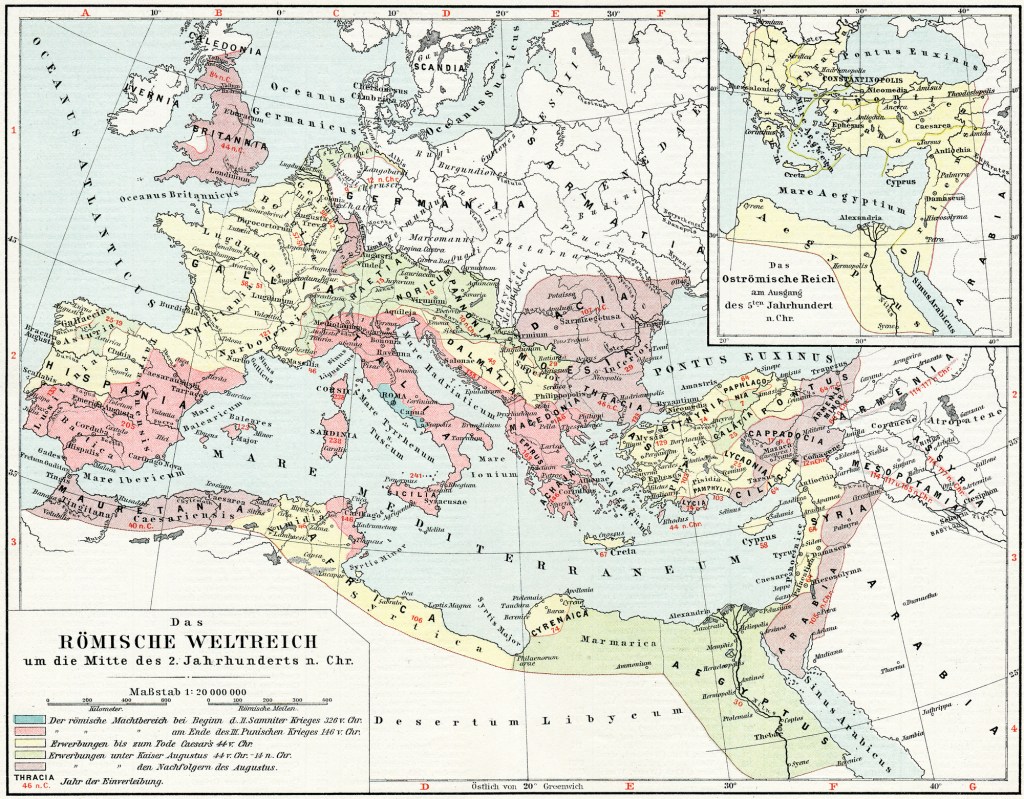
Map of the Roman Empire, 2nd century AD. Publication of the book “Meyers Konversations-Lexikon”, Volume 7, Leipzig, Germany, 1910

Fellow blogger Joel Edmund Anderson wrote a short summary of the Letter to Diognetus on his blog, Resurrecting Orthodoxy (March 19, 2022). This is part of his series on early church fathers.

I feel like we tend to believe that we have advanced from our peers centuries ago, and I am ever skeptical of that advancement. I tend to believe the writer of Ecclesiastes:

What has been will be again,
    what has been done will be done again;
    there is nothing new under the sun.

Ecclesiastes 1:9

Yes, we have made great technological advancements, but how different are people, really? I direct your attention to the Ukraine where Russian bombs fall on hospitals, schools and people fleeing a war with very questionable motivations.

Lest we be too smug, more people died at the hands of despotic rulers in the 20th Century than all the previous centuries combined.

But, I don’t want to preach, and I don’t exempt myself from my personal indictment. I am not exempt. People are still people, and we have a tendency to do bad things.

On this point, though, I like reading the thoughts of ancient minds to remind myself of the ways in which we tread the same ground. The Letter to Diognetus is a good example, and I commend the article I have linked for your consideration.

Joel Edmund Anderson observes that the Letter to Diognetus is the first communication (in records we have) attempting to explain Christianity to pagans. It was written early, around 130 AD, and it distinguishes Christianity from Judaism and from paganism.

Who is Diognetus? What was the occasion for the letter? Was the letter sent unsolicited? Did Diognetus inquire about Christianity? Was it the product of a discussion? Who wrote the letter? We don’t know.

I imagine the letter wasn’t unsolicited. Writing utensils and parchment, papyrus or whatever medium was used then not in abundant supply in the 2nd Century. Writing was an effort.

That the letter was preserved speaks, perhaps, to the way the letter was received. Whoever received this letter thought it was valuable enough to keep it and preserve it.

As I read the summary of the letter today, though, I am interested in several points made in the letter and how they relate to us 19 centuries later.

Continue reading “What We Can Learn from the Letter to Diognetus”

The Group Affiliations the Apostles Had and What It Might Mean for Us

When I look at American expressions of Christianity today, I wonder if we demonstrate the right way to follow Jesus.

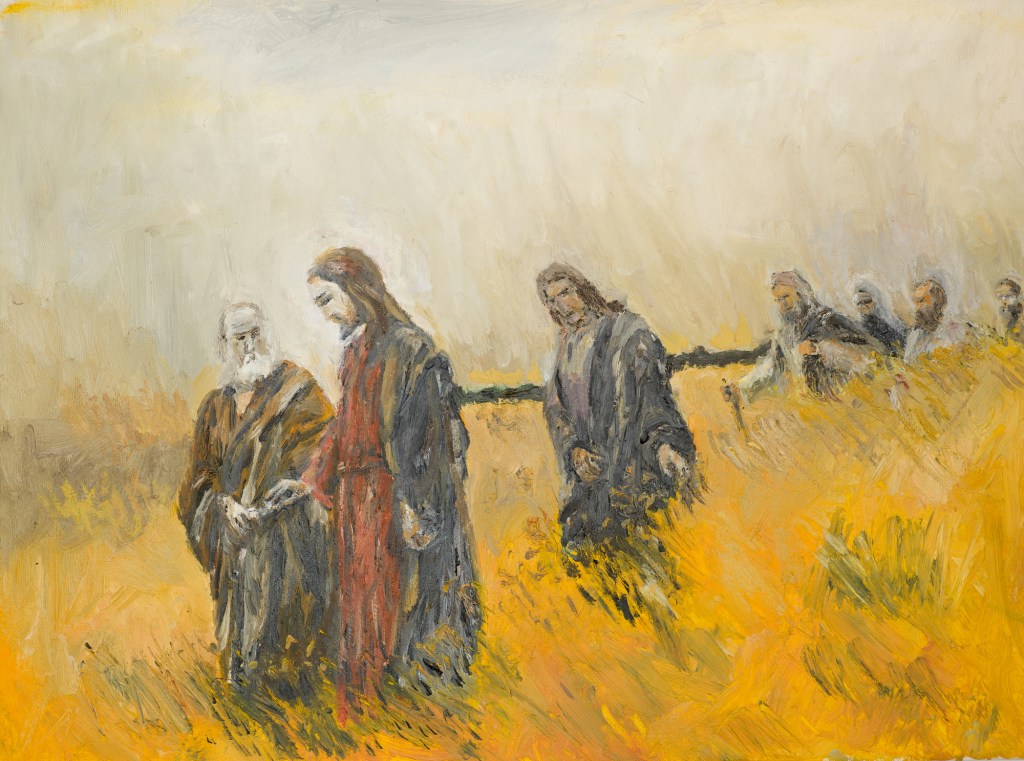
Oil painting illustrating Jesus Christ and his disciples on a meadow

I have spent some time lately considering the various influential groups of people in the time of Jesus and the orientation of those groups toward Jesus. I have wondered why Jesus seemed to pick on the Pharisees more than the other groups, especially since they seemed most aligned with him and had the most in common with him.

As I researched and thought about the various groups of Jewish influencers in the First Century in relation to Jesus, I began to think about the apostles, and their connections to these groups. I am always mining for insight as I read Scripture, and today my mind turns toward the relationship of the twelve apostles to those same groups of First Century, Jewish influencers.

We don’t know much about the background of the twelve disciples, except that most of them were “common” men of generally humble means. One disciple was identified with the Zealots (Simon, the Zealot, also known as Simon the Canaanite). Matthew, the tax collector, might have been Herodian (or may have been viewed as one).

We really don’t know about the group affiliation of the other disciples, at least not from the explicit text. They seem to have been ordinary people with no distinct association with particular groups. They did not seem to be closely associated with any of the five groups Jewish leadership groups in First Century Judea.

Even Simon, who is known as the Zealot, probably left his group behind to follow Jesus. Just as Matthew left behind his livelihood (tax collection) to follow Jesus. Of course, Simon (Peter) and Andrew dropped their fishing nets to follow Jesus, as did the brothers, James and John. It’s no stretch, therefore, to imagine that Simon, the Zealot, would have similarly “dropped” or left behind his affiliation with the Zealots to follow Jesus.

In fact, the theme of leaving behind your group seems to run throughout the teaching and example of Jesus. Jesus said, “[E]veryone who has left houses or brothers or sisters or father or mother or children or lands, for my name’s sake, will receive a hundredfold and will inherit eternal life.” (Matt. 19:29)

He called Peter and Andrew and James and John away from their profession of fishing. He called Matthew, the tax collector, away from his profession of tax collecting. I think it’s fair to assume that Jesus called Simon, the Zealot, away from the Zealots to follow him.

The theme of leaving behind family, livelihood and group identity runs deep in Scripture, all the way back to Abram (as Abraham was originally known) when God called Abram to leave his country, his people, and his father’s household and go to the land God would show him. (Gen. 12:1)

Hebrews 11 commends Abraham for the example of faith demonstrated in responding to God’s call and leaving behind the familiarity of all the things that typically identify people and their place in the world. Abraham and all the people of faith commended in Hebrews 11 demonstrated a kind of faith that made them “aliens and strangers on earth”.

Jesus called the rich young ruler to walk away from his wealth. (Matt. 19:16-30) Jesus told Nicodemus, the Pharisee, that he would have to be born again to see the kingdom of God. (John 3:3) Nicodemus was born into an enviable position in his community and may have winced at the thought of needing to be “born again”.

The kingdom of God is something I have been mulling over for many weeks, and months. It’s a theme I have written about often lately, and it has occupied a prominent place in my meditations lately.

The five main groups of Jewish influencers in the First Century had one thing in common – they were operating on a spectrum of influential relationship to the political structures and religious structures in their world. They were invested and embedded into their positions, and identities, with the people with whom they affiliated – like the partisanship and critical group affiliations we have today.

Along came Jesus, however, and he called people “out of the world”. (John 15:18-19) Jesus called people to leave their lives, and identities, and associations behind to follow him. I believe he is still calling people to the same allegiance today.

We don’t know much about the backgrounds and affiliations of the twelve disciples, perhaps, because they did just that. They left those things behind to follow Jesus. They became known, simply, as disciples of Jesus. They were, simply, Christ followers.

I am interested in these things because of what it means for us. If we would be disciples of Jesus and Christ followers, how do these things translate to our lives in the 21s Century?

Continue reading “The Group Affiliations the Apostles Had and What It Might Mean for Us”

Coming Out of the Shadow of the Law and the Mystery of Parables into the Light of the Gospel

What does it mean that the Law is only a shadow of things to come?

I just posted an article imagining a modern parable: The Kingdom of God Is Like an Autostereogram. Today, I am going to write about actual parables that Jesus told. Matthew 13 contains a bunch of them, and they individually and collectively tell a story about the kingdom of God.

Interestingly, Jesus ties the teaching of the law into becoming a disciple of the kingdom of heaven. (Matt. 13:52) We don’t normally associate the precision of a code of laws with the imprecision of parables. It’s almost like a left brain/right brain kind of association.

We tend to categorize and distill things down into neat packages, like a code of laws, but parables don’t seem to fit into our neat packages. Laws and parables seem, at first blush, to be polar opposites, but they aren’t. In fact, the Mosaic Law, which informs the Judeo-Christian tradition, isn’t (perhaps) what we think it is.

We think of the Law of Moses as a code of laws, a list of prescriptions, of do’s and don’ts that must be followed precisely. The Pharisees in Jesus’s day also viewed the Law that way, but Jesus took them to task for it:

Woe to you, scribes and Pharisees, hypocrites! You tithe mint and dill and cumin, but have neglected the weightier matters of the law: justice and mercy and faith. These you ought to have done without leaving the others undone (Matt. 23:23)


Woe to you Pharisees, because you give God a tenth of your mint, rue and all other kinds of garden herbs, but you neglect justice and the love of God. You should have practiced the latter without leaving the former undone. (Luke 11:42)

The Mosaic Law wasn’t (isn’t) simply about following a prescription or recipe to achieve eternal life. The Law was meant to point to something, to point beyond it to God and His purposes.

Jesus said the Law (and the Prophets) “testify” about him! (John 5:39) On the road to Emmaus after he rose from dead, Jesus explained to some of his followers how Moses (the Law) and Prophets were written about him. (Luke 24:27) (Wouldn’t you like to be a fly on that wall?!)

Wait a minute! Does that mean we don’t need to follow the Law? What about the Ten Commandments? Why did God get so angry at the Israelites for not following the Law?

Jesus told the Pharisees they should do both: follow the Law and not neglect the “weightier matters” of the Law (justice and mercy and the love of God). What does that even mean? Why would he say that?

I will give you “my” answer – the way I understand it – informed by the totality of Scripture. In the process, we will see that the Law and the parables Jesus used are really more similar than dissimilar.

Continue reading “Coming Out of the Shadow of the Law and the Mystery of Parables into the Light of the Gospel”