What Was the Sin of Sodom and Gomorrah?

A clue is that people cried out in distress

It is probably not exactly what you think


I have wanted to dig into the story of Sodom and Gomorrah for a while now, ever since someone suggested to me that the story isn’t what I think it is. Everyone knows the reference to Sodom and Gomorrah, right? God smote those villages with fire and brimstone because of homosexuality.

That’s what I was taught. At least, that is what I always believed, but I have learned there may be more to the story. The truth is right where we should expect to find it: in the Bible. If you are intrigued as I was, then read on.

First, let’s review the story in Genesis 13. Abram and Lot flourished, and their clans and flocks grew in size in the land God promised Abram. As their estates grew, tensions arose among their entourages, and they decided to separate and spread out. (Gen. 13:5-9)

“Lot looked around and saw that the whole plain of the Jordan toward Zoar was well watered, like the garden of the Lord, like the land of Egypt.” (Gen. 13:10) The desirability of the land prompted Lot to choose Sodom and Gomorrah in the plain of Jordon, while Abram remained in Canaan.

Although the land was desirable, the story ends with this ominous statement: “The people of Sodom were wicked and were sinning greatly against the Lord.” (Gen. 13:13) Did Lot know what he was getting into?

That statement is there for a reason. We should take note. The land was inhabited with “wicked” people, yet Lot moved there anyway. Perhaps, the allure of a well watered garden – like the garden of Eden and like Egypt – was so great that Lot ignored the fact that wicked people lived there.

The mention of similarity to Egypt should also recall the desire of the people in the wilderness to go back to Egypt. Though they were enslaved there, the land was lush, and they had food and comfort. It seems that these allurements caused Lot to overlook the obvious problem with choosing to live there.
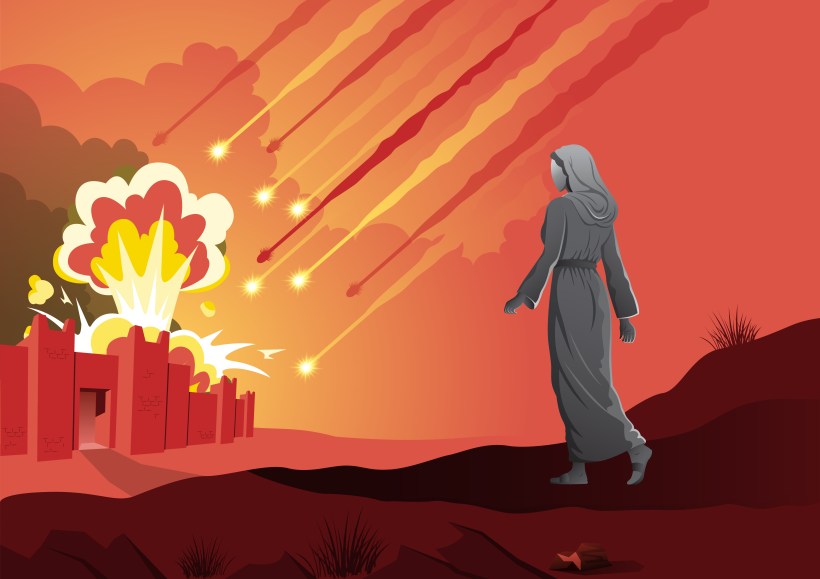

The comment also may provide an explanation for why Lot’s wife looked back in defiance of the angel’s warning. She may have regretted leaving such a desirable place to live, despite the wickedness of the people there.


She may have wanted to return to the abundance and comfort that drew them there, and that desire to hold on to abundance and comfort in the face of the abject wickedness of the people may have been her undoing.

We should also understand the backstory in Genesis 18 before we get to the story of Sodom and Gomorrah Genesis 19. Before the angels visited Sodom, they visited Abram.

Abram saw the three “angels of the Lord” from his tent. He went out to meet them, bowed in respect, and insisted they come to his tent to be refreshed. Abram and Sarai spared no expense to show them hospitality, and the angels returned the favor by affirming God’s promise to the elderly couple: promising that Sarai would bear a child within a year. (Gen. 18:1-15)

Before the angels left, the angels told Abram the reason they came: to investigate Sodom and Gomorrah because “the outcry against Sodom and Gomorrah [was] so great and their sin [was] so grievous.” (Gen. 18:20) This “outcry” that reached the LORD is the first clue to what was going on there. (Gen. 18:21)

The Hebrew word that is translated “outcry” in this verse is za’aq. It mean a shriek, cry for help, cry of distress, lamentation. The outcry means something was going on in Sodom and Gomorrah that was causing people to cry out for help in distress.

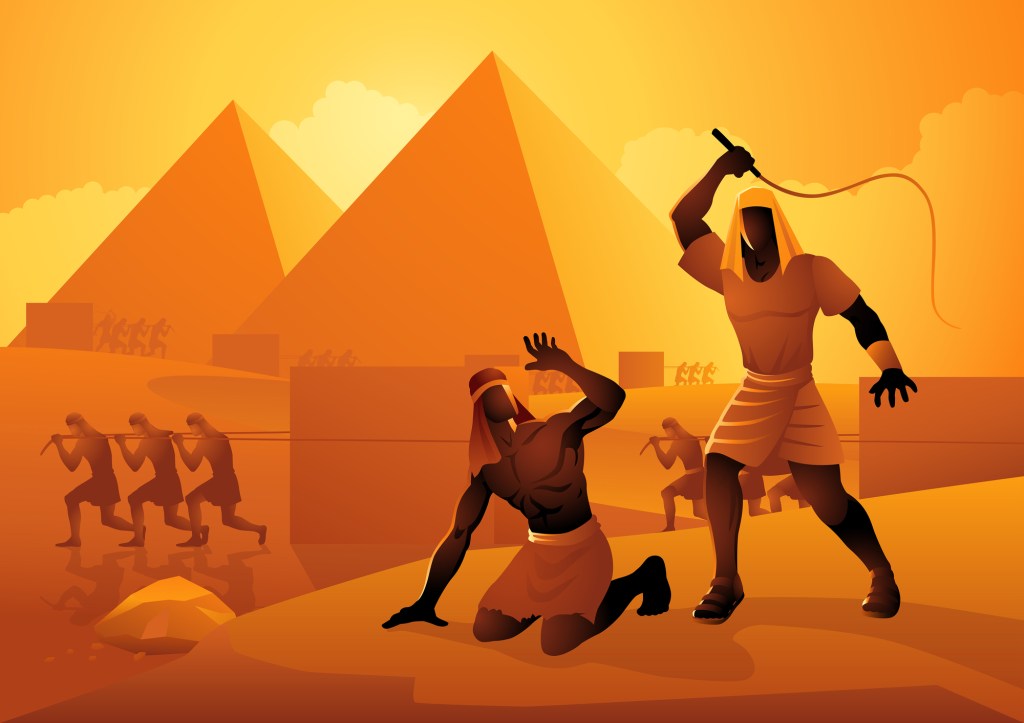
The word, outcry, in Genesis 18 should bring to mind Exodus 2:23 where God heard the Israelites cry out in distress over their oppressive treatment by the Egyptians. In both cases, in Egypt and in Sodom & Gomorrah, God responds to an outcry of the people living there.

They same word, za’aq, is used in both passages. God responded to the Hebrews cry for deliverance by sending Moses, and God miraculously rescued them from the land of Egypt. In Genesis 18, God similarly responded to a cry for deliverance from Sodom by sending His angels to investigate.

The parallel nature of these stories is important to recognize. The people cried out in distress, and God responded. Parallel stories and themes run throughout the Bible, and we should pay attention to them when they appear. They usually mean something.


We know why the people cried out in Egypt – because Pharaoh enslaved and mistreated them. The Bible is relatively silent, however, on the circumstances in Sodom and Gomorrah. If we pay close attention, though, we can find some clues!

Back to the story: In Genesis 19, Lot repeats the pattern of Abram’s hospitality. Lot saw two angels at the city gate, and he went out to meet them, like Abram did. Lot greeted them with respect the same way Abram did, and Lot insisted they come to his home where he prepared a feast for them, just as Abram did. (Gen. 19:1-3) These stories appear one after the other in the biblical narrative, and the parallel symmetry signals that we should pay attention.

Abram and Sarai, by the way, are known for generous hospitality. The generous hospitality of Abram is legendary in Jewish and even Muslim lore. Generous hospitality was a key distinctive of Abraham, God’s man of faith.

Lot, who was Abram’s kin, demonstrated the same kind of generous hospitality, but the story takes a bad turn. Everything seems great until the men of Sodom surround Lot’s house and demand that Lot bring the angels out to them, “So that we can have sex with them.” (Gen. 19-4-5) When Lot refused, they turned on Lot, This is what they said:

“This fellow [Lot] came here as a foreigner, and now he wants to play the judge! We’ll treat you worse than them.”

genesis 19:9

Most of us, I think, assume the sin of Sodom was primarily sexual in nature. The story certainly seems to suggest that if we miss the clues to what was really going on. The symmetry of the parallel stories leading up to the story of Sodom and Gomorrah suggest that something else is going on. The people crying out in distress, like the Jews in Egypt is another clue, and what the townspeople say to Lot is still another clue.

The clues are in the context and the contrast between the way Abram and Lot treated the foreigners/angels and the way the townspeople in Sodom & Gomorrah treated them. Abram and Lot go out of their way to greet the angels, bow to them in respect, make them feel welcome, and show them generous hospitality. The men of Sodom react the opposite way: they respond with hostility. They are angry that the foreigner in their midst (Lot) invited foreign guests into his home, and they came to punish and humiliate those guests by violating them sexually.

I never noticed these clues in the text before. They cast a different light on the story. It seems that the story is less about men wanting to have sex with men than it is about brutish inhospitality the strangers/foreigners.


This was a lynch mob. They came to run the foreign guests out of town and to demonstrate their extreme displeasure with Lot for inviting them in to his home. The men wanted to humiliate, violate, and punish Lot’s foreign guests in the worst possible way, and they wanted Lot to understand why: because Lot was a foreigner, and these men were foreigners, and they were not welcome in their town.


As side note, I would not likely have noticed this but for the book I am reading by James K. Hoffmeier, The Immigration Crisis: Immigrants, Aliens, and the Bible. He cites to the Sodom and Gomorrah story as an example of the way people in the Old Testament controlled their borders and their cities. (See also Judges 19-21 in which a similar scene plays out in Gibeah where the sons of Benjamin treat the Levites passing through in exactly the same way.)

I am reminded of the Parable of the Sheep and the Goats in which people did not realize the way they treated foreigners (and other vulnerable people) was like treating Jesus that way – good and bad. I am also reminded of Hebrews 13:2: “Do not forget to show hospitality to strangers, for by so doing some people have shown hospitality to angels without knowing it.” Mistreating strangers – similarly – might be nistreating angels!

This was the last straw for God. The angels returned the favor Lot showed them by protecting him and his family. The angels warned them to get out of town quick. As soon as Lot and his family were out of town, “the Lord rained down burning sulfur on Sodom and Gomorrah….” and reduced it to smoke and ash (Gen. 19:10-28)

Aside from some other details that do not seem directly relevant at the moment, that is the story of Sodom & Gomorrah. Most of the references to Sodom & Gomorrah in the rest of the Bible are used as warnings without much commentary, except for three passages. These passages tell fill in the rest of the story.

Continue reading “What Was the Sin of Sodom and Gomorrah?”

Sacred Space

Abraham created sacred space


Abraham was a man who listened and responded to God. When God told him to go to a land God would show him, Abraham responded and went, not knowing where he was going. At God’s direction, Abraham left his father’s household, his community and his homeland.

When Abraham first entered what we now call the promised land, he built an altar to God between Bethel and Ai. He, Sarai and Lot continued traveling down south into the Negev desert. Because of drought, they went further south into Egypt. Then, they came back up through the Negev desert to the promised land again:


From the Negev he went from place to place until he came to Bethel, to the place between Bethel and Ai where his tent had been earlier and where he had first built an altar. There Abram called on the name of the Lord.

Genesis 13:3-4


Abraham and Lot accumulated many animals and possessions in their travels, and they both had many herdsmen to tend the animals. When their herdsmen began quarreling with each other, Abraham took action to address the situation.

He told Lot it wasn’t good that their herdsmen were quarreling, and he offered Lot his choice of land. Abraham said, “If you go left, I will go right. If you go right, I will go left.” Lot chose the plains of the Jordan, so Abraham went the other direction:


So Abram went to live near the great trees of Mamre at Hebron, where he pitched his tents. There he built an altar to the Lord.

Genesis 13:18 


From this portion of the story of Abraham, I am impressed today by a couple of things. First, Abraham is ever the hospitable man. He offered Lot his choice of direction first.

I believe Abraham did this because he trusted God, and he was content that God would take care of him. Thus, he was able to be hospitable and kind. He didn’t need to compete or vie with his nephew. He did the right thing and let God do the rest.

The first point is most important: Abraham trusted God. Abraham listened and was responsive to God’s voice. He went when God said to go.

When he got to the promised land, he did not seek to possess it by his own will. He held it loosely. He came and he went, and he returned again trusting that God would guide him and settle him where God desired him to be.

When he first entered the promised land, he built an altar to God. The first thing he did was to create sacred space and to seek God. Abraham created sacred space, but he did not seek to possess it.

When drought came, Abraham was quick to move, wandering through the Negev desert to Egypt and back again. When he came back, he returned to the sacred space he had previously created.

Even then, he did not seek to possess the land, as if it were his. He was content to allow Lot his choice. After Lot chose his direction, Abraham struck out to a new location. Where he settled he created an altar to God, and he made sacred space at the new location.

Continue reading “Sacred Space”

What Laws Must a Christian Follow?

The tension between the Law and the Gospel and how they relate to each other is the key to understanding Christianity.


The themes of law and grace are central to Christianity. Sorting them out gets to the very heart of the gospel message. Yet, many people inside and outside of the Christian community are unclear on what laws Christians must follow, what laws are no longer applicable, and why.

Someone recently posted the following question to a group to which I belong on social media:


I get the message of we are not under the law but under grace. But if we live through Christ we will follow the law. How do we know what law to follow? Does this go as far back as to not mix fabrics? 

Obviously everyone says we’re no longer under the law, but ”faith without works is dead” so I am confused. 

How do we know which laws to follow?


Human tendency is to want a list of rules to follow so we can check them off. The rich young ruler demonstrates that human tendency when he came to Jesus one day and asked, “Teacher, what good thing must I do to get eternal life?” (Matt. 19:16)

We also have a tendency to want to quantify rules, and to simplify them to make them easier to follow. Perhaps, that is what motivated someone to ask Jesus, “Teacher, which is the greatest commandment in the Law?” (Matt. 22:36)

Or we go the other direction: we add rules on top of rules on top of rules to make sure that we don’t miss anything. The Pharisees demonstrated this approach in how they handled the commandment to observe the Sabbath. The created a list of “work” that was forbidden including, among other things: sowing, plowing, reaping, binding sheaves, threshing, winnowing, selecting, grinding, sifting, kneading, and baking bread; twelve similar activities related to the preparation of clothing, from shearing sheep to sewing; and seven activities related to preparing the carcass of a deer for food or leather. (See What are some Sabbath Observance rules that the Pharisees made?)

Moses started with ten commandments. By the time the books of Moses were completed, there were 613 commandments! (Though not everyone agrees on exactly what they are.)

The Torah (the Five Books of Moses – Genesis, Exodus, Leviticus, Numbers & Deuteronomy) focused on laws. That focus carries through the entire Old Testament. Though the laws are often more prominent in the breach, than in the observance thereof!

The same focus continued into the New Testament. We see it in the question asked by the rich young ruler and the Pharisees’ questions to Jesus. We see it in the tension between Paul and Peter that threatened to divide the early church over whether believing Jews must follow the Law and what laws believing Gentiles must follow.

This is the tension between the Law and the Gospel. If we understand only one thing about the Gospel message, the relationship of the Law to the Gospel might be the most important thing! I have written about it often, including How the Moorings of the Gospel Were Secured.

For the sake of brevity, I won’t summarize everything here. You can click in the links in the last two paragraphs to get an overview from the articles linked there. Understanding what Jesus meant when he said he didn’t come to abolish the law, but to fulfill it is critical.

If you are not a Christian, or you are a Christian, but you are not sure you understand these things, please do not just gloss over them. The tension between the Law and the Gospel and how they relate to each other is the key to Christianity.

It was the focus of almost all of Paul’s writings. It is the major theme in Romans, Galatians, Ephesians, Hebrews and the other epistles. Take some time now to wrestle with it. Don’t stop until it makes sense to you!

Hopefully, the rest of my thoughts in this piece will help.

Continue reading “What Laws Must a Christian Follow?”

What It Means to Be Called According to God’s Purpose

Abraham understood that God’s purposes were much greater than Abraham and Sarah, much greater than the land promised to them, much greater even than all his descendants that would populate the earth like the stars in the sky and sand on the seashore.

Photo by Peter Avildsen

God calls us according to his purpose. He calls us as beings He created in His own image. He calls us as His image bearers, and He gives us the responsibility for being fruitful and multiplying and tending to the creation that He made.

We messed up His creation. We got it all wrong. We went our own ways. We sought to make a name for ourselves. We pursued our own ends.

Then God became flesh. He became a man and lived among us. He subjected Himself to the worst of our messiness. Unbelievably, He gave Himself up to us – and for us – to redeem us from our own devices. AND to redeem us for His purposes.

God invites us to become His children by accepting this great sacrifice that He made for us. He now invites us to give ourselves up to Him and to let Him take His rightful place in our lives and hearts and to make His purposes our purposes.

Sometimes, I believe, we have too small a view of God and His purposes. We tend to be satisfied to think that God merely desires to save us from ourselves, and we do not have a robust view of God’s purposes.

Continue reading “What It Means to Be Called According to God’s Purpose”

The Dilemma of God Demanding Justice from Beings Incapable of Meeting God’s Standard

There is one critique of the Christian notion of sin and the justice of God that is troubling on its face. That key critique for anyone who claims that God demands justice for sin is that God is seemingly unjust to require justice of beings who can’t measure up.

Many modern people bristle at the Christian idea of sin, and they bristle even more at the idea that God would punish sinners. Frankly, I think many modern people simply don’t understand what sin is and who God is.

But, that aside, there is one critique of the Christian notion of sin and the justice of God that is troubling on its face. That key critique for anyone who claims that God demands justice for sin is that God is seemingly unjust to require justice of beings who can’t measure up.

Alongside the notion that the God of the Bible and demands judgment for not measuring up to God’s just standard is the notion that all people are sinners who don’t measure up. In fact, the New Testament is fairly read to say that people are incapable of living up to God’s standard.

The doctrine of original sin says that we are all corrupted because the sin of Adam and Eve has been passed down generation after generation. Even if we don’t believe in the doctrine of original sin, however, the Bible is clear from the Old Testament to the New Testament that human beings don’t measure up to God’s standard:


They have all turned aside; together they have become corrupt;
    there is none who does good,
    not even one.

Psalm 14:3


They have all fallen away;
    together they have become corrupt;
there is none who does good,
    not even one.

Isaiah 53:5


as it is written:

“None is righteous, no, not one;
   .
 All have turned aside; together they have become worthless;
    no one does good,
    not even one.”

Romans 1:10-12


Jesus said, “No one is good except God alone.” (Mark 10:18 (NIV)) Yet, he says, “Be perfect … as your heavenly Father is perfect?” (Matthew 5:48)

This is the dilemma: How can we be perfect?! “To err is human” the bard once said, and so it seems we are imperfect by our very nature.

Many people reject the idea that God can be just and demand justice from people incapable of measuring up to the standards God’s justice demands. They say it would be unjust for God to demand justice from beings who have no ability to act other than they do, and so fail to meet God’s standards.

God seems to be acting unfairly to demand that we meet His standards when we are 1) created beings, 2) born into sin, and 3) incapable of living up to the perfection God requires.

Other questions tumble after these thoughts: Why didn’t God create us perfect? If we are born sinful, how can God blame us for being sinful? If we are incapable of being perfect, how can God punish us for our imperfection?

Continue reading “The Dilemma of God Demanding Justice from Beings Incapable of Meeting God’s Standard”