Jesus is the Alpha and the Omega, the beginning and the end. (Revelation 1:8; 21:6; and 22:13) Jesus was in the beginning with God, the Father, and the universe and all that is in it was made through Jesus. (John 1:1-3)
At this time of year, we celebrate God descending to become man in Jesus of Nazareth, born in Bethlehem into a common family in a far flung place. Jesus was God in his very nature, but he deigned to shed himself of that glory and power to become man, to become a servant to his own creation, and to humble himself to the point of death at the hands of his own creation. (Philippians 2:5-8)
In the end, Jesus will be exalted to the “highest place” with a “name that is above every name.” (Phil. 2:9) Every knee in heaven and on earth will bow to him, and every tongue will acknowledge that “Jesus Christ is Lord,” to the glory of God the Father.” (Phil. 2:10-11)
From the garden of Eden to the new heavens and earth and the New Jerusalem in which God will dwell with His people, God has had a plan from the beginning to the end. God set eternity in the hearts of people, but not so that we would know the beginning from the end. (Ecclesiastes 3:11) We don’t know, but God knows. Do we trust Him?
That is the question in my mind on this 1st day of the New Year in 2026. That is the question with which I challenge myself. Will I trust Him with my life? With the world? With the insanity that seems to characterize the year that just ended in United States of America where I live?
Since God created the universe and populated it with people and animals, God ordained and allowed people to populate the Earth. God didn’t dictate how the history of His creation would unfold. He created Adam and Eve with the capacity to live in sync with God and the universe, but He also gave them the capacity to go their own ways. God had a plan from the beginning, but He allowed the universe and mankind, His crowning creation, to unfold as it would.
I am beginning a new year of reading through the Bible as I have done many years in the past. I have read through the first handful of chapters in Genesis, and my thoughts gather around the question: will I trust God better in the New Year?
I recently finished a review of the of history of the blogging on this site: Looking Back at 13 Years of Navigating By Faith. One article stands high above the rest in the sheer number of people who have read/viewed it.
I wrote that article, Who Were the Sons of Issachar? And What Might They Mean for Us Today?, during Donald Trump’s second presidential campaign. Christian support for Donald Trump was characterized by a sense of urgency and high stakes. State COVID restrictions jeopardized religious liberty. BLM aroused woke, liberal, mobs in streets around the country. Christians sounded the alarm that people of faith would be canceled by the most anti-faith Democratic ticket in years if Trump didn’t win.
Prominent Christian leaders like Robert Jeffress and Franklin Graham argued that Trump was a “strongman” needed to protect the nation from “anarchy” and “socialism.” Jeffress excused Trump’s obvious flaws, saying that American Christians didn’t need a “Sunday School teacher” but a “fighter” who would protect Christian interests in a hostile culture. Lance Wallnau framed Trump as a modern King Cyrus—the Persian king used by God to protect His people and restore them to the promised land.
Support for Donald Trump was increasingly framed as a battle against “darkness” and “anti-Christian” forces. While many traditional evangelicals focused on policy, the New Apostolic Reformation (NAR) was mobilized by prophecy, spiritual warfare, and the “Seven Mountain Mandate.” Dozens of self-identified prophets in this network insisted that Trump’s re-election was divinely mandated in a cosmic battle between good and evil controlled by a demonically influenced “deep state.” The current was strong, and a large number of Christians were swept along with it.
A conversation with my best friend from college, who I loved more than a brother, and who I trusted implicitly, left me in full spiritual crisis mode. He expressed his continued support of Trump on the basis of those prophetic claims predicting another presidential victory and the belief that God ordained Donald Trump for this time. My friend urged my to be like the sons of Issachar “who understood the times and knew what Israel should do.” (1 Chronicles 12:32)
I have a healthy respect for God’s ability to speak through people in what we call prophecy. The Apostle Paul commands us not to despise prophecy, but to test everything, hold fast to what is good, and abstain from every evil. (1 Thessalonians 5:20-22) I resolved to give Donald Trump another look and to reconsider him.
I had written in 2020 about wolves in sheep’s clothing with Donald Trump expressly in mind. Jesus said we would know falsehood by its fruit, and the fruit I saw in Donald Trump belied the claims of God’s providential blessing.
That a president is not a pastor made some sense. God can use anyone, even a donkey, right? Maybe Trump is like the Persian King Cyrus who is divinely appointed to restore the Christian heritage of the United States….
A year earlier, in 2019, I reflected on those claims that Trump is like a King Cyrus, and I came to a different conclusion. Trump seemed to me more like a King Saul, the king God’s people wanted – the king they wanted because they did not trust God. They wanted a king like all the other nations, though the Prophet Samuel warned them against it. God gave them the king His people wanted, even though they were rejecting God to ask for a king:
“[W]hen they said, ‘Give us a king to lead us,’ this displeased Samuel; so he prayed to the Lord. 7 And the Lord told him: ‘Listen to all that the people are saying to you; it is not you they have rejected, but they have rejected me as their king. 8 As they have done from the day I brought them up out of Egypt until this day, forsaking me and serving other gods, so they are doing to you. 9 Now listen to them; but warn them solemnly and let them know what the king who will reign over them will claim as his rights.‘”
1 Samuel 8:6-9
God gave them the king they wanted in the same way that God gives people over “to the sinful desires of their heats.” (Romans 1:24) The people were rejecting God as their king, so God gave them over to the king they wanted.
People of that day might have assumed that God was blessing them to give them the king they wanted, but that was not the case. Samuel warned them against it, but they insisted anyway.
King Saul was rebellious, insecure, self-absorbed, and psychotic. He failed to obey God’s commands. He became obsessed with his power and reputation among the people, and he became jealous of David.
Though Saul remained king, God had already rejected him and anointed David to succeed him. Saul tried to take David’s life multiple times in fits of jealous rage, and David escaped into the wilderness.
This is where the Sons of Issachar entered the picture. Though Saul was still king, they “understood the times.” They could see the proverbial writing on the wall. They knew that David was God’s man, and Saul’s reign was ending.
Many people have argued that Donald Trump is like the foreign king, Cyrus, who protected and funded the nation of Israel to return to the Promised Land. I have argued that Donald Trump is not like the foreign king, Cyrus, but like the Israelite King Saul. Donald Trump is the king that God’s people wanted.
I am listening to The Basic Folk podcast episode 316 with Joy Oladokun (an artist I like by the way) Perhaps, that is a strange way to open a blog post on the age old heresy of Marcionism – the belief that the god revealed in the Old Testament is different from God revealed in the New Testament. Hang with me though!
Joy Oladokun (who is a musical artist you should check out) grew up in the church and cut her musical chops on worship music and listening to Phil Collins with her father. She uses biblical themes in her music, which also has a distinctly spiritual character to it.
Though she may have some heretical ideas about God and the Bible, I believe we can appreciate and like music even when the artist doesn’t believe exactly as we do and, in this case, even when she has heretical ideas about God and the Bible. We are all on a journey in our relationship to God, and I appreciate that about people and the music people make on their own journeys.
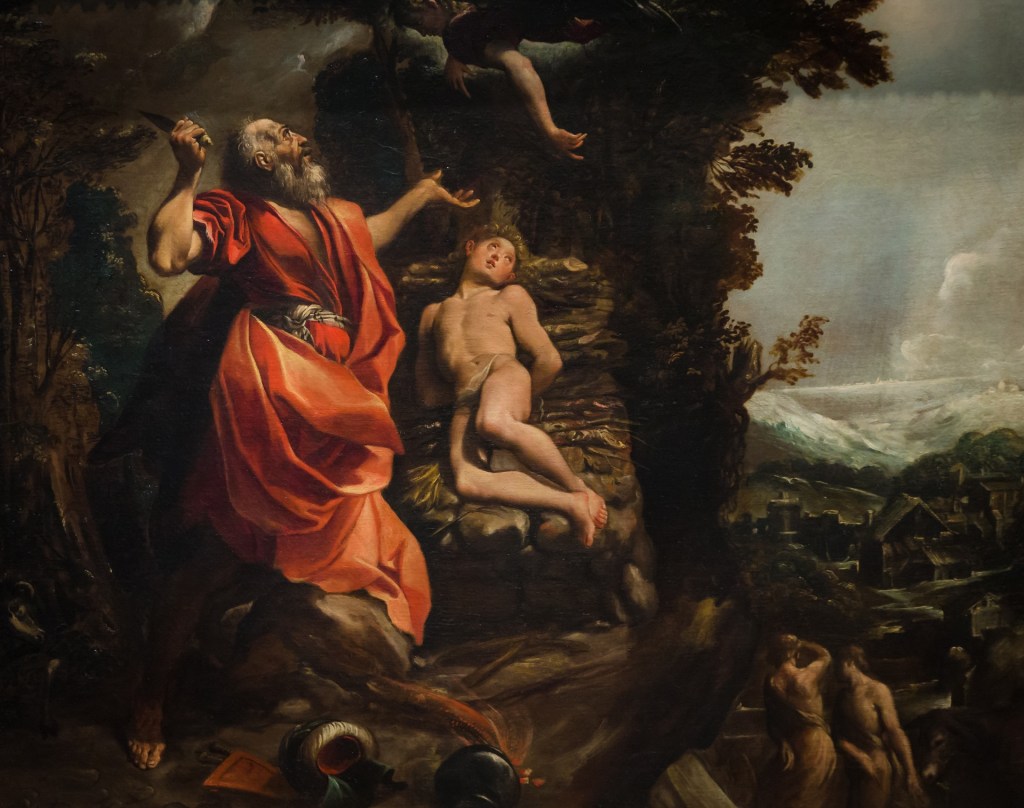
Anyway, around the 15 minute mark in the podcast Joy Oladokun expresses her understanding that God, in the Old Testament flip flops. Then, she provides this short theological synopsis, “It’s like, ‘Sacrifice your son…. Never mind, here’s a goat.” I am chuckling even now, but her thoughts and the example she gives deserves a response.
Many people her age (and all ages, really) have an issue with the story of Abraham sacrificing Isaac. It also opens up a biblical theme that I glimpsed as a young nonbeliever reading the Bible for the first time many years ago that continues to develop as I age.
Perhaps, I am fortunate that I didn’t pay much attention to theology in my formative years, because I didn’t formulate many theological ideas that colored and warped my view of God. When I read the Bible for the first time in college, I came to it with no preconceived ideas and no assumptions (that I recall).
I was raised Catholic, but I didn’t even realize that the readings in the mass were from the Bible (until after I became a Christian). I could not recall anything from the catechism classes I took. I was pretty much too zoned out (and, later, stoned out) to latch onto many theological constructs.
I didn’t know anything about evangelical ideas, like biblical inerrancy, predestination, and eschatological schemes. I came at the Bible like I approached all literature, poetry, and philosophy. I let it speak to me and convey its message to me.
Early on (as I read Genesis), I learned that Abraham heard the voice of God, and he responded in faith (with trust). I learned that the Ancient Near Eastern people from whom Abraham descended and believed in many gods who were more or less arbitrary and capricious. One of those beliefs that was ubiquitous in Abraham’s day was the belief that gods require child sacrifice to be appeased.
I could see that the God who Abraham “heard” was not like those other gods that he and the people around him believed in. I could see that Abraham lived his life on a journey (quite literally) of discovery about this God whose “voice” he heard.
Abraham’s understanding was evolving as he sensed this God and responded in faith to Him. He was learning that God was not like the gods with which he was familiar. This God made promises, and He kept them. This God desired a relationship with Abraham, and He was trustworthy.
I have to admit that the story about Isaac was a bit of a mystery to me then, but I didn’t rush to any conclusions. I understood that child sacrifice was practiced throughout the ancient Levant, but something was different about this story that carried some significance, though I wasn’t quite sure of all that it meant at the time.
There was a lot I didn’t understand. I was on a journey myself, and I realized there was mystery in the stories that belied quick or simple explanations. I, like Abraham perhaps, was willing to explore where a connection to this God might take me (after a brief flirtation with Eastern religion).
I have been on this journey now for over 45 years. I responded to the God of Abraham when I was 19 (the summer after I first read the Bible). I was far from knowing all the answers (though I did go through a period in which I thought I knew much more than I did).
I guess the thought that we know more than we really do is a human trait, and it is one we are well advised to resist. We are finite beings, regardless of the knowledge we collect, and we will never be more than finite beings in these earthly bodies that we will take to our graves.
I can’t tell you how many years I have taken to get to a place of some comfortable understanding on the Abraham and Isaac story. It is more than I might like to admit, but I have always been willing to give God the benefit of the doubt, which is what Abraham did. It is what he was commended for: faith, which is simply trusting in the goodness of God.
The Bible we have says that God told Abraham to go sacrifice his son, Isaac. We cannot escape that is what the Bible says. But, is that what God actually said?
Or is that just what Abraham “heard”? Or is it just what Abraham understood? Or is it just what he felt compelled to do?
I don’t know, and I think it is ok to say, “We don’t really know.” I also think it is ok to ask the question and to assume we may not necessarily have the right answer.
In any event, Abraham clearly believed that God told him to sacrifice his son. That requirement, of course, is antithetical to the promise God had given Abraham – that Abraham’s descendants would fill the earth and become as numerous as the stars in the sky. Yet, Abraham dutifully (if not reluctantly) complied with what he believed he must do.
This is a kind of faith that we don’t understand today, especially in the post Enlightenment age of reason and science driven more recently by post-modern skepticism. We are told in Sunday school (as I have learned) that this story is about Abraham’s faith and willingness to do what he was told, though it didn’t make sense
I think that is partially true, but I have come to see that the story is not only (or maybe even primarily) about faith. The story isn’t primarily about Abraham, either. He is just the vessel through which the story unfolds. The story is about God, and who God is, and the character of God.
Whether God told Abraham to sacrifice his son, or Abraham jumped to that conclusion, doesn’t matter so much. Child sacrifice was demanded by the gods, according to Ancient Near Eastern religious thought that was formative in Abraham’s outlook on the world. He responded according to the custom, practice, and wisdom of his age.
I have written about this a number of times before. (See the Abraham and the Paradigm Shift, Abraham and the Love of God, Abraham and Isaac Revisited: Introduction, Abraham and Isaac Revisited: Here I Am, Abraham, Abraham and Faith and the Hope Deferred, and Abraham and the Blood Path) I am not going to cover all that ground again, but I return to the same theme again because it has roots in my initial revelation of God and my own journey of faith. As I hope to flesh out, it also provides some insight into the God who seems to flip flop.
I have wanted to dig into the story of Sodom and Gomorrah for a while now, ever since someone suggested to me that the story isn’t what I think it is. Everyone knows the reference to Sodom and Gomorrah, right? God smote those villages with fire and brimstone because of homosexuality.
That’s what I was taught. At least, that is what I always believed, but I have learned there may be more to the story. The truth is right where we should expect to find it: in the Bible. If you are intrigued as I was, then read on.
First, let’s review the story in Genesis 13. Abram and Lot flourished, and their clans and flocks grew in size in the land God promised Abram. As their estates grew, tensions arose among their entourages, and they decided to separate and spread out. (Gen. 13:5-9)
“Lot looked around and saw that the whole plain of the Jordan toward Zoar was well watered, like the garden of the Lord, like the land of Egypt.” (Gen. 13:10) The desirability of the land prompted Lot to choose Sodom and Gomorrah in the plain of Jordon, while Abram remained in Canaan.
Although the land was desirable, the story ends with this ominous statement: “The people of Sodom were wicked and were sinning greatly against the Lord.” (Gen. 13:13) Did Lot know what he was getting into?
That statement is there for a reason. We should take note. The land was inhabited with “wicked” people, yet Lot moved there anyway. Perhaps, the allure of a well watered garden – like the garden of Eden and like Egypt – was so great that Lot ignored the fact that wicked people lived there.
The mention of similarity to Egypt should also recall the desire of the people in the wilderness to go back to Egypt. Though they were enslaved there, the land was lush, and they had food and comfort. It seems that these allurements caused Lot to overlook the obvious problem with choosing to live there.
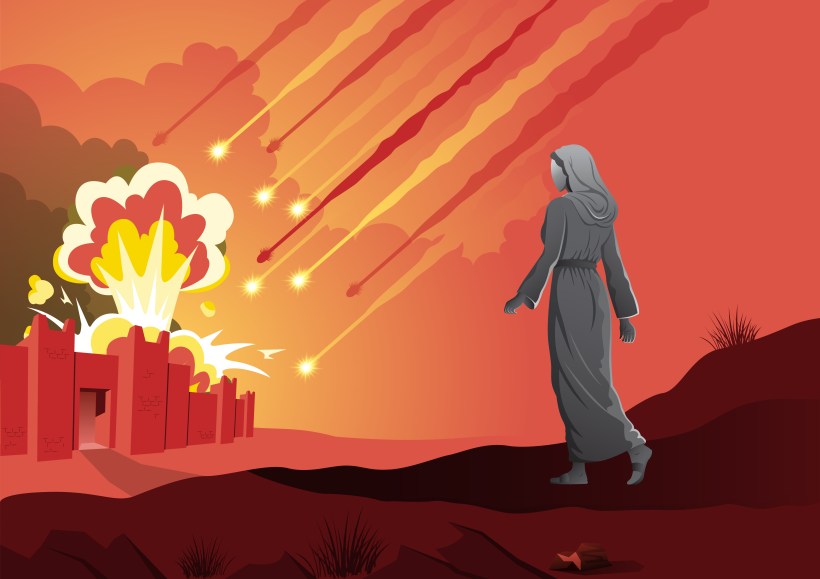
The comment also may provide an explanation for why Lot’s wife looked back in defiance of the angel’s warning. She may have regretted leaving such a desirable place to live, despite the wickedness of the people there.
She may have wanted to return to the abundance and comfort that drew them there, and that desire to hold on to abundance and comfort in the face of the abject wickedness of the people may have been her undoing.
We should also understand the backstory in Genesis 18 before we get to the story of Sodom and Gomorrah Genesis 19. Before the angels visited Sodom, they visited Abram.
Abram saw the three “angels of the Lord” from his tent. He went out to meet them, bowed in respect, and insisted they come to his tent to be refreshed. Abram and Sarai spared no expense to show them hospitality, and the angels returned the favor by affirming God’s promise to the elderly couple: promising that Sarai would bear a child within a year. (Gen. 18:1-15)
Before the angels left, the angels told Abram the reason they came: to investigate Sodom and Gomorrah because “the outcry against Sodom and Gomorrah [was] so great and their sin [was] so grievous.” (Gen. 18:20) This “outcry” that reached the LORD is the first clue to what was going on there. (Gen. 18:21)
The Hebrew word that is translated “outcry” in this verse is za’aq. It mean a shriek, cry for help, cry of distress, lamentation. The outcry means something was going on in Sodom and Gomorrah that was causing people to cry out for help in distress.
The word, outcry, in Genesis 18 should bring to mind Exodus 2:23 where God heard the Israelites cry out in distress over their oppressive treatment by the Egyptians. In both cases, in Egypt and in Sodom & Gomorrah, God responds to an outcry of the people living there.
They same word, za’aq, is used in both passages. God responded to the Hebrews cry for deliverance by sending Moses, and God miraculously rescued them from the land of Egypt. In Genesis 18, God similarly responded to a cry for deliverance from Sodom by sending His angels to investigate.
The parallel nature of these stories is important to recognize. The people cried out in distress, and God responded. Parallel stories and themes run throughout the Bible, and we should pay attention to them when they appear. They usually mean something.
We know why the people cried out in Egypt – because Pharaoh enslaved and mistreated them. The Bible is relatively silent, however, on the circumstances in Sodom and Gomorrah. If we pay close attention, though, we can find some clues!
Back to the story: In Genesis 19, Lot repeats the pattern of Abram’s hospitality. Lot saw two angels at the city gate, and he went out to meet them, like Abram did. Lot greeted them with respect the same way Abram did, and Lot insisted they come to his home where he prepared a feast for them, just as Abram did. (Gen. 19:1-3) These stories appear one after the other in the biblical narrative, and the parallel symmetry signals that we should pay attention.
Abram and Sarai, by the way, are known for generous hospitality. The generous hospitality of Abram is legendary in Jewish and even Muslim lore. Generous hospitality was a key distinctive of Abraham, God’s man of faith.
Lot, who was Abram’s kin, demonstrated the same kind of generous hospitality, but the story takes a bad turn. Everything seems great until the men of Sodom surround Lot’s house and demand that Lot bring the angels out to them, “So that we can have sex with them.” (Gen. 19-4-5) When Lot refused, they turned on Lot, This is what they said:
“This fellow [Lot] came here as a foreigner, and now he wants to play the judge! We’ll treat you worse than them.”
genesis 19:9
Most of us, I think, assume the sin of Sodom was primarily sexual in nature. The story certainly seems to suggest that if we miss the clues to what was really going on. The symmetry of the parallel stories leading up to the story of Sodom and Gomorrah suggest that something else is going on. The people crying out in distress, like the Jews in Egypt is another clue, and what the townspeople say to Lot is still another clue.
The clues are in the context and the contrast between the way Abram and Lot treated the foreigners/angels and the way the townspeople in Sodom & Gomorrah treated them. Abram and Lot go out of their way to greet the angels, bow to them in respect, make them feel welcome, and show them generous hospitality. The men of Sodom react the opposite way: they respond with hostility. They are angry that the foreigner in their midst (Lot) invited foreign guests into his home, and they came to punish and humiliate those guests by violating them sexually.
I never noticed these clues in the text before. They cast a different light on the story. It seems that the story is less about men wanting to have sex with men than it is about brutish inhospitality the strangers/foreigners.
This was a lynch mob. They came to run the foreign guests out of town and to demonstrate their extreme displeasure with Lot for inviting them in to his home. The men wanted to humiliate, violate, and punish Lot’s foreign guests in the worst possible way, and they wanted Lot to understand why: because Lot was a foreigner, and these men were foreigners, and they were not welcome in their town.
As side note, I would not likely have noticed this but for the book I am reading by James K. Hoffmeier, The Immigration Crisis: Immigrants, Aliens, and the Bible. He cites to the Sodom and Gomorrah story as an example of the way people in the Old Testament controlled their borders and their cities. (See also Judges 19-21 in which a similar scene plays out in Gibeah where the sons of Benjamin treat the Levites passing through in exactly the same way.)
I am reminded of the Parable of the Sheep and the Goats in which people did not realize the way they treated foreigners (and other vulnerable people) was like treating Jesus that way – good and bad. I am also reminded of Hebrews 13:2: “Do not forget to show hospitality to strangers, for by so doing some people have shown hospitality to angels without knowing it.” Mistreating strangers – similarly – might be nistreating angels!
This was the last straw for God. The angels returned the favor Lot showed them by protecting him and his family. The angels warned them to get out of town quick. As soon as Lot and his family were out of town, “the Lord rained down burning sulfur on Sodom and Gomorrah….” and reduced it to smoke and ash (Gen. 19:10-28)
Aside from some other details that do not seem directly relevant at the moment, that is the story of Sodom & Gomorrah. Most of the references to Sodom & Gomorrah in the rest of the Bible are used as warnings without much commentary, except for three passages. These passages tell fill in the rest of the story.
Abraham was a man who listened and responded to God. When God told him to go to a land God would show him, Abraham responded and went, not knowing where he was going. At God’s direction, Abraham left his father’s household, his community and his homeland.
When Abraham first entered what we now call the promised land, he built an altar to God between Bethel and Ai. He, Sarai and Lot continued traveling down south into the Negev desert. Because of drought, they went further south into Egypt. Then, they came back up through the Negev desert to the promised land again:
From the Negev he went from place to place until he came to Bethel, to the place between Bethel and Ai where his tent had been earlier and where he had first built an altar. There Abram called on the name of the Lord.
Genesis 13:3-4
Abraham and Lot accumulated many animals and possessions in their travels, and they both had many herdsmen to tend the animals. When their herdsmen began quarreling with each other, Abraham took action to address the situation.
He told Lot it wasn’t good that their herdsmen were quarreling, and he offered Lot his choice of land. Abraham said, “If you go left, I will go right. If you go right, I will go left.” Lot chose the plains of the Jordan, so Abraham went the other direction:
So Abram went to live near the great trees of Mamre at Hebron, where he pitched his tents. There he built an altar to the Lord.
Genesis 13:18
From this portion of the story of Abraham, I am impressed today by a couple of things. First, Abraham is ever the hospitable man. He offered Lot his choice of direction first.
I believe Abraham did this because he trusted God, and he was content that God would take care of him. Thus, he was able to be hospitable and kind. He didn’t need to compete or vie with his nephew. He did the right thing and let God do the rest.
The first point is most important: Abraham trusted God. Abraham listened and was responsive to God’s voice. He went when God said to go.
When he got to the promised land, he did not seek to possess it by his own will. He held it loosely. He came and he went, and he returned again trusting that God would guide him and settle him where God desired him to be.
When he first entered the promised land, he built an altar to God. The first thing he did was to create sacred space and to seek God. Abraham created sacred space, but he did not seek to possess it.
When drought came, Abraham was quick to move, wandering through the Negev desert to Egypt and back again. When he came back, he returned to the sacred space he had previously created.
Even then, he did not seek to possess the land, as if it were his. He was content to allow Lot his choice. After Lot chose his direction, Abraham struck out to a new location. Where he settled he created an altar to God, and he made sacred space at the new location.










 Navigating by Faith