
Pulling at the Threads of the Christian Paradigm that Uniquely Influenced the Western World

Down at the bedrock of modern, western values remains a Christian foundation.

Galleries under the central arena of the Colosseum in Rome, Italy

I read Tom Holland’s new book, Dominion, about a year ago, and I have written about it a few times. Many Christians would not think to read a history about Western Civilization by a self-described secular humanist (once atheist, perhaps now agnostic) historian.

Most non-Christians are likely to be uncomfortable with the chronicle Holland describes of the radically influential role that Christianity played in the development of Western Civilization, providing the foundation, in fact, for secular humanist ideals. When Holland dug down to the bedrock of modern, western values, he was surprised himself to find them anchored on a Christian foundation.

Holland did not set out to write a Christian apologetic, and he seems to remain somewhat uncertain how to process what he “discovered”. What he found, though, changed his mind about Christianity. He gives a brief explanation in the following clip:

Though Holland has had a turnabout on his view of Christianity, he finds himself caught in an odd position wrought by the unexpected discovery that his lifelong, secular humanist values flow from the radical catalyst of Christian influence and remain embedded ubiquitously in its very fabric. The awkwardness of his current position is evident in his interviews and discussions about the book.

Christians and secular thinkers, alike, wrestle with his book. Holland doesn’t hide any warts, and he doesn’t pull any punches. Neither does he obfuscate the thoroughly paradigmatic shift in Western thinking that Christianity worked into a society that once proudly and unashamedly championed strength and privilege over the poor, the weak, and the lowly.

Holland exposes the metanarrative developed during the Enlightenment and thereafter that belies the foundation on which the Enlightenment structure was built. Far from advancing the progression of human values, the Enlightenment threatened to undo the distinctly Christian concern for the poor, weak, and lowly while attempting to wrest western civilization from the hold of the Divine. Humanism saved the Christian ethic, albeit divorced from Christ.

Consider the full title of Darwin’s great tome which staked out the ground of a scientific (and social) revolution free from God’s interference:

“The Origin of Species by means of Natural Selection or the Preservation of Favoured Races in the Struggle for Life”

The title of Darwin’s book championing the evolutionary paradigm, harkens back to the Greco-Roman value system that despised the poor, the weak and the lowly. That value system did not just turn a callous eye at wanton and discriminate cruelty, it cheered on the strong while they snuffed out the weak. It was national sport!

The very reason the full title never “stuck” (I now believe) is due to a fundamental, pervasive, and thoroughly entrenched counter-value of the intrinsic worth of human life that is uniquely Christian in its source.

The intrinsic value of all human life, from the greatest to the least, from the wisest and strongest to the weakest and most imbecilic, from the fittest to the most infirm, is traceable to the Christian belief that all human beings are made in the image of God. That the survival of the fittest did not take hold as a western social or ethical value is attributable to the deeply ingrained Christian ethic that survived yet, despite the efforts to eradicate its God from modern equations.

Modern humanists may attempt to recast Darwin into a humanistic mold, but the idea of “social Darwinism” bears his name through no model of random, unguided selection. According to John G. West, Charles Darwin, himself, set in motion the inertia for eugenics, among other things, that were associated with social Darwinism:

Darwin himself in The Descent of Man provided the rationale for what became the eugenics movement, and how the vast majority of evolutionary biologists early in the twentieth century were right to see negative eugenics as a logical application of Darwin’s theory.

While the defense of Darwin against the charge of social Darwinism has largely succeeded in popular and polite company, the very title of the Origin of Species (by means of Natural Selection or the Preservation of Favoured Races in the Struggle for Life) belies the success of that effort. The fact that the full title is merely a parenthetical today is evidence only of a concerted rescue campaign.

Christian values survived despite the Enlightenment coupe, not because of it. Humanism today assumes the evolutionary paradigm for its science alongside the uniquely Christian paradigm of intrinsic human value. That the two assumptions do not fit well together seems to be lost on modern minds.

Continue reading “Pulling at the Threads of the Christian Paradigm that Uniquely Influenced the Western World”
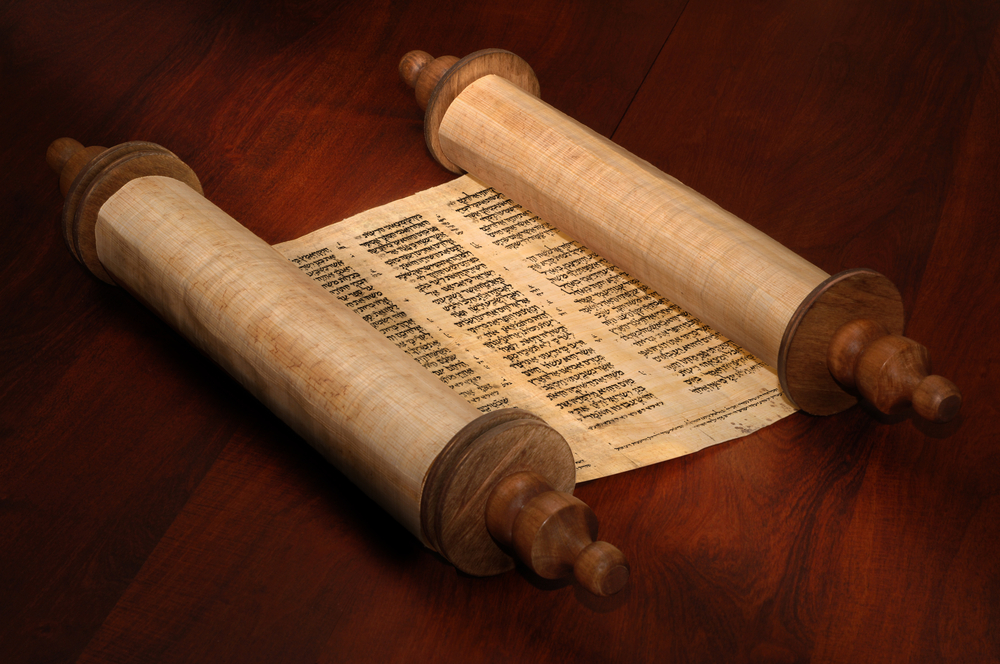
The Perfect Imperfection of the Mosaic Law and the New Covenant

The Mosaic Law is not a universal moral code applicable to all people at all times.

If you read through the Torah, you will find verses that seem morally repugnant to our modern sensibilities. For instance, the death penalty applies to conduct that seem to us like minor offenses. Israelites were allowed to keep slaves. The Mosaic Law is also clearly paternalistic in our modern view, subjecting women to second class citizenship.

This is just a start. Skeptics like to point out these things in criticism of the Bible. They claim that Scripture is full of immoral ideas.

Christians try to find explanations that soften the criticism, claiming that we need to understand the cultural context and what was actually meant. Skeptics claim Christians twist the plain meaning of the text to avoid obvious conclusions. So it goes.

Could it be that both skeptics and defenders of the biblical text are right? That is the position that is taken in the video by Inspiring Philosophy: The Imperfect Mosaic Law.

We have to admit that the Torah contains some instructions that are morally distasteful, if not repugnant, by modern standards. We could try to explain them away. We could claim that our modern morality is wrong. We could reject the Bible and concede to the skeptics that it was written by Ancient Near Eastern men, there is no God, and the Bible is unreliable as a moral code.

Most of these options assume that the Mosaic Law is/was meant to be a perfect and universal statement of God’s moral code. Perhaps, though the Torah was never meant to be a perfect, universal moral law. Perhaps it wasn’t meant to be applied to all people in all times.

It seems that believers and non-believers, alike, assume we must apply every word of the Bible to modern life, and it stands or falls on its instruction to us today. Believers hold on as skeptics try to pry away our faith from clenched fists that we hold to the Bible.

Maybe, however, it ain’t so. The video describes some subtle and some not-so-subtle clues that support the view that Ancient Near East morality contained in the Bible was never meant to be a timeless measure of the conduct for mankind. One such clue is the way Jesus viewed and applied the Law.

In Matthew 19, for instance, the Pharisees tried to trick Jesus with a question on divorce. They referenced the Law of Moses, which allowed men to divorce and send their wives away, and they asked Jesus who would be a man’s wife in heaven if he divorced and remarried many times. Jesus responded, to their chagrin, that Moses allowed men to divorce their wives only because of the hardness of their hearts, adding, “but from the beginning it was not so”. (Matt. 19:8)

Jesus seems to be saying, here, that God instructed the people in the Mosaic Law on divorce, not with a timeless moral truism, but with a temporary “law” intended to accommodate their existing, cultural, and social condition.

Jesus seems to be suggesting that this aspect of the Mosaic Law was a kind of “compromise” between God and Israel. God apparently softened and calibrated the provisions of the Law to accommodate the cultural norms, attitudes, and expectations of the people at the time.

Perhaps, the people were not open to what God intended from the beginning, so God revised the terms for them. Perhaps, the instruction on divorce was a “step in the right direction”, but only a step toward the actual ideal.

We don’t know exactly. We might be tempted to think that this was the only accommodation because this is the only time Jesus is recorded to have said anything like this. As it turns out, however, most of the Mosaic Law was provisional, and it was replaced by a New Covenant. Jesus shifted the grand paradigm completely!

I have often thought that the Bible demonstrates a kind of progression in the relationship between God and man. I don’t mean this in the sense of a formal doctrine. Whatever we might call it, Scripture is the narrative of a growing, unfolding revelation of God to people.

Scripture has an arc to it. From the creation of the world, to Adam and Eve, to Noah, Abraham, Moses, David, the first Temple, and the second Temple and forward to Jesus and beyond, Scripture has a progression. There is a “sweep” to Scripture that is, perhaps, just as (or more) important to recognize as any particular passages.

Thus, I believe the video is correct that the Mosaic Law is not meant as a legislative moral code to be applied to all people at all times. The Law was given to a particular people in a particular time, but it fits into the progression of revelation of God to man.

At different places and times, building on prior connections, the Bible is the narrative of God working with people to reveal Himself in ways that they can understand and in ways that they are able (or willing) to receive. He is always working with people to preserve that narrative for future generations who will stand on the shoulders of prior generations with the benefit of hindsight and cumulative revelation.

And this is key: God is doing these things while protecting the character of free agency that He gave to people He created in His image. His overarching purposes require that we be allowed to engage Him and participate in this progression on our own accord using the agency He gave us.

As I have often speculated, this is because God is love, and God desires a reciprocal, loving relationship with us. Love does not coerce. Love does not demand or impose itself uninvited. Love requires freedom both ways in the relationship.

Some of the passages that are most repulsive to us may be nothing more than the Ancient Near perspective of people through whom God was revealing Himself. These passages are colored by the limited understanding of the people at the time and the limits of God’s revelation to them bounded by that understanding.

The descriptions of God’s wrath, jealousy and harsh dealings, are the descriptions of people who lived in a harsh world filled with arbitrary and capricious gods. That’s how they saw the world.


God was distinguishing Himself to these people in the midst of the world as they knew it, and He could only take them so far in their understanding. They way they described what God was doing was true to their understanding, but it was also limited by it.

God engaged with these people in the context of covenant relationship. The relationship came first. The revelation that the God of the “heavens and the earth” desired a two-way relationship with them most have been mind-blowing.

One key to God’s character in this relationship is His faithfulness to the promises He makes. No matter how wicked, evil, and determined the people are to walk in their own ways, God never abandons them. Though he warns them and even metes out judgment on them, God is always ready and quick to receive them back if/when they turn back to Him. Always.

The way Jesus viewed the Mosaic Law is instructive and provides key information about the covenant relationship between God and man. We tend to read the Mosaic Law like a prescriptive code laying down universal rules for all time and all people, but that isn’t the way Jesus seemed to view it.

Continue reading “The Perfect Imperfection of the Mosaic Law and the New Covenant”

Jesus, Justice and Bruised Reeds

God’s justice is characterized by His preference for mercy.

“Behold, my servant whom I have chosen, my beloved with whom my soul is well pleased. I will put my Spirit upon him, and he will proclaim justice to the Gentiles. He will not quarrel or cry aloud, nor will anyone hear his voice in the streets; a bruised reed he will not break, and a smoldering wick he will not quench, until he brings justice to victory; and in his name the Gentiles will hope.” (Matthew 12:18-21 ESV)

These are the words of the prophet Isaiah (Isaiah 42:1-4) that Jesus fulfilled according to the Gospel of Matthew. They are echoed in the baptism of Jesus when the Holy Spirit descended on Jesus in the form of a dove, and a voice from heaven spoke and said: “This is my beloved Son, with whom I am well pleased.” (Matt. 3:17)

Of particular note to me is the statement that Jesus came “to proclaim justice to the Gentiles”, and he will “bring justice to victory; and in his name the Gentiles will hope!” For the past two years, I have read through the Bible from start to finish focusing on the theme of justice (among other things).

The theme of justice is everywhere in scripture when you look for it! Justice is particularly embedded in the messianic prophecies and promises. The coming, the life, the death and the resurrection of Jesus is all about righteousness and justice.

I believe that modern Americans have a warped view of what justice means, biblically. We tend to view justice as retributive and punitive. Justice in a popular sense tends to mean people getting their just desserts, but that isn’t what we see in Scripture.

The prophets warned God’s people about two main things: idolatry and failing to do justice. Obeying God’s commands fit more or less into these two broad categories of worshiping God alone and doing right by people.

These are the two great categories of the ten commandments. Thus, the law is summed up this way: love God and love your neighbor.

When God executed judgment on His people in the OT in keeping with the warnings spoken by the prophets, He always did so in hope that His people would turn from their wicked ways. Judgement as a subset of justice was redemptive. It’s aim was to guide people back to right relationship with God and to each other.

Overarching God’s justice is His preference for mercy, because His ultimate desire is for relationship with us. He desires also that we would have healthy relationships with each other (love your neighbor) in the same way. A right relationship with God and with our other human beings (and the world we live in) is the essence of what it means to be righteous and just.

Continue reading “Jesus, Justice and Bruised Reeds”

Separating the Church from Babylonian Morality in the Race Discussion

If we fall into a politically partisan conversation, the Gospel takes a back to secular politics.

The following thoughts and observations come from and are inspired by a conversation between Preston Sprinkle and Dr. Ed Uszynski. (See Episode 877: Race, CRT, and Evangelicalism of Theology in the Raw.)

Sprinkle and Urszynski are in agreement that Christians generally are doing a poor job of grappling with the issue of race in the United States. Most Christians are vocal in their criticism of secular solutions, but few Christians are really engaging with the underlying issues.

Critical Theory, CRT and Marxist ideology and terminology are fueling the discussion in the secular culture. Identity politics, systemic racism, police brutality is the language commonly used in the secular world to frame the discussion. Whether Christians are condemning these concepts or aligning with them, Christians are not offering much in return.

In the podcast, one the two men (I can’t remember which) said that we should have different language inside the Church. We should have Gospel language that addresses injustice.

“We should have a theological understanding of the concept of justice…. We should be immersed in care and concern for vulnerable populations, regardless of color, regardless of gender, regardless of background. We should be robustly able to think about what it means to care for the least of these, to watch out for people who are being taken advantage of…. That’s a biblical idea that we should be deeply immersed in theologically and biblically.”

That, however, isn’t happening in most Christian circles. People who are engaging in the conversation are engaging in it with the secular terminology and don’t recognize that we need to separate ourselves from that secular perspective. We are defining ourselves in relation to secular concepts, rather than driving the conversation from a biblical perspective with biblical concepts and biblical terminology.

Christian are either adopting CRT in church, which is the primary, secular approach, or Christians are rejecting CRT without offering a Gospel orientated alterative. People address CRT (by opposing it), but they are largely not addressing or effectively engaging the race conversation on a theological level.

“We have done a horrible job, generally, in embracing, and believing and obeying the rich theological theme of what the Kingdom of God is designed to look like and how it is designed to function in terms of its multiethnic backbone.”

Continue reading “Separating the Church from Babylonian Morality in the Race Discussion”

A Critique of Some Reasons Why Christians Oppose Critical Race Theory

Has CRT become a scapegoat that masks and exasperates the real problem?

Critical Race Theory (CRT) has caused quite a stir in Christian (and conservative) circles, while racial tensions remain inflamed in the United States after a summer of COVID fear and racial unrest. While we are currently in a period of relative calm, it seems like the volcanic activity continues churning under the surface, and it’s only a matter of time before that tension erupts again after another callous killing.

Since last summer, I have focused often on issues of race in my writing, and race continues to occupy my mind. Thus, when a friend recommended some episodes from Theology in the Raw on the subject of CRT and race, generally, I listened to them. I was thrilled to find the discussions civil, intelligent and enlightening.

I have listened to several episodes now, but the one I am writing about today is episode #844. I am going to summarize parts of it with my own comments, but I highly suggest listening to the whole discussion if you have the time and inclination.

In this podcast, Preston Sprinkle’s guest, “Pastor T”, explains some of the frustrations that black people have with white people (conservative and progressive) in the conversation about race. Pastor T explains that the black Church is more aligned with conservatives on theological lines, but they tend toward progressives on political lines because of silence and lack of engagement with black plight in America by white evangelicals.

Take a moment to listen to Pastor T explain (at approximately 24 minutes in):

I will pick up the conversation in the context of the reasons why Christians oppose CRT. Pastor T identifies at least three (3) areas of concern expressed by some Christians: 1) it leads people away from the Gospel and causes people to deconvert; 2) it is a false religion that threatens Christianity; and 3) it is a progressive ideology that threatens conservative values and democracy.

The first group of people oppose CRT because they see CRT drawing people away from the church, away from Christianity and away from the Gospel. They see people “deconstructing” and leaving their faith. They believe that CRT is to blame, at least in part.

A slightly different reason that people oppose CRT is a concern that CRT is a false gospel advocated with religious zeal usurping real religious zeal in the truth of the Gospel. This is objection is a worldview concern – opposition to a competing worldview.

This view sees CRT as racializing the world because CRT divides the world into oppressor groups and oppressed groups. It posits that people in the oppressor group can never be justified; and the people in the oppressed group are justified simply by virtue of their grievances. These are secular constructs, not biblical ones.

The third group of people might use the language of theology, but their focus is more political. They say that CRT is not good for society, democracy, or the country. They oppose the Black Lives Matter movement and the movement to defund the police, for instance, as unwise, unhelpful, destructive, and (also) contrary to the Bible.

Pastor T began the discussion by acknowledging the legitimacy of these concerns. He affirms that we should be concerned about rival claims to salvation and eternal life and the basic teaching of the Gospel.

Pastor T is a conservative Christian, as are many black Christians in their theology. His observations suggest that we are separated more by race than by theology in the American Church. Perhaps, the disconnect between the black Church and the white Church over CRT in America has more to do with racial experience and perspective than the Gospel. That is becoming more evident to me as time as goes on.

Continue reading “A Critique of Some Reasons Why Christians Oppose Critical Race Theory”