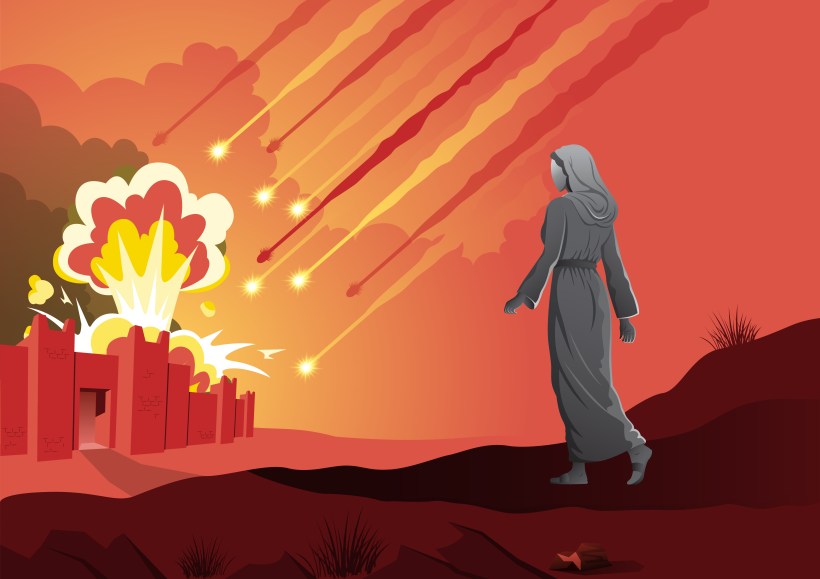
The Sin of Sodom & Gomorrah Summarized: A Warning to the United States of America (and a Reason for Hope)

It may be worse then you think and more relevant than you assume


Since I noticed how Ezekiel summarized the sin of Sodom & Gomorrah earlier this year, I wanted to take a closer look. Ezekiel’s summary was surprising to me, and I wondered, “What did I miss in reading the story?”

I thought it was about sexual sin, and specifically homosexual sin, but Ezekiel doesn’t even mention sexual sin in his summary. This is what Ezekiel says, speaking to Israel:

“You not only followed [the ways of Sodom] and copied their detestable practices, but in all your ways you soon became more depraved than they. As surely as I live, declares the Sovereign Lord, your sister Sodom and her daughters never did what you and your daughters have done.

‘Now this was the sin of your sister Sodom: She and her daughters were arrogant, overfed and unconcerned; they did not help the poor and needy. They were haughty and did detestable things before me.'”

(Ezekiel 16:47-50) Obviously, the story of Sodom & Gomorrah isn’t what I thought it was.

Like most people, I was taught a simple version: God destroyed Sodom and Gomorrah because of homosexuality. End of story.

But when I actually took the time read the text carefully, I realized the Bible tells a far more unsettling story, and a story that is far more relevant to our world today than I imagined. The Bible contrasts hospitality and hostility to strangers (angels) to highlight the root of Sodom & Gomorrah’s sin.

I did a careful exegesis of the Sodom & Gomorrah story previously that demonstrates what the primary the sin of Sodom & Gomorrah was, but today I am just going to summarize it. The summary needs to include the context in which the story of Sodom & Gomorrah is embedded in the Bible.

Before Genesis 19 where we find the story of Sodom & Gomorrah is the story in Genesis 18 of Abraham’s and Sarah’s magnanimous hospitality to three strangers who turn out to be “the Lord” and two angels on their way to Sodom. The one called “the Lord” remained behind talking to Abraham, while the two angels continued on to Sodom where Lot sees them sitting in the gateway of the City. Lot calls to them, invites them in, and shows them the same magnanimous hospitality Abraham showed. (Gen. 19:1-3)

The parallel stories of Abraham’s and Lot’s hospitality that mirror each other in the same pattern set the stage for God’s judgment on Sodom. That’s when things go sideways. The men of the town surround Lot’s house and demand that Lot send them out to be violated sexually.

Abraham welcomes strangers with generosity and honor. Lot does the same, but the men of Sodom do the opposite. They rage against the strangers. They threaten Lot because he is a “foreigner”, and they warn Lot they will treat him worse than what they plan to do to the strangers in Lot’s house if he doesn’t comply.

The town’s men resented Lot being there and resented him inviting other foreigners into his house. They formed an angry mob to humiliate and violate Lot’s guests as a warning: you are not welcome here!

As Ezekiel says, the reason for this conduct is because they were arrogant, overfed and unconcerned about others. They did not help the poor and the needy. Worse, they didn’t just turn the foreigners away; they didn’t just drive them out of town; they tried to punish, violate, humiliate, and shame them.

The Lord told Abraham that He was responding to the great outcry against Sodom & Gomorrah due to the grievousness of their sin. (Gen. 18:20) Such an outcry is the response of people when great injustice is done to them. The scene echoes the story of Cain and Abel when Abel’s blood was said to cry out from the ground in Genesis 4. The same word is used for Israel’s outcry under Egyptian oppression in Exodus 2.

God responds to injustice. God responds specifically to the outcries of people who bear the oppression of that injustice, and God judges those who are unrepentantly responsible for that injustice.

The story of Sodom & Gomorrah is a story of God’s judgment on sin, but it isn’t sexual sin that brings God’s judgment. The sin that prompted God to respond was the sin that caused people to cry out under the weight of injustice.

Jesus later confirms that the sin of Sodom & Gomorrah is inhospitality when he warns towns who do not welcome his followers, saying, “it will be more bearable for Sodom and Gomorrah on the day of judgment than for that town.” Jesus says this in Mathew 10 when he sent his 12 disciples to proclaim the kingdom of God, and Jesus says it again in Luke 10, when he sent out 72 of his followers to heal the sick and proclaim the kingdom.

The context of these statements was the hospitality (or lack of it) shown to his followers. There is no mention of sexual sin—only refusal to welcome, refusal to listen, refusal to be hospitable.

Ezekiel is very specific about the sin of Sodom & Gomorrah:

“This was the sin of your sister Sodom: pride, excess of food, prosperous ease—but she did not help the poor and needy.”

Pride. Comfort. Indifference. Not just lack of empathy, but downright cruelty to the poor and needy – the vulnerable. That is the Bible’s own summary of the sin of Sodom & Gomorrah.

The angels/foreigners in the story of Sodom & Gomorrah are just one category of vulnerable people. Elsewhere, Scripture often mentions widows, orphans, and foreigners together to describe the vulnerable people in the ancient near east who God desired His people to protect and watch over – because God’s heart is to protect and watch over the vulnerable and needy.

Yes, there is sexual sin in the story, but the root of that sin is hostility toward others. In the context of the story as it sits in the greater context of the previous story about Abraham’s radical hospitality, the sexual act is a weapon of the people of Sodom. They use it out of arrogance, out of desire to guard their own wealth and comfort from foreigners, to humiliate, shame, and drive out the foreigners who dared to encroach on on what they had. It is the final expression of a society that idolized comfort, wealth, and lifestyle. Because they didn’t love God, they didn’t love people.

Sodom wasn’t destroyed because it was too permissive. Sodom was destroyed because its people were too proud, too full, too comfortable, and too cruel in their efforts to protect what they had from outsiders.

God heard the cries of those crushed by that system—and He acted.

That’s what makes this story disturbingly relevant today. The sin of Sodom isn’t ancient or obscure. It shows up whenever a society values its own prosperity above allegiance to God and clings to its own comfort, despises the stranger, and silences the cries of the vulnerable to protect what it has.

And that should give Christians (and non-Christians alike) pause in 2025 in the United States of America. God is no respecter of persons. People reap what they sow. God did not spare the people of Israel from His judgment when they repeatedly gave in to idolatry (putting their own interests above God’s interest) and oppressed their neighbors. He will not spare a country or a even a group of believers who do that.

The good news is that God is always, always faithful. He is aways just to forgive those who ask to be forgiven and repent of their ways. I pray that we can be such people.

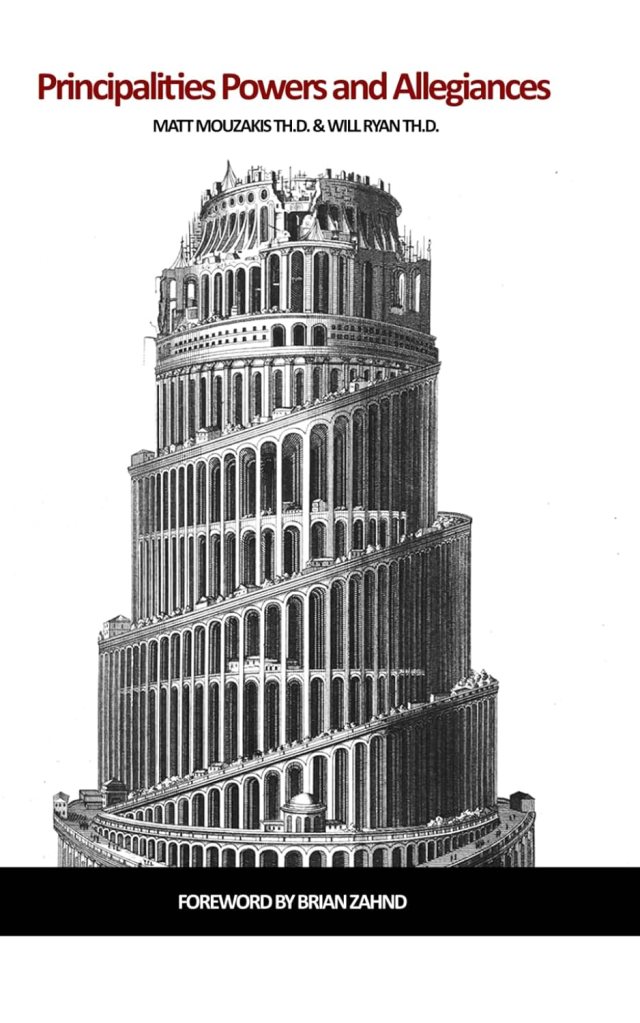
A Review of Principalities Powers and Allegiances: Submission in Enemy Territory

Untangling submission to authority and allegiance to God


A friend posted an glowing endorsement of the book, Principalities Powers and Allegiances, by Matt Mouzakis & Will Ryan, that intrigues me because the subject is a topic I have spent some time considering and writing about. The book is an exegesis of biblical passages that have posed challenges to modern Christians like myself: Romans 13:1-7 and 1 Peter 2:11-17.

These passages instruct Christians to submit to earthly authorities “for the Lord’s sake” (1 Peter 2:13). Mouzakis and Ryan provide background and Scriptural insight that sheds some fresh light on these passages. It is not new light. In fact, it is ancient light that was likely understood by the original readers of those words, but which has been lost in the centuries since that time.

I do not have the book, but I was curious because of my own interest in the tension between faithful adherence to the Gospel and submission to governing authorities, so I asked Google Gemini for a summary of the book. More specifically, I asked for a summary of the exegesis of Romans 13:1-7 for comparison to my own exegesis. (How Should the Church Act Regarding Authority? and more recently Submitting to Authority For the Lord’s Sake Like Peter, Paul, and Jesus Did)

The exegesis of Romans 13:1-7 offered by Mouzakis and Ryan is a departure from modern reading that views government as God’s benevolent institution for all time. They argue that the passage must be read through the lens of the Deuteronomy 32 worldview and the larger narrative of sin and God’s judgment in the book of Romans.

The Deuteronomy 32 worldview, in a nutshell, is that Yahweh, is the sole supreme Deity, and that the gods of the other nations are lesser, created spiritual beings (“sons of God” or elohim). It pulls from the judgment following the Tower of Babel that included the scattering of the people:

“When the Most High gave to the nations their inheritance,
    when he divided mankind,
he fixed the borders of the peoples
    according to the number of the sons of God.”

(Deut. 32:8)(ESV)

The “sons of God” are sometimes translated “sons of Israel”, but Israel was not yet a nation at that time. Abraham, Isaac, and Jacob (whose name was changed to Israel) from which God formed His people were not yet born. God called Abraham out from among the nations and formed a people of God, the nation of Israel, separate and apart from the nations. Thus, Jews identified only two sets of people: the Jews and the Gentiles.

The Deuteronomy 32 worldview notes that the “sons of God” (the elohim) rebelled. They demanded the worship that belonged only to Yahweh, and they lead the nations into idolatry and violence. They are the principalities and powers that Paul speaks of who rule the “world system.” Jesus defeated those principalities and powers by his life, death, and resurrection (Colossians 2:15), broke down the dividing wall between Jews and Gentiles (Ephesians 2:14), and established his Church for the purpose of reclaiming the nations for the Kingdom of God.

Romans 13 needs to be read in the context of the sweep and arc of the story of God and what He is doing in space and time. Here are the key points of their specific interpretation of Romans 13:

1. The Context:

From Handing Over to Submission

The authors connect Romans 13 directly to Romans 1:21-23, where Paul describes God “handing over” (paradidomi) humanity to the consequences of their idolatry. In the Deuteronomy 32 worldview, this “handing over” included disinheriting the nations and appointing elohim (spiritual beings) to govern them.

The Problematic Authorities:

By the time of the New Testament, these spiritual beings—the principalities and powers—had fallen, becoming demonic forces that oppose God. When humanity rejects God, they are handed over to the “world” and to these spiritual powers, which are associated with the consequences of “sin and death.”

The Assertion:

The Roman government (specifically the Empire under Nero in the 1st Century) is viewed as aligned with these demonic forces. Paul’s message is that because Christians serve KING JESUS, they are no longer slaves to these demonic forces, even while living under their political rule.

2. The Nature of “The Authorities”

The Greek word used for “authorities” in Romans 13:1 is exousiai, which refers both to human governing authorities and spiritual powers (seen in Ephesians 6:12). Mouzakis and Ryan contend that Paul is deliberately using this ambiguous term to encompass the reality that earthly governments are influenced by unseen spiritual powers.

When Paul says the authorities are “instituted by God,” he does not mean God approves or blesses their actions. Rather, God established them as the temporary framework of consequences and judgment that the world is subjected to—a framework that God ultimately controls in his sovereignly.

3. The Ruler as “God’s Servant”

The authors evaluate the terms used for the governing official: leitourgos (minister/servant, v. 6) and diakonos (servant/minister, v. 4).

A Tool of Wrath:

The ruler is called both “God’s servant for good” and an “avenger who carries out God’s wrath” (v.4)(ESV). This wrath is seen not necessarily as God’s positive blessing on good governance, but as the execution of the consequences already outlined in Romans 1—the judgment of being “handed over” to a system that operates by the sword. the “good” is the carrying out of God’s purposes. The government’s function is to maintain basic civic order and punish wrongdoers, which is a necessary restraint in a fallen world, but the government itself is not necessarily acting righteously.

Consistent with this, we can find multiple times in Scripture where unjust nations are identified as servants of God. Isaiah identifies Assyria as the “the rod of my anger, in whose hand is the club of my wrath!” even as Isaiah pronounces, Woe to the Assyrian!” (Is. 10:5-6) Jeremiah called the Babylonian king, Nebuchadnezzar, God’s servant. (Jer.25:9 & 27:6) to bring God’s judgment.

The Non-Endorsement:

The term leitourgos neutral. It refers to public servants, generally. It means a tool or agent of God, like Assyria and Babylon were to accomplish God’s purposes in exiling his people. It is not an endorsement of them as God’s representative.

4. Allegiance vs. Submission

The most crucial distinction is between submission and allegiance:

Allegiance is to Christ:

The Christian’s primary and ultimate loyalty is to Jesus and the Kingdom of God. Our allegiance (our citizenship in the kingdom of God) made the Christian community a rival kingdom to the Roman Empire. That is why Christians were viewed with suspicion and called “atheists” (because they didn’t bow to Caesar and they didn’t worship the Roman pantheon of gods). Jesus was crucified, in part, because he was perceived to claim to be the King of the Jews, though his kingdom is not of this world.

Submission is Tactical:

The command to “be subject” (hypotassō) is a call for voluntary, orderly yielding to maintain peace, prevent anarchy, and avoid creating unnecessary offense that would hinder the spread of the Gospel. Peter says to submit “for the Lord’s sake”, so that the Gospel message is not hindered. It is an act of discipleship lived out in enemy territory.

Taxes and Honor:

Paul’s only specific instruction about submitting to the governing authorities is to “pay to all what is owed them” (v.7), including taxes. He echoed Jesus in this who told us to pay unto Caesar what is Caesar’s and to his disciples to pay the Temple tax. It is a call to fulfill one’s basic civic duty (giving to Caesar what bears Caesar’s image). However, the ultimate message is a remez (a subtle link or hint) to Jesus’s teaching to give yourself wholly to God because you bear His image.

In summary, for Mouzakis and Ryan, Romans 13 is not a command for blind obedience to the state, but a strategic directive for Kingdom citizens to live non-violently and orderly in a world ruled by lesser, fallen powers, while reserving ultimate worship and allegiance for King Jesus.


If you are interested in what the authors have to say about the book, this video features Dr. Matt Mouzakis discussing the process of writing the book and exploring its underlying theological themes in a conversation about writing worship music. Write Biblically Accurate Songs For The Church with Dr. Matt Mouzakis

If you want to read what I have written about the tension between submission to authority and allegiance to God, see How Should the Church Act Regarding Authority? and more recently Submitting to Authority For the Lord’s Sake Like Peter, Paul, and Jesus Did.

Did AI do a good job summarizing the book? I have added to the AI summary I obtained. Did “we” do a good job? If you have read the book, please let me know.

If this helped you, made you curious, or even if you disagree, please feel free to start a conversation in the comments.

Why I Am Speaking Out Now

Why I have not spoken out like this before


People ask me why I didn’t speak out negatively against the Biden Administration. It’s true, I didn’t speak out (as much) against the Biden administration as I do now against the Trump administration.

To be clear, I did not vote for Joe Biden. I also did not vote for Hillary Clinton or Barack Obama. I am a lifelong conservative and I have voted Republican most of the time throughout most of my life, with few exceptions, mostly on a local level.

I would be classified as a compassionate conservative. On some scales, I come out as a “classic liberal.” I believe in the freedom of speech, individual rights, and basic constitutional protections for all people, but I am not a Democrat, and I never have been.

As a conservative, and as a human being, I have some of the same concerns that Democrats do. We just approach things differently. For the most part, I am not confident in large government. I have seen too much bureaucracy, waste, and abuse in state governments and large municipalities to have much confidence in large government.

At the same time, I recognize weaknesses in my conservative position that have become accentuated over the years. For instance, large business is not any better than large government, and could be even worse.

A problem for the political system as a whole is the amount of money that pours into the political process. It has grown exponentially over my lifetime. Money begets greed, self-interest, and corruption in ways that are not healthy for our politics.

The amount of money accessible to politicians has a strong negative effect on our political system. If you look at the data of the wealth of politicians when they begin as “public servants” and retire, the amount of wealth that politicians accumulate is staggering and indicative of a major problem in American politics. I believe that the love of money is the root of all evil, as the Bible says, and the amount of money in the political system is a corrupting influence.

But , I digress. None of that explains why I have spoken out more over the last year against the Trump administration than I did against the Biden administration. I thought the Biden administration was inept. It seemed clear that Biden was being propped up and pushed forward, but he was not controlling what was going on. The disparate interest groups in the Biden administration and the Democratic Party as a whole that push extreme agendas that much of the country is uncomfortable with were problematic. But political processes still operated. There was a strong Republican Party, albeit with its own issues.

I did speak out about the fact that Congress has become a lame duck branch of government. Over many years, beginning at least with the Clinton administration going forward, presidents have wielded more and more executive power, issuing executive orders to make sweeping changes that were never intended to be part of the power of the executive branch.

I believe one reason for that is that Congress is often unable to reach a consensus that will pass both houses of Congress. We are more polarized now than we were 50 years ago. There is no middle ground. Politicians in the middle get taken out by their own party. So we have no consensus-building block that is essential to allow Congress to adopt laws and overhaul laws like our immigration law when needed. Therefore, presidents rule by the stroke of a pen with an executive order, and that has become the norm. I have been talking about that for many years.

What we are seeing now is the fallout of those many years of allowing Congress to languish in passivity while we became accustomed to presidents creating law with the stroke of a pen. Executive orders were never intended to be the way our system operates, but it is the present reality. The Trump administration is the natural result of that failure.

Donald Trump is taking the momentum of decades of American political processes and stretching them to their inevitable conclusions, which is a king-like authority in the executive branch, where the president can do just about whatever the president wants to do with impunity, including ignoring legal precedent and law and becoming a law unto himself.

Speaking of legal precedent, our Supreme Court process, our process for appointing Supreme Court justices and lower court justices has become more and more political over the years. Things took a turn for the worse with the Bork confirmation hearings, which was an absolute political circus. I have been speaking out against that for years, because it undermines the integrity of the judicial branch of government. It was never meant to be hyper-politicized. Justices were meant to be appointed because of their judicial reputation and acumen. Judges were not meant to be political hacks or political puppets. They were meant to be truly independent, the best and the brightest.

Of course, human nature being what it is, conservative presidents would tend to appoint conservative justices, and liberal presidents would tend to appoint liberal justices. But the history of American jurisprudence shows that merit, judicial acumen, and proven judicial ability were at the top of the list of qualifications. That is no longer the case. Presidents and parties make no bones about who they want as their judicial candidates. They want people who are going to decide cases according to the party line, and that is coming home to roost now also.

Donald Trump thinks that he can tell justices how to rule and how to apply the law, or, in some cases, how to ignore the law. Donald Trump just fired hundreds of immigration judges so that he can replace them with immigration judges who will rule exactly as he wants them to.

That is not how the executive branch and judicial branch should be interacting with each other. The judicial branch is specifically meant to be a foil to the executive branch. The judicial branch is meant to stand independently so that it can be a check and balance on the other branches of government.

What we are seeing today is the complete erosion of this check and balance system that was established in our Constitution. It is completely breaking down and devolving into supreme authority in the executive branch.

I don’t blame Donald Trump for the erosion of the check and balance system in our government. It’s been happening for a long time.

I do blame him for being an opportunistic extremist. He is an opportunist who sees the reality, and he has no qualms about exploiting and taking advantage of it. He is a bad actor, in my opinion, who is driving a proverbial truck through a gaping hole in our system.

When I speak out, I am not just speaking out against the Trump administration. I am speaking out as a warning signal about where we are in the history of our country.

We are at a tipping point. Our system is caving in and collapsing. I am afraid it’s already too late, and part of the problem is that we are so focused on our partisan politics, so willing to excuse and defend our own party and our own party line that we cannot see the collapse of our system of government as it is happening in front of our eyes. 

Perhaps, more personally, I have been a lifelong conservative because I thought the Republican Party would protect the rule of law and the integrity of the Constitution. I thought the Republicans would conserve the basic freedoms we have and hold us back from a progressive erosion of the foundational components of Constitution and law.

What alarms me most about the Trump Administration is that he has taken it the other direction and is knocking down whole walls and structural elements of our Constitution to impose his will on the country. He is intentionally pushing every boundary in the direction of expansive executive power, and the Republican party won’t stand up to him.

The Trump Administration is running rough shod over due process protections, ignoring the First Amendment, and actively attempting to reinterpret and rewrite the Fourth and Fourteenth Amendments, among other things. These are staple protections of our freedom. Trump is undoing fundamental protections at breakneck speed and overwhelming the court system, and I see an immediate threat to the seams of our democracy that are ready to burst and break open. These actions betray every conservative nerve in my body, and that is why I am speaking out now.

Where are the conservative stalwarts standing up to him? Most conservatives are cheering or at least looking the other way as Trump and his motely crew of hacks dismantle the fabric of our law.

~~~~~~~~~~~

So, stepping down from my soapbox, let me know where I am coming unhinged. Give me some hope. Disagree me if you see it differently. I am not unable to listen to contrary voices, and (in fact) need some fresh perspective at times to balance me out. Thank you ahead of time.

Why I Write About Immigration Issues

The truth is complicated, but God’s heart is certain

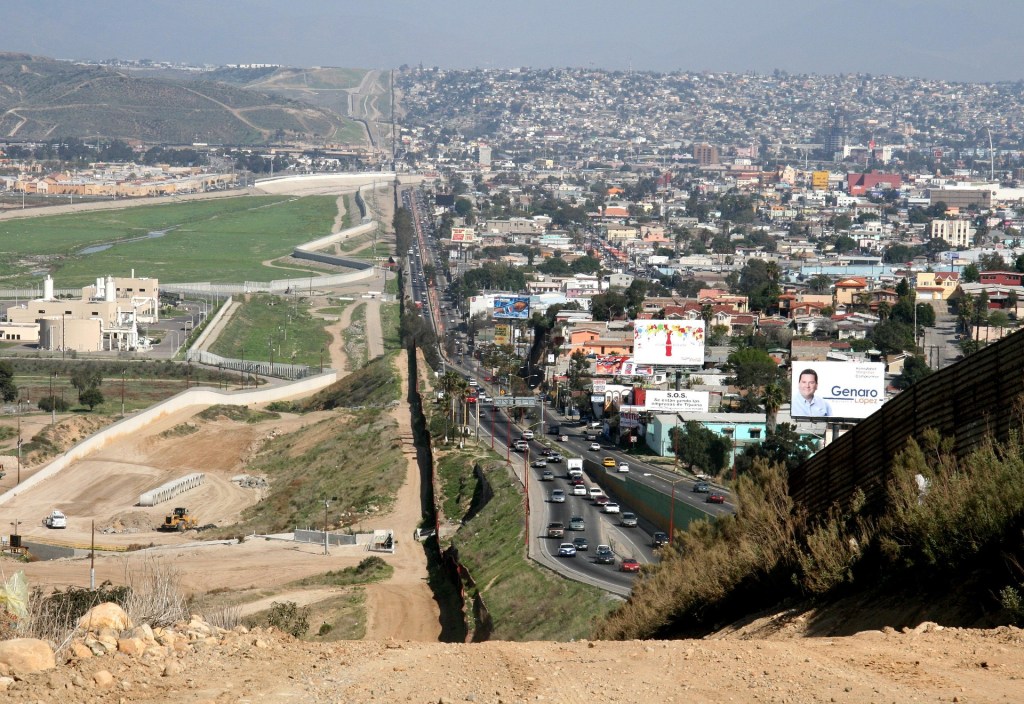
Mexican Border

I have friends who keep me honest, and I am grateful for that. They don’t always agree with me. In fact, they often disagree with me on various things, but they remain my friends, and I remain grateful for them.

Anyone who follows me on social media knows that I am virtually fixated on the issue of immigration right now. It may seem like a new thing—that all of a sudden I have become woke, liberal, or progressive. Some people who don’t know me well, I am sure, think that about me. The truth is more complicated than that.

I am a lifelong Republican and conservative by nature. I’m also a follower of Jesus, though, and I find that Jesus defies modern political categories and stereotypes. If Jesus looks to me like a Republican or Democrat, “my Jesus” probably is not the real Jesus, and my politics have likely influenced my view of Jesus.

Many people might look at my posts on immigration and feel like I have abandoned all sense of patriotism and national pride. They might think I have become a hater of the United States of America. Again, the truth is more complicated than that.

I grew up with a love for my country and a strong sense of patriotism and pride. I was educated, like most people my age, on the goodness of the United States of America, celebrating Christopher Columbus and Thanksgiving this time of year with idyllic depictions of pioneers living in harmony with Native Americans as our forefathers lived out their manifest destiny in keeping with a divine mandate from our creator to form the greatest, freest country on earth.

I still believe we live in the greatest, freest country on earth, but the truth is messier and more complicated than I once believed. I am grateful for a strong sense of the goodness of the United States of America I learned as a child, and I appreciate the positives in that idealized memory of America. But it’s more complicated than that.

Humanity is nothing if not messy. We are fallen, sinful creatures. We know that, but our idyllic, comforting images die hard.

The pioneers displaced the Native Americans who were here long before us. They were pushed out of their ancestral lands. They were marched in a “trail of tears” to godforsaken territories where they have had to scrape out a meager subsistence ever since then in the literal dust of the barren, rocky places to which they were consigned.

Slavery is a pox on our idyllic history. That it was supported, promoted, and defended by Christians who sought comfort in the Bible while they exploited, oppressed, and dehumanized people for the color of their skin (and wealth they could generate) is a testament to the utter bankruptcy of human beings – even religious ones.

Let’s be honest about this, also: religious people who use their religion to justify their unjust ways are not doing anything different than non-religious people who are unjust. It’s just more insidious for the fact that they contort love of neighbor to love of self.

I have learned to be honest and not to look away from these contrary images of our history and our past. God calls for repentance, and repentance requires honesty. Repentance and heart change are the only proper response to the evil of idolatry and injustice.

Honesty does not mean I do not love my country, and it does not mean that I am not thankful for being born here. I still believe that the good we have brought into the world is not any less good. It’s just complicated, and I want us to live up to the ideals we ascribe to.

In case you could not tell, I am not an idealist, though I certainly do have idealistic tendencies. Not that I am any different than anyone else. We are complicated and complex creatures; human beings. Despite the polarized simplicity of social media that pigeon holes us into two-dimensional, stereotypical ideologues, people and societies are complex.

On the issue of immigration, my “awakening” happened more than a decade ago – in 2014. During the Obama administration, as I watched the Syrian refugee crisis unfold in the news, I realized that didn’t have a robust biblical view on the subject of immigration. I have written about this often, so please bear with me if you have read what I have written before.

Continue reading “Why I Write About Immigration Issues”

Unveiling the Mystery of the Hiddenness of God

Why would God be hidden to us?


I have been meditating on the hiddenness of God lately and leaning into the mystery of God’s hiddenness. I am intrigued by it. The Bible is forthright about the hiddenness of God.

As I think about the hiddenness of God, the mind of the skeptic plays in my ear: “How do you know God exists? Why does God seem hidden? Maybe it’s because He doesn’t exist!” Believing in a “hidden” God is belief without evidence; it’s belief in the teeth of the evidence (as Dawkins says).

My response is that we all have faith in our basic assumptions about reality. The scientist assumes only matter and motion. He sees evidence for things like gravity and neutrinos, and dark matter and dark energy that cannot be seen. The scientist reasons to the best explanation for the things that cannot be seen in order to make sense of the reality in the world, and he does so within the “limitations” of materiality.

Science, after all, is the study of the material world. That is is the scope of science as it is defined in the modern world. Science is based on what is quantifiable, measurable, observable, and reproducible.

When I do theology or philosophy, I also start with assumptions. I start with an assumption, or a theory if you like, that God exists. The proof of God, however, is necessarily different than scientific proof.

God is not a substance in the universe to be quantified, measured, observed, or reproduced in the way we can study the natural world. He is not a component of the universe. He is not comprised of matter and motion like the universe. God is not a principle of physics that can be observed in its regularity and tested by its regularity.


If God exists and created the universe, He is separate and apart from the universe. That does not mean that God is not present in some way; it means that He is not present in the same way that you and I are present. Rather, God is transcendent. He is imminent (near in some way), but not contained within the creation.


God also must have agency to have determined to create. We understand the necessity for agency by our own agency. This makes sense of the question: why is there a universe; why is there something, rather than nothing.

For the life of me, I can make no sense of the assertion that a universe can create itself. What kind of voodoo magic is that? That conclusion is based on an assumption that matter and motion is all that exists, but we cannot prove that assumption.

To say that God must have agency is not to be anthropomorphic about it but to reason to the best explanation based upon what we know, which is our own agency and the way we conduct ourselves in the world. Where does a universe come from? The simple answer is that it comes from a creator who has agency, who has intentionality, and the ability to will and to act according to His purpose and design.

Where does intricate, fine-tuned complexity that is complex to the nth degree come from? It comes from a mind, from a creator who conceives a plan and then implements it. We know that from the way human beings create things. Where did we get that capacity? Like things produce or reproduce like things.

We know that the universe is “winding down”. That is what the law of thermodynamics tell us. Entropy is the rule. This means the universe is not getting more complex; it is breaking down, evening out, cooling, and becoming less complex over time.

Over course, this is occurring over a very, very long period of eons, so (perhaps) there is enough energy in the universe for complexity to form in areas of the universe even while entropy is working its very long way toward the inevitable heat death of the universe as a whole.


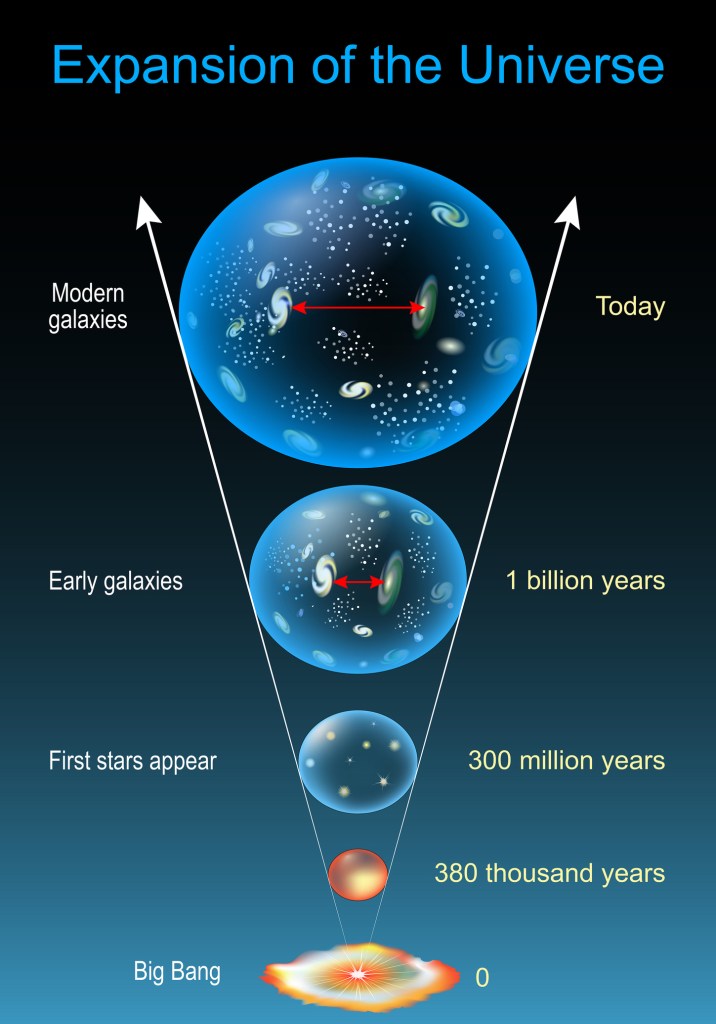
Maybe, but where did the energy come from to cause the so-called Big Bang? What triggered the universe to begin to begin with?

No one can explain that who doesn’t believe in a “Big Banger”, a Creator. It is the best explanation that we have. It makes the most sense of the reality that the Universe had a beginning.


The multiverse doesn’t solve the “problem” of a beginning. It just kicks the can back down the road further. What triggered the multiverse into being? It’s an endless regression.

The Christian (Jewish and Muslim) conception of God is that God is the timeless, eternal being who always existed and was never created who chose to trigger the universe (or multiverse) into existence.

This, frankly, makes much more sense than a past eternal, non-sentient universe that just poofed life into existence. How do you get life from nonliving matter? What animates that matter?

But the questions don’t stop there. What triggers consciousness from inert, non-conscious matter? How do the fundamental “building blocks” of matter develop consciousness? It’s a complete mystery, and there is no mechanism known to modern science to explain it – other than the brute fact that human beings and (to some lesser degree) animals (and maybe plants) are conscious beings.

Consciousness is proven by the sheer fact that we are conscious of ourselves. It seems to “reside” in or be attached to the brain, but the brain by itself is not consciousness. The brain is a perfect, intricate receptacle for consciousness, but the brain and consciousness are not perfectly coexistent. They are not the same things, and science has no adequate explanation for that.

Because these things suggest looking outside the limitations of the material world for our answers, we have theology and philosophy, which can be “scientific” loosely in method and approach, but defies the limitations of scientific inquiry.

That doesn’t mean that theology and philosophy should be divorced from science (or that science should be divorced from theology and philosophy). All reality must ultimately cohere harmoniously, or we cannot call it reality.

But, I have digressed (only slightly) from the point, which is the mystery of the hiddenness of God.

Continue reading “Unveiling the Mystery of the Hiddenness of God”