What Business Do We Have Judging the World?


The title to this blog article is a question that doesn’t come from me. It comes from Paul, the Apostle. The question is rhetorical, meaning that Paul assumed his audience would know the answer, though he doesn’t leave them guessing. He provides the answer.

His audience was the Corinthian church in the 50’s AD. The larger context in which Paul asked this rhetorical question is also instructive. This is that context in which Paul asks the question:

I wrote to you in my letter not to associate with sexually immoral people— not at all meaning the people of this world who are immoral, or the greedy and swindlers, or idolaters. In that case you would have to leave this world. But now I am writing to you that you must not associate with anyone who claims to be a brother or sister but is sexually immoral or greedy, an idolater or slanderer, a drunkard or swindler. Do not even eat with such people.

1 Corintihans 5:9-11 (emphasis added)

Then Paul asks the question,

What business is it of mine to judge those outside the church? Are you not to judge those inside? God will judge those outside.  

1 Corinthians 5:12 (emphasis added)

I am reminded of this passage today because of a comment posted by someone on Facebook about how we should treat people who seem to be “acting against God.” The poster expressed the opinion that something should be done by Christians about the “open immorality … being accepted in society.”

I don’t want to suggest that biblical morality should not instruct how Christians vote and engage politically in the world, but Paul’s question about judging the world should affect how we interact with the world in politics and other ways. At the same time, we need to know how to model Paul’s instruction not to judge those outside the church.

Christians are often accused of “forcing their religion” or morality on others. Simply voting and engaging politically based on biblical values is not forcing religion or morality on others any more than others voting and engaging politically based on their own values is forcing their views on us. We can vote our consciences without judging.

This is where we may need some nuance, however, as some Christians seem to think they have a biblical obligation or mandate to make the world conform to a biblical morality. I have to admit that I have shared this confusion in my past until I began to take seriously what Paul said to the Corinthians in the passage quoted above.

Judging by Paul’s words, I used to view this exactly backward! I judged the world by biblical morality, but I often gave myself and fellow Christians a pass when it came to strict adherence to righteous behavior. After all, we are saved by our faith and not be works, right? If I mess up, I can confess it and be forgiven – even as I demand that the world acknowledge and follow the law.

As I meditate on Paul’s words, I see that Paul’s instruction aligns with what Jesus said about judging. I think you will see that as I unpack what Paul and Jesus said and try to work out why they said it and what it might mean for us in the way we conduct ourselves in the world.

Continue reading “What Business Do We Have Judging the World?”

The Entrance to the Kingdom of God Is Both Narrower and Wider Than We Might Expect

On the one hand, Jesus seemed to be saying that virtually no one was able to enter the kingdom of God….

Revelation of Jesus Christ, Jerusalem of the Bible

Some local Hebrews in the First Century asked Jesus whether the people entering the kingdom of God would be few. They were not likely thinking of all the people in the world. They were likely focusing on themselves, the Hebrews who identified as God’s people when they asked that question.

I get the impression that the questioner might have believed what Jesus was preaching. He (or she) may have been picking up on some clues that God’s standards are much higher than he might have once believed, and that many (even of the Hebrews) might not meet that standard.

Indeed, this seems to be the point Jesus intended to make in the famous Sermon on the Mount. He said, “You have heard it said, ‘Don’t commit adultery.’ I tell you that anyone who looks with lust at a woman has already committed adultery in his heart! Jesus said, “You have heard it said “Don’t commit murder.’ I tell you anyone who is angry at his brother has murdered him in his heart!” (See Matt. 5:21-48)

Jesus ratcheted up the standard. He upped the ante. If you walked away from this message without thinking you don’t measure up, you missed the point!

Paul the Apostle would later say, “All have sinned and fallen short!” You have to read the whole message to get to the ultimate point – that we do not measure up, and we never will measure up, but God has provided a way for us into His kingdom nevertheless. (See Romans 3:21-26)

On the one hand, Jesus seemed to be saying that virtually no one was able to enter the kingdom of God. On the other hand, God seemed to be swinging the gate wide open to anyone and everyone.

When Jesus answered the question I opened with, he didn’t really answer it. He said, “Strive to enter through the narrow door. Because many will seek to enter, and the door will be shut to them.” (Luke 13:24)

Did Jesus affirm that the people entering the kingdom of God would would be few? Not really. He didn’t say many would enter either. He focused the questioner’s attention on the questioner himself.

Jesus often did that. Why are we concerned about everyone else in the world when God gave us responsibility for ourselves, and no one else?

We aren’t ultimately even responsible for our own children, as they make their own choices and go their own ways. We have some influence over them which can be good or bad, but they ultimately are responsible for themselves.

Consider, again, the audience: they were First Century Hebrews. For many centuries, their ancestors lived with the identity that they, alone, were the people of God, chosen by Him, and destined to be His people. These are the people to whom Jesus made the following statement:

“There will be weeping there, and gnashing of teeth, when you see Abraham, Isaac and Jacob and all the prophets in the kingdom of God, but you yourselves thrown out. People will come from east and west and north and south, and will take their places at the feast in the kingdom of God. Indeed there are those who are last who will be first, and first who will be last.” (Luke 13:28-30)

Maybe it was a genuine, sincere, and humble question. Maybe the question was posed by a elitist with an elitist attitude seeking confirmation of his elite position in the world.

We don’t know, and it doesn’t really matter because the answer is the same: Jesus came for the Hebrews, and he came for everyone else. God became flesh and came for “his own” people (John 1:11), and He came for the whole world. (John 3:16-18)

However, only those who receive Him are the people who are considered His children (John 1:12-13) who will become the kingdom of God. The invitation stands:

“I stand at the door and knock. If anyone hears my voice and opens the door, I will come in and eat with that person, and they with me.” (Rev. 3:20)

Can it be that the entrance to the kingdom of God is both narrower than expected and wider than expected?

Continue reading “The Entrance to the Kingdom of God Is Both Narrower and Wider Than We Might Expect”

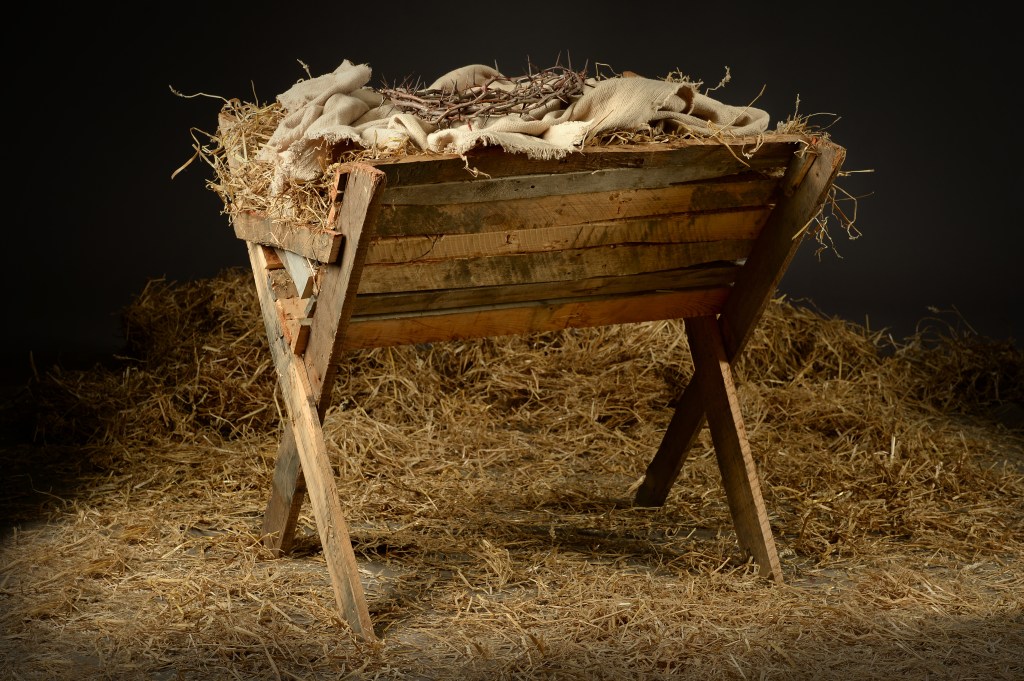
A Message in a Manger


I am going to revisit some of the Christmas articles I have written in previous years in the coming weeks, starting with this one. I may freshen them up a bit as I do so. This was one of the first articles I wrote on this blog, and I think the message still resonates today: A Message in a Manger.

The Word of God Is Living and Active

Unlike the other sacred texts I read, the Bible was hard-edged, and it confronted me with me! It penetrated my heart, and I wanted to look away!


I have made the statement in a previous article that the truth of God is not hidden from those who truly seek Him and desire to know Him. The truth is only hidden to those who don’t really desire to know God for who He is.

The following statement was made in the sermon I heard today: “Holiness and wholeness are hidden where only the humble can find them”.

I recognize that it’s easy for someone who believes in God to say these things. A person might even say these things in an arrogant and elitist sort of way, but that attitude would be 180 degrees wrong.

God is not an elitist. Elitism is antithetical to God and the fruit of the Spirit that should characterize those who believe and know Him.

Jesus, who claims to have been God in the flesh, came not to be served, but to serve and give his life. God “emptied Himself, by taking the form of a servant, being made in human likeness….” (Philippians 2:7) These are not the actions of an elitist God.

The Gospel story of God descending from His place of privilege and power as creator of the world to enter His creation is not the story of an elitist God. He didn’t come as the greatest of all men with power and might. He came as a child, and He embraced the life of a servant, washing his disciples feet, healing lepers by touch, embracing prostitutes, and loving vulnerable people on the edges of society.

We also read that God created all humans in His image. Therefore, all human beings have intrinsic value. Since our value is given by God, it has nothing to do with our station in life. That value is not connected to how gifted or smart we are. It is not dependent on who our human ancestors were, or anything other than the image of God that we bear in ourselves by virtue of being born.

The flip side of that is the statement that God is “no respecter of persons” (He doesn’t show favoritism according to our standards). (Romans 2:11-16) If God is hidden to some people, His hiddenness is more a reflection of what people are looking for than who God is.

As a case in point, His own people, the nation to whom He spent hundreds of years revealing Himself, didn’t even recognize Him when He entered their world in real time and encountered them stripped down to human form:


He was in the world, and though the world was made through him, the world did not recognize him. He came to that which was his own, but his own did not receive him. Yet to all who did receive him, to those who believed in his name, he gave the right to become children of God….”

John 1:10-12


Jesus confronted the elite, religious leaders. He called them blind guides. They, of all people, should have been able to recognize Him, but they didn’t.

We see in those interactions that they were looking for a savior that would overthrow the Roman Empire and ascent to the throne of Israel. They wanted an earthly savior. They were jealous of his popularity. They didn’t expect God to come to them humbly as He did. They didn’t remember their own Scriptures that say,


“though the Lord is exalted, yet he regards the lowly”.

Psalm 138:6


They didn’t remember or perhaps understand that the long-awaited Messiah would not fit a worldly model of power and strength. They should have known that he would have “no beauty or majesty to attract us to him” and “nothing in his appearance that we should desire him”. (Isaiah 53:2) They should have known that he would be “despised and rejected by mankind”, “a man of suffering, and familiar with pain” who would be “held in low esteem”. (Is. 53:3)

At the same time, we can understand why they missed these details or didn’t understand them. God is the King of Kings and the Lord of Lords! Why would He stoop so low? The kings, lords and rulers of the world did not stoop.

God called the nation of Israel to separate from the nations around them and to be different, but they continually failed to do that. God’s revelation from the beginning was an exercise in demonstrating that He is different, and not like the other gods, but they like the familiarity of those gods.

God’s people demanded a king to be like all the other nations. In doing that, they were rejecting God as their King who was distinctly different. They embraced the other nations’ gods; and Israel became indistinguishable from the character of the other nations.

They were meant to be a city on hill, a light to show the uniquely different character of God to the nations around them. They were continually urged to welcome strangers, to care for widows and orphans, and to do justice. (See 25 passages, including 19 Old Testament passages, with these instructions.) God desired them to be different from the world around them, as He is different from the gods of the other nations, but they failed to be different.

It’s no wonder that the Jewish leaders in the days of Jesus failed to recognize him. The Pharisees were so focused on the minutia of of their religious observances they neglected the “weightier matters of the law: justice and mercy and faithfulness”. (Matthew 23:23) They failed in their religiosity to appreciate and embrace God’s character that is embedded in the concepts of righteousness and justice. (Psalm 89:14)

They didn’t recognize God in the flesh because they lost sight of His real character. They were religious, but they lacked a real understanding of God.

The prophets, like Jeremiah, warned the nation of Israel many years earlier that they were going astray. The human heart is deceitful. (Jeremiah 17:9) We fool ourselves too easily.

Our fears, insecurities, pride, desires to be like the Joneses (other nations) and many things that get in the way of knowing God for who He is take priority in our thoughts and attitudes. We buy into narratives of ourselves, others and God that are warped.

Religious people are not immune to self-deception, and Christians are no less susceptible to self-deception than others. This is the lesson of the Pharisees, the leaders of God’s people in the days that Jesus walked the earth. In fact, religious people may be even more susceptible to self-deception because we use religion to legitimatize and justify our deception!


“The eye is the lamp of the body. If your eyes are healthy, your whole body will be full of light. But if your eyes are unhealthy, your whole body will be full of darkness. If then the light within you is darkness, how great is that darkness!”

(Matthew 6:22-23)


What is the cure for this human malady?

There is one thing that is specifically designed by God to reveal (expose) the hearts of people. It may not work exactly as we might want it to work. It isn’t a magic device, and it doesn’t work unless we submit to it. Rather, it’s the tool God uses to do His surgery in our hearts if we allow it in to our hearts to do its work. That tool is the inspired word of God.


“[T]he word of God is alive and active. Sharper than any double-edged sword, it penetrates even to dividing soul and spirit, joints and marrow; it judges the thoughts and attitudes of the heart. Nothing in all creation is hidden from God’s sight. Everything is uncovered and laid bare before the eyes of him to whom we must give account.”

Hebrews 4:12-13


Continue reading “The Word of God Is Living and Active”

The Dilemma of God Demanding Justice from Beings Incapable of Meeting God’s Standard

There is one critique of the Christian notion of sin and the justice of God that is troubling on its face. That key critique for anyone who claims that God demands justice for sin is that God is seemingly unjust to require justice of beings who can’t measure up.

Many modern people bristle at the Christian idea of sin, and they bristle even more at the idea that God would punish sinners. Frankly, I think many modern people simply don’t understand what sin is and who God is.

But, that aside, there is one critique of the Christian notion of sin and the justice of God that is troubling on its face. That key critique for anyone who claims that God demands justice for sin is that God is seemingly unjust to require justice of beings who can’t measure up.

Alongside the notion that the God of the Bible and demands judgment for not measuring up to God’s just standard is the notion that all people are sinners who don’t measure up. In fact, the New Testament is fairly read to say that people are incapable of living up to God’s standard.

The doctrine of original sin says that we are all corrupted because the sin of Adam and Eve has been passed down generation after generation. Even if we don’t believe in the doctrine of original sin, however, the Bible is clear from the Old Testament to the New Testament that human beings don’t measure up to God’s standard:


They have all turned aside; together they have become corrupt;
    there is none who does good,
    not even one.

Psalm 14:3


They have all fallen away;
    together they have become corrupt;
there is none who does good,
    not even one.

Isaiah 53:5


as it is written:

“None is righteous, no, not one;
   .
 All have turned aside; together they have become worthless;
    no one does good,
    not even one.”

Romans 1:10-12


Jesus said, “No one is good except God alone.” (Mark 10:18 (NIV)) Yet, he says, “Be perfect … as your heavenly Father is perfect?” (Matthew 5:48)

This is the dilemma: How can we be perfect?! “To err is human” the bard once said, and so it seems we are imperfect by our very nature.

Many people reject the idea that God can be just and demand justice from people incapable of measuring up to the standards God’s justice demands. They say it would be unjust for God to demand justice from beings who have no ability to act other than they do, and so fail to meet God’s standards.

God seems to be acting unfairly to demand that we meet His standards when we are 1) created beings, 2) born into sin, and 3) incapable of living up to the perfection God requires.

Other questions tumble after these thoughts: Why didn’t God create us perfect? If we are born sinful, how can God blame us for being sinful? If we are incapable of being perfect, how can God punish us for our imperfection?

Continue reading “The Dilemma of God Demanding Justice from Beings Incapable of Meeting God’s Standard”