To Obey Is Better Than Sacrifice

What is the obedience God desires from us?


I became a follower of Jesus in 1979, though I was a wild, untamed stallion when I was first confronted with the Lordship of Christ and verbally submitted to him. I wandered down my own paths in the year that followed, leading me to a breaking point and more complete surrender. (A cycle I have unfortunately repeated more than once.)

Over the following two years, I was about as surrendered to God as I have been my whole life. I was all in – or as all in as I was capable of being at that time, perhaps. During that time, I became a big fan of Keith Green. I even saw him in concert in Des Moines Iowa in 1981 or 1982. He died in a place crash within a year or two after that, and his impact and memory has faded.

When I saw him in concert, though, his radical Christian commitment had been a huge impact on me, and that impact carried with me beyond his death. Thus, my daily reading today recalls to my mind these lyrics by Keith Green:


To obey is better than sacrifice
I want more than Sundays and Wednesday nights
If you can't come to me every day
Then don't bother coming at all

Keith Green was a musical child prodigy who was radically saved by Jesus. He used his great musical talent and platform to become a prophet of sorts to young Christians at the time who wanted an authentic faith.


I was very drawn to a monastic, cloistered life at that age that Keith Green represented, like a modern Essene. The truth is that I had long been drawn to that kind of thing going back to the book, My Side of the Mountain, that I read in grade school (about a boy who leaves his parents to hollow out a summer home in the trunk of dead tree in the Catskills).

That book seeded in me a longing for something authentic and pure. The idea took root in me that I could not find “it” in the bustle of the world. I needed to escape to solitude, self-reflection, and devotion to a simple life.

In a poignant moment in my senior year in college, I faced up to that longing and desire that ran deep in me, and I made a conscious decision to follow Jesus into the messy clamor of human society. Jesus often escaped to the mountains and the wilderness to be alone with God, but he always returned to the highways, and byways, and the public squares where people live.

Still, the Keith Green spirit of uncompromised obedience to Christ and Christ alone left an imprint on me. His prophetic insistence on radical commitment carried me forward in those early years of my journey with Christ.

Now, I find myself some 40+ years down a road that has taken many twists and turns. That road has taken me through long and winding wilderness areas that were darker than I care to dwell on. It has taken me to the other side of those dark times into the light of a new day, more weary and (hopefully) wiser for the experience. I am still following Jesus as best as I can, but I have a slightly different view of Keith Green’s words today. I hope I can give this the nuance it deserves.

Continue reading “To Obey Is Better Than Sacrifice”

Still Influenced By the Flesh: What’s Love Got to Do with It?

If we are Christ followers, we should not be content to remain as we are


“[Y]ou are still influenced by the flesh. For since there is still jealousy and dissension among you, are you not influenced by the flesh and behaving like unregenerate people?”

1 Corinthians 3:3 NET

I am inspired by Paul’s first letter to the Corinthians (of which we have record). The topic I want to write about is what Paul calls “the flesh”. We might just call it sin. The doctrine of sin is not popular today, but the Bible doesn’t pull any punches about it, and neither should we.

We do need to view it in the right context, though. The Bible is clear that all people have sinned, and all people do sin. John says that anyone who denies they have sinned is a liar, (1 John 1:8) but John adds that God is faithful and just to forgive us when we confess our sin to Him. (1 John 1:9)

Paul wrote this letter to “the church of God in Corinth, to those sanctified by Christ Jesus and called to be His holy people, together with all those everywhere who call on the name of our Lord Jesus Christ….” (1 Cor. 1:2) Thus, he is writing to Christians – Christians who are “still influenced by the flesh”.

Yes, Christians are influenced by the flesh, and Christians are susceptible to sin.

The notion of sin is disfavored and much maligned, but most people would agree that “to err is human”. The biblical notion of sin is not much different than this popular understanding of what it means to be human. It means in its various forms in the Greek to fail, to miss the mark, to do wrong, to misstep, etc. (See Biblehub)

The Greek word translated “flesh” in the New English Translation is σαρκικός, ή, όν (sarkikos). It means “pertaining to the flesh, carnal” (“behavior which is typical of human nature … with special focus upon more base physical desires” according to the HELPS word studies found at the Biblehub website).

Fleshiness is human tendency. Therefore, we might change the popular idea of what it means to be human by saying, “To sin is human.”

The Bible claims that only one human being in history was without sin, and that person was Jesus of Nazareth, who the Bible claims was actually God incarnate (God who became human). The Bible also claims that Jesus came to deliver humans from the limitations of sin (and from death). This was his purpose – to invite us into relationship with God as children to become who God always meant us to be – to be free of sin and death, to live in eternal relationship with God, having the same characteristics God has.

This is a process that starts with a commitment to God in Christ, and it culminates in our own victory over sin and death. The ultimate realization of this victory, however, only occurs after our resurrection:

“So will it be with the resurrection of the dead. The body that is sown is perishable, it is raised imperishable; it is sown in dishonor, it is raised in glory; it is sown in weakness, it is raised in power; it is sown a natural body, it is raised a spiritual body.”

1 Corinthians 15:42-43

“I declare to you, brothers and sisters, that flesh and blood cannot inherit the kingdom of God, nor does the perishable inherit the imperishable. Listen, I tell you a mystery: We will not all sleep, but we will all be changed—in a flash, in the twinkling of an eye, at the last trumpet. For the trumpet will sound, the dead will be raised imperishable, and we will be changed. For the perishable must clothe itself with the imperishable, and the mortal with immortality.”

1 Corinthians 15:50-53

Paul calls this transformation the perishable being clothed with the imperishable, and the mortal with immortality. (1 Cor. 15:54) Thus, we do not attain this perfection until we die and are resurrected, but we are called into relationship with God in this life where the process of change this begins the to happen

Paul’s purpose in writing this letter to the Christian Corinthians (and Christians everywhere and at all times) was to address their fleshiness – their sin. Though they had the “mind of Christ” (1 Cor. 2:16), they were still influenced by the flesh. (1 Cor. 3:3) Just as we are. So we should take note.

Continue reading “Still Influenced By the Flesh: What’s Love Got to Do with It?”

Comments on Why God Became Incarnate and Died for Our Sins

Daniel Mann does a good job of explaining Why Christ, as God Incarnate, Had to Die for Our Sins. In reading his explanation, my mind goes to statements like God’s “transcendent love” and “total abhorrence for sin”, God’s “righteousness” and “divine forbearance” for sin, and the price that had to be paid “to satisfy God’s righteous character”.

Daniel describes his own reaction to these concepts formerly, as a non-Christian. He felt God was a “deceiving sadist” until one day he realized that Jesus was God incarnate, that God did not merely sacrifice a created being – God sacrificed Himself in human form!


Indeed, that is the central point of Christian belief, which is described beautifully and poignantly in Paul’s letter to the Philippians (2:5-8):

In your relationships with one another, have the same mindset as Christ Jesus:

Who, being in very nature [form of] God,
    did not consider equality with God something to be used to his own advantage;
rather, he made himself nothing
    by taking the very nature [form] of a servant,
    being made in human likeness.
And being found in appearance as a man,
    he humbled himself
    by becoming obedient to death—
        even death on a cross!

These things would be small consolation, also, if not for the victory on the other side of the cross (Phil. 2:9-11)

Therefore God exalted him to the highest place
    and gave him the name that is above every name,
that at the name of Jesus every knee should bow,
    in heaven and on earth and under the earth,
and every tongue acknowledge that Jesus Christ is Lord,
    to the glory of God the Father.

That Jesus was fully man and fully God incarnated into a man is key to the understanding of Christianity. That God is three “persons” in one is also key, as it provides some explanation how God can incarnate Himself into the form of a man and die (in human flesh), though God remains self-existent and eternal, the Creator (and not a created being).

Not that there is no mystery in this. I concede this is hard for creatures who are limited dimensionally to wrap our heads around these ideas.

Finally, it explains how (and why) death to Jesus in the flesh had no power over him. As God incarnate, death “could not hold him”. (Acts 2:24)

But, I am not writing to clarify these aspects of Christian doctrine. I want to focus on Daniel Mann’s personal revelation that Jesus was God incarnate, and his death was voluntary – God sacrificing Himself, and not God sacrificing some created being.

This realization made all the difference for him. When he really understood this distinction, he began to see the love of God that was demonstrated in that act of self-sacrifice – something God did not have to to, but He did it for us because He loves us.

Other people, I know, are not convinced. Indeed, if a person understands Jesus to be human only, and not God incarnate, the story makes no sense.

Another stumbling block is God’s “abhorrence for sin” and the need to satiate a “righteous” God. These Christian concepts are foreign territory for many people. Why, if God is so loving, does He demand sacrifices for sin?

Continue reading “Comments on Why God Became Incarnate and Died for Our Sins”

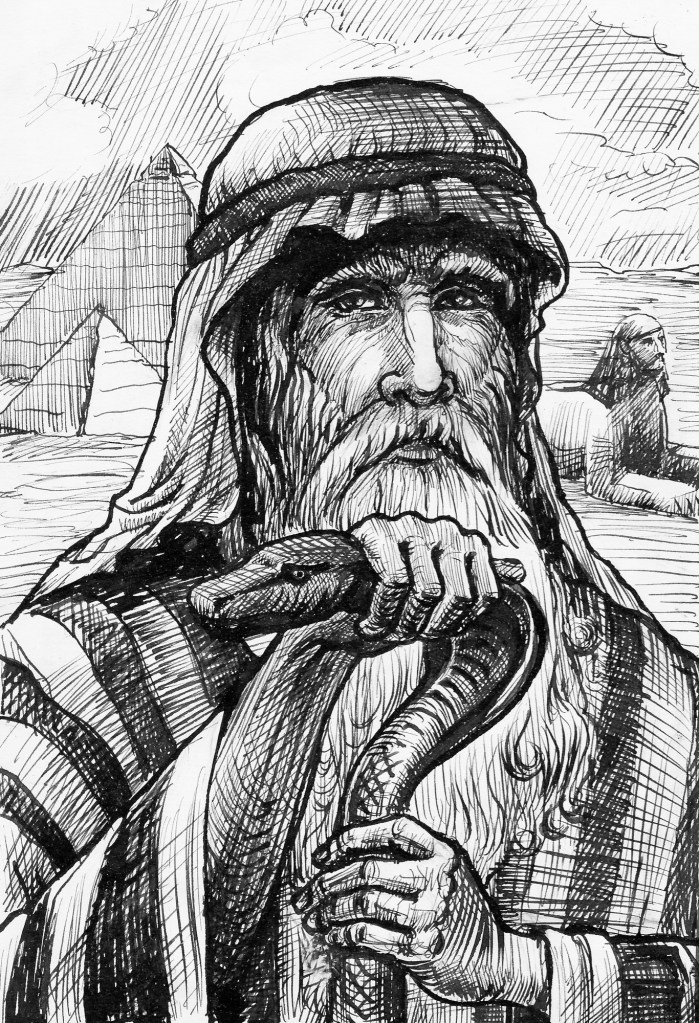
Lessons from Moses of Faith, the Lack Thereof and the Purposes of God

Moses knew better, but his own emotions got the best of him.

Egypt, Sinai, Mount Moses: view from road on which pilgrims climb the mountain of Moses

The passage in Numbers 20:1‭-‬13, which I quote below (in the NIV), has puzzled me in the past. It didn’t sit well with me, and I figured I simply didn’t understand it well.

As with many things I don’t understand well, I often “shelve” them for later consideration. Later is now, as I have just read through the passage again in my yearly journey through the Bible. This is the setting:

“In the first month the whole Israelite community arrived at the Desert of Zin, and they stayed at Kadesh. There Miriam died and was buried.”

Miriam, the sister of Moses and Aaron, had just died. Not much is said about her death, but Moses and Aaron must have been grieving. That grief on top of resistance from the Israelites they were trying to lead according to God’s direction, and the harsh circumstances of the desert must have weighed heavily on them.


“Now there was no water for the community, and the people gathered in opposition to Moses and Aaron. They quarreled with Moses and said, ‘If only we had died when our brothers fell dead before the Lord!'”

I believe their “brothers” who “fell before the Lord” refers to Korah who led a rebellion against Moses. (Numbers 16) Korah challenged Moses and his right to lead the Israelites, because Korah was not happy with his clan’s roll in caring for the Tent of Meeting. In challenging Moses, he was basically saying, “Who put you in charge?!”

Instead of confronting Korah directly, Moses set up a test before the people to allow God to identify who was in charge. When Korah and his clan burned incense, the ground rumbled, and Moses told the people to back away from Korah and his tribe of rebels as the ground swallowed them up.

Not long afterward, the wanderings of the Israelites brought them to the Desert of Zin, where the Israelites became so angry and distraught about the conditions in the desert that they wished they died with Korah in rebellion against God. The desert conditions must have seemed pretty inhospitable. Moses was losing the hearts of the people, and they were turning against him. Again! The people said:

“‘Why did you bring the Lord’s community into this wilderness, that we and our livestock should die here? Why did you bring us up out of Egypt to this terrible place? It has no grain or figs, grapevines or pomegranates. And there is no water to drink!’” 

Of course, Moses was God’s man. That fact was demonstrated graphically in the Korah situation, but they continued to take their dissatisfaction over their circumstances out on Moses. Instead of God, they blamed Moses for their situation. When Moses and Aaron the assembly of the people, the made a beeline for the entrance to the tent of meeting where they “fell facedown”, and “the glory of the Lord appeared to them.”

Moses and Aaron knew the score. They knew that the people were really finding fault with God, not Moses or Aaron. They were intimate enough with God to know that God was not to be trifled with.

When the glory of God appeared to them, they should have been emboldened to stand resolute on their confidence in God’s direction. They should not have doubted that God was with them. Right?

Of course, the Israelites should not have doubted that God was with them, either. God’s visibly demonstrated Himself to them over and over again. His visible presence went with them in a pillar of cloud by day and fire by night. They had seen the demonstrations of the power and holiness of God at the Red Sea, at Mount Sinai and in the ground swallowing up Korah and his band of rebels.

What more did they need to see to understand that God was with them?

Yet, they did not trust that God had their back. God gave them manna every morning, and God gave them so much meat when they demanded meat that it came out of their nostrils. Yet, they continually grumbled and complained and wished they were back in Egypt.

Something had to be done to put down the unrest!

“The Lord said to Moses, ‘Take the staff, and you and your brother Aaron gather the assembly together. Speak to that rock before their eyes and it will pour out its water. You will bring water out of the rock for the community so they and their livestock can drink.’” (Emphasis added)

The instructions were simple and pretty clear: take the staff and speak to the rock.

“So Moses took the staff from the Lord’s presence, just as he commanded him. He and Aaron gathered the assembly together in front of the rock and Moses said to them, ‘Listen, you rebels, must we bring you water out of this rock?’” 

Moses started out all right. He took the staff as he was commanded, but things begin to go off the rails after that. Moses was obviously perplexed that the people were so angry, and he might have been taking it personally. Instead of speaking to the rock, Moses turned and spoke to the people, and he was full of wrath for them in that moment.

It’s hard for me to blame Moses for feeling this way. I am sure I would take it personally also. It was personal!

The people were obstinate. What more could Moses do to demonstrate that God put him in charge?! Yet, they continued to challenge Moses and blame him for their unsatisfactory conditions.


Moses knew better, but it seems his own emotions got the best of him. He took their opposition personally, and his anger led him to forget God’s instructions to him:

“Then Moses raised his arm and struck the rock twice with his staff. Water gushed out, and the community and their livestock drank.”

The result was good, right?

But, Moses didn’t do exactly what God commanded him. God told him to speak to the rock. Instead, Moses spoke to the people, and Moses struck the rock with his staff. These clues pop when God responds:

“But the Lord said to Moses and Aaron, ‘Because you did not trust in me enough to honor me as holy in the sight of the Israelites, you will not bring this community into the land I give them.'”

I have long thought that the punishment didn’t fit the crime. Perhaps, I didn’t understood the significance of these things. God’s response seemed harsh in light of the faithfulness of Moses before Pharaoh, in receiving and delivering the Ten Commandments, and in putting up with the grumbling, and complaining, and obstinance, and waywardness of the Israelites, but maybe I was missing something.

Keep in mind that Moses grew up in luxury and privilege in Pharaoh’s household. The Israelites were “his people”, but only by genetics. Moses put up with a lot with these people he didn’t grow up with and didn’t even know very well. It seemed to me that Moses had been pretty faithful to God but clearly, his disobedience to God was more significant than I have appreciated.

Continue reading “Lessons from Moses of Faith, the Lack Thereof and the Purposes of God”

What Laws Must a Christian Follow?

The tension between the Law and the Gospel and how they relate to each other is the key to understanding Christianity.


The themes of law and grace are central to Christianity. Sorting them out gets to the very heart of the gospel message. Yet, many people inside and outside of the Christian community are unclear on what laws Christians must follow, what laws are no longer applicable, and why.

Someone recently posted the following question to a group to which I belong on social media:


I get the message of we are not under the law but under grace. But if we live through Christ we will follow the law. How do we know what law to follow? Does this go as far back as to not mix fabrics? 

Obviously everyone says we’re no longer under the law, but ”faith without works is dead” so I am confused. 

How do we know which laws to follow?


Human tendency is to want a list of rules to follow so we can check them off. The rich young ruler demonstrates that human tendency when he came to Jesus one day and asked, “Teacher, what good thing must I do to get eternal life?” (Matt. 19:16)

We also have a tendency to want to quantify rules, and to simplify them to make them easier to follow. Perhaps, that is what motivated someone to ask Jesus, “Teacher, which is the greatest commandment in the Law?” (Matt. 22:36)

Or we go the other direction: we add rules on top of rules on top of rules to make sure that we don’t miss anything. The Pharisees demonstrated this approach in how they handled the commandment to observe the Sabbath. The created a list of “work” that was forbidden including, among other things: sowing, plowing, reaping, binding sheaves, threshing, winnowing, selecting, grinding, sifting, kneading, and baking bread; twelve similar activities related to the preparation of clothing, from shearing sheep to sewing; and seven activities related to preparing the carcass of a deer for food or leather. (See What are some Sabbath Observance rules that the Pharisees made?)

Moses started with ten commandments. By the time the books of Moses were completed, there were 613 commandments! (Though not everyone agrees on exactly what they are.)

The Torah (the Five Books of Moses – Genesis, Exodus, Leviticus, Numbers & Deuteronomy) focused on laws. That focus carries through the entire Old Testament. Though the laws are often more prominent in the breach, than in the observance thereof!

The same focus continued into the New Testament. We see it in the question asked by the rich young ruler and the Pharisees’ questions to Jesus. We see it in the tension between Paul and Peter that threatened to divide the early church over whether believing Jews must follow the Law and what laws believing Gentiles must follow.

This is the tension between the Law and the Gospel. If we understand only one thing about the Gospel message, the relationship of the Law to the Gospel might be the most important thing! I have written about it often, including How the Moorings of the Gospel Were Secured.

For the sake of brevity, I won’t summarize everything here. You can click in the links in the last two paragraphs to get an overview from the articles linked there. Understanding what Jesus meant when he said he didn’t come to abolish the law, but to fulfill it is critical.

If you are not a Christian, or you are a Christian, but you are not sure you understand these things, please do not just gloss over them. The tension between the Law and the Gospel and how they relate to each other is the key to Christianity.

It was the focus of almost all of Paul’s writings. It is the major theme in Romans, Galatians, Ephesians, Hebrews and the other epistles. Take some time now to wrestle with it. Don’t stop until it makes sense to you!

Hopefully, the rest of my thoughts in this piece will help.

Continue reading “What Laws Must a Christian Follow?”