The Sin of Sodom & Gomorrah Summarized: A Warning to the United States of America (and a Reason for Hope)

It may be worse then you think and more relevant than you assume


Since I noticed how Ezekiel summarized the sin of Sodom & Gomorrah earlier this year, I wanted to take a closer look. Ezekiel’s summary was surprising to me, and I wondered, “What did I miss in reading the story?”

I thought it was about sexual sin, and specifically homosexual sin, but Ezekiel doesn’t even mention sexual sin in his summary. This is what Ezekiel says, speaking to Israel:

“You not only followed [the ways of Sodom] and copied their detestable practices, but in all your ways you soon became more depraved than they. As surely as I live, declares the Sovereign Lord, your sister Sodom and her daughters never did what you and your daughters have done.

‘Now this was the sin of your sister Sodom: She and her daughters were arrogant, overfed and unconcerned; they did not help the poor and needy. They were haughty and did detestable things before me.'”

(Ezekiel 16:47-50) Obviously, the story of Sodom & Gomorrah isn’t what I thought it was.

Like most people, I was taught a simple version: God destroyed Sodom and Gomorrah because of homosexuality. End of story.

But when I actually took the time read the text carefully, I realized the Bible tells a far more unsettling story, and a story that is far more relevant to our world today than I imagined. The Bible contrasts hospitality and hostility to strangers (angels) to highlight the root of Sodom & Gomorrah’s sin.

I did a careful exegesis of the Sodom & Gomorrah story previously that demonstrates what the primary the sin of Sodom & Gomorrah was, but today I am just going to summarize it. The summary needs to include the context in which the story of Sodom & Gomorrah is embedded in the Bible.

Before Genesis 19 where we find the story of Sodom & Gomorrah is the story in Genesis 18 of Abraham’s and Sarah’s magnanimous hospitality to three strangers who turn out to be “the Lord” and two angels on their way to Sodom. The one called “the Lord” remained behind talking to Abraham, while the two angels continued on to Sodom where Lot sees them sitting in the gateway of the City. Lot calls to them, invites them in, and shows them the same magnanimous hospitality Abraham showed. (Gen. 19:1-3)

The parallel stories of Abraham’s and Lot’s hospitality that mirror each other in the same pattern set the stage for God’s judgment on Sodom. That’s when things go sideways. The men of the town surround Lot’s house and demand that Lot send them out to be violated sexually.

Abraham welcomes strangers with generosity and honor. Lot does the same, but the men of Sodom do the opposite. They rage against the strangers. They threaten Lot because he is a “foreigner”, and they warn Lot they will treat him worse than what they plan to do to the strangers in Lot’s house if he doesn’t comply.

The town’s men resented Lot being there and resented him inviting other foreigners into his house. They formed an angry mob to humiliate and violate Lot’s guests as a warning: you are not welcome here!

As Ezekiel says, the reason for this conduct is because they were arrogant, overfed and unconcerned about others. They did not help the poor and the needy. Worse, they didn’t just turn the foreigners away; they didn’t just drive them out of town; they tried to punish, violate, humiliate, and shame them.

The Lord told Abraham that He was responding to the great outcry against Sodom & Gomorrah due to the grievousness of their sin. (Gen. 18:20) Such an outcry is the response of people when great injustice is done to them. The scene echoes the story of Cain and Abel when Abel’s blood was said to cry out from the ground in Genesis 4. The same word is used for Israel’s outcry under Egyptian oppression in Exodus 2.

God responds to injustice. God responds specifically to the outcries of people who bear the oppression of that injustice, and God judges those who are unrepentantly responsible for that injustice.

The story of Sodom & Gomorrah is a story of God’s judgment on sin, but it isn’t sexual sin that brings God’s judgment. The sin that prompted God to respond was the sin that caused people to cry out under the weight of injustice.

Jesus later confirms that the sin of Sodom & Gomorrah is inhospitality when he warns towns who do not welcome his followers, saying, “it will be more bearable for Sodom and Gomorrah on the day of judgment than for that town.” Jesus says this in Mathew 10 when he sent his 12 disciples to proclaim the kingdom of God, and Jesus says it again in Luke 10, when he sent out 72 of his followers to heal the sick and proclaim the kingdom.

The context of these statements was the hospitality (or lack of it) shown to his followers. There is no mention of sexual sin—only refusal to welcome, refusal to listen, refusal to be hospitable.

Ezekiel is very specific about the sin of Sodom & Gomorrah:

“This was the sin of your sister Sodom: pride, excess of food, prosperous ease—but she did not help the poor and needy.”

Pride. Comfort. Indifference. Not just lack of empathy, but downright cruelty to the poor and needy – the vulnerable. That is the Bible’s own summary of the sin of Sodom & Gomorrah.

The angels/foreigners in the story of Sodom & Gomorrah are just one category of vulnerable people. Elsewhere, Scripture often mentions widows, orphans, and foreigners together to describe the vulnerable people in the ancient near east who God desired His people to protect and watch over – because God’s heart is to protect and watch over the vulnerable and needy.

Yes, there is sexual sin in the story, but the root of that sin is hostility toward others. In the context of the story as it sits in the greater context of the previous story about Abraham’s radical hospitality, the sexual act is a weapon of the people of Sodom. They use it out of arrogance, out of desire to guard their own wealth and comfort from foreigners, to humiliate, shame, and drive out the foreigners who dared to encroach on on what they had. It is the final expression of a society that idolized comfort, wealth, and lifestyle. Because they didn’t love God, they didn’t love people.

Sodom wasn’t destroyed because it was too permissive. Sodom was destroyed because its people were too proud, too full, too comfortable, and too cruel in their efforts to protect what they had from outsiders.

God heard the cries of those crushed by that system—and He acted.

That’s what makes this story disturbingly relevant today. The sin of Sodom isn’t ancient or obscure. It shows up whenever a society values its own prosperity above allegiance to God and clings to its own comfort, despises the stranger, and silences the cries of the vulnerable to protect what it has.

And that should give Christians (and non-Christians alike) pause in 2025 in the United States of America. God is no respecter of persons. People reap what they sow. God did not spare the people of Israel from His judgment when they repeatedly gave in to idolatry (putting their own interests above God’s interest) and oppressed their neighbors. He will not spare a country or a even a group of believers who do that.

The good news is that God is always, always faithful. He is aways just to forgive those who ask to be forgiven and repent of their ways. I pray that we can be such people.


Why I Write About Immigration Issues

The truth is complicated, but God’s heart is certain

Mexican Border

I have friends who keep me honest, and I am grateful for that. They don’t always agree with me. In fact, they often disagree with me on various things, but they remain my friends, and I remain grateful for them.

Anyone who follows me on social media knows that I am virtually fixated on the issue of immigration right now. It may seem like a new thing—that all of a sudden I have become woke, liberal, or progressive. Some people who don’t know me well, I am sure, think that about me. The truth is more complicated than that.

I am a lifelong Republican and conservative by nature. I’m also a follower of Jesus, though, and I find that Jesus defies modern political categories and stereotypes. If Jesus looks to me like a Republican or Democrat, “my Jesus” probably is not the real Jesus, and my politics have likely influenced my view of Jesus.

Many people might look at my posts on immigration and feel like I have abandoned all sense of patriotism and national pride. They might think I have become a hater of the United States of America. Again, the truth is more complicated than that.

I grew up with a love for my country and a strong sense of patriotism and pride. I was educated, like most people my age, on the goodness of the United States of America, celebrating Christopher Columbus and Thanksgiving this time of year with idyllic depictions of pioneers living in harmony with Native Americans as our forefathers lived out their manifest destiny in keeping with a divine mandate from our creator to form the greatest, freest country on earth.

I still believe we live in the greatest, freest country on earth, but the truth is messier and more complicated than I once believed. I am grateful for a strong sense of the goodness of the United States of America I learned as a child, and I appreciate the positives in that idealized memory of America. But it’s more complicated than that.

Humanity is nothing if not messy. We are fallen, sinful creatures. We know that, but our idyllic, comforting images die hard.

The pioneers displaced the Native Americans who were here long before us. They were pushed out of their ancestral lands. They were marched in a “trail of tears” to godforsaken territories where they have had to scrape out a meager subsistence ever since then in the literal dust of the barren, rocky places to which they were consigned.

Slavery is a pox on our idyllic history. That it was supported, promoted, and defended by Christians who sought comfort in the Bible while they exploited, oppressed, and dehumanized people for the color of their skin (and wealth they could generate) is a testament to the utter bankruptcy of human beings – even religious ones.

Let’s be honest about this, also: religious people who use their religion to justify their unjust ways are not doing anything different than non-religious people who are unjust. It’s just more insidious for the fact that they contort love of neighbor to love of self.

I have learned to be honest and not to look away from these contrary images of our history and our past. God calls for repentance, and repentance requires honesty. Repentance and heart change are the only proper response to the evil of idolatry and injustice.

Honesty does not mean I do not love my country, and it does not mean that I am not thankful for being born here. I still believe that the good we have brought into the world is not any less good. It’s just complicated, and I want us to live up to the ideals we ascribe to.

In case you could not tell, I am not an idealist, though I certainly do have idealistic tendencies. Not that I am any different than anyone else. We are complicated and complex creatures; human beings. Despite the polarized simplicity of social media that pigeon holes us into two-dimensional, stereotypical ideologues, people and societies are complex.

On the issue of immigration, my “awakening” happened more than a decade ago – in 2014. During the Obama administration, as I watched the Syrian refugee crisis unfold in the news, I realized that didn’t have a robust biblical view on the subject of immigration. I have written about this often, so please bear with me if you have read what I have written before.

Continue reading “Why I Write About Immigration Issues”

Trust for Those Who Would Judge the World?

Living out our trust in God by waiting on Him


Do you trust God? Do you have faith? Those aren’t trite questions, and they don’t discount the desperation behind those who cry out to God for justice, for righteousness, for real change in the world and in our own circumstances.

Where is the justice in this world? The writer of Ecclesiastes looked for justice and observed, “In the place of justice – wickedness was there!” (Ecc. 3:16) I have seen injustice in the American court system myself. I see injustice every day in the news. Just today, I met with people who have suffered great injustice in the local legal aid clinic I run.

The injustice in this world is undeniable, and it can be utterly crushing for those on the wrong side of injustice. In truth, we have all been on the wrong side of injustice at times in our lives, big or small. Truly, the writer of Ecclesiastes was accurate when he said:

I saw the tears of the oppressed—
    and they have no comforter;
power was on the side of their oppressors—
    and they have no comforter.

(Ecclesiastes 4:1) Injustice feeds injustice in a seemingly never-ending cycle. (Think about the Hatfields and the McCoys or the Palestinians and the Israelis.)

In our human minds, we imagine that injustice must be met immediately with action and force. Justice cries out for redress. We lament when justice does not come. We pray and cry out to God. When justice does not come for us, we might even be tempted to believe that God does not care or worse – the God does not exist.

The questions I pose, therefore, are not glib or lightly asked: Do you trust God? Do you believe?

When we are tempted to take judgment into their own hands, we fail to trust God if we act on that temptation. We become judge and jury. We usurp God’s justice in the process. (Vengeance is mine sayeth the Lord.) And, when become the judge and executioner, we make a mess of it in the process. We warp God’s justice to our conceptions of justice.

“Justice is not God wielding ‘the stick.’ It’s His desire to restore, redeem, reconcile, and mend all that’s broken in the world.” Chris Gresham-Britt

When the world talks about justice, the focus is on punishment. We don’t realize it as Christians that our view of justice is often more colored by the world than by God. Worldly justice is punitive.

If we are going to trust and believe God, we accept what the prophet says: that God desires mercy, not sacrifice. (Hosea 6:6) God desires to save and not to judge. That is why God sent His only Son into the world: not to condemn the world, but to save the world. (John 3:17)

God’s goal is redemption and destruction. God is just, but justice seems to be lacking in the world. Why? Peter says, we need to trust and be patient, as God us patient with us:

“[T]he Lord is not slow in keeping his promise, as some understand slowness. Instead he is patient with you, not wanting anyone to perish, but everyone to come to repentance.” (2 Peter 3:9)

God is waiting (longing) to have mercy on us! (Psalm 30:18) “[God takes] no pleasure in the death of the wicked, but rather that they turn from their ways and live.” (Ezekiel 33:11)

So, God waits patiently, withholding His judgment – withholding ultimate justice. He does this because He desires that none would perish, that all would turn to him and be saved. He waits to be gracious to us.

But we are impatient. We don’t want to wait. We want everything to be made right immediately, especially the injustices done to us, the people like us, and the people we know. “With the Lord a day is like a thousand years, and a thousand years are like a day” (2 Peter 3:8), but a day seems like a thousand years to us when are suffering or see suffering.

We cannot imagine the delicate and complex balance of God’s patience in waiting for people to come to repentance so that He can have mercy and the judgment that He will inevitably allow to be imposed on those who refuse to turn and repent. All the while, God hears the outcries of people suffering the injustices of their own folly and wickedness and the folly and wickedness of others – sowing the wind and reaping the whirlwind.

But, we do not see as God sees, and we do not know as God knows. Judgment is God’s business. It is not our business to judge the world. (1 Corinthians 5:12) That is where real faith comes – to leave the judging to God and to love the world as God loves the world, which is His instruction to us.

The whole law is summarized in two principles: love God, and love your neighbor. (Matthew 22:37-40; Romans 13:8-10; Galatians 5:14) That’s it. Just do it.

If you see a hurting neighbor, don’t judge; just help. Like the Good Samaritan, cross the road (go out of you way) to help your neighbor. Bear one another’s burdens. By doing these things, you will fulfill the law of love. (Romans 13:8-10)

In the end, justice will come quickly, but will God find faith on earth?

Do you trust God? Show it by loving others and leave the judgment to God. Do you have faith that God will bring justice? God’s justice is always colored by his desire to be gracious and compassionate. Be a vessel of God’s justice that is tempered by mercy and love, and love your neighbor.

When You Are Bitterly Disappointed and Angry at the World

God waits to be gracious


The Book of Jonah is an important story, but not for its historical significance. Whether the story is historical fact is not what’s important. If that is our only focus as we read and think about Jonah, we are missing the point.

Jonah is the story of a reluctant prophet. When God commands him to go to the wicked City of Nineveh and warn them to repent to avoid judgment, Jonah heads the opposite direction by ship. God stirs up a great storm, and Jonah is swallowed by a whale. After three days, Jonah prays and submits to God, and the whale vomits him up on the shoreline.


Unable to run from God’s command, Jonah heads off to Nineveh where he delivers the warning. The wicked people of Nineveh repent, and God relents from the judgment He planned, but God’s mercy on Nineveh causes Jonah to be bitterly disappointed and angry.


Jonah was disappointed because Jonah wanted what Jonah wanted. He didn’t want what God desired. He was focused on what he thought should happen. He thought Nineveh should pay the price for its wickedness, but God had different plans.

God was patient with him and went to great lengths to show Jonah His heart for a people Jonah despised. We might credit Jonah for his (reluctant) obedience, but Jonah doesn’t understand God’s sovereignty, mercy, and compassion, even at the end.

God’s determination to spare the people of Nineveh “seemed very wrong” to him, “and he became angry.” (Jonah 4:1) If it were up to Jonah, the people of Nineveh would have been destroyed like Sodom and Gomorrah. Jonah identified with God’s judgment, but he didn’t understand God’s compassion.

Jonah reminds me of Elijah, who was known for his boundless faith in (and preoccupation with) God’s power. Elijah is known for calling down fire to consume a sacrificial bull that he soaked with water, showing up the false profits who could not get their gods to consume a dry sacrifice. When Elijah exposed them for the false prophets they were, he agitated the crowd to march the false prophets down the mountain where Elijah slaughtered them.

I imagine Elijah and Jonah would have gotten along well…. Or maybe not. Though they are much alike, Elijah was a loner, and perhaps Jonah was also. Elijah complained that he was the last of God’s prophets, though 100 of God’s prophets remained in the land. Perhaps, Elijah thought he was too good for them.

Jonah and Elijah wanted to see God’s judgment. They wanted the people to burn for their wickedness. They were personally affronted when God showed patience and reluctance to rain judgment down on the people who deserved it.


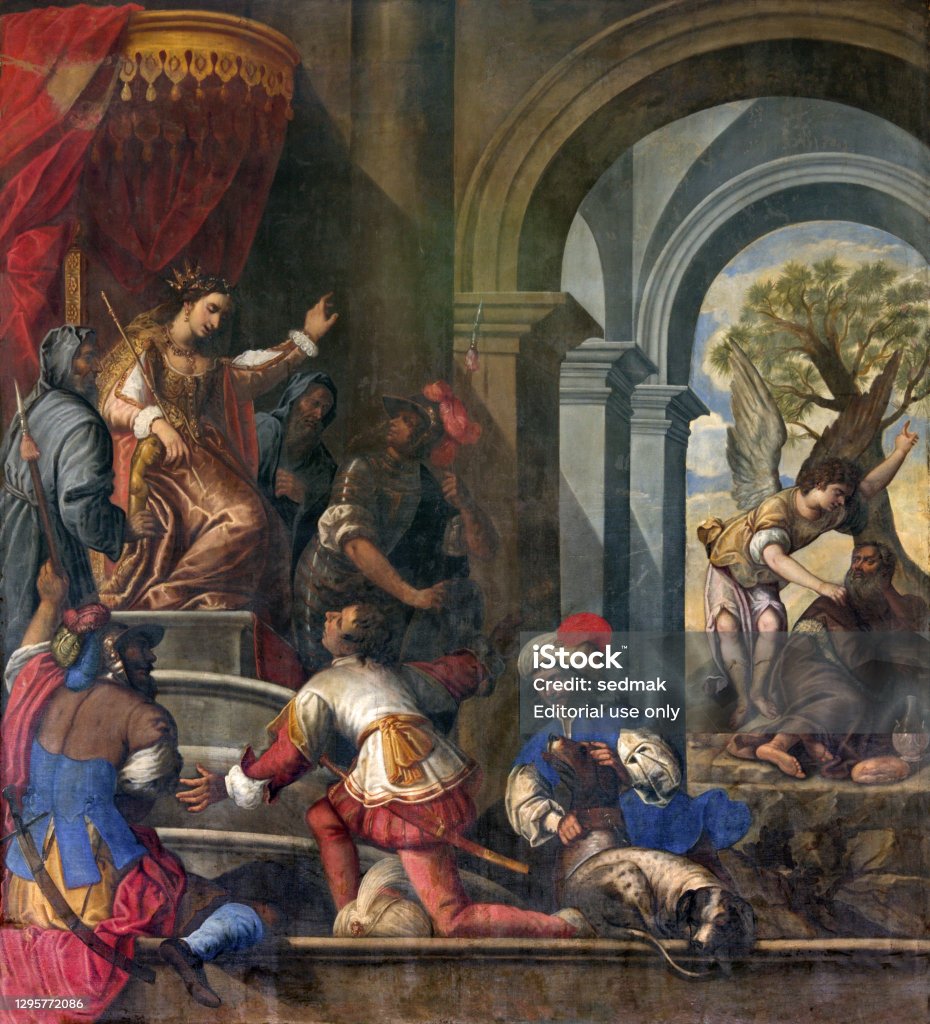
Despite the awesome display of God’s awesome power summoned by Elijah’s undaunting faith before King Ahab and his prophets, the wicked Queen, Jezebel, was not moved. She ordered Elijah to be arrested and killed on sight.


When Elijah heard her decree, he fled into the desert, where he sat down under a broom tree in bitter disappointment and anger at the way things turned out.  

Couldn’t Elijah call fire down on Ahab and Jezebel? Why didn’t he do it? Elijah had just slaughtered all the King’s prophets after showing them up with fire from the heavens. When Jezebel wasn’t phased, Elijah fled in fear.

Elijah may have run in a moment of fear, but his fear turned to anger and disappointment, like Jonah. Both of them ended up under a tree that provided them shade. God ministered to both of them in their dejected state.

Elijah kept going south, all the way to the mountain where God met Moses on the Sinai Peninsula. In the cave where he took shelter, God came to him, asking, “Elijah, why are you here?” Then, Elijah let God have the full weight of his disappointment and anger:

“I have been most zealous for the Lord, the God of hosts, but the Israelites have forsaken your covenant. They have destroyed your altars and murdered your prophets by the sword. I alone remain, and they seek to take my life.”

1 Kings 19:10

But, God was patient. He told Elijah to stand at the mouth of the cave so the Lord can “pass by”. “A strong and violent wind rending the mountains and crushing rocks” came, but the Lord wasn’t in the wind. Then an earthquake came, but the Lord wasn’t in the earthquake. After the earthquake, came a fire, but the Lord wasn’t in the fire. (1 Kings 19:11-12)

Finally, “a light silent sound” came, and the Lord said to Elijah, again, “Why are you here?” God was not in the mighty displays of wind, earthquake, and fire. God was in a still, small voice.

Yet still, Elijah was fixated on his own disappointment and anger and responded exactly as he did before:

“I have been most zealous for the Lord, the God of hosts, but the Israelites have forsaken your covenant. They have destroyed your altars and murdered your prophets by the sword. I alone remain, and they seek to take my life.”

1 Kings 19:14

Elijah’s disappointment, anger, and indignation turned toward God. “They destroyed your alters and murdered your prophets!” Elijah said. It’s everyone’s fault but his. It’s ultimately God’s fault, right? Because Elijah knew what God could do. God could have destroyed Ahab and Jezebel in a ball of fire, but He didn’t.

In similar fashion, God asked Jonah twice, “Why are you angry?” (Jonah 4:1 and 4:9) Twice Jonah responds exactly the same way: “It is better for me to die!” (Jonah 4:3 and 4:8) It’s the same pattern for Elijah and Jonah.

At the end of Jonah, God asks the rhetorical question, “Should I not have concern for the great city of Nineveh?” But, Jonah doesn’t respond. (Jonah 4:10) Jonah didn’t want God’s compassion for Nineveh. He wanted them to burn.

We don’t know what became of Jonah, but we do learn the rest of the story of Elijah. God sends him back to Damascus to anoint a new King and pass his prophetic torch to Elisha. (1 Kings 19:15-18) When Elijah pronounced God’s judgment on the wicked King Ahab, the King humbled himself and repented, and God spared him (just like Nineveh). (1 Kings 21:27-29)

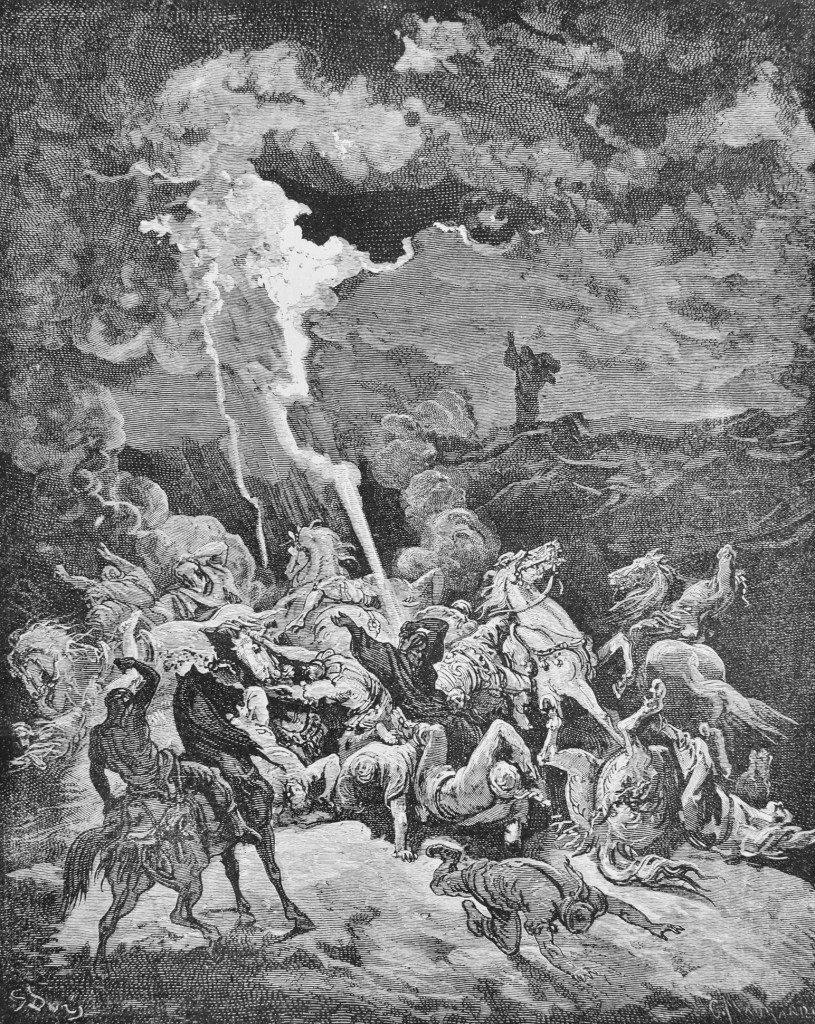
Eventually, Ahab’s son, Ahaziah, took over, and Elijah continued with his righteous taunts. Ahaziah sent fifty men to summon Elijah before him, and Elijah called down fire to destroy them. (2 Kings 1:10) Ahaziah sent another company of fifty men to summon Elijah, and Elijah called down fire again to destroy them. “(2 Kings 1:12)


Elijah is the prophet who called down fire. He was a man of great faith. He had great confidence in God. He was a firebrand, himself, in his sense of God’s righteousness and communication of God’s righteousness to the false prophets, the unrighteous and wicked leaders of his time, and even on the remnant of God’s prophets who escaped the sword only hid away in a cave.


Jonah had similar confidence in God. After the people of Nineveh repented and God relented, Jonah said, “I knew it! That’s what I said! That’s why I went the other way, because they don’t deserve it! Just take my life.” (Jonah 4:2-3)(my paraphrase)

Jonah and Elijah are held out in the Bible as God’s prophets and men of great faith, but they are flawed. They are self-righteous. They have a hard edge. The desire judgment, and they don’t love as God loves.

Their disappointment and anger stems from their desire to see the wicked people destroyed. God’s desire is ever to save, to have compassion, and for people to repent so God can show mercy. God’s great desire is not to judge, but to be gracious:

Truly, the Lord is waiting to be gracious to you,
    truly, he shall rise to show you mercy;
For the Lord is a God of justice:
    happy are all who wait for him!

(Isaiah 30:18) God’s justice is ultimately to be gracious and to show mercy. Justice and mercy are not divorced from each other; they are intertwined. His judgment is meant to bring us to repentance so that He can have mercy on us.

When we have our act together and have great faith, our temptation is to desire judgment for its own sake, but God is not like that. Jesus, who was the exact representation of God in the flesh, shows us God’s heart when his disciples returned from traveling the countryside to tell people about the kingdom. The disciples wanted to call down fire on the people who rejected them and refused to welcome them, and Jesus rebuked them.

When we find ourselves disappointed and angry at a world full of sinners who deserve judgment, we need to think of Elijah and Jonah and the counterexample of God in dealing with Nineveh and Jesus in rebuking the disciples. God is “merciful and gracious, slow to anger, and abounding in steadfast love.” (Exodus 34:6-7) God takes no pleasure in the death of the wicked. (Ezekiel 18:23 and 33:11)

We can laud Elijah and even Jonah for their faith and (ultimately) their obedience, but we need to recognize that they didn’t understand God’s heart of compassion for people. They didn’t understand God’s desire for mercy and grace. God ultimately wants more than our raw belief and cold obedience; He desires “mercy, not sacrifice.” (Hosea 6:6 and Matthew 9:13)

God wants out hearts, and He wants us to see the world as He sees it. He wants us to love even our enemies (the wicked) and to sacrifice ourselves for the good of others as He sacrificed Himself for us in Christ. Thus, Jesus emphasized forgiving as we have been forgiven and showing mercy as God has shown mercy to us:

“Judgment without mercy will be shown to anyone who has not been merciful. Mercy triumphs over judgment.”

(James 2:13) When we are tempted to be judgmental and righteous, we need to remember that God has been gracious to us, and He desires – above all – to be gracious to the world. When we are bitter and angry at the sin in the world, we need to remember that Jesus came into the world not to condemn it, but to save it, just he saved us.

Did Jesus So Judge the World that He Came into the World to Condemn It?

When Jesus called us to follow him, he called us to adopt his posture toward the world.


I am writing today about something I have written before, but I think it bears repeating. I have not stopped thinking about it since these words from Paul virtually leapt off the page when I read them a few years ago:

What business is it of mine to judge those outside the church? Are you not to judge those inside? God will judge those outside.”

1 Corinthians 5:12-13 (emphasis added)

How many times had I glossed over those words without really seeing them? Did he really mean that? We are not to judge people outside the church? Isn’t that exactly what we do?

I have kept going back to Paul’s admonition often since that day. I didn’t see it right away, but I eventually noticed that Paul echoed the very words of Jesus in that statement: Jesus said,

“If anyone hears my words but does not keep them, I do not judge that person. For I did not come to judge the world, but to save the world. There is a judge for the one who rejects me and does not accept my words; the very words I have spoken will condemn them at the last day.”

JOhn 12:47-48 (emphasis added)

Elsewhere, Jesus said, “God did not send his Son into the world to condemn the world, but to save the world through him.” (John 3:17)

If Jesus bids us to follow him, should we not adopt the same posture toward the world? It is the same posture Paul admonished the Corinthians to model toward those outside the Church: Do not judge them because they have a judge! (And it isn’t us!)

Paul

1 Corinthians 5:12-13

What business is it of mine to judge those outside the church?

God will judge those outside

Jesus

John 12:47-48

I have not come to judge the world.

There is a judge for the one who rejects me.

When adopt the posture Jesus had toward the world and the posture Paul tells the church to adopt, we are freed up from the responsibility to judge so that we can love. Even if the world goes its own way, which it will, we can love the world. Even if the world hates us, we can still love the world.

We are free to preach good news to the poor, to give sight to the blind, to set the oppressed free, and to proclaim the favor of God to all who will receive Him. This was how Jesus characterized what he came to do when he read from the Isaiah scroll in his hometown synagogue, sat down, and said, “Today this scripture is fulfilled in your hearing.” (Luke 4: 21) This is our ministry also, if we will follow him.

We don’t have to be in the business of judging the world because the world has a Judge. We can leave that to God. In fact, it isn’t an option. It is God’s rightful place to judge, and it isn’t our place.

That means it isn’t up to us to make the world conform to the law of God. We are not responsible to require godly behavior and biblical morality from the world, and it isn’t our business to do that.

Rather, we are to love the world, though people in the world are yet sinners. We can do that because Jesus loved us and died for us while we were yet sinners.

“Are you not to judge those inside?” says Paul. The world has not subscribed to Jesus, but we have. Judgment begins in the house of God because Jesus counts on us to be the light and salt of the world. If we lose our flavor, we cannot be who God calls us to be.

Who among us were able to conform to the Law before Jesus? None of us! Which is why we needed him. We are saved by grace through faith, and not by anything we could do. The world, likewise, cannot conform to God’s law apart from Jesus. This is why the world needs a Savior: because it has a Judge.

Why, then, would we try to impose godly behavior and biblical morality on the world through human, legal means when the world is incapable of conforming to God’s law apart from Jesus?

Jesus sends us into the world as his ambassadors just as he came into the world: not to judge the world, because the world already has a judge. He sends us out as ambassadors not to condemn the world, but but to save it.

If we can adopt this posture toward the world that Jesus adopted and that Paul admonished, we can be unified in that purpose and calling of Jesus even in our own differences about how the world ought to operate. We can love each other as fellow ambassadors of Christ and give each other grace in the areas in which we disagree.

Our primary focus should be the purpose and focus of Jesus – not to condemn the world, but to save it by proclaiming good news to the poor, sight for the blind, freedom for the oppressed, and the favor of God’s love toward all who will receive Him. Everything else fades in light of that purpose and calling.

Jesus said, the world will know us by our love for each other. (John 13:35) Let us so live, then, that the world knows us for our love for one another and our love for the world that Jesus loved!