A very good friend and sister in Christ recently gave a devotional presentation to a faith-based non-profit Board of which I am a member. She reflected on her experience of being a minority as a Christian growing up in India, where less than two percent (2%) of the population is “Christian” (including Catholics, Jehovah Witnesses, and Mormons).
Her poignant story of personal struggle with minority status and finding blessing in it, hits home with me. I have never felt like a minority in the visceral way that she experienced it. The blessing she found through Scripture in embracing her minority status is a lesson for all believers.
Being a Christian in a Non-Christian World
My friend struggled with her minority status as a Christian in India. She was ridiculed, teased, and looked down upon. By God’s grace, she felt her divine calling as a child of God, but her identity as a Christian came with consequences.
The consequences proved even more difficult for her sister, who applied to medical school. The admissions officer said she must recant her faith to be approved for assignment to any med school. She refused, and she gave up her dream of becoming a physician. Minority status in a majority world as consequences.
Being a Foreigner in the United States
When she emigrated to the United States she felt the joy of being a part of the Christian majority. Over time, however, the struggle with minority status began to resurface again. She stood out because of her ethnicity, accent, and cultural differences. She realized, “I am a minority within my Christian majority realm.”
This was a very personal struggle for her because of her childhood experience in India. She thought that moving to American where Christians are in the majority would be different. Instead, she felt the sting of minority status. Though she was a Christian in an ostensibly Christian country, she was still an outsider and a foreigner because of her nationality, ethnicity, and cultural differences.
Being a Foreigner in the World
She shared that God met her in the struggle and confronted her with His Word. What she learned through this process was sobering for her, and it is a lesson for those of us who have always lived in majority status in a majority Christian nation.
She began to realize what a privilege it is to be a minority because we are called as believers out of the world where wide is the path that leads to destruction. We are set apart by God from the world, which means we are called to minority status in the world.
Narrow is the path that leads to life. Minority status is the Christian experience.
The Privilege of Minority Status
As she focused on these things God was showing her in His Word, she became grateful for her experience as a Christian in a majority non-Christian country. This experience gave her perspective that American Christians lack.
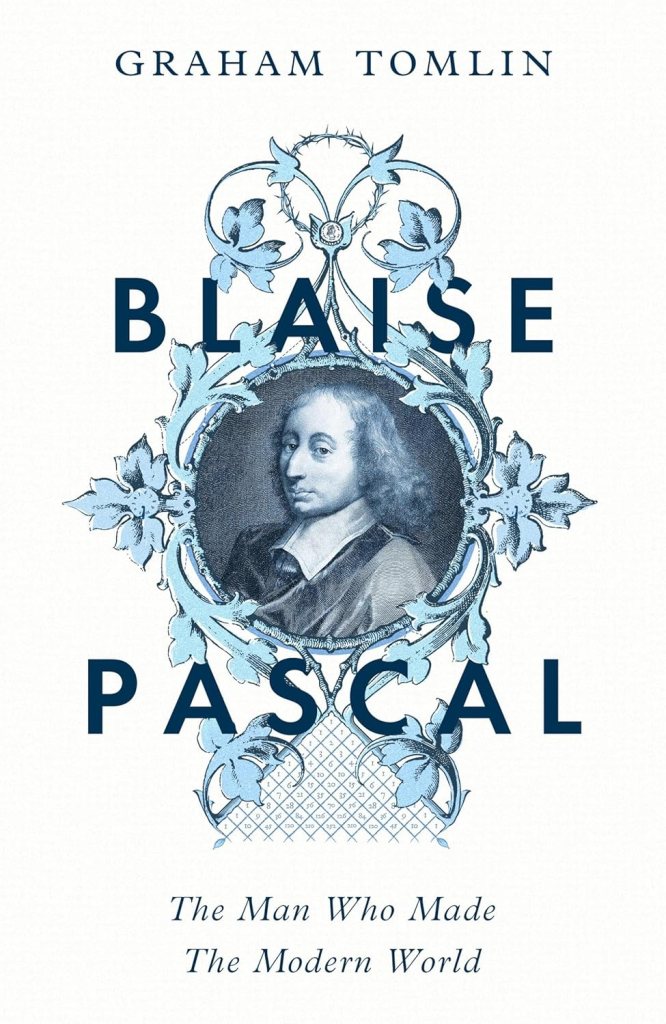
Glen Scrivener argues that atheists misunderstand Pascal’s Wager in Episode number 595 of his Speak Life Podcast (Atheists Misunderstand Pascal’s Wager (and so do Christians) I think he is right, and it seems that Christians don’t really understand it, either. Me included … until now. Before we dive in, though, let’s review Pascal’s Wager.
Blaise Pascal starts with the premise that human beings can neither prove the existence of God, nor prove that God does not exist. This is a concession, perhaps, to the atheist, but the atheist stands in no better position in relation to proving that God does not exist.
If that is the reality, then whether to believe in God or not is crap shoot. If we can’t prove it one way or the other, are we any better off than a roll of the dice? Pascal says we are, and the truly rational person would choose belief in God based on what is known as Pascal’s Wager.
Believing in God potentially gains a person everything (eternal life, joy, meaning, etc.). If God exists, the believer hits the jackpot. Believing in God also has very little downside. Pascal supposes that a person might forego some pleasures that were not pursued or time and energy spent living out faith (more on that below), but a person is little worse off for believing in God if God does not exist.
On the other hand, a person who doesn’t believe in God loses everything if God does exist (eternal separation from God). Therefore, Pascal said, the rational thing is to believe in God, because the potential gain is infinite and the potential loss is minimal. Given that we cannot prove God one way or the other, the truly rational person would “wager” on God, says Pascal.
Christopher Hitchens calls Pascal’s Wager “religious hucksterism of the cheapest, vulgarist, nastiest kind,” and Alex O’Connor calls it “half-hearted ass-kissing just in case.” Richard Dawkins asks, “What is so special about belief?” And, “Why would God not look for something of more substance from us, like being good?”
The often deriding comments beg for some understanding, and Dawkins’s legitimate questions call for a response. Matt Dillahunty says, “Pascal’s wager is an apologetic argument that attempts to demonstrate that belief in God is warranted based on decision theory and probability.” But is it?
All of these comments and questions assume that Pascal’s Wager is an apologetic argument for God, and they find it woefully wanting in that respect. Even Christians assume it is an apologetic argument, also, but everyone who makes that assumption has missed the actual point of Pascal’s Wager.
Glen Scrivener’s summary of Pascal’s Wager taken from Graham Tomlin’s book, Pascal, The Man Who Made the Modern World, exposes the error people make in these assumptions. Pascal wasn’t attempting to assert a rational argument, defense, or proof of God. He was making a very different point altogether.
Pascal was a genius by any measure. He was a scientist, mathematician, geometer, physicist, philosopher, polemicist, and theologian. He invented probability theory; he proved the existence of the vacuum, laid the foundations of integral calculus, performed what is called the first proper scientific experiment, established the principle that made possible the hydraulic press, demonstrated that air has weight, and many other things.
Thus, Scrivener says, “If we think that Blaise Pascal was silly, that might not reflect on Blaise Pascal; it might be a sign that we have misunderstood him.” The podcast featuring Graham Tomlin linked above and embedded below does a great job explaining the misunderstanding. It is worth the 25 minutes to watch and listen, but I am going to summarize and add my own thoughts as I continue.
“Behold, a king will reign in righteousness, and princes will rule in justice. Each will be like a hiding place from the wind, a shelter from the storm, like streams of water in a dry place, like the shade of a great rock in a weary land. Then the eyes of those who see will not be closed, and the ears of those who hear will give attention.”
Isaiah 32:1-3 ESV
A king will reign in righteousness!
What king in the history of the world has ruled in righteousness?
Maybe there is one I don’t know about. If you believe the Bible, though, no man is righteous. Not one. (Romans 3:10-12)
Only one person in history might fit this description, and his name is Jesus. Pilate called him “king of Jews”, and Jesus didn’t deny it (John 18:33), but he died on a cross at the hands of the dominant power in the First Century: Rome.
During his life, Jesus predicted his death, but he said he would come again. (See, for instance, John 5:28-29, 14:1-3; Luke 21:25-28; and Matthew 24:23, 36-44) His First Century followers claimed that Jesus rose from the dead, and he ascended to the right hand of God. (Revelation 3:21; Matthew 22:44; Acts 2:33) They wrote about his coming back to rule the earth. (See, 2 Peter 3:10, 4:7: 1 Thessalonians 4:16-17, 5:1-3; Hebrews 9:28) In the vision John the Apostle famously saw, he says:
“Behold, he is coming with the clouds, and every eye will see him, even those who pierced him, and all tribes of the earth will wail on account of him. Even so. Amen.“
Revelation 1:7
“See, I am coming soon; my reward is with me, to repay according to everyone’s work. I am the Alpha and the Omega, the first and the last, the beginning and the end….”
Revelation 12:12
During his life, Jesus said he came to preach the good news of the kingdom of God, (Luke 4:43), and he traveled around from town to town “proclaiming the good news of the kingdom of God.” (Luke 8:12) He said the kingdom of God has come (Luke 10:9), and it is in our midst. (Luke 17:21)
From these things, we learn that Jesus claimed to have brought the kingdom of God to earth, but he also said he would die. He also said he would rise from the dead, and come again. His followers claim he did rise and return in the flesh, but only for 40 days. Then, he left and ascended into heaven.
Jesus said, and his followers claim, that he would come again (again), but that hasn’t happened yet. In the meantime, Jesus claims he introduced the kingdom of heaven on earth. So, where is it?
Jesus told Pilate his kingdom is “not of this world.” (John 18:36) And, he said this right before he was crucified We might write Jesus off as a lunatic except for the fact that he seems to have risen from the dead according to hundreds of his followers (1 Corinthians 15:3-8), and he spent time with them over 40 days before he reportedly ascended to the right hand of God. (Acts 1: 3–4)
Even for people who have difficulty believing these claims, no one can deny the lasting influence Jesus has had. One has to wonder how such a person who was not born into nobility, who was not even a ranking religious leader in his local community, who worked with his hands, who never had political power or influence, who was poor, and who is more famous for dying than living could have become the symbol and hope of Western Civilization. Not only that, but he is revered, followed and worshipped in every nation around the world.
Paul called followers of Jesus “ambassadors” with a “message of reconciliation”. (2 Corinthians 5:18-21) He says this because Jesus came to reconcile the world to himself – to God the Father, with whom Jesus called himself one. He cam to reconcile the world to God, and we who follow him are commissioned to share the same message.
This is the good news of the kingdom of God: freedom for people who are imprisoned and oppressed, recovery of sight to the blind, and an invitation to enter into God’s favor – His kingdom. (Luke 4:18-19) Jesus is the king of this kingdom that is not of this world.
But, we are to be despised of all people on the earth if we have nothing but a kingdom that is not of this world (and nothing beyond it). If Jesus was not raised from the dead, we have nothing, and our faith is less than useless.
Thus, the testimony of those early followers who watched him die on a Roman cross and be buried and who claimed that he appeared to them, sat with them and broke bread with them, and taught them for 40 days before he ascended into heaven is the foundation of our faith. (1 Corinthians 15:3-7)
Because of their witness, we believe his promise that he will come again to bring his other-worldly kingdom to this earth in a final resolution and redemption of all that God created. If we trust the Bible, we find that his coming was foretold centuries before he was born:
“Wonderful Counselor, Mighty God, Everlasting Father, Prince of Peace. Of the increase of his government and of peace there will be no end, on the throne of David and over his kingdom, to establish it and to uphold it with justice and with righteousness from this time forth and forevermore.”
Isaiah 5:9-7
“One like the son of man” was also foretold by Daniel, a person who would be “given dominion and glory and a kingdom, that all peoples, nations, and languages should serve him….” (Daniel 7:13-14) Jesus claimed to be this “Son of Man”. (See, Matthew 16:13-20 and Luke 22:48) Indeed, Christians believe Jesus is this Son of Man who was foretold, and that he will come again to judge the living and the dead.
Jesus is the “king who will reign in righteousness!” And Isaiah says that “princes [rulers, officials, captains] will rule in justice.” Among the meanings of the Hebrew word sar (שַׂר) is a vassal (a protected servant of the king), who has power and authority under a king. As followers of Jesus, that is us!
We are all vassals of King Jesus. Peter calls us a “royal priesthood”. (1 Peter 2:9) Isaiah says that each of the vassals of the king of righteousness will rule with justice. Each of us!
How do we do that today in the kingdom of God that is not of this world?
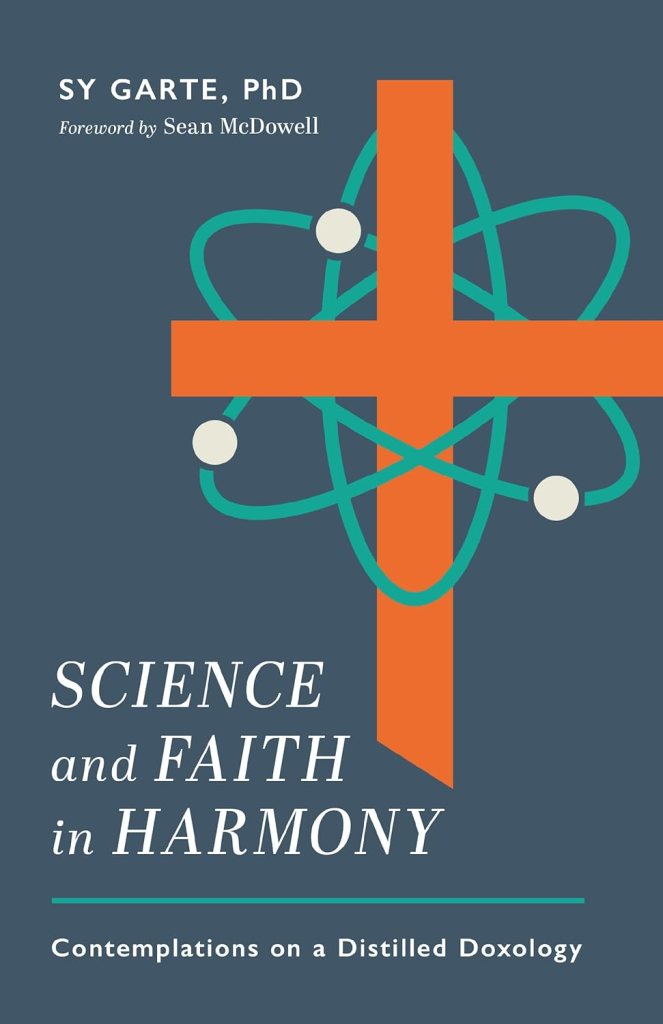
In his new book, Faith and Science in Harmony: Contemplation on a Distilled Doxology, Sy Garte makes the following statement:
“[Science] cannot be used to demonstrate the existence of God beyond doubt since it lacks the appropriate methodology and conceptual framework to investigate the divine. But if God exists, we would expect to find things about our universe outside of what we’d expect if there was no God – things that point to a Creator – and that is exactly what we find.”
Science in Harmony: Contemplation on a Distilled Doxology, p. 110
This statement is a good summary of the content of the book.
Sy Garte was a third generation atheist for decades, well into middle age. He is a retired scientist whose upbringing, education, and worldview was defined by materialistic and naturalistic assumptions. He was educated and trained to follow the science, and the science led him to him edges where science could not go.
The penumbra of a reality that was eclipsed to him in those materialistic assumptions emanated from behind those dark edges. He recognized the limits of those assumptions, and his curiosity led him explore the strange light at their edges.
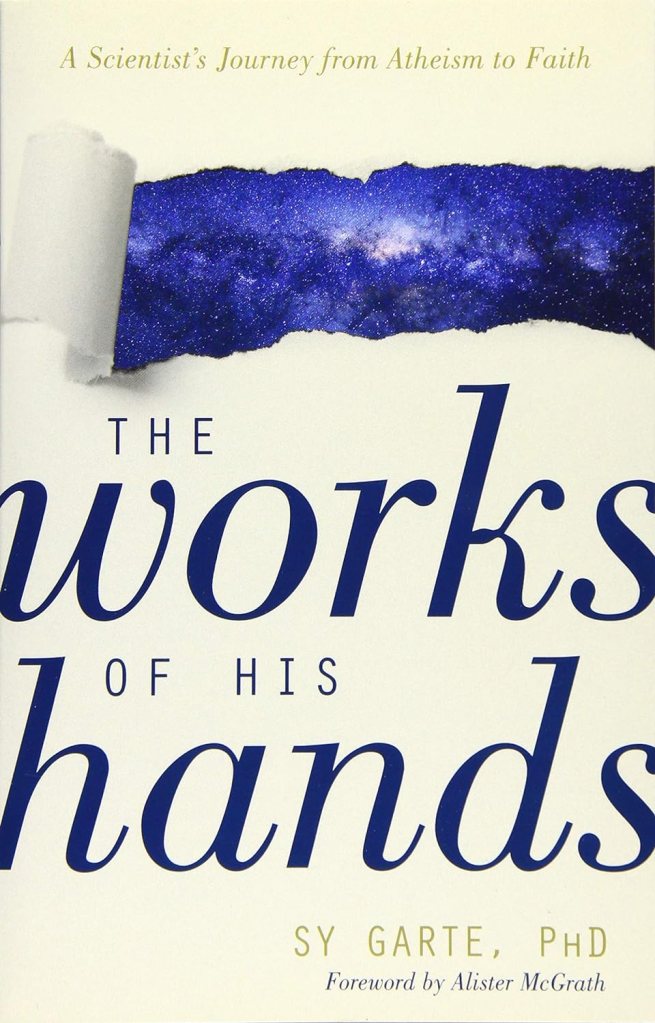
Sy Garte tells his story in the book, The Works of His Hands: A Scientist’s Journey from Atheism to Faith. He followed the science where it led him. When it led him to dead ends where science could not go, he explored where science pointed. The journey took years. His story may not be your story, but it is well worth the read. It may even illuminate your own journey.
His most recent book, Faith and Science in Harmony: Contemplation on a Distilled Doxology, explores “the things that point to a Creator” in snippets of insightful science, poetry and story. He takes the reader to the penumbra and explores the light that shines out from behind it with snippets of science, stories, and unique insights.
Each chapter is short, packed full of a lifetime of insight, science, and faith that emanates from the science to which he devoted his life. The book illuminates a reality that was not accessible by that science alone, but to which that science leads. The book is as readable and accessible as it is intriguing and insightful.
The weaves science into a tapestry of personal stories, anecdotes, examples, quotations, Bible verses, and citations that explore the strange light that emanates from the edges where science meets faith.
Dr. Sy Garte is a biochemist and has been a professor at New York University, University of Pittsburgh, and Rutgers University. He has authored over two hundred scientific publications and four previous books.
Sy Garte has served as division director at the National Institutes of Health and Vice President for Research (acting) at the Uniformed Services University of the Health Sciences. He has also served on the Board of Advisors for the John Templeton Foundation. Sy is the Editor-in-Chief of “God and Nature” magazine and vice president of the Washington, DC, chapter of the American Scientific Affiliation (ASA). He is a Fellow of the ASA.
Sy is now a lay leader and certified Lay Servant in the United Methodist Church. Although retired from active employment, Sy keeps busy writing and evangelizing online and in the church. He also contributes to science and faith journals such as Perspectives in Science and Christian Faith, and keeps a blog “The Book of Works”.
God had a purpose when he created the universe and put man in the center of it. This is what the Bible tells us. I believe God’s plan was not thwarted by Adam and Eve eating from the fruit from the tree of the knowledge of good and evil. God’s plan was not thwarted by Cain killing Abel, and God’s plan was not thwarted by the Babylonians constructing a tower to their own glory.
God is patient and long-suffering. He created His universe and called it good, but His plan is and always has been to perfect His creation.
God gave us the ability to go our own way, but God’s purposes will be accomplished despite the freedom God gave us.
God gave us the ability to create our own kingdoms, but God’s purposes are to invite all people to embrace His kingdom. He provides the way freely as a gift, but our kingdoms often look better to us, and our ways seem right in our own eyes.
This is a very simplistic view of the whole sweep of Scripture, from beginning to end, which I believe we need to see so we don’t miss the forest for the trees. Of course, only God has perspective to see and to make sense of all the trees in that Great Forest. But, He gave us His word so we can begin to catch a glimpse of God’s great plans.
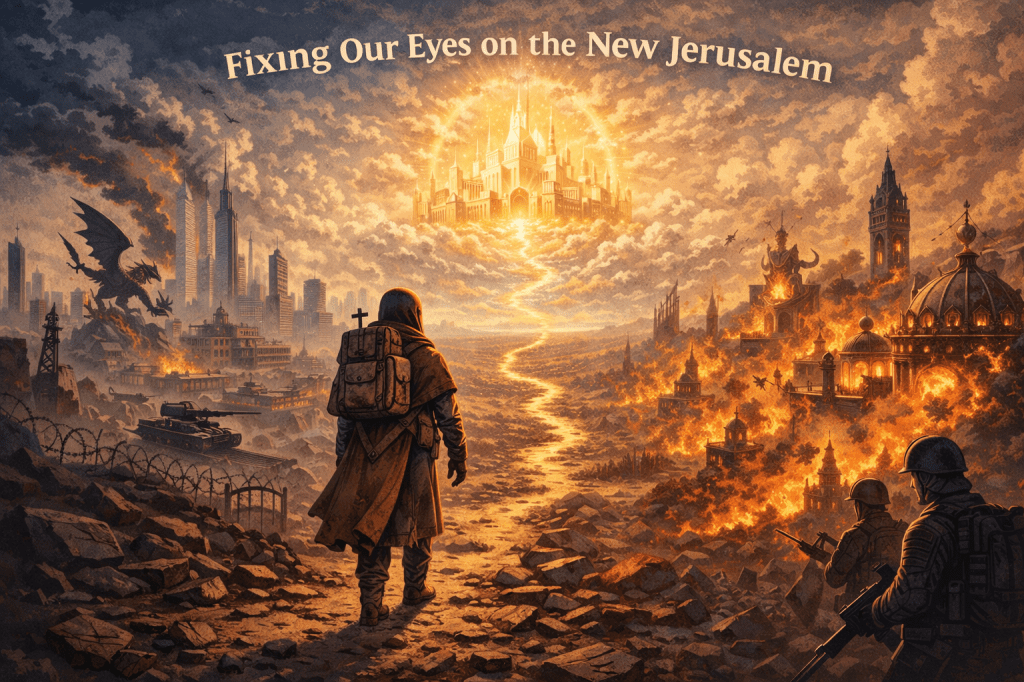
I want to focus on the big picture today, to survey the sweep and arc of God’s plan as revealed in the Bible, but I am not going to start with the creation of the universe or in the garden. I am going to start in Babylon. After all, we all live in a spiritual Babylon today.
We read in Genesis 11 that the world had one language and common speech. The people moved eastward, found a plain, and they settled there.
Recall that God instructed Adam and Eve to fill the whole earth. Their descendants settled in Babylon, however, and they remained there contrary to that instruction. They didn’t want to follow God’s plan; they wanted to follow their own plans.
The people came together to build a city for themselves and “a tower that reaches to the heavens” to “make a name for themselves.” This is a description of human beings choosing to go their own way, rather than God’s way.
They were afraid of being scattered over the face of the whole earth because that is what God wanted: for them to fill the earth. Because they resisted they were afraid..
The people were unified in going their own way against God. Their unity in going their own way was an obstacle to God achieving His purposes. For this reason, God confused their language, and they scattered over the whole earth.
People do not do well with differences. We isolate. We become group-focused. We despise others who are not like us, and we have inordinate pride in ourselves and our own kind. THIS is the story of human history.
It is also the story of God working His purposes in the world He created to achieve his ends. We may have trouble following it, but I think it will come into better focus if we jump quickly to the end. Then we will fill in the middle. All of this is just a brief snapshot of what God has revealed.










 Navigating by Faith