Oh, how I long for heaven in a place called earth Where every son and daughter will know their worth Where all the streets resound with thunderous joy Oh how I long for heaven in a place called earth
Song writers have common themes and images that run through their work. Jon Forman is one of my favorite song writers because he resonates with a theme that has run through my thinking over the last decade: the transience of this life and the transcendence of the life to come.
In the song, A Place Called Earth, he focuses on the “borderlines” between the transience of our lives and the longing for transcendence. It’s an age-old theme. It’s a theme that has been the subject of some of the greatest writers in the history of world from the author of Ecclesiastes to Shakespeare.
The video embedded above was a recent live performance of this song off the new EP, Departures. Linked below is the studio recording of A Place Called Earth that was written by Jon Foreman with his brother, Tim, and Lauren Daigle. I encourage you to listen to it in all of its orchestral fullness.
The hope of the Christ follower is the longing for heaven, a place where everyone knows their worth through the eyes of Jesus. Our hope to know even as we are fully known. Meanwhile, we see dimly as in a mirror, and we have this hope, the treasure of the Holy Spirit who gives us assurance, in earthen vessels. (2 Corinthians 4:7) We long for heaven in a place called earth.
Oh, the wars we haven’t won Oh, the songs we’ve left unsung Oh, the dreams we haven’t seen The borderlines
Jon Foreman’s plaintive voice captures the angst of these lines perfectly. We try to notch our belts with victories, but what of all the defeats? The songs we have left unsung? The great dreams we dared to dream that we haven’t seen?
All our victories are hollow trophies at the end of our days. Memories of them begin to fade from the moment of victory. Like the entropy to which our universe is subjected (Romans 8:20), those memories will fade into utter obscurity long after we have taken our last breaths.
We see this on the borderlines. On the borderlines, where we peer out over an endless expanse yawning out into a far distant future, and beyond it into an eternity we can’t even fathom. We realize our utter insignificance as we peer out beyond what we can see and comprehend.
I recently read an article by Ed Stetzer and Andrew MacDonald, Waking Up After QAnon: How Can the Church Respond, posted by Christianity Today. The secondary headline is: Evangelicals disproportionately believed conspiracy theories in 2020. How do we recover?
I do not agree completely with everything in this article, but I think it is more “right” than wrong. The following assertion, for instance, certainly rings true to me:
“For years a segment of Christianity has sought to reclaim the United States of America as a Christian nation—or at the very least a nation founded upon Judeo-Christian values. However, they have, at the same time, witnessed the American culture (and, yes, what they see as American elites—media giants, big tech, politicians, and Hollywood) adopt a more secular and progressive agenda.”
I am familiar with the thinking of patriotic Christians because I “grew up” in Christianity in an atmosphere influenced by the Moral Majority and efforts to reclaim the Christian heritage of this country. It was a patriotic movement made “sacred” with Christian reference and fervor.
The community in which I was engaged out of college joined the effort. It seemed that some momentum was being generated in the direction of reclaiming the United States as a Christian nation…. at least while I remained in that community. When I left to go to law school, my perspective changed.
Looking back, I see that patriotic Christianity appeals to a certain narrative of faith and a desire to protect what is familiar and comfortable. It affirms a sense of place in the world as an American Christian who believes fully that the United States was blessed by God more than other nations in the world and stands like a city set on a hill for the world to see.
While I think there may be some truth to that blessing from God, we shouldn’t confuse His blessing for a time (and for His greater purpose) with our own desires for prosperity, influence, protection of lifestyle, culture and familiar life. God raises kings, and he takes them down.
The patriotic movement in the church going back in time was influenced, in part, by the “prosperity gospel”. The focus was on faith. A certain exhilaration accompanies the thinking that we are part of a sacred movement of God’s people uniquely blessed with faith. It was a kind of manifest destiny for the church.
I imagine the 1st Century Jews saw the world similarly, though they didn’t have the prosperity or power of American Christians in 21st Century. Their sense of being God’s people and being culturally “right”, however, made it difficult for them to accept that God loved Gentiles. That tribalism caused the first schism in the early church.
The American exceptionalism that is part of the allure of this politically-charged faith embraces modern Israel and the Jewish state. They see a kinship there, and I believe we are prone to the same kind of error that the early church fell into.
Moving on from that community of my early walk in Christ and seeing faith and the world from different angles changed my perspective. I loved my time in the community of my early Christian years. They did many things right, and they were eager and earnest in their faith in refreshing ways, but I have come to see that patriotic element differently. God is bigger than our patriotic ideas of Him.
(Not that all the people in the church I attended wandered down that road. I know many of them still, and many of them did not get swept up in the patriotic fervor. They have adjusted and adapted, and their perspectives have changed also.)
The real point here is that God has a global and universal purpose. We are as much a part of that purpose as our brothers and sisters in China, or India or in the African American churches in the US.
That is not to say that everyone is right about the way they view the world. We all have our own unique vantage points and perspectives, and for that reason I need to listen to others because they offer perspective that I have trouble seeing from my own, limited position.
Perhaps, if we can all come together in the shared experience of Christ who died for all mankind and learn to set aside the things that divide us, we can catch a more global and universal glimpse of what God is doing in the world. The Stetzer and MacDonald article makes the following statement regarding the headlong embrace of Donald Trump:
“Christians need to understand how this foolishness not only hurts relationships in the local church and community but diminishes our witness. In such situations, our gospel witness is at stake and we cannot afford to be passive.”
This is a major concern. We may have trouble seeing the ways in which we have wandered off the narrow path unless we take time to listen to what other believes are saying.
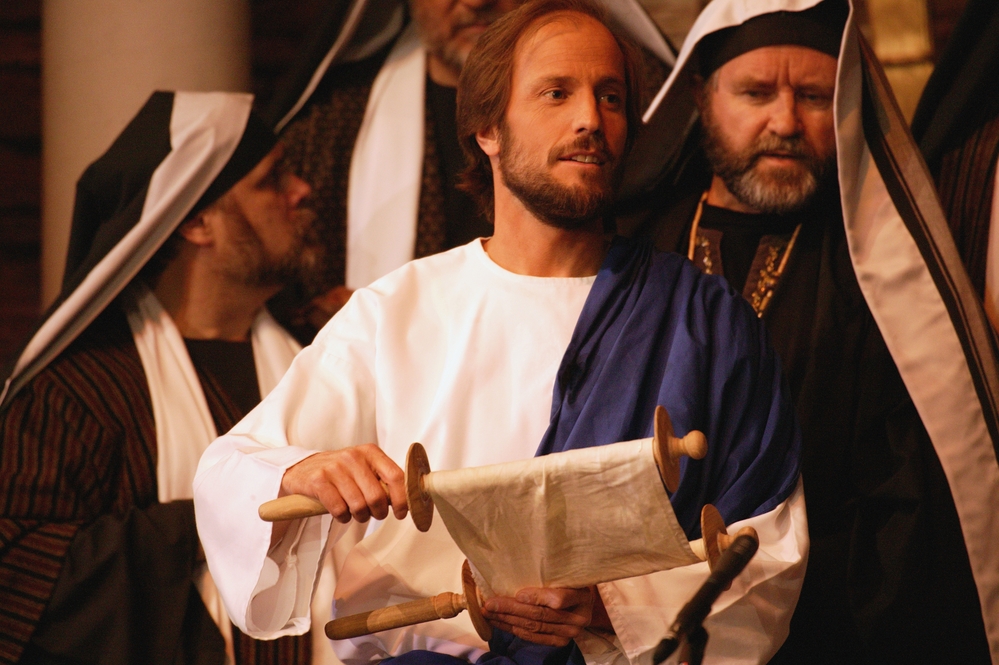
I wrote about A Mic Drop Moment in First Century Galilee back in March of 2020, referring to the passage in Luke 4 in which Jesus read from the Isaiah Scroll in the synagogue in Galilee where he announced his public ministry. I have been focused on that passage since the spring of 2019, when I was drawn to it for a talk on doing justice.
The world changed dramatically between March 2020 and July 2020. COVID shut down commerce and isolated people. The George Floyd killing happened in June, and we were embroiled in nationwide unease and unrest. The need for justice in a spiritually dry and parched world was quite evident, then, as the scabs of centuries of racial injustice were torn open and bleeding.
The focus of my writing has been on my fellow evangelicals. They way I have phrased this introduction may strike discord among my church family (or so I imagine as I write this).[i] I am convinced, however, these things are centrally important to God and how the body of Christ lives out the Gospel in the world.
Righteousness and justice are the foundation of God’s throne. Mercy and truth go before Him. (Ps. 89:14)
If we want to get closer to God, to know Him better and to be like Him in this fallen world, we need to focus on these: righteousness and justice. They are the twin pillars of God’s character.
This morning, Jeff Frazier’s sermon at Chapelstreet Church in Batavia, IL was on the same passage in Luke 4 that I have been reading periodically since 2019.[ii] I focus on a particular emphasis today that prompts this article, but let me set the scene first.
The entirety of the passage is found at Luke 4:16-30. I encourage you to read it now or read my mic drop description of it (as if Jesus read from the Isaiah scroll in a neighborhood church today).
The key points for this article are that Jesus went to his home synagogue and read from the Isaiah scroll to his “own people” who knew him well. When Jesus said the messianic message of that passage was being fulfilled in their hearing, the people asked him, “Aren’t you Joseph’s son?”
Still, they spoke well of him and marveled at his “gracious words”. (Luke 4:22) Then Jesus made them uncomfortable by foretelling that they would taunt him and reject Him, adding, “[N]o prophet is acceptable in his hometown.” (Luke 4:23-24)
I imagine the synagogue went quiet quickly. They probably looked at each, thinking or saying things, like,
What is he saying?
Did I just hear him right?
Weren’t we just saying how he has grown up into a fine young man?
Did he just accuse us of rejecting him?
We haven’t done anything!
We weren’t even thinking those things!”
But Jesus didn’t stop there. He turned the heat up a notch! This is where things really got dicey in his hometown synagogue. This is the point I am seeing in this passage today – something for us to think about in the American Church today.
Jesus referenced two passages of Scripture and two stories of revered Hebrew prophets. His citation to Scripture may not have raised eyebrows. It was the application of them that riled up his synagogue audience.
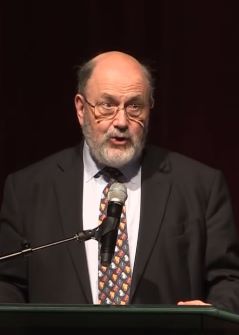
Esau McCaulley interviewed NT Wright on his Disrupters podcast last year. NT Wright is a British New Testament scholar of some renown who became McCaulley’s mentor at St. Andrew’s University in Scotland. McCaulley made a comment after the interview that prompts my writing today. He said,
“I feel like I am a mix of a bunch of things. I have this kind of British, evangelical side, and I have this kind of African American church side, and strangely they have coalesced in ways I didn’t expect.”
N.T. Wright Forces an Overdue Conversation on the Disrupters Podcast 2-3-22
McCaulley was raised Southern Baptist in the deep south, so their relationship is intriguing to me. The conversation between Wright and McCaulley is interesting and rich. The fact that they come from unique and diverse backgrounds permeates the discussion as they explore the things that unite them.
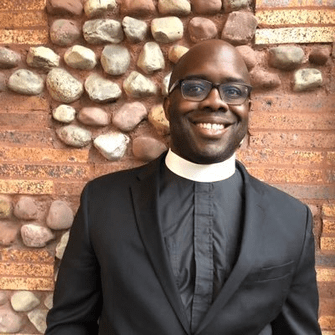
Esau McCaulley is a New Testament scholar in his own right, due in no small part to the influence of NT Wright. He has written one book on Galatians, and he is now writing a second. McCaulley also became an Anglican priest, but his heritage and unique experience, personally and communally, as a black man in America remain central to his identity.
The close relationship between these men from very different backgrounds and from different areas of the world has me thinking about the church in the United States and the global Church. I recently heard someone comment on an unfortunate, unforeseen, and unintended consequence of the Reformation. That consequence was the fragmentation of the Church.
The post-Reformation church fragmented into dissenting groups, and some of those dissenting groups fragmented further into groups of people who spoke English, French, and other European languages. Over time, the fragmentation rippled out from Europe to the New World and beyond.
The Reformation splintered into many “protestant” groups, and that fragmentation exploded in the New World where Lutherans, Presbyterians, Methodists and others splintered apart from each other into various and distinct groups, and many more new denominations sprung up. The fragmentation continued along cultural, doctrinal, ethnic, ritualistic, racial, governmental, language and other lines.
Today in America we can find a mind-boggling number of separate church bodies aligned in linguistic, ethnic doctrinal, geographic, and cultural huddles of believers that keep largely to themselves based on language, ethnicity, race, heritage, doctrine, worship preference, governmental protocol, and other things.
This fragmentation is still evident in the United States, and churches in the United States have been accused of being more segregated than the rest of the country (which is still pretty segregated).
The intersectionality (to use a very loaded term) of the disparate backgrounds, experiences and heritage of Wright and McCaulley, and their ongoing relationship remind me of the need for unity in the Church. We need to come together. We need to talk.
The Adoration of the Magi; Border with the Queen of Sheba before King Solomon, from a prayer book of Cardinal Albrecht of Brandenburg (text in German), Bruges, Belgium, about 1525-30, Simon Bening. The J. Paul Getty Museum.
Matthew provides us the story of the Magi priests (not kings) visiting Jesus with gifts “from afar”. Magi is a Zoroastrian term referring to “dream interpreting astrologers-astronomers from Persia or Mesopotamia who possessed secret knowledge”.[i] We don’t know the actual number, though three is the popular legend.
The number was postulated by Origen in the Third Century based on the number of gifts they brought: gold, frankincense, and myrrh. The Feast of the Epiphany, which was first celebrated in Alexandria, Egypt, at the end of the Second Century or beginning of the Third Century (the home of Origen), celebrates the appearance of God to the world who became flesh in the person of the Christ child.
The arrival of the Magi is acknowledgement of the worldwide, universal significance of the event.
“Matthew’s story about travelers following the trail of a mysterious star was all about including ‘foreigners’ in the Christmas story. Matthew showed Gentiles—in other words non-Jews, people who worshipped so-called pagan gods—acknowledging Jesus as king and, presumably, savior.”
The universal availability of Jesus beyond the Jewish community into which Jesus was born to the world is built right into the beginning of the narrative in Matthew. It resonates with Paul’s letters in which he maintains, to his own detriment among his fellow Jews, that Christ came for Jew and Gentile, alike.
That the offering of God in the flesh to the world which is built into the very beginning of the story was first celebrated in the Feast of the Epiphany in Northern Africa is intriguing to me. Though the Magi would have come from a different area of the world, the point of the story is the universality of Christ.
We also forget how prominent in early Christian history was the African church. This intrigues me as well.
The story in Matthew is only 12 verses long (Matt. 2:1-12). A longer version of the story exists in one other manuscript, the “Revelation of the Magi”.[ii] This Syriac text that was translated into English only recently is apocryphal and likely dates to the Second or Third Century.[iii] It depicts the wise men coming from Shir, which is in China today.
Like many apocryphal texts, it smacks of myth and legend (the star they follow comes down and transforms into the baby Jesus). It is a whimsical story, perhaps, like the Chronicles of Narnia.
While the Revelation of the Magi is apocryphal and fantastical in its details, the idea that men came from the Far East is not. The Spice Route that comes into Jerusalem connects all the way to China and can be observed still today.
I have meditated before on the thought that Jesus came at just the right time in history when much of the known world was unified by a system of Roman roads and order opening the world to the west and north (to the British isles) for the spread of the Gospel. So also, we see that the Spice Route opened the world for the spread of the Gospel to the east, just as other trade routes allowed the Gospel to spread south into Africa, with Alexandria being one of the three pillars of early Christian authority.
While I am very familiar with Paul’s ministry to the Gentiles and faithful devotion to the promise God made to Abraham to bless all the nations through his seed, I had not noticed the significance of the Magi in the Gospel of Matthew (a more Jewish-orientated Gospel).








 Navigating by Faith