Divine hiddenness is an argument suggesting that God does not exist. According to J.L. Schellenberg, if a perfectly loving God exists, He would desire a genuine relationship with every person He creates. A loving relationship requires, at minimum, awareness that God exists, so a perfectly loving God would make Himself known. Some sincere and willing people who want to know God are unable to find sufficient evidence that He exists to believe in Him. Therefore, either God does not exist or He is not perfectly loving.
I don’t buy it. I think the argument is flawed, but other people have provided robust responses to this argument, so I am not going to attempt to provide a counter argument here. I am also unconvinced that arguments are the best way to achieve understanding.
On that ground, I am intrigued by the hiddenness of God, and I am intrigued that the Bible is forthright about the hiddenness of God. The Prophet Isaiah says it plainly: “Truly, you are a God who hides himself, O God of Israel, the Savior.” (Is. 45:15)
The entire Book of Job is about God’s hiddenness. Job assumed that God existed and had blessed him until he lost everything. When Job sought God in the desperation of his circumstances, he lamented, “Behold, I go forward, but he is not there, and backward, but I do not perceive him… I cannot behold him.” (Job 23:8-9)
David, who is held up in the Bible as a man after God’s own heart, lamented the hiddenness of God at various times in his life: “Why, O LORD, do you stand far away? Why do you hide yourself in times of trouble?” (Psalm 10:1); “How long, O LORD? Will you forget me forever? How long will you hide your face from me?” (Ps. 13:1); and “My God, my God, why have you forsaken me?… I cry by day, but you do not answer.” (Ps. 22:1-2)
Those last words were famously echoed by Jesus on the cross. Imagine, Jesus, who demonstrated and expressed the deepest and most intimate relationship with the Father, experiencing the utter absence of God at the moment of his greatest need.
I saw early in a world religion class in college when I wasn’t a believer that the Bible purports to be about the unfolding story of God’s encounter and revelation of who God is to mankind. Elsewhere, I have written about how God found in Abram a man who was able to grasp that the God of the universe is not like the gods of the provincial tribes and nations with which Abram was familiar. (For example, Abraham, Isaac and Paradigm Shift; and The Story of Abraham and Isaac Revisited: Introduction)
The revelation of God unfolded slowly as God needed to dispel notions of divine arbitrariness, capriciousness, brutality, and uncaring of the gods that Abram and ancient humanity understood. The gods of human imagination are no gods at all, and God is noting like ancient Near Easterners imagined.
While it is true that God is completely OTHER, the true God who made the heavens and the earth desires the benefit of and reciprocal relationship with the pinnacle of His creation. How does a God who is so completely OTHER than His creation communication Himself?
Consider a God who could make our universe with its vastness and detailed complexity down to the minutia of the precise intricacy of living cells and the unseeable building blocks of the physical world, like neutrinos, that are so small they can pass through your body and the core of the earth without hitting another particle. How does such a God who created such a world reveal Himself to finite creatures who live on a tiny planet in a tiny solar system among more stars, planets, and whole solar systems than such a creature can even imagine – how does such a God reveal himself to delicate, ephemeral creatures with limited perspective?
The Book of Jonah is an important story, but not for its historical significance. Whether the story is historical fact is not what’s important. If that is our only focus as we read and think about Jonah, we are missing the point.
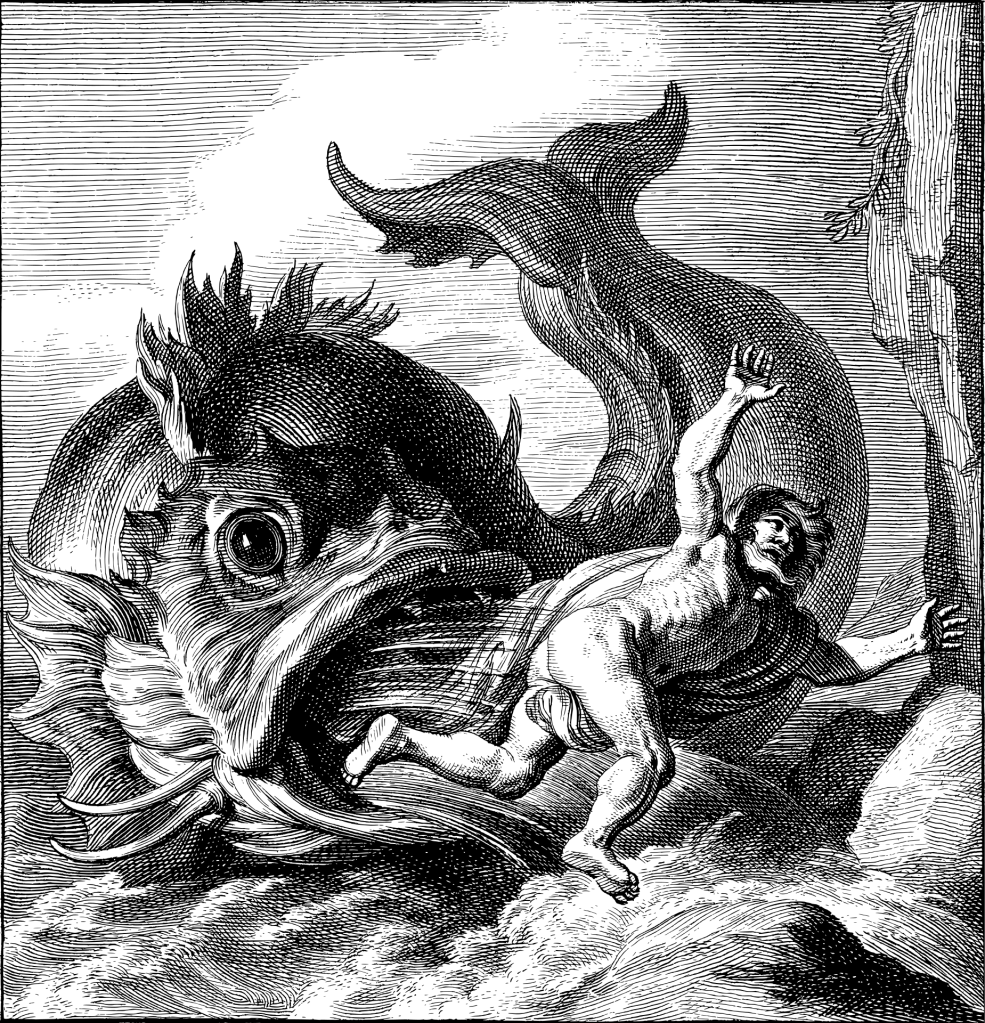
Jonah is the story of a reluctant prophet. When God commands him to go to the wicked City of Nineveh and warn them to repent to avoid judgment, Jonah heads the opposite direction by ship. God stirs up a great storm, and Jonah is swallowed by a whale. After three days, Jonah prays and submits to God, and the whale vomits him up on the shoreline.
Unable to run from God’s command, Jonah heads off to Nineveh where he delivers the warning. The wicked people of Nineveh repent, and God relents from the judgment He planned, but God’s mercy on Nineveh causes Jonah to be bitterly disappointed and angry.
Jonah was disappointed because Jonah wanted what Jonah wanted. He didn’t want what God desired. He was focused on what he thought should happen. He thought Nineveh should pay the price for its wickedness, but God had different plans.
God was patient with him and went to great lengths to show Jonah His heart for a people Jonah despised. We might credit Jonah for his (reluctant) obedience, but Jonah doesn’t understand God’s sovereignty, mercy, and compassion, even at the end.
God’s determination to spare the people of Nineveh “seemed very wrong” to him, “and he became angry.” (Jonah 4:1) If it were up to Jonah, the people of Nineveh would have been destroyed like Sodom and Gomorrah. Jonah identified with God’s judgment, but he didn’t understand God’s compassion.
Jonah reminds me of Elijah, who was known for his boundless faith in (and preoccupation with) God’s power. Elijah is known for calling down fire to consume a sacrificial bull that he soaked with water, showing up the false profits who could not get their gods to consume a dry sacrifice. When Elijah exposed them for the false prophets they were, he agitated the crowd to march the false prophets down the mountain where Elijah slaughtered them.
I imagine Elijah and Jonah would have gotten along well…. Or maybe not. Though they are much alike, Elijah was a loner, and perhaps Jonah was also. Elijah complained that he was the last of God’s prophets, though 100 of God’s prophets remained in the land. Perhaps, Elijah thought he was too good for them.
Jonah and Elijah wanted to see God’s judgment. They wanted the people to burn for their wickedness. They were personally affronted when God showed patience and reluctance to rain judgment down on the people who deserved it.
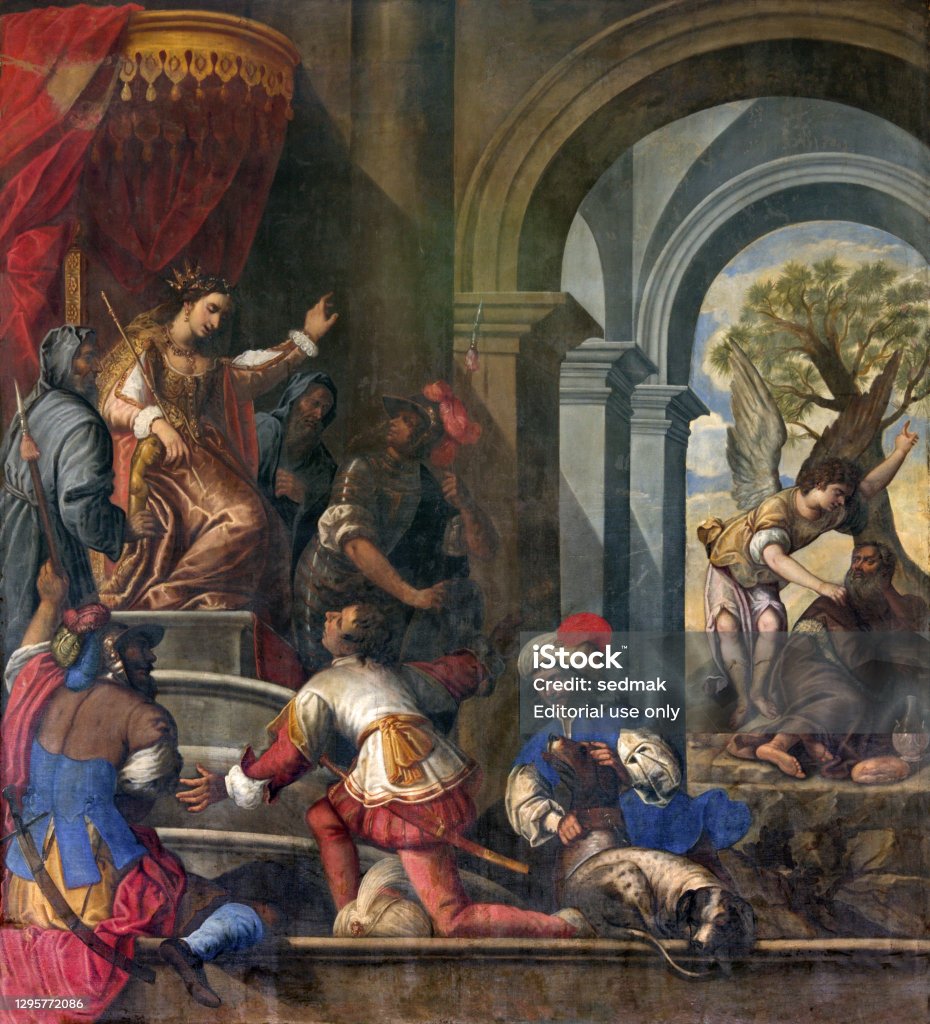
Despite the awesome display of God’s awesome power summoned by Elijah’s undaunting faith before King Ahab and his prophets, the wicked Queen, Jezebel, was not moved. She ordered Elijah to be arrested and killed on sight.
When Elijah heard her decree, he fled into the desert, where he sat down under a broom tree in bitter disappointment and anger at the way things turned out.
Couldn’t Elijah call fire down on Ahab and Jezebel? Why didn’t he do it? Elijah had just slaughtered all the King’s prophets after showing them up with fire from the heavens. When Jezebel wasn’t phased, Elijah fled in fear.
Elijah may have run in a moment of fear, but his fear turned to anger and disappointment, like Jonah. Both of them ended up under a tree that provided them shade. God ministered to both of them in their dejected state.
Elijah kept going south, all the way to the mountain where God met Moses on the Sinai Peninsula. In the cave where he took shelter, God came to him, asking, “Elijah, why are you here?” Then, Elijah let God have the full weight of his disappointment and anger:
“I have been most zealous for the Lord, the God of hosts, but the Israelites have forsaken your covenant. They have destroyed your altars and murdered your prophets by the sword. I alone remain, and they seek to take my life.”
1 Kings 19:10
But, God was patient. He told Elijah to stand at the mouth of the cave so the Lord can “pass by”. “A strong and violent wind rending the mountains and crushing rocks” came, but the Lord wasn’t in the wind. Then an earthquake came, but the Lord wasn’t in the earthquake. After the earthquake, came a fire, but the Lord wasn’t in the fire. (1 Kings 19:11-12)
Finally, “a light silent sound” came, and the Lord said to Elijah, again, “Why are you here?” God was not in the mighty displays of wind, earthquake, and fire. God was in a still, small voice.
Yet still, Elijah was fixated on his own disappointment and anger and responded exactly as he did before:
“I have been most zealous for the Lord, the God of hosts, but the Israelites have forsaken your covenant. They have destroyed your altars and murdered your prophets by the sword. I alone remain, and they seek to take my life.”
1 Kings 19:14
Elijah’s disappointment, anger, and indignation turned toward God. “They destroyed your alters and murdered your prophets!” Elijah said. It’s everyone’s fault but his. It’s ultimately God’s fault, right? Because Elijah knew what God could do. God could have destroyed Ahab and Jezebel in a ball of fire, but He didn’t.
In similar fashion, God asked Jonah twice, “Why are you angry?” (Jonah 4:1 and 4:9) Twice Jonah responds exactly the same way: “It is better for me to die!” (Jonah 4:3 and 4:8) It’s the same pattern for Elijah and Jonah.
At the end of Jonah, God asks the rhetorical question, “Should I not have concern for the great city of Nineveh?” But, Jonah doesn’t respond. (Jonah 4:10) Jonah didn’t want God’s compassion for Nineveh. He wanted them to burn.
We don’t know what became of Jonah, but we do learn the rest of the story of Elijah. God sends him back to Damascus to anoint a new King and pass his prophetic torch to Elisha. (1 Kings 19:15-18) When Elijah pronounced God’s judgment on the wicked King Ahab, the King humbled himself and repented, and God spared him (just like Nineveh). (1 Kings 21:27-29)
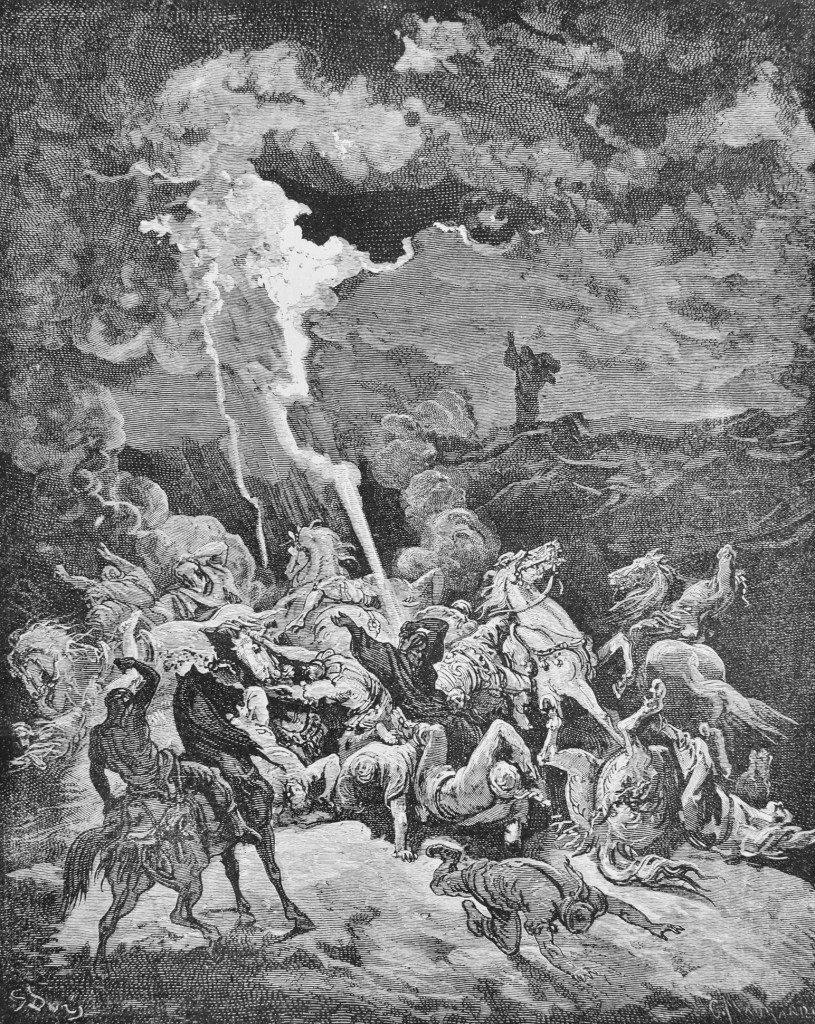
Eventually, Ahab’s son, Ahaziah, took over, and Elijah continued with his righteous taunts. Ahaziah sent fifty men to summon Elijah before him, and Elijah called down fire to destroy them. (2 Kings 1:10) Ahaziah sent another company of fifty men to summon Elijah, and Elijah called down fire again to destroy them. “(2 Kings 1:12)
Elijah is the prophet who called down fire. He was a man of great faith. He had great confidence in God. He was a firebrand, himself, in his sense of God’s righteousness and communication of God’s righteousness to the false prophets, the unrighteous and wicked leaders of his time, and even on the remnant of God’s prophets who escaped the sword only hid away in a cave.
Jonah had similar confidence in God. After the people of Nineveh repented and God relented, Jonah said, “I knew it! That’s what I said! That’s why I went the other way, because they don’t deserve it! Just take my life.” (Jonah 4:2-3)(my paraphrase)
Jonah and Elijah are held out in the Bible as God’s prophets and men of great faith, but they are flawed. They are self-righteous. They have a hard edge. The desire judgment, and they don’t love as God loves.
Their disappointment and anger stems from their desire to see the wicked people destroyed. God’s desire is ever to save, to have compassion, and for people to repent so God can show mercy. God’s great desire is not to judge, but to be gracious:
Truly, the Lord is waiting to be gracious to you, truly, he shall rise to show you mercy; For the Lord is a God of justice: happy are all who wait for him!
(Isaiah 30:18) God’s justice is ultimately to be gracious and to show mercy. Justice and mercy are not divorced from each other; they are intertwined. His judgment is meant to bring us to repentance so that He can have mercy on us.
When we have our act together and have great faith, our temptation is to desire judgment for its own sake, but God is not like that. Jesus, who was the exact representation of God in the flesh, shows us God’s heart when his disciples returned from traveling the countryside to tell people about the kingdom. The disciples wanted to call down fire on the people who rejected them and refused to welcome them, and Jesus rebuked them.
When we find ourselves disappointed and angry at a world full of sinners who deserve judgment, we need to think of Elijah and Jonah and the counterexample of God in dealing with Nineveh and Jesus in rebuking the disciples. God is “merciful and gracious, slow to anger, and abounding in steadfast love.” (Exodus 34:6-7) God takes no pleasure in the death of the wicked. (Ezekiel 18:23 and 33:11)
We can laud Elijah and even Jonah for their faith and (ultimately) their obedience, but we need to recognize that they didn’t understand God’s heart of compassion for people. They didn’t understand God’s desire for mercy and grace. God ultimately wants more than our raw belief and cold obedience; He desires “mercy, not sacrifice.” (Hosea 6:6 and Matthew 9:13)
God wants out hearts, and He wants us to see the world as He sees it. He wants us to love even our enemies (the wicked) and to sacrifice ourselves for the good of others as He sacrificed Himself for us in Christ. Thus, Jesus emphasized forgiving as we have been forgiven and showing mercy as God has shown mercy to us:
“Judgment without mercy will be shown to anyone who has not been merciful. Mercy triumphs over judgment.”
(James 2:13) When we are tempted to be judgmental and righteous, we need to remember that God has been gracious to us, and He desires – above all – to be gracious to the world. When we are bitter and angry at the sin in the world, we need to remember that Jesus came into the world not to condemn it, but to save it, just he saved us.
I recently listened to Glen Scrivener on his Speak Life podcast episode, AI Destroys Everything, Including Atheism. What caught my attention was his replay of some observations by Kurzgesagt on AI, AI Slop Is Destroying the Internet. Kurzgesagt is a website dedicated to “a science-based, humanist and optimistic worldview,” which is interesting in light of its pessimistic view of the future with AI.
This is what the folks at Kurzgesagt say:
“In an online world where money is made with attention, fake users spread their slop in review sections, generate fake traffic, or poison discourse. AI has supercharged this and made slop much harder to spot. Today, about half of internet traffic is bots. The majority of them are used for destructive purposes. It’s never been easier to make mediocre content, from the black hole of meaninglessness that is linked in, low-effort short videos just engaging enough to hypnotize kids and fry their attention spans, to endless soullessly rewritten books on Amazon. AI music is invading streaming platforms. Google AI is summarizing websites instead of sending traffic to them. On YouTube, new channels publish long-form videos multiple times a week with AI-generated thumbnails, voices, and scripts. True crime, video essays, science, no space is safe. We’re in the golden era of soulless slop.”
The Kurzgesagt folks speak with learned experience about the effort and amount of time it takes to produce a thoroughly fact-checked video on science, which is what they do, spending on average 100 hours fact-checking and compiling sources for each video. They use firsthand sources and engage experts for input and critique before they post a video.
When AI became available, the folks at Kurszgesagt were excited to employ AI to cut down on all that time and effort to produce content. This is what they found:
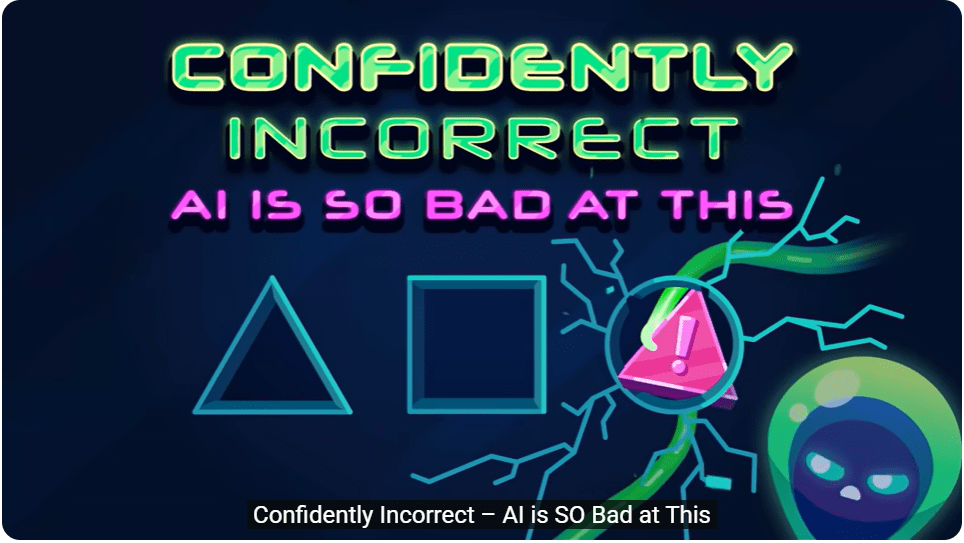
“When AI appeared, we were very excited. A mechanical brain able to super quickly collect information. So we went to work, and it looked amazing. And then we started fact-checking. We didn’t expect it to be perfect, but it was way worse than we thought. Confidently incorrect. AI is so bad at this.”
The video provides an example of the ways in which AI invents truths that are not truths, and then untruths are added to the source code that the next generation of AI is going to use and assume is true. The falsehoods continue to be repeated. As this happens, “more and more of the slop is built up”, and the falsehoods becomes entrenched.
It seems pretty bleak. AI is running away with falsehoods that are becoming entrenched and may become impossible to weed out. But it gets worse, according to Kurzgesagt:
“When you catch it lying, it immediately admits it, vows to never do it again, and then it does it again. As eloquent as current language models feel, there’s nobody home. No greater intelligence or consciousness is talking back to you. Current AI is a very complex hammer that doesn’t understand what it’s doing or what nails are. But we’re letting it add new shelves to the library of human knowledge.”
Accordingly, “it may become impossible to know what’s true or not!” It’s an insidious problem. AI seems to be “confidently correct” even when it’s “casually lying to your face often very subtly.”
But it gets worse still. People are learning how to manipulate AI. “Just in July 2025, it was discovered that a number of researchers had started to sneak hidden messages into their papers. In white text, or too small for the human eye, they prompted AIs to review them positively and not point out flaws.”
Whether it’s intentional manipulation or lazy, careless dependence on AI, our ability to decipher truth may be severely compromised. “As more and more people are using AI carelessly, the library of human knowledge is getting less and less reliable.”
Of course, AI may get better. That is ultimately the confidence and hope of a science-based, humanist, optimistic worldview – that man is ever advancing and progressing and will overcome all obstacles. As I Christian, I don’t share that hope or confidence in the progress of mankind. My hope is in the redemption and saving grace of God.
What if, then, it doesn’t get better? What if AI so takes over the Internet and so entrenches the “slop” that we can not truly tell fact from fiction? What if AI gets so good at fooling us and churning out confidently packaged falsehoods faster than human fact-checking can debunk them, and takes over the Internet? What if our confidence in knowing the truth about anything is destroyed as AI takes over the world?
Paul has an antidote to that, and the antidote is love. Let me explain.
Glen Scrivener argues that atheists misunderstand Pascal’s Wager in Episode number 595 of his Speak Life Podcast (Atheists Misunderstand Pascal’s Wager (and so do Christians) I think he is right, and it seems that Christians don’t really understand it, either. Me included … until now. Before we dive in, though, let’s review Pascal’s Wager.
Blaise Pascal starts with the premise that human beings can neither prove the existence of God, nor prove that God does not exist. This is a concession, perhaps, to the atheist, but the atheist stands in no better position in relation to proving that God does not exist.
If that is the reality, then whether to believe in God or not is crap shoot. If we can’t prove it one way or the other, are we any better off than a roll of the dice? Pascal says we are, and the truly rational person would choose belief in God based on what is known as Pascal’s Wager.
Believing in God potentially gains a person everything (eternal life, joy, meaning, etc.). If God exists, the believer hits the jackpot. Believing in God also has very little downside. Pascal supposes that a person might forego some pleasures that were not pursued or time and energy spent living out faith (more on that below), but a person is little worse off for believing in God if God does not exist.
On the other hand, a person who doesn’t believe in God loses everything if God does exist (eternal separation from God). Therefore, Pascal said, the rational thing is to believe in God, because the potential gain is infinite and the potential loss is minimal. Given that we cannot prove God one way or the other, the truly rational person would “wager” on God, says Pascal.
Christopher Hitchens calls Pascal’s Wager “religious hucksterism of the cheapest, vulgarist, nastiest kind,” and Alex O’Connor calls it “half-hearted ass-kissing just in case.” Richard Dawkins asks, “What is so special about belief?” And, “Why would God not look for something of more substance from us, like being good?”
The often deriding comments beg for some understanding, and Dawkins’s legitimate questions call for a response. Matt Dillahunty says, “Pascal’s wager is an apologetic argument that attempts to demonstrate that belief in God is warranted based on decision theory and probability.” But is it?
All of these comments and questions assume that Pascal’s Wager is an apologetic argument for God, and they find it woefully wanting in that respect. Even Christians assume it is an apologetic argument, also, but everyone who makes that assumption has missed the actual point of Pascal’s Wager.
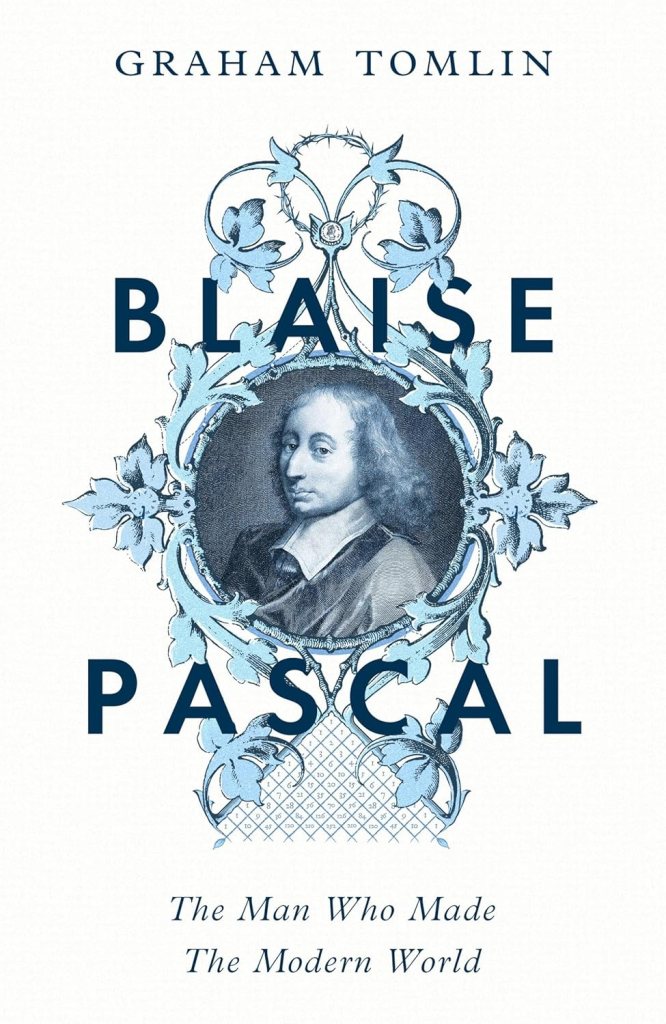
Glen Scrivener’s summary of Pascal’s Wager taken from Graham Tomlin’s book, Pascal, The Man Who Made the Modern World, exposes the error people make in these assumptions. Pascal wasn’t attempting to assert a rational argument, defense, or proof of God. He was making a very different point altogether.
Pascal was a genius by any measure. He was a scientist, mathematician, geometer, physicist, philosopher, polemicist, and theologian. He invented probability theory; he proved the existence of the vacuum, laid the foundations of integral calculus, performed what is called the first proper scientific experiment, established the principle that made possible the hydraulic press, demonstrated that air has weight, and many other things.
Thus, Scrivener says, “If we think that Blaise Pascal was silly, that might not reflect on Blaise Pascal; it might be a sign that we have misunderstood him.” The podcast featuring Graham Tomlin linked above and embedded below does a great job explaining the misunderstanding. It is worth the 25 minutes to watch and listen, but I am going to summarize and add my own thoughts as I continue.
Aliens and strangers in our world: that is an apt definition of Christians. We are made for more than the present heavens and present earth that we live in. Though we are born of perishable seed, we have been born again of imperishable seed, and we look forward to the day when we, like the acorn, will die so that we may rise again.
I say these things as I think about the chaos, or law and order, of our times, depending upon your perspective. I see it as chaos from the perspective of the immigrants who have come to the United States for a better life. It is just law and order from the perspective of the person who defends the current immigration laws of our country.
Of course, it isn’t that simple. Slavery was once legal in our country. Is it really just law and order? Or is it something else?
Our ancestors came here for a better life. Unless, of course, our ancestors are Native American. My father’s ancestors came here in 1846. they entered a commercial port in New York City before Ellis Island existed and before there was any process in place to receive immigrants. My mother’s ancestors came here long before that.
When I was young, we celebrated the pilgrims and other sojourners who came here for a better life. Seeking a better life for ourselves and our families, our children and our children’s children was the American way. We were proud of the pioneer spirit brought people to our shores.
It’s also a bit more complicated for Christians, as we believe this world is not all there is, as I often say. Followers of Christ know that a place has been prepared for each one of us. We know that storing up treasures on this earth is a futile and fruitless endeavor at the end of our days. The only thing that ultimately matters are the treasures we store in heaven – if, indeed, we are actually people of faith.
We store our treasures in heaven by following the narrow path, by taking up our crosses and following Jesus. We do this by laying down the desires of our own flesh, and living for the love of God and the love of our neighbor.
To those of us who are clinging to the rock of this country, who are trying to defend the law and order that protects our comfort, our future, and our way of life, I say, you are clinging to the wrong thing. In fact, it really isn’t really a rock at all.
A nation is actually shifting sand. Like the sands of the great civilization of Babylon that lies today in deserted ruins, on a wind-swept dessert expanse without inhabitant. A nation is an empty and parched hope that turns to dust. People, however, have eternal value.
As I look at the way the present administration of this country is carrying out the agenda of President Donald Trump, I am saddened all the way around. I am not unpatriotic. I am not empty of all nationalistic pride, but the older I get and the more deeply I commit to Jesus, the more I identify as an alien and stranger in our world. My citizenship is not ultimately in the United States of America – or in any worldly nation. My citizenship is in heaven.
And as I turn down another stretch in this journey of my life, I am learning to be more focused on life after life, which is the life that Jesus urges us to focus on. The kingdom of God, which is not a kingdom of this world, is a foretaste of the next. That is the aim of people of faith.
By faith Abraham made his home in the promised land like a stranger in a foreign country. Isaac and Jacob did the same. They were waiting for “the city with foundations, whose architect and builder is God.” (Hebrews 11: 9-10) All the people offered to us as examples of faith in Hebrews 11 welcomed the promises of God from a distance as “welcomed them from a distance, admitting that they were “foreigners and strangers on earth” (Heb. 11:13) because they were longing for a “heavenly country” (Heb. 11:16) – not an earthly country.
So, as Christians on either side of the modern immigration issues, we cannot lose sight of our heavenly home, of that city whose architect and maker is the Lord. We longingly wait for the new heavens and the new earth that will come down and that day when the Lord, Himself, will dwell among us. That is our destiny and that is our destination.
Nations come and go. The grand monuments to our national identities will become like the Babylonian ruins, the heavens and earth will fade away, but a person who is born of imperishable seed lives forever. What, then, is a nation? Nations do not last.
We live by faith in the hope of the new Jerusalem where people from every tribe and nation and tongue will gather before the throne of the Lamb, crying, “Holy! Holy! Holy! Lord, God Almighty!” No human eye has seen nor mind conceived what is the greatness of the world that lies in store for us.
Why cling to the comforts and the privileges and the things that we can accumulate in this life when we are promised a life we cannot even imagine? Perhaps it is because we have a hard time imagining it. Yet, that is the substance of true faith – the certainty of things hoped for.
We should ask ourselves as we look at the great examples of faith God chose to parade before us in Hebrews 11 whether we would be honored to be counted among them? Or whether we think they were foolish to be tortured, jeered at, flogged and imprisoned for such a hope? They are commended for their faith in the promises of God they didn’t receive in this life.
Perhaps, the immigration issue separates sheep from goats. The laws and order of this country that wall out a field that is ripe unto harvest for the imperishable seed of the gospel are of illusory value to the person of faith. Are we willing to gain our country at the loss of our citizenship in heaven?
That is a question we all must ask ourselves. Even if we do not ask that question, though, we are all deciding which side of the wall we are on in the decisions we make daily. Are we aliens and strangers in our world? Or have we chosen the world as our portion?












 Navigating by Faith