The Dilemma of God Demanding Justice from Beings Incapable of Meeting God’s Standard

There is one critique of the Christian notion of sin and the justice of God that is troubling on its face. That key critique for anyone who claims that God demands justice for sin is that God is seemingly unjust to require justice of beings who can’t measure up.

Many modern people bristle at the Christian idea of sin, and they bristle even more at the idea that God would punish sinners. Frankly, I think many modern people simply don’t understand what sin is and who God is.

But, that aside, there is one critique of the Christian notion of sin and the justice of God that is troubling on its face. That key critique for anyone who claims that God demands justice for sin is that God is seemingly unjust to require justice of beings who can’t measure up.

Alongside the notion that the God of the Bible and demands judgment for not measuring up to God’s just standard is the notion that all people are sinners who don’t measure up. In fact, the New Testament is fairly read to say that people are incapable of living up to God’s standard.

The doctrine of original sin says that we are all corrupted because the sin of Adam and Eve has been passed down generation after generation. Even if we don’t believe in the doctrine of original sin, however, the Bible is clear from the Old Testament to the New Testament that human beings don’t measure up to God’s standard:


They have all turned aside; together they have become corrupt;
    there is none who does good,
    not even one.

Psalm 14:3


They have all fallen away;
    together they have become corrupt;
there is none who does good,
    not even one.

Isaiah 53:5


as it is written:

“None is righteous, no, not one;
   .
 All have turned aside; together they have become worthless;
    no one does good,
    not even one.”

Romans 1:10-12


Jesus said, “No one is good except God alone.” (Mark 10:18 (NIV)) Yet, he says, “Be perfect … as your heavenly Father is perfect?” (Matthew 5:48)

This is the dilemma: How can we be perfect?! “To err is human” the bard once said, and so it seems we are imperfect by our very nature.

Many people reject the idea that God can be just and demand justice from people incapable of measuring up to the standards God’s justice demands. They say it would be unjust for God to demand justice from beings who have no ability to act other than they do, and so fail to meet God’s standards.

God seems to be acting unfairly to demand that we meet His standards when we are 1) created beings, 2) born into sin, and 3) incapable of living up to the perfection God requires.

Other questions tumble after these thoughts: Why didn’t God create us perfect? If we are born sinful, how can God blame us for being sinful? If we are incapable of being perfect, how can God punish us for our imperfection?

Continue reading “The Dilemma of God Demanding Justice from Beings Incapable of Meeting God’s Standard”

Christianity’s Ties to the Scientific Method

Christianity was the fertile soil in which scientific method and modern science began to grow


I have heard a number of people assert that Christianity gave birth to the scientific method. Perhaps, the first time I heard that claim was from John Lennox, the famous Oxford University professor of mathematics. I was intrigued, but I didn’t take the time to research his claim at the time.

I have heard the claim repeated multiple times, most recently by Dr. Michael Guillen the astrophysicist, former Harvard professor and TV personality. In fact, he devoted a podcast to the subject (embedded below), so I figured it was time to learn more.

I started with Wikipedia, which has a page on scientific method. Wikipedia begins with Aristotle and focuses on rationalism as the basis for scientific method.

Properly speaking, rationalism is not a method. It is a philosophy, a way to approach the world. Rationalism and Aristotle, though, seem to have led the way to the development of the scientific method.

Aristotle’s inductive-deductive method that depended on axiomatic truths and the “self-evident concepts” developed by Epicurus was an early conception of the way to do science. It was jettisoned, however, for something more like the modern scientific method beginning around the 16th Century. Perhaps, this is why Guillen doesn’t mention Aristotle, except in passing.

After those early pioneers, Wikipedia references some great Muslim thinkers who were influenced by Aristotle (including Avicenna (Ibn Sina) and Averroes (Abū l-Walīd Muḥammad Ibn ʾAḥmad Ibn Rušd)). They placed “greater emphasis on combining theory with practice”, focusing on “the use of experiment as a source of knowledge”. Guillen starts his history of scientific method with these early “flashes” of scientific method in the Muslim world.

These men of the Islamic Golden Age pioneered a form of scientific method, but the inertia did not continue. Moses ben Maimon (Maimonides), the great Jewish theologian, physician, and astronomer, developed a similar emphasis on evidence. He urged “that man should believe only what can be supported either by rational proof, by the evidence of the senses, or by trustworthy authority”. He foreshadowed a future scientific posture, but his prescience also did compel further advancement at the time.

Dr. Guillen credits Robert Grosseteste and Roger Bacon with the formation of the first actual principles of scientific method. Their ideas “caught fire” in Christian Europe from the tinder of academies that began just after the turn of the first millennium, igniting a blaze that would fuel scientific inquiry and endeavor for centuries to come.

“Concluding from particular observations into a universal law, and then back again, from universal laws to prediction of particulars”, Grosseteste emphasized confirmation “through experimentation to verify the principles” in both directions.

Roger Bacon, Grosseteste’s pupil, “described a repeating cycle of observation, hypothesis, experimentation, and a need for independent verification”, including the recording of the way experiments were conducted in precise detail so that outcomes could be replicated independently by others. Bacon’s methodology lead to the modern emphasis on peer-review in science, says Guillen.

Wikipedia mentions Francis Bacon and Descartes. Bacon and Descartes emphasized the importance of skepticism and rigid experimentation, expressly rejecting Aristotle’s dependence on first principles (axioms). Guillen, however, glosses over Descartes to get to Galileo Galilei and Isaac Newton.

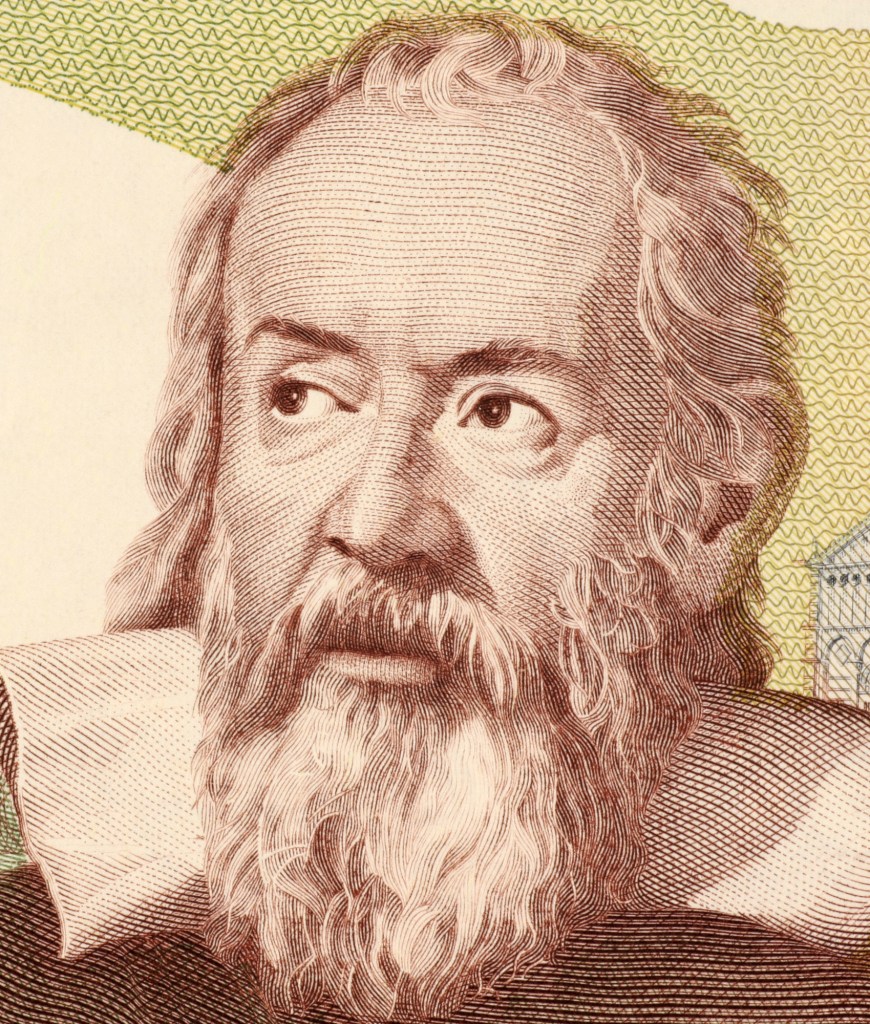
Galileo Galilei introduced mathematical proof into the process and continued to distance science from reliance on Aristotelean first principles. Galileo and Newton reformulated the terms of scientific method that would inform modern scientists ever afterward.


That the two latter men were men of faith, along with Grosseteste (a Catholic Bishop) and Roger Bacon, his student, is significant. Maimonides and the Islamic thinkers before him were also men of faith. These men who pioneered the way to modern science were all monotheists who believed in a creator God. 

Science did not really take off until the 17th Century. The trailblazers of the modern scientific method were religious men, and the modern scientific method was born in the religious environment in Christian Europe lead, primarily, by men of faith.

Why did science catch fire in Christian Europe and not in other parts of the world? Why not in China? Or in the world of the eastern religions? This is a question Guillen poses, and he provides a possible answer.

Continue reading “Christianity’s Ties to the Scientific Method”

Taking the Hand of God, Literally; How We Read the Bible


Heaven is my throne, and the earth my footstool. What sort of house will you build for me? says the Lord, or what will be my resting place? Did not my hand make all these things?

Acts 7:49‭-‬50 CSB

I have thought and written about the fundamentalists and the atheists of the world who, ironically, approach the Bible in the same way. Both groups of people read the Bible in a wooden, inflexible, literal kind of way. (See Sam Harris Podcast with Bart Ehrman – Part 2 – Wooden Fundamentalism)

This passage above gets me thinking about these things again. The passage quoted above is from Steven’s address to the Jewish leaders who had him stoned after calling them stiff-necked like their ancestors in the desert (among other things).

Steven recited the Jewish history to them, including the Ark of the Covenant that was created to hold the Ten Commandments and the Tent of Meeting that was carried through the desert and set up where they stopped as a place for God’s “presence” to “dwell” among them. The Tabernacle with the Ark of the Covenant became the inner sanctum of the Tent of Meeting. These structures the people carried with them became the place they would meet with God.

David desired to build God a home, a permanent place for the Ark of the Covenant and Tabernacle, and Solomon accomplished David’s dream. David knew, however, that God does not live in a temple made by human hands. Solomon, David’s son who built the Temple, acknowledged the same thing when he dedicated the Temple:

“But will God really dwell on earth? The heavens, even the highest heaven, cannot contain you. How much less this temple I have built!

1 Kings 8:27

They understood that the Tabernacle, the Tent of Meeting, and the Temple were symbolic. These physical structures and the activity organized around them and in them were meant to point to a metaphysical reality of much greater substance.

It’s ironic that David, a man after God’s own heart, knew these things, but the people of God generally often did not. David was a man after God’s own heart, but the Israelites on the whole were often stiff-necked, as Stephen said.

I find it ironic that people who try to interpret and apply the Bible in the most literal way fall on opposite ends of the spectrum. Fundamentalists and atheists both tend to interpret the Bible literally. They are the two sides of the same interpretive coin. The only difference is that one side believes every part of it, and the other side believes none of it.

At the end of the passage quoted above, the Lord poses the rhetorical question, “Did not my hand make all of these things?”

Does anyone literally believe that God’s hand made the universe? I suppose we should ask, also, “Does God have only one hand?”

I would venture to guess that everyone understands this phrase to be allegorical. Yet, there are so many things in the Bible that people try to take and apply literally that are, perhaps, not as obviously allegorical.

I’ve heard the counter statement that we cannot pick and choose the things we believe out of the Bible. We must believe every word of it, or reject all of it. This is the fundamentalist/literalist approach – all or nothing. Never mind that a verse like the one quoted above is clearly not intended to be taken literally!

Not to pick on “fundamentalists” (whatever that term might mean), but those people we tend to label with that term tend to push a very literal interpretation of Scripture. They, in a sense, double-down on the “facts” stated in the Bible and attempt to believe “everything”. Many atheists dig in on the same literal way of interpreting the Bible, but they believe none of it. They both approach the Bible the same way, but one believes 100% and the other believes 0%.

Continue reading “Taking the Hand of God, Literally; How We Read the Bible”

How Should Christians Live Out the Gospel in a Post Roe v. Wade World?

What does God do with babies who die in the womb?

Davide French has expressed some of my own angst at the news that the Supreme Court overturned Roe v. Wade in a recent article, Roe Is Reversed, and the Right Isn’t Ready. Like him, I have championed the pro-life cause. My wife and I marched in Washington. We protested at an abortion clinic. We supported a crisis pregnancy center. I have largely been silent, however, for the past 30 some years.

In 1988, the year I entered law school with two children, financial difficulty, and a very uncertain future, my wife became pregnant. It was the most difficult year of our lives. She was severely sick, living in a strange place 1000 miles from her family under extreme pressure.

When the doctor told her the baby tested positive for spina bifida, and she should consider an abortion, she changed doctors. I supported her fully. We were committed to life.

My son who was born in 1989 is 33 years old now. He bears the scar tissue at the base of his spine where his spinal cord once looped outside his spinal column. He was born that way – with the scar tissue, healed over, fully formed and perfectly healthy.

He became a champion wrestler, All-State, many times All-American, many times national finalist, multi-time national champion. My wife might not have been born if abortion was legal in 1961, and my son would not have been born if we we listened to our doctor.

We were very fortunate, and we are very grateful, and I realize the story could very well have been different. Many people are not as fortunate.

There is a constitutional issue with abortion, a moral issue, and then there is the issue of how the body of Christ demonstrates God’s love in this broken world. I have some thoughts on each of these issues, and I feel compelled to weigh into these turbid waters despite my hesitation.

The constitutional issue has been settled… for now. As an attorney and having studied the Roe v. Wade decision in law school, I can say with some degree of confidence that it had thin precedential support. It’s foundations were shadowy and wispy as a matter of constitutional jurisprudence, relying on a medical understanding of the day, and not legal principles, to shore up a lack of solid, legal precedent.

In the David French article he quotes Justice Ruth Bader Ginsberg who seems to admit the same point. She once “declared Roe ‘breathtaking’ and warned that ‘Doctrinal limbs too swiftly shaped, experience teaches, may prove unstable.’” Her prescience was accurate. It stood for one year shy of 50, but those doctrinal limbs have given away under their own weight.

“The Court’s job is not to determine which rights we should possess but rather which rights we do possess,” says French. (Emphasis in the original) So, it should be. So, the Constitution is written. So, the jurisprudence informs us.

Lawmaking is the province of Congress, not the judicial branch. Ironically, though, the instability of that decision haunts not just the left today. Framed on the back of a politically motivated opinion for which little precedent existed for support, that one decision has greatly politicized the Supreme Court to our jeopardy.

That most people perceive the opinion that struck down Roe v. Wade as a political accomplishment is proof, and that should not be comforting news. A Supreme that can be lobbied and jockeyed and filibustered to do the majority’s bidding is a threat to freedom and sound government.

And, of course, the recent decision was just as political as the decision it overturned – maybe more so. The Court that decided such a progressive decision as Roe v. Wade was largely appointed by conservative presidents. Richard Nixon appointed Justice Blackmun, who write the majority opinion.

There was a day when Presidents made an attempt to appoint the most impressive legal minds to the high court. Confirmation hearings focused on their credentials and legal acumen. The justice appointees and the senators who vetted them knew well and respected the value of impartiality that is essential to true justice. In an odd way, Roe v. Wade, penned by a conservative appointee is proof.

For the last 40 or more years, however, most confirmation hearings on appointments to the high court have been political circuses. No question is off limits, including the direct question of how a justice will decide an issue that comes before him or her. It no longer matters that the Rules of Professional Responsibility that govern all judges forbids that very thing.

Pro-life champions are notching the recent decision as a win, but the battle rages on. This decision pushes the battle to the legislatures of the 50 states.

More fundamentally, though, pro-lifers may have won this battle, but the Republic may be losing the war. The more our Supreme operates by political fiat, the less stable we become.

As for morality, it seems that many people assume the pro-life position is a religious view. While many religious people are pro-life, many religious people are pro-choice also. I have seen many of my religious friends categorically criticize the decision in the last few days.

At the same time, the pro-life crowd includes non-religious people, including atheists, like Kelsey Hazzard, who says, “The abortion industry would have you believe that people like me do not exist.” Reducing the abortion issue to a religious category is scapegoating and insulting to people who claim not to be religious.

No other modern issue offers less common ground for compromise. A fetus is either human life with intrinsic value, or it isn’t. A women’s body is either an inviolable vessel subject to her self control, or it isn’t. A fetus in a woman’s womb is part of her body, or it’s an unborn baby with separate and distinct personage, value, and legal status.

I find the arguments for life to be compelling, but the arguments for choice are compelling also. The stories are real. The fact that women, alone, bear the burden of the consensual (or non consensual) act of sex is reality.

A man can and often does escape all responsibility, but a woman has nowhere to hide. The fact that man are not compelled by the state to bear their responsibility is criminal.

Yes, many states have laws on the books that allow a woman to prove paternity and make the man pay support, but that’s on her dime! Some local prosecutors will take those cases, but those positions are too few, too overworked, and have insufficient resources to take on all cases.

I have slowly come around to an uncomfortable angst on the morality of abortion.

Thirty four years ago, our conviction about what we should do when faced with the probability that we might have a physically deformed child was unwavering. We chose to protect the life God gave us. I still think abortion is morally wrong.

It doesn’t matter whether that life might be deformed or have down syndrome. It doesn’t matter what the economic, social, and other circumstances are. I am not saying there are no exceptions, but most exceptions do not justify taking a life.

This is the black and white, analytical position I believe in, but I know the challenge is not in the black and white, but in the grey. The exceptions to the rules are always where the difficulty lies. Life is complex, and complexity is nuanced.

I am not going to say much more about the morality. I know where I stand, but I know good people who share my faith – people I have prayed with – who do not share my position.

About 18 months go my view of things shifted through the unlikely coincidence of my annual Bible reading and a serendipitous sermon on Sanctity of life Sunday. (See Thoughts on the Sanctity of Human Life….” I hope you will take the time to read it, because it informs my questions to the body of Christ.

Does God hear the cries of unborn babies? Does God hear the cries of women who have been abused and misused? The answer is certainly, “Yes”.

There are people on both “sides” of the abortion story. I believe Scripture warns us about our focusing on the “sides” and urges us to consider the greater purposes of God. Do you remember what the angel of the Lord told Joshua, when Joshua asked which side he was on? Go ahead and check it out.

Do you think God rejects innocent babies who have not yet taken a breath? How you answer that question may well reveal how you perceive God.

How you answer that question likely influences how you respond to this issue. Read Exodus 2 and Exodus 3. Whose cries does God hear, and what cries prompt Him to respond?

I hope you don’t gloss over these questions. I hope you wrestle with the implications. Who is it that God is concerned about? And why?

Go back to the question about how God handles the death of an unborn baby who has yet to take a breath. Does He receive them? Or does He reject them?

I urge you not to gloss over these questions.

How we answer them informs how the Church should orientate itself on the issue of abortion. Our answers suggest the priority of our focus and how we should live out the Gospel on this issue.

How we do that individually is a matter of the gifting God has giving each of us, the burden He has put on our hearts, and the leading of the Holy Spirit. We will only make our way forward as the salt and light God intend us to be with much prayer and humility and trepidation.

Digging into the Accuracy and Inspiration of the Bible

I wrote recently on the character of Scripture, prompted by a statement made by Marty Solomon in Episode #82 of the BEMA Podcast, picking up on a statement he made that inspiration doesn’t necessarily mean accuracy. (See Does inspiration mean accuracy?) This topic gets into what it means that Scripture is the inspired word (or revelation) of God.

The idea that Scripture is inspired by God comes from 2 Timothy 3:16:

“All Scripture is inspired by God and beneficial for teaching, for rebuke, for correction, for training in righteousness….” 

2 Timothy 3:16 (NASB)

Paul’s statement in his second letter to young Timothy is one of the few comments on the character of Scripture in the Bible. In this article, I want to focus on other comments on Scripture that can be found in the New Testament.

You might be surprised to know that Peter references Paul authoritatively, expressly characterizing Paul’s letters as “scripture” (sacred writings). (2 Peter 3:15-16 ESV) The recognition by Peter that Paul’s writings are scripture is highly significant because Jesus said Peter was the “rock” on which Jesus would build his church. (Matt. 16:18) If Peter considered Paul’s writings “scripture”, we should too.

Paul, likewise, references Luke in his first letter to Timothy. Paul quotes from “the Scripture”, saying: “’Do not keep an ox from eating as it treads out the grain.’ And in another place, ‘Those who work deserve their pay!’” (1 Timothy 5:18 NLT) The first quotation is from Deuteronomy 25:4. The second is from Luke 10:7 (NRSV). Thus, Paul quotes Luke’s Gospel, as scripture in the same vein as the Torah.

This discussion, though, begs the question: what is scripture? Obviously Peter thought Paul’s letters were scripture, and Paul thought Luke was scripture. Most of scripture in that time would have been what we call the Old Testament. There was no “New Testament”, so what else is scripture?

Many misconceptions abound. People claim that books were removed from the Bible. People claim that a group of “church fathers” got together and determined what should be in the New Testament.

These claims are false. They have no basis in the historical record.

The truth is more complicated, and the NT canon developed more organically than what is popularly believed. The writings of the NT developed from the texts that were considered authoritative throughout the scattered regions of the early church, long before the Christianity became the official religion of Rome in the late 4th century and the Holy Roman Empire emerged in the 9th Century (See Encyclopedia Britannica).

We may think of Christianity being controlled centrally from Rome, but that didn’t happen until after the 4th Century. Before that, churches were scattered all over the Roman Empire and beyond. Various centers of influence existed, including Rome, Alexandria (Northern Africa), Jerusalem and Caesarea (the Levant), Antioch (Syria), Lyons (France) and other places. The top down authority of Rome (and Constantinople) developed much later.

The writings that make up the existing New Testament were shared and circulated throughout a wide area, wherever churches took root. Opinions were shared, and a consensus grew based primarily on the authorship (apostolic connection) and message (consistency with the teachings of Jesus).

Many of those writings were accepted very early by a majority of people, and others gained acceptance later by the same organic method of consensus. (See The Formation of the New Testament Canon) Many other writings were considered helpful, but not scriptural, and some writings were considered heretical. Late writings generated after the apostles had all died were categorically excluded. These writings date from the second century and later.

Eusebius of Caesarea was one of the first people to attempt a summary of authoritative writings. The 22 “books” he identified in the 3rd Century are nearly identical to the canon we have today, minus a few and plus a few. The consensus was close to settled at that time.

The first person to name all 27 writings exactly as they are known today was Athanasius in Northern Africa in his Festal Letter written A.D. 367. The same canon was accepted by the rest of Christendom at the African synods of Hippo Regius (A.D. 393) and Carthage (A.D. 397 and 419). (Not the Council of Nicaea as the popular myth goes!)

In between the 1st Century and the early 5th Century when the canon was officially settled, other lists were offered by various sources. Bruce Metzger, the Princeton Theologian, says, “The slowness of determining the final limits of the canon is testimony to the care and vigilance of early Christians in receiving books purporting to be apostolic.”

Metzger notes that “the chief criterion for acceptance of particular writings as sacred, authoritative, and worthy of being read in services of worship was apostolic authorship”. The early church focused on the source or authority – connection to the apostles who knew Jesus. They also measured them by the known message of Jesus, as preserved by those same apostles.

Keep in mind that the apostles lived on after Jesus. Peter died in 64 AD during the reign of Nero in Rome according to contemporary, extra-biblical sources. John, the Apostle, died in approximately 100 AD according to reports preserved from multiple sources.

Thus, the apostles, the closest people to Jesus, lived on 30 to 70 years after Jesus died. They were the standard by which the authority of contemporary writings were judged.

Determining (or accepting) what is Scripture is only a beginning, though. How we view Scripture and interact with it is where the real rubber meets the road. In my last article, I wrestled with what it means that Scripture is inspired, suggesting that accuracy is not necessarily the key component. I will dig a little deeper into that vein in the rest of this article.

Continue reading “Digging into the Accuracy and Inspiration of the Bible”