The Parable of the Good Samaritan has a backstory in Hebrew Scripture I previously didn’t know, and it relates to our present times. Specifically, it relates to the issue of immigration.
The context of the parable is a question put to Jesus by an expert in the law: “What must I do to inherit eternal life?” Jesus turned the question back on the expert, asking, “What is written in the law? … How do you read it?”
It’s interesting that Jesus does this. Maybe he wanted the legal expert to think it through for himself, rather than repeat what others have told him.
The expert answered, “’Love the Lord your God with all your heart and with all your soul and with all your strength and with all your mind’; and, ‘Love your neighbor as yourself.’”
Jesus affirmed his response, and said, “Do this and you will live.”
But, the expert in the law wasn’t satisfied with that answer. He asked Jesus, “Who is my neighbor?” This is where the backstory begins. To understand the backstory, we need to know where in Scripture the law expert was pulling his answers from and what he (and Jews of his time) likely thought about them.
I went to bed last night concerned I was getting things wrong. Specifically, I have been critical of Donald Trump and what he has done since he took office again, and I have been getting push back from many people. It isn’t the many people that concerns me, but my brothers and sisters in Christ who are calling me out on this.
It seems so obvious to me that the things being done are wrong, and the way they are being done is wrong, but other Christians are not seeing it. I prayed to God last night, “If I am wrong, please correct me.”
This morning my daily reading included this verse:
“I am sending you out like sheep among wolves. Therefore be as shrewd as snakes and as innocent as doves.” Matthew 10:16
I was doubting myself last night, so my first thought was to check the context, even though I know it. Sure enough, it was what I remembered:
“These twelve Jesus sent out with the following instructions: ‘Do not go among the Gentiles or enter any town of the Samaritans. Go rather to the lost sheep of Israel. ‘” Matthew 10:5-6
I have read this passage dozens of times, probably, since I became a Christian over 40 years, but I didn’t realize the context of the sheep among wolves statement made by Jesus until the last year. When I read that passage recently, I said to myself, “Wait a minute! Jesus said that to his disciples when he sent them out to his own people – the Jews.” What!?
He said, don’t go to the Gentiles, and don’t even go to the Samaritans; go “the lost sheep of Israel.” He would later send them to the Samaritans; and he ultimately sent his followers to Judea, to Samaria, and to the ends of the earth.
Of course, he sent them to the lost of sheep of Israel. Maybe not all the people of Israel were lost sheep. Maybe the wolves were only among the lost sheep of Israel.
Surely, the people in the church today are not the lost sheep. The church is filled with the elect. The church is filled with sheep who hear the shepherd’s voice. I believe that is true!
At the same time, I think it is safe to say that not everyone who goes to church is a child of God. The old adage that parking yourself in a garage does make you an automobile is true. Jesus said it this way: “The kingdom of heaven is like a man who sowed good seed in his field. But while everyone was sleeping, his enemy came and sowed weeds among the wheat….” (Matthew 13:24-25)
I am sobered by this. I don’t think that Jesus was saying that all God’s people at that time were wolves. Maybe the wolves weren’t even people. Sometimes, we can take a metaphor too far. He was telling them to be careful, to be circumspect, to remember what he taught them, and not to be lead astray – even among God’s people. We may be sometimes fooled into listening to the voices of wolves, rather than the voice of the Good Shepherd.
This is the story of God and His people. God sent His prophets to His people again and again, and they did not listen. (Jeremiah 26:5) When God commissioned Isaiah, He told Isaiah that the people would hear, but not understand, and they would see, but they would not perceive, and this would continue until the land was in ruins and only a remnant remained. (Isaiah 6:1-13)
Of course, I am not the Prophet, Isaiah. I am a sinful man saved by the grace of a loving God. I have my own faults and biases and sinful tendencies, and I could be wrong. I am acutely aware of this.
Jesus was entered Jerusalem on the colt of a donkey around the time Pontius Pilate entered Jerusalem from the opposite direction, from Caesarea. Picture the incongruity of a full grown man sitting on a colt of a donkey with his legs dragging the ground under the poor little beast. Then picture the Roman ruler of the land came from the opposite direction in a mighty procession with banners and fanfare and a show of force with all the military show of Communist China.
Jesus was coming to die on a cross, but the people greeted him like he was a king who would ascend the throne of David and overthrow the Roman government. They shouted, “Hosanna!” (Save us!) They waived palm branches to herald the Messiah they believed would save them from the Romans like a hammer, and they laid their garments down in submission.
The people didn’t understand that Jesus came to die on a cross. The poignancy of this incongruence is understood best by how the story in Luke ends:
“As he approached Jerusalem and saw the city, he wept over it and said, ‘If you, even you, had only known on this day what would bring you peace—but now it is hidden from your eyes. The days will come upon you when your enemies will build an embankment against you and encircle you and hem you in on every side.They will dash you to the ground, you and the children within your walls. They will not leave one stone on another, because you did not recognize the time of God’s coming to you.'”
Luke 19:41-44
Those people would have said they did recognize the time of God’s coming, right?! They got it right: he was the Messiah! They recognized that Jesus was God’s Messiah promised of old.
In that general sense, they did get it right. Jesus was/is the Messiah, but their expectations of what that meant and what he would do was wrong. They thought he came to conquer, but he came to die.
By the end of that week, the people who waived palm branches and laid their garments down had changed their tune. They wanted Barabbas released, not Jesus.
As discussed in the conversation linked below in the video, they wanted the way of Barabbas – the sword – not the way of Jesus, the cross. They didn’t want a suffering Messiah; they wanted a conquering Messiah. They didn’t want the Lamb of God; they wanted the Lion of Judah.
We aren’t much different than they. For all of our Bibles and bible apps, we don’t even know Scripture as well as they did! Lifeway Research reports that only 36% of Evangelicals read the Bible every day, and only 32% of Protestant, read the Bible every day.
We have our own expectations of the way God should do things, and we tend to lean back into what someone recently called the default stance of the flesh – the appeal of power and influence. But, that isn’t God’s way. Jesus showed us God’s way, and he invites us to follow his way as he followed the Father’s way in this present world.
Paul reminds us,
“But God chose the foolish things of the world to shame the wise; God chose the weak things of the world to shame the strong. God chose the lowly things of this world and the despised things—and the things that are not—to nullify the things that are….”
1 Corinthians 1:27-28
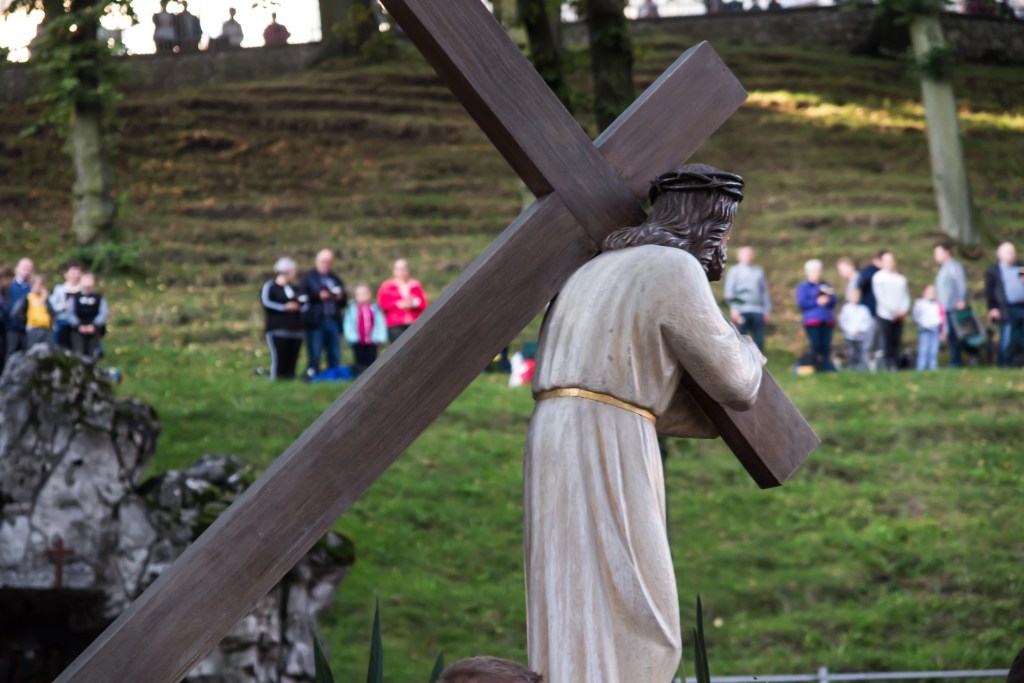
We need to be careful not to be hearers who don’t understand and seers who don’t perceive. We need to be careful to choose God’s way, which is not our way. We need to carry our crosses and not swords.
Does any of this make me “right”? No. But, I am seeking God. I am trying to be true, to know Him, and to be like Him. That is my heart’s desire. I am trying to recognize and honor God in these times and to reflect His heart and character as best as I can understand it.
The lesson of the words of Jesus to be careful of the wolves among the sheep, the lesson of the prophets, and Paul’s reminder that God shames the wise and the strong by choosing what seems to be foolishness and weakness means that I need to resist the default position of the flesh (to rely on power and influence). I need to be grounded in God’s Word and not everything that anyone who is a Christian says. I need to be aware that weeds grow among the wheat and wolfish things appear among the sheep.
Though every man be a liar, yet God is true! (Romans 3:4) The heart of a man is deceitful above all things. (Jeremiah 17:9) This is true of me and my heart if I am not careful and do no guard it. We need each other, and we need to hold each other accountable, not to political ideologies and cultural ways, but to the Word of God and the way of Jesus.
I wrote some time ago on the subject that God meets us where we are. That blog article has been among the most read articles on this site since I wrote it. It was heartfelt, part of my own journey of discovery, and I think it resonates with the longing and angst that seems always resident in the human heart. Certainly always in mine.
God stands at the door to our hearts knocking. He doesn’t break the door down, and He won’t continue to knock if we ignore Him. He doesn’t overpower us, and He doesn’t seek to compel us against our will.
Yet, He desires us so much that He left His glory behind to become one of us, to enter into our human, historical space, and to offer Himself up for us – to redeem us – and provide a way for us to connect with Him. He took on human form, and He offered Himself up in a human body to demonstrate His love for us. Amazing!
No one can say that God is not invested in our redemption and in our good. No one can show more love or commitment to another person than to lay down his own life for another, and God did that for us.
Yet, He is unwilling to violate our will to coerce us into relationship with Him or to require us to submit to Him – even if it is for our good. He desires a loving relationship with us. He loves us like a parent loves a child because He “gave birth” to us (knitting us together in our mothers’ wombs (Psalm 139)). His love is unwavering even if we ignore Him and go our own way.
Thus, God meets us where we are. We can go nowhere that God is not present and able to meet us – when we are ready to meet Him.
Where can I go from your Spirit? Where can I flee from your presence? If I go up to the heavens, you are there; if I make my bed in the depths, you are there.
psalm 139:7-8
God meets us where we are when we are ready and willing to meet Him. He was always there, but we are not always ready or willing. When we get to that “place”, though, God is ever ready to meet us.
Know, however, that “meeting” the God who is always there is not an end; it is just a beginning. It is the beginning of a relationship with your creator. It is just the beginning of God’s good intentions for you.
“‘For I know the plans I have for you,’ declares the Lord, ‘plans to prosper you and not to harm you, plans to give you hope and a future. Then you will call on me and come and pray to me, and I will listen to you. You will seek me and find me when you seek me with all your heart. I will be found by you,’ declares the Lord….”
Jeremiah 29:11-14a
God’s intentions for you are good – to prosper you and not to arm you. We have trouble sometimes trusting God’s goodness, but this is the essence of faith: for “whoever comes to him must believe that he exists and that he rewards those who diligently search for him.” (Hebrews 11:6) His promise for us is so good it is beyond our ability even to imagine! (1 Corinthians 2:9)
Yet, Jesus warns us to count the cost. (Luke 14:28) Why? What cost?
These are important questions that we should ask. There is a catch – a cost – that we need to be aware of: God may meet us where we are, but He doesn’t intend to leave us there.
I became a follower of Jesus in 1979, though I was a wild, untamed stallion when I was first confronted with the Lordship of Christ and verbally submitted to him. I wandered down my own paths in the year that followed, leading me to a breaking point and more complete surrender. (A cycle I have unfortunately repeated more than once.)
Over the following two years, I was about as surrendered to God as I have been my whole life. I was all in – or as all in as I was capable of being at that time, perhaps. During that time, I became a big fan of Keith Green. I even saw him in concert in Des Moines Iowa in 1981 or 1982. He died in a place crash within a year or two after that, and his impact and memory has faded.
When I saw him in concert, though, his radical Christian commitment had been a huge impact on me, and that impact carried with me beyond his death. Thus, my daily reading today recalls to my mind these lyrics by Keith Green:
To obey is better than sacrifice
I want more than Sundays and Wednesday nights
If you can't come to me every day
Then don't bother coming at all
Keith Green was a musical child prodigy who was radically saved by Jesus. He used his great musical talent and platform to become a prophet of sorts to young Christians at the time who wanted an authentic faith.
I was very drawn to a monastic, cloistered life at that age that Keith Green represented, like a modern Essene. The truth is that I had long been drawn to that kind of thing going back to the book, My Side of the Mountain, that I read in grade school (about a boy who leaves his parents to hollow out a summer home in the trunk of dead tree in the Catskills).
That book seeded in me a longing for something authentic and pure. The idea took root in me that I could not find “it” in the bustle of the world. I needed to escape to solitude, self-reflection, and devotion to a simple life.
In a poignant moment in my senior year in college, I faced up to that longing and desire that ran deep in me, and I made a conscious decision to follow Jesus into the messy clamor of human society. Jesus often escaped to the mountains and the wilderness to be alone with God, but he always returned to the highways, and byways, and the public squares where people live.
Still, the Keith Green spirit of uncompromised obedience to Christ and Christ alone left an imprint on me. His prophetic insistence on radical commitment carried me forward in those early years of my journey with Christ.
Now, I find myself some 40+ years down a road that has taken many twists and turns. That road has taken me through long and winding wilderness areas that were darker than I care to dwell on. It has taken me to the other side of those dark times into the light of a new day, more weary and (hopefully) wiser for the experience. I am still following Jesus as best as I can, but I have a slightly different view of Keith Green’s words today. I hope I can give this the nuance it deserves.
Let’s lay politics aside for a moment, and just consider the Word of God. Politics, of course, is the backdrop to this article. A person cannot be completely apolitical, no matter how hard one tries, but political positions shift, evolve and change, while the Word of God is eternal. Therefore, we should put the Word of God first over our political inclinations.
The Word of God existed before God made the universe, and all of creation was made by the Word. (John 1:1-3) God spoke the entire universe into existence (Genesis 1) and made all things by that are seen from what cannot be seen His command. (Hebrews 11:3)
Of course if you are a Christian, you believe that the Word of God became flesh (John 1:14) in Jesus: God with us; God incarnate; God who became man. He proved himself by what he said, by the miracles he did, and by rising from the dead after he was tortured, crucified, and buried.
The Word of God (at least some of it) is preserved in writing for us as it was spoken to and through people who heard God’s voice and responded in faith by preserving it. Jesus, Himself, quoted extensively from the books of what we call the Old Testament as authority for what he said and did. (Interestingly, he never quoted from apocryphal texts.) Jesus, who we believe was God who became man and who rose from the dead, treated those Old Testament writings with great deference – as the word of God.
Jesus quoted Scripture often from Genesis to the Prophets. When Jesus was tempted by Satan in the wilderness, he quoted scripture, including Deuteronomy 8:3: “Man shall not live on bread alone, but on every word that comes from the mouth of God.” When Jesus began his ministry, his first public statement and the description of his ministry came from the prophet, Isaiah:
“The Spirit of the Lord is on me, because he has anointed me to proclaim good news to the poor. He has sent me to proclaim freedom for the prisoners and recovery of sight for the blind, to set the oppressed free, to proclaim the year of the Lord’s favor.”
Luke 4:18-19 (which Jesus told the listeners was fulfilled by him that day in their hearing)
After Jesus rose from the dead, he explained how the Scriptures from Genesis through the Prophets were about him. (Luke 24:27) Jesus was both the Word of God through whom God made the universe, and he honored the word of God preserved in the Bible – calling it his daily bread. It defined his purpose; and it informed who he was.
With that set up, my theme today is the Prophets and what they said about how God’s people should act in the world, especially rulers who wield governmental influence and power. Our political views, how we conduct ourselves in politics, and who we champion as our rulers should be informed and driven by God’s Word.












 Navigating by Faith