On the Flying Fickle Finger of Fate and Reeds Blowing in the Wind

Should Christians be influenced by shifting political winds?


I recall today the Flying Fickle Finger of Fate award from Rowan and Martin’s Laugh In back in 1968. When I was 8 years old, Laugh In was a hip variety show of biting political humor that was mostly lost on my young mind. The award was a dubious honor ceremoniously presented each week to public figures, corporations, and government agencies for ridiculous “achievements”.
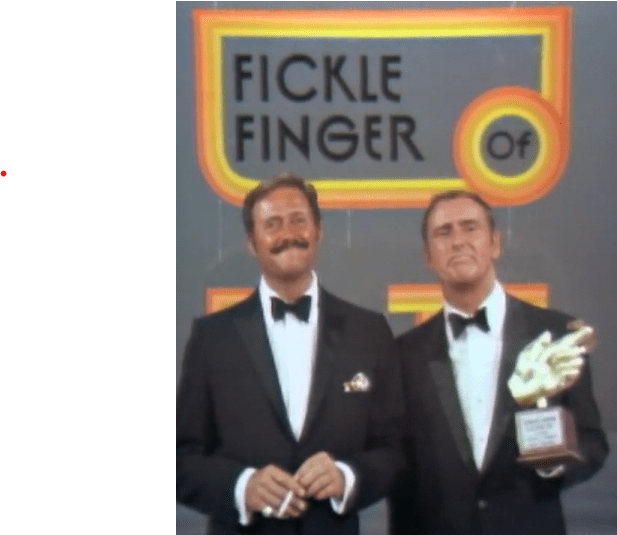

The Fickle Finger of Fate suggests the unpredictable and arbitrary nature of luck or destiny. As finite human beings, we don’t control our fates, and we cannot know the twists and turns that await us in the future.


The award has an ironic backstory. Star Trek was moved from the coveted 7:00 PM spot to the dreaded 10:00 PM “death slot” by NBC to make room for Laugh In. The hip, comedic variety show, however, was popular only for a relatively a short stint from 1968 to 1973 and has largely been forgotten by all but impressionable young minds.

Star Trek, on the other hand, went on to become an iconic science fiction series. It was ahead of its time, and it became a hit in off-network syndication, inspiring sequels and movies for almost 50 years.

Fate is certainly a fickle thing. Driven by polls and ratings to attract the largest audience, NBC obviously did not foresee the lasting success of the Star Trek brand. They also did not expect the short-lived lifespan of their cutting edge variety show that replaced Star Trek.

As Christians, we don’t believe in fate, of course. We don’t believe in random chance. We believe in God who designed and ordered the universe and established our place in it.

The future, however, is equally unknowable to us. As the writer of Ecclesiastes said thousands of years ago, “God set eternity in the heart of man, but not so that he can know the end from the beginning.” (Ecc. 3:11). The Prophet Isaiah said it this way,

“’For my thoughts are not your thoughts,
    neither are your ways my ways,’
declares the Lord.
‘As the heavens are higher than the earth,
    so are my ways higher than your ways
    and my thoughts than your thoughts.'”

Isaiah 58:8-6

God famously, but lovingly, rebuked Job for insisting on understanding things he could not fathom. As with Job, we are invited to have faith and to trust God, but we have more reason for hope and trust than Job, because we know our redeemer lives. He rose from the dead!

We understand that God can be trusted because of His willing demonstration of love for us in emptying Himself to become a man and laying down His life for us. We have no option but to trust Him, but we know we can trust him because of His love for us that He demonstrated on the cross.

Still, we easily are easily swayed and influenced by external pressures. We may think that we understand the times when we are only blowing in the shifting winds of “fate” (powers and principalities that want to blow us off course).


Paul says these powers and principalities are operative in the world. They are “spirits of the age” that play us like instruments if we are not grounded in the Word of God and led by His Holy Spirit.

Jesus used the phrase, reed blowing in the wind, when he addressed a crowd that went into the wilderness to see John the Baptist: “Did you you go to see a “reed swayed in the wind?” (Matt. 11:7-18)


John the Baptist was not just a curiosity. He was not a fleeting personality (like Rowan & Martin) with no lasting importance or purpose. He was the messenger of the Messiah, foretold by the prophets preparing the way for Jesus, the suffering servant who would take away the sins of the world. John was an agent in God’s eternal plan, and Jesus was (and is) the key figure in that plan.

Though he was foretold by the Prophets, no one knew exactly how things would unfold – not even God’s own people. In fact, they didn’t recognize God’s Messiah or receive him when he came. (John 1:11). Crowd of common people were drawn to Jesus, but smarter and more prestigious religious leaders were not.

Many have come, and many have gone. Many have claimed to be the harbingers of promise and special knowledge in their times, but many have proven wrong in their predictions.

The reality is that we do not know what we do not know. We must ever remain open to letting God’s Word shape us and direct us, and we must ever remain attentive to allow the Holy Spirit to guide us in applying His Word in our times.

Even now, smart people – including learned, religious people – believe and act as if they know the times. It is the same in every age and every generation, but we are easily swayed and blown by the winds of fate and human influence that seek to drive the course of history not always in ways that are aligned with God’s plan and purposes. To that generation, and to ours, Jesus said:

“They are like children sitting in the marketplaces and calling out to others:
‘We played the pipe for you,
    and you did not dance;
we sang a dirge,
    and you did not mourn.’”

Matt. 11:16-17

Human tendency is to trust ourselves. The smarter we are, the more we trust in our own ability to figure it out. Perhaps, this explains why so many scientists and PhD’s are atheists. Perhaps, this is why so many of the religious leaders in the time of Jesus were blind leaders of the blind. Perhaps, we are susceptible to the same error.


We don’t know the end from the beginning. We don’t know God’s thoughts unless He reveals them. God doesn’t dance to the tunes we play. Our tunes are often just riffs on the spirits of our age changing as those spirits change their tunes that we follow.
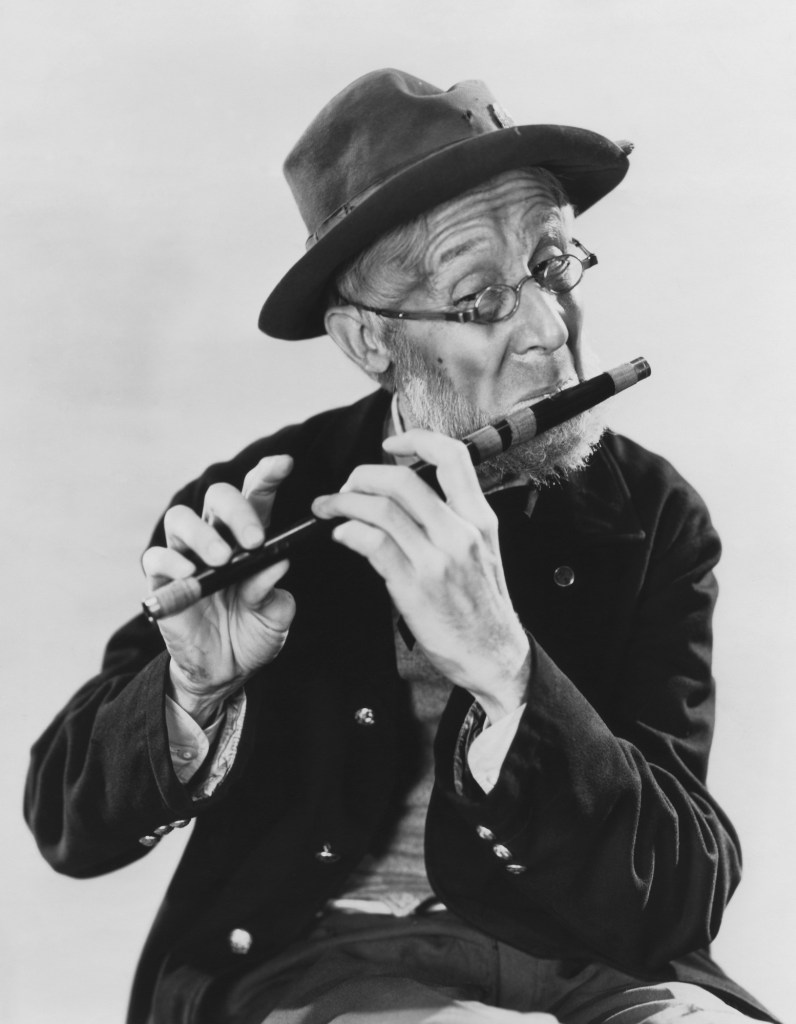

I reflect on these things as I think through changes in the winds influencing the evangelical church in my lifetime.. We need to be grounded in the Word of God and in tune with the Spirit of God. (See Hearing the Voice of God for Today) if we are not, we become reeds blowing in the wind.

A few weeks ago, I created a short list of issues on which Evangelicals (my tribe) have swayed in the political winds during my lifetime. I have done some research to confirm and correct my intuitions, and that exercise has confirmed my suspicions that we have, indeed, been reeds blowing in the political winds over the last 60 years. Following are just a few examples.

Continue reading “On the Flying Fickle Finger of Fate and Reeds Blowing in the Wind”

What is the Attitude Christians Should Have on Immigration?

A Christian’s attitude on immigration should be informed by the Bible


In 2014, during the Syrian refugee crisis, I watched the flood of humanity escaping from the ruthless butchery that occurred during that time in that region of the world. I recall the controversy in the various countries to which this seemingly unending stream of people fled in desperation and anger. Some countries like Germany opened the floodgates; other countries like Hungary closed their borders.

I empathized with people who didn’t want their countries overrun by foreign refugees. I watched the mass of displaced foreigners overwhelming the roads and rails in Europe, and I read stories of mobs of young Arab men taking out their anger on the countries they entered and women they encountered there.


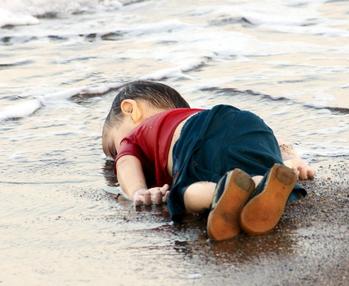
I saw mothers and fathers with desperation in their eyes and fearful children in tow. The image of a lifeless little boy washed up on a sandy Mediterranean beach still haunts me.


Syria was home to the oldest population of Christians on earth, and Christians were caught in a sectarian and political power struggle between largely Muslim factions fighting for and against Democracy. Both Christians and Muslims fled from the conflagration between the deadly governmental crackdown against the popular rebel uprising, and the ruthlessly uncompromising, opportunistic butchers of ISIS who joined in the fight.

Though many of the refugees were Christians caught in the cross fire, and the though the rebels fought for Democracy, President Obama resolutely refused to open American borers to more than a handful of Syrian refugees. As the flood of humanity streamed into Turkey and Europe, we stood aloof.

I was torn. The throngs of young and angry Muslim men mixed with desperate parents and fearful children pulled me in different directions, and I didn’t know how to respond.

I had recently done an apologetic study of Christianity vs. Islam, and my concern about the angry, displaced Muslims was keen. President Obama and the Democratic majority acted as if the moral fabric of the universe would rend in two if we verbalized what everyone knew and thought: that angry young men indoctrinated by radical Islam are dangerous.

Yet, the faces of those parents and children and the haunting visage of the 3-year old Alan Kurdi lying lifeless and washed up on a Mediterranean shoreline begged for a compassionate response.

I realized in that conflict of opposing strains of response to the Syrian crisis that I really had no idea how a Christian should look at these things. I realized that I didn’t know what, if anything, a robust reading of Scripture might suggest.

So, I did what I should have done a long time before that. I did a deep dive into what the Bible has to say about immigrants.

For anyone who does not honor or respect or believe in the Bible, this won’t mean much to you. For me, it was important to know whether the Bible addressed the subject and, if so, what the Bible has to say about it.

Continue reading “What is the Attitude Christians Should Have on Immigration?”

Justice and Mercy and the Faithfulness of God

God waits to be gracious


Isaiah says. “[T]he Lord waits to be gracious to you.” He desires and longs to be gracious. In modern vernacular, we might say that God cannot wait to be gracious to us! 

We may think that God exalts Himself in showing judgment. We might imagine Jesus coming on a white horse judging and making war in righteousness with a sword coming from his mouth as the supreme exaltation of God. (Revelation 19-11-16) But, God doesn’t exalt Himself in showing Judgment. He exalts Himself in showing mercy.

God is God. He could judge the world at any time. He could utterly overwhelm us with presence and power right now. He could wipe humankind off the face of the earth in a moment, but He doesn’t do that.

God waits to be gracious to us, and He exalts Himself by showing mercy. God’s greatness is seen most authentically in showing mercy.

This is because God is a God of justice. We might be tempted to think that justice is the opposite of mercy, but justice turns out to be wrapped up in mercy. The greatest expression of God’s justice is on display in God showing mercy.

Justice, then, is not in opposition to mercy; justice and mercy are not opposites. They are brothers. Justice and mercy are mutually dependent on each other. One does not exist without the other.

For this reason, James says, “Judgment will be without mercy to anyone who has not shown mercy.” James 2:13 We might think we want judgment to come, but it’s justice with mercy that we want and need. If think we do justice without showing mercy, we are do neither, and neither justice nor mercy will be done. 

Mercy triumphs over judgment, according to James. That means that mercy is God’s ultimate goal. Not judgment, but mercy

As Christians, we should know this. Jesus came not to condemn, but to save. He is the Good Shepherd who leaves the 99 in search of the one, lost sheep. Jesus came not for the righteous but for this sick with sin. He came not to judge but to save.

Jesus warned the Pharisees about heaping heavy, cumbersome loads on other people’s shoulders. (Matthew 23:4) He warned them about shutting the door of the kingdom of heaven in people’s faces. (Matt. 23:13) And, he warned them about neglecting the more important matters of the law—justice, mercy and faithfulness. (Matt. 23:23)

Justice is not justice without mercy. God is just, merciful and faithful. So, we wait – so we trust – in Him. He who is merciful and just is faithful and just to forgive us when we confess our sins (1 John 1:9) because God waits to gracious.

We should wait always to be gracious and merciful because God is merciful in His justice with us.

How Should We Judge Our Neighbors?

Who we judge and how we judge are keys to how we will be judged.


Many things are said about judging, and confusion persists about whether Christians are to judge or not to judge. I wrestled through the seeming conundrum – to judge or not to judge – a number of years ago and came up with 8 Important Points About Judging and Judgment. I didn’t realize, then, how these principles tie into the way we should look at immigration.

In very brief summary, Jesus said, “Judge not, that you be not judged” (Matt. 7:1), and followed immediately with the statement, “For in the way you judge, you will be judged; and by your standard of measure, it will be measured to you.” (Mt. 7:2) He was not telling us not to judge; he was telling us to be careful how we judge. This is critical.

The statements in Matthew 7 cited above are the set up for the short parable of the person with a log in his eye trying to take the speck of his brother’s eye. The parable ends with Jesus telling us first to take the log out of our own eye; then we can see accurately to take the speck out of our brother’s eye.

Paul riffs on this theme Jesus preached when he said, “If we would judge ourselves, we would not be judged.” (1 Cor. 11:31 NKJV) Paul also picks up on something I missed for years in the log and speck parable. In that parable, Jesus is talking about “judging” our brother. Who we judge is just as critical as how we judge.

When I first discovered this, I realized that I and most Christians I know had it all wrong. That lightbulb went on when I read these words by the Apostle, Paul:

 “What business is it of mine to judge those outside the church? Are you not to judge those inside?”

1 corinthians 5:12

Jesus only talked about judging our brothers, and Paul makes it clear this means people in the church. We have no business judging people outside the church. “God will judge those outside.” (1 Cor. 5:13) (This is why we need to preach the gospel to them!)

Of course, when we feel compelled to judge someone else, we should always examine ourselves first. We should always be careful how we judge, because we how we judge others is how we will each be judged. We should never judge people outside the church – because Jesus came not to condemn – and neither should we; he came to save.

Notice these themes that Jesus preached:

  • We will be shown mercy as we show mercy to others (Matt. 5:7)
  • We will be forgiven as we forgive others (Matt. 6:15); and
  • We will be judged as we judge others (Matt. 7:2);

Consistent with what Jesus preached, the themes of judgment and mercy are tied together by James:

When James adds that “mercy triumphs over judgment,” he is highlighting a standard that is based on God’s character. God desires mercy and not sacrifice (Hosea 6:6); God desires mercy, which is why Jesus came to call sinners to himself (Matt. 9:13); and God desires us to be merciful as He is merciful. (Luke 6:36)


So many people view God as an angry God who is full of wrath and judgment. Nothing could be further from the truth. “The Lord is merciful and gracious, slow to anger, and abounding in steadfast love.” (Psalm 103:8) “The steadfast love of the Lord never ceases; his mercies never come to an end.” (Lamentations 3:22)


God is just because he is merciful! Biblical justice is characterized by mercy. Thus, justice without mercy is not biblical justice:

“Therefore the Lord waits to be gracious to you; therefore he will rise up to show mercy to you. For the Lord is a God of justice; blessed are all those who wait for him.” 

Isaiah 30:18

But what does this have to do with judging neighbors? Why did James ask the rhetorical question: “Who are you to judge your neighbors?” This question ripples back to the question, “Who is my neighbor?” The context in which God told us to love our neighbors is a good place to start with answers to these questions.

Continue reading “How Should We Judge Our Neighbors?”

What Is the Evidence of the Person Who Claims to Have Faith But is Only Deceived?

We are created by God to bear good fruit.


One thing about God’s Word is that it is deadly serious. God’s Word is a double-edged sword. It cuts, as it is designed to do, like a scalpel. Paul says poetically that “it penetrates even to dividing soul and spirit, joints and marrow,” and “it judges the thoughts and intents of the heart.” (Hebrews 4:12)

If you let it do its work in you, it will save your life, just as a surgeon’s scalpel saves lives. It isn’t often comfortable, but it is necessary, and it brings healing to our condition.

In the first chapter of James, he warns, “Do not merely listen to the word, and so deceive yourselves. Do what it says.” (James 1:22 NIV) This is a sober reminder of what Jesus said about building a house on sand and trees that do not bear good fruit.

The person who hears the words of Jesus and does not put them into practice is like a foolish man who built his house on sand (Matthew 7:24-27), and trees that do not bear fruit are cut down and thrown into the fire. (Matthew 7:19)

We are created by God to bear good fruit. He plants His seed in us with the hope and the intention that we bear good fruit. If we are truly connected to the Vine (Jesus), we will bear good fruit.

God has a purpose and a design for the world, and he created us to engage Him to be an active, fruitful part of that purpose and design. So, how do we do that?

Continue reading “What Is the Evidence of the Person Who Claims to Have Faith But is Only Deceived?”